Researchers aim to “set the record straight” on how the virus transferred from bats into humans.


Researchers aim to “set the record straight” on how the virus transferred from bats into humans.
Jeff OversPA
You’re reading The Waugh Zone, our daily politics briefing. Sign up now to get it by email in the evening.
It’s taken quite a while, but Labour is talking about Brexit again. In her first big intervention as shadow chancellor, Rachel Reeves started the week by unveiling a new ‘Made in Britain’ policy under which the party would change procurement rules to boost home-grown firms.
As she set out details of how the plan would secure supply chains by “reshoring jobs” as the US and French have done, Reeves uttered the B-word. “It’s about sorting out some of the problems with our Brexit deal that the government signed last year,” she told me on TimesRadio.
That deal had “short-changed our creative industries, our professional services and our farming and food businesses. where we have seen a 47% drop in exports to the EU”, she added. New blue passports being made in France, just one UK firm winning HS2 contracts, overseas firms supplying PPE in the pandemic, all are examples of the government’s failures, she said.
For Labour the political benefits of this new policy are obvious. This week’s latest GDP figures showed that while professional services and construction were picking up again, manufacturing and farming were not. The former are concentrated in London and the south east, the latter are crucial in the ‘Red Wall’ seats (many of which have a mix of urban and rural) in the north and midlands.
And while Reeves is careful not to suggest Labour would reverse Brexit, she is determined to highlight the flaws in the Johnson deal. By focusing on how to make, sell and buy more British products, she has followed through on her very first Commons appearance in her new role. Add in examples of Labour metro mayors plugging the idea this week and you can see it’s no one-off strategy.
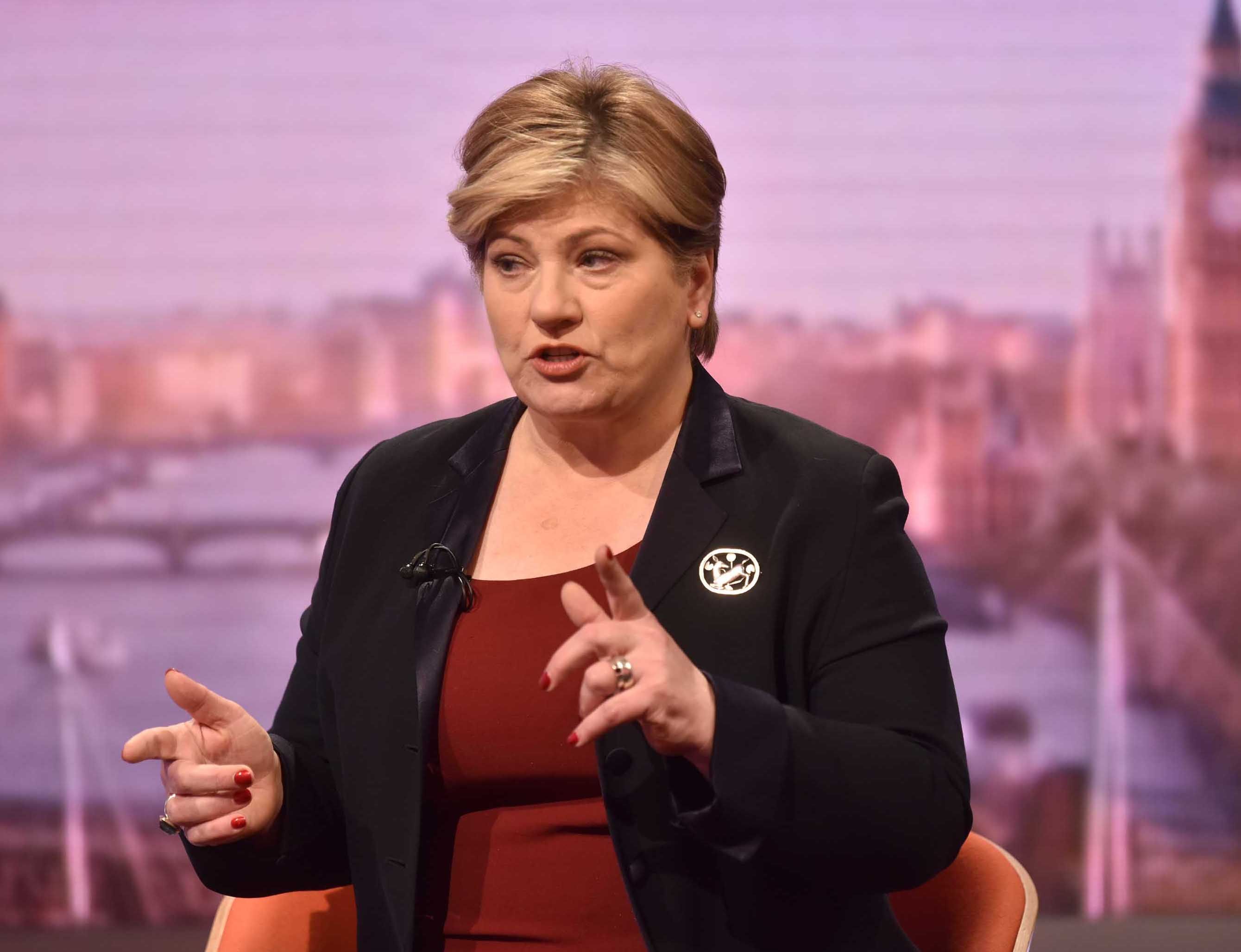
Labour’s win in Batley and Spen seems to have helped fuel this attempt to get on the front foot. And further proof of a new-found confidence on the issue comes in our latest Commons People podcast with Emily Thornberry. The shadow international trade secretary told us: “Six months out from the deal we can now start saying: ‘when you say this is a teething problem it obviously isn’t’,”
Liz Truss was like the “secretary of state for a doughnut”, because she focused on all trade apart from the great glaring hold of trade with the EU, Thornberry said. “She will take no responsibility for patching the deal that we really need, which is the biggest trade deal, which is the trade deal with the EU, which has great glaring holes…We need to repair this really thin deal. It’s like gossamer.”
Strong stuff, but Thornberry is clearly unafraid of taking the fight to her opposite number. In the podcast, she says Truss has become “a Margaret Thatcher tribute act”. And she reveals the gossip in the Department of International Trade is that Truss has a habit of writing on documents in her ministerial red box: “Too long, didn’t read”.
Thornberry also underscored Labour’s tougher lines on China, revealing she had been in talks with Taiwan’s UK representative today and calling for British firms to reveal if they use products made by Uighurs. This follows Lisa Nandy’s call earlier this week for the UK to stage a political, but not sporting, boycott of the Beijing Winter Olympics.
The ‘Made in Britain’ policy itself has echoes of Gordon Brown’s “British jobs for British workers”, without using that exact phrase. I remember David Cameron was so outraged by the slogan he once said in PMQs it was “borrowed off the National Front”. And in a reminder of how politics has come since, Cameron even complained the policy would contravene EU free movement rules.
Yet focusing on British manufacturing and procurement perhaps also shows that Labour is also getting more comfortable with the idea of “progressive patriotism”, a phrase that Rebecca Long-Bailey road-tested in the leadership campaign but quickly backed away from.
Gareth Southgate’s calm, inclusive leadership of the England football team has embodied that concept better than most politicians (particularly Tory backbencher Lee Anderson, who will amazingly boycott England’s big game this weekend because the team continues to take the knee).
As Boris Johnson wraps himself in bunting, while curiously wearing his England top under a suit jacket, Labour is edging its way into criticising his skinny trade deal with the EU. I wonder if Keir Starmer will go the whole way and promise at the next election “a better Brexit”?

New infections continue to rise, as England prepares to lift further restrictions.
But European regulators say the benefits of Covid vaccines continue to far outweigh the risks.
A study of more than a million people shows those with other conditions get high protection from two doses.

Coral reefs are a favorite spot for scuba divers and are among the world’s most diverse ecosystems. For example, the Hawaiian coral reefs, known as the “rainforests of the sea,” host over 7,000 species of marine animals, fishes, birds and plants. But coral reefs are facing serious threats, including a number of diseases that have been linked to human activity.
To understand the connection between human activity and a type of tumorlike disease called growth anomalies (GAs), researchers at the National Institute of Standards and Technology (NIST) have collaborated with the U.S Geological Survey (USGS) and the National Oceanic and Atmospheric Administration (NOAA) to use an emerging molecular profiling method to identify 18 small molecules that promise to help them better understand the series of molecular reactions that lead to the disease.
GAs affect both the coral skeleton and its soft tissues. Scientists don’t know the cause of the disease or how it spreads but have hypothesized that there is a strong correlation between GA prevalence in coral colonies and human population density nearby.
Almost all types of corals are made of hundreds to millions of individual soft-bodied animals called polyps. The polyps secrete calcium carbonate to form a hard skeleton that lays the foundation for the coral colony. GAs affect corals through irregular and accelerated growth of their skeleton, causing it to be less dense and filled with holes. This results in a tumorlike mass in the skeleton of a coral colony with fewer polyps and a diminished ability to reproduce.
Shallow water corals receive food like carbohydrates and oxygen as a byproduct of photosynthesis from the symbiotic relationship they have with zooxanthellae, photosynthetic algae that live inside coral tissues. GAs can lead to fewer symbiotic zooxanthellae and therefore less energy being absorbed from photosynthesis.
Even though GAs do not typically directly lead to coral death, they do affect the overall health of coral colonies and can pose an ecological threat to coral populations. To analyze the disease, NIST researchers chose the coral species Porites compressa as their target sample.
This coral species is known as the “finger” or “hump” coral and is part of the stony coral family, which is “one of the important reef-building species in Hawaii,” said NIST chemist Tracey Schock. “They lay the foundation for the coral reef.”
P. compressa is found in shallow lagoons off the Hawaiian Islands, and the researchers obtained their coral samples from Kaneohe Bay, Oahu. The bay has been studied widely as a site affected by human activity such as sewage discharge and metal pollution. GAs have previously been observed in the coral species there.
In order to analyze and study GAs in P. compressa, researchers turned to the field of metabolomics, which is the study of small molecules, such as those making up living organisms found in tissues, blood or urine. These small molecules, known as metabolites, are the intermediate and end products in a linked series of biochemical reactions known as molecular pathways in an organism.
Some examples of such small molecules include sugars like glucose, amino acids, lipids and fatty acids. Their production can be influenced by genetic and environmental factors and can help researchers better understand the biochemical activity of tissue or cells. In this case, chemical analysis of metabolites provides significant information that helps researchers understand the physiology of the disease.
For their study, researchers sampled a coral colony that had both healthy and diseased tissue. They split up their samples so they could assess the healthy coral and diseased coral separately. They also had a separate adjacent sample that was free of diseased tissue.
The samples were frozen in liquid nitrogen, and then freeze-dried for practical sample processing while maintaining metabolic integrity. The researchers then separated the diseased parts from the healthy colony using a hammer and stainless-steel chisel and collected the tissue from the skeleton with a brush. In one of the final stages of the sample preparation, they chemically extracted the metabolites from the coral tissue using a combination of methanol, water and chloroform.
“The method is novel for coral studies,” said Schock. “With metabolomics, it is critical to preserve the state of all metabolites in a sample at the time of collection. This requires halting all biochemical activity using liquid nitrogen and maintaining this state until chemical extraction of the metabolome. The complexity of a coral structure necessitates stringent collection and processing protocols.”
The researchers then produced a metabolomic analysis of the coral samples by using a reproducible profiling technique known as proton nuclear magnetic resonance (1H NMR).
The 1H NMR technique exposes the coral extract to electromagnetic fields and measures the radio frequency signals released by the hydrogens in the sample. The various kinds of metabolites are revealed by their unique signals which inform of their chemical environment. NMR detects all signals from the magnetic nuclei within a sample, making it an unbiased “all-in-one” technique. Two-dimensional NMR experiments that can identify both hydrogens (1H) and their directly bound carbon (13C) atoms provide more chemical information, giving confidence in the accuracy of the identities of the various metabolites within a sample.
The study identified 18 different metabolites and a new GA morphological form in P. compressa. The researchers found that GA tumors have distinct metabolite profiles compared with healthy areas of the same coral colony and detected specific metabolites and metabolic pathways that may be important for these profile differences. They also discovered that the loss of internal pH regulation is seemingly responsible for the hollow skeletons that are a characteristic of GAs.
“We have not only characterized new aspects of GA physiology, but have also discovered candidate pathways that provide a clear path forward for future research efforts aiming to further understand GA formation and coral metabolism, in general,” said Schock.
As studies of this type accumulate, the researchers envision a database that could pull together coral metabolite information from multiple coral species into an accessible location for all scientists.
Collaborating with other researchers in different fields could increase understanding of the biological impacts of this disease on coral colonies. “We are going to learn which species are tolerant and which species are sensitive to stresses, and the physiological adaptations or mechanisms of both types will be important to conservation efforts,” said Schock.
For now, the researchers hope these findings will be helpful for other scientists analyzing coral species and ultimately be beneficial for the coral reefs themselves, potentially aiding efforts to better preserve them.

A lump in the thyroid gland is called a thyroid nodule, and 5-10% of all thyroid nodules are diagnosed as thyroid cancer. Thyroid cancer has a good prognosis, a high survival rate, and a low recurrence rate, so early diagnosis and treatment are crucial. Recently, a joint research team in Korea has proposed a new non-invasive method to distinguish thyroid nodules from cancer by combining photoacoustic (PA) and ultrasound image technology with artificial intelligence.
The joint research team — composed of Professor Chulhong Kim and Dr. Byullee Park of POSTECH’s Department of Electrical Engineering, Department of Convergence IT Engineering and Department of Mechanical Engineering, Professor Dong-Jun Lim and Professor Jeonghoon Ha of Seoul St. Mary’s Hospital of Catholic University of Korea, and Professor Jeesu Kim of Pusan National University — conducted a research to acquire PA images from patients with malignant and benign nodules and analyzed them with artificial intelligence. In recognition of their significance, the findings from this study were published in Cancer Research.
Currently, the diagnosis of a thyroid nodule is performed using a fine-needle aspiration biopsy (FNAB) using an ultrasound image. But about 20% of FNABs are inaccurate which leads to repetitive and unnecessary biopsies.
To overcome this problem, the joint research team explored the use of PA imaging to obtain an ultrasonic signal generated by light. When light (laser) is irradiated on the patient’s thyroid nodule, an ultrasound signal called a PA signal is generated from the thyroid gland and the nodule. By acquiring and processing this signal, PA images of both the gland and the nodule are collected. At this time, if multispectral PA signals are obtained, oxygen saturation information of the thyroid gland and thyroid nodule can be calculated.
The researchers focused on the fact that the oxygen saturation of malignant nodules is lower than that of normal nodules, and acquired PA images of patients with malignant thyroid nodules (23 patients) and those with benign nodules (29 patients). Performing in vivo multispectral PA imaging on the patient’s thyroid nodules, the researchers calculated multiple parameters, including hemoglobin oxygen saturation level in the nodule area. This was analyzed using machine learning techniques to successfully and automatically classify whether the thyroid nodule was malignant or benign. In the initial classification, the sensitivity to classify malignancy as malignant was 78% and the specificity to classify benign as benign was 93%.
The results of PA analysis obtained by machine learning techniques in the second analysis were combined with the results of the initial examination based on ultrasound images normally used in hospitals. Again, it was confirmed that the malignant thyroid nodules could be distinguished with a sensitivity of 83% and a specificity of 93%.
Going a step further, when the researchers kept the sensitivity at 100% in the third analysis, the specificity reached 55%. This was about three times higher than the specificity of 17.3% (sensitivity of 98%) of the initial examination of thyroid nodules using the conventional ultrasound.
As a result, the probability of correctly diagnosing benign, non-malignant nodules increased more than three times, which shows that overdiagnosis and unnecessary biopsies and repeated tests can be dramatically reduced, and thereby cut down on excessive medical costs.
“This study is significant in that it is the first to acquire photoacoustic images of thyroid nodules and classify malignant nodules using machine learning,” remarked Professor Chulhong Kim of POSTECH. “In addition to minimizing unnecessary biopsies in thyroid cancer patients, this technique can also be applied to a variety of other cancers, including breast cancer.”
“The ultrasonic device based on photoacoustic imaging will be helpful in effectively diagnosing thyroid cancer commonly found during health checkups and in reducing the number of biopsies,” explained Professor Dong-Jun Lim of Seoul St. Mary’s Hospital. “It can be developed into a medical device that can be readily used on thyroid nodule patients.”

Babies younger than four weeks old, called neonates, were once thought not to perceive pain due to not-yet-fully-developed sensory systems, but modern research says otherwise, according to researchers from Hiroshima University in Japan.
Not only do babies experience pain, but the various levels can be standardized to help nurses recognize and respond to the babies’ cues — if the nurses have the opportunity to learn the scoring tools and skills needed to react appropriately. With tight schedules and limited in-person courses available, the researchers theorized, virtual e-learning may be able to provide a path forward for nurses to independently pursue training in this area.
To test this hypothesis, researchers conducted a pilot study of 115 nurses with varying levels of formal training and years of experience in seven hospitals across Japan. They published their results on May 27 in Advances in Neonatal Care.
“Despite a growing body of knowledge and guidelines being published in many countries about the preventions and management of pain in neonates hospitalized in the NICU, neonatal pain remains unrecognized, undertreated, and generally challenging,” said paper author Mio Ozawa, associate professor in the Graduate School of Biomedical and Health Sciences at Hiroshima University.
The researchers developed a comprehensive multimedia virtual program on neonatal pain management, based on selected standardized pain scales, for nursing staff to independently learn how to employ measurement tools. The program, called e-Pain Management of Neonates, is the first of its kind in Japan.
“The aim of the study was to verify the feasibility of the program and whether e-learning actually improves nurses’ knowledge and scoring skills,” said paper author Mio Ozawa, associate professor in the Graduate School of Biomedical and Health Sciences at Hiroshima University. “The results of this study suggest that nurses could obtain knowledge and skills about the measurement of neonatal pain through e-learning.”
The full cohort took a pre-test at the start of the study, before embarking on a self-paced, four-week e-learning program dedicated to learning standardized pain scales to measure discomfort in babies. However, only 52 nurses completed the post-test after four weeks. For those 52, scores increased across a range of years of experience and formal education.
Ozawa noted that the sample size is small but also said that the improved test scores indicated the potential for e-learning.
“Future research will need to go beyond the individual level to determine which benefits are produced in the management of neonatal pain in hospitals where nurses learn neonatal pain management through e-learning,” Ozawa said. “This study demonstrates that virtually delivered neonatal pain management program can be useful for nurses’ attainment of knowledge and skills for managing neonatal pain, including an appropriate use of selected scoring tools.”
Story Source:
Materials provided by Hiroshima University. Note: Content may be edited for style and length.
Gary Lineker has begged England fans not to boo the Italian national anthem during Sunday’s Euro 2020 final.
England fans at Wembley came in for criticism after the team’s historic 2-1 win against Denmark during Wednesday’s semi final, when they booed the Danish anthem.
The Match Of The Day host has now pleaded with those who are attending Sunday’s game not to repeat the scenes of earlier in the week.

Marc Atkins via Getty Images
In a post on Twitter, he wrote: “If you’re lucky enough to get a ticket for the final, please, please don’t boo the Italian anthem.”
He explained: “A/ It’s an absolute belter and worth listening to. B/ It’s bloody rude, disrespectful and utterly classless.”
If you’re lucky enough to get a ticket for the final, please, please don’t boo the Italian anthem. A/ It’s an absolute belter and worth listening to. B/ It’s bloody rude, disrespectful and utterly classless.
— Gary Lineker 💙 (@GaryLineker) July 8, 2021
UEFA charged England over the boos in the stadium on Wednesday, while disciplinary proceedings were opened over England fans letting off flares inside the venue.
England were also charged after a laser was shown in Denmark’s goalkeeper Kasper Schmeichel’s eyes before Kane struck his spot-kick.
According to Eurosport, the Three Lions are likely to be hit with fines for the offences.
Meanwhile David Beckham, Adele and Dua Lipa were among the famous faces celebrating England’s historic win on Wednesday.
Gareth Southgate’s men will play Italy on Sunday – England’s first major international final since the 1966 World Cup.


You’re reading The Waugh Zone, our daily politics briefing. Sign up now to get it by email in the evening.
Ever since Gordon Brown blundered into giving pensioners a measly 75p rise in their pension, politicians have been terrified of upsetting the grey vote. Back in 1999, the Treasury was so pleased with low inflation that it had failed to spot the PR disaster of the tiny increase it entailed in all index-linked benefits.
Brown never repeated the error, and indeed paid his penance by swiftly making his temporary winter fuel allowance a permanent fixture, as well as introducing free TV licences for the elderly and pension credit.
During the 2010 election, David Cameron was bounced by Brown into keeping the measures. The Tory leader went further by bringing in the now infamous ‘triple lock’ that guarantees to uprate the basic and state pension in line with earnings, prices or 2.5%, whichever is the higher.
In 2015, the Conservatives did dip a toe in the dangerous waters of cutting “pensioner perks”, as some called them, announcing they would withdraw state funding of the free TV licence for over-75s and ask the BBC to foot the bill instead. The blame game still plays out, but a survey by AgeUK found that Tory voters will be hit hardest.
Fast-forward to today and it appears that Rishi Sunak is preparing to think the unthinkable and not honour the triple lock pledge that was reaffirmed in the last Tory manifesto. The chancellor has in some ways the perfect cover in the form of the pandemic and the huge costs it has inflicted on the whole nation.
The young in particular have been hit hard by joblessness, on top of student debt and the UK’s chronic inability to offer them affordable housing. With the third wave of Covid powering a fresh tsunami of cases among the under-30s, it seems they are in for their share of ill-health too. While ministers seem bent on a form of herd immunity, long Covid is the fear that stalks many a young person’s Whatsapp chat.
The demands for “intergenerational fairness” have been getting louder and Sunak seems to have listened. Of course, he was subtle about it on the breakfast sofa shows, but the message seemed pretty clear: the triple lock will be tweaked, amended, possibly suspended to save valuable cash.
In a masterclass of political hint-dropping, the chancellor said that yes, the triple lock was still government policy “but I very much recognise people’s concerns”. “We want to make sure the decisions we make and the systems we have are fair, both for pensioners and for taxpayers.” It was straight out of the overseas aid playbook: the overall aim is to stick to the manifesto but the pandemic has forced a rethink.
That’s why the chatter in Whitehall and among MPs is that the Treasury is considering a possible suspension of the triple lock for one year only, just as happened on the pledge to spend 0.7% of GDP on aid. The hint was all but official when even Boris Johnson refused to kill off the speculation on Thursday. “We’ve got to have fairness for pensioners and the taxpayers,” he said.
Whereas Brown was trapped into a PR nightmare by linking pensions to (low) inflation, Sunak is obviously keen not to suffer from a similarly self-inflicted, locked-in syndrome. With pensions now linked earnings (which are soaring at 8%), even a temporary way of avoiding the £3bn cost would save the Treasury serious money. Pensioners could still get a rise, just not a mega rise.
Insiders stress that nothing is decided and it will all depend on how the numbers look later in the year ahead of the spending review, but no one is killing the idea of a brief suspension of the full triple lock. The fact that both the PM and chancellor sounded like they were coordinating their message (on various outlets) shows there is a softening up exercise going on at the very least.
With Keir Starmer’s shift from constructive to destructive opposition, Labour will inevitably try to seize on any change as an outrageous theft from pensioners’ purses. But what everyone will be trying to gauge is just how many Tory backbenchers try to prevent any unpicking of the lock. Will those who were gung ho about a temporary cut to aid now bite their tongues?
It will certainly be a test of Sunak’s political skills, though he does perhaps have time on his side. Just as with the international development ‘cut’, opting to do this in the middle of a parliament (and the middle of a pandemic) gives him room to make up for it in the run up to the next election.
It could also be that on the triple lock the chancellor realises that over the long term he could burnish rather than tarnish his reputation, not least among younger voters who see this as a fairness issue.
The furlough scheme has already helped make him the most popular politician in the UK and he may think he can afford to burn a bit of that capital now. Ending the £20 uplift in Universal Credit and jacking up corporation tax prove he is unafraid of making unpopular decisions.
If he does go ahead and take the bold option on pensions, it would certainly signal that Sunak really does have his eyes on the main prize. Unlike his ‘buy now, pay later’ boss, the chancellor cannot be seen to rely on borrowing as his way of balancing the books. If he can project himself to Tory MPs as firm but fair on tax and spend, he may have a decent crack at No.10 himself.

