Double-Jabbed Adults Will No Longer Have To Isolate At Home After Covid ‘Contact’

JONATHAN BUCKMASTER via Getty Images

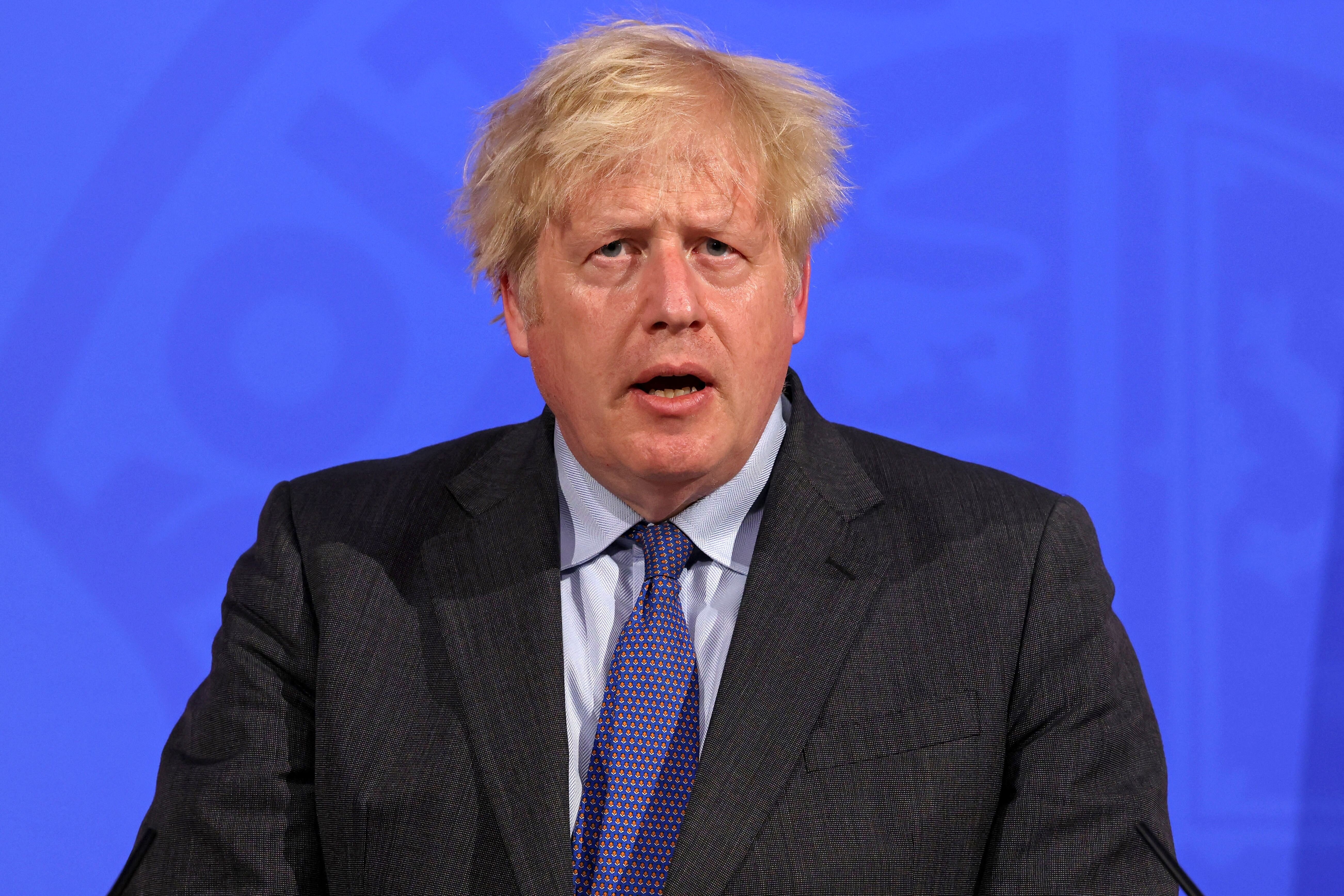
Double-jabbed adults will no longer be forced to isolate at home after coming into contact with someone with Covid, Boris Johnson has declared.

The prime minister announced the radical new move as he also revealed that the gap between first and second vaccine doses would be slashed from 12 weeks to just 8 weeks for all under-40s, with the aim of getting everyone fully protected by mid-September.

The proposals, which depend on the final data on the spread of the virus being confirmed next Monday, were part of a raft of measures set to kick in on so-called Freedom Day on July 19.

The changes to the home quarantine restrictions for double-vaccinated individuals will mean that for the first time in more than a year the public can continue to go about their daily life even after being classed as a “contact” of someone with Covid.

However, some people will still have to isolate at home for 10 days, including those who test positive or those who are explicitly asked to quarantine by the Test and Trace service.

Speaking at a Downing Street press conference, Johnson said: “We will continue from Step Four [of his ‘roadmap’ out of lockdown], to manage the virus with a test, trace and isolate system that is proportionate to the pandemic.

“You will have to self isolate if you test positive, or are told to do so by NHS test and trace. But we’re looking to move to a different regime for fully vaccinated contacts of those testing positive, and also for children.”

Johnson and his fellow ministers have come under huge pressure in recent weeks to show that double-vaccination with Pfizer or AstraZeneca will finally have real benefits in terms of personal freedoms.

Both vaccines reduce the chances of serious Covid illness by more than 90%, including the Delta variant of the virus, and the government is keen to continue the UK’s reputation as the least vaccine hesitant nation in the world.

On Monday, the issue was highlighted when the Duchess of Cambridge was required under current rules to stay at home despite being double-jabbed, after she was told she had come into contact with someone with Covid in recent days.

Under the new system, a “proportionate” test, trace and isolate system will be kick in from July 19m with symptomatic testing continuing and free basic rapid testing extended until 30th September. Contact tracing will continue.

The vaccine rollout will be accelerated across England by reducing the dose interval for under-40s, from 12 weeks to eight. This will mean every adult has the chance to be double-jabbed by mid September.

In recent days, vaccine centres have been inundated with over-18s who want to get their second jab much sooner than the 12 weeks technically allowed at present.

Pfizer’s guidance is that a gap of just three weeks is required for minimum protection and some GPs and health centres have been allowing such fast-tracked dosing rather than have to throw away valuable vaccines at the end of their working day.

All over-50s are already allowed to cut the dosing gap to eight weeks and that will apply to all age groups under Johnson’s latest proposals.
Share Button

Global BECCS potential is largely constrained by sustainable irrigation

A new collaborative research led by researchers from the National Institute for Environmental Studies, Potsdam Institute for Climate Impact Research, Ritsumeikan University, and Kyoto University found that although unlimited irrigation could increase global BECCS potential (via the increase of bioenergy production) by 60-71% by the end of this century, sustainably constrained irrigation would increase it by only 5-6%. The study has been published in Nature Sustainability on July 5.

Bioenergy with carbon capture and storage (BECCS) is a process of extracting bioenergy from biomass, then capturing and storing the carbon to a geological reservoir. It is a negative emission technology since the biomass is produced by plants through photosynthesis that can uptake the carbon dioxide from atmosphere. To achieve the 2°C or 1.5°C climate goal, large-scale deployment of BECCS was assumed to be prominent in many previous studies. However, this caused increasing concerns on the challenges brought to water and land resources to grow the bioenergy crops. For example, existing studies have showed that irrigation to achieve considerable bioenergy crop production needed for BECCS potential comparable to the requirement of 2°C or 1.5°C climate goal would lead to severe water stress even than climate change itself.

Under this context, where and to what extent irrigation can enhance the global BECCS potential remains unknown under sustainable water use. “Here, we define it as water use securing the local and downstream water availability for conventional water use and environmental flow requirements, suppressing nonrenewable water resources withdrawal, and preventing additional water stress.” explains lead author Zhipin Ai from National institute for environmental studies, Japan.

The study was based on simulations with a spatially explicit representation of bioenergy crop plantations and water cycle in an internally consistent model framework. To quantitatively determine the constraints of irrigation water resources, the researchers designed distinct irrigation ways (unlimited irrigation, sustainable irrigation, and no irrigation) with bioenergy crops planted on land scenarios with strict land protections to prevent adverse effects on biodiversity, food production, land degradation, and desertification due to large-scale land conversion.

The study found that, under the rain fed condition, the average global BECCS potential in 2090 was 0.82-1.99 Gt C yr-1. The BECCS potential reached 1.32-3.42 Gt C yr-1 (60% and 71% increases compared to that under rainfed condition) under full irrigation, whereas under sustainable irrigation, the BECCS potential was 0.88-2.09 Gt C yr-1 (5% and 6% increases compared to that under rainfed condition). The BECCS potential under sustainable irrigation is close to the lower limit of 1.6-4.1 Gt C yr-1, which is the required amount of BECCS in 2100 that consistent with the 1.5°C or 2°C climate goal as documented in the IPCC Special Report on Global Warming of 1.5ºC.

Given the many negative environmental impacts of large-scale deployment of BECCS, the researchers suggest that comprehensive assessments of the BECCS potential that consider both potential benefits and adverse effects are necessary for simultaneously achieving the multiple sustainable development goals on climate, water, land, etc. “In addition, considering the relatively low biophysically constrained BECCS potential under sustainable water and land use scenarios, a critical reexamination of the contribution of BECCS towards achieving the Paris Agreement goal is needed.” says co-author Vera Heck from the Potsdam Institute for Climate Impact Research.

This study was supported by the Environment Research and Technology Development Fund (JPMEERF20202005, JPMEERF15S11418, and JPMEERF20211001) of the Environmental Restoration and Conservation Agency of Japan.

Story Source:

Materials provided by National Institute for Environmental Studies. Note: Content may be edited for style and length.

Share Button

Psychedelic spurs growth of neural connections lost in depression

The psychedelic drug psilocybin, a naturally occurring compound found in some mushrooms, has been studied as a potential treatment for depression for years. But exactly how it works in the brain and how long beneficial results might last is still unclear.

In a new study, Yale researchers show that a single dose of psilocybin given to mice prompted an immediate and long-lasting increase in connections between neurons. The findings are published July 5 in the journal Neuron.

“We not only saw a 10% increase in the number of neuronal connections, but also they were on average about 10% larger, so the connections were stronger as well,” said Yale’s Alex Kwan, associate professor of psychiatry and of neuroscience and senior author of the paper.

Previous laboratory experiments had shown promise that psilocybin, as well as the anesthetic ketamine, can decrease depression. The new Yale research found that these compounds increase the density of dendritic spines, small protrusions found on nerve cells which aid in the transmission of information between neurons. Chronic stress and depression are known to reduce the number of these neuronal connections.

Using a laser-scanning microscope, Kwan and first author Ling-Xiao Shao, a postdoctoral associate in the Yale School of Medicine, imaged dendritic spines in high resolution and tracked them for multiple days in living mice. They found increases in the number of dendritic spines and in their size within 24 hours of administration of psilocybin. These changes were still present a month later. Also, mice subjected to stress showed behavioral improvements and increased neurotransmitter activity after being given psilocybin.

For some people, psilocybin, an active compound in “magic mushrooms,” can produce a profound mystical experience. The psychedelic was a staple of religious ceremonies among indigenous populations of the New World and is also a popular recreational drug.

It may be the novel psychological effects of psilocybin itself that spurs the growth of neuronal connections, Kwan said.

“It was a real surprise to see such enduring changes from just one dose of psilocybin,” he said. “These new connections may be the structural changes the brain uses to store new experiences.”

Story Source:

Materials provided by Yale University. Original written by Bill Hathaway. Note: Content may be edited for style and length.

Share Button

Astronomers discover an oversized black hole population in the star cluster Palomar 5

Palomar 5 is a unique star cluster. This is firstly because it is one of the “fluffiest” clusters in the halo of our Galaxy, with the average distance between the stars being a few light-years, comparable to the distance from the Sun to the nearest star. Secondly, it has a specular stellar stream associated with it that spans more than 20 degrees across the sky. In a paper published today in Nature Astronomy, an international team of astronomers and astrophysicists led by the University of Barcelona show that both distinguishing features of Palomar 5 are likely the result of an oversized black hole population of more than 100 black holes in the center of the cluster.

“The number of black holes is roughly three times larger than expected from the number of stars in the cluster, and it means that more than 20% of the total cluster mass is made up of black holes. They each have a mass of about 20 times the mass of the Sun, and they formed in supernova explosions at the end of the lives of massive stars, when the cluster was still very young” says Prof Mark Gieles, from the Institute of Cosmos Sciences of the University of Barcelona (ICCUB) and lead author of the paper.

Tidal streams are streams of stars that were ejected from disrupting star clusters or dwarf galaxies. In the last few years, nearly thirty thin streams have been discovered in the Milky Way halo. “We do not know how these streams form, but one idea is that they are disrupted star clusters. However, none of the recently discovered streams have a star cluster associated with them, hence we can not be sure. So, to understand how these streams formed, we need to study one with a stellar system associated with it. Palomar 5 is the only case, making it a Rosetta Stone for understanding stream formation and that is why we studied it in detail” explains Gieles.

The authors simulate the orbits and the evolution of each star from the formation of the cluster until the final dissolution. They varied the initial properties of the cluster until a good match with observations of the stream and the cluster was found. The team finds that Palomar 5 formed with a lower black hole fraction, but stars escaped more efficiently than black holes, such that the black hole fraction gradually increased. The black holes dynamically puffed up the cluster in gravitational slingshot interactions with stars, which led to even more escaping stars and the formation of the stream. Just before it completely dissolves — roughly a billion years from now — the cluster will consist entirely of black holes. “This work has helped us understand that even though the fluffy Palomar 5 cluster has the brightest and longest tails of any cluster in the Milky Way, it is not unique. Instead, we believe that many similarly puffed up, black hole-dominated clusters have already disintegrated in the Milky Way tides to form the recently discovered thin stellar streams” says co-author Dr. Denis Erkal at the University of Surrey.

Gieles points out that in this paper “we have shown that the presence of a large black hole population may have been common in all the clusters that formed the streams.” This is important for our understanding of globular cluster formation, the initial masses of stars and the evolution of massive stars. This work also has important implications for gravitational waves. “It is believed that a large fraction of binary black hole mergers form in star clusters. A big unknown in this scenario is how many black holes there are in clusters, which is hard to constrain observationally because we can not see black holes. Our method gives us a way to learn how many BHs there are in a star cluster by looking at the stars they eject.”, says Dr. Fabio Antonini from Cardiff University, a co-author of the paper.

Palomar 5 is a globular cluster discovered in 1950 by Walter Baade. It is in the Serpens constellation at a distance of about 80,000 light-years, and it is one of the roughly 150 globular clusters that orbit around the Milky Way. It is older than 10 billion years, like most other globular clusters, meaning that it formed in the earliest phases of galaxy formation. It is about 10 times less massive and 5 times more extended than a typical globular cluster and in the final stages of dissolution.

Story Source:

Materials provided by University of Barcelona. Note: Content may be edited for style and length.

Share Button

Royals celebrate NHS anniversary with George Cross and tea party

The Queen awards the NHS the George Cross while Prince William attends a thanksgiving service.

Share Button

Covid: Train bosses say social distancing not always possible

A train operator says it is not always possible to enforce Covid rules during busy times.

Share Button

Boris Johnson To Give Glimpse Of July 19 Covid Freedoms In No.10 Press Conference

WPA Pool via Getty Images

Boris Johnson will signal how England can “learn to live with” Covid when he uses a press conference on Monday to set out his plans to restore people’s freedoms from July 19.

The prime minister will give an update of reviews into social distancing guidelines, working from home and vaccine passports, ahead of a formal announcement on the full lifting of lockdown next week.

The live televised briefing from Downing Street is aimed at giving the public and businesses more time to prepare for unlocking on July 19.

It appears that the PM will go for a “big bang” approach, ditching a whole raft of current requirements to work from home and wear masks on public transport.

The public are also expected to be allowed to order drinks at the bar in pubs for the first time in months, and to attend outdoor mass events. The idea of Covid ‘passports’ has also been shelved.

Some public health experts have warned that lifting all the restrictions at once may risk fuelling the current third wave of Covid cases triggered by the Delta variant of the virus.

On Sunday, Communities Secretary Robert Jenrick said he expected life to “return to normality as far as possible” in England after the “terminus date” due to the success of the vaccine rollout in preventing serious illness.

The cabinet minister told the BBC the country had moved into the “final furlong” of coronavirus restrictions.

Officials said the Prime Minister would on Monday give an update on the next steps on the one metre-plus rule in hospitality venues, the use of masks, and working from home.

As well as publishing the taskforce reviews, an update will also be provided on what is next for care home visits, No 10 said.

Speaking before his announcement, the prime minister said people would have to “exercise judgment” to protect themselves from Covid-19, in a sign the government will shift from legally enforced restrictions to affording people personal choice.

“Thanks to the successful rollout of our vaccination programme, we are progressing cautiously through our road map,” Johnson said.

“Today we will set out how we can restore people’s freedoms when we reach Step 4.

“But I must stress that the pandemic is not over and that cases will continue to rise over the coming weeks.

“As we begin to learn to live with this virus, we must all continue to carefully manage the risks from Covid and exercise judgment when going about our lives.”

With Johnson due to address the nation, Health Secretary Sajid Javid will take responsibility for announcing the government’s plans to parliament on Monday afternoon.

The move follows stern rebukes from Commons Speaker Sir Lindsay Hoyle in recent weeks for ministers deciding to make statements to the press before MPs.

The government said it will not be known until July 12 – seven days before the target date for easing restrictions – whether its four tests for unlocking have been met, given the need to consult the latest data.

Labour said Johnson must reveal how many Covid-related deaths it is willing to accept in the face of rising cases of the Indian strain – also know as the Delta variant – if restrictions are abolished.

Shadow health secretary Jonathan Ashworth said: “We are all desperate to move on from restrictions but with infections continuing to rise steeply thanks to the Delta variant, Boris Johnson needs to outline the measures he will introduce such as ventilation support for building and sick pay for isolation to push cases down.

“Letting cases rise with no action means further pressure on the NHS, more sickness, disruption to education and risks a new variant emerging with a selection advantage.

“So far ‘learning to live with the virus’ had been no more than a ministerial slogan.

“Now we know this is the Government’s strategy, when Sajid Javid addresses the Commons he must explain what level of mortality and cases of long Covid he considers acceptable. And what support will be in place for the most deprived areas where cases are highest and vaccination rates lowest.

“These are important questions ministers now must answer.”

Share Button

Covid-19: Masks will become personal choice, says Robert Jenrick

Robert Jenrick says mask laws in England could go but Scotland says there will be an “ongoing need”.

Share Button

David And Victoria Beckham Celebrate 22nd Wedding Anniversary By Sharing Glorious Matchy-Matchy Throwback Pics

David Beckham has shown just what a perfect match him and wife Victoria are on their 22nd wedding anniversary.

The former footballer has shared a series of pics with Victoria and they all have one thing in common: matchy-matchy outfits.

Well, they’ve always had a bit of a thing for coordinating their wardrobe, but we still can’t get on board with those matching purple wedding outfits (sorry guys).

David shared the collection of throwback snaps on Instagram on Sunday, which he captioned: “22 years later, still matching outfits. Happy anniversary love u so much and thank you for giving me our amazing kids so we can all wear the same.”

The final pic sees the happy couple posing with their four children, Brooklyn, 22, Romeo, 18, Cruz, 16, and Harper, nine, in their PJs – all matching, of course.

Victoria was also feeling nostalgic on her Instagram page, where she shared a video montage of her and David looking seriously loved-up throughout the years.

She captioned the montage, “I love you David” with a pink hearts emoji, and finished with “Happy Anniversary”.

David and Victoria first met in 1997 at a football match, and were engaged a year later. They tied the knot four months later in a lavish ceremony at Luttrellstown Castle, just outside Dublin.

Share Button

The 10 Funniest Celebrity Tweets About England’s Euro 2020 Victory Over Ukraine

We think there might be quite a few sore heads today following England’s stunning 4-0 win against Ukraine on Saturday night.

Over 20 million fans – including quite a few famous faces – watched the game on the BBC and many celebrated into the early hours after the Three Lions reached their second consecutive semi-final at a major tournament.

And it didn’t take long for many a celeb to share their (often hilarious) thoughts on England’s latest Euro 2020 win on Twitter…

Two goals from captain Harry Kane and headers from Harry Maguire and Jordan Henderson handed the England side a resounding win at Stadio Olimpico in Rome.

Gareth Southgate’s men will now meet Denmark in the last four at Wembley on Wednesday evening.

Either Italy or Spain are waiting for a potential final next weekend.

Share Button