Pet owners with Covid could infect about 20% of cats and dogs, although most symptoms are mild.


Pet owners with Covid could infect about 20% of cats and dogs, although most symptoms are mild.

Mayo Clinic does not endorse companies or products. Advertising revenue supports our not-for-profit mission.
Advertising & Sponsorship
Check out these best-sellers and special offers on books and newsletters from Mayo Clinic.
The official list of Covid-19 symptoms should be expanded as the existing one could “miss many Covid-19 cases”, experts have argued.
The UK should follow other countries and include a broader range of symptoms, according to a group of scientists. Classic symptoms of Covid-19, listed on the NHS website, are a high temperature, a new continuous cough and/or a loss or change to a person’s sense of smell or taste.
Advertisement
But the most commonly reported symptoms by people taking part in the Office for National Statistics (ONS) Covid-19 Infection Survey are cough, headache and fatigue.
The latest ONS release shows 61% of people who tested positive reported symptoms. Of these, 42% had a cough, 39% reported headache and 38% reported fatigue, according to the ONS. Muscle ache was reported by a quarter of people and 32% reported having a sore throat. Meanwhile a third reported fever and 21% reported loss of smell and 15% reported loss of taste.
Advertisement
A separate study – the Zoe Covid Symptom study – recently reported that a headache, sore throat and runny nose are now the most commonly reported symptoms. These are most likely symptoms of the Delta variant.
Advertisement
Writing in the British Medical Journal (BMJ), Dr Alex Crozier and colleagues – including Professor Calum Semple who is a member of Sage – suggest that limiting testing to only people with fever, cough and a change in taste or smell could “miss or delay identification of many Covid cases”.
They suggest this could “hamper efforts to interrupt transmission” of the virus. The group argue that increasing the symptom list could improve Britain’s pandemic response by expanding the criteria for self-isolation and eligibility for symptomatic testing.
The “narrow” case definition “limits” the early detection of contagious people, which restricts the efforts of the Test and Trace programme, they say. Non-traditional symptoms “often manifest earlier”, they added.
The US Centres for Disease Control lists 11 more symptoms than the UK, and the World Health Organisation includes nine more. The testing capabilities are now able to facilitate people with a broader spectrum of symptoms, they added. They say testing people with a single non-specific symptom could overwhelm capacity in the UK, but “combinations of symptoms could be used to help identify more cases sooner without overwhelming testing capacity”.
Advertisement

The authors continue: “The UK’s decision to adopt a narrow case definition was based on ease of communication, avoiding confusion with other infections and preserving testing capacity. This situation is now different — testing capacity is high.
“Covid-19 is associated with a wide range of symptoms. Many patients do not experience the UK’s official case-defining symptoms, initially, or ever, and other symptoms often manifest earlier. Limiting the symptomatic testing to those with these official symptoms will miss or delay identification of many Covid-19 cases, hampering efforts to interrupt transmission.
“Expanding the clinical case definition of Covid−19, the criteria for self-isolation, and eligibility for symptomatic testing could improve the UK’s pandemic response.
The Department of Health and Social Care has been approached for comment by PA Media. We will update this piece if there is a response.


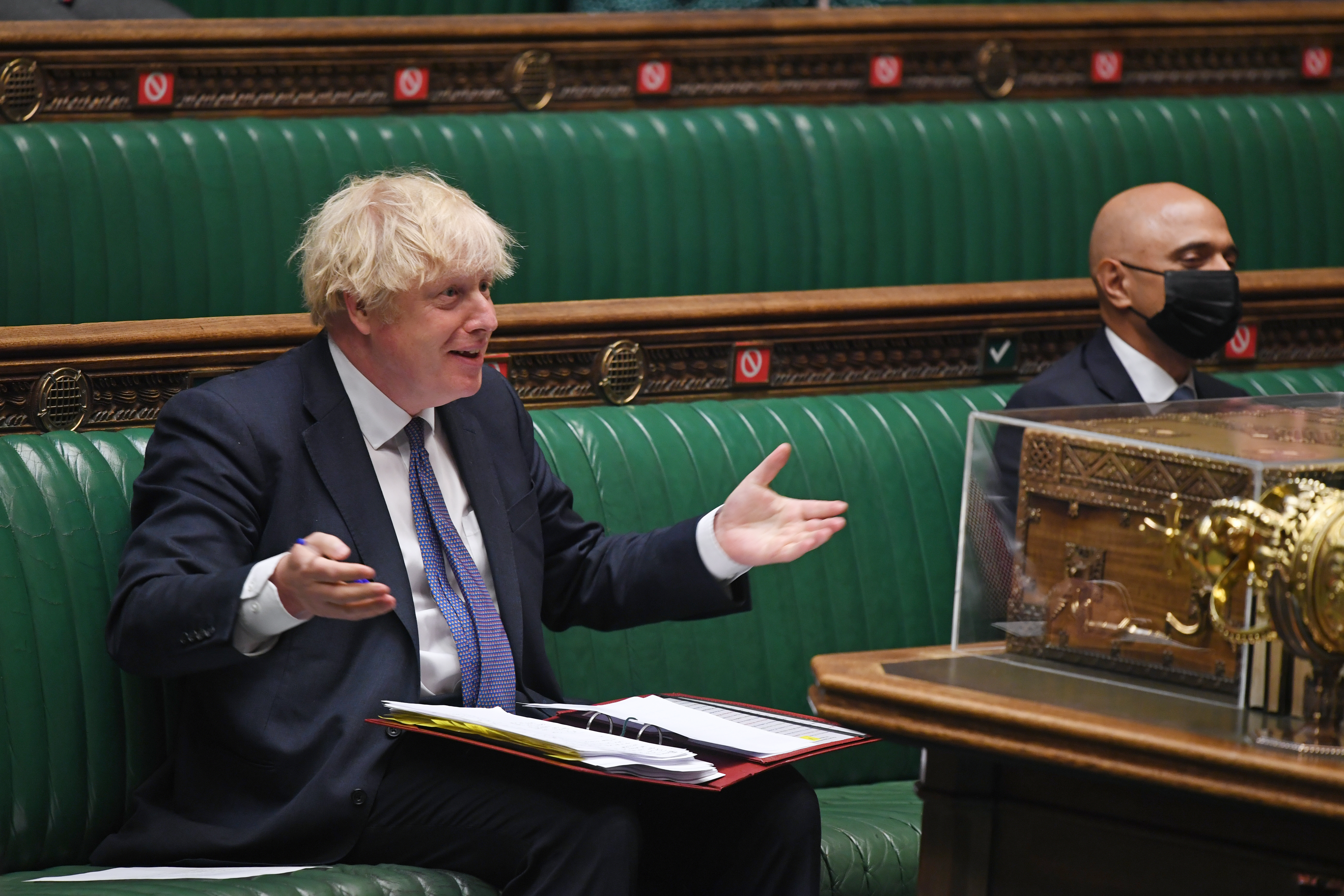
Another PMQs, another tone deaf performance from Boris Johnson. Last week, he appeared to belittle Keir Starmer’s concern over low rape conviction rates as mere “jabber”. This week, he seemed to dismiss anger over Matt Hancock’s Covid rule breach as “Westminster bubble” chatter.
In both cases, allies of Johnson say such attacks are unfair as it was clear he was hitting back at Starmer rather than the issues he raised. Well, upto a point, Lord Copper. In failing to separate out the issues, with the change in register needed for each, the PM has no one to blame but himself for the criticism.
Starmer has long been advised by older hands on the Labour benches to mix up his bowling speed, shifting from fast balls to slower off-spin, and it worked today. By contrast, Johnson stuck to his usual attack-as-best-form-of-defence tactic, and it failed.
First, the Labour leader ridiculed Johnson’s claim to have sacked Hancock a day after keeping him (Starmer must have been tempted to accuse the PM of being ‘Captain Hindsight’ on that one). Then he changed the tone to raise the fury of the parents of a dying cancer patient who was denied hospital visits the week before Hancock broke the social distancing rules with his mistress.
When Starmer quoted Ollie Bibby’s mother – “I’m livid. We did everything we were told to do and the man that made the rules didn’t” – Johnson should have spotted it was time to change gear himself and issue a heartfelt apology. If indeed he had sacked Hancock, as he implied, surely it wouldn’t be difficult to condemn his former health secretary’s actions?
Instead, the tone deaf PM gave a perfunctory answer about sharing the grief of families like Ollie’s, before launching swiftly into his charge that Starmer was raising matters that were the stuff of the ‘Westminster bubble’. Yet the whole point about the Hancock story was its reach went way beyond that bubble, that’s precisely why Tory MPs successfully pressured him to quit.
It wasn’t just the jaw-dropping photos and video of Hancock in a clinch that ensured this story cut through outside SW1 (the test is always whether the WhatsApps of MPs’ non-political friends pick it up and boy did they in spades). It was the simple, rank hypocrisy of the man who set the rules breaking them.
Add in the contrast between his workplace affair and the deadly seriousness of people forced to miss funerals, and this was way bigger than a bit of bubble trouble. The PM sounded like a man who believed the political wound had healed after just four days, but Starmer picked at the scab to reveal what lay beneath.
All those couples whose weddings have been reduced to small events, or whose family and friends have been barred from hugging or dancing at a reception, won’t have seen the Hancock clinch as hilarious. Wrecking your own marriage is a personal car-crash, wrecking thousands of other marriages while snogging your lover is public policy suicide.
The Hancock hypocrisy charge is also attaching to Johnson too. Brides-to-be are furious that the PM can have a garden party to watch the football but they can’t have a proper wedding reception. You can’t sing in church, but you can sing Three Lions in a stadium. You can’t go on holiday, but rich businessmen can arrive from abroad without quarantine.
Johnson’s failure to adapt his PMQs responses will fuel Labour’s charge that his complacency proves the Tories are a tired party that have been in power for too long. But it also risked a total lack of empathy that will worry his MPs more, especially when the PM’s X-factor has been his ability to channel and give voice to voters’ concerns.
And given he already has a reputation for being economical with the actualite (to quote the late Alan Clark), trying to spin his way out of an obvious failure to sack Hancock was ill-advised.
On Tuesday, the SNP’s Ian Blackford got into trouble with the Speaker when he declared: “The truth and this government are distant strangers, and that should come as no surprise when we remember the prime minister has been sacked not once but twice for lying.”
Now it’s demonstrably true that Johnson was fired from the Times for making up a quote and later as a shadow minister for denying he had an affair. So when Speaker Hoyle urged a retraction from Blackford, saying “as we know, hon. Members would never lie”, it’s no wonder the SNP leader in Westminster ignored the plea and carried on regardless.
The other problem for the PM is that he’s now made a habit of using misleading statements in PMQs. Refusing to correct the record over his false claim that Labour voted against an NHS pay rise is one thing. But his consistent misuse of statistics is another entirely. And today there was yet another warning from the statistics watchdog about his statements about child poverty.
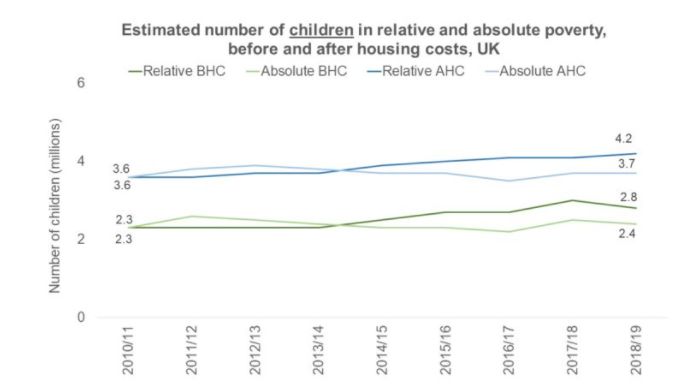
As we revealed on Wednesday, the UK Office for Statistics Regulation (OSR) has written once more to get Johnson to use the right definitions, after he claimed last month that “we are also seeing fewer households now with children in poverty than 10 years ago”. The watchdog pointed out that while this may apply to ‘absolute’ poverty, the figures for relative poverty had got worse.
Most embarrassing to No.10 is that the regulator revealed it had raised this topic privately with the PM’s Downing Street briefing team, and still he kept on making statements that failed to show the full picture. There are clearly lies, damned lies and child poverty statistics.
It may just be down to Johnson’s slapdash nature, or to his failure to shift out of attack mode. Either way, he gives the impression of a PM who just can’t handle the truth. If he’s not careful, over time, the voters may decide on a sacking of their own.

The Bronze Age in the eastern Mediterranean has long been considered by researchers to have been the ‘first international age,’ especially the period from 1600-1200 BC, when powerful empires from Anatolia, Mesopotamia, and Egypt set up large networks of subordinate client kingdoms in the Near East. These empires fought, traded, and corresponded with one another, and ancient texts from the period reveal rich economic and social networks that enabled the movement of people and goods.
A new study conducted by an interdisciplinary team of archaeologists, geneticists, and isotope experts, and published in PLOS ONE, investigated the movement of people in this period at a single regional center, a Bronze Age city-state called Alalakh in present-day southeastern Turkey. Their results indicate that the majority buried at Alalakh were raised locally and descended from people who lived in the region.
The team’s goal was to see if the high levels of interregional connectivity evidenced by the architecture, texts, and artifacts found at the site during 20 years of excavations, sponsored by the Turkish Ministry of Culture and Tourism and Hatay Mustafa Kemal University, could be detected among the population buried at the city.
To do so, they conducted strontium and oxygen isotope analyses on tooth enamel, which can detect whether an individual grew up locally at Alalakh or moved there only during adulthood. The genetic data on the other hand can be used to determine where a person’s recent ancestors came from.
The isotope analysis identified several non-local individuals. However, their DNA showed an ancestry that was local to Alalakh and neighbouring regions. “There are two possible explanations for our findings,” said co-lead author Stefanie Eisenmann from the Max Planck Institute for the Science of Human History. “Either these individuals are short-distance migrants from the region or return-migrants, people whose parents or grandparents originally came from Alalakh.”
Only one sampled individual, an adult woman, was not part of the local gene pool, instead showing ancestry that most closely matched groups in Central Asia. However, her isotopic signatures suggested a local upbringing. “We expected the isotope analysis to show that this person immigrated to Alalakh, since her genetic data was so different from the rest of the population, so we were surprised to see that she was likely native to Alalakh. It could have been her parents or grandparents who made the move, instead,” explained Tara Ingman, the other lead-author of the study from Koç University.
While different types of mobility were identified, including short-distance, long-distance, and return migration, there were no complete foreigners in the dataset. Most people were born and raised at Alalakh and also their ancestors came from the region.
“There are several ways to explain this. It is possible that far less long-distance migrants were living at Alalakh than we had previously thought. Another possibility is that we haven’t found their graves, yet. Perhaps most individuals that came from far away were not buried directly at Alalakh, or in a way we cannot trace,” said Murat Akar, director of the excavations.

Directing a meeting, dialing up an old acquaintance, dictating the perfect tuna salad sandwich across a drive-through window. For business and for pleasure, human beings are in constant communication.
Our proclivity for socialization is lifelong, equally prominent in the lives of adolescents and adults. A recent study determined key differences in the ways that various age groups communicate, as well as one conversational component that stands the test of time: friendship. Specifically, bonds between individuals who identify as female.
Led by former Beckman Institute postdoctoral researchers Michelle Rodrigues and Si On Yoon, an interdisciplinary team evaluated how interlocutors’ age and familiarity with one another impacts a conversation, reviewing the interaction’s overall effectiveness and stress responses generated as a result.
The study, titled “What are friends for? The impact of friendship on communicative efficiency and cortisol response during collaborative problem solving among younger and older women,” was published in the Journal of Women and Aging in May 2021.
Two hypotheses form the foundation of this female-focused study. First, the tend-and-befriend hypothesis, which challenges the traditionally masculine “fight-or-flight” dichotomy.
“Women have evolved an alternative mechanism in response to stress,” said Rodrigues, who is currently an assistant professor in the Department of Social and Cultural Sciences at Marquette University. “In order to deal with stress, women can befriend female peers.”
The team also tested the socio-emotional selectivity hypothesis, which postulates a social “pruning” as humans advance in age and pursue more intimate, higher-quality circles of friends.
The introduction of age as a variable is novel in the field and stems from an interdisciplinary Beckman collaboration.
“I was working with several different groups in several different disciplines, coming from the perspective of studying friendship but having previously done research on adolescent girls, but not older women,” Rodrigues said.
She combined forces with then-Beckman-postdoc Si On Yoon, who was studying the cognitive mechanisms of natural conversation across the lifespan, including healthy younger and older adults.
“My research program was focused on language measures in social interactions, and I was glad to work with Dr. Rodrigues to develop an integrative approach including both language processing and physiological measures to study social interactions,” said Yoon, who is currently an assistant professor in the Department of Communication Sciences and Disorders at the University of Iowa.
The interdisciplinary team merged both theories into a single query: Across women’s lifespans, how are the tendencies to “tend and befriend” as well as socially select reflected in their communication?
They tested a pool of 32 women: 16 “older adults” aged 62-79, and 16 “younger adults” aged 18-25. Each participant was either paired with a friend (a “familiar” conversation partner) or a stranger (“unfamiliar”).
The partnerships underwent a series of conversational challenges, wherein the participant instructed her partner to arrange a set of tangrams in an order that only the former could see. The catch? Each shape was abstract, their appearances purposefully difficult to describe.
“You could look at one [tangram] and say, ‘This looks like a dog.’ Or, you could say, ‘This looks like a triangle, with a stop sign, and a bicycle wheel,'” Rodrigues said.
This exercise helped quantify each conversation’s efficiency: partners who achieved the desired tangram arrangement in fewer words were considered more efficient, and pairs who needed more words to complete the task were considered less efficient.
The researchers found that while the younger adult pairs communicated more efficiently with familiar partners than their older counterparts, they communicated less efficiently with unfamiliar partners; alternatively, the older adults demonstrated conversational dexterity, quickly articulating the abstract tangrams to friends and strangers alike.
“A referential communication task like this requires that you see where the other person is coming from. It seems like the younger adults are a little more hesitant in trying to do that, whereas the older adults have an easier time doing that with strangers,” Rodrigues said.
This was not predicted based on the socio-emotional selectivity hypothesis, which anticipated a correlation between age and social isolation.
“Even though older adults choose to spend more time with people who matter to them, it’s clear that they have the social skills to interact with unfamiliar people if and when they choose to,” Rodrigues said.
Rodrigues’ team also measured salivary cortisol to quantify and compare participants’ stress levels throughout the testing process.
“When you experience something stressful, if you have a stress response system that’s working as it should, the result is an elevated amount of cortisol, our primary stress hormone, which then tells our bodies to release glucose into our bloodstreams,” she said. “That’s reflected in our saliva about 15 to 20 minutes after we experience it. If we see a rise in salivary cortisol from an individual’s baseline levels, that indicates that they are more stressed than they were at the time of the earlier measurements.”
Across both age groups, those working with familiar partners had consistently lower cortisol levels than those working with unfamiliar partners.
“A lot of the research on the tend-and-befriend hypothesis has only focused on young women, so it’s great to have these results that pull that out to the end of life. We can see that friendship has that same effect throughout the lifespan. Familiar partners and friendship buffer stress, and that’s preserved with age,” Rodrigues said.

Proteins have been quietly taking over our lives since the COVID-19 pandemic began. We’ve been living at the whim of the virus’s so-called “spike” protein, which has mutated dozens of times to create increasingly deadly variants. But the truth is, we have always been ruled by proteins. At the cellular level, they’re responsible for pretty much everything.
Proteins are so fundamental that DNA — the genetic material that makes each of us unique — is essentially just a long sequence of protein blueprints. That’s true for animals, plants, fungi, bacteria, archaea, and even viruses. And just as those groups of organisms evolve and change over time, so too do proteins and their component parts.
A new study from University of Illinois researchers, published in Scientific Reports, maps the evolutionary history and interrelationships of protein domains, the subunits of protein molecules, over 3.8 billion years.
“Knowing how and why domains combine in proteins during evolution could help scientists understand and engineer the activity of proteins for medicine and bioengineering applications. For example, these insights could guide disease management, such as making better vaccines from the spike protein of COVID-19 viruses,” says Gustavo Caetano-Anollés, professor in the Department of Crop Sciences, affiliate of the Carl R. Woese Institute for Genomic Biology at Illinois, and senior author on the paper.
Caetano-Anollés has studied the evolution of COVID mutations since the early stages of the pandemic, but that timeline represents a vanishingly tiny fraction of what he and doctoral student Fayez Aziz took on in their current study.
The researchers compiled sequences and structures of millions of protein sequences encoded in hundreds of genomes across all taxonomic groups, including higher organisms and microbes. They focused not on whole proteins, but instead on structural domains.
“Most proteins are made of more than one domain. These are compact structural units, or modules, that harbor specialized functions,” Caetano-Anollés says. “More importantly, they are the units of evolution.”
After sorting proteins into domains to build evolutionary trees, they set to work building a network to understand how domains have developed and been shared across proteins throughout billions of years of evolution.
“We built a time series of networks that describe how domains have accumulated and how proteins have rearranged their domains through evolution. This is the first time such a network of ‘domain organization’ has been studied as an evolutionary chronology,” Fayez Aziz says. “Our survey revealed there is a vast evolving network describing how domains combine with each other in proteins.”
Each link of the network represents a moment when a particular domain was recruited into a protein, typically to perform a new function.
“This fact alone strongly suggests domain recruitment is a powerful force in nature,” Fayez Aziz says. The chronology also revealed which domains contributed important protein functions. For example, the researchers were able to trace the origins of domains responsible for environmental sensing as well as secondary metabolites, or toxins used in bacterial and plant defenses.
The analysis showed domains started to combine early in protein evolution, but there were also periods of explosive network growth. For example, the researchers describe a “big bang” of domain combinations 1.5 billion years ago, coinciding with the rise of multicellular organisms and eukaryotes, organisms with membrane-bound nuclei that include humans.
The existence of biological big bangs is not new. Caetano-Anollés’ team previously reported the massive and early origin of metabolism, and they recently found it again when tracking the history of metabolic networks.
The historical record of a big bang describing the evolutionary patchwork of proteins provides new tools to understand protein makeup.
“This could help identify, for example, why structural variations and genomic recombinations occur often in SARS-CoV-2,” Caetano-Anollés says.
He adds that this new way of understanding proteins could help prevent pandemics by dissecting how virus diseases originate. It could also help mitigate disease by improving vaccine design when outbreaks occur.
The article, “Evolution of networks of protein domain organization,” is published in Scientific Reports. The work was supported by the National Science Foundation and the U.S. Department of Agriculture.
The Department of Crop Sciences is in the College of Agricultural, Consumer and Environmental Sciences at the University of Illinois.

DANIEL LEAL-OLIVAS via Getty Images
Boris Johnson has been formally warned by the UK statistics regulator about his claim that child poverty has fallen over the past decade, HuffPost UK can reveal.
The Office for Statistics Regulation (OSR) has written to Downing Street to raise Johnson’s use of statistics in prime minister’s question time last month.
The PM declared “we are also seeing fewer households now with children in poverty than 10 years ago”.
The OSR said that it had received complaints about the misleading nature of the claim, adding that on some measures child poverty had increased in recent years, not decreased.
“It would help aid public understanding if statements concerning child poverty were clear about which measure is being referred to, particularly where other measures present a different trend,” the watchdog said in its letter to No.10’s head of data science.
Campaigners have long warned that Johnson deliberately makes misleading statements about the poverty statistics.
The Department for Work and Pensions (DWP) uses both relative poverty and absolute poverty measures, before and after housing costs.
Relative poverty covers households which have “less than 60% of contemporary median income”.
Absolute poverty is defined as households which have less than 60% of the median income in 2010/11 “held constant in real terms”.
Relative child poverty after housing costs rose from 3.6m when the Tories took office in 2010 to 4.2m in 2018/19.
But Johnson relies on the “absolute” child poverty measure which has dipped in 2019/20 to fall just below the 2010 figure.
Anna Feuchtwang, Chair of the End Child Poverty campaign and CEO of the National Children’s Bureau, said: “The prime minister’s misuse of child poverty statistics is neither fair or accurate.
“It’s simply not right to play down the misery of families swept into poverty and hide behind different statistical measures when answering difficult questions. The simple fact is that even by the government’s own measures, child poverty is rising and we need urgent action rather than game-playing by policymakers.
“The Office for Statistics Regulation has written to the prime minister again, calling for him to be clear on which measure of child poverty he is using in his statements to parliament.
“We hope this will prompt greater recognition from across government that child poverty is a real and present blight on many young lives.”
A government spokesperson said: “The prime minister was referring to absolute child poverty statistics between 2009/10 and 2019/20.
“These statistics show that the number of children in the UK living in poverty fell both before and after housing costs were taken into consideration.”
In its latest letter, the OSR’s Ed Humpherson suggested that he had decided to issue a fresh warning because the PM had continued to ignore previous attempts to engage with Downing Street.
“Over the last year, a number of concerns have been raised to us regarding the prime minister’s use of statistics on child poverty and in each case, we have brought this to the attention of the briefing team in No.10,” he wrote.
The OSR wrote in a blog: “Measuring poverty is complicated. There is no wrong measure but there is a wrong way of using the available measures – and that is to pick and choose which statistics to use based on what best suits the argument you happen to be making.
“It is important to look at all the data available and set the context when referring to statistics on poverty.”
Earlier this year, the Resolution Foundation forecast that the situation would get even worse, pointing out that higher unemployment and the removal of a £20 uplift in universal credit could lead to 400,000 more children ending up on the breadline, the biggest year-on-year rise in poverty rates since the 1980s.
Here is the letter in full from the UK Office for Statistics Regulation to Laura Gilbert, Director of Data Science, 10 Downing Street:
Dear Laura
Use of official statistics on child poverty in Prime Minister’s Questions
Over the last year, a number of concerns have been raised to us regarding the Prime Minister’s use of statistics on child poverty and in each case, we have brought this to the attention of the briefing team in No.10. Further concerns were raised to us following Prime Minister’s Questions on 26 May, where the Prime Minister said that “We are also seeing fewer households now with children in poverty than 10 years ago.”
As the Office for Statistics Regulation highlighted last year in a blog and more recently in our review of income-based poverty statistics, measuring poverty is complicated and different measures tell different parts of the story.
We are pleased to see some improvement in the way official statistics on child poverty are referred to in these statements. However, it would help aid public understanding if statements concerning child poverty were clear about which measure is being referred to, particularly where other measures present a different trend.
I am copying this letter to Alex Jones, Head of Data and Transformation for 10 Downing Street, and Steve Ellerd-Elliott, Head of Profession for Statistics at the Department for Work and Pensions.
Yours sincerely
Ed Humpherson
Director General for Regulation

The UK’s vaccine committee says winter could see spikes in flu and Covid, putting pressure on the NHS.
Most of the 1,991 cases were people who travelled to London for Scotland’s game with England on 18 June.
