Queen’s Birthday Honours List 2021: All The Celebrities Who’ve Been Recognised

The full list of stars on the Queen’s Birthday Honours list has been revealed, with Great British Bake Off judge Prue Leith, football hero Raheem Sterling and TV personality Robert Rinder among those who have been recognised.

Receiving the top honours of a damehood are Bake Off star Prue and former Strictly Come Dancing judge and legendary choreographer Arlene Phillips.

Musical theatre star and Oscar-nominated actor Jonathan Pryce is also set to receive a knighthood – ahead of his debut as Prince Philip in the fifth series of the royal Netflix drama The Crown.

Gareth Cattermole/David M Bennett/Jeff Spicer/Getty

Prue Leith, Arlene Phillips and Jonathan Pryce

Footballer Raheem Sterling is set to receive an MBE this year, for his work to promote racial equality in sport, with his England teammate Jordan Henderson also getting the same honour.

Also receiving MBEs are TV personality Robert Rinder – who has made the list alongside his mum, Angela Cohen – radio presenter Simon Mayo, actor Ruth Wilson and singers Alison Moyet and Engelbert Humperdinck.

Patrick Elmont/UEFA/Getty/David M Bennett/Harry Herd

Raheem Sterling, Robert Rinder and Alison Moyet

Several public figures will also receive CBEs, including TV presenter Sue Barker and singer Lulu.

Artist Edmund de Waal, Yes musician Rick Wakeman and former England manager Roy Hodgson are also among those who have been awarded CBEs.

Tristan Fewings/Cameron Spencer/John Walton/PA Images/Getty

Edmund de Waal, Lulu and Sue Barker

It’s also been confirmed that rock singer Skin and children’s author David Almond will receive OBEs.

As well as public figures and celebrities, it’s also been noted that those who came together to prepare thousands of meals for key workers during the pandemic have been rewarded for their efforts in the Queen’s Birthday Honours list.

Members of the scientific community have also been recognised for pulling together to combat coronavirus.

It’s been reported that this year’s Birthday Honours list is the most diverse to date, both in terms of gender and race.

Share Button

13 Striking Photos You Missed This Week

During the ever-changing news cycle, it’s easy to miss captivating images that fly under the radar. Fortunately, we’ve got you covered.

We’re highlighting exceptional photos from around the world this past week.

Check them out below.

Above: In this photo provided by NASA, a partial solar eclipse is seen as the sun rises to the left of the US Capitol in Washington on June 10, as seen from Arlington, Virginia. 

BEN STANSALL/AFP via Getty Images

Activists put the finishing touches to a sand drawing of the G-7 leaders and calling on them to share the vaccine and waive the patents on Watergate Bay beach near Newquay, Cornwall, on June 10, ahead of the three-day G-7 summit. Leaders from Canada, France, Germany, Italy, Japan, the U.K. and the United States meet this weekend for the first time in nearly two years, for the three-day talks in Carbis Bay, Cornwall.

Eugene Garcia via AP

A pair of migrant families from Brazil pass through a gap in the border wall between Mexico and Yuma, Arizona, on June 10, to seek asylum. The families are part of an influx of asylum-seekers entering the US in the Yuma area from South America and elsewhere. 

Phil Noble via AP

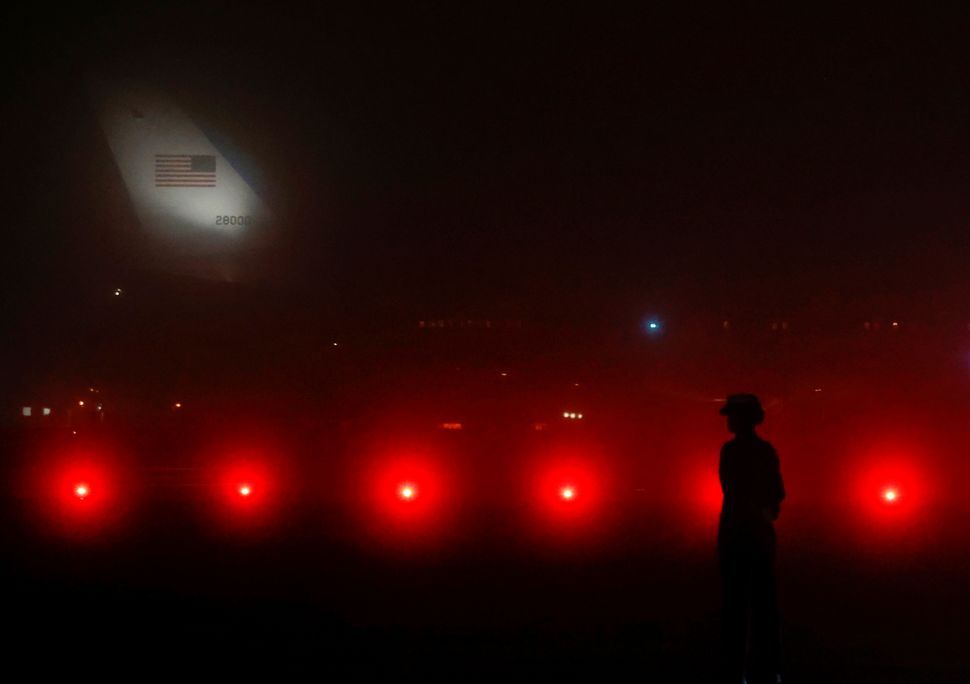
Military personnel wait as President Joe Biden and first lady Jill Biden arrive on Air Force One at Cornwall Airport Newquay, near Newquay, England, ahead of the G-7 summit in Cornwall on June 9.

Hadi Mizban via AP

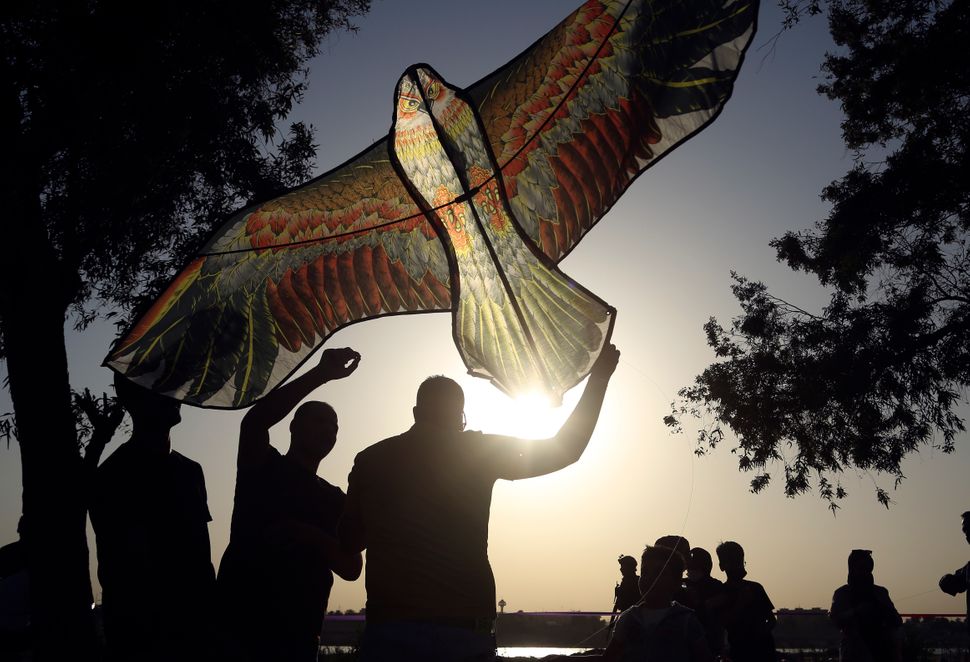
People take part in the Baghdad Kite Festival in Baghdad, Iraq, on June 5. 

Ben Curtis via AP

Abeba Gebru, 37, from the village of Getskimilesley in Ethiopia, holds the hands of her malnourished daughter, Tigsti Mahderekal, 20 days old, in the treatment tent of a medical clinic in the town of Abi Adi, in the Tigray region of northern Ethiopia, on May 11. She had the baby at home and walked 12 days to get the famished child to a clinic. “She survived because I held her close to my womb and kept hiding during the exhausting journey.” 

Kemal Aslan via AP

A man relaxes on a canoe at the Caddebostan shore, on the Asian side of Istanbul, Tuesday, June 8, surrounded by a huge mass of marine mucilage, a thick, slimy substance made up of compounds released by marine organisms, in Turkey’s Marmara Sea. Turkey’s president has promised to rescue the Marmara Sea from an outbreak of “sea snot” that is alarming marine biologists and environmentalists. Turkish President Recep Tayyip Erdogan said untreated waste dumped into the Marmara Sea and climate change had caused the bloom of the thick, slimy substance made up of compounds released by marine organisms.

RANEEN SAWAFTA via REUTERS

Relatives of Palestinian security officer Adham Alioh, who was killed by Israeli forces, mourn during his funeral in Nablus in the Israeli-occupied West Bank June 10. 

ANNEGRET HILSE via REUTERS

The German Athletics Championships in Braunschweig on June 5 feature Rebekka Hasse in the women’s 100 meter semi-final 

Patrick Semansky via AP

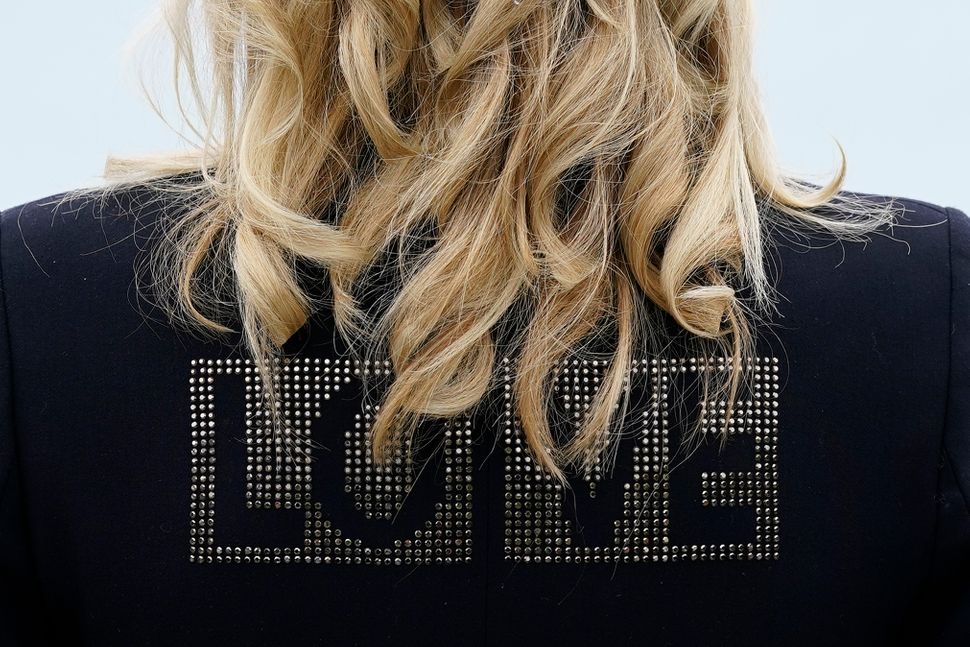
First lady Jill Biden turns around to show the word “love” on the back of her jacket as she speaks with reporters after visiting with Carrie Johnson, wife of British Prime Minister Boris Johnson, ahead of the G-7 summit, Thursday, June 10, in Carbis Bay, England. 

EMILY IRVING-SWIFT/AFP via Getty Images

Divers taking part in a project to document shipwrecks in Cyprus with 360-degree images to promote the Mediterranean island as a dive destination for tourists take photos of the Lef1 shipwreck off the coast of Larnaca on June 8. LEF1, a 50-foot vessel, was sunk on Dec. 10, 2019, to a depth of around 50 feet. It is one of several sunken vessels in artificial reefs to promote marine life in the area.

SAEED KHAN/AFP via Getty Images

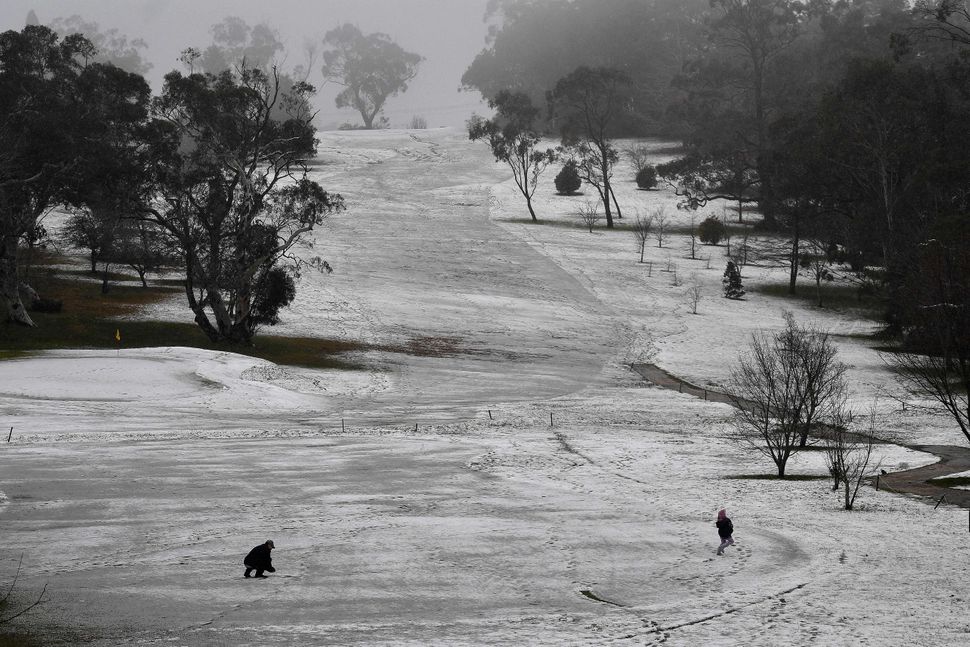
This picture taken on June 10 shows a family enjoying the first snowfall of the season at a golf course in the Blue Mountains of Australia. 

CHANDAN KHANNA/AFP via Getty Images

Former world welterweight king Floyd Mayweather (R) and YouTube personality Logan Paul fight in an eight-round exhibition bout at Hard Rock Stadium in Miami on June 6. Mayweather, who weighed in at 155 pounds, dominated his 190-pound opponent, much to the delight of a substantial crowd at the home of the Miami Dolphins. 

Michael Probst via AP

People walk on the pier at the Baltic Sea in Scharbeutz, Germany, as the sun rises Monday, June 7.

Share Button

Brain areas involved in seeking information about bad possibilities

The term “doomscrolling” describes the act of endlessly scrolling through bad news on social media and reading every worrisome tidbit that pops up, a habit that unfortunately seems to have become common during the COVID-19 pandemic.

The biology of our brains may play a role in that. Researchers at Washington University School of Medicine in St. Louis have identified specific areas and cells in the brain that become active when an individual is faced with the choice to learn or hide from information about an unwanted aversive event the individual likely has no power to prevent.

The findings, published June 11 in Neuron, could shed light on the processes underlying psychiatric conditions such as obsessive-compulsive disorder and anxiety — not to mention how all of us cope with the deluge of information that is a feature of modern life.

“People’s brains aren’t well equipped to deal with the information age,” said senior author Ilya Monosov, PhD, an associate professor of neuroscience, of neurosurgery and of biomedical engineering. “People are constantly checking, checking, checking for news, and some of that checking is totally unhelpful. Our modern lifestyles could be resculpting the circuits in our brain that have evolved over millions of years to help us survive in an uncertain and ever-changing world.”

In 2019, studying monkeys, Monosov laboratory members J. Kael White, PhD, then a graduate student, and senior scientist Ethan S. Bromberg-Martin, PhD, identified two brain areas involved in tracking uncertainty about positively anticipated events, such as rewards. Activity in those areas drove the monkeys’ motivation to find information about good things that may happen.

But it wasn’t clear whether the same circuits were involved in seeking information about negatively anticipated events, like punishments. After all, most people want to know whether, for example, a bet on a horse race is likely to pay off big. Not so for bad news.

“In the clinic, when you give some patients the opportunity to get a genetic test to find out if they have, for example, Huntington’s disease, some people will go ahead and get the test as soon as they can, while other people will refuse to be tested until symptoms occur,” Monosov said. “Clinicians see information-seeking behavior in some people and dread behavior in others.”

To find the neural circuits involved in deciding whether to seek information about unwelcome possibilities, first author Ahmad Jezzini, PhD, and Monosov taught two monkeys to recognize when something unpleasant might be headed their way. They trained the monkeys to recognize symbols that indicated they might be about to get an irritating puff of air to the face. For example, the monkeys first were shown one symbol that told them a puff might be coming but with varying degrees of certainty. A few seconds after the first symbol was shown, a second symbol was shown that resolved the animals’ uncertainty. It told the monkeys that the puff was definitely coming, or it wasn’t.

The researchers measured whether the animals wanted to know what was going to happen by whether they watched for the second signal or averted their eyes or, in separate experiments, letting the monkeys choose among different symbols and their outcomes.

Much like people, the two monkeys had different attitudes toward bad news: One wanted to know; the other preferred not to. The difference in their attitudes toward bad news was striking because they were of like mind when it came to good news. When they were given the option of finding out whether they were about to receive something they liked — a drop of juice — they both consistently chose to find out.

“We found that attitudes toward seeking information about negative events can go both ways, even between animals that have the same attitude about positive rewarding events,” said Jezzini, who is an instructor in neuroscience. “To us, that was a sign that the two attitudes may be guided by different neural processes.”

By precisely measuring neural activity in the brain while the monkeys were faced with these choices, the researchers identified one brain area, the anterior cingulate cortex, that encodes information about attitudes toward good and bad possibilities separately. They found a second brain area, the ventrolateral prefrontal cortex, that contains individual cells whose activity reflects the monkeys’ overall attitudes: yes for info on either good or bad possibilities vs. yes for intel on good possibilities only.

Understanding the neural circuits underlying uncertainty is a step toward better therapies for people with conditions such as anxiety and obsessive-compulsive disorder, which involve an inability to tolerate uncertainty.

“We started this study because we wanted to know how the brain encodes our desire to know what our future has in store for us,” Monosov said. “We’re living in a world our brains didn’t evolve for. The constant availability of information is a new challenge for us to deal with. I think understanding the mechanisms of information seeking is quite important for society and for mental health at a population level.”

Share Button

An omega-3 that’s poison for tumors

So-called “good fatty acids” are essential for human health and much sought after by those who try to eat healthily. Among the Omega-3 fatty acids, DHA or docosahexaenoic acid is crucial to brain function, vision and the regulation of inflammatory phenomena.

In addition to these virtues, DHA is also associated with a reduction in the incidence of cancer. How it works is the subject of a major discovery by a multidisciplinary team of University of Louvain (UCLouvain) researchers, who have just elucidated the biochemical mechanism that allows DHA and other related fatty acids to slow the development of tumours. This is a major advance that has recently been published in the journal Cell Metabolism.

Key to the discovery: interdisciplinarity

In 2016, Olivier Feron’s UCLouvain team, which specialises in oncology, discovered that cells in an acidic microenvironment (acidosis) within tumours replace glucose with lipids as an energy source in order to multiply. In collaboration with UCLouvain’s Cyril Corbet, Prof. Feron demonstrated in 2020 that these same cells are the most aggressive and acquire the ability to leave the original tumour to generate metastases. Meanwhile, Yvan Larondelle, a professor in the UCLouvain Faculty of Bioengineering, whose team is developing improved dietary lipid sources, proposed to Prof. Feron that they combine their skills in a research project, led by PhD candidate Emeline Dierge, to evaluate the behaviour of tumour cells in the presence of different fatty acids.

Thanks to the support of the Fondation Louvain, the Belgian Cancer Foundation and the Télévie telethon, the team quickly identified that these acidotic tumour cells responded in diametrically opposite ways depending on the fatty acid they were absorbing. Within a few weeks, the results were both impressive and surprising. “We soon found that certain fatty acids stimulated the tumour cells while others killed them,” the researchers explained. DHA literally poisons them.

A fatal overload

The poison acts on tumour cells via a phenomenon called ferroptosis, a type of cell death linked to the peroxidation of certain fatty acids. The greater the amount of unsaturated fatty acids in the cell, the greater the risk of their oxidation. Normally, in the acidic compartment within tumours, cells store these fatty acids in lipid droplets, a kind of bundle in which fatty acids are protected from oxidation. But in the presence of a large amount of DHA, the tumour cell is overwhelmed and cannot store the DHA, which oxidises and leads to cell death. By using a lipid metabolism inhibitor that prevents the formation of lipid droplets, researchers were able to observe that this phenomenon is further amplified, which confirms the identified mechanism and opens the door to combined treatment possibilities.

For their study, UCLouvain researchers used a 3D tumour cell culture system, called spheroids. In the presence of DHA, spheroids first grow and then implode. The team also administered a DHA-enriched diet to mice with tumours. The result: tumour development was significantly slowed compared to that in mice on a conventional diet.

This UCLouvain study shows the value of DHA in fighting cancer. “For an adult,” the UCLouvain researchers stated, “it’s recommended to consume at least 250 mg of DHA per day. But studies show that our diet provides on average only 50 to 100 mg per day. This is well below the minimum recommended intake.”

Story Source:

Materials provided by Université catholique de Louvain. Note: Content may be edited for style and length.

Share Button

Emmanuel Macron Wants His Own ‘Special Relationship’ With Joe Biden

Boris Johnson this week confirmed that he doesn’t like to call the UK and United States’ close ties the “special relationship”, believing it makes Britain look “needy”.

But it appears Emmanuel Macron has no such concerns.

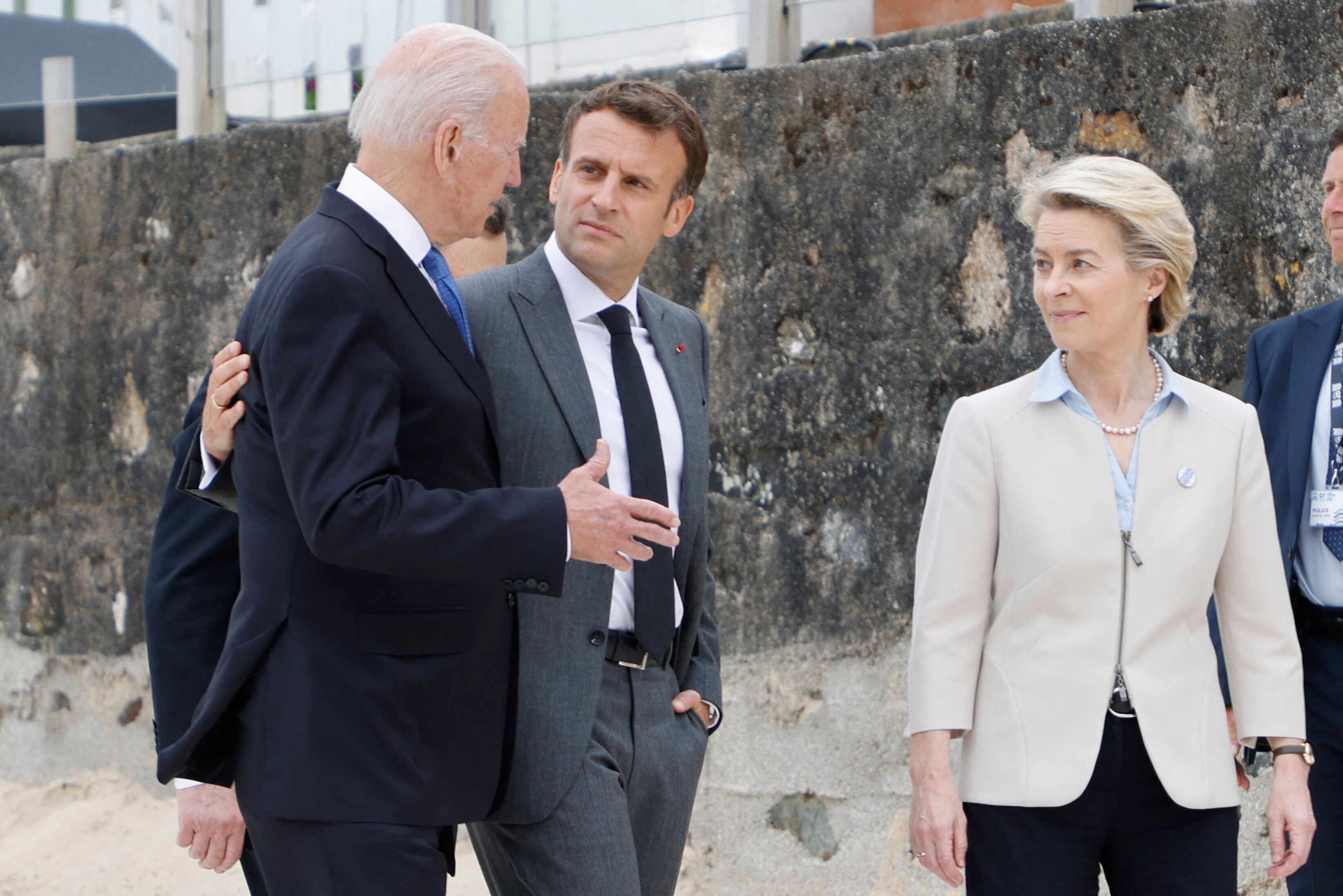
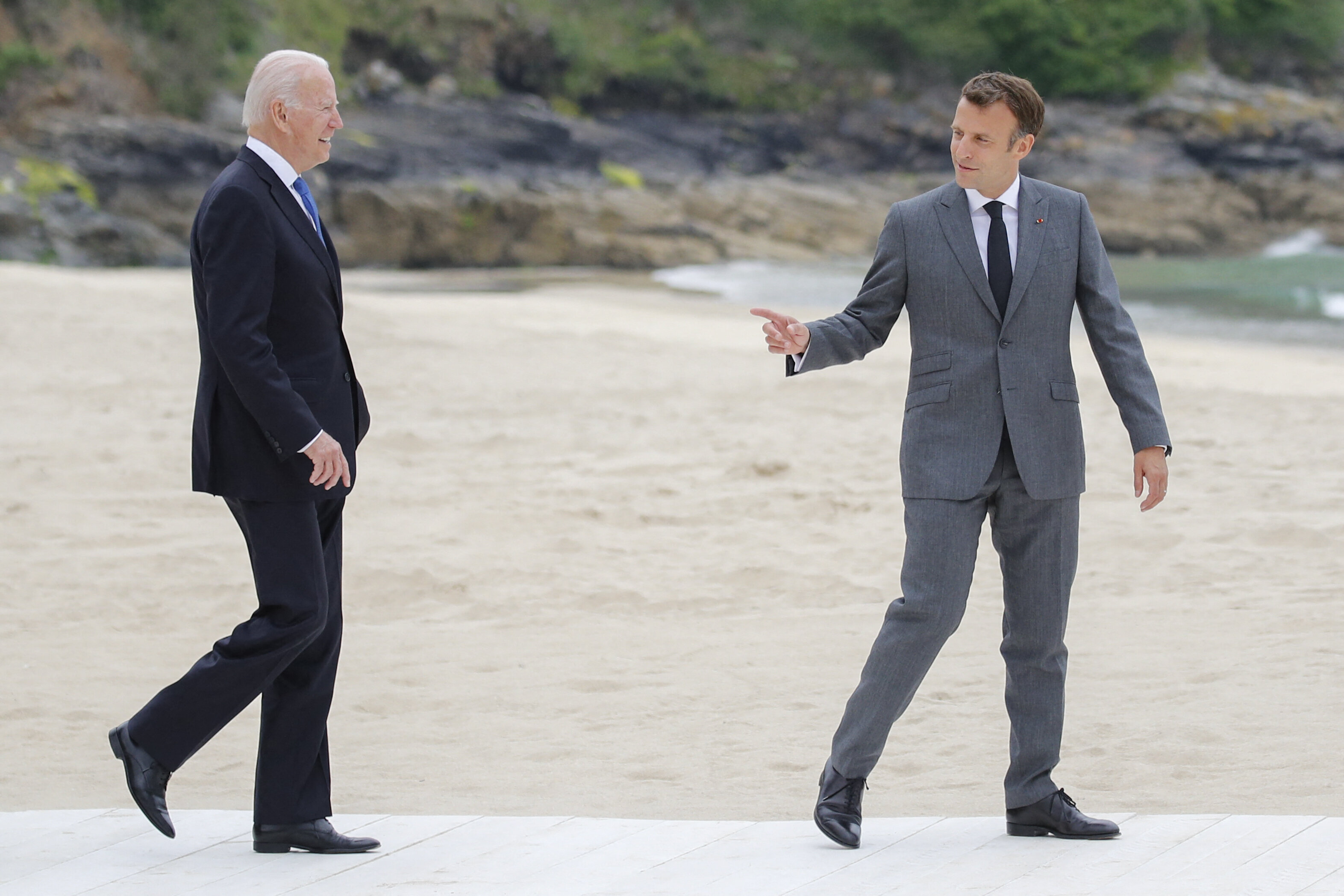
After the G7 summit got underway with an awkward “family photo” on the beach, the French president made a beeline for Joe Biden, throwing his arm around the American’s shoulders and beginning an animated discussion

The Frenchman’s remarks were inaudible, but Johnson – who was out ahead of the pair after Angela Merkel told him “you are the leader” – will be hoping Macron was not trying to lobby Biden on the Brexit sausage war that is threatening to overshadow the G7 meeting.

PHIL NOBLE via Getty Images

French president Emmanuel Macron (right) greets US president Joe Biden at the G7 summit

LUDOVIC MARIN via Getty Images

Macron was flanked by European Commission president Ursula von der Leyen

PATRICK SEMANSKY via Getty Images

The vignette was one of several moments in which G7 leaders appeared uneasy at their first face-to-face meeting since the start of the Covid pandemic.

Biden at one point tried to break the tension, joking “everybody in the water” after leaders and their spouses were greeted with elbow bumps from Boris and Carrie Johnson on the beach at Carbis Bay in Cornwall.

After strolling down a lengthy walkway to the seafront, Jill Biden meanwhile joked that “I feel like we are at a wedding” while Johnson later agreed that it was like “walking down the aisle”.

Leaders then struggled to create any kind of bonhomie as they stood two metres apart for a family photo.

As the talks finally got underway inside around a familiar circular table, Johnson bemoaned the carefully choreographed photo op as a “media circus”.

“This is meant to be a fireside chat between the great democracies of the world,” the PM complained.

In an unusual move for Johnson, he also suggested the G7 should support a more “feminine” economic recovery.

The PM said the citizens of G7 nations “want us to be sure that we are beating the pandemic together and discussing how we will never have a repeat of what we have seen”.

“But also that we are building back better together and building back greener and building back fairer and building back more equal and… in a more gender neutral and perhaps a more feminine way.”

Johnson also appeared to criticise his own Conservative Party for the way it handled the recovery from the 2008 financial crash by taking power in 2010 and embarking on a programme of austerity.

He said the G7 economies had the potential to “bounce back very strongly” from Covid.

“But it is vital that we don’t repeat the mistake of the last great crisis, the last great economic recession of 2008 when the recovery was not uniform across all parts of society,” the PM said.

There was a risk the pandemic could leave a “lasting scar” as “inequalities may be entrenched”, Johnson said.

“We need to make sure that as we recover, we level up across our societies and we build back better,” he added.

Share Button

Covid: Unvaccinated most at risk from Delta variant

There have been nearly 30,000 new cases of the variant in the UK in the past week.

Share Button

Fashion for pointy shoes unleashed plague of bunions in medieval Britain

The British have suffered for their fashion for centuries according to a new study suggesting that a vogue for shoes with a pointed tip led to a sharp increase in hallux valgus of the big toe — often called bunions — in the late medieval period.

Researchers investigating remains in Cambridge, UK, found that those buried in the town centre, particularly in plots for wealthier citizens and clergy, were much more likely to have had bunions — suggesting rich urbanites paid a higher price for their footwear in more ways than one.

A University of Cambridge team also discovered that older medieval people with hallux valgus were significantly more likely to have sustained a broken bone from a probable fall compared to those of a similar age with normal feet.

Hallux valgus is a minor deformity in which the largest toe becomes angled outward and a bony protrusion forms at its base, on the inside of the foot.

While various factors can predispose someone to bunions, from genetics to muscle imbalance, by far the most common contemporary cause is constrictive boots and shoes. The condition is often associated with wearing high heels.

Archaeologists analysed 177 skeletons from cemeteries in and around the city of Cambridge and found that only 6% of individuals buried between 11th and 13th centuries had evidence of the affliction. However, 27% of those dating from the 14th and 15th centuries had been hobbled by longstanding hallux valgus.

Researchers point out that shoe style changed significantly during the 14th century: shifting from a functional rounded toe box to a lengthy and more elegant pointed tip.

In a paper published today in the International Journal of Paleopathology, the team from Cambridge University’s After the Plague project argues that these “poulaine” shoes drove the rise of bunions in medieval Britain.

“The 14th century brought an abundance of new styles of dress and footwear in a wide range of fabrics and colours. Among these fashion trends were pointed long-toed shoes called poulaines,” said study co-author Dr Piers Mitchell from Cambridge’s Department of Archaeology.

“The remains of shoes excavated in places like London and Cambridge suggest that by the late 14th century almost every type of shoe was at least slightly pointed — a style common among both adults and children alike.”

“We investigated the changes that occurred between the high and late medieval periods, and realized that the increase in hallux valgus over time must have been due to the introduction of these new footwear styles,” said Mitchell.

First author Dr Jenna Dittmar, who conducted the work while at Cambridge, said: “We think of bunions as being a modern problem but this work shows it was actually one of the more common conditions to have affected medieval adults.”

The remains came from four separate sites around Cambridge: a charitable hospital (now part of St John’s College); the grounds of a former Augustinian friary, where clergy and wealthy benefactors were buried; a local parish graveyard on what was the edge of town; and a rural burial site by a village 6km south of Cambridge.

Researchers conducted “paleopathological assessments,” including inspecting foot bones for the bump by the big toe that is the hallmark of hallux valgus.

They found a sliding scale of bunion prevalence linked to the wealth of those interred on each site. Only 3% of the rural cemetery showed signs, 10% of the parish graveyard (which mainly held the working poor), creeping up to 23% of those on the hospital site.

Yet almost half those buried in the friary — some 43% — including five of the eleven individuals identified as clergy by their belt buckles, carried the mark of the bunion.

“Rules for the attire of Augustinian friars included footwear that was ‘black and fastened by a thong at the ankle’, commensurate with a lifestyle of worship and poverty,” said Mitchell.

“However, in the 13th and 14th centuries it was increasingly common for those in clerical orders in Britain to wear stylish clothes — a cause for concern among high-ranking church officials.”

In 1215, the church forbade clergy from wearing pointed-toed shoes. This may have done little to curb the trend, as numerous further decrees on indiscretions in clerical dress had to be passed, most notably in 1281 and 1342.

“The adoption of fashionable garments by the clergy was so common it spurred criticism in contemporary literature, as seen in Chaucer’s depiction of the monk in the Canterbury Tales,” said Mitchell.

Across late medieval society the pointiness of shoes became so extreme that in 1463 King Edward IV passed a law limiting toe-point length to less than two inches within London.

The majority of remains with signs of hallux valgus across all sites and eras within the study were men (20 of the 31 total bunion sufferers). The research also suggests that health costs of foot fashion were not limited to bunions.

Dr Jenna Dittmar found that skeletal remains with hallux valgus were also more likely to show signs of fractures that usually result from a fall e.g. those to upper limbs indicating an individual tumbled forward onto outstretched arms.

This association was only found to be significant among those who died over 45 year old, suggesting youthful fashion choices came back to haunt the middle-aged even in medieval times.

“Modern clinical research on patients with hallux valgus has shown that the deformity makes it harder to balance, and increases the risk of falls in older people,” said Dittmar. “This would explain the higher number of healed broken bones we found in medieval skeletons with this condition.”

Share Button

Astronomers spot a ‘blinking giant’ near the center of the Galaxy

Astronomers have spotted a giant ‘blinking’ star towards the centre of the Milky Way, more than 25,000 light years away.

An international team of astronomers observed the star, VVV-WIT-08, decreasing in brightness by a factor of 30, so that it nearly disappeared from the sky. While many stars change in brightness because they pulsate or are eclipsed by another star in a binary system, it’s exceptionally rare for a star to become fainter over a period of several months and then brighten again.

The researchers believe that VVV-WIT-08 may belong to a new class of ‘blinking giant’ binary star system, where a giant star — 100 times larger than the Sun — is eclipsed once every few decades by an as-yet unseen orbital companion. The companion, which may be another star or a planet, is surrounded by an opaque disc, which covers the giant star, causing it to disappear and reappear in the sky. The study is published in Monthly Notices of the Royal Astronomical Society.

The discovery was led by Dr Leigh Smith from Cambridge’s Institute of Astronomy, working with scientists at the University of Edinburgh, the University of Hertfordshire, the University of Warsaw in Poland and Universidad Andres Bello in Chile.

“It’s amazing that we just observed a dark, large and elongated object pass between us and the distant star and we can only speculate what its origin is,” said co-author Dr Sergey Koposov from the University of Edinburgh.

Since the star is located in a dense region of the Milky Way, the researchers considered whether some unknown dark object could have simply drifted in front of the giant star by chance. However, simulations showed that there would have to be an implausibly large number of dark bodies floating around the Galaxy for this scenario to be likely.

One other star system of this sort has been known for a long time. The giant star Epsilon Aurigae is partly eclipsed by a huge disc of dust every 27 years, but only dims by about 50%. A second example, TYC 2505-672-1, was found a few years ago, and holds the current record for the eclipsing binary star system with the longest orbital period — 69 years — a record for which VVV-WIT-08 is currently a contender.

The UK-based team has also found two more of these peculiar giant stars in addition to VVV-WIT-08, suggesting that these may be a new class of ‘blinking giant’ stars for astronomers to investigate.

VVV-WIT-08 was found by the VISTA Variables in the Via Lactea survey (VVV), a project using the British-built VISTA telescope in Chile and operated by the European Southern Observatory, that has been observing the same one billion stars for nearly a decade to search for examples with varying brightness in the infrared part of the spectrum.

Project co-leader Professor Philip Lucas from the University of Hertfordshire said, “Occasionally we find variable stars that don’t fit into any established category, which we call ‘what-is-this?’, or ‘WIT’ objects. We really don’t know how these blinking giants came to be. It’s exciting to see such discoveries from VVV after so many years planning and gathering the data.”

While VVV-WIT-08 was discovered using VVV data, the dimming of the star was also observed by the Optical Gravitational Lensing Experiment (OGLE), a long-running observation campaign run by the University of Warsaw. OGLE makes more frequent observations, but closer to the visible part of the spectrum. These frequent observations were key for modelling VVV-WIT-08, and they showed that the giant star dimmed by the same amount in both the visible and infrared light.

There now appear to be around half a dozen potential known star systems of this type, containing giant stars and large opaque discs. “There are certainly more to be found, but the challenge now is in figuring out what the hidden companions are, and how they came to be surrounded by discs, despite orbiting so far from the giant star,” said Smith. “In doing so, we might learn something new about how these kinds of systems evolve.”

Share Button

Star’s death will play a mean pinball with rhythmic planets

Four planets locked in a perfect rhythm around a nearby star are destined to be pinballed around their solar system when their sun eventually dies, according to a study led by the University of Warwick that peers into its future.

Astronomers have modelled how the change in gravitational forces in the system as a result of the star becoming a white dwarf will cause its planets to fly loose from their orbits and bounce off each other’s gravity, like balls bouncing off a bumper in a game of pinball.

In the process, they will knock nearby debris into their dying sun, offering scientists new insight into how the white dwarfs with polluted atmospheres that we see today originally evolved. The conclusions by astronomers from the University of Warwick and the University of Exeter are published in the Monthly Notices of the Royal Astronomical Society.

The HR 8799 system is 135 light years away and comprises a 30-40 million year-old A type star and four unusually massive planets, all over five times the mass of Jupiter, orbiting very close to each other. The system also contains two debris discs, inside the orbit of the innermost planet and another outside the outermost. Recent research has shown that the four planets are locked in a perfect rhythm that sees each one completing double the orbit of its neighbour: so for every orbit the furthest completes, the next closest completes two, the next completes four, while the closest completes eight.

The team from Warwick and Exeter decided to learn the ultimate fate of the system by creating a model that allowed them to play ‘planetary pinball’ with the planets, investigating what may cause the perfect rhythm to destabilise.

They determined that the resonance that locks the four planets is likely to hold firm for the next 3 billion years, despite the effects of Galactic tides and close flybys of other stars. However, it always breaks once the star enters the phase in which it becomes a red giant, when it will expand to several hundred times its current size and eject nearly half its mass, ending up as a white dwarf.

The planets will then start to pinball and become a highly chaotic system where their movements become very uncertain. Even changing a planet’s position by a centimetre at the start of the process can dramatically change the outcome.

Lead author Dr Dimitri Veras from the University of Warwick Department of Physics said: “The planets will gravitationally scatter off of one another. In one case, the innermost planet could be ejected from the system. Or, in another case, the third planet may be ejected. Or the second and fourth planets could switch positions. Any combination is possible just with little tweaks.

“They are so big and so close to each other the only thing that’s keeping them in this perfect rhythm right now is the locations of their orbits. All four are connected in this chain. As soon as the star loses mass their locations will deviate, then two of them will scatter off one another, causing a chain reaction amongst all four.”

Dr Veras was supported by an Ernest Rutherford Fellowship from the Science and Technology Facilities Council, part of UK Research and Innovation.

Regardless of the precise movements of the planets, one thing that the team is certain of is that the planets will move around enough to dislodge material from the system’s debris discs into the atmosphere of the star. It is this type of debris that astronomers are analysing today to discover the histories of other white dwarf systems.

Dr Veras adds: “These planets move around the white dwarf at different locations and can easily kick whatever debris is still there into the white dwarf, polluting it.

“The HR 8799 planetary system represents a foretaste of the polluted white dwarf systems that we see today. It’s a demonstration of the value of computing the fates of planetary systems, rather than just looking at their formation.”

Co-author Professor Sasha Hinkley of the University of Exeter said: “The HR 8799 system has been so iconic for exoplanetary science since its discovery nearly 13 years ago, and so it is fascinating to see into the future, and watch it evolve from a harmonious collection of planets into a chaotic scene.”

Story Source:

Materials provided by University of Warwick. Note: Content may be edited for style and length.

Share Button

UK to donate more than 100m surplus vaccine doses, says PM

Boris Johnson says the donations to countries in need will begin within weeks.

Share Button