A five-month-old becomes the first person in England to get a drug with a list price of £1.79m.


A five-month-old becomes the first person in England to get a drug with a list price of £1.79m.

While it is widely accepted that climate change drove the evolution of our species in Africa, the exact character of that climate change and its impacts are not well understood. Glacial-interglacial cycles strongly impact patterns of climate change in many parts of the world, and were also assumed to regulate environmental changes in Africa during the critical period of human evolution over the last ~1 million years. The ecosystem changes driven by these glacial cycles are thought to have stimulated the evolution and dispersal of early humans.
A paper published in Proceedings of the National Academy of Sciences (PNAS) this week challenges this view. Dr. Kaboth-Bahr and an international group of multidisciplinary collaborators identified ancient El Niño-like weather patterns as the drivers of major climate changes in Africa. This allowed the group to re-evaluate the existing climatic framework of human evolution.
Walking with the rain
Dr. Kaboth-Bahr and her colleagues integrated 11 climate archives from all across Africa covering the past 620 thousand years to generate a comprehensive spatial picture of when and where wet or dry conditions prevailed over the continent. “We were surprised to find a distinct climatic east-west ‘seesaw’ very akin to the pattern produced by the weather phenomena of El Niño, that today profoundly influences precipitation distribution in Africa,” explains Dr. Kaboth-Bahr, who led the study.
The authors infer that the effects of the tropical Pacific Ocean on the so-called “Walker Circulation” — a belt of convection cells along the equator that impact the rainfall and aridity of the tropics — were the prime driver of this climate seesaw. The data clearly shows that the wet and dry regions shifted between the east and west of the African continent on timescales of approximately 100,000 years, with each of the climatic shifts being accompanied by major turnovers in flora and mammal fauna.
“This alternation between dry and wet periods appeared to have governed the dispersion and evolution of vegetation as well as mammals in eastern and western Africa,” explains Dr. Kaboth-Bahr. “The resultant environmental patchwork was likely to have been a critical component of human evolution and early demography as well.”
The scientists are keen to point that although climate change was certainly not the sole factor driving early human evolution, the new study nevertheless provides a novel perspective on the tight link between environmental fluctuations and the origin of our early ancestors.
“We see many species of pan-African mammals whose distributions match the patterns we identify, and whose evolutionary history seems to articulate with the wet-dry oscillations between eastern and western Africa,” adds Dr. Eleanor Scerri, one of the co-authors and an evolutionary archaeologist at the Max Planck Institute for the Science of Human History in Germany. “These animals preserve the signals of the environments that humans evolved in, and it seems likely that our human ancestors may have been similarly subdivided across Africa as they were subject to the same environmental pressures.”
Ecotones: the transitional regions between different ecological zones
The scientists’ work suggests that a seesaw-like pattern of rainfall alternating between eastern and western Africa probably had the effect of creating critically important ecotonal regions — the buffer zones between different ecological zones, such grassland and forest.
“Ecotones provided diverse, resource-rich and stable environmental settings thought to have been important to early modern humans,” adds Dr. Kaboth-Bahr. “They certainly seem to have been important to other faunal communities.”
To the scientists, this suggests that Africa’s interior regions may have been critically important for fostering long-term population continuity. “We see the archaeological signatures of early members of our species all across Africa,” says Dr. Scerri, “but innovations come and go and are often re-invented, suggesting that our deep population history saw a constant saw-tooth like pattern of local population growth and collapse. Ecotonal regions may have provided areas for longer term population continuity, ensuring that the larger human population kept going, even if local populations often went extinct.”
“Re-evaluating these patterns of stasis, change and extinction through a new climatic framework will yield new insights into the deep human past,” says Dr. Kaboth Bahr. “This does not mean that people were helpless in the face of climatic changes, but shifting habitat availability would certainly have impacted patterns of demography, and ultimately the genetic exchanges that underpin human evolution.”

By including multi-ethnic participants, a large scale genetic study has identified more regions of the genome linked to type 2 diabetes-related traits than if the research had been conducted in Europeans alone.
The international MAGIC collaboration, made up of more than 400 global academics, conducted a genome-wide association meta-analysis led by the University of Exeter. Now published in Nature Genetics, their findings demonstrate that expanding research into different ancestries yields more and better results, as well as ultimately benefitting global patient care.
Up to now, nearly 87 per cent of genomic research of this type has been conducted in Europeans. This means that the way these findings are implemented may not optimally benefit people from non-European ancestries.
The team analysed data across a wide range of cohorts, encompassing more than 280,000 people without diabetes. Researchers looked at glycaemic traits, which are used to diagnose diabetes and monitor sugar and insulin levels in the blood.
The researchers incorporated 30 percent of the overall cohort with individuals of East Asian, Hispanic, African-American, South Asian and sub-Saharan African origin. By doing so, they discovered 24 more loci — or regions of the genome -linked to glycaemic traits than if they had conducted the research in Europeans alone.
Professor Inês Barroso, of the University of Exeter, who led the research, said: “Type 2 diabetes is an increasingly huge global health challenge- with most of the biggest increases occurring outside of Europe. While there are a lot of shared genetic factors between different countries and cultures, our research tells us that they do differ, in ways that we need to understand. It’s critical to ensuring we can deliver a precision diabetes medicine approach that optimises treatment and care for everyone.”
First author Dr Ji Chen, of the University of Exeter, said: “We discovered 24 additional regions of the genome by including cohorts which were more ethnically diverse than we would have done if we’d restricted our work to Europeans. Beyond the moral arguments for ensuring research is reflective of global populations, our work demonstrates that this approach generates better results.”
The team found that though some loci were not detected in all ancestries, they were still useful to capture information about the glycaemic trait in that ancestry. Co-author Cassandra Spracklen, Assistant Professor at the University of Massachusetts-Amherst, said: “Our findings matter because we’re moving towards using genetic scores to weigh up a person’s risk of diabetes. We know that scores developed exclusively in individuals of one ancestry don’t work well in people of a different ancestry. This is important as increasingly healthcare is moving towards a more precise approach. Failing to account for genetic variation according to ancestry will impact our ability to accurately diagnose diabetes.”
Story Source:
Materials provided by University of Exeter. Note: Content may be edited for style and length.

Between 1991 and 2018, more than a third of all deaths in which heat played a role were attributable to human-induced global warming, according to a new article in Nature Climate Change.
The study, the largest of its kind, was led by the London School of Hygiene & Tropical Medicine (LSHTM) and the University of Bern within the Multi-Country Multi-City (MCC) Collaborative Research Network. Using data from 732 locations in 43 countries around the world it shows for the first time the actual contribution of human-made climate change in increasing mortality risks due to heat.
Overall, the estimates show that 37% of all heat-related deaths in the recent summer periods were attributable to the warming of the planet due to anthropogenic activities. This percentage of heat-related deaths attributed to human-induced climate change was highest in Central and South America (up to 76% in Ecuador or Colombia, for example) and South-East Asia (between 48% to 61%).
Estimates also show the number of deaths from human-induced climate change that occurred in specific cities; 136 additional deaths per year in Santiago de Chile (44.3% of total heat-related deaths in the city), 189 in Athens (26.1%), 172 in Rome (32%), 156 in Tokyo (35.6%), 177 in Madrid (31.9%), 146 in Bangkok (53.4%), 82 in London (33.6%), 141 in New York (44.2%), and 137 in Ho Chi Minh City (48.5%). The authors say their findings are further evidence of the need to adopt strong mitigation policies to reduce future warming, and to implement interventions to protect populations from the adverse consequences of heat exposure.
Dr Ana M. Vicedo-Cabrera, from the University of Bern and first author of the study, said: “We expect the proportion of heat-related deaths to continue to grow if we don’t do something about climate change or adapt. So far, the average global temperature has only increased by about 1°C, which is a fraction of what we could face if emissions continue to grow unchecked.”
Global warming is affecting our health in several ways, from direct impacts linked to wildfires and extreme weather, to changes in the spread of vector-borne diseases, among others. Perhaps most strikingly is the increase in mortality and morbidity associated with heat. Scenarios of future climate conditions predict a substantial rise in average temperatures, with extreme events such as heatwaves leading to future increases in the related health burden. However, no research has been conducted into what extent these impacts have already occurred in recent decades until now.
This new study focused on human-made global warming through a ‘detection & attribution’ study that identifies and attributes observed phenomena to changes in climate and weather. Specifically, the team examined past weather conditions simulated under scenarios with and without anthropogenic emissions. This enabled the researchers to separate the warming and related health impact linked with human activities from natural trends. Heat-related mortality was defined as the number of deaths attributed to heat, occurring at exposures higher than the optimum temperature for human health, which varies across locations.
While on average over a third of heat-related deaths are due to human-induced climate change, impact varies substantially across regions. Climate-related heat casualties range from a few dozen to several hundred deaths each year per city, as shown above, depending on the local changes in climate in each area and the vulnerability of its population. Interestingly, populations living in low and middle-income countries, which were responsible for a minor part of anthropogenic emissions in the past, are those most affected.
In the UK, 35% of heat-related deaths could be attributed to human-induced climate change, which corresponds to approximately 82 deaths in London, 16 deaths in Manchester, 20 in West Midlands or 4 in Bristol and Liverpool every summer season.
Professor Antonio Gasparrini from LSHTM, senior author of the study and coordinator of the MCC Network, said: “This is the largest detection & attribution study on current health risks of climate change. The message is clear: climate change will not just have devastating impacts in the future, but every continent is already experiencing the dire consequences of human activities on our planet. We must act now.”
The authors acknowledge limitations of the study including being unable to include locations in all world regions — for example, large parts of Africa and South Asia — due to a lack of empirical data.
A scientist advising the government says there has been exponential growth in the number of new cases.
Boris Johnson was met with many messages of congratulations after marrying Carrie Symonds in a private ceremony over the weekend, but Peter Andre accidentally had fans laughing after sending his good wishes to the prime minister.
The Mysterious Girl singer inadvertently made a joke about a sex act as he posted about the Johnsons’ nuptials on Instagram.
Sharing an image of the couple of their wedding day, Peter learned an valuable lesson about the placement of commas as he wrote: “Enjoy your wedding BJ.”
He later added: “Probs said that wrong 😑.”
“Unfortunate use of words,” one of his followers commented with some laughing emojis.
“SCREAMING,” another wrote.
“Oops that’s a blooper Peter what were you thinking or not thinking LOL,” a third added.

SOPA Images via Getty Images
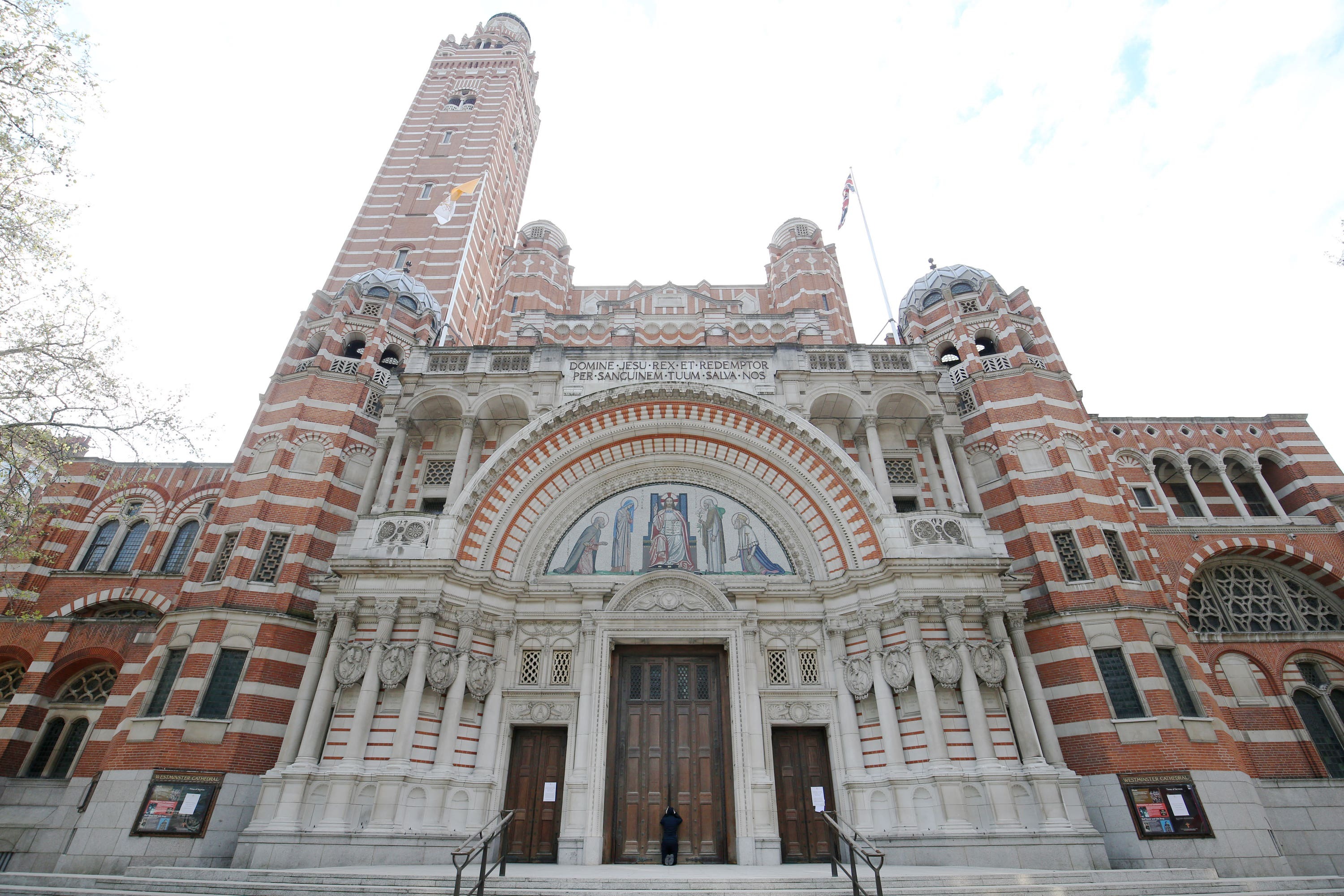
The couple tied the knot at Westminster Cathedral on Saturday afternoon, with a small group of their friends and family present for the ceremony.
Reports of the wedding began circulating on Saturday, with a Downing Strret spokesperson confirming the following morning: “The Prime Minister and Ms Symonds were married yesterday afternoon in a small ceremony at Westminster Cathedral.
“The couple will celebrate their wedding with family and friends next summer.”
PA has reported that the celebration will take place in July 2022, with Symonds set to take on her new husband’s surname, being known as Carrie Johnson as of Saturday.
This is the first marriage for Carrie Johnson, while it is the prime minister’s third.
He was previously married to the artist and journalist Allegra Mostyn-Owen between 1987 and 1993, and the barrister and journalist Marina Wheeler.
Johnson and Wheeler’s divorce was finalised in 2020.


Ed Sheeran made his big-screen acting debut in the 2019 film Yesterday – but he’s admitted the role almost never came to be.
The chart-topping singer played himself in Richard Curtis and Danny Boyle’s musical comedy, which centred around a character who woke up unexpectedly in a world where The Beatles’ music never existed.
However, speaking to BBC Radio 1’s Kids Ask Difficult Questions, Ed disclosed that the part wasn’t actually written for him.
In fact, both Harry Styles and Coldplay frontman Chris Martin had turned it down before Ed was approached.

Jeff Spicer via Getty Images
He recalled: “They asked Chris Martin, he said no, they asked Harry Styles, he said no, and I was third choice.”
Film director Danny Boyle previously dismissed the suggestion that Harry was approached for the role, but conceded that the part was originally created with Chris in mind.
“Although Harry Styles was very good in the Chris Nolan film [Dunkirk],” Danny told ABC Radio. “So maybe we would had gone to Harry Styles, if Ed Sheeran had said no.”


Jamie Oliver has revealed he continues to receive abuse from members of the public after he worked to have Turkey twizzlers banned over 15 years ago.
In 2005, the celebrity chef launched a campaign to improve the quality of food being served in UK schools, with Bernard Matthews’ Turkey twizzlers among the items he wanted scrapped from school menus.
Not everyone was happy with the move, and in a new interview with the podcast 12 Questions, he disclosed that some disgruntled fans of the offending turkey treats continue to abuse him on a regular basis.
Recalling a recent trip to the zoo, Jamie said: “[I was] with my kids and, you know, two metres away, [someone said] ‘that’s Jamie Oliver over there’ and the girl goes: ‘Yeah, I don’t like him, he’s a fucking arsehole’.
“And my kids are right next to me and hearing it as well, it’s a metre and a half away.”

VALERY HACHE via Getty Images
He continued: “As I walk away, she goes to me ‘have you tried those new turkey twizzlers?’ and I went ‘no, I haven’t,’ and she goes: ‘Well, they’re horrible!’
“I said: ‘You probably wouldn’t like the original ones, then.’ And she goes: ‘No I did, and you took them, you stole them away from me’.”
Jamie added that when he used to tour schools, he would be spat at by those unhappy with his campaigning.
“When I was walking around schools as a 28-year-old, I was getting so much abuse,” he admitted.
“I had so much DNA on my back every day when I got home. It was proper filth.”

Scott Barbour via Getty Images
Jamie’s work at this time was initially captured in the documentary Jamie’s School Dinners, after which he launched the Feed Me Better campaign.
Turkey twizzlers were reintroduced in 2020, with an apparently “healthier” recipe, which included no E numbers and around a 67% meat content.
Listen to Jamie’s full interview on 12 Questions here.



NHS boss Chris Hopson adds it’s “incredibly striking” how busy hospitals are with non-Covid patients.
Downing Street has confirmed that prime minister Boris Johnson married his partner Carrie Symonds over the weekend.
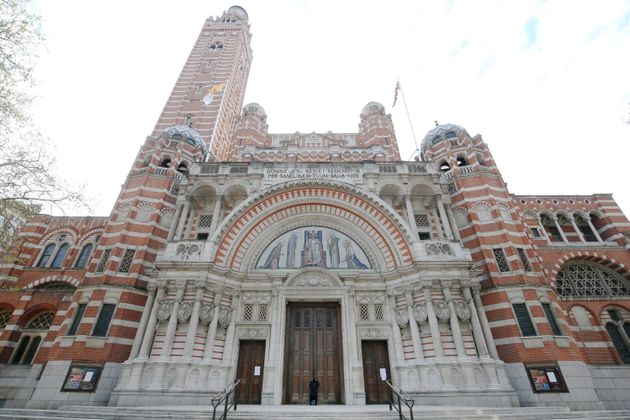
The couple tied the knot at Westminster Cathedral on Saturday afternoon, with a small group of their friends and family present for the ceremony.
Reports of the wedding began circulating on Saturday, with a spokesperson confirming the following morning: “The Prime Minister and Ms Symonds were married yesterday afternoon in a small ceremony at Westminster Cathedral.
“The couple will celebrate their wedding with family and friends next summer.”

PA
PA has reported that the celebration will take place in July 2022, with Symonds set to take on her new husband’s surname, being known as Carrie Johnson as of Saturday.
An official photo has also been released of the pair on their wedding day, with the bride sporting a white dress and floral headband, while the PM is seen sporting a black suit with a blue tie.
According to The Sun, Westminster Cathedral was cleared by staff at 1.30pm on Saturday, who told visitors it was “going into lockdown”.
PA
The wedding was officiated by Father Daniel Humphreys, who had given the couple pre-marriage instructions, and oversaw the baptism of their son Wilfred, who was born in 2020.
This is the first marriage for 33-year-old Carrie Johnson, while it is the prime minister’s third.
He was previously married to the artist and journalist Allegra Mostyn-Owen between 1987 and 1993, and the barrister and journalist Marina Wheeler.
Johnson and Wheeler’s divorce was finalised in 2020.