Dr Dean Eggitt, a GP in Doncaster, opened his doors to the BBC to show the pressures facing practices.


Dr Dean Eggitt, a GP in Doncaster, opened his doors to the BBC to show the pressures facing practices.
You’re reading The Waugh Zone, our daily politics briefing. Sign up now to get it by email in the evening.
The whole point of Dominic Cummings’ evidence was to provide the first draft of the history of the government’s handling of the pandemic. While his personal opinions on what went wrong can be dismissed, his eye-witness testimony cannot be easily shrugged off. And on that score, he didn’t disappoint, giving vivid accounts of the chaos in Downing Street as Covid hit landfall in March 2020.
His description of the events of over two key days allowed the public a glimpse of just how Boris Johnson runs, or doesn’t run, his government. On the “insane day” of March 12, while the PM clearly had no choice but to deal with Trump’s plea to join a bombing raid on Iraq, Cummings implied that his boss allowed partner Carrie Symonds’ to waste valuable press office time with complaints about a story about their dog Dilyn.
But it was the following day that was more telling and more worrying. First, a senior department of health official confided there was no plan for a pandemic. Then deputy cabinet secretary Helen McNamara allegedly said “I think we are absolutely fucked, I think this country is heading for a disaster. I think we are going to kill thousands of people.” Those words are sure to be pored over in any public inquiry.
Just as concerning was the picture painted by Cummings of the lack of data available, with him having to scribble on a whiteboard and an iPad a rough model of how many hospitalisations were happening, based on snippets of early info from NHS chief Simon Stevens. So too was the revelation that the Cabinet secretary Mark Sedwill so misunderstood Covid that he suggested the PM go on TV to tell people to have ‘chickenpox parties’.
In what felt like a Whitehall version of the Assassin’s Creed video game, Cummings spent a lot of his time trying to eviscerate Matt Hancock’s reputation. The allegations were hugely serious, from lying about PPE stocks and testing in care homes to his decision to announce a 100,000 daily test target while the PM was “on his deathbed”. Yet the relentless nature of the onslaught (who cares how many times Cummings called for him to be sacked?) tipped from public interest to private vendetta.
What also furthered the impression that this was about personalities was his huge praise for Rishi Sunak and Dominic Raab (who both happened to be Brexiteers, while Hancock was a Remainer). Cummings’ curious memory loss about discussions of the EatOutToHelpOut scheme, plus his failure to criticise any decisions by old boss Michael Gove, suggested chairman Greg Clark was right when he asked if this was about ‘settling scores’.
Cummings also failed to fully credit Hancock for his strong push for a second lockdown in the autumn, while at the same time playing down the chancellor’s concerns about the idea. The lens was so skewed that he even said Sunak’s real worry was that the department of health could impose a circuit breaker but had no plan for what happened next. Most curiously, for a man who blogged at length about systems and processes, his real focus was on the central role of “brilliant” individuals, be they officials or ministers.
The vituperative attacks on Hancock felt like a sideshow compared to Cummings’ cold, matter of fact descriptions of Boris Johnson as being “unfit” to be prime minister. This was the PM’s former chief adviser saying he was never really upto the job, but he was at least better than Jeremy Corbyn. Johnson changed his mind so much, on everything from Covid to free school meals, that he looked “just like a shopping trolley smashing from one side of the aisle to the other.” Sunak was at his wits end about the trolley too, we learned.
Funnily enough the trolley analogy was first used by former Cameron spinner Craig Oliver to describe how Johnson wrote two different Telegraph columns for and against Brexit. But Cummings’s more damning charge was that the PM was fundamentally unserious about Covid policy. Perhaps his most telling line was this: “There is a great misunderstanding people have, that because it [Covid] nearly killed him, therefore he must have taken it seriously.” Narrator: he didn’t.
We heard of Johnson’s talk of injecting himself with Covid on live TV, his regret that he didn’t behave like the Mayor in Jaws and keep the beaches/shops/pubs open, his glib lines about letting ‘the bodies pile high’ and that the virus was “only killing 80-year-olds” (a charge pointedly not denied in PMQs). All felt like jokes that curdled quickly into a cold contempt for the very public he was meant to serve.
Add the claim Johnson “changes his mind 10 times a day” and disappears on holiday at key moments, and that’s a withering verdict on any politician, let alone a PM in a pandemic. No Wonder Johnson looked distinctly rattled when Keir Starmer quoted Cummings central admission: “When the public needed us most, the government failed”.
Having learned from his Rose Garden press conference disaster, Cummings at least tried to open with an apology for his failures, including not hitting the “panic button” for lockdown earlier. Yet it felt like a strange humblebrag, that somehow he was a genius who spotted the problem but failed to convey that genius. It reminded me of the job interviewees who say their only flaw is that they are a perfectionist.
In a similar vein, his line that it was ”completely crazy that I should have been in such a senior position…I’m not smart” was a laughable attempt at self-effacement. In the next breath he expressed frustration that he wasn’t running the country instead of the elected PM, saying he tried to “create a structure around him..to push things through against his wishes”. Yet this was a man who stuck to his ludicrous specsavers defence for his trip to Barnard Castle.
Cummings’ line that Covid needed a “kind of dictator”, a scientist with “kingly authority”, just also proved how unserious he really is. So too were his references to Spider-Man memes and the film Independence Day (which the bereaved families group felt belittled the gravity of their loss). When he kept saying he felt like he was in a movie, he came across someone as woefully out of his depth as the boss he ridiculed. Asked if he too was unfit for No.10, he just sidestepped the question like a politician. And his charge that it was “crackers” that Johnson was in power suffered from the slight problem of his enthusiastic work to keep him there.
The lessons learned about Cummings’ own character were possibly just as telling as lessons learned about the pandemic. His own credibility as a witness may already be fatally undermined by his Durham drive. But his testimony had some clear contradictions too. Criticising Carrie Symonds’ “unethical” interference in No.10 appointments may have provoked a hollow laugh from Sonia Khan, whom he had frogmarched by a policeman out of Downing Street without due process.
Most of all, when the crunch came, this would-be iconoclast, the arch-disrupter also revealed a telling lack of nerve in the real world: he revealed he didn’t push for lockdown earlier because he was “frightened” he would get it wrong. That in itself was a rare admission that running a government really is very different from running a referendum campaign. The stakes are all too real.
Cummings’ most serious charge was left for the latter part of his nearly seven hours testimony: “Tens of thousands of people died, who didn’t need to die.” The irony is that Johnson seems to have finally learned the lesson of hard lockdowns and slow releases only since January – after his chief adviser left office. Cummings today got his blame game retaliation in first ahead of the public inquiry. As the PM copes with the new Indian variant, his best answer to the criticism would be to get the current unlockdown right.


Piscine orthoreovirus (PRV) — which is associated with kidney and liver damage in Chinook salmon — is continually being transmitted between open-net salmon farms and wild juvenile Chinook salmon in British Columbia waters, according to a new genomics analysis published today in Science Advances.
The collaborative study from the University of British Columbia (UBC) and the Strategic Salmon Health Initiative (SSHI) — a partnership between Fisheries and Oceans Canada (DFO), Genome BC and the Pacific Salmon Foundation — traces the origins of PRV to Atlantic salmon farms in Norway and finds that the virus is now almost ubiquitous in salmon farms in B.C.
It also shows that wild Chinook salmon are more likely to be infected with PRV the closer they are to salmon farms, which suggests farms transfer the virus to wild salmon.
Genome sequencing of viruses from farms and wild fish further indicates that transmission occurs between farms and wild salmon.
“Both our genomic and epidemiological methods independently came to the same conclusion, that salmon farms act as a source and amplifier of PRV transmission,” said Dr. Gideon Mordecai, a viral ecologist and Liber Ero fellow with UBC Science and researcher with UBC Medicine, who led the study. “Because separate lines of independent evidence all point to the same answer, we’re confident in our finding.”
Sequencing of 86 PRV genomes helped researchers track the history of PRV emergence in British Columbia. They estimate that the lineage of PRV in the North East Pacific diverged from PRV in the Atlantic Ocean approximately 30 years ago. This suggests that the introduction of PRV to B.C. and infection of wild Pacific salmon is a relatively recent phenomenon, coincident with the growth of salmon aquaculture in the province — not dating back to early attempts to introduce Atlantic salmon to the region, starting in 1874.
“There is much confusion about where PRV is originally from, whether it is transmitted between farmed and wild salmon, and how different lineages of the virus cause different severities of disease,” said Dr. Mordecai. “This study’s genome sequencing clearly indicates PRV is not native to B.C. waters — it originated in the Atlantic Ocean and has been spread around the world through salmon aquaculture.”
The study highlights the role of aquaculture in introducing novel pathogens to new regions, where they then spread to wild fish, and integrates the expertise of the two senior authors, Dr. Kristi Miller, a DFO scientist and Professor Jeffrey Joy, a UBC evolutionary geneticist. It demonstrates the value of genomics in the surveillance of viral pathogens affecting important fisheries resources and how analytical methods derived from the epidemiology of human viruses can be adapted and applied to conserving wild salmon populations.
Further analysis of PRV genomes generated by the study suggested that there has been a growth in the number of PRV infections in B.C. over recent decades. This finding corresponds with the regional growth in salmon aquaculture and high rates of viral infection in salmon farms.
“Our finding that PRV is transmitted between farmed and wild salmon is particularly relevant given recent field and laboratory studies showing the lineage of PRV in B.C. is likely to cause disease in both Pacific and Atlantic salmon” says Dr. Mordecai. A recent Norwegian study found that a Canadian isolate of the virus causes heart lesions in Atlantic salmon. More importantly to the Pacific ecosystem, PRV has been associated with a different disease in Chinook salmon in which blood cells rupture, leading to kidney and liver damage. These are in contrast to the DFO’s assessment that PRV is not a disease agent.
“Our study reaffirms that a more precautionary approach to managing salmon farming in BC is warranted,” says study co-author Dr. Andrew Bateman, of the Pacific Salmon Foundation. “The PRV findings, in particular, support calls to transition from open-net salmon farming towards farming technology that doesn’t allow disease transfer between farmed and wild salmon, protecting BC’s wild Pacific salmon from serious risk in the process.”
“The study provides foundational information necessary to assess the risk of salmon aquaculture on wild fish, as recommended by the Auditor General of Canada’s 2018 Report on Salmon Farming, which criticized DFO’s ability to manage aquaculture in a precautionary manner,” says Professor Jeffrey Hutchings of Dalhousie University, a leading Canadian fisheries scientist who was not involved with the research. “The work by Mordecai, Miller, and colleagues on PRV provides the most compelling, scientifically objective evidence to date that wild salmon in BC are at increased risk of disease because of open net-pen Atlantic salmon aquaculture,” adds Professor Hutchings.

Researchers at McGill University have gained new insight into the workings of perovskites, a semiconductor material that shows great promise for making high-efficiency, low-cost solar cells and a range of other optical and electronic devices.
Perovskites have drawn attention over the past decade because of their ability to act as semiconductors even when there are defects in the material’s crystal structure. This makes perovskites special because getting most other semiconductors to work well requires stringent and costly manufacturing techniques to produce crystals that are as defect-free as possible. In what amounts to the discovery of a new state of matter, the McGill team has made a step forward in unlocking the mystery of how perovskites pull off this trick.
“Historically, people have been using bulk semiconductors that are perfect crystals. And now, all of a sudden, this imperfect, soft crystal starts to work for semiconductor applications, from photovoltaics to LEDs,” explains senior author Patanjali Kambhampati, an associate professor in the Department of Chemistry at McGill. “That’s the starting point for our research: how can something that’s defective work in a perfect way?”
Quantum dots, but not as we know them
In a paper published May 26 in Physical Review Research, the researchers reveal that a phenomenon known as quantum confinement occurs within bulk perovskite crystals. Until now, quantum confinement had only been observed in particles a few nanometres in size — the quantum dots of flatscreen TV fame being one much-vaunted example. When particles are this small, their physical dimensions constrain the movement of electrons in a way that gives the particles distinctly different properties from larger pieces of the same material — properties that can be fine-tuned to produce useful effects such as the emission of light in precise colours.
Using a technique known as state-resolved pump/probe spectroscopy, the researchers have shown a similar type of confinement occurs in bulk caesium lead bromide perovskite crystals. In other words, their experiments have uncovered quantum dot-like behaviour taking place in pieces of perovskite significantly larger than quantum dots.
Surprising result leads to unexpected discovery
The work builds on earlier research which established that perovskites, while appearing to be a solid substance to the naked eye, have certain characteristics more commonly associated with liquids. At the heart of this liquid-solid duality is an atomic lattice able to distort in response to the presence of free electrons. Kambhampati draws a comparison to a trampoline absorbing the impact of a rock thrown into its centre. Just as the trampoline will eventually bring the rock to a standstill, the distortion of the perovskite crystal lattice — a phenomenon known as polaron formation — is understood to have a stabilizing effect on the electron.
While the trampoline analogy would suggest a gradual dissipation of energy consistent with a system moving from an excited state back to a more stable one, the pump/probe spectroscopy data in fact revealed the opposite. To the researchers’ surprise, their measurements showed an overall increase in energy in the aftermath of polaron formation.
“The fact that the energy was raised shows a new quantum mechanical effect, quantum confinement like a quantum dot,” Kambhampati says, explaining that, at the size scale of electrons, the rock in the trampoline is an exciton, the bound pairing of an electron with the space it leaves behind when it is in an excited state.
“What the polaron does is confine everything into a spatially well-defined area. One of the things our group was able to show is that the polaron mixes with an exciton to form what looks like a quantum dot. In a sense, it’s like a liquid quantum dot, which is something we call a quantum drop. We hope that exploring the behavior of these quantum drops will give rise to a better understanding of how to engineer defect-tolerant optoelectronic materials.”
Story Source:
Materials provided by McGill University. Note: Content may be edited for style and length.

University of Idaho researchers partnered with other scientists from the United States and Australia to study the evolution of Tasmanian devils in response to a unique transmissible cancer.
The team found that historic and ongoing evolution are widespread across the devils’ genome, but there is little overlap of genes between those two timescales. These findings, published in Proceedings of the Royal Society B, suggest that if transmissible cancers occurred historically in devils, they imposed natural selection on different sets of genes.
Tasmanian devils suffer from a transmissible cancer called devil facial tumor disease (DFTD). Unlike typical cancers, tumor cells from transmissible cancers are directly transferred from one individual to another like an infectious disease. DTFD is most commonly transmitted from host to host as devils bite each other during mating season. The tumors become malignant and can kill their hosts within six months.
DFTD was first discovered in 1996, and the recent discovery of a second transmissible cancer in Tasmanian devils in 2016 suggests that they may be prone to this unique type of disease. The threat of these two cancers has prompted conservation efforts.
“For the conservation of Tasmanian devils, our work adds to the growing list of genes that we have observed to be evolving in response to DFTD,” said Paul Hohenlohe, U of I Department of Biological Sciences associate professor, Institute for Bioinformatics and Evolutionary Studies (IBEST) principal investigator and senior author on the paper. “We can monitor genetic diversity of these genes in wild populations to understand whether and how these populations can adapt and survive in the face of DFTD.”
Using genomic sequencing and data analysis, the research team tested for natural selection in Tasmanian devils in response to DFTD to find out whether they are evolving as a result of the disease. They also looked for evidence of natural selection in the devils’ evolutionary history to test whether the genes that are evolving under DFTD show evidence of historical natural selection.
Finding little overlap in what genes are involved at historical and modern timescales, the team determined that if transmissible cancers have occurred historically in devils, they caused natural selection on different sets of genes. Their results and analysis of historical selection suggest that DFTD is a newly emerging selective force that distinctly shapes today’s wild devils.
This information can be used to inform conservation efforts by identifying targets for genetic monitoring and guiding maintenance of adaptive potential in Tasmanian devil populations.
“Our work suggests that maintaining genetic diversity across a wide set of functionally important genes is critical to make sure Tasmanian devils are able to adapt to transmissible cancers and other threats to their survival,” Hohenlohe said.
Story Source:
Materials provided by University of Idaho. Note: Content may be edited for style and length.
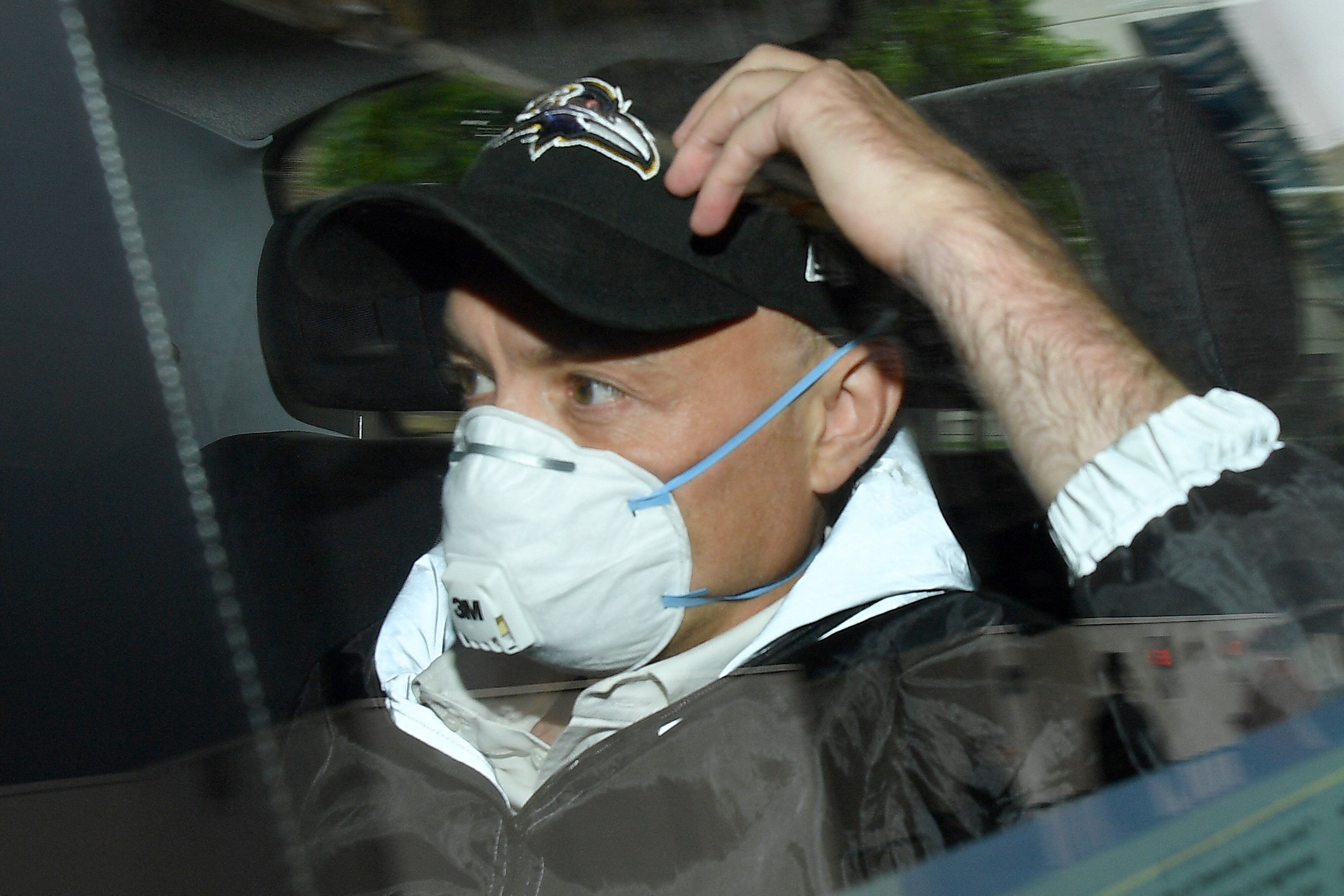
Former Downing Street adviser Dominic Cummings says care homes lacked tests and protection.
JUSTIN TALLIS via Getty Images
Boris Johnson has been left licking his wounds after Dominic Cummings dropped bombshell upon bombshell on the prime minister over his handling of Covid.
The former aide sent shockwaves through Westminster at his long-awaited Commons committee hearing, in which he called for health secretary Matt Hancock to be sacked over alleged lies and said the PM was “unfit” for office.
In a frankly bizarre turn, the PM’s ex-adviser also claimed that in the early days of the pandemic, Johnson considered having Covid injected into him live on television by chief medical officer Chris Whitty.
Amidst all this, you may have missed some other important news.
Let’s get you caught up with some of today’s other headlines.
AFP Contributor via Getty Images
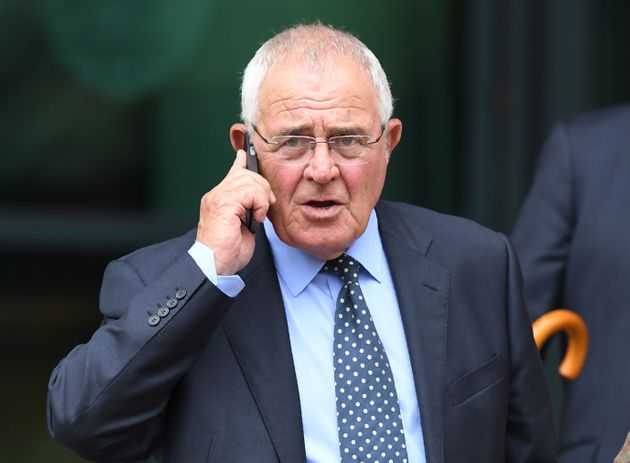
Two retired police officers and an ex-solicitor accused of altering police statements after the Hillsborough disaster have been acquitted.
The trial against Donald Denton, 83, retired detective chief inspector Alan Foster, 74, and solicitor Peter Metcalf, 71, collapsed on Wednesday after a judge ruled there was no case to answer.
The three men denied charges of perverting the course of justice after it was alleged they tried to minimise the blame on South Yorkshire Police.
Mr Justice William Davis said the amended statements were intended for a public inquiry into safety at sports grounds, however, and that as such it was not a course of public justice.
Ninety-six Liverpool fans died as a result of the crush at the FA Cup semi-final match at Sheffield Wednesday’s ground on 15 April 1989.
Margaret Aspinall, whose son James was among them, said the ruling was “an absolute mockery” and a “shambles”.
“We’re always the losers no matter what the outcome today,” she said.
Dominic Raab met with Israeli prime minister Benjamin Netanyahu and Palestinian president Mahmoud Abbas as he reiterated the UK supports a two-state solution in the Israel-Gaza conflict.
The foreign secretary called for a “lasting peace” on Wednesday and visited both Israel and the occupied Palestinian territories following last week’s ceasefire.
The ceasefire was declared on Friday after 11 days of fighting killed more than 250 people, the vast majority in Gaza, in what was the worst violence in the conflict since 2014.
Raab tweeted: “Vital we make progress towards a more positive future for Israelis and Palestinians.”

Guy Smallman via Getty Images
Five men have been arrested on suspicion of attempted murder over the shooting of black equal rights activist Sasha Johnson.
The 27-year-old Oxford graduate is fighting for her life in hospital after being injured at a party in Peckham, south-east London in the early hours of Sunday.
The Metropolitan Police said that officers detained three teenagers and two older men on suspicion of other offences, before they were all also arrested on suspicion of attempted murder.
The first suspect, a 17-year-old boy, was held on suspicion of possession of an offensive weapon and drug dealing on Tuesday afternoon.
Police then raided an address in Peckham where they arrested three men – aged 18, 19 and 28 – on suspicion of affray and possession with intent to supply class B drugs.
A fifth man, aged 25, was arrested later that evening following a car chase, also in Peckham, on suspicion of affray and failing to stop for police.
All five have also since been arrested on suspicion of attempted murder.
MP Rob Roberts
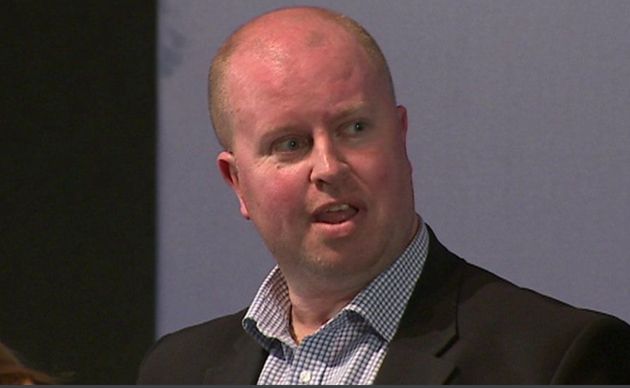
Disgraced MP Rob Roberts may escape a by-election despite breaching sexual misconduct rules.
The MP for Delyn faces being suspended from the Commons for six weeks after repeated unwanted advances to a member of staff during which asked him to be “less alluring”.
Roberts has been stripped of the Tory whip but the way recall laws are drawn up means he cannot face the prospect of losing his seat.
The sanction was proposed by the panel set up in 2020 to deal with cases raised under the Independent Complaints and Grievance Scheme.
But the Recall of Parliament Act was passed in 2015 and only allows the prospect of a by-election for sanctions imposed on the recommendation of the Commons Committee on Standards.
House of Commons leader Jacob Rees-Mogg will invite the “relevant bodies” to consider whether the laws need to be changed to enable the recall process to be triggered.
MPs need to approve the six-week suspension.
WPA Pool via Getty Images
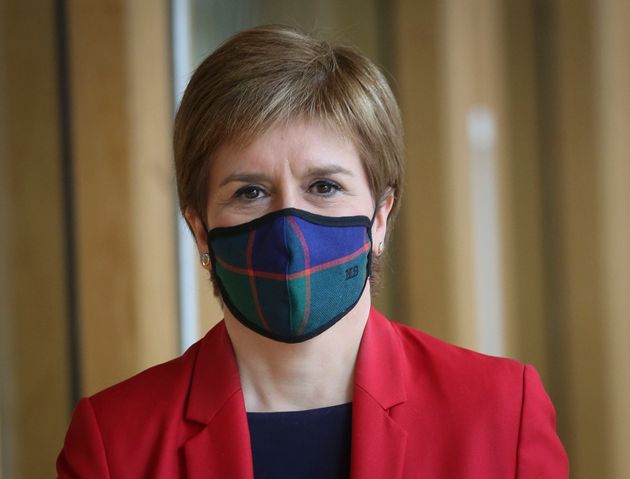
Nicola Sturgeon has revealed her SNP government is in talks with the Scottish Greens over a formal co-operation agreement.
The first minister has said that by working together the two parties “can help build a better future for Scotland” as she set out her priorities following the SNP victory in the Holyrood election earlier this month.
She stressed discussions between the two parties – which are being supported by the civil service – will continue over the coming weeks, and said it is “not inconceivable” that they could see Green MSPs joining the SNP in the Scottish Government.
Both parties support the case for Scottish independence.
fotograzia via Getty Images
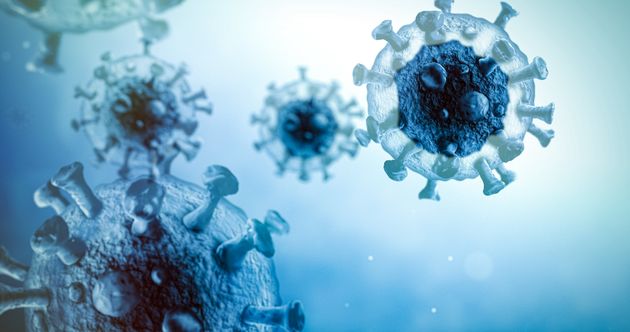
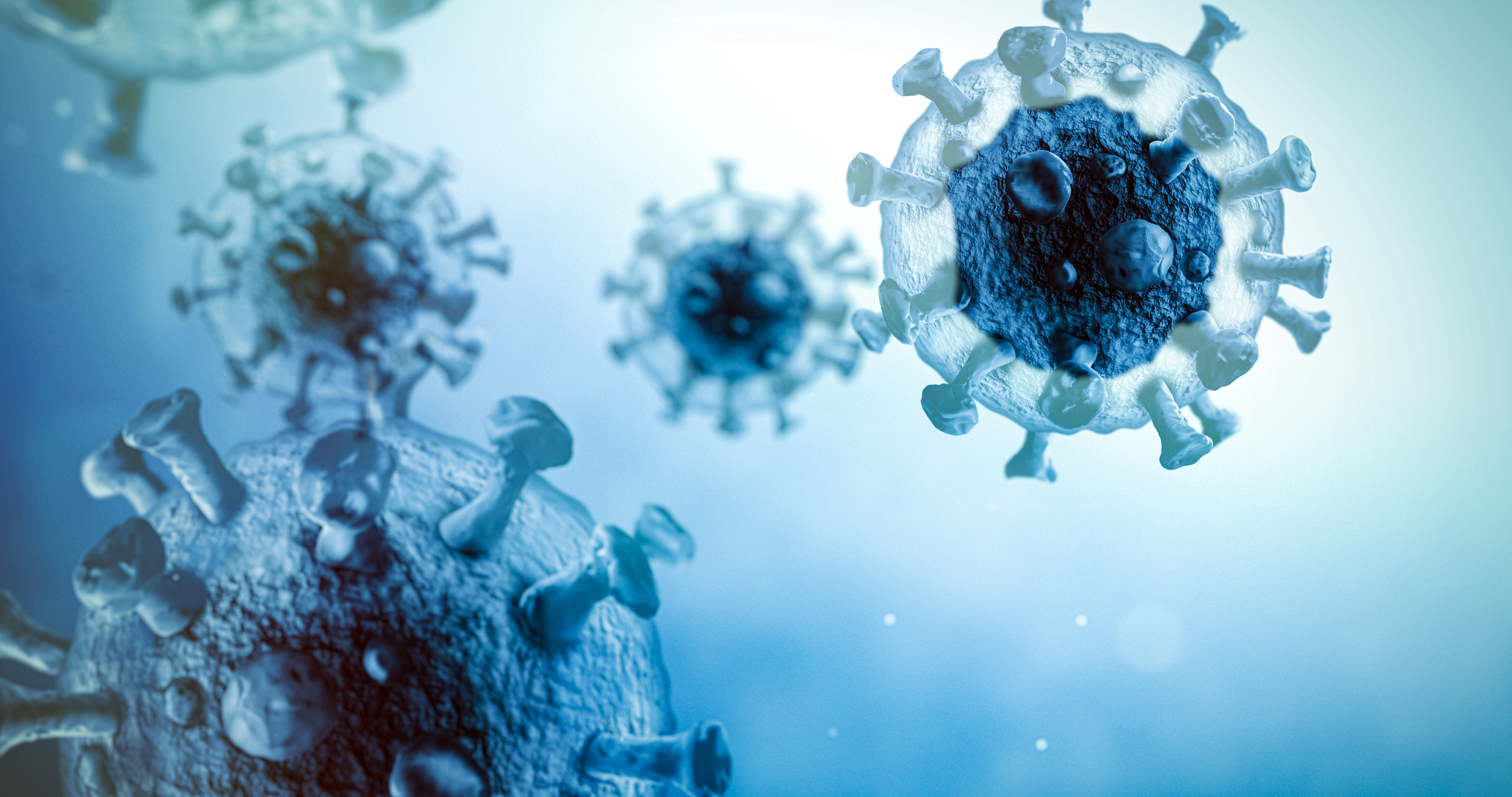
Coronavirus is going to do “weird” things going forward, and “super mutant viruses” may emerge, an expert has warned.
Professor Ravi Gupta, professor of clinical microbiology at the University of Cambridge, said that while this would not necessarily be a bad thing, the virus would try to become more efficient at transmission as more people are protected.
He added that coronavirus is unpredictable and we should not be overconfident at any stage.
Asked about how to prepare for future variants, Gupta told a press briefing: “I think that we have good vaccines, now we need to keep the pressure on vaccine designers, manufacturers to adapt vaccines.”
He added: “Secondly, the virus is going to do some weird things. I mean, this is just the beginning.
“I think it’s going to recombine, you’re going to get super mutant viruses, I believe.
“But that’s not not necessarily a terrible thing, but the virus is going to do very unexpected things because the amount of pressure on it is going to be severe, so it will adapt.
picture alliance via Getty Images
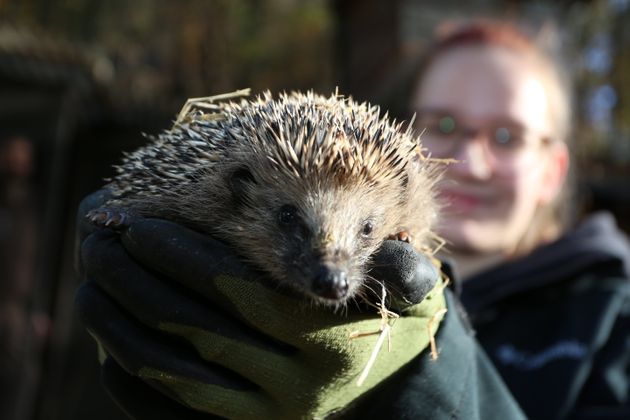
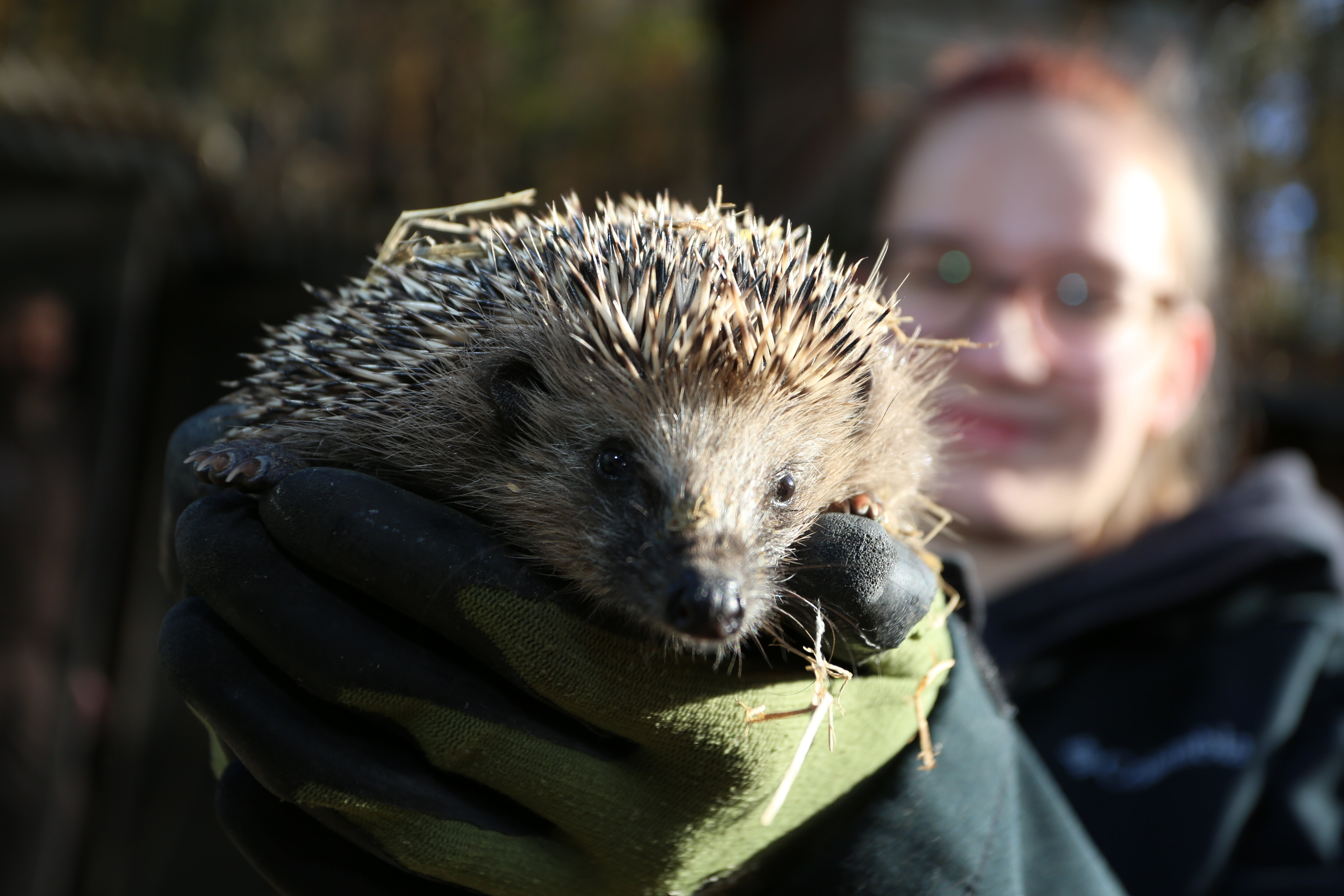
Former Tory cabinet minister Christ Grayling has urged the government to do more to stop the decline of hedgehogs
The Epsom and Ewell MP said the “catastrophic loss” of the small, spiky mammals was due to a mixture of habitat loss, the reduction of wildlife and protections available.
Speaking in a Commons debate on the Environment Bill, he said: “It is tragic, back in the 1950s there was something like 30 million hedgehogs in this country, now it’s estimated to be about 1.5 million, that is a catastrophic loss.”
“When I was a child, hedgehogs were around in the garden all the time, I have never as an adult seen a hedgehog in my garden or anywhere near it, this is a tragic loss and one we have to work to reverse.”
Too many species he said had declined in numbers, adding “we should be protecting them all”.
Saying hedgehog numbers had declined by 95% in recent years, he asked the government to address “shortcomings” in current legislation, adding: “I hope we’ll all be hedgehog champions going forwards and I’d say to the minister we’re going to be holding her feet to the fire to make sure her department delivers.”
NurPhoto via Getty Images
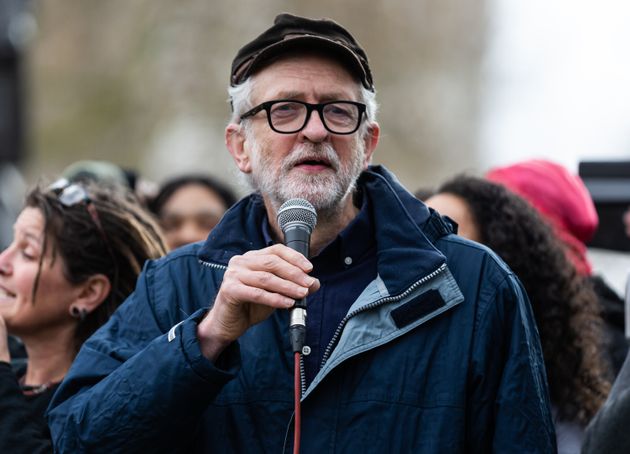
And finally … Jeremy Corbyn is celebrating his 72th birthday.
The former Labour leader shows no sign of slowing down campaigning, however, as he plans on celebrating the milestone with an online event entitled ‘Happy Birthday Jeremy – Restore the Whip’.
Corbyn sits as an independent MP after his successor Keir Starmer suspended him from the Parliamentary Labour Party following his claim that anti-Semitism in the party on his watch had been “overstated” by his opponents.
He remains a member of the Labour Party, however.
At the event will be comedian Alexei Sayle, as well as a number of left-wing MPs, including Richard Burgon and Zarah Saltana.
There were no well wishes from Dominic Cummings, however, who told MPs as part of his marathon evidence session: “There’s a very profound question in the nature of our political system, any system that leaves people with the choice between Boris Johnson and Jeremy Corbyn is obviously a system that’s gone extremely badly wrong.”




James Newman may suffered crushing disappointment at this year’s Eurovision, but it seems his consolation prize wasn’t too bad.
The Embers singer has revealed he received a call of support from none other than Coldplay’s Chris Martin after picking up the dreaded “nul points” at Saturday’s Song Contest.
Speaking to Radio 1′s Newsbeat, James said Chris FaceTimed him on Monday morning to give him some words of encouragement.

picture alliance via Getty Images
“He told me to not take the result personally, said I was amazing and told me to keep my chin up,” James revealed.
“I’ve grown up listening to him, he’s an amazing songwriter so it made me feel so much better.”
In the interview, James also stood by his Eurovision performance, saying he “couldn’t have done any better”.
“The dancers nailed it every time and I think it looked great,” he insisted.

JMEnternational via Getty Images
The United Kingdom languished at the bottom of the leaderboard as Italy romped to victory during Saturday’s event.
James scored zero points from the jury vote and from the public vote and was the only entry to do so poorly.
The last time the UK scored “nul points” was in 2003, when Jemini infamously picked up nothing for their rendition of Cry Baby.
James had previously broken his silence on Saturday’s result, insisting he is focusing “on the positives of this amazing experience” instead.
In a lengthy statement on social media, James wrote: “I want to focus on the positives of this amazing experience. I stood on a stage and sang to hundreds of millions of people with a song that I wrote and love.”
He added: “The thing about writing songs is that there is no guarantee that a song you think will connect with people, will connect with an audience.”



Restrictions are not being imposed on Indian variant-affected areas, the government says.
French social media influencers say they have been offered money to discredit the anti-Covid vaccine.
