UK-EU Trade May Never Return To ‘Normal’, Brexit Minister Admits

Trade between the UK and the EU may never return to “normal”, a senior Brexit minister has admitted.

Lord Frost appeared to blame Brussels for the barriers many firms are facing to trading with the EU, despite negotiating the trade deal that took the UK out of the single market, which used to guarantee free flowing business with the continent.

It came after Brexiteer Tory MP Richard Drax said he had heard from businesses having difficulties with “red tape, the colour of your pen, problems at the border” as a result of the UK leaving the single market.

Earlier this month, Boris Johnson deployed gunboats to Jersey amid a post-Brexit fishing dispute with France.

Recent official statistics showed that in the first quarter of the year when the UK and EU traded on post-Brexit terms for the first time, exports to the EU were down 18% with imports down 21%, compared to the last quarter of 2020.

Particular sectors such as food and drink have been particularly hard hit by the new export requirements, and for the first time on record EU imports were outstripped by non-EU goods in March.

Frost said there were “teething problems” in seafood exports and said government support for the industry was having “some effect” in making exports easier.

He said there were “isolated incidents” of EU officials complaining about “the wrong colour stamp or pen” but said largely the Brussels side had been “pretty pragmatic”.

At the Commons European scrutiny committee, Drax then asked Frost if he was confident that in months and years ahead business can resume “as normal as it possibly can”.
House of Commons – PA Images via Getty Images

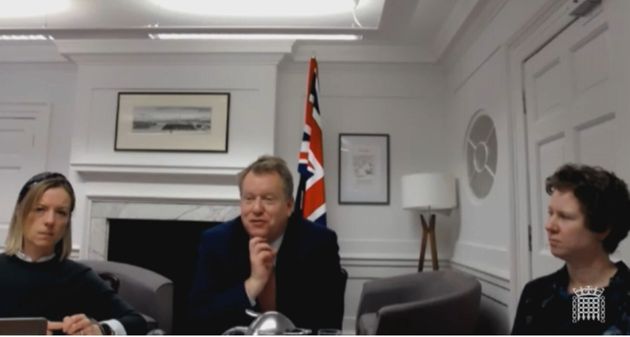
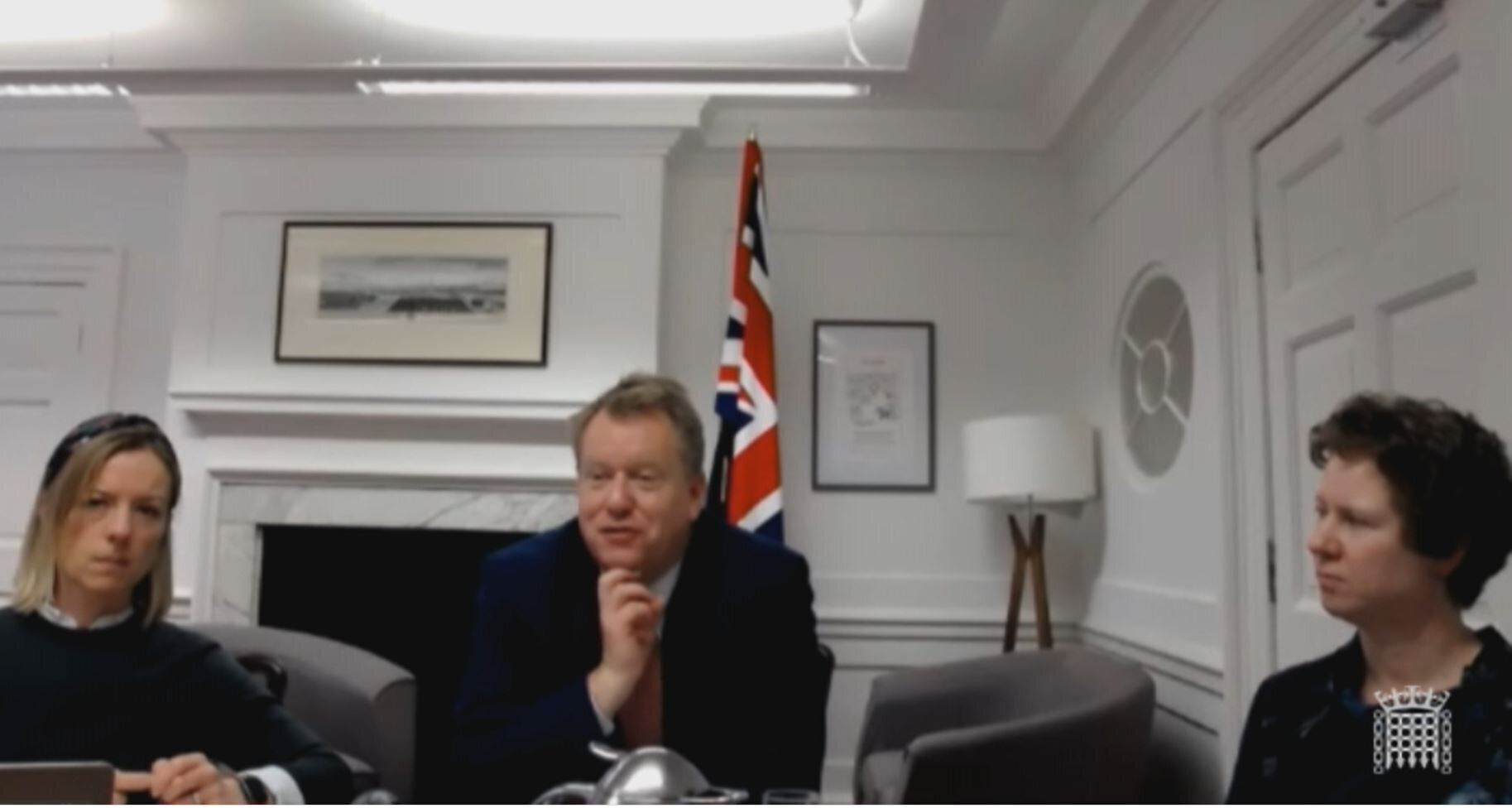
Brexit minister Lord Frost with officials giving evidence to the European Scrutiny Committee

Frost replied: “I don’t know whether it will happen, I think it definitely can happen.

“There is a lot of pragmatism, everybody wants trade to continue in as free flowing a way as we possibly can in the new arrangements.

“There is definitely a large current of opinion in the EU and member states that want that to happen.

“I think there are people who see Brexit as a bit of a zero-sum game and want us to face difficulties.

“But I like to think those won’t be the dominant opinions and things will settle down in a fairly pragmatic way as we move forward.

“We’ll see.”

Frost also admitted that checks at the Northern Irish border that he and the prime minister negotiated were causing more problems for businesses in the rest of the UK than they had anticipated.

The minister is currently trying to renegotiate the terms of trade for Northern Ireland to improve the situation amid growing tensions in the region.

But he rejected the EU’s call for the UK to adopt Brussels regulations on plant and animal-based trade as a way through the row.

Frost said: “I think the broader question is that the processes around the boundary between GB [Great Britain] and Northern Ireland are significant.

“They probably have a bigger chilling effect than we thought on GB businesses wanting to move goods into Northern Ireland and that is one of the problems that’s underlying some of the unrest and political developments we’re seeing in Northern Ireland.”

He added: “Obviously, from the EU’s point of view the easiest solution to any border problem is that we should just operate the same rules and laws as they do, and that solves the problem, obviously that doesn’t work for us and that isn’t going to be the solution.

“That was obviously one of the big problems with the original backstop and everything that went with it, so we’re not going back there.”
Share Button

Scientists find new way of predicting COVID-19 vaccine efficacy

The early immune response in a person who has been vaccinated for COVID-19 can predict the level of protection they will have to the virus over time, according to analysis from Australian mathematicians, clinicians, and scientists, and published today in Nature Medicine.

The researchers from UNSW’s Kirby Institute, the Peter Doherty Institute for Infection and Immunity, and the University of Sydney have identified an ‘immune correlate’ of vaccine protection. This has the potential to dramatically cut development times for new vaccines, by measuring neutralising antibody levels as a ‘proxy’ for immune protection from COVID-19.

“Neutralising antibodies are tiny Y-shaped proteins produced by our body in response to infection or vaccination. They bind to the virus, reducing its ability to infect,” says Dr Deborah Cromer from the Kirby Institute.

“While we have known for some time that neutralising antibodies are likely to be a critical part of our immune response to COVID-19, we haven’t known how much antibody you need for immunity. Our work is the strongest evidence to date to show that specific antibody levels translate to high levels of protection from disease.”

The researchers analysed data from seven COVID-19 vaccines to examine the how the response measured soon after vaccination correlated with protection. They then used statistical analysis to define the specific relationship between immune response and protection. Their analysis was remarkably accurate and was able to predict the efficacy of a new vaccine.

Dr Cromer said that this finding has the potential to change the way we conduct COVID-19 vaccine trials in the future.

“Antibody immune levels are much easier to measure than directly measuring vaccine efficacy over time. So, by measuring antibody levels across the range of new vaccine candidates during early phases of clinical trials, we can better determine whether a vaccine should be used to prevent COVID-19.”

Vaccine boosters likely to be required within a year

Another crucial application of this analysis is its ability to predict immunity over time. The researchers predict that immunity to COVID-19 from vaccination will wane significantly within a year, with the level of neutralising antibodies in the blood dropping over the first few months following infection or vaccination.

“Vaccination works very well to prevent both symptoms and severe disease in the short to medium term, but efficacy is predicted to decline over the first few months for most of these vaccines,” says Dr David Khoury, also from the Kirby Institute.

“However, it is very important to understand the difference between immunity against infection and protection from developing severe disease. Our study found that a 6-fold lower level of antibodies is required to protect against severe disease. So even though our analysis predicts that we will start losing immunity to mild infection in the first year after vaccination, protection from severe infection should be longer lived,” says Dr Khoury.

“But ultimately, for optimal protection against moderate disease and transmission of COVID-19, these findings suggest we may be looking at annual vaccine boosters, just like what we have with the flu vaccine.”

Applying the model in the real word

A major global challenge is the evolution of the virus and the emergence of new variants. There is a growing concern, based on laboratory studies, that antibodies developed against the dominant strains are less effective at neutralising these new variants.

“An added advantage of our work is that allows us to predict how protective an immune response will be against different variants,” says Professor Jamie Triccas from the University of Sydney’s Marie Bashir Institute and Faculty of Medicine and Health.

“This analysis shows a very good correlation between the immune response — which is very easy to test for — and the efficacy of a vaccine in preventing infection, which is incredibly hard to test for. This means we can predict how protective an immune response will be against different variants, without having to determine efficacy against each variant in large and costly clinical trials.

“This work can facilitate decision making by providing the necessary data much earlier on in the vaccine development pipeline and in a far more efficient way.”

A limitation of this study is that it analyses the relationship between early immune responses to infection and vaccination and protection from infection (the data that is currently available), and uses this relationship to project how immunity will change in the future and in the response to different viral variants. Future studies should aim to confirm these predictions as data becomes available.

Share Button

Engineered organism could diagnose Crohn’s disease flareups

In an important step toward the clinical application of synthetic biology, Rice University researchers have engineered a bacterium with the necessary capabilities for diagnosing a human disease.

The engineered strain of the gut bacteria E. coli senses pH and glows when it encounters acidosis, an acidic condition that often occurs during flareups of inflammatory bowel diseases like colitis, ileitis and Crohn’s disease.

Researchers at the University of Colorado (CU) School of Medicine used the Rice-created organism in a mouse model of Crohn’s disease to show acidosis activates a signature set of genes. The corresponding genetic signature in humans has previously been observed during active inflammation in Crohn’s disease patients. The results are available online in the Proceedings of the National Academy of Sciences.

Study co-author Jeffrey Tabor, whose lab engineered the pH-sensing bacterium, said it could be reprogrammed to make colors that show up in the toilet instead of the fluorescent tags used in the CU School of Medicine experiments.

“We think it could be added to food and programmed to turn toilet water blue to warn patients when a flareup is just beginning,” said Tabor, an associate professor of bioengineering in Rice’s Brown School of Engineering.

Over their 3.5 billion-year history, bacteria have evolved countless specific and sensitive genetic circuits to sense their surroundings. Tabor and colleagues developed a biohacking toolkit that allows them to mix and match the inputs and outputs of these bacterial sensors. The pH-sensing circuit was discovered by Rice Ph.D. student Kathryn Brink in a 2019 demonstration of the plug-and-play toolkit.

PNAS study co-authors Sean Colgan, the director of the CU School of Medicine’s mucosal inflammation program, and Ian Cartwright, a postdoctoral fellow in Colgan’s lab, read about the pH sensor and contacted Tabor to see if it could be adapted for use in a mouse model of Crohn’s disease.

“It turns out that measuring pH within the intestine through noninvasive ways is quite difficult,” said Colgan, the Levine-Kern Professor of Medicine and Immunology in the CU School of Medicine.

So Brink spent a few weeks splicing the necessary sensor circuits into an organism and sent it to Colgan’s lab.

“Normally, the pH in your intestines is around seven, which is neutral, but you get a lot of inflammation in Crohn’s disease, and pH goes to something like three, which is very acidic,” Tabor said.

Colgan and colleagues have studied the genes that are turned on and off under such conditions and “needed a tool to measure pH in the intestine to show that the things they were observing in in vitro experiments were also really happening in a live animal,” Tabor said.

“Colonizing this bacterial strain was the perfect biological tool to monitor acidosis during active inflammation,” Colgan said. “Correlating intestinal gene expression with the bacterial pH sensing bacteria proved to be a useful and valuable set of biomarkers for active inflammation in the intestine.”

Tabor said he believes the pH-sensing bacterium could potentially be advanced for human clinical trials in several years.

Tabor’s work was supported by the Welch Foundation (C-1856) and the National Science Foundation (1553317).

Story Source:

Materials provided by Rice University. Original written by Jade Boyd. Note: Content may be edited for style and length.

Share Button

Two biodiversity refugia identified in the Eastern Bering Sea

Scientists from Hokkaido University have used species survey and climate data to identify two marine biodiversity refugia in the Eastern Bering Sea — regions where species richness, community stability and climate stability are high.

Marine biodiversity, the diversity of life in the seas and oceans, supports ecosystem services of immense societal benefits. However, climate change and human activities have been adversely affecting marine biodiversity for many decades, resulting in population decline, community shifts, and species loss and extinction. Developing effective means to mitigate this rapid biodiversity loss is vital.

Scientists from Hokkaido University have identified and characterised regions in the Eastern Bering Sea where biodiversity has been protected from the effects of climate change. Their work was published in the journal Global Change Biology.

Conservation is one of the many approaches by which we have been able to protect biodiversity in various environments from climate change, pollution and human encroachment. Conservation hinges on the identification of areas where the maximum amount of biodiversity is preserved. One such area are refugia, regions that are relatively buffered from the impacts of ongoing climatic changes, which provide favorable habitats for species when the surrounding environment becomes inhospitable.

The scientists tracked the distribution of 159 marine species in the Eastern Bering Sea, off the coast of Alaska, from data collected by the National Oceanic and Atmospheric Administration (NOAA) between 1990 and 2018. Using statistical analysis, they attempted to find regions where there existed persistently high species richness and a stable marine community over a longer period of time. They also, separately, mapped out the changes in climate across the Eastern Bering Sea over the same period.

The scientists identified two distinct refugia in the fishery-rich waters of the Eastern Bering Sea. These regions covered less than 10% of the total study area but harbored 91% of the species analyzed. Most significantly, among the species sheltered in these refugia, commercially important fish and crabs were present in high numbers — indicating that these refugia conserved high-value resources in addition to supporting high species diversity and community stability. Moreover, these refugia overlapped with regions of high climatic stability over time, where trends in seasonal sea surface temperatures and winter sea ice conditions remained largely unchanged.

Climate buffering and high productivity within the Eastern Bering Sea refugia potentially permit the persistence of stable communities and high biodiversity as well as cushion marine communities from the impacts of fishing. “These biodiversity refugia, albeit small, will be increasingly crucial for preserving communities in this climate-exposed and continually exploited marine ecosystem,” says Irene D. Alabia, the lead author of the paper. “At a larger scale, this underpins the need and urgency to identify and manage marine biodiversity refugia to maintain climate-resilient marine ecosystems and fisheries.”

Story Source:

Materials provided by Hokkaido University. Note: Content may be edited for style and length.

Share Button

Long working hours killing 745,000 people a year, study finds

The World Health Organization says the trend may worsen due to the coronavirus pandemic.

Share Button

Covid-19: Lockdowns ease in England, Wales and most of Scotland

Rules on socialising indoors and foreign travel are lifted in England, Wales and most of Scotland.

Share Button

India’s Covid crisis hits Covax vaccine-sharing scheme

The largest single supplier to the international Covax scheme has made no shipments since March.

Share Button

Len McCluskey Acted ‘With Integrity’ Over £98m Hotel Project, Union Chief Says

Google

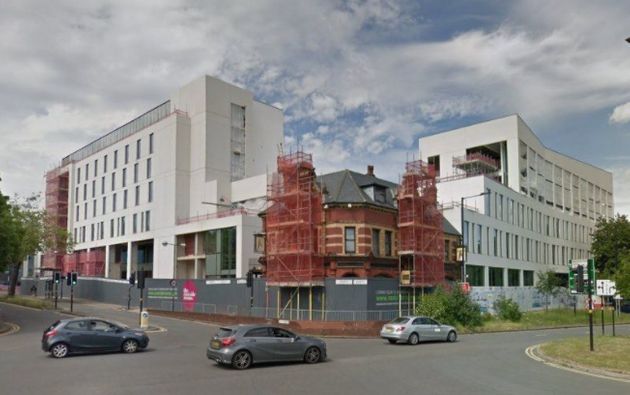
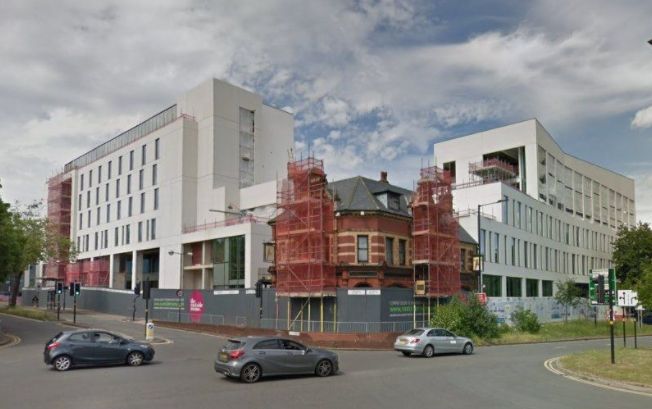
The Unite union complex in Birmingham

A leading contender in the race to succeed Len McCluskey has declared there was “no wrongdoing” in the handling of Unite’s controversial new £98m hotel complex.

Assistant general secretary Steve Turner said that McCluskey and the union’s executive council had acted with “integrity” and with “a sense of responsibility for members’ money” when they monitored and approved the project.

In a message to the executive, Turner said that his enemies had misrepresented his recent interview with HuffPost UK, in which he said he would order an independent, QC-led review “if I was genuinely concerned” about the hotel and conference centre complex in Birmingham.

The new building, which will house Unite’s regional headquarters as well as a four-star, 170 bed Aloft hotel and 1,000-seat conference centre, has been dogged by criticism as its costs soared by more than £40m.

The union insists the extra costs were caused by high standards of unionised labour, the need to strip cladding related to Grenfell changes and the addition of an extra floor onto the hotel.

But Unite’s handling of the project has been seized on by Gerard Coyne, the “moderate” contender in the election to succeed McCluskey as general secretary.

The race for general secretary was hit by a fresh row in recent days when Howard Beckett, backed by some on the Left, was suspended by the Labour party for calling for home secretary Priti Patel to be “deported”.

In his interview with HuffPost UK last month, Turner said that if there was any evidence of “anything untoward” in the project “then absolutely I would have an independent investigation into it because this is our members money”.

While stressing that the hotel complex was a “world class” venue likely to bring in revenue, he added that there should have been greater cost transparency throughout the project and said that if he became general secretary he would improve financial oversight by the executive.

“We’re all as guilty as anybody else because we’ve all been in the executive [council] meetings where things have been raised and the cost implications have not perhaps been discussed in the way in which they should have been discussed,” he said.

Hollie Adams – PA Images via Getty Images

Len McCluskey

It is understood that Turner’s remarks caused intense irritation among senior figures in the union and in a new written message to the executive, he appeared to apologise for giving any impression of criticism of the hotel project.

In his email, circulated to all regional secretaries and passed to HuffPost UK, he said he wanted “to clear up some misrepresentation” of his comments “by some of our enemies”.

“It is…regrettable that comments made by myself about lessons I have personally learned from the process, and would inform my future thinking on projects, are being used by others in a negative way to raise issues that have been already been the subject of detailed reports, addressed and closed by the executive,” he wrote.

“As I have always said, there was no wrong-doing on this matter, in fact quite to the contrary. Learning lessons from our experiences and examining ways we can improve is something I think we all do regularly, and I have, as I’m sure have you.

“I am very clear that our executive council, officers, staff and general secretary have always been committed to acting in the best interests of our members and do so with integrity and a sense of responsibility for members’ money. In doing so they have always had, and always will have, my full backing.”

Turner – who is seen as the favourite to succeed McCluskey because of his endorsement by the union’s dominant United Left grouping – also stressed that he had intended no criticism of the “lay members” of the union’s executive. He ended his message with the words “in solidarity”.

Beckett, who had sat on Labour’s ruling national executive committee on behalf of Unite, has been suspended following his remarks about Patel on Twitter. He deleted the tweet and apologised for its offensive nature.

The other contender in the contest is national organiser Sharon Graham, another leftwinger who has led the union’s push to expose working conditions at employers like Amazon.

Coyne said: “The current election for general secretary is a crucial moment of decision for Unite members, and the £98m Birmingham project is a test of judgement and leadership for all four of the candidates.

“My position has been consistent throughout: I will hold an independent, published inquiry so we can learn the lessons and move on. I haven’t said one thing in public and another thing in private, or ducked the issue. It is now clear that I am the only candidate who stands for real change.”

Turner’s letter in full:

From: EC Admin <EC.Admin@unitetheunion.org>
Subject: TO MEMBERS OF THE EXECUTIVE COUNCIL FROM AGS STEVE TURNER

To Members of the Executive Council
Cc: Regional Secretaries
From: AGS, Steve Turner

Dear colleagues

I’m writing to you directly following the publication of an article in the Huffington Post concerning our Birmingham conference facility. The article, one of two, followed an hour-long interview concerning my being a candidate in the upcoming election for general secretary.

I want to clear up some misrepresentation of comments I made within it by some of our enemies.

Firstly, I am and always have been throughout my 39 years in our union, a champion of lay member democracy, control and leadership of our union and would never do anything to bring that into question. Nothing in my comments could be construed to being anything but supportive of this.

Secondly, neither was it in any way an attempt to undermine the statement agreed at our executive in January concerning the facility, which I support whole-heartedly. I’ve visited the centre. It’s a world class facility for our members, a great investment for our union and a long-term asset we can be very proud of.

It is however, regrettable that comments made by myself about lessons I have personally learned from the process, and would inform my future thinking on projects, are being used by others in a negative way to raise issues that have been already been the subject of detailed reports, addressed and closed by the executive.

As I have always said, there was no wrong-doing on this matter, in-fact quite to the contrary. Learning lessons from our experiences and examining ways we can improve is something I think we all do regularly, and I have, as I’m sure have you.

I am very clear that our executive council, officers, staff and general secretary have always been committed to acting in the best interests of our members and do so with integrity and a sense of responsibility for members’ money. In doing so they have always had, and always will have, my full backing.

In solidarity

Steve Turner

Share Button

Covid: Increasing confidence jabs work against Indian variant

There is “increasing confidence” Covid vaccines are effective against the variant, Matt Hancock says.

Share Button

Nish Kumar Speaks Out Over The BBC’s Decision To Axe The Mash Report

Nish Kumar has shared his thoughts on the BBC’s decision to axe the satirical comedy series The Mash Report.

In March, it was confirmed that The Mash Report – hosted by Nish and featuring comedians like Rachel Parris and Ellie Taylor – would not be returning, with a BBC spokesperson stating that the decision had been made “in order to make room for new comedy shows”.

They explained: “We are very proud of The Mash Report but in order to make room for new comedy shows we sometimes have to make difficult decisions and it won’t be returning.

“We would like to thank all those involved in four brilliant series and hope to work with Nish Kumar, Rachel Parris and the team in the future.”

BBC

Nish Kumar hosted all four series of The Mash Report between 2017 and 2020

At the time, several news outlets pointed out that the news came after reports in The Telegraph claiming the BBC’s newly-appointed director general Tim Davie was “planning to tackle perceived left-wing bias in the corporation’s comedy shows”.

Davie later branded these claims “nonsense”, with Nish sharing his thoughts in a new interview with the Observer.

Nish recalled that he found out about The Mash Report’s cancellation in an email from the controller of the BBC Two, telling him: “We don’t have the money, so we’re gonna move on.”

The comedian told the Observer he took the decision in his stride, and when the subsequent reports emerged in the press about the reasons for The Mash Report’s cancellation, he received another email from the BBC urging him to “ignore the article, it’s all nonsense”.

However, Nish has revealed he “pushed for a public clarification” from the BBC, saying: “There’s an important principle at stake. The story suggests a person’s political leanings can have a bearing on what they get to do on television, which is unacceptable.”

Carla Speight via Getty Images

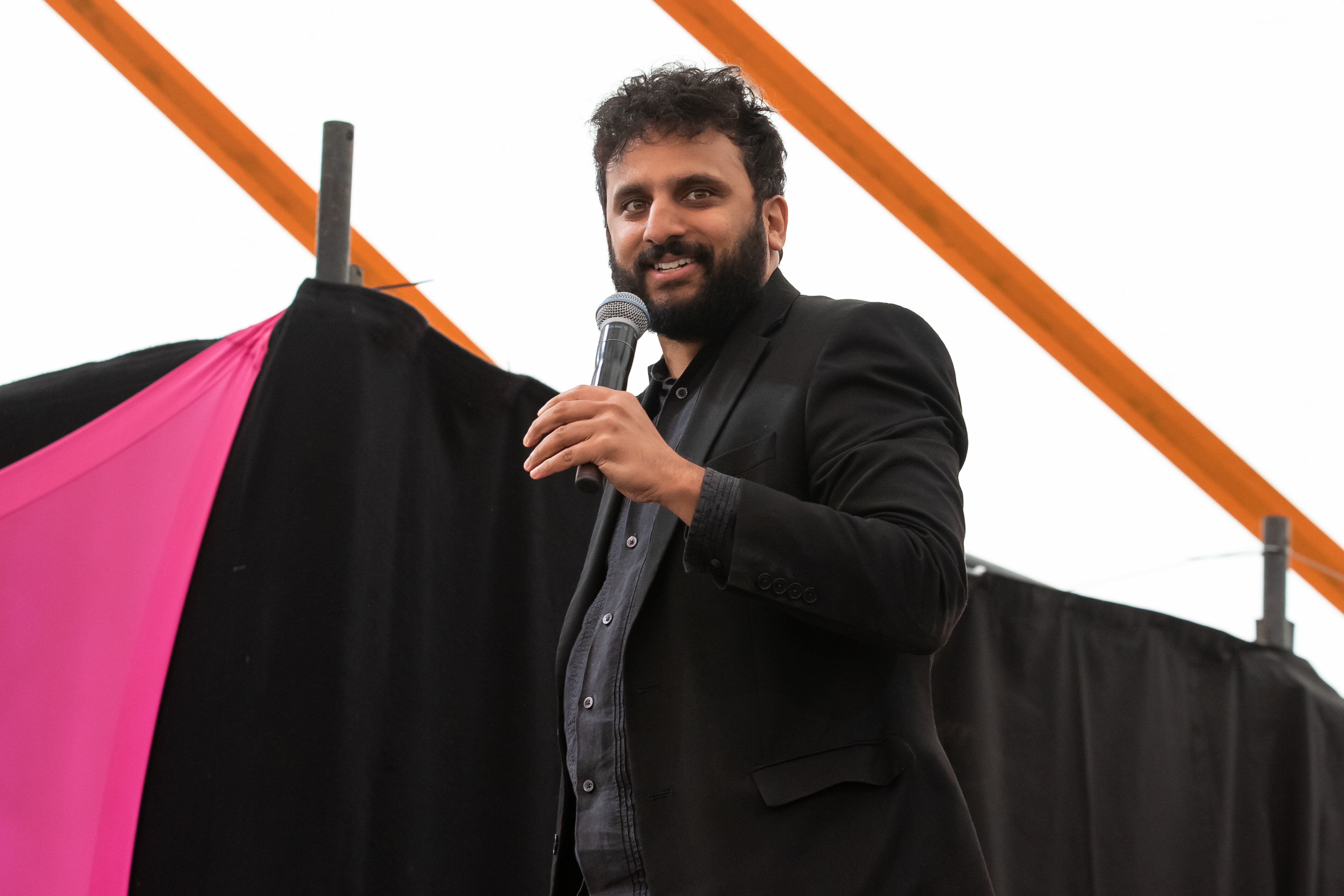
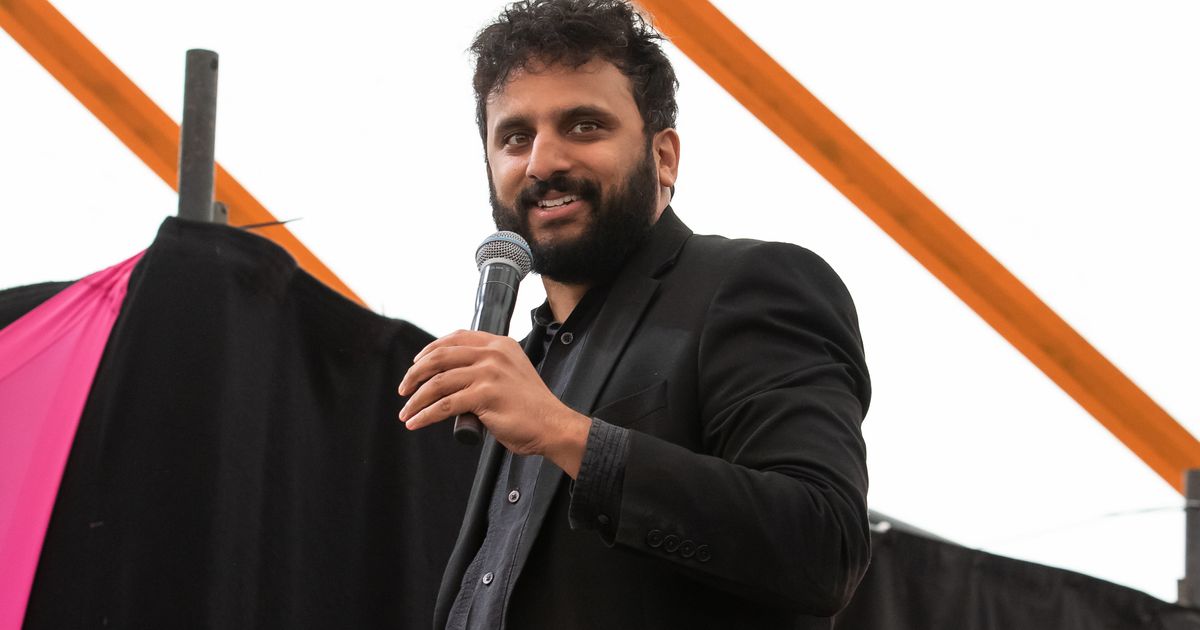
Nish Kumar performing at Latitude Festival in 2019

He added that while he doesn’t believe Tim Davie was responsible for The Mash Report not coming back: “The concern for me is that it’s a useful myth for Tim Davie to have out there, because it placates the British right. It gives the sharks a bit of blood.

“And when do sharks ever stop at a bit of blood? When do sharks ever say, ‘Thank you for the bit of blood. That was the perfect amount. Like tapas’?”

He added: “If the BBC does not say something publicly to make it clear they were not reacting to the political content of the show, it will set a bad precedent. It may well stop people pitching new programme ideas. It is not about any reassurance they may have privately given me since.”

A BBC spokesperson had no additional comment besides the original statement when contacted by HuffPost UK.

The Observer also reported that production company Zeppotron is in talks with several broadcasters about potentially reviving The Mash Report on a commercial station.

Although viewing figures for The Mash Report were usually around the one million mark, it did garner a loyal following during its four years on TV.

It was also responsible for a number of viral clips, most notably a scene featuring Rachel Parris, which was titled How Not To Sexually Harass Someone.

Share Button