Lab-made hexagonal diamonds stiffer than natural diamonds

Nature’s strongest material now has some stiff competition. For the first time, researchers have hard evidence that human-made hexagonal diamonds are stiffer than the common cubic diamonds found in nature and often used in jewelry.

Named for their six-sided crystal structure, hexagonal diamonds have been found at some meteorite impact sites, and others have been made briefly in labs, but these were either too small or had too short of an existence to be measured.

Now scientists at Washington State University’s Institute for Shock Physics created hexagonal diamonds large enough to measure their stiffness using sound waves. Their findings are detailed in a recent paper in Physical Review B.

“Diamond is a very unique material,” said Yogendra Gupta, director of the Institute for Shock Physics and corresponding author on the study. “It is not only the strongest — it has beautiful optical properties and a very high thermal conductivity. Now we have made the hexagonal form of diamond, produced under shock compression experiments, that is significantly stiffer and stronger than regular gem diamonds.”

Researchers have long wanted to create a material stronger than natural diamonds, which could have a variety of uses in industry. While many theorized that hexagonal diamonds would be stronger, the WSU study provides the first experimental evidence that they are.

Lead author Travis Volz, now a post-doctoral researcher at Lawrence Livermore National Laboratory, focused his dissertation work at WSU on the creation of hexagonal diamonds from graphite. For this study, Volz and Gupta used gunpowder and compressed gas to propel small graphite disks about the size of a dime at a speed of around 15,000 miles per hour onto a transparent material. The impact produced shockwaves in the disks that very rapidly transformed them into hexagonal diamonds.

Immediately after impact the researchers produced a small sound wave and used lasers to measure its movement through the diamond. Sound moves faster through stiffer material. Previously sound moved fastest through cubic diamond; in the lab-created hexagonal diamonds it moved faster.

Each process happened in several billionths of a second, or nanoseconds, but the researchers were able to make the stiffness measurements before the high velocity impact destroyed the diamond.

Stiffness is the ability of a material to resist deformation under a force or pressure — for instance, a rock is stiffer than rubber as rubber will bend when pressed. Hardness is the resistance to scratching or other surface deformations.

Generally stiffer materials are also harder, said Volz. While the researchers weren’t able to scratch the diamonds to test hardness directly, by measuring the diamonds’ stiffness, they can make inferences about their hardness.

If the science advances to the point where lab-made hexagonal diamonds can be created and recovered, they could have a range of uses.

“Hard materials are useful for machining capabilities,” said Volz. “Diamond has been used for a long time in drill bits, for example. Since we found that the hexagonal diamond is likely harder than the cubic diamond, it could be a superior alternative for machining, drilling or any type of application where the cubic diamond is used.”

While the industrial advantages are clear, Gupta said it is still possible hexagonal diamonds could one day be used on engagement rings. Currently lab-made cubic diamonds have less value compared to their natural peers, but hexagonal diamonds would likely be more novel.

“If someday we can produce them and polish them, I think they’d be more in-demand than cubic diamonds,” said Gupta. “If somebody said to you, ‘look, I’m going to give you the choice of two diamonds: one is lot more rare than the other one.’ Which one would you pick?”

Story Source:

Materials provided by Washington State University. Original written by Sara Zaske. Note: Content may be edited for style and length.


Share Button

Exercise, healthy diet in midlife may prevent serious health conditions in senior years

Following a routine of regular physical activity combined with a diet including fruits, vegetables and other healthy foods may be key to middle-aged adults achieving optimal cardiometabolic health later in life, according to new research using data from the Framingham Heart Study published today in the Journal of the American Heart Association, an open access journal of the American Heart Association.

Cardiometabolic health risk factors include the metabolic syndrome, a cluster of disorders such as excess fat around the waist, insulin resistance and high blood pressure. Presence of the metabolic syndrome may increase the risk of developing heart disease, stroke and Type 2 diabetes.

Researchers noted it has been unclear whether adherence to both the U.S. Department of Health and Human Services’ 2018 Physical Activity Guidelines for Americans and their 2015-2020 Dietary Guidelines for Americans — as opposed to only one of the two — in midlife confers the most favorable cardiometabolic health outcomes later in life. The physical activity guidelines recommend that adults achieve at least 150 minutes of moderate or 75 minutes of vigorous physical activity per week, such as walking or swimming. The dietary guidelines, which were updated in January 2021, offer suggestions for healthy eating patterns, nutritional targets and dietary limits.

In an analysis of data from participants of the Framingham Heart Study, which began more than 70 years ago in Framingham, Massachusetts, investigators examined data from 2,379 adults ages 18 and older and their adherence to the two guidelines. They observed that meeting a combination of the two recommendations during midlife was associated with lower odds of metabolic syndrome and developing serious health conditions as participants aged in their senior years in 2016-2019 examinations.

“Health care professionals could use these findings to further promote and emphasize to their patients the benefits of a healthy diet and a regular exercise schedule to avoid the development of numerous chronic health conditions in the present and in later life,” said corresponding author Vanessa Xanthakis, Ph.D., FAHA, assistant professor of medicine and biostatistics in the Section of Preventive Medicine and Epidemiology at Boston University School of Medicine in Boston. “The earlier people make these lifestyle changes, the more likely they will be to lower their risk of cardiovascular-associated diseases later in life.”

Study participants were selected from the third generation of the Framingham Heart Study. Participants (average age 47, 54% women) were examined between 2008 and 2011. Researchers evaluated physical activity using a specialized device known as an omnidirectional accelerometer. The device, which tracks sedentary and physical activity, was worn on the participant’s hip for eight days. Researchers also collected dietary information from food frequency questionnaires to measure the kinds and levels of food and nutrients consumed.

In this investigation, researchers observed that among all participants, 28% met recommendations of both the physical activity and dietary guidelines, while 47% achieved the recommendations in only one of the guidelines. Researchers also observed that:

  • participants who followed the physical activity recommendations alone had 51% lower odds of metabolic syndrome;
  • participants who adhered to the dietary guidelines alone had 33% lower odds; and
  • participants who followed both guidelines had 65% lower odds of developing metabolic syndrome.

“It is noteworthy that we observed a dose-response association of adherence to diet and physical activity guidelines with risk of cardiometabolic disease later in life,” Xanthakis said. “Participants who met the physical activity guidelines had progressively lower risk of cardiometabolic disease as they increased adherence to the dietary guidelines.”

All study participants were white adults, therefore, the findings cannot be generalized to people in other racial or ethnic groups. Additional studies with a multiethnic participant sample are needed, researchers said.

Story Source:

Materials provided by American Heart Association. Note: Content may be edited for style and length.

Share Button

Engineers use tiny device to change songbird pitch, improve understanding of human speech

The human brain regions responsible for speech and communication keep our world running by allowing us to do things like talk with friends, shout for help in an emergency and present information in meetings.

However, scientific understanding of just how these parts of the brain work is limited. Consequently, knowledge of how to improve challenges such as speech impediments or language acquisition is limited as well.

Using an ultra-lightweight, wireless implant, a University of Arizona team is researching songbirds — one of the few species that share humans’ ability to learn new vocalizations — to improve scientific understanding of human speech. A paper about their work was published today in the journal Nature Communications.

“Using new methods of antenna design and optimized electronics, we were able to shrink the devices dramatically compared to existing versions, to about a third of the size of a dime and as thin as a sheet of paper,” said lead author Jokubas Ausra, a biomedical engineering doctoral student in the Gutruf Lab, where the devices were created.

There are several ways the device can be used to study the link between brain behavior and vocalization. It can monitor the bird for slight temperature changes that indicate when a bird is most likely to sing. Using a technique called optogenetics, researchers can modulate neuron groups in the brain regions used for birdsong. In this study, the team found that remotely controlling specific neurons during birdsong using their unique device caused the song to change pitch.

“We are excited to expand the toolbox of neuroscientists and hope to enable many exciting studies that decipher the working principles of the brain,” said senior author Philipp Gutruf, assistant professor of biomedical engineering and Craig M. Berge Fellow in the UArizona College of Engineering.

The Gutruf Lab has developed other wireless lightweight devices used to monitor brain activity in rodents, but birds’ ability to move in 3D space represents an added challenge. This tiny device allows the birds to move without restriction — a breakthrough enabled by careful management of the energy sent wirelessly to the implant.

“Because of the small size and light weight, the birds can move freely and live permanently with the implant without affecting their behavior or health, which opens up many possibilities to study the basis for vocal communication,” said co-senior author Julie Miller, an assistant professor of neuroscience and speech, language and hearing sciences at UArizona.

The team’s next goal is to expand device capabilities to also record neuron activity. This could allow researchers to visualize brain activity during song learning and performance to gain a deeper understanding of the underlying brain mechanisms.

Story Source:

Materials provided by University of Arizona College of Engineering. Note: Content may be edited for style and length.
Share Button

Covid-19: Shielding coming to an end for millions

Wednesday is the last day millions of the most clinically vulnerable people in England and Wales are told to shield.

Share Button

Coronavirus: More work needed to rule out China lab leak theory says WHO

All possible causes of the pandemic remain on the table, says the WHO, though lab leak least likely.

Share Button

Covid: Germany limits use of AstraZeneca Covid jab for under-60s

The vaccine maker stresses that regulators find the benefits of its Covid-19 shot outweigh the risks.

Share Button

Northern Independence Party Manifesto Plan Includes Referendum On Ditching The Queen

Jonathan BradyPA

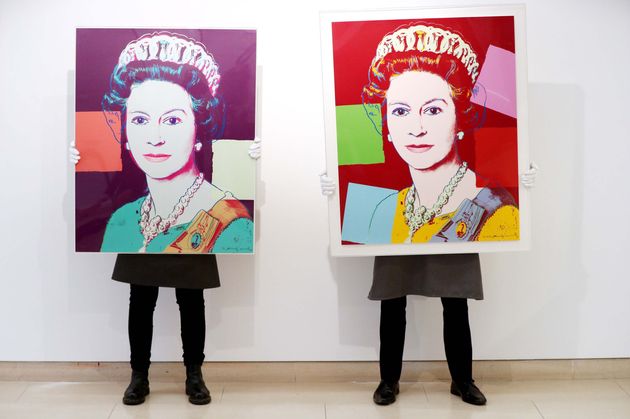
Reigning Queens screenprint by Andy Warhol

Legalisation of cannabis and referendums on ditching the Queen and scrapping the pound are among the manifesto plans of the newly formed Northern Independence Party that is fighting the Hartlepool by-election.

The draft programme of the NIP, which is a “democratic socialist” party that wants to repeat the SNP’s success in replacing Labour, calls for the public to be given a say over the currency and the monarchy alongside a raft of proposals to create a country of “Northumbria”.

The new state – which would include the north-west, north-east, Yorkshire and Humber, and Cheshire – would accept Brexit for now.

But the draft manifesto adds: “If however the people of a free North want to rejoin the EU at some point in the distant future, then that is a decision for the people.”

The NIP hopes to capitalise on discontent with Keir Starmer’s leadership by backing Thelma Walker, a former Labour MP and strong Jeremy Corbyn supporter, as a candidate in the Hartlepool by-election on May 6.

A draft “mini manifesto” for the local elections, which has been sent to members of the party for consultation but is not yet public, has been passed to HuffPost UK. A final version is expected to be ratified next week.

The mini-manifesto includes a wide range of policies including giving NHS nurses a 15% pay rise and all council workers a “real living wage” of £9.50 an hour.

Among the eclectic proposals are “an increase in the penalties for sheep worrying” to protect farmers, a lowering of the state pension age and council-run e-bike rental schemes.

Referendums of “the people of the free North” would be central to the new state, with the removal of the Queen as head of state and the creation of a new currency among the options.

“Many people in the North love the royal family, and it is not for us as a party to decide this,” the manifesto states.

“If enough people in a free North want to keep the Queen as head of state, as she is in many commonwealth countries, then she will be asked to be. If the majority of people want to be a republic, then we will be.”

Northern Independence Party

Northern Independence Party logo

It takes a similar view on whether to keep sterling. “We don’t know what the relationship between the pound, the euro, and other currencies will look like when we gain independence.

“There are important factors to consider on all sides – while introducing a new currency has costs, and would be disruptive, it could also make it easier to invest in rebuilding our hollowed-out industries, and make our exports more competitive on international markets.”

On drugs, the NIP states: “We believe that cannabis should be legalised, as it has across much of the US and Canada, and will favour harm reduction approaches to other illegal drugs.”

The manifesto also calls for privatised energy and water companies to be brought under public control locally, for more pilots of a universal basic income system and for stronger trans rights, including the legalisation to protect trans teenagers’ access to puberty blockers.

It proposes public libraries should be brought back under council or community ownership, and vows to “support local independent newspapers and journalism by writing for them, taking out adverts, and providing grants to new organisations”.

The NIP recognises that while independence is its ultimate goal, its candidates will in the short term have to “fight the system from within” by backing policies at council and Westminster level that would shift the UK in a more socialist direction.

Since its launch last year, the party has tried to use humour in its online media presence to boost its profile, recently defending the use of a whippet on its logo as a satire on perceptions of the north.

The NIP’s membership has soared since Walker was announced as its candidate for Hartlepool earlier this week, going up from 300 to 1300.

NIP co-funder Philip Proudfoot told HuffPost UK: ”A new state, in order to have buy-in and legitimacy would require lots of referendums, that direct democracy element is foundational to the project.

“If it comes to questions like ‘do you keep the monarchy?’, there’s an ongoing debate within an NIP whether we just put it in as a policy, and then if people vote for us that’s what they’re getting – or whether or not it would be a referendum to be decided.”

Proudfoot said that the party was made up of “ordinary people” ranging from farmers – who want tougher penalties to protect their sheep –  to mental health nurses, from teachers to the unemployed worried about Universal Credit.

Members are being asked for feedback on the draft manifesto ahead of a special meeting expected next week. “We’re trying to be hyper, hyper democratic,” Proudfoot said.

Referring to the cannabis policy, he added: “Our main target is of course, young, socially liberal, left-wing people living in our towns and cities in the north. What do they want? Legalisation of cannabis. It’s pretty standard now across the world, isn’t it?

“The people of Hartlepool do deserve to have a left-wing candidate. In terms of what will be our national policies, it’s kind of inspired by 2017 Labour, because that’s when the Labour party increased its vote share in the north.”

Here is a copy of the draft mini-manifesto – known as a “minifesto” – in full:

Share Button

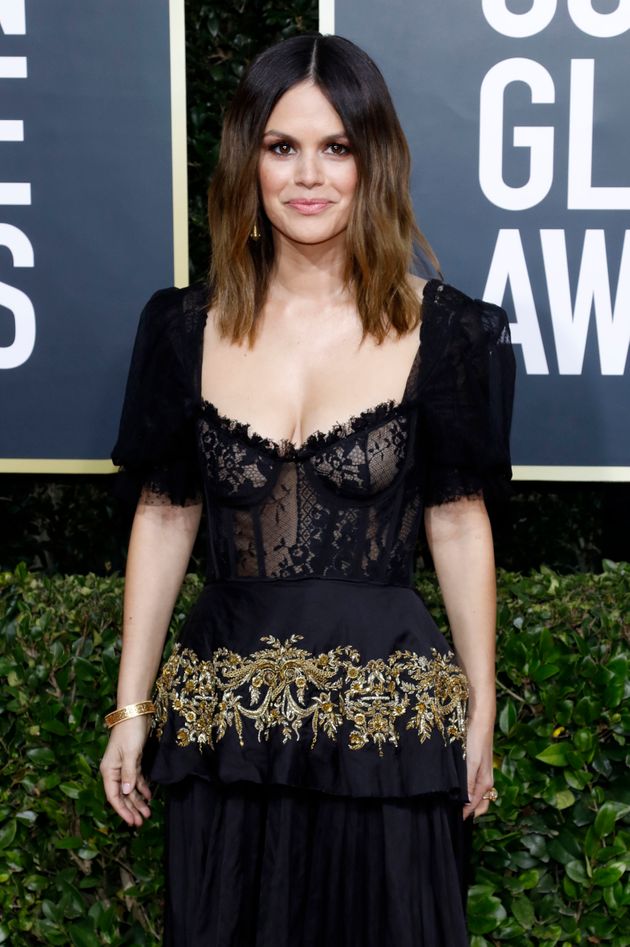
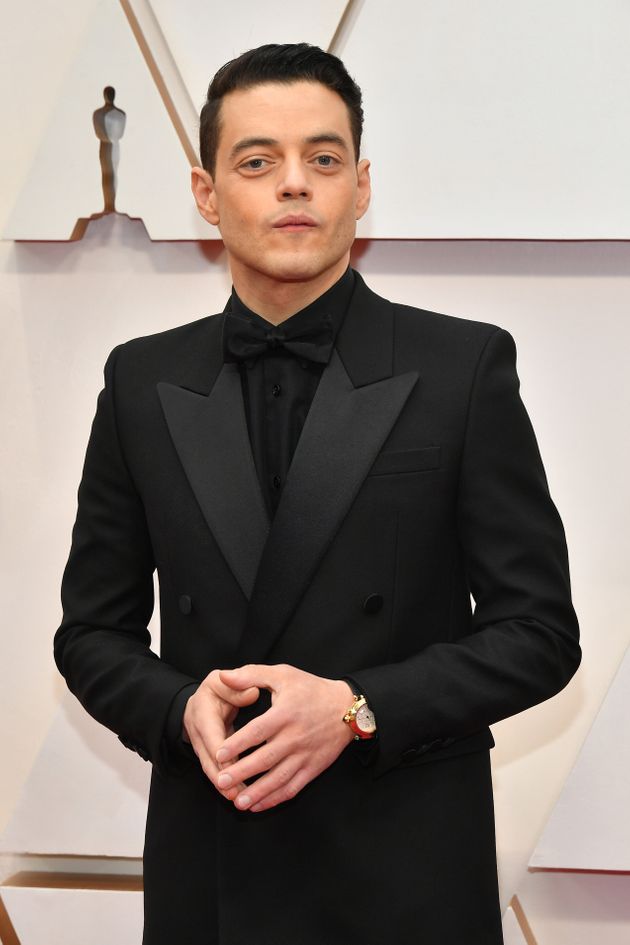
Rachel Bilson Says Rami Malek Was Less Than Impressed With Her Throwback Photo Of Them As Teenagers

Rachel Bilson and Rami Malek have apparently been involved in some drama that’s straight out of a high school yearbook.

The former star of The O.C. sat down with Dax Shepard and Monica Padman on a recent episode of their podcast, Armchair Expert, and shared an odd story about the Oscar winner.

Apparently, back in February 2019, Rachel shared a snapshot of herself and Rami in New York City when they were teenagers, in an effort to poke fun at their younger selves.

The pair were friends back in the day, having both attended Notre Dame High School in Sherman Oaks, California, so the image was a nod to where they came from.

Barcroft Media via Getty Images

Rachel Bilson

“Rami was a good friend of mine,” explained Rachel.“We were [in] the same crew. We did [the play] The Crucible together [in] senior year, we were the leads in it together— all these things.”

Rachel figured the throwback photo would be a fun way to celebrate Rami amid his various appearances at various awards shows in 2019 for his performance as Freddie Mercury in the Queen film Bohemian Rhapsody.

“Obviously, he gets super famous and he’s always been extremely talented … even in high school,” she continued.

“I had posted a throwback of us from our senior trip to New York… just the dorkiest picture of the both of us. But I throw it up [on Instagram], ’cause it’s funny and I think it’s so important to be able to make fun of yourself.”

However, she then that the image soon prompted a direct message from Rami on Instagram.

Amy Sussman via Getty Images

Rami Malek at last year’s Oscars

Rachel said that when her old friend contacted her there was no “hey! how are you?”.

“It was straight to: ‘I would really appreciate if you take that down. I’m a really private person’,” she revealed.

“I was like, ‘Oh, shit! Okay!’ I get really hot and start sweating. I’m all nervous, like, ‘Oh god! What did I do?’. He was a really good friend, it’s a funny picture … you know? I don’t take myself that seriously.”

Rachel later spoke with Rami’s stylist, a friend of hers, who said: “Well it’s not a great picture of him.”

She also said that The O.C. creator Josh Schwartz remarked on the post, telling her: “You did him dirty. He’s about to be [Oscar] nominated.”

“I removed it, and I even wrote to him a really nice message like, ‘I’m so sorry! Go get the Oscar! You’re doing amazing’,” Rachel recalled. “And I never heard anything back, which is fine.

“I was super bummed because he was so nice, and we were good friends. I’m a big fan of not taking yourself seriously, especially at that level of fame and talent. But look, he wants to be super respected. It’s his thing, so I respected it. I took it down. I was just a little bummed at how it was handled.”

Rami probably didn’t stay too upset, though. He walked away with the Oscar for Best Actor just a few weeks later.

Listen to Rachel’s full interview on the Armchair Expert podcast.

A version of this story previously appeared on the US edition of HuffPost.

Share Button

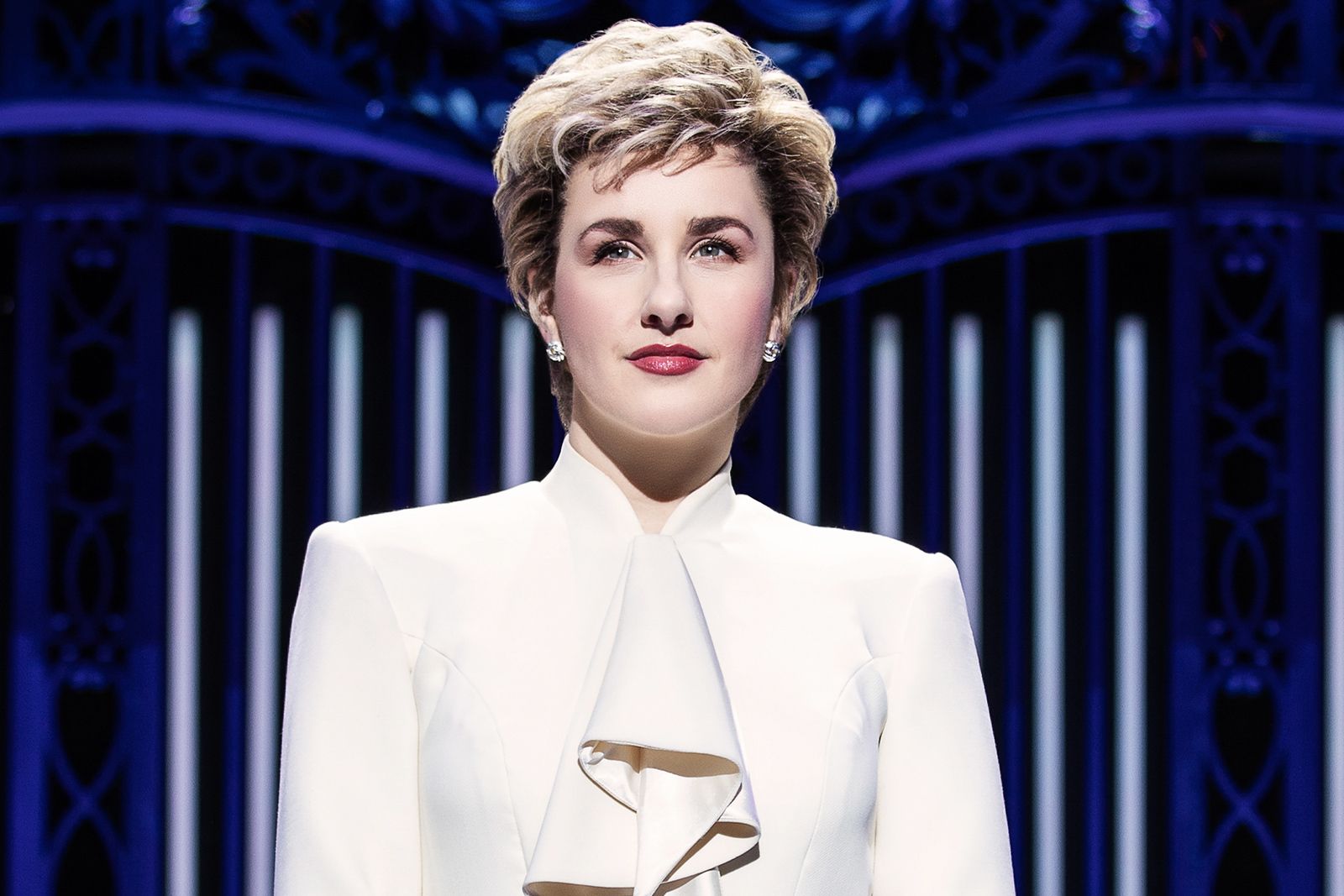
Princess Diana Musical Coming To Netflix Ahead Of Broadway Return

A new musical based on the life of Princess Diana is coming to Netflix later this year, it has been confirmed.

The stage production, titled simply Diana, began preview performances on Broadway in March 2020, but was shut down after just nine shows when theatres closed due to the pandemic.

Producers of Diana have now announced plans for the musical to reopen in December, but before that, the whole world will have the opportunity to watch it on Netflix.

A filmed version of the show, recorded in September, is set to debut on the streaming platform on 1 October, two months before its return to Broadway.

Evan Zimmerman/Matthew Murphy

Broadway performer Jeanna de Waal as Princess Diana

Frank Marshall, one of Diana’s producers, told the New York Times: “I think people will see the movie and will say, that’s a show I want to see in person.”

Beth Williams, another of its leading producers, added: “We feel like it’s an incredible opportunity to put Diana in front of the global Netflix audience, and then give them an opportunity to see it live.”

Diana features Broadway performer Jeanna de Waal in the title role, while Roe Hartrampf and Erin Davie play Prince Charles and Camilla Parker-Bowles, respectively.

Judy Kaye – who won a Tony Award for her performance in Phantom Of The Opera – also appears as Queen Elizabeth II.

HuffPost UK has contacted Netflix for clarification on whether the Diana musical will also be streaming in the UK.

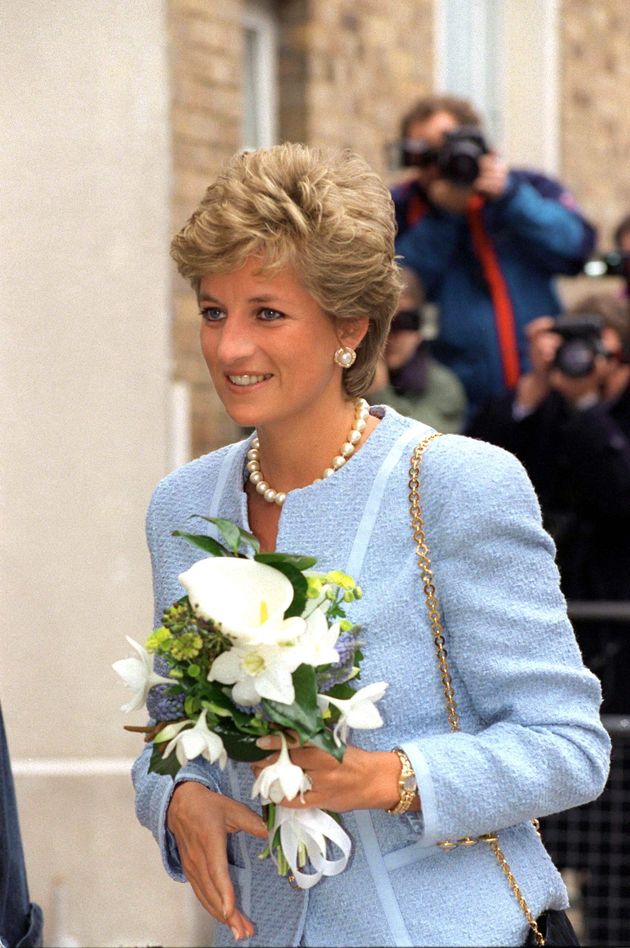
Tim Graham via Getty Images

Princess Diana pictured in 1995

Share Button

Mystery of photosynthetic algae evolution finally solved

An evolutionary mystery that had eluded molecular biologists for decades may never have been solved if it weren’t for the COVID-19 pandemic.

“Being stuck at home was a blessing in disguise, as there were no experiments that could be done. We just had our computers and lots of time,” says Professor Paul Curmi, a structural biologist and molecular biophysicist with UNSW Sydney.

Prof. Curmi is referring to research published this month in Nature Communications that details the painstaking unravelling and reconstruction of a key protein in a single-celled, photosynthetic organism called a cryptophyte, a type of algae that evolved over a billion years ago.

Up until now, how cryptophytes acquired the proteins used to capture and funnel sunlight to be used by the cell had molecular biologists scratching their heads. They already knew that the protein was part of a sort of antenna that the organism used to convert sunlight into energy. They also knew that the cryptophyte had inherited some antenna components from its photosynthetic ancestors — red algae, and before that cyanobacteria, one of the earliest lifeforms on earth that are responsible for stromatolites.

But how the protein structures fit together in the cryptophyte’s own, novel antenna structure remained a mystery — until Prof. Curmi, PhD student Harry Rathbone and colleagues from University of Queensland and University of British Columbia pored over the electron microscope images of the antenna protein from a progenitor red algal organism made public by Chinese researchers in March 2020.

Unravelling the mystery meant the team could finally tell the story of how this protein had enabled these ancient single-celled organisms to thrive in the most inhospitable conditions — metres under water with very little direct sunlight to convert into energy.

Prof. Curmi says the major implications of the work are for evolutionary biology.

“We provide a direct link between two very different antenna systems and open the door for discovering exactly how one system evolved into a different system — where both appear to be very efficient in capturing light,” he says.

“Photosynthetic algae have many different antenna systems which have the property of being able to capture every available light photon and transferring it to a photosystem protein that converts the light energy to chemical energy.”

By working to understand the algal systems, the scientists hope to uncover the fundamental physical principles that underlie the exquisite photon efficiency of these photosynthetic systems. Prof. Curmi says these may one day have application in optical devices including solar energy systems.

EATING FOR TWO

To better appreciate the significance of the protein discovery, it helps to understand the very strange world of single-celled organisms which take the adage “you are what you eat” to a new level.

As study lead author, PhD student Harry Rathbone explains, when a single-celled organism swallows another, it can enter a relationship of endosymbiosis, where one organism lives inside the other and the two become inseparable.

“Often with algae, they’ll go and find some lunch — another alga — and they’ll decide not to digest it. They’ll keep it to do its bidding, essentially,” Mr Rathbone says. “And those new organisms can be swallowed by other organisms in the same way, sort of like a matryoshka doll.”

In fact, this is likely what happened when about one and a half billion years ago, a cyanobacterium was swallowed by another single-celled organism. The cyanobacteria already had a sophisticated antenna of proteins that trapped every photon of light. But instead of digesting the cyanobacterium, the host organism effectively stripped it for parts — retaining the antenna protein structure that the new organism — the red algae — used for energy.

And when another organism swallowed a red alga to become the first cryptophyte, it was a similar story. Except this time the antenna was brought to the other side of the membrane of the host organism and completely remoulded into new protein shapes that were equally as efficient at trapping sunlight photons.

EVOLUTION

As Prof. Curmi explains, these were the first tiny steps towards the evolution of modern plants and other photosynthetic organisms such as seaweeds.

“In going from cyanobacteria that are photosynthetic, to everything else on the planet that is photosynthetic, some ancient ancestor gobbled up a cyanobacteria which then became the cell’s chloroplast that converts sunlight into chemical energy.

“And the deal between the organisms is sort of like, I’ll keep you safe as long as you do photosynthesis and give me energy.”

One of the collaborators on this project, Dr Beverley Green, Professor Emerita with the University of British Columbia’s Department of Botany says Prof. Curmi was able to make the discovery by approaching the problem from a different angle.

“Paul’s novel approach was to search for ancestral proteins on the basis of shape rather than similarity in amino acid sequence,” she says.

“By searching the 3D structures of two red algal multi-protein complexes for segments of protein that folded in the same way as the cryptophyte protein, he was able to find the missing puzzle piece.”

Share Button