A 12-week gap could leave those having two Pfizer jabs vulnerable to Covid-19, researchers suggest.


A 12-week gap could leave those having two Pfizer jabs vulnerable to Covid-19, researchers suggest.

In previous research, ancient massacre sites found men who died while pitted in battle or discovered executions of targeted families. At other sites, evidence showed killing of members of a migrant community in conflict with previously established communities, and even murders of those who were part of religious rituals.
But a more recent discovery by a research team — that includes two University of Wyoming faculty members — reveals the oldest documented site of an indiscriminate mass killing 6,200 years ago in what is now Potocani, Croatia.
“The DNA, combined with the archaeological and skeletal evidence — especially that indicating systematic violence, perhaps even execution-style — demonstrates an indiscriminate massacre and haphazard burial of 41 individuals from an early pastoralist community in what is now eastern Croatia,” says James Ahern, a UW professor in the Department of Anthropology and associate vice provost for graduate education.
Ahern was a nonsenior co-author of a paper, titled, “Genome-Wide Analysis of Nearly All the Victims of a 6,200-Year-Old Massacre,” that was published March 10 in PLOS ONE. The journal accepts research in over 200 subject areas across science, engineering, medicine, and the related social sciences and humanities.
Mario Novak, a research associate with the Institute for Anthropological Research in Zagreb, Croatia, was the paper’s lead author. Ivor Jankovic, a UW adjunct professor of anthropology and assistant director of the Institute for Anthropological Research, also was a nonsenior co-author of the study.
Other researchers who contributed to the paper were from the Universitat Pompeu Fabra in Barcelona, Spain; Harvard University; Archaeological Museum in Zagreb, Croatia; University of Zagreb; University of Vienna; Broad Institute of Harvard and Massachusetts Institute of Technology; and the Howard Hughes Medical Institute at Harvard Medical School.
In 2007, the Croatian site underwent a “rescue” excavation that occurred when the burial was uncovered during the construction of a garage on private land, Ahern says. Archaeologists, led by Jacqueline Balen of the Archaeological Museum in Zagreb, working nearby on a cultural resource impact assessment related to the construction of a motorway, were called in to investigate.
In 2012, Ahern and Jankovic, then a research scientist at the Institute for Anthropological Research, were invited by the archaeologists in charge of Potocani discoveries to analyze the skeletal remains. The skeletal remains needed to be cleaned and inventoried, and basic analysis — such as estimation of age and sex, recording of preserved elements, and basic documentation of pathologies and trauma — was conducted by Jankovic, Ahern and Zrinka Premuzic, a Ph.D. student at the University of Zagreb.
“This is the oldest known case of indiscriminate, mass killing that we know of,” Ahern says. “In some ways, it goes against the conventional wisdom about early agriculturalists — the Neolithic and Eneolithic — who have long been thought to have lived in small villages or herding groups.
“The DNA evidence indicates just a few close relatives in such a large sample, meaning that, not only was the violence seemingly indiscriminate, it involved a subset of a much larger local population.”
Prior research shows that some early farmers lived in large settlements, such as at Catalhoyuk in Western Asia; and some later Eneolithic peoples, such as those who lived at the Vucedol site in the Balkans. However, Potocani is approximately 1,000 years older than the latter settlement.
The genetic analysis revealed that 70 percent of the analyzed skeletons did not have close kin among the deceased. Additionally, there was no sex bias, as the number of males and females found at the site were almost equal in number. This indicates the massacre was not the outcome of inter-male fighting one would expect in battles, nor was the result of a reprisal event targeting individuals of a specific sex.
Cranial injuries were found on 13 of the 41 individuals massacred at the site, according to the study.
“Although we do not have evidence on the cause of death for the other individuals, their deaths were almost certainly violent,” Ahern says. “Multiple radiocarbon dates, as well as the sedimentology of the burial, all indicate a single burial event.
“Furthermore, a majority of violent deaths do not leave clear evidence of trauma in the preserved skeletal remains,” he continues. “Individuals could have been strangled, bludgeoned, cut or stabbed in soft-tissue areas or in manners that did not damage underlying bones.”
The study also considered the potential role of climate change in the mass burial event. When climate changes, resources such as water, vegetation — including feed for cattle and other livestock — and game animals become less predictable. Furthermore, hazards, such as unpredictable extreme weather, become more common.
“These factors tend to disrupt human lifeways, and groups sometimes try to take over others’ territories and resources,” Ahern explains. “Increases in population size cause groups to overextend their local resources and require expansion into other areas. Both climate change and population increase tend to cause social disruption and violent acts, such as what happened at Potocani, that become more common as groups come into conflict with each other.”
Data in the study reveal how organized violence in this period could be indiscriminate, just as indiscriminate killings have been an important feature of life in historic and modern times. The history, development and causes of human violence are crucial to our ability to understand and reduce violence in our own society, Ahern says.
“Perhaps, because of the long history of human violence and warfare and its contemporary relevance, the public is engaged by the sort of narrative about the deep human past that we’ve been able to recreate through our scientific research,” Ahern says. “Furthermore, DNA, heredity and human ancestry are issues that touch everyone’s lives. Our research also highlights UW’s global engagement and research enterprise.”

Scythian people of ancient Ukraine led more complex lives than commonly assumed, according to a study published March 10, 2021 in the open-access journal PLOS ONE by Alicia R. Ventresca Miller of the University of Michigan and colleagues.
The Scythian people, who lived across the Pontic steppe around 700-200 BCE, are often portrayed as a culture of nomadic warriors. But this idea is challenged by archaeological evidence that indicates a more complex and varied culture at this place and time. In this study, researchers employed isotopic analyses to investigate patterns of diet and mobility in Scythian populations.
The authors measured isotopes of carbon, nitrogen, oxygen, and strontium in human teeth and bones from several Scythian-era burial sites in Ukraine. Isotopes that reflect diet, indicate that in some places there was a varied diet including numerous domesticated crops, while isotopes that reflect geologic surroundings indicate that most people did not travel long distances during their lifetimes.
These results support the growing understanding that Scythian populations were not a homogenous culture, but a more diverse group which, in some places, lived more sedentary lives with a dependence on agriculture. The authors suggest that future studies should expand this work to compare multiple generations of people over more varied geographical locations. This work will help archaeologists move toward a more complete idea of what it meant to be Scythian.
The authors add: “Our multi-isotopic study challenges romantic notions of wide-ranging Scythian nomads. We show that while some individuals from classic Scythian contexts traveled long distances, the majority remained local to their settlements, farming millet and raising livestock in mixed economic systems.”
Story Source:
Materials provided by PLOS. Note: Content may be edited for style and length.

A new systematic review of 65 studies from around the world involves a total of 97,333 health care workers and finds that 1 in 5 have experienced depression, anxiety, and/or PTSD during the ongoing COVID-19 pandemic. Yufei Li, Nathaniel Scherer, and colleagues at the London School of Hygiene & Tropical Medicine, U.K., present these findings in the open-access journal PLOS ONE on March 10.
The pandemic has posed significant challenges for health care workers, with many fearing for their own safety while facing a high workload and limited psychological support. Previous analyses of data from multiple studies have revealed high rates of depression, anxiety, and PTSD among health care workers during the pandemic. However, those reviews did not adequately address the many relevant studies conducted in China, where the first COVID-19 outbreak occurred.
To address that gap, Li, Scherer, and colleagues carried out a systematic search of studies in both English and Chinese that were conducted from December 2019 to August 2020 and addressed prevalence of mental disorders in health care workers. They identified 65 suitable studies from 21 countries, involving a total of 97,333 health care workers.
By pooling and statistically analyzing data from all 65 studies, the researchers estimated that 21.7 percent of the health care workers involved in the studies have experienced depression during the pandemic, 22.1 percent anxiety, and 21.5 percent PTSD. Studies conducted in the Middle East showed the highest pooled rates of depression (34.6 percent) and anxiety (28.9 percent).
These findings suggest that the COVID-19 pandemic has significantly impacted the mental health of health care workers. For comparison, the World Health Organization estimates that 4.4 percent of the entire world population experience depression, and 3.6 percent experience anxiety disorders, including PTSD. However, those estimates were determined through different methods and prior to the pandemic.
Nonetheless, the authors note, the new findings could help inform policy and initiatives to provide urgently needed psychological support to health care workers.
The authors add: “This systematic review and meta-analysis provides, to date, the most comprehensive synthesis of depression, anxiety and PTSD prevalence amongst health care workers during the COVID-19 pandemic, with the unique inclusion of publications in both English and Chinese.”
Story Source:
Materials provided by PLOS. Note: Content may be edited for style and length.
Scientists say the findings could also help identify those most at risk of dying from Covid-19.
Experts and parents criticise approach as reports emerge of pupils incorrectly told they have virus.
Press Association
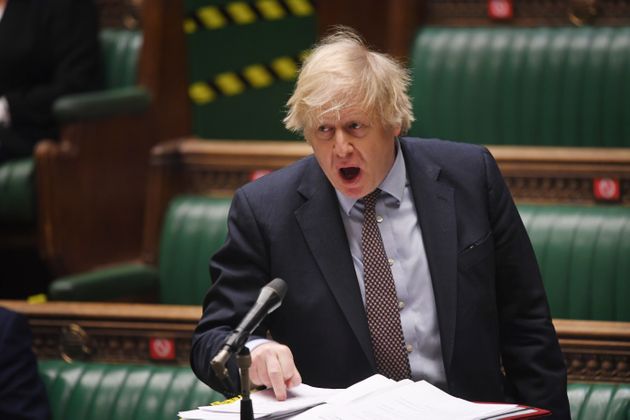
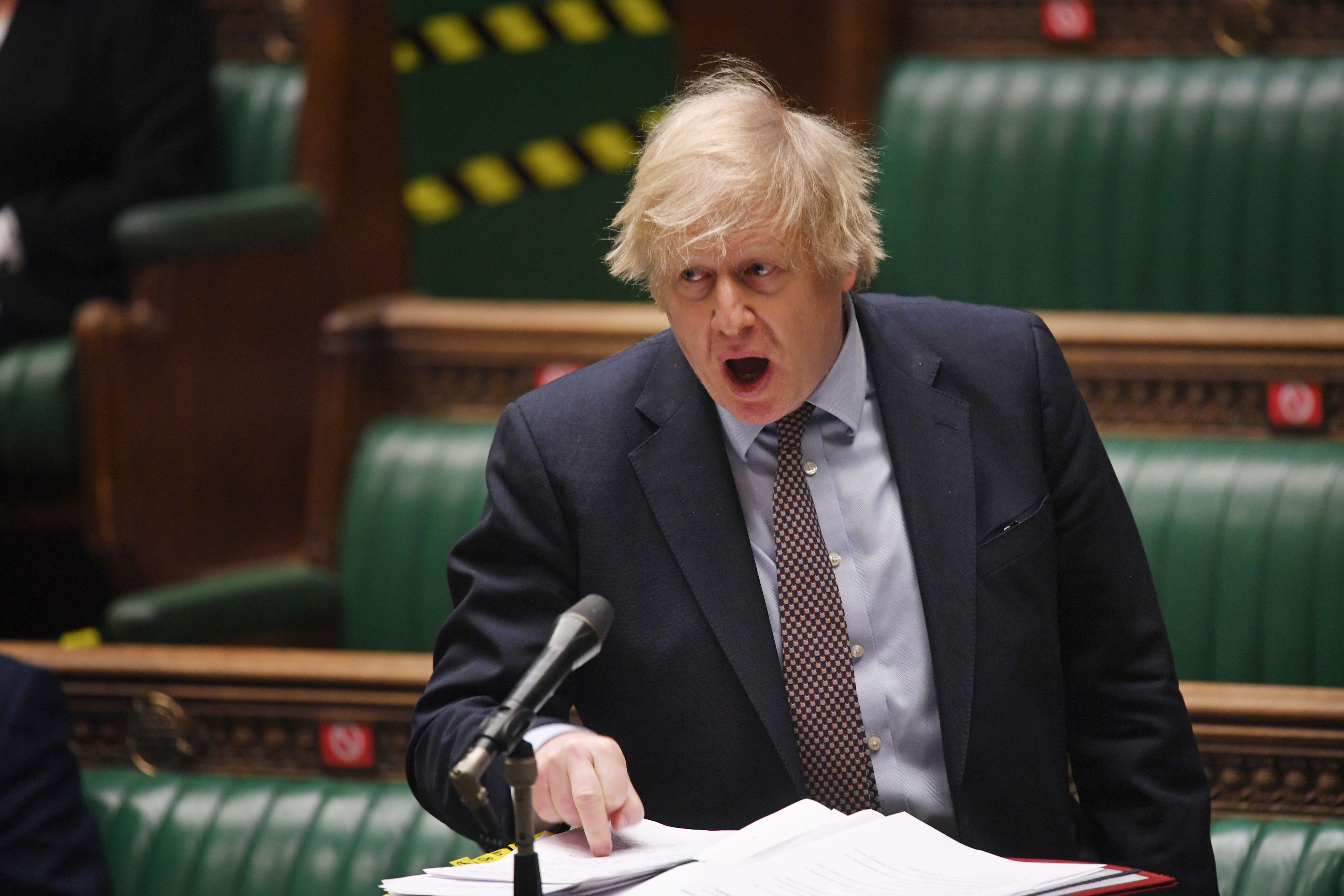
Boris Johnson has refused to apologise after falsely claiming Labour voted against a pay rise for nurses.
The prime minister, who is under fire for his offer to give hard-pressed NHS staff a 1% pay rise, had claimed that Keir Starmer’s party had opposed earlier government plans to give health workers a 2.1% hike.
The move, part of the NHS funding bill, was never put to a vote but Johnson’s aides have rejected calls for the PM to say sorry or even correct his mistake.
During prime minister’s questions on Wednesday, Johnson told MPs: “The last time we put it to a vote, he (Starmer) voted against it.”
Shadow health secretary Jonathan Ashworth raised a point of order with Commons speaker Lindsay Hoyle after the session.
He said: “The prime minister twice from that despatch box said that the Labour opposition voted against the NHS Funding Bill and the 2.1% increase for NHS staff – this is not the case.
“Indeed, in the debate, as Hansard will show, I was explicit that we would not be dividing the House.”
Hoyle ruled that it was “certainly a point of clarification” but by that point Johnson had left the chamber.
Johnson’s press secretary Allegra Stratton, who later faced questions from journalists, refused to offer any apology from the PM.
She said: “The speaker addressed it in the House immediately after the shadow health secretary and the speaker regarded it as a point of clarification, and he regarded it as having been dealt with.”
Pressed more than 10 times on whether Johnson would accept he was wrong about claiming there was a vote, Stratton repeated the line and said simply said it was “appropriate” for the speaker to clarify the point.
She insisted that Johnson was “concerned about the truth of these matters”, she added “it would be difficult if the speaker had not addressed it”.
Asked about the ministerial code, which says government ministers should correct any error “at the earliest opportunity”, Stratton insisted that “the system worked”, suggesting the speaker corrected the mistake.
During PMQs, Johnson hinted nurses may be in line for a bigger rise than the 1% proposed by the government.
Labour has called for a larger rise for all NHS staff and has demanded the government put plans to a vote.
Ian West/PA Photos
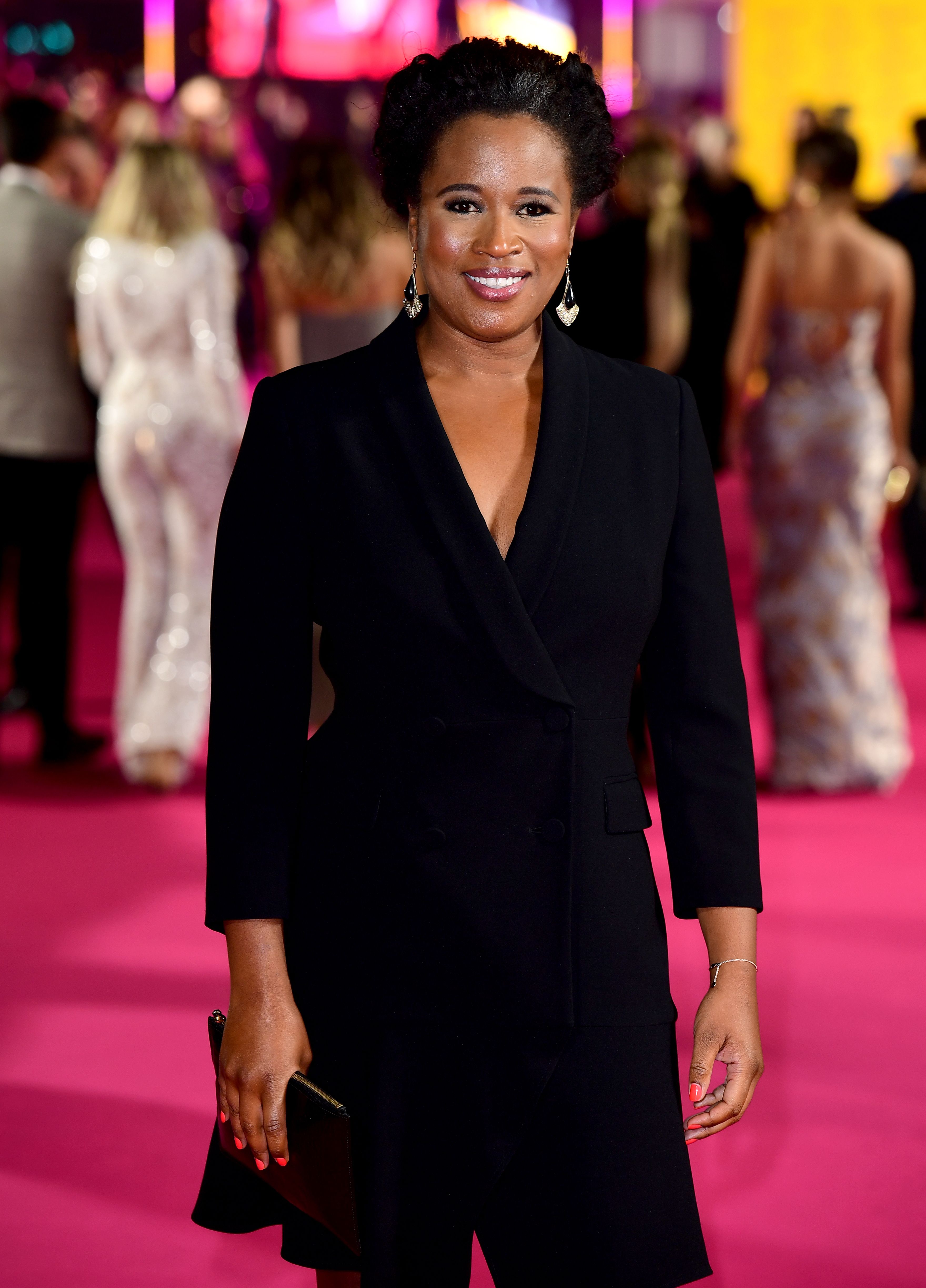
Award-winning journalist and Loose Women panellist Charlene White has pulled out of hosting the Society of Editors’ National Press Awards following the Society’s widely ridiculed claim that the UK media is “not racist”.
In a statement sent to the SoE’s executive director Ian Murray, seen by HuffPost UK, White cited the much-criticised statement, released on Monday in the wake of Harry and Meghan’s interview with Oprah Winfrey.
“Perhaps it’s best for you to look elsewhere for a host for your awards this year,” she said.
“Perhaps someone whose views align with yours: that the UK press is the one institution in the entire country who has a perfect record on race.”
The first Black woman to present the ITV News At Ten, White worked in several senior broadcasting roles at the BBC before joining ITN in 2008.
In 2020 she made her debut appearance as a guest presenter on Loose Women, and it was announced in January that she would become a regular in the wake of Andrea McLean’s exit from the show.
The National Press Awards, organised by the SoE, are set to take place on March 31, recognising outstanding coverage by journalists in the UK across 2020. Among the shortlisted candidates is HuffPost UK’s own Aasma Day, for her work on “reporting diversity”.
White, who has been involved in the awards as a judge for several years, called out the SoE’s inconsistent approach to racism and representation in the media, writing: “Your organisation approached me to become a judge for its awards and to work alongside you because at that time it was hugely lacking in terms [of] being a fair reflection of the UK population. In other words, the nominations and winners list involved very few non-white journalists.
“This is not an unusual scenario, unfortunately. Over the years several organisations have been held to account for eradicating and ignoring the work of ethnic minority professionals – and women.
“So, you told me you wanted that to change. In fact, we spoke at length about it.
“But here’s the thing. I only work with organisations who practise what they preach. My time is precious, so I’d rather not waste it.”
Murray, in a statement published on Monday, sparked a backlash against the organisation when he claimed: “The UK media has never shied away from holding a spotlight up to those in positions of power, celebrity or influence.
“If sometimes the questions asked are awkward and embarrassing, then so be it, but the press is most certainly not racist.”
His assertion, which he went on to defend in a heated interview with Victoria Derbyshire on Tuesday, was fiercely criticised – not least by members of the SoE’s own board, who said they were “deeply angry” about the way they had been represented.
The SoE represents almost 400 members in senior positions across the UK media, several of whom have now publicly declared their opposition to Murray’s statement.
More than 168 journalists, writers and broadcasters from Black and Asian backgrounds across the media on Tuesday signed an open letter describing the SoE’s position as “laughable” proof of “an institution and an industry in denial”.
In her statement, White said: “Since the Black Lives Matter movement really took hold in the UK last year, every single institution in this country has had to finally look at its failings and its position in terms of how they treat ethnic minorities both inside and outside of its walls.
“But for some unknown reason, you feel as though the UK press is exempt in that discussion. I could list the many many studies that have been done on this, or I could quote facts and figures regarding the correlation between the lack of diversity in newsrooms and the way stories are covered.
“But I’m not your personal Google.
“What I am is a Black woman who has consistently stood up for what she believes in, irrespective of the impact it would have on my career.”
The SoE has since added a clarification to its original statement, rowing back only slightly on Murray’s claim that the UK press is “not bigoted”.
The addition reads: “The Society of Editors has a proud history of campaigning for freedom of speech and the vital work that journalists do in a democracy to hold power to account.
“Our statement on Meghan and Harry was made in that spirit but did not reflect what we all know: that there is a lot of work to be done in the media to improve diversity and inclusion.
“We will reflect on the reaction our statement prompted and work towards being part of the solution.”

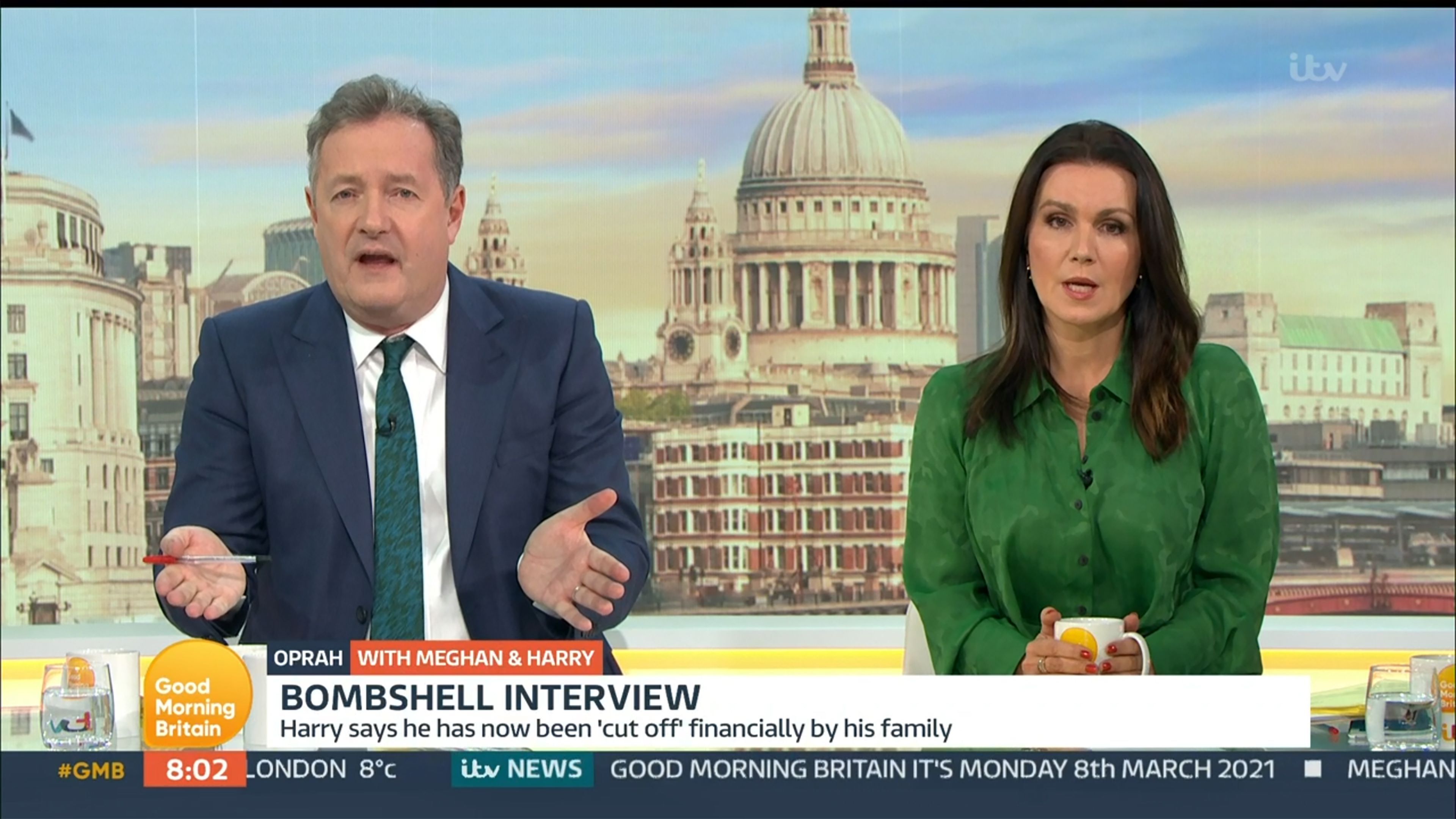
Meghan Markle formally complained to ITV about Piers Morgan before he exited Good Morning Britain, according to multiple reports.
The PA news agency reports that someone lodged the grievance with the broadcaster on the Duchess’ behalf, following controversial comments he made about her live on air following her US TV interview with Oprah Winfrey.
PA understands that Meghan’s concern was not about the personal attacks on the validity of her racism allegation made against a member of the royal family, or her claims she was not supported by the institution when experiencing suicidal thoughts.
Instead, the complaint is said to focus on how Piers’ comments may affect the issue of mental health generally and those attempting to deal with their own problems.
Rex
The claims were also independently reported by the Guardian and the Telegraph when it was revealed over 41,000 people had complained to TV watchdog Ofcom over Piers’ remarks, with the story also featuring on ITV’s own lunchtime news bulletin on Wednesday.
ITV declined to comment when contacted by HuffPost UK.
The broadcaster confirmed the divisive presenter had left its flagship breakfast show on Tuesday, after he cast doubt on Meghan’s revelation during her interview that she had experienced suicidal thoughts after joining the Royal Family.
Telling Oprah of how there was a time where she “didn’t want to be alive anymore”, Megan continued: “I said that I needed to go somewhere to get help. And I said that I’d never felt this way before. I need to go somewhere. And I was told that I couldn’t, because it wouldn’t be good for the institution.”
On the following morning’s edition of GMB, Piers said: “I’m sorry, I don’t believe a word she says.”
While co-host Susanna Reid shared her shock at Piers’ lack of sympathy, he continued: “I wouldn’t believe her if she read me a weather report, and the fact that she’s fired up this onslaught against our royal family, I think is contemptible.”

Getty
Piers had previously been criticised by mental health charity Mind, who work with ITV on its Britain Get Talking initiative.
Ofcom is now investigating whether Good Morning Britain broke broadcasting rules it has for harm and offence by airing Piers’ comments.
Since leaving the programme, he has doubled down on his remarks in a tweet, writing: “On Monday, I said I didn’t believe Meghan Markle in her Oprah interview. I’ve had time to reflect on this opinion, and I still don’t. If you did, OK.
“Freedom of speech is a hill I’m happy to die on. Thanks for all the love, and hate. I’m off to spend more time with my opinions.”
He also insisted his exit from GMB was “amicable” and that he and ITV bosses “agreed to disagree”.
On Wednesday, Piers’ GMB co-host Susanna Reid said the show “will go on” in his absence.
Useful websites and helplines
Mind, open Monday to Friday, 9am-6pm on 0300 123 3393.
Samaritans offers a listening service which is open 24 hours a day, on 116 123 (UK and ROI – this number is FREE to call and will not appear on your phone bill).
CALM (the Campaign Against Living Miserably) offer a helpline open 5pm-midnight, 365 days a year, on 0800 58 58 58, and a webchat service.
The Mix is a free support service for people under 25. Call 0808 808 4994 or email help@themix.org.uk
Rethink Mental Illness offers practical help through its advice line which can be reached on 0808 801 0525 (Monday to Friday 10am-4pm). More info can be found on rethink.org.


It was set up to help prevent lockdowns but there have been two more since its launch, MPs say.
