There was a 75% reduction in staff at Addenbrooke’s Hospital testing positive after a vaccination.


There was a 75% reduction in staff at Addenbrooke’s Hospital testing positive after a vaccination.
Over-40s will be first in line from mid-April after the top nine priority groups receive one dose.

The UK’s Covid R rate has remained between 0.6 and 0.9, scientists advising the government have said.
R measures the number of people, on average, that each sick person will infect.
If R is greater than 1 the epidemic is generally seen to be growing; if R is less than 1 the epidemic is shrinking.
The estimate, published on Friday and provided by the Scientific Advisory Group for Emergencies (Sage) and the Department for Health and Social Care, is the same as last week.
In England as a whole, the R rate is 0.7 to 0.9, while regionally it is as follows:
East of England – 0.6 to 0.8 (last week 0.6 to 0.8)
London – 0.6 to 0.8 (0.6 to 0.8)
Midlands – 0.7 to 0.9 (0.6 to 0.9)
North-east and Yorkshire – 0.7 to 0.9 (0.7 to 1.0)
North-west – 0.7 to 0.9 (0.6 to 0.9)
South-east – 0.7 to 0.9 (0.6 to 0.8)
South-west – 0.6 to 0.8 (0.6 to 0.9)
In Scotland the latest figures estimate the R rate is between 0.7 and 0.9, the same as last week.
In Wales the R rate has also remained the same, estimated to be between 0.7 and 0.9.
And in Northern Ireland it is estimated to be between 0.8 and 1.5.
It comes as the government announced it would accept the recommendation from its scientific advisers that the next phase of the vaccine rollout should continue to be based on age.
The Joint Committee on Vaccination and Immunisation (JCVI) said the under-50s should be give priority in this order:
It rejected demands that key workers, such as teachers, be bumped up the list irrespective of age.
The JCVI said targeting occupational groups would be more complex to deliver and could slow down the vaccine programme, leaving some more vulnerable people at higher risk unvaccinated for longer.
The latest official figures show 18,691,835 people have so far been offered at least one dose of a vaccine.

Blossom is coming to the UK – in a big way. The National Trust has announced it’ll be planting more blossoming tree circles in towns and cities across the country “to help signal reflection and hope” following the pandemic.
The conservation charity hopes to spark an annual marking of the season akin to Japan’s hanami – the ancient tradition of viewing and celebrating cherry blossom as the first sign of spring.
The hope is to extend our newfound appreciation of nature that got so many people through the first lockdown in spring 2020, and to give tourism a bit of a boost once it’s able to resume.
The first new blossom circle will be at the Queen Elizabeth Olympic Park in east London and will include 33 UK-grown trees, including cherry, plum, hawthorn and crab apple, to represent the 33 London boroughs.
It’ll be joined by more blossom-friendly green spaces in and around urban areas over the next five years, to connect more people to nature.
Can’t wait until then? Here’s some amazing blossom photos from around the world to get you in the mood for spring.
Press Association
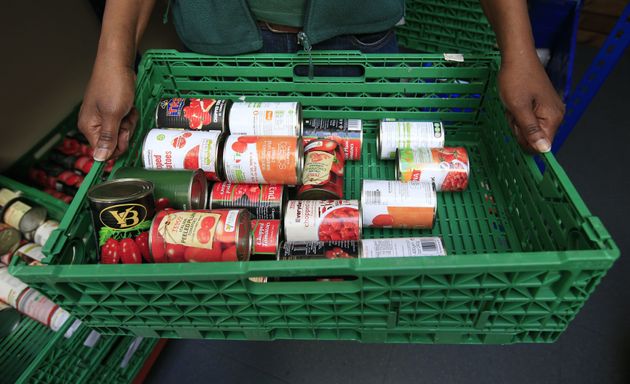
Boris Johnson’s government has buried an internal review into whether welfare policies like Universal Credit are driving historic levels of food bank use.
The Department for Work and Pensions (DWP) began a study in 2018 investigating the impact of Universal Credit and other reforms were having on food poverty.
Ministers were due to complete work in October 2019 but the snap general election campaign delayed the report, with MPs told it would be published in summer 2020.
Now, the government appears to have shelved the report altogether.
Welfare minister Will Quince confirmed in a written statement that the DWP has “reallocated resources to prioritise work to help the Covid-19 effort”.
It comes after a Trussell Trust analysis found there had been a 61% increase in food bank use between October and December, and that families with children have been worst-hit by Covid uncertainty.
Ministers have been under pressure to stamp out food poverty, with Manchester United footballer Marcus Rashford leading a high-profile campaign for free school meals.

Press Association
Labour MP Neil Coyle, who uncovered that the research has been shelved, told HuffPost UK: “The government claims its policies are not responsible for the dramatic rise in food bank use and food poverty since it came to power a decade ago, but the DWP won’t even publish its own research into how Universal Credit causes food bank dependency.
“Ministers have sat on the findings of government research for a year and a half and appear in deep denial about the level of the problem and the direct impact of their policies.
“Until ministers admit the link between their policies and rising food bank dependency, they will continue to see campaigns like that of Marcus Rashford, expose the extent of the problem their policies have caused and be forced into more humiliating climb-downs and more reactive, stopgap measures which cost taxpayers more overall.”
The £200,000 DWP study was set up to examine “policy or operational practice that may have contributed to a rise in demand for food bank services”.
In 2019, UN special rapporteur Philip Alston found that poverty in the UK was “systemic” and “tragic”.
Quince said in the statement that the government had been supporting families struggling during the pandemic with welfare payments and extra cash handed to councils.
He said: “Throughout this pandemic, this government has delivered an unprecedented package of support to protect jobs and businesses and, for those in most need, injected billions into the welfare system.
“The new Covid Winter Grant Scheme builds on that support with an additional £170m for local authorities in England, to support families with children and other vulnerable people with the cost of food and essential utilities this winter.”
The monarch, who had her first dose of the vaccine in January, said it “didn’t hurt at all”.
A bill to give ministers maternity pay will change, after peers reject the use of the term “person”.

COVID-19 can be diagnosed in 55 minutes or less with the help of programmed magnetic nanobeads and a diagnostic tool that plugs into an off-the-shelf cell phone, according to Rice University engineers.
The Rice lab of mechanical engineer Peter Lillehoj has developed a stamp-sized microfluidic chip that measures the concentration of SARS-CoV-2 nucleocapsid (N) protein in blood serum from a standard finger prick. The nanobeads bind to SARS-CoV-2 N protein, a biomarker for COVID-19, in the chip and transport it to an electrochemical sensor that detects minute amounts of the biomarker.
The researchers argued their process simplifies sample handling compared to swab-based PCR tests that are widely used to diagnose COVID-19 and need to be analyzed in a laboratory.
“What’s great about this device is that doesn’t require a laboratory,” Lillehoj said. “You can perform the entire test and generate the results at the collection site, health clinic or even a pharmacy. The entire system is easily transportable and easy to use.”
The research appears in the American Chemical Society journal ACS Sensors.
Lillehoj and Rice graduate student and lead author Jiran Li took advantage of existing biosensing tools and combined them with their own experience in developing simple diagnostics, like a microneedle patch introduced last year to diagnose malaria.
The new tool relies on a slightly more complex detection scheme but delivers accurate, quantitative results in a short amount of time. To test the device, the lab relied on donated serum samples from people who were healthy and others who were COVID-19-positive.
Lillehoj said a longer incubation yields more accurate results when using whole serum. The lab found that 55 minutes was an optimum amount of time for the microchip to sense SARS-CoV-2 N protein at concentrations as low as 50 picograms (billionths of a gram) per milliliter in whole serum. The microchip could detect N protein in even lower concentrations, at 10 picograms per milliliter, in only 25 minutes by diluting the serum fivefold.
Paired with a Google Pixel 2 phone and a plug-in potentiostat, it was able to deliver a positive diagnosis with a concentration as low as 230 picograms for whole serum.
“There are standard procedures to modify the beads with an antibody that targets a particular biomarker,” Lillehoj said. “When you combine them with a sample containing the biomarker, in this case SARS-CoV-2 N protein, they bond together.”
A capillary tube is used to deliver the sample to the chip, which is then placed on a magnet that pulls the beads toward an electrochemical sensor coated with capture antibodies. The beads bind to the capture antibodies and generate a current proportional to the concentration of biomarker in the sample.
The potentiostat reads that current and sends a signal to its phone app. If there are no COVID-19 biomarkers, the beads do not bind to the sensor and get washed away inside the chip.
Lillehoj said it would not be difficult for industry to manufacture the microfluidic chips or to adapt them to new COVID-19 strains if and when that becomes necessary.
The National Institutes of Health, the National Science Foundation and the Rice University COVID-19 Research Fund supported the research.
Story Source:
Materials provided by Rice University. Note: Content may be edited for style and length.

After traveling several billion miles toward the Sun, a wayward young comet-like object orbiting among the giant planets has found a temporary parking place along the way. The object has settled near a family of captured ancient asteroids, called Trojans, that are orbiting the Sun alongside Jupiter. This is the first time a comet-like object has been spotted near the Trojan population.
The unexpected visitor belongs to a class of icy bodies found in space between Jupiter and Neptune. Called “Centaurs,” they become active for the first time when heated as they approach the Sun, and dynamically transition into becoming more comet-like.
Visible-light snapshots by NASA’s Hubble Space Telescope reveal that the vagabond object shows signs of comet activity, such as a tail, outgassing in the form of jets, and an enshrouding coma of dust and gas. Earlier observations by NASA’s Spitzer Space Telescope gave clues to the composition of the comet-like object and the gasses driving its activity.
“Only Hubble could detect active comet-like features this far away at such high detail, and the images clearly show these features, such as a roughly 400,000-mile-long broad tail and high-resolution features near the nucleus due to a coma and jets,” said lead Hubble researcher Bryce Bolin of Caltech in Pasadena, California.
Describing the Centaur’s capture as a rare event, Bolin added, “The visitor had to have come into the orbit of Jupiter at just the right trajectory to have this kind of configuration that gives it the appearance of sharing its orbit with the planet. We’re investigating how it was captured by Jupiter and landed among the Trojans. But we think it could be related to the fact that it had a somewhat close encounter with Jupiter.”
The team’s paper appears in the February 11, 2021 issue of The Astronomical Journal.
The research team’s computer simulations show that the icy object, called P/2019 LD2 (LD2), probably swung close to Jupiter about two years ago. The planet then gravitationally punted the wayward visitor to the Trojan asteroid group’s co-orbital location, leading Jupiter by about 437 million miles.
Bucket Brigade
The nomadic object was discovered in early June 2019 by the University of Hawaii’s Asteroid Terrestrial-impact Last Alert System (ATLAS) telescopes located on the extinct volcanoes, one on Mauna Kea and one on Haleakala. Japanese amateur astronomer Seiichi Yoshida tipped off the Hubble team to possible comet activity. The astronomers then scanned archival data from the Zwicky Transient Facility, a wide-field survey conducted at Palomar Observatory in California, and realized that the object was clearly active in images from April 2019.
They followed up with observations from the Apache Point Observatory in New Mexico, which also hinted at the activity. The team observed the comet using Spitzer just days before the observatory’s retirement in January 2020, and identified gas and dust around the comet nucleus. These observations convinced the team to use Hubble to take a closer look. Aided by Hubble’s sharp vision, the researchers identified the tail, coma structure and the size of the dust particles and their ejection velocity. These images helped them confirm that the features are due to relatively new comet-like activity.
Although LD2’s location is surprising, Bolin wonders whether this pit stop could be a common pull-off for some sunward-bound comets. “This could be part of the pathway from our solar system through the Jupiter Trojans to the inner solar system,” he said.
The unexpected guest probably will not stay among the asteroids for very long. Computer simulations show that it will have another close encounter with Jupiter in about another two years. The hefty planet will boot the comet from the system, and it will continue its journey to the inner solar system.
“The cool thing is that you’re actually catching Jupiter flinging this object around and changing its orbital behavior and bringing it into the inner system,” said team member Carey Lisse of the Johns Hopkins University Applied Physics Laboratory (APL) in Laurel, Maryland. “Jupiter controls what’s going on with comets once they get into the inner system by altering their orbits.”
The icy interloper is most likely one of the latest members of the so-called “bucket brigade” of comets to get kicked out of its frigid home in the Kuiper belt and into the giant planet region through interactions with another Kuiper belt object. Located beyond Neptune’s orbit, the Kuiper belt is a haven of icy, leftover debris from our planets’ construction 4.6 billion years ago, containing millions of objects, and occasionally these objects have near misses or collisions that drastically alter their orbits from the Kuiper belt inward into the giant planet region.
The bucket brigade of icy relics endure a bumpy ride during their journey sunward. They bounce gravitationally from one outer planet to the next in a game of celestial pinball before reaching the inner solar system, warming up as they come closer to the Sun. The researchers say the objects spend as much or even more time around the giant planets, gravitationally pulling on them — about 5 million years — than they do crossing into the inner system where we live.
“Inner system, ‘short-period’ comets break up about once a century,” Lisse explained. “So, in order to maintain the number of local comets we see today, we think the bucket brigade has to deliver a new short-period comet about once every 100 years.”
An Early Bloomer
Seeing outgassing activity on a comet 465 million miles away from the Sun (where the intensity of sunlight is 1/25th as strong as on Earth) surprised the researchers. “We were intrigued to see that the comet had just started to become active for the first time so far away from the Sun at distances where water ice is barely starting to sublimate,” said Bolin.
Water remains frozen on a comet until it reaches about 200 million miles from the Sun, where heat from sunlight converts water ice to gas that escapes from the nucleus in the form of jets. So the activity signals that the tail might not be made of water. In fact, observations by Spitzer indicated the presence of carbon monoxide and carbon dioxide gas, which could be driving the creation of the tail and jets seen on the Jupiter-orbiting comet. These volatiles do not need much sunlight to heat their frozen form and convert them to gas.
Once the comet gets kicked out of Jupiter’s orbit and continues its journey, it may meet up with the giant planet again. “Short-period comets like LD2 meet their fate by being thrown into the Sun and totally disintegrating, hitting a planet, or venturing too close to Jupiter once again and getting thrown out of the solar system, which is the usual fate,” Lisse said. “Simulations show that in about 500,000 years, there’s a 90% probability that this object will be ejected from the solar system and become an interstellar comet.”
Video: https://www.youtube.com/watch?v=x-Ikmr5IPys&feature=emb_logo

The pandemic has made clear the threat that some viruses pose to people. But viruses can also infect life-sustaining bacteria and a Johns Hopkins University-led team has developed a test to determine if bacteria are sick, similar to the one used to test humans for COVID-19.
“If there was a COVID-like pandemic occurring in important bacterial populations it would be difficult to tell, because before this study, we lacked the affordable and accurate tools necessary to study viral infections in uncultured bacterial populations,” said study corresponding author Sarah Preheim, a Johns Hopkins assistant professor of environmental health and engineering.
The findings were published today in Nature Microbiology.
Sick bacteria are stymied in their function as decomposers and as part of the foundation of the food web in the Chesapeake Bay and other waterways. Determining viral infections in bacteria traditionally relies on culturing both bacteria and virus, which misses 99% of bacteria found in the environment because they cannot be grown in culture, Preheim says, adding that tests of viral infections in uncultured bacteria are expensive and difficult to apply widely, not unlike the early stages of COVID-19 testing.
The key to making a test of viral infections for uncultured bacteria faster and more affordable was to isolate single bacterial cells in a small bubble (i.e. an emulsion droplet) and fuse the genes of the virus and bacteria together once inside.
“The fused genes act like name tags for the bacteria and viruses,” said lead author Eric Sakowski, a former postdoctoral researcher in Preheim’s laboratory who is now an assistant professor at Mount St. Mary’s University. “By fusing the genes together, we are able to identify which bacteria are infected, as well as the variant of the virus that is causing the infection.”
The resulting test provides a novel way to screen for viral infections in a subset of bacterial populations. The test allows researchers to identify a link between environmental conditions and infections in Actinobacteria, one of the most abundant bacterial groups in the Chesapeake Bay and one that plays a crucial role in decomposing organic matter, making nutrients available to plants and photosynthetic algae.
Though the researchers developed this tool studying the Chesapeake Bay, they say their approach could be widely applied across aquatic ecosystems, shedding light on viral ecology and helping predict — and even prevent — devastating environmental impacts.
“This testing tool allows us to track viral infections more easily, so we can monitor these infections to see when they are most likely to have important environmental consequences,” Preheim said.
Sakowski said the new test could someday also affect how we treat bacterial infections.
“Viruses show potential for treating infections caused by antibiotic-resistant bacteria,” he said. “Knowing which viruses most effectively infect bacteria will be critical to this type of treatment.”
Preheim’s team also included Johns Hopkins doctoral student Keith Arora-Williams, and Funing Tian, Ahmed A. Zayed, Olivier Zablocki, and Matthew B. Sullivan, all from the Ohio State University.
Support was provided by the National Science Foundation and the Gordon E. and Betty I. Moore Foundation.
Story Source:
Materials provided by Johns Hopkins University. Note: Content may be edited for style and length.
