No 10 declines to say if it will be done by the time hospitality venues in England are due to reopen.


No 10 declines to say if it will be done by the time hospitality venues in England are due to reopen.
HuffPost is part of Verizon Media. Click ‘I agree‘ to allow Verizon Media and our partners to use cookies and similar technologies to access your device and use your data (including location) to understand your interests, and provide and measure personalised ads. We will also provide you with personalised ads on partner products. Learn more about how we use your data in our Privacy Centre. Once you confirm your privacy choices here, you can make changes at any time by visiting your Privacy dashboard.
Click ‘Learn more‘ to learn and customise how Verizon Media and our partners collect and use data.

If you’re one of the many runners who jumped for joy when allowed to exercise outdoors again, you do, however, need to be aware that you’ll be braving the cold during your daily run now that it’s winter.
Winter weather brings its own risks – being exposed to cold air and rain, running out in the dark and dealing with wet, slippery sidewalks and paths can set us up for sniffles, coughs and injuries if we aren’t careful. Here are some tips to stay healthy and safe during training without setting yourself up for a trip to the emergency room or doctor’s office.
1. Layer up
Avoid being exposed to the cold by dressing the part. Long-sleeve tops and leggings from made from moisture-wicking fabric will keep your limbs covered and protected against the rain, while also absorbing sweat. If you’re cold and wet, you ‘re more likely to catch the common cold or seasonal flu. While the weather isn’t directly responsible for making you sick, the colder weather can weaken your body’s immune system, making you more prone to getting ill, which you want to avoid, especially during the Covid-19 pandemic.
2. Boost your immune system
A strong immune system is key to staying healthy, but even more so in winter, when you want to ward off unwelcome colds and flu. Viruses such as influenza tend to survive longer outside in colder air, ready to pounce on a human host.
Boost your immune system by eating plenty of fruit and vegetables. Eating healthy might not be high on your agenda during cold weather, when comfort food sounds more attractive, but be creative with your vegetables and enjoy nutritious vegetable soups, curries, or stir fries packed with flavour. Stuck for ideas? These 11 healthy and warming winter recipes from Food24 may be a good start.
3. Mind your breathing
You have to wear a mask or buff over your mouth and nose while exercising outdoors under the latest regulations. Your lungs and ears might, however, thank you for this extra measure of protection when it’s cold outside.
According to Dr Craig Jones, an ear, nose and throat specialist from the Harvard-affiliated Massachusetts Eye and Ear institute, cold air can disrupt the protective moisture layer that lines your lower airways by causing it to evaporate faster than it can be replaced. This effect can be even worse in those prone to respiratory illnesses such as bronchitis and those who are suffering from conditions such as asthma.
When covering your neck, mouth and nose with a buff, it can reduce respiratory risk by warming the face, warming the air you breathe and increasing moisture, especially if you live in a cold, dry climate.
If you still feel uncomfortable running with a mask or buff, practise breathing through your nose as your mask will remain dryer for longer and it will cause less disruption in the airways. Dr Jones explains that when you breathe through your nose, cold air is warmed and moisturised as it passes through the nose, throat and upper airway, so, by the time it reaches the lower airway, it is usually warm enough not to disrupt the moisture layer there.
4. Stay safe
Colds and flu are unfortunately not your only winter worries when training outside. As we are currently not allowed to train in organised groups, we have to venture outside on our own. This can be more dangerous when it gets darker earlier and stays darker outside until later for several reasons. Not only are you a softer target for potential attackers, but you are also more at risk of injuring yourself when there is limited visibility. Combine this with wet, slippery leaves on sidewalks and you can almost guarantee yourself a stumble.
Dress in reflective clothing and wear a headlamp if you are training early in the morning. This will make it easier for drivers on their way to work to spot you. Always let members of your household know when you are going out, which route you will be taking and how long you will be away. Many runners prefer not to take a mobile phone with them as it raises their risks for being mugged, but if you’re able to call someone for help in case of an injury, this can reduce your risk of more danger. Keep your phone hidden by stashing it into a runner’s belt or pocket.
Music may motivate us, but keep the volume down if you wear earphones. This will allow you to be more aware of your surroundings and potential risks such as oncoming cars.
READ | Why do you cough after exercise?
READ | How to boost your immune system while training during winter
READ | Yes, you can still exercise if you have lung disease. Here’s how
Image credit: Burst from Pexels
NEXT ON HEALTH24X


Children have mostly had mild cases of the coronavirus – the elderly and those who have pre-existing chronic conditions and weakened immune systems seem to have more severe cases of Covid-19. Scientists have been trying to unravel this mystery for months.
One of the proposed reasons is that with age, comes a deterioration of the immune system, and with that, as a previous Health24 article explains, chronic diseases such as high blood pressure and diabetes, ultimately make it harder to fight off infections.
A recent study, published in The Lancet, states that increasing evidence points to the difference in the condition of blood vessels between adults and children. The study was carried out by 10 researchers who studied the arteries of adults infected with Covid-19, and said that this may shed further light on why children are at extremely low risk of becoming ill when contracting the virus.
Clotting and a malfunctioning endothelium
The team of researchers looked at three Covid-19 adult patients, aged 71, 58 and 69, two of whom died. They found that the virus infected one of the patients’ endothelium, and led to inflammation and signs of clotting. Endothelial cells participate in several physiological functions, and are known for acting as a barrier between blood and body tissue and work to prevent blood clotting.
According to a 2012 study published on IntechOpen, ageing influences endothelial cells and cause a progressive deterioration of their function, which may explain why children are more protected from serious effects of Covid-19, such as stroke.
Lead researcher of the study, Frank Ruschitzka, a cardiologist at the University Hospital Zurich in Switzerland told Nature that many adults who present with severe Covid-19, experience clotting in their blood vessels, which can lead to heart attacks or strokes, and explained that the clotting appeared to be linked to a malfunctioning endothelium.
The role of blood clot formation
Blood clots usually form when triggered by a cut or injury, for example, and work to stop the bleeding. However, they can also form due to a damaged endothelium. Through their study results, the research team suggests that issues with the endothelium have commonly presented in many severe or fatal adult Covid-19 cases.
For people with conditions that compromise the endothelium, such as diabetes and hypertension, this may possibly explain why they are also at a high risk of experiencing severe Covid-19, Marcel Levi, a haematologist at University College Hospital told Nature.
However, because the recent study involved just three adults, further investigation into these complications is needed, Ruschitzka said.
Children and ‘healthy blood vessels’
Paul Monagle, paediatric haematologist at the Melbourne Children’s Campus told Nature that scientists believe children’s blood vessels are better able to withstand a viral attack than adults, and added that the fact that case studies show few children with Covid-19 present with excessive clotting and damaged vessels may support this.
However, Monagle is trying to determine what exactly occurs when SARS-CoV-2 enters the endothelial cells, and has, therefore, launched two experiments to see if there may be something “protective” about children’s blood vessels that causes an unlikelihood of excess clot production in response to a viral infection.
Lung damage in paediatric Covid-19
Another recent study, reported by Health24, involved a case investigation published in the American Journal of Roentgenology (AJR) that showed that most (77% of patients studied) young Covid-19 patients have negative chest CT findings. Simply put, their lungs present as normal and no damage is found.
Professor Eugene Weinberg, a paediatric allergologist who was on the News24 Frontline panel discussion on Wednesday, also stressed that in children who contract the virus, only 1% have severe symptoms and the rest mild or no symptoms.
Statistics further indicate that in South Africa, out of a total of 1 210 deaths (recorded on 10 June), only six occurred in people under the age of 20.


Breathable and transparent – this could be the face of future surgical masks thanks to Swiss researchers from science and technology university EPFL.
Dreamed up by the EssentialTech Centre of the university, they created a disposable surgical mask where patients can see the whole face of healthcare professionals while being treated.
Called HelloMasks, they also founded the startup HMCare to market it. There has been a boom in mask production around the world, and this surge in demand helped them to easily raise around R17.6 million to start the manufacturing process.
READ: Masks and Covid-19: How, when and why – the latest guidelines
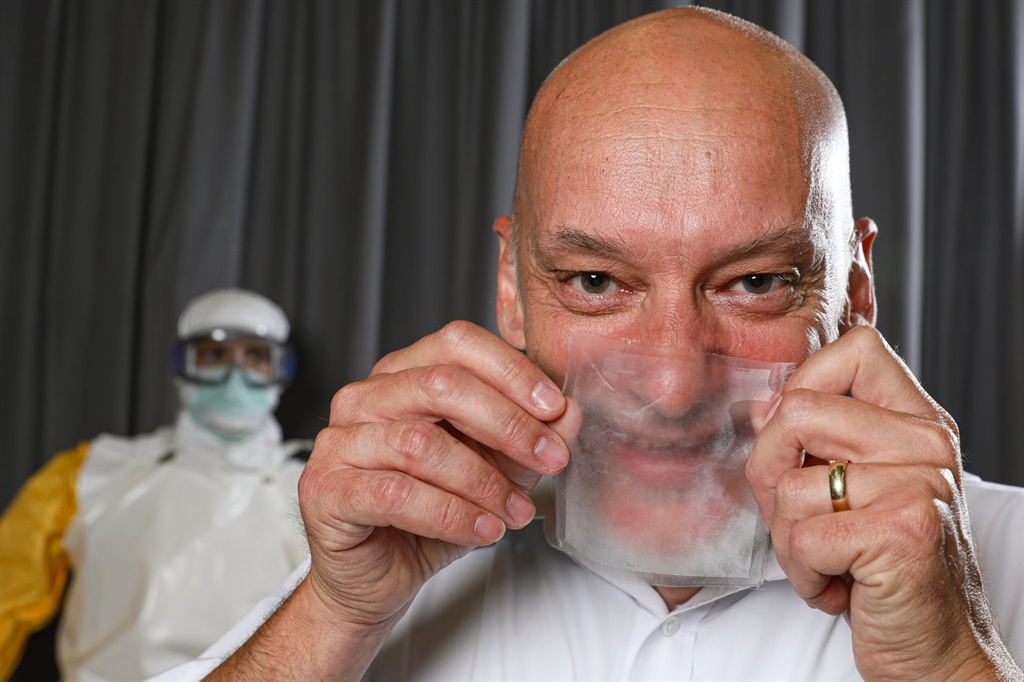
Their timing couldn’t be better. They started working on the mask two years ago – before the start of the pandemic – because they saw a need for medical practitioners to better communicate with their patients while keeping their masks on. This is especially useful for children, patients that have hearing issues, and the elderly – all who depend on visual cues for communication.
A smile from a healthcare worker also goes a long way to comfort patients.
This was the general spirit behind the idea for the masks. Klaus Schönenberger, head of the centre, worked during the Ebola outbreak in West Africa in 2015, and saw nurses pinning photos of themselves to their chests so that patients could tell what they looked like under all the protective gear.
He got together with Thierry Pelet, now the CEO of the start-up, and Sacha Sidjanski, a project manager at EPFL’s School of Life Sciences, who were both inspired by a storyteller at a hospital who was saddened that ill children couldn’t see her facial expression while she was entertaining them.
READ: Running with a mask – what you should know, and how to choose the right one
[embedded content]
“Looking online, you can find prototypes of masks that are partly transparent, but they’re just normal masks with some of the fabric replaced by clear plastic,” says Pelet. These masks also fog up because the plastic isn’t breathable.
The transparent membrane material made from polymer is biomass-based, eco-friendly, and better yet, breathable.
[Photo of mask material]Sample of the mask’s material. (Photo: EPFL)
While designed originally for healthcare professionals – to whom it will be sold first – with the pandemic they may start marketing it to the public at large. This would be especially useful for the deaf community during the pandemic.
They are hoping to launch in 2021
Image credit: Photo courtesy EPFL

Thousands of extra staff are deployed as passengers are told to cover their faces or risk being fined.
Scientists from Imperial College London believe a hormone imbalance could be responsible.
In the later years of Walt Disney’s life, he actively worked on his vision for EPCOT (Experimental Prototype Community of Tomorrow). His intention was to build a complete city of the future – a place for people to live and work in harmony. His designs included a central downtown hub with skyscrapers, Monorails and People Movers for transportation, houses for people to live in, entertainment centers, parks, waste management, and more. It was a big picture vision that he’d been working on for many years, including a deep study of urban planning.
When Walt died his EPCOT vision unfortunately died with him. No one else was willing and able to carry it forward. The real Epcot Center that was built in Orlando after Walt’s death would barely qualify as a shadow of what Walt actually wanted to build. His vision was much grander than another theme park.
What killed this dream? The answer is smoking.
Walt was a heavy smoker and had some serious health issues because of it, including lung cancer. Even as his health and energy were declining, he kept trying to work on this project, but his long-term habit of smoking got the better of him and cut his vision to shreds. He passed away in 1966 at the age of 65, not long after having a lung removed. At least he was able to say goodbye to the people he cared about.
Walt largely hid his smoking habit from the public, not allowing himself to be filmed or photographed smoking. He tried to quit of course but didn’t succeed, and in the end this nasty habit took him down.
Imagine what he could have done with an extra 10 or 20 years. The utopian city of tomorrow might actually have been built, at least the 1960s version of it. That could have created many interesting ripples.
Some forms of baggage can not only slow you down but can kill your dreams. It’s better to release this baggage while you can instead of dragging it into you future, year after year and decade after decade.
What’s your current baggage? Is there some nasty habit or inner demon that’s been burdening you? What happens if you carry it forward for the rest of your life? Even if it doesn’t damage your health, does it have the potential to crush your dreams?
We often hate to slow down and deal with our baggage, but sometimes that’s the intelligent choice. Imagine if Walt took a couple of years to put other aspects of life on pause and to do whatever it took to quit smoking when he was younger. Perhaps he could have retained two healthy lungs and spent an extra decade or more working on his biggest dreams.
With the current virus situation, there’s been a chance to slow down many aspects of life. For many people this is a good time to process and clear out old baggage, so we can release what no longer serves us.
Your baggage might be bad habit, but it could just as well be something else – a misaligned job, a misaligned relationship, a misaligned social circle, etc. What’s creating the most drag in your life when you try to advance towards your goals? What do you think would happen if you finally released it?
Processing your baggage won’t be easy, but admitting the truth that you absolutely must deal with it is a good step. Embracing and accepting the truth puts you on a path to greater freedom. Even when that’s difficult, don’t revert to denial. Just keep facing the daunting challenge.
Walt could have quit smoking. Many other people have done so. He didn’t make that enough of a priority in his life though. He didn’t do what was necessary to process that baggage.
Whatever is dragging you down is most likely a solvable problem, especially if many other people have already overcome similar burdens. It’s good to remind yourself of that often. Your problems have solutions. Your baggage doesn’t have to be permanent. Other people have processed and released similar baggage. And so can you.
