David Walliams Dropped By Publisher HarperCollins Over ‘Inappropriate Behaviour’

Comedian, children’s author and former Britain’s Got Talent star David Walliams has been dropped by HarperCollins UK following an investigation into his conduct.

A spokesperson for the publisher told the The Telegraph: “After careful consideration, and under the leadership of its new CEO, HarperCollins UK has decided not to publish any new titles by David Walliams.

“HarperCollins takes employee well-being extremely seriously and has processes in place for reporting and investigating concerns.”

However, HarperCollins UK commented in their statement to The Telegraph that “to respect the privacy of individuals, we do not comment on internal matters.”

Former employees also told the publication that they were advised to work in pairs when meeting with Walliams and not to visit his home.

The Little Britain star is one of the UK’s most successful children’s authors, having written 40 books, which have sold more than 60 million copies worldwide and been translated into 55 languages.

HuffPost UK has contacted Walliams’ representatives for comment.

Share Button

Resident doctors in Scotland to go on strike for first time

Their union BMA Scotland has accused the government of reneging on a commitment to restore pay to 2008 levels.

Share Button

I Went Into Nursing To Help People – Until I Could No Longer Defend What I Was Being Asked To Do

It is hard to explain what it is really like to work as a nurse inside a hospital. The experience is almost impossible to understand unless you have lived it. There is no real-world equivalent to a bad shift in nursing.

Most people do not understand how working three days a week can drain a person so deeply that they spend their days off unable to function. Or why night shift nurses sleep through almost their entire stretch of days off. Or why we cannot always be fully present for our families.

The answer is exhaustion — physical, mental and moral.

When I graduated, I knew nursing would be difficult, but I did not understand what difficult truly meant. My first medical-surgical job showed me immediately. Our ratio was eight patients to one nurse. The charge nurse, the person meant to be the extra support, also carried a full patient load.

Normal was med passes that took hours, often starting one round of medications before finishing the last. Normal meant having to push charting to the end of the shift, and hoping your documentation made sense when you were already 15 hours into a 12-hour shift. Breaks were rare. Getting to go to the bathroom was luck. There was no time to think, much less feel.

Early in my career, one of the most capable nurses I knew accidentally gave the wrong medication to a patient because she was drowning in the workload. Instead of asking what changes could prevent something like that from happening again, our manager asked me what I thought. I was a brand new nurse. I told the truth: The system set her up to fail. She has eight patients. No one can do this safely.

He looked at me and said, “If that is your opinion, you are never going to make it in nursing.”

I carried that moment with me for years. It was the first time I understood that in hospital culture, leadership said the right things about honesty and safety, but the reality did not match the words. Speaking up about real problems was treated as an inconvenience. Vulnerability was something you were expected to swallow. What mattered was endurance.

Eventually, I moved into paediatrics. The ratio was better, but it wasn’t any less intense. Children can look fine one moment and be critically unstable the next. Parents needed reassurance, explanations and someone to translate what was happening. It was a different kind of emotional work.

When the pressure mounted, communication was always the first thing to break. Once, a child went to surgery and never returned to the room. No one told the parents or the unit that the child had been transferred to the ICU. They waited quietly, expecting their child to come back until I told them their child was in intensive care and that we needed to go immediately. Under normal circumstances, someone would have updated them. It was another cut.

I asked leadership whether anyone was tracking these lapses. In every setting I had worked before, investigating what went wrong was standard practice. Leadership told me someone, somewhere, was handling it. It never felt like an answer.

So I moved into leadership as a house supervisor, where I could see the hospital from the top down. I believed that if I could understand the system at a higher level, maybe I could help fix what was breaking.

Instead, I learned how powerless we really were.

As house supervisor, I existed between two worlds. Floor nurses often blamed me for every gap in staffing. Upper leadership expected me to justify every instinct I had. If I believed a unit needed more help, even as I could feel the tension rising on the floor, I had to wake up a director in the middle of the night and explain why. Most of the time, the answer was no.

But the hardest part was not staffing. It was enforcing policies I no longer believed in.

People imagine a nurse quits after one traumatic night or a tragic patient death. That is not how it happens. Most of us enter nursing because we want to help people, because we believe it is our calling, because we think we can make a difference. What breaks you is not one catastrophe. It is the accumulation of moments when you knew what should have been done and were not allowed to do it.

There were nights when I had to walk into a room with security behind me and tell a family member they had to leave. Not because the situation was unsafe. Not because they were disruptive. But because the rulebook said they could not stay.

One night stands out more than any other. A parent begged me to let both of their children stay. One child had been admitted. The other could not be left alone. They pleaded for them to remain together. I called leadership and asked for an exception. I was told there were no exceptions.

I was placed in the position of having to enforce a rule that would separate a family in the middle of the night, with one child remaining in the hospital and the other sent home. That was the moment I knew I was not practicing nursing anymore. I was enforcing rules that made no human sense. Rules that hurt families. Rules that I could not find a way to defend.

Burnout did not hit me all at once. It settled into my body and refused to leave. I began experiencing chest tightness and hyperventilation on the drive to work. I had my heart checked, but I knew it was not cardiac. Panic attacks mimic heart failure. I had seen enough of both to know the difference.

I thought stepping into leadership would give me the tools to fix what was breaking. It did not. The panic worsened. That was when I realised I did not need a new unit or a new specialty. I needed a new life. Something quieter. Something more human.

So I left.

The author working outside in her new life.

Photo Courtesy Of Melissa Main

The author working outside in her new life.

Public health felt like the one corner of nursing where the stakes were not life or death every single minute. I moved to a rural county where many families lived off-grid, and I became the only public health nurse for the region. I imagined helping with water access, housing instability, food shortages and clothing needs. My family started our own life in Michigan in a camper, filling five-gallon jugs by hand and navigating limited heat and water, so I understood the community.

But even in public health, the work was limited by funding and politics. Instead of addressing big problems, I found myself focused on vaccines, birth control and disease contact tracing. All important, but much smaller scale than the work the community needed. Then the funding cuts began. Programs froze. Jobs were eliminated. Leadership reminded us every few months that no one’s job was safe, not even theirs. Instead of building long-term public health, we were waiting for the next round of layoffs.

Then the shutdown happened, and the writing was on the wall. How do you serve a community when the structure meant to support it is being dismantled faster than you can help? I realised I could not keep practicing nursing inside systems that were dissolving beneath me.

We say nurses “leave the profession,” but you never really do. I did not stop being a nurse, but I stepped to the side of nursing.

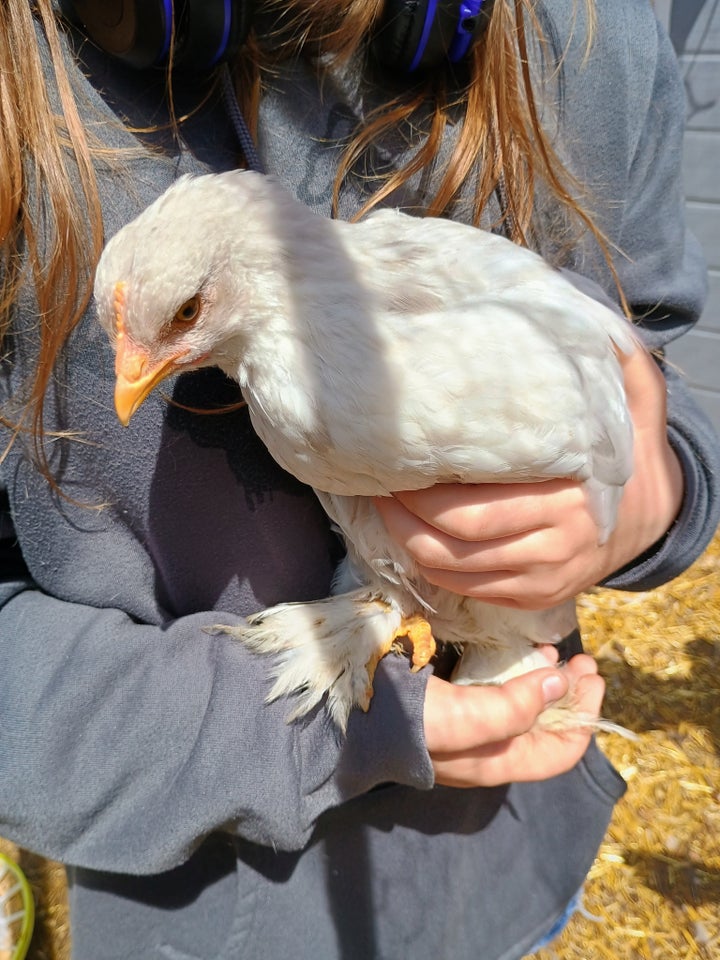
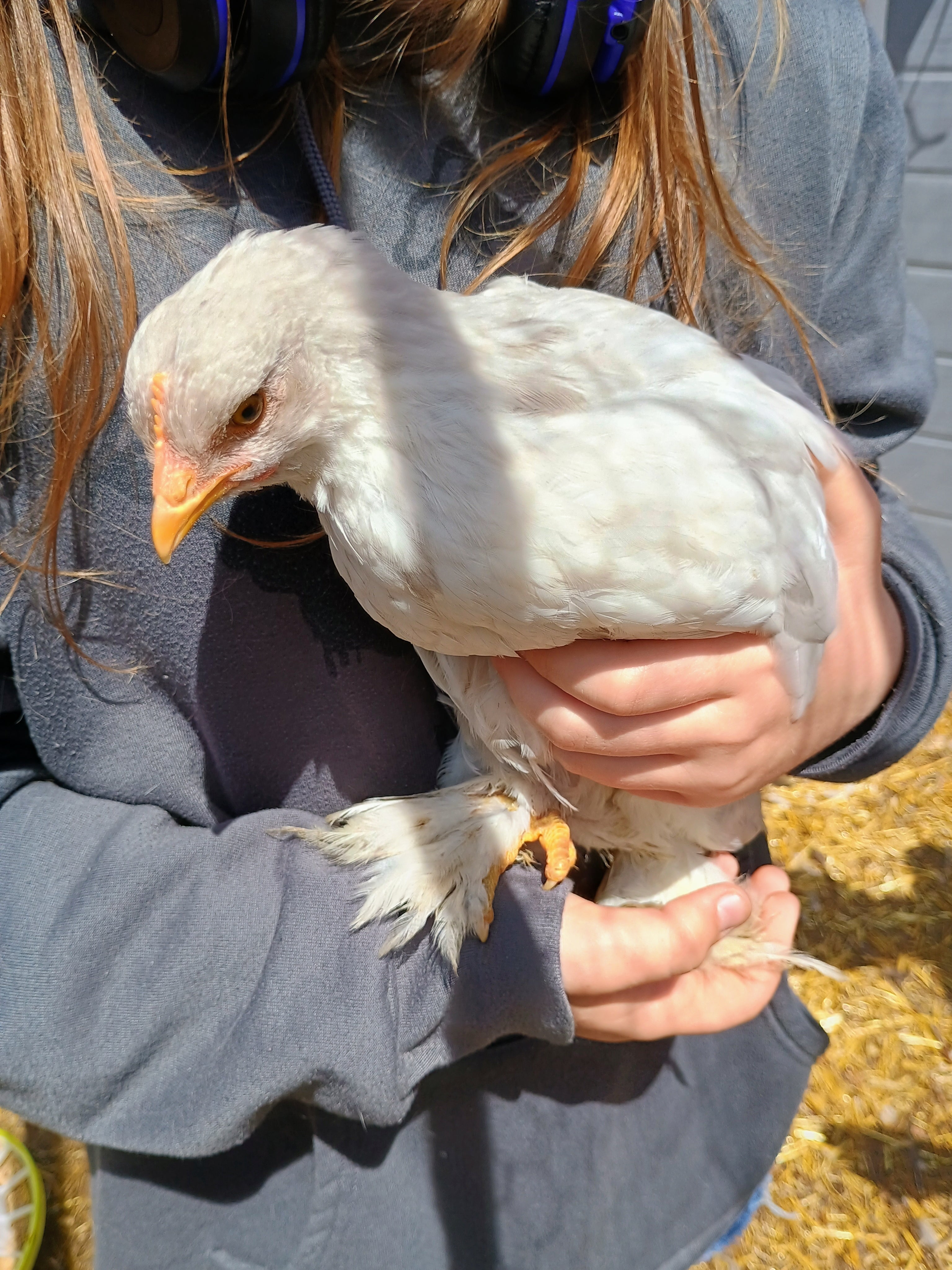
Out here in the woods, I began to feel like myself again. I wake with the sun. I tend to the animals who depend on me. Building a homestead was not only survival. It became a new way to serve. When I gather eggs or bottle-feed calves, I am reminded that even now, in small ways like giving free eggs to neighbours, I am building the kind of community I always wanted. A community where people support one another directly instead of relying on systems that continue to fail them.

One of the chickens on the author cares for.

Photo Courtesy Of Melissa Main

One of the chickens on the author cares for.

But this story is not about me. It is about the nurses still showing up every day to a system full of cracks they did not create but are expected to hold together. They deserve a health care system that cares for them with the same intensity they give to everyone else.

Instead, nurses across the nation are watching their profession be reclassified so that the education required for it is no longer considered a professional degree. The wording alone is in poor taste, and it lands like salt in a wound that nurses have never been given the time or space to heal. For many of us, it is one more reminder that the system does not value the work we do.

I have built a peaceful life, one that lets me breathe. But nurses should not have to leave the bedside to save themselves. Nurses do not need more resilience. What they need is support, respect and a health care system that gives them a reason to stay.

Share Button

The 98% mystery: Scientists just cracked the code on “junk DNA” linked to Alzheimer’s

When people picture DNA, they often imagine a set of genes that shape our physical traits, influence behavior, and help keep our cells and organs functioning.

But genes make up only a small slice of our genetic code. Just around 2% of DNA contains our 20,000-odd genes. The other 98% has long been labelled the non-coding genome, or so-called ‘junk’ DNA. This larger portion includes many of the control switches that determine when genes turn on and how strongly they act.

Astrocytes and hidden DNA switches in the brain

Researchers from UNSW Sydney have now pinpointed DNA switches that help regulate astrocytes. Astrocytes are brain cells that support neurons, and they are known to be involved in Alzheimer’s disease.

In research published on December 18 in Nature Neuroscience, a team from UNSW’s School of Biotechnology & Biomolecular Sciences reported that they tested nearly 1000 possible switches in lab-grown human astrocytes. These switches are strings of DNA called enhancers. Enhancers can sit far from the genes they influence, sometimes separated by hundreds of thousands of DNA letters, which makes them difficult to investigate.

Testing nearly 1000 enhancers at once

To tackle that problem, the researchers combined CRISPRi with single-cell RNA sequencing. CRISPRi is a method that can switch off small stretches of DNA without cutting it. Single-cell RNA sequencing measures gene activity in individual cells. Together, the tools let the team examine the effects of nearly 1000 enhancers in a single large-scale test.

“We used CRISPRi to turn off potential enhancers in the astrocytes to see whether it changed gene expression,” says lead author Dr. Nicole Green.

“And if it did, then we knew we’d found a functional enhancer and could then figure out which gene — or genes — it controls. That’s what happened for about 150 of the potential enhancers we tested. And strikingly, a large fraction of these functional enhancers controlled genes implicated in Alzheimer’s disease.”

Cutting the list from 1000 candidates to about 150 confirmed switches greatly reduces the search area in the non-coding genome for genetic clues linked to Alzheimer’s disease.

“These findings suggest that similar studies in other brain cell types are needed to highlight the functional enhancers in the vast space of non-coding DNA”

Why “in-between” DNA matters for many diseases

Professor Irina Voineagu, who oversaw the study, says the results also provide a useful reference for interpreting other genetic research. The team’s findings create a catalogue of DNA regions that can help explain results from studies looking for disease-related genetic changes.

“When researchers look for genetic changes that explain diseases like hypertension, diabetes and also psychiatric and neurodegenerative disorders like Alzheimer’s disease — we often end up with changes not within genes so much, but in-between,” she says.

Her team directly tested those “in-between” stretches in human astrocytes and showed which enhancers truly control key brain genes.

“We’re not talking about therapies yet. But you can’t develop them unless you first understand the wiring diagram. That’s what this gives us — a deeper view into the circuitry of gene control in astrocytes.”

From gene switches to AI prediction models

Running nearly a thousand enhancer tests in the lab took painstaking effort. The researchers say this is the first time a CRISPRi enhancer screen of this size has been carried out in brain cells. Now that the groundwork has been done, the dataset can also be used to train computer models to predict which suspected enhancers are real gene switches, potentially saving years of lab work.

“This dataset can help computational biologists test how good their prediction models are at predicting enhancer function,” says Prof. Voineagu.

She adds that Google’s DeepMind team is already using the dataset to benchmark their recent deep learning model called AlphaGenome.

Potential tools for gene therapy and precision medicine

Because many enhancers are active only in specific cell types, targeting them could offer a way to fine-tune gene expression in astrocytes without changing neurons or other brain cells.

“While this is not close to being used in the clinic yet — and much work remains before these findings could lead to treatments — there is a clear precedent,” Prof. Voineagu says.

“The first gene editing drug approved for a blood disease — sickle cell anemia — targets a cell-type specific enhancer.”

Dr. Green says enhancer research could become an important part of precision medicine.

“This is something we want to look at more deeply: finding out which enhancers we can use to turn genes on or off in a single brain cell type, and in a very controlled way,” she says.

Share Button

An 11-year-old needed two new organs and doctors made history

Children’s Hospital Colorado (Children’s Colorado) has completed its first-ever dual heart and liver transplant, marking a major milestone for the hospital. The complex procedure involved dozens of specialists working across 25 multidisciplinary care teams. Nationwide, only 38 pediatric patients have previously received both a heart and liver transplant.

“Performing Children’s Colorado’s first-ever heart and liver dual organ transplant is an amazing accomplishment for our Pediatric Transplant Program,” said Dr. Megan Adams, surgical director of the Pediatric Liver Transplant and Kidney Transplant Programs. “Thanks to years of dedication and a team committed to being the trusted leaders in pediatric transplant across our seven-state region, we’re grateful to provide this level of care to even more kids who need complex organ transplants to treat life-threatening illnesses and help them live healthy and happy lives.”

Years of Preparation Lead to a Life-Saving Moment

Care teams at Children’s Colorado had spent years preparing for the possibility of a dual heart and liver transplant. Close coordination among specialists in surgery, cardiology, hepatology, and other fields, along with strong backing from hospital leadership, ensured the team was ready when 11-year-old Gracie Greenlaw and her family needed help.

Gracie was born with hypoplastic left heart syndrome (HLHS), a condition in which her heart developed with only one functioning pumping chamber. Before turning three, she underwent three major surgeries, the Norwood, the Glenn and the Fontan, to allow her heart to circulate blood effectively. Although many children with HLHS now survive into adulthood, the condition and its treatments can lead to serious long-term complications, including liver damage and liver failure.

Managing the Long-Term Effects of Congenital Heart Disease

To address these ongoing challenges, Children’s Colorado established the Fontan Multidisciplinary Clinic in 2016 as part of its Single Ventricle Program. The clinic focuses on caring for patients with HLHS and other single ventricle conditions, such as tricuspid atresia and unbalanced common atrioventricular canal, by providing coordinated, whole-patient care.

Through this program, Gracie received continuous monitoring and treatment for both her heart and liver. Her care team included experts like cardiologist Dr. Kathleen Simpson and hepatologist Dr. Dania Brigham, who worked together to manage her condition until a transplant became the best option.

“The Fontan is a lifesaving surgery, but the longer someone lives after the procedure, there is an increased chance of developing comorbidities,” Simpson said. “Our care team worked to keep her healthy and living a typical day-to-day life as long as possible before we determined a dual organ transplant would give her the best long-term quality of life.”

Preparing for a Complex Dual Organ Transplant

For years, Gracie lived with plastic bronchitis, a condition that causes thick, protein-like material to build up in the airways. Over the past year, her symptoms worsened, and signs of liver failure began to appear. Her medical team concluded that moving forward with a dual transplant was necessary, and she was placed on the transplant waitlist in April.

In preparation, dozens of specialists met regularly to plan for the surgery. They carefully accounted for the challenges of transplanting two organs at once, including differences in blood volume needs and electrolyte management during the operation.

A Carefully Orchestrated 16-Hour Surgery

Less than a month after joining the waitlist, compatible donor organs became available, made possible by another family’s decision to donate. Because the heart can only remain viable for a short time, the surgical team began with the heart transplant. Dr. Matthew Stone, surgical director of the Pediatric Heart Transplant Program, and congenital heart surgeon Dr. Emily Downs led the nine-hour procedure.

While the heart surgery was underway, the donor liver was maintained on a TransMedics Organ Care System — a specialized device designed to replicate normal liver function. This technology preserved the liver and allowed the heart surgeons the time they needed to complete their work. Dr. Adams and transplant surgeon Dr. Kendra Conzen then performed the liver transplant, which took an additional seven hours. Throughout the process, close coordination with anesthesiology teams was essential to protect Gracie’s health.

Recovery and a Return to Everyday Life

The surgery was successful. Gracie left the cardiac progress care unit just over a month later. Seven months after the transplant, she continues to attend monthly follow-up visits, but she has returned to school and is back home with her dogs.

Like other pediatric heart transplant recipients, Gracie will need another heart transplant later in life. Her transplanted liver, however, is expected to last for the rest of her lifetime.

“This procedure showcases the expertise, talent and level of care Children’s Colorado provides to our patients, including those with complex medical needs,” said Dr. Duncan Wilcox, Surgeon in Chief. “As the top-ranked pediatric hospital in Colorado and the Rocky Mountain region, we are proud of our leading-edge transplant care and look forward to supporting more patients who need dual organ transplants in the future.”

Share Button

Young people will feel burden of UK’s ageing society, report suggests

The House of Lords said raising the state pension age and increasing immigration would not be a solution.

Share Button

Neurons aren’t supposed to regrow but these ones brought back vision

For decades, neuroscientists have taught that neurons do not regenerate once they are damaged or destroyed. This belief has shaped how brain injuries are understood and treated. Yet people often regain at least some lost abilities after trauma, raising an important question: if neurons do not grow back, how does recovery happen?

A new JNeurosci paper offers insight into this puzzle. Athanasios Alexandris and colleagues at Johns Hopkins University used mice to study what happens inside the visual system after traumatic brain injury. The visual system includes cells in the eye that send information to the brain, allowing animals and humans to see. Damage to this system can disrupt communication between the eye and the brain, leading to vision problems.

Surviving Cells Rebuild Eye to Brain Connections

After injury, the researchers closely tracked the connections between cells in the eye and neurons in the brain. Instead of finding widespread regrowth of new cells, they observed something different. The cells that survived the injury began to adapt.

These surviving cells grew extra branches, which allowed them to connect with more neurons in the brain than before. This process, known as sprouting, helped compensate for cells that were lost due to injury. Over time, the number of connections between the eye and the brain returned to levels similar to those seen before the injury occurred.

Importantly, these rebuilt connections were not just structural. Measurements of brain activity showed that the new pathways were working properly and could transmit signals effectively. In practical terms, this means the visual system was able to function again despite the damage.

Sex Differences in Visual System Recovery

The study also revealed a significant difference between male and female mice. While male mice showed strong recovery through this compensatory sprouting process, female mice experienced slower or incomplete repair. The eye to brain connections in females did not always fully return to preinjury levels.

According to the authors, these findings point to a recovery mechanism that operates differently depending on sex. As Alexandris explains, “We didn’t expect to see sex differences, but this aligns with clinical observations in humans. Women experience more lingering symptoms from concussion or brain injury than men. Understanding the mechanism behind the branch sprouting we observed — and what delays or prevents this mechanism in females — could eventually point toward strategies to promote recovery from traumatic or other forms of neural injury.”

The research team plans to continue investigating why this repair process differs between females and males. By uncovering the biological factors that influence neural recovery, they hope to identify new ways to improve healing after brain injuries, including concussions and other forms of trauma.

Share Button

William Rush, Waterloo Road Actor, Dies Aged 31

Former Waterloo Road actor William Rush has died at the age of 31.

William was best known for his work as Josh Stevenson in the long-running BBC school drama, playing the character for four seasons between 2009 and 2013.

His mother, soap actor Debbie Rush, shared the news on Instagram on Thursday morning, writing that her “beautiful baby boy” had died the previous day.

“As a family, our hearts are completely broken, and there are no words that can truly capture the depth of our loss,” she wrote.

“Even in our darkest moment, William gave the most precious gift of all. Through being an organ donor, he has given hope and life to other families, thinking of others right to the very end. His kindness and love will forever be part of his legacy.”

She added: “We kindly ask that our privacy be respected as we navigate this unimaginable grief. William will always be loved, always missed, and forever in our hearts.”

Debbie signed off her message using the hashtag “#bekind”.

William Rush in character as Josh in Waterloo Road

William began his career as a child actor, appearing in shows like Grange Hill and Shameless before landing the role of Josh in Waterloo Road.

Throughout his time in the series, William’s character, Josh, was involved in several of the show’s major storylines, including coming to terms with his sexuality, issues with drug addiction and his mental health.

He also appeared in Coronation Street, the same soap in which his mum starred as Anna Windass, and the ITV detective drama in 2014.

William was also a musician and singer, appearing on the talent search The X Factor in 2016, making it through to the infamous “six chair challenge” stage, before being cast in the Australian miniseries Friday On My Mind as the musician George Young, which marked his final on-screen role.

Share Button

Has flu peaked? What the figures tell us

NHS remains on high alert over flu, health bosses say, but there are signs infections are levelling off.

Share Button

Keir Starmer Calls Out Donald Trump’s ‘Quiet, Piggy’ Insult

Keir Starmer has just claimed he would “call out” someone for using Donald Trump’s “quiet, piggy” insult.

The prime minister was on ITV’s Loose Women to promote the government’s new scheme to halve violence against women and girls by calling out misogyny when panellist Myleene Klass asked Starmer about the US president’s remarks.

She said: “You know someone very close, one of our closest allies shall we say, recently used the language – ‘quiet, quiet, piggy’. Would you allow for someone to speak to your daughter, your wife, your colleagues in the way that Trump spoke to a female journalist?”

The US president caused an international stir in November when he insulted a female reporter after she asked about his name being mentioned in newly released emails sent by the dead convicted sex offender Jeffrey Epstein.

The prime minister replied: “No, I wouldn’t. I absolutely wouldn’t.”

“Would you class it as misogyny, is that something you would be looking at?” Klass asked.

“I would call it out,” he said. “But I would also say, part of the stuff we’re doing with teenagers is talking about behaviours they might not think are problematic but in fact are.”

Klass said: “It’s not just online, they’re learning from the top.”

Starmer has been in a precarious diplomatic situation ever since Trump returned to office at the start of the year.

He has tried to maintain the strong international relationship between the US and the UK while dodging over their ideological differences.

The prime minister has also tried to call out misogyny repeatedly in recent weeks, saying his female cabinet colleagues such as chancellor Rachel Reeves had been victim to it.

Meanwhile, Trump has been accused of ratcheting up his insults towards female reporters in recent weeks, angrily claiming one was “stupid” in November and another is “ugly, inside and out”.

<div class="js-react-hydrator" data-component-name="YouTube" data-component-id="1059" data-component-props="{"itemType":"video","index":16,"contentIndexByType":1,"contentListType":"embed","code":"

","type":"video","meta":{"author":"Loose Women","author_url":"https://www.youtube.com/channel/UChJfh0Y4ycfMbf2SHQzRasg","cache_age":86400,"description":"The Prime Minister is joining us live in the studio to exclusively discuss the Government’s plans to tackle violence against women and girls, following their pledge to halve the rate of female-based violence over the next decade. Our panel will be asking Sir Keir some tough questions about the strategy which includes teaching boys about misogyny in schools. Sir Keir will also be telling us why he wants to support our domestic violence campaign: Facing it Together. Plus we’ll also be getting to know the real Keir; the man behind the politics.\n\nSubscribe now for more! http://bit.ly/1VGTPwA \n\nFrom series 29, broadcast on 18/12/2025.\n\nWatch Loose Women on ITVX: http://daytimelink.itv.com/WatchLWYT\n\nLike, follow and subscribe to Loose Women!\nSubscribe now for more! http://bit.ly/1VGTPwA \nWebsite: http://bit.ly/1EDGFp5\nYouTube: http://bit.ly/1C7hxMy\nFacebook: http://on.fb.me/1KXmWdc\nX (Twitter): http://bit.ly/1Bxfxts\n\nCatch Loose Women every weekday from 12.30pm on ITV, STV and the ITVX.\n\nJoin our panellists as they share their lives and talk about everything from friendships to relationships, parenting to politics, mental health and much, much more. Tune in to find out what your favourite Loose Women have been up to, watch exclusive interviews with showbiz stars, and get a much needed laugh at lunchtime.\n\nhttp://www.itv.com\nhttp://www.stv.tv\n\n#loosewomen","options":{"_cc_load_policy":{"label":"Closed captions","value":false},"_end":{"label":"End on","placeholder":"ex.: 11, 1m10s","value":""},"_start":{"label":"Start from","placeholder":"ex.: 11, 1m10s","value":"389"}},"provider_name":"YouTube","thumbnail_height":720,"thumbnail_url":"https://i.ytimg.com/vi/wwM3Njx8bmw/maxresdefault.jpg","thumbnail_width":1280,"title":"Sir Keir Starmer on Tackling Violence Against Women and Girls | Loose Women","type":"video","url":"https://www.youtube.com/watch?v=wwM3Njx8bmw","version":"1.0"},"flags":[],"enhancements":{},"fullBleed":false,"options":{"theme":"news","device":"desktop","editionInfo":{"id":"uk","name":"U.K.","link":"https://www.huffingtonpost.co.uk","locale":"en_GB"},"originalEdition":"uk","isMapi":false,"isAmp":false,"isMobile":false,"isAdsFree":false,"isVideoEntry":false,"isEntry":true,"isMt":false,"entryId":"6944182de4b045d9788d3d9a","entryPermalink":"https://www.huffingtonpost.co.uk/entry/keir-starmer-hits-back-at-donald-trumps-quiet-piggy-insult_uk_6944182de4b045d9788d3d9a","entryTagsList":"donald-trump,us-news,keir-starmer,loose-women","sectionSlug":"politics","deptSlug":null,"sectionRedirectUrl":null,"subcategories":"entertainment","isWide":false,"isShopping":false,"headerOverride":null,"noVideoAds":false,"disableFloat":false,"isNative":false,"commercialVideo":{"provider":"custom","site_and_category":"uk.politics","package":null},"isHighline":false,"vidibleConfigValues":{"cid":"60afc140cf94592c45d7390c","disabledWithMapiEntries":false,"overrides":{"all":"60b8e525cdd90620331baaf4"},"whitelisted":["56c5f12ee4b03a39c93c9439","56c6056ee4b01f2b7e1b5f35","59bfee7f9e451049f87f550b","5acccbaac269d609ef44c529","570278d2e4b070ff77b98217","57027b4be4b070ff77b98d5c","56fe95c4e4b0041c4242016b","570279cfe4b06d08e3629954","5ba9e8821c2e65639162ccf1","5bcd9904821576674bc55ced","5d076ca127f25f504327c72e","5b35266b158f855373e28256","5ebac2e8abddfb04f877dff2","60b8e525cdd90620331baaf4","60b64354b171b7444beaff4d","60d0d8e09340d7032ad0fb1a","60d0d90f9340d7032ad0fbeb","60d0d9949340d7032ad0fed3","60d0d9f99340d7032ad10113","60d0daa69340d7032ad104cf","60d0de02b627221e9d819408"],"playlists":{"default":"57bc306888d2ff1a7f6b5579","news":"56c6dbcee4b04edee8beb49c","politics":"56c6dbcee4b04edee8beb49c","entertainment":"56c6e7f2e4b0983aa64c60fc","tech":"56c6f70ae4b043c5bdcaebf9","parents":"56cc65c2e4b0239099455b42","lifestyle":"56cc66a9e4b01f81ef94e98c"},"playerUpdates":{"56c6056ee4b01f2b7e1b5f35":"60b8e525cdd90620331baaf4","56c5f12ee4b03a39c93c9439":"60d0d8e09340d7032ad0fb1a","59bfee7f9e451049f87f550b":"60d0d90f9340d7032ad0fbeb","5acccbaac269d609ef44c529":"60d0d9949340d7032ad0fed3","5bcd9904821576674bc55ced":"60d0d9f99340d7032ad10113","5d076ca127f25f504327c72e":"60d0daa69340d7032ad104cf","5ebac2e8abddfb04f877dff2":"60d0de02b627221e9d819408"}},"connatixConfigValues":{"defaultPlayer":"16b0ecc6-802c-4120-845f-e90629812c4d","clickToPlayPlayer":"823ac03a-0f7e-4bcb-8521-a5b091ae948d","videoPagePlayer":"05041ada-93f7-4e86-9208-e03a5b19311b","defaultPlaylist":"2e062669-71b4-41df-b17a-df6b1616bc8f"},"topConnatixThumnbailSrc":"data:image/png;base64,iVBORw0KGgoAAAANSUhEUgAAAAEAAAABCAQAAAC1HAwCAAAAC0lEQVR42mNkYAAAAAYAAjCB0C8AAAAASUVORK5CYII=","customAmpComponents":[],"ampAssetsUrl":"https://amp.assets.huffpost.com","videoTraits":null,"positionInUnitCounts":{"buzz_head":{"count":0},"buzz_body":{"count":0},"buzz_bottom":{"count":0}},"positionInSubUnitCounts":{"article_body":{"count":8},"blog_summary":{"count":0},"before_you_go_content":{"count":0}},"connatixCountsHelper":{"count":0},"buzzfeedTracking":{"context_page_id":"6944182de4b045d9788d3d9a","context_page_type":"buzz","destination":"huffpost","mode":"desktop","page_edition":"en-uk"},"tags":[{"name":"Donald Trump","slug":"donald-trump","links":{"relativeLink":"news/donald-trump","permalink":"https://www.huffingtonpost.co.uk/news/donald-trump","mobileWebLink":"https://www.huffingtonpost.co.uk/news/donald-trump"},"section":{"title":"News","slug":"news"},"topic":{"title":"Donald Trump","slug":"donald-trump","overridesSectionLabel":false},"url":"https://www.huffingtonpost.co.uk/news/donald-trump/"},{"name":"us news","slug":"us-news","links":{"relativeLink":"news/us-news","permalink":"https://www.huffingtonpost.co.uk/news/us-news","mobileWebLink":"https://www.huffingtonpost.co.uk/news/us-news"},"relegenceSubjectId":981465,"url":"https://www.huffingtonpost.co.uk/news/us-news/"},{"name":"keir starmer","slug":"keir-starmer","links":{"relativeLink":"news/keir-starmer","permalink":"https://www.huffingtonpost.co.uk/news/keir-starmer","mobileWebLink":"https://www.huffingtonpost.co.uk/news/keir-starmer"},"url":"https://www.huffingtonpost.co.uk/news/keir-starmer/"},{"name":"Loose Women","slug":"loose-women","links":{"relativeLink":"news/loose-women","permalink":"https://www.huffingtonpost.co.uk/news/loose-women","mobileWebLink":"https://www.huffingtonpost.co.uk/news/loose-women"},"section":{"title":"Entertainment","slug":"entertainment"},"topic":{"title":"Loose Women","slug":"loose-women","overridesSectionLabel":false},"url":"https://www.huffingtonpost.co.uk/news/loose-women/"}],"isLiveblogLive":null,"isLiveblog":false,"backfillRelatedArticles":[],"signInUrl":"https://login.huffpost.com/login?dest=https%3A%2F%2Fwww.huffpost.com%2Fentry%2Fkeir-starmer-hits-back-at-donald-trumps-quiet-piggy-insult_uk_6944182de4b045d9788d3d9a%3Fhp_auth_done%3D1","cetUnit":"buzz_body","enableIncontentPlayer":false,"bodyAds":["

\r\n\r\n HPGam.cmd.push(function(){\r\n\t\treturn HPGam.render(\"inline-1\", \"entry_paragraph_1\", false, false);\r\n });\r\n\r\n","

\r\n\r\n HPGam.cmd.push(function(){\r\n\t\treturn HPGam.render(\"inline\", \"entry_paragraph_2\", false, false);\r\n });\r\n\r\n","

\r\n\r\n HPGam.cmd.push(function(){\r\n\t\treturn HPGam.render(\"inline-2\", \"entry_paragraph_3\", false, false);\r\n });\r\n\r\n","

\r\n\r\n HPGam.cmd.push(function(){\r\n\t\treturn HPGam.render(\"inline-infinite\", \"repeating_dynamic_display\", false, false);\r\n });\r\n\r\n"],"adCount":0,"midArticleAdPartner":null},"isCollectionEmbed":false}”>


Share Button