Chef Heston Blumenthal says being sectioned was the “best thing” as he dealt with bipolar symptoms.


Chef Heston Blumenthal says being sectioned was the “best thing” as he dealt with bipolar symptoms.
Some NI GP practices face the risk of going under due to a hike in national insurance contributions.
Creon, a pancreatic enzyme replacement therapy, helps digestion but stocks are desperately low.
A coroner says the public is being misled over what an NHS physician associate does.

Astronomical surveys have discovered nearly 6,000 exoplanets, including many habitable planets, which may harbor liquid water on their surfaces. The search for life on such planets is one of the most significant scientific endeavors of this century, with direct imaging observation projects currently under development.
On Earth-like planets, the characteristic reflectance spectrum of terrestrial vegetation, known as “vegetation red edge,” is considered as a key biosignature. However, ocean planets, with most of their surfaces covered by water, are unlikely to support terrestrial vegetation. To broaden the scope of life detection on ocean planets, this study examined the characteristics of reflectance spectra from floating plants and tested their detectability.
The study investigated the reflectance spectra of floating plants across different scales, from individual leaves in laboratory settings to large-scale observation via satellite remote sensing of lake vegetation.
Although floating leaves exhibit considerable morphological variation among species, their general trend reveals a pronounced red edge, often comparable to or even exceeding that of terrestrial plants. This enhancement is attributed to air gaps in sponge tissue that provide buoyancy and specialized epidermal structures that offer water repellency. While floating leaves show slightly reduced reflectance when wet, they still display a more distinct red edge than submerged water plants.
However, on a larger scale, the red edge signature of floating vegetation weakens due to lower vegetation density and reduced leaf overlap on the water surface. Landscape-scale analyses using satellite remote sensing (Sentinel-2; ESA) with the Normalized Difference Vegetation Index (NDVI) flourishes in summer and disappears in winter, causing the NDVI to be relatively low when averaged over the year. Nevertheless, the fluctuation between minimum and maximum NDVI values is more pronounced for floating vegetation compared to forests. To further investigate this pattern, a large-scale survey of 148 lakes and marshes across Japan was conducted. The study revealed a characteristic seasonal NDVI variation, shifting from negative values in winter to positive values in summer. Importantly, while water suppresses the reflectance of floating vegetation, its own reflectance is even lower and remains stable. It enhances the detectability of seasonal NDVI fluctuations, which remain robust against atmospheric and cloud interference, suggesting that this method could be promising for detecting life on habitable exoplanets in the future.
If photosynthetic organisms, such as floating plants, exist universally on habitable exoplanets, then the scope of life exploration can be expanded to include ocean planets rather than being limited to Earth-like planets. It is important to understand the origin and evolutionary process of life as it coevolves with planetary environments to predict the morphology of organisms that may adapt to diverse planetary conditions. This study provides a foundation for future research on biosignatures, paving the way for the next generation of life-detection missions.

New research from the University of Sydney highlights the unique existential dilemma faced by Sydney’s koala population.
These populations in south-western Sydney are among the very few in New South Wales (NSW) still free of chlamydia, a highly contagious disease causing infertility that has severely diminished populations elsewhere in the continent’s eastern states.
However, analysis of these koalas led by Dr Elspeth McLennan and Professor Carolyn Hogg at the University’s School of Environmental and Life Sciences shows how vulnerable they are to environmental threats and outbreaks of disease. Highly inbred and with low genetic diversity, they are less likely to adapt to the disease should it arrive on their doorstep.
The findings have been published in Conservation Genetics.
Tissue samples from 111 koalas were collected by NSW Government staff from seven sites in the south-western Sydney suburbs of Liverpool, Campbelltown, Heathcote and Wollondilly, and from Wingecarribee in the Southern Highlands.
Genetic analysis showed a high level of interrelatedness, inbreeding and worryingly low genetic diversity across Sydney koalas.
Low genetic diversity means populations cannot always adapt to change, making them highly susceptible to environmental threats and disease outbreaks.
“On average, koalas in the Sydney populations have cousin or half-sibling relationships,” said Dr McLennan.
Living in highly urbanised areas limits opportunities for Sydney’s koalas to move around and breed with populations further afield and increase the diversity needed to build resilience. However, there is a chance that koalas from the neighbouring Wollondilly Shire, where chlamydia is present, may find their way to the Sydney populations. Gene flow analysis showed koalas are moving between Wollondilly and Campbelltown, the southern-most chlamydia-free site.
“It’s a classic Catch-22 situation,” said Dr McLennan. “If the Wollondilly koalas breed with those elsewhere in Sydney they could increase genetic diversity. But they may bring chlamydia with them. If the latter happens, individual koalas are unlikely to have enough genetic variation to adapt to the threat.
“Instead of some individuals being able to naturally clear chlamydia without it progressing to blindness and infertility, it is possible all individuals will contract the infection whereby it progresses to the later stages of the disease.”
Dr McLennan says there is no ready solution to addressing the threats, including anthropogenic threats from climate change and ongoing urbanisation, to koalas in south-west Sydney. Simply improving habitat connectivity to increase genetic diversity may promote chlamydia spread, she said.
“Beyond south-west Sydney, the results show the importance of managing koala populations and their surrounding landscapes. We need to ensure ongoing connectivity between all koala populations to maintain their health and resilience to threats.”
Koalas in Queensland, New South Wales and the Australian Capital Territory were listed as endangered in 2022. Their populations have decreased 24 percent in the last 20 years.
The research highlights an issue faced by conservationists worldwide too.
“Without diversity, endangered species risk succumbing to disease outbreaks and environmental threats.”

Researchers at Tohoku University have developed a groundbreaking titanium-aluminum (Ti-Al)-based superelastic alloy. This new material is not only lightweight but also strong, offering the unique superelastic capability to function across a broad temperature range — from as low as -269°C, the temperature of liquid helium, to +127°C, which is above the boiling point of water. This discovery holds significant potential for a variety of applications, including those in space exploration and medical technology.
Sheng Xu, an Assistant Professor at Tohoku University’s Frontier Research Institute for Interdisciplinary Sciences, emphasized the importance of the alloy’s wide operational temperature range. “This alloy is the first of its kind to maintain superelasticity at such an extreme range of temperatures while remaining lightweight and strong, which opens up a variety of practical applications that were not possible before. The alloy’s properties make it ideal for future space missions, such as creating superelastic tires for lunar rovers to navigate the extreme temperature fluctuations on the Moon’s surface.”
The alloy’s flexibility at extremely low temperatures makes it a promising material for applications in the forthcoming Hydrogen Society and various other industries. Of course, the alloy can be used in everyday applications requiring flexibility, such as medical devices like stents.
Currently, most shape-memory alloys — materials capable of regaining their original shape after force is removed — are limited to specific temperature ranges. The new Ti-Al-based alloy overcomes this limitation, offering wide applicability in fields that require materials with exceptional strength and flexibility, from space exploration to everyday medical tools.
The research team employed advanced techniques such as rational alloy design and precise microstructure control. By using phase diagrams, the researchers were able to select alloy components and their proportions. Additionally, they optimized processing and heat treatment methods to achieve the desired material properties.
The implications of this study extend beyond immediate practical applications. “This discovery not only sets a new standard for superelastic materials but also introduces new principles for material design, which will undoubtedly inspire further breakthroughs in materials science,” Xu added.
Details of the breakthrough were published in the journal Nature on February 26, 2025.
Susan Hamilton wins her case for unfair constructive dismissal against a south London NHS Trust.
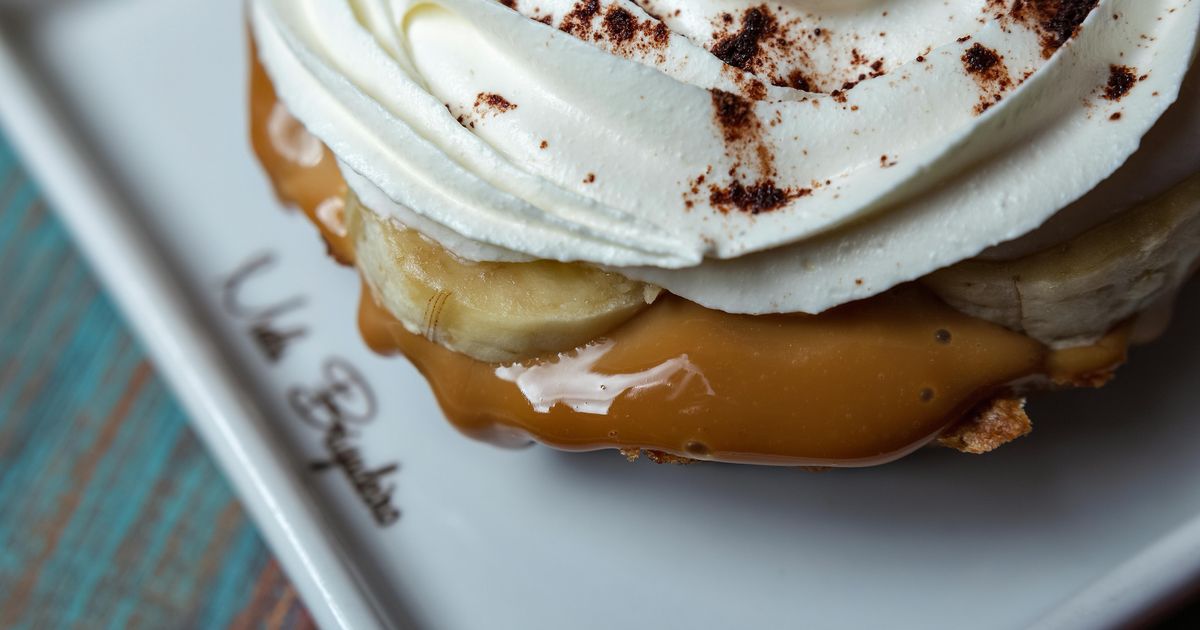
Sometimes, you get hit with a very specific craving. For a while there, I had a hankering for sour cream and chive pretzels. No idea why — it’s not like they’re something that I have often.
Now, though, now I am craving the delectable, moreish joys of a banoffee pie. Sweet, soft, and with a lovely silky finish to it… I actually can’t think of anything I want more in this moment.
Advertisement
Thankfully, I don’t need to wait too long to tuck into this coveted dessert as the cake queen herself Mary Berry has a banoffee pie recipe that is so simple that it doesn’t even require baking.
As featured on her BBC One series Classic Mary Berry, this recipe requires:
Additionally, she advises, if you’d like to make a salted caramel version, you only need a teaspoon of sea salt. Yum.
Advertisement
The base can be made up to a day in advance and to make it, Mary advises doing the following: “Crush the biscuits to fine crumbs and melt the butter over a low heat.
“Pour both into a bowl and mix to combine. Spoon into the base of the tin and press down with the back of a spoon until level. Place in the fridge for 15 minutes
The banana and cream should be made on the day and left for around an hour to set in the fridge.
The toffee is the only really tricky part of the recipe, requiring precision and focus. For that, you heat butter and sugar together and stir over a low heat until combined. Then you add the condensed milk and bring to the boil, stirring for a few minutes.
Advertisement
However, if you over-boil it, it will become grainy and more like fudge, which is not the vibe.
If you’re also ready to treat yourself to this delicious pie, you can view the full recipe here.

The UK’s ambassador to the United Nations walked out of the room when Russia’s delegate was addressing its Human Rights Council on Wednesday.
Simon Manley joined dozens of other ambassadors in protesting Vladimir Putin’s representative’s speech during a session which was meant to mark the third anniversary of Russia’s brutal invasion of Ukraine.
Advertisement
Manley, who walked out of the room as soon as the speech started, later explained that their actions came down to Kyiv’s exclusion from early peace talks between Russia and the US last week in Saudi Arabia.
According to Reuters, the delegate said: “Our support for Ukraine is iron-clad. We want to see a just and enduring peace in line with the UN charter. Ukraine has to be at the negotiating table.”
Speaking outside the room where Russia’s ambassador was speaking, France’s Jerome Bonnafont said: “If we let slide what happened with Ukraine without reacting…we would open the door to a disintegration of fundamental principles on which the UN was founded.”
Advertisement
The Washington delegate did not join those protesting because they had not turned up to the session at all, following US president Donald Trump’s decision to pull the States out of the Human Rights Council earlier this month.
Speaking to those still in the room, Russia’s deputy foreign minister Sergey Vershinin bizarrely accused Ukraine of a “flagrant violation of fundamental human rights”.
“Securing human rights and freedoms is incompatible with double standards,” he added, claiming Kyiv was guilty of Russophobia.
Advertisement
Actually, there is an international arrest warrant out for the Russian president over his alleged war crimes including the forced deportation of Ukrainian children.
Ukraine’s deputy foreign affairs minister Mariana Betsa then slammed Moscow for violating international law, adding: “The aggressor should be punished, aggression should not be rewarded.”
This incident comes after the US voted with Russia twice at the UN security council this week.
The States first voted against a European-drafted resolution condemning Russia’s war on Ukraine, joining Russia, North Korea and Belarus who opposed the resolution.
Advertisement
The States then put forward a different resolution which takes a neutral stance on the conflict, and includes no criticism of Russia.
Since his re-election, Trump has turned US policy towards Ukraine completely on its head.
While pushing for a quick end to the war, the US president is much more sympathetic towards Vladimir Putin than his predecessor Joe Biden.
He has signalled Ukraine may have to cede occupied territory to Russia in exchange for peace, while also blaming Kyiv for starting the war and falsely calling the country’s democratically elected president a dictator.
Advertisement
Meanwhile, prime minister Keir Starmer is in Washington DC today, trying to secure “security guarantees” from Trump for Europe – although Trump has already rejected the idea.

