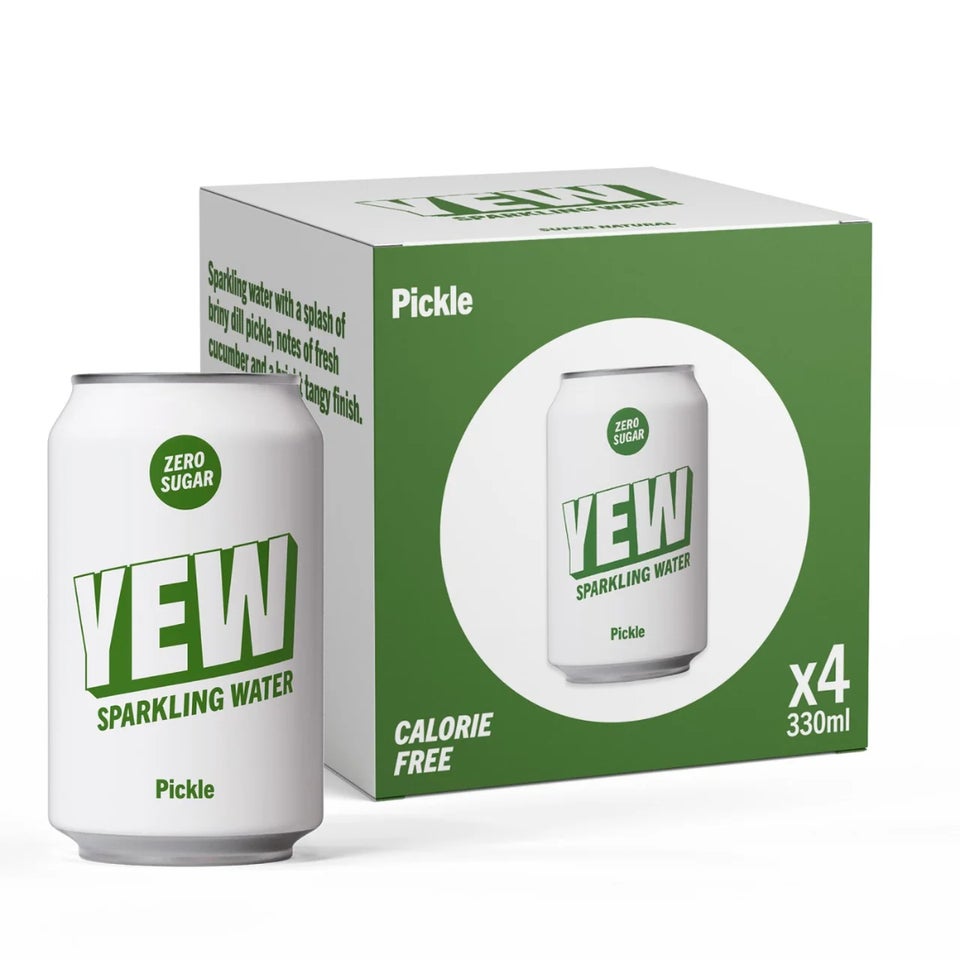
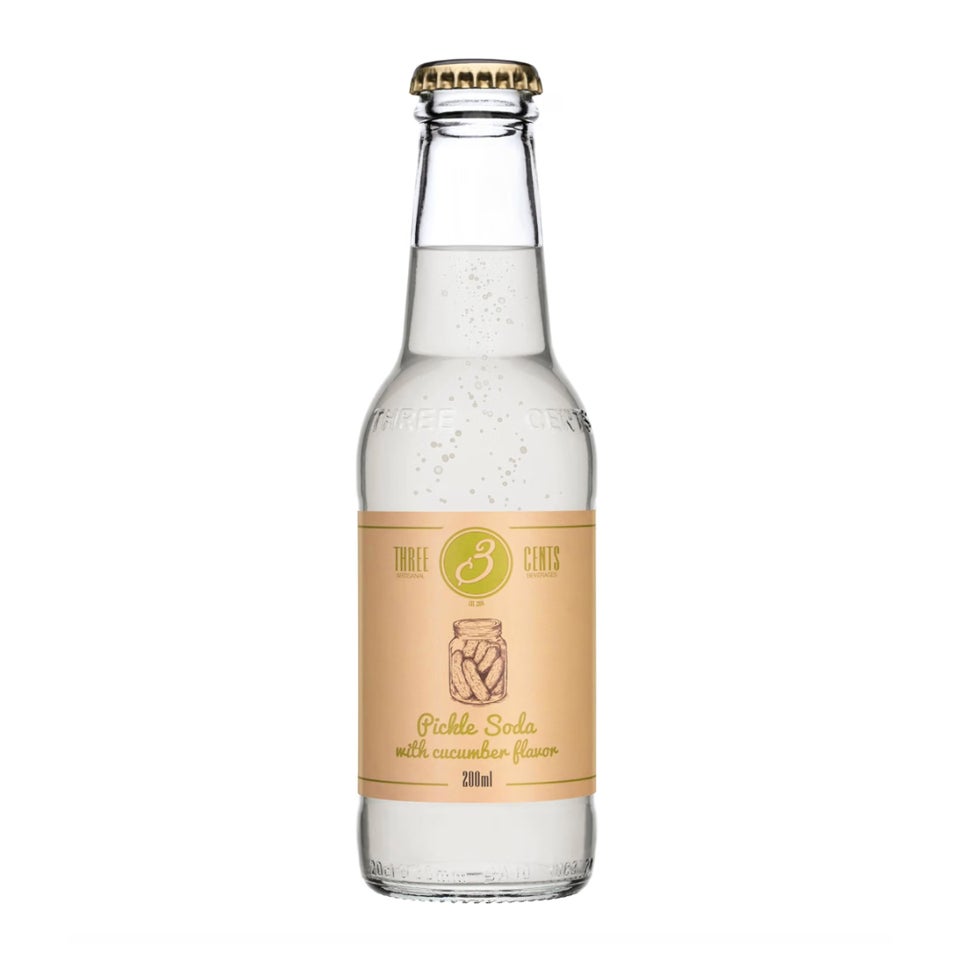
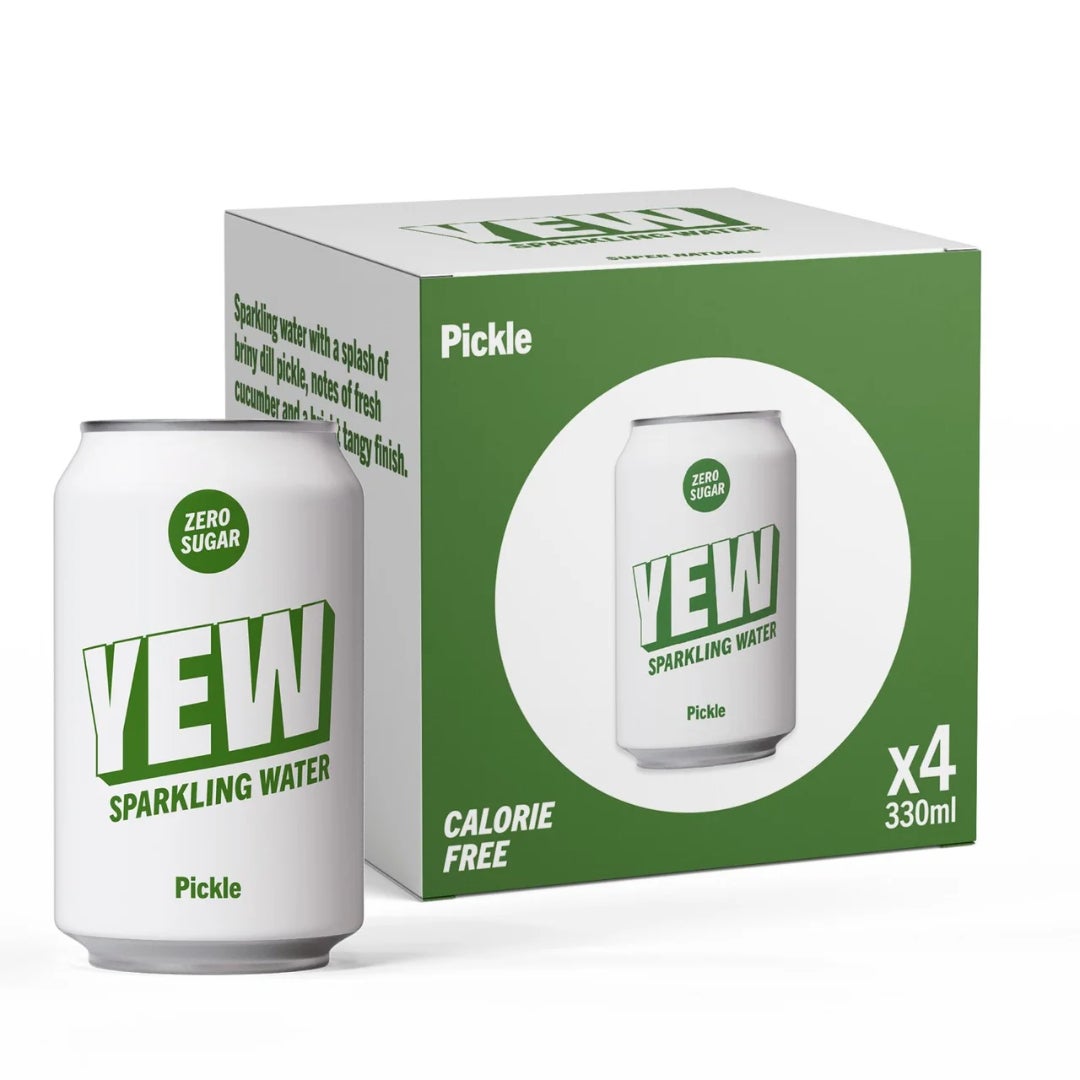
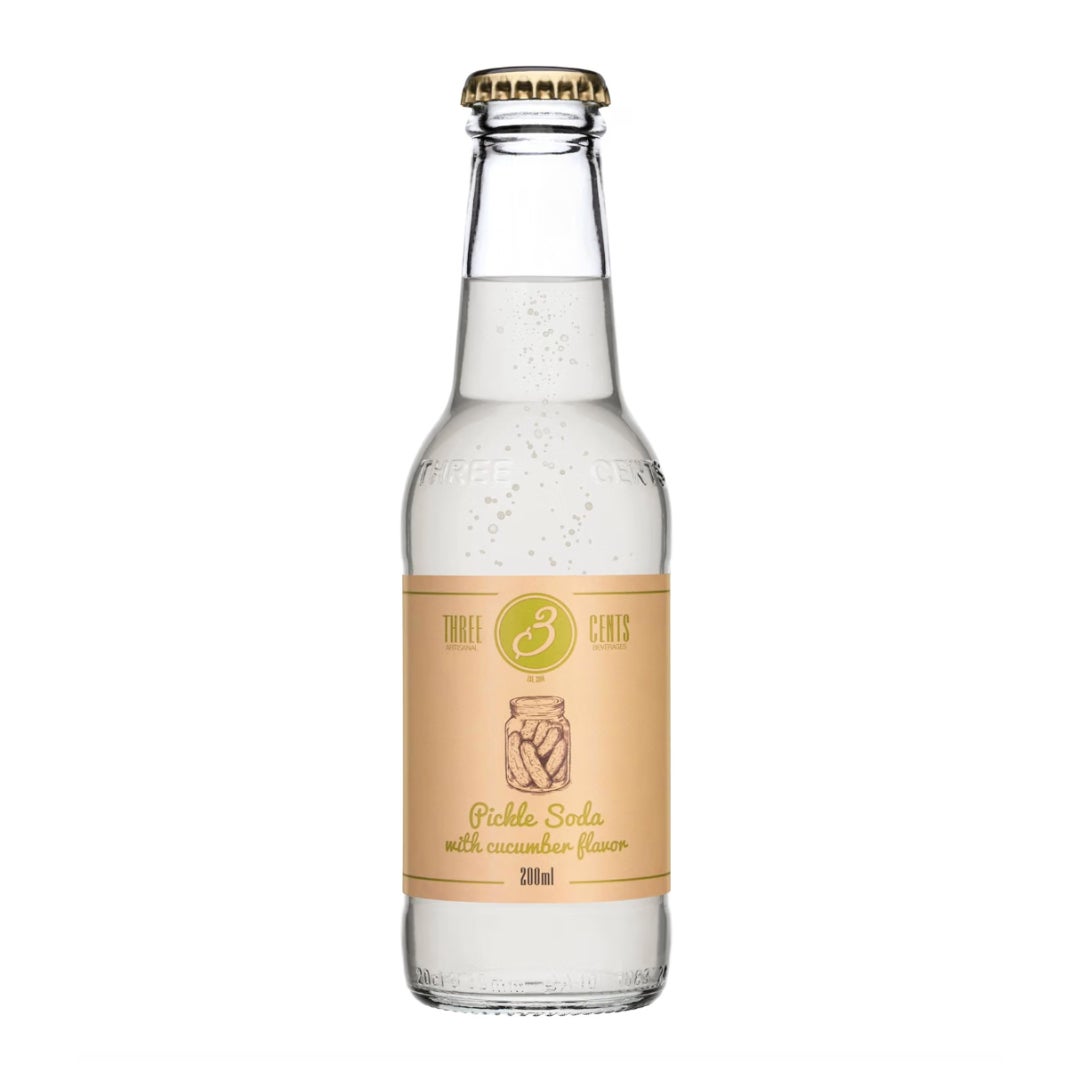
What was once something you interacted with when it was sandwiched between your patty and bun is now everywhere.
From big snack pickles, to picklebacks, the past decade has certainly been the time for pickles to shine.
Advertisement
And now, pickles are dominating the soft drink market, too.
Earlier this year, I had a limited-edition pickle matcha, which blended matcha with lemonade and pickle brine, at Bird & Blend.
And now, pickle sodas seem to be popping up left, right and centre.
Almost certainly not for the pickle protester, these drinks taste (shockingly) as though they’ve been infused with citrusy brine.
Three Cents’ has a slightly more cucumber, vegetal taste to it, and comes in the brand’s classic glass bottle.
Advertisement
Yew’s, on the other hand, tastes exactly like drinking a sparkling version of the liquid straight from the jar.
If you do have a particular penchant for pickles, like me, these drinks are refreshing and quench that need to chomp down an entire jar of the things as a late-night ‘snack’.
Should you be even slightly opposed to a pickle, though, you’ll find yourself making a face like you’ve eaten a sour candy at even the first sip – they’re that precise.
As it turns out, it could prove an excellent way to boost your performance at the gym, as well as aiding in your recovery.
Advertisement
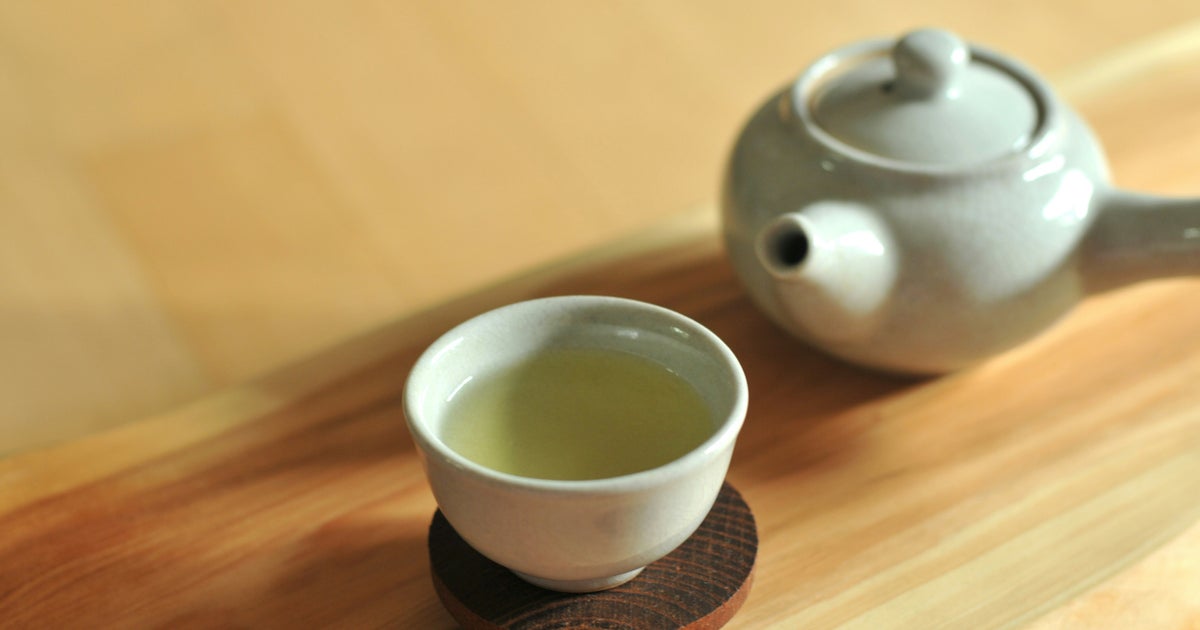
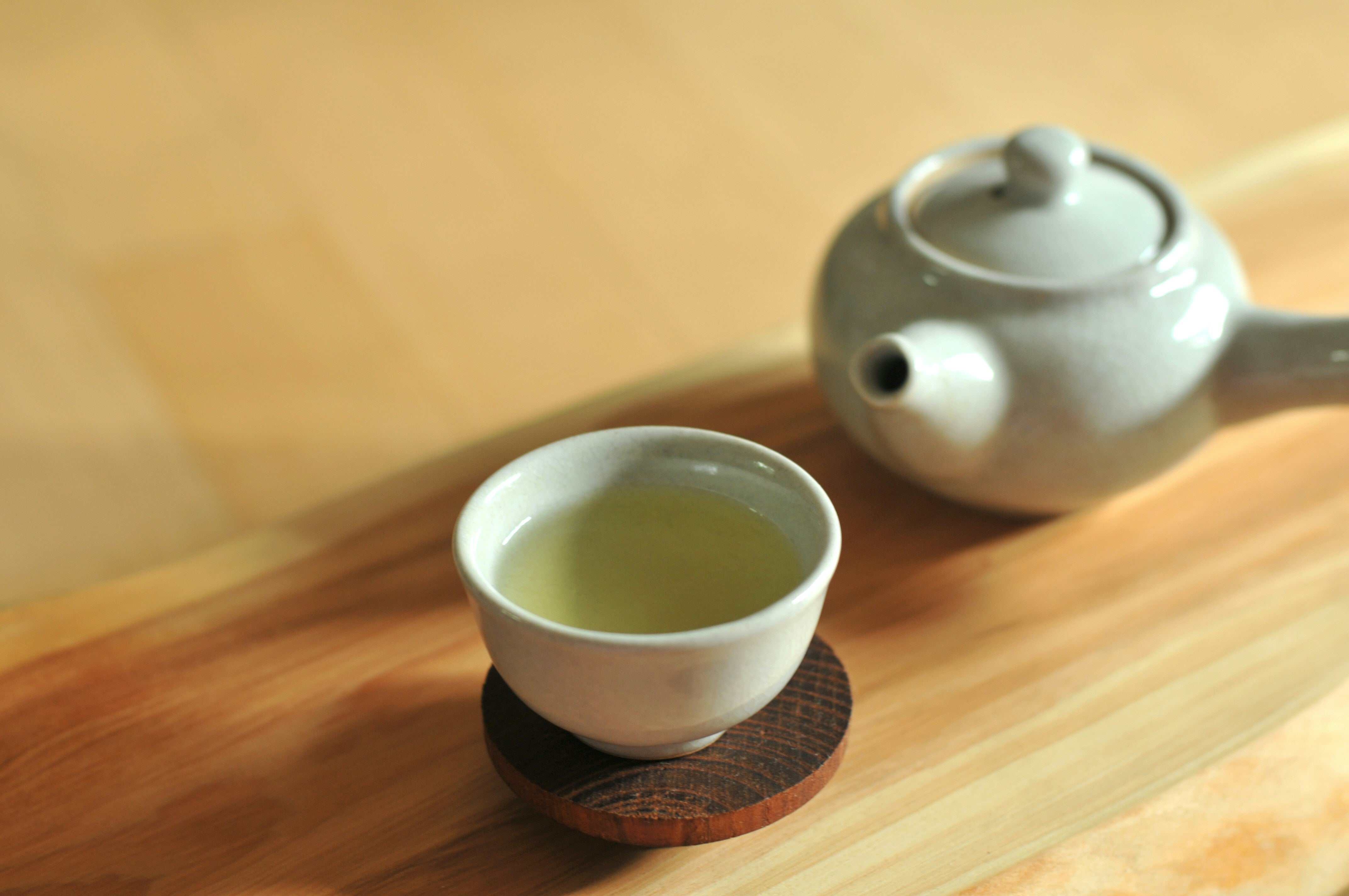
Research suggests that either the drink itself, or a green tea extract, could improve everything from your antioxidant balance during exercise to how well your muscles hold up afterwards.
How can green tea help my workouts?
1) Green tea extract could help your muscles to recover
A 2018 paper found that green tea extract could help to “reduce the marker of muscle damage after exercise”, though it didn’t make participants’ muscles less sore after a gruelling workout.
Advertisement
This “suggests the green tea extract supplementation has positive effects on muscle recovery after strenuous exercise”.
2) Green tea might diminish oxidative stress
Meanwhile, 2021 research suggested that the antioxidants present in green tea (the kind you drink, not a supplement or extract) could help to diminish “oxidative stress” on our bodies while we’re pushing ourselves in the gym.
Oxidative stress is an imbalance of free radicals, which can harm cells, and antioxidants, which neutralise them. This imbalance can sometimes lead to cell damage and can happen during excessive or very heavy exercise.
Advertisement
This research found that “the consumption of green tea during and following exercise can lower oxidative stress,” though the authors added more research is needed. A separate study noted that most people will need to consume green tea regularly for at least a week to see “significant differences” here.
3) Green tea extract could help you last longer during exercise – and may help you burn more fat while doing so
Lastly, green tea extract might help you to burn more fat and push yourself further during workouts, too.
Advertisement
At least, that’s according to a 2025 paper, which focused on the effects of ginger and green tea extracts on active men in different temperatures.
Only green tea extract seemed to consistently improve their cycling endurance and energy efficiency while working out – meaning it relied more on the burning of fat than carbohydrates to power the men’s workouts.
I’m still reeling from the stench I smelled in my fridge the other day. After an unpleasant inspection, I realised the issue wasn’t a rotting courgette or some turned milk; instead, the little drainage hole at the back of the fridge had gotten blocked, leading stagnant water to pool under our bottom drawer.
I probably don’t need to tell you that this was not a welcome aroma. Nor did it go away completely after I flushed and cleared the drain, no matter how many times I wiped and re-wiped the surfaces.
Advertisement
It took a tip from appliance company Whirlpool – using coffee grounds – to finally rid our kitchen of the stinky spectre.
Coffee grounds can absorb smells from your fridge
You’ve likely already heard that a bowl of baking powder can help to get rid of some odours.
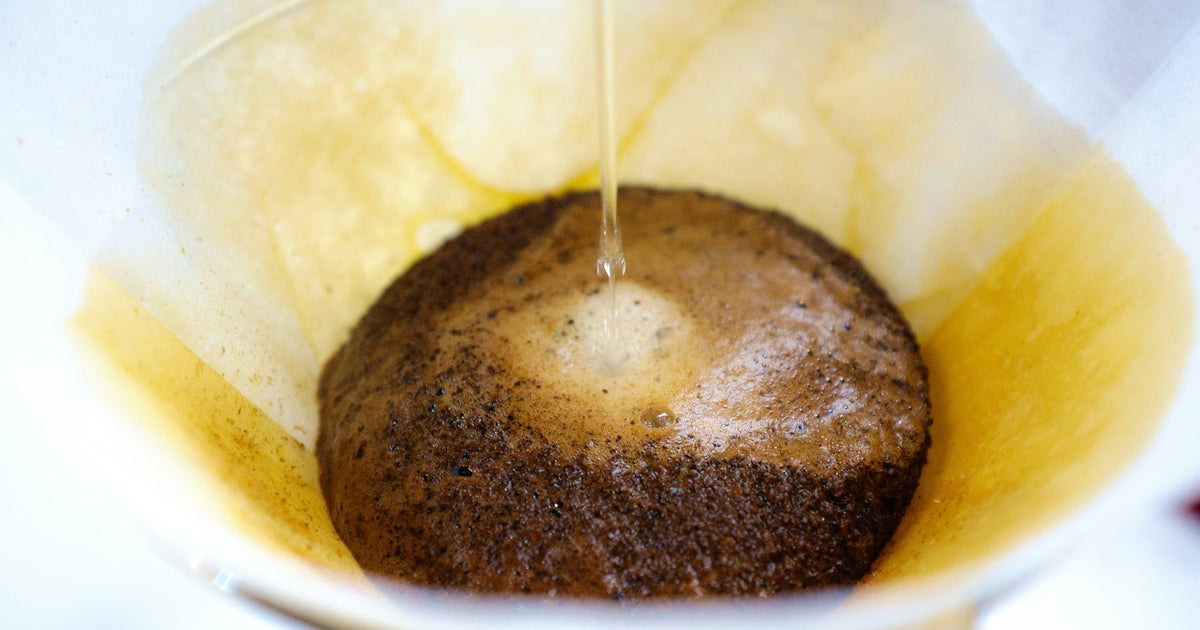
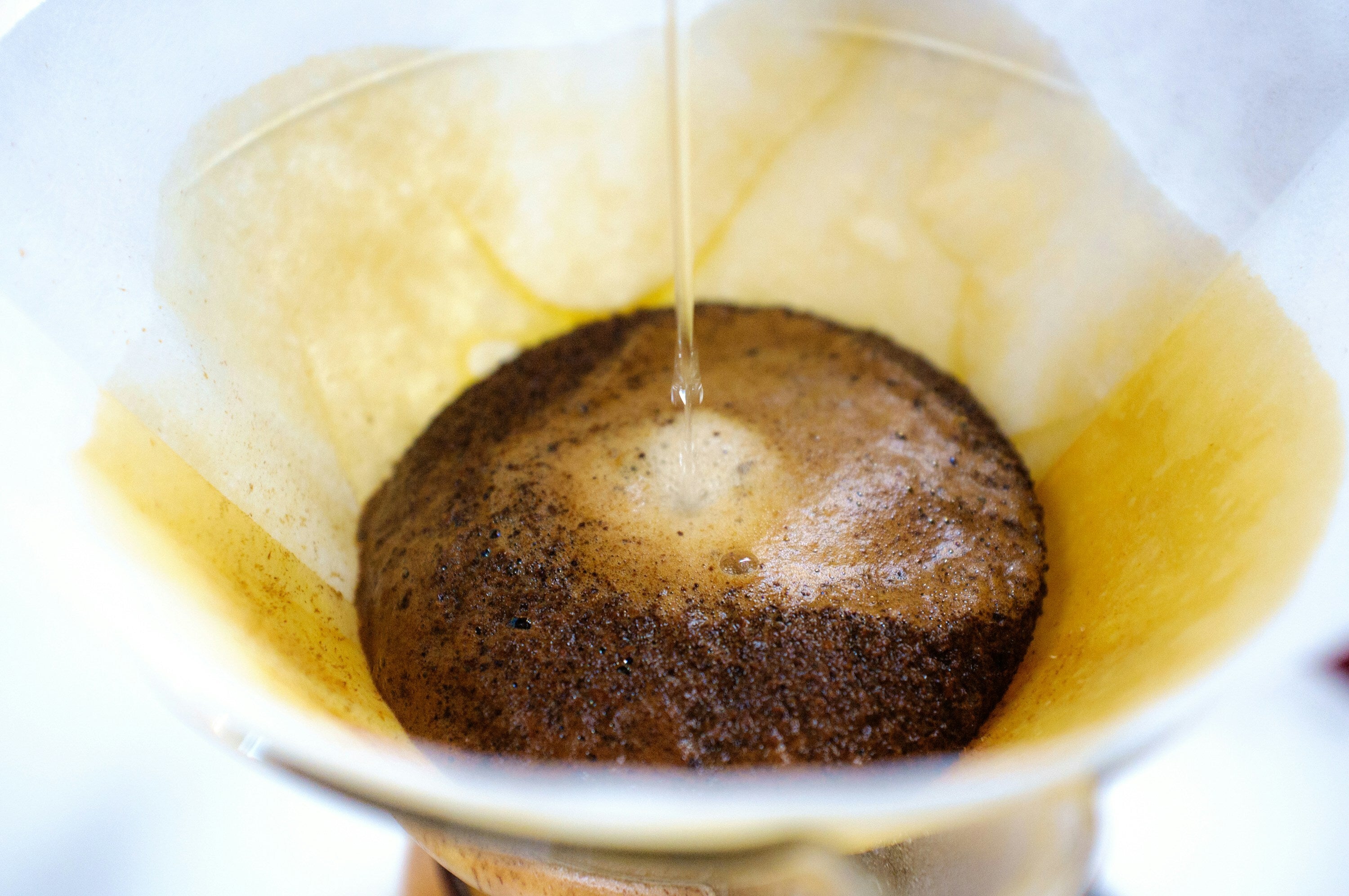
But if you don’t have that, coffee grounds do just as good a job, said Whirlpool.
“Coffee grounds contain nitrogen, which is great for neutralising odours. If you’re dealing with refrigerator odours, try placing a small bowl of coffee grounds in your fridge compartment,” their site reads.
“It will not only help absorb the odour but also leave behind a slight coffee smell.”
They do also reccomend vinegar for stronger smells, though we were dealing with a lingering, one-off scent remnant here rather than an ongoing smell issue.
Advertisement
And yes, old coffee grounds do the job brilliantly, as The Kitchn noted. Just make sure they’re dry; you can do that by placing them in a thin layer on a baking tray after use and waiting.
So far, it’s worked. A day after the Great Stink, our fridge is back to its normal aroma.
And there’s some evidence to suggest that rooibos tea, a South African variety made from the fermented leaves of the Aspalathus linearis shrub, can help with everything from reducing inflammation to controlling blood sugar and boosting our gut health.
Green rooibos is made from the same leaves, but they’re unfermented.
Here are some of the potential health benefits of the caffeine-free tea:
1) It’s brimming with antioxidants
Green rooibos tea is the only source of aspalathin (which helps to maintain cell health), and it’s high in other antioxidants, like quercetin (potentially anti-inflammatory, anti-histamine, and immune-boosting), too.
Advertisement
Antioxidants help to protect our DNA from harmful free radicals. They may also assist in protecting against chronic illness, heart disease, and cancer.
A 2023 review found that drinking rooibos tea seemed to be linked to higher antioxidant levels in our bodies.
It could also help the integrity of a single-cell gut layer, which helps us to absorb nutrients and keeps toxins and disease out.
3) It could help to manage inflammation
Inflammation isn’t always a bad thing. We need it to build muscle and recover from some illnesses.
But when inflammation becomes chronic and happens when the body doesn’t need it, it can lead to “inflammaging”. That can “contribute to conditions such as heart disease, type 2 diabetes, dementia, and frailty,” GP Dr Suzanne Wylie previously told HuffPost UK.
Remember the rooibos tea-specific aspalathin we mentioned earlier? A 2023 paper suggested that it could help to explain why rooibos tea seemed to help control blood sugar levels in both healthy and at-risk individuals.
Still, more research is needed to work out how, why, and to what extent that’s true.
With a last name like Bologna, I suppose I shouldn’t be surprised that I am one of many Italian Americans who love travelling to “Il Bel Paese”. Italy is by far my most-visited destination outside the United States, and I’ve been fortunate to spend time in eight of the country’s 20 regions.
Although delicious foods are available in abundance across Italy, I recently explored an area that should probably be high up on cheese lovers’ travel bucket lists: Parma.
Advertisement
As you might’ve deduced, Parma – along with its neighbour Reggio Emilia – is the namesake of the beloved hard cheese, Parmigiano Reggiano.
The so-called “king of cheeses” can, in fact, only be legally produced under that name in those two provinces, plus Modena, Mantova and Bologna.
The Parmigiano Reggiano moment
It’s no secret that Parmigiano Reggiano is having a moment, finding its way into headlines (and bellies) around the world. This past November, news broke that United Talent Agency had signed the Parmigiano Reggiano Consortium to help place the cheese in movies and shows and raise awareness about these official products.
Advertisement
That came just two months after the governing body for the Italian cheese announced a strategic partnership with the New York Jets football team – an initiative that included stadium concession offerings, video segments and more.
Around the 2024 Paris Olympics, Parmigiano Reggiano also made waves as fans of Italian gymnast Giorgia Villa discovered her previous sponsorship deal with the consortium – completewithamazingphotos of the athlete posing with big wheels of cheese. (Whether we’ll be seeing more cheese-y sponsorships at the upcoming Milan-Cortina Olympics remains to be seen, but given the host location and the consortium’s PR push, the synergy feels almost inevitable.)
Caroline Bologna/HuffPost
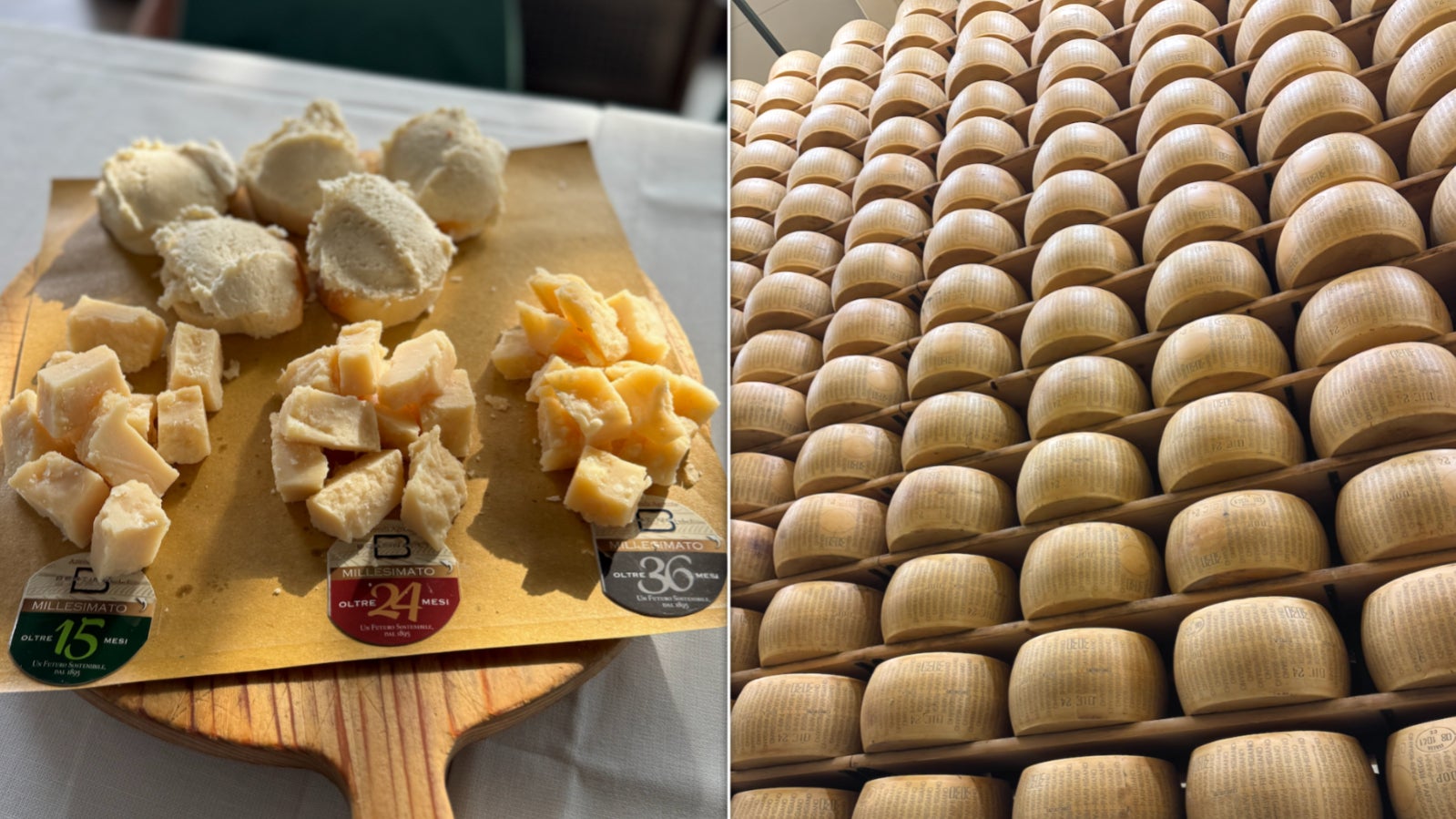
My visit to Parma included a stop at Azienda Agricola Bertinelli, a family-owned dairy that offers Parmigiano Reggiano tastings and tours to educate visitors about the production process behind this highly regulated cheese.
And then there are the seemingly endless socialmediavideos of mouthwatering pasta prepared in hollowed-out wheels of Parmigiano Reggiano tableside at restaurants and in home kitchens. The Italian brainrot trend naturally featured a “Parmigiano” character as well.
I was pumped to visit the home of the king of cheeses in Parma, a lovely province and city in Italy’s Emilia-Romagna region.
Advertisement
Despite its world-famous food exports, Parma still flies under the radar compared to flashier Italian destinations that dominate most itineraries, like Florence, Rome and Venice. And as it turns out, there’s plenty to do there beyond stuffing your face with dairy goodness.
What to eat in Parma
Reaching Parma is fairly easy. You can drive from Milan in less than two hours or take the train from many destinations around Italy, including Milan, Bologna, Florence, Venice and more. The train station was a breezy stroll to the centre of the action and the whole city felt very walkable.
As the first Italian destination to earn UNESCO’s “City of Gastronomy” title, Parma is unsurprisingly filled with excellent eateries. I had great multi-course meals at Cortex and Croce di Malta, wine and snacks at Tra L’uss e L’asa and Tabarro, and sandwiches at Pepen and Bel Grano Focaccia.
Advertisement
Other restaurants recommended by locals in town included Osteria del 36, Ombre Rosse, Ristorante Cocchi, Trattoria Corrieri and Trattoria del Tribunale.
Caroline Bologna/HuffPost
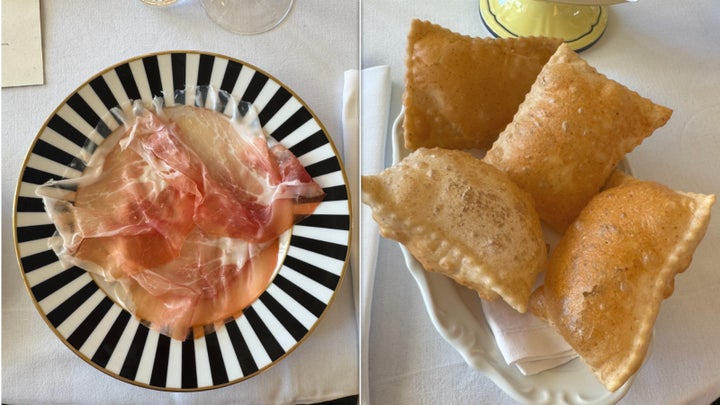
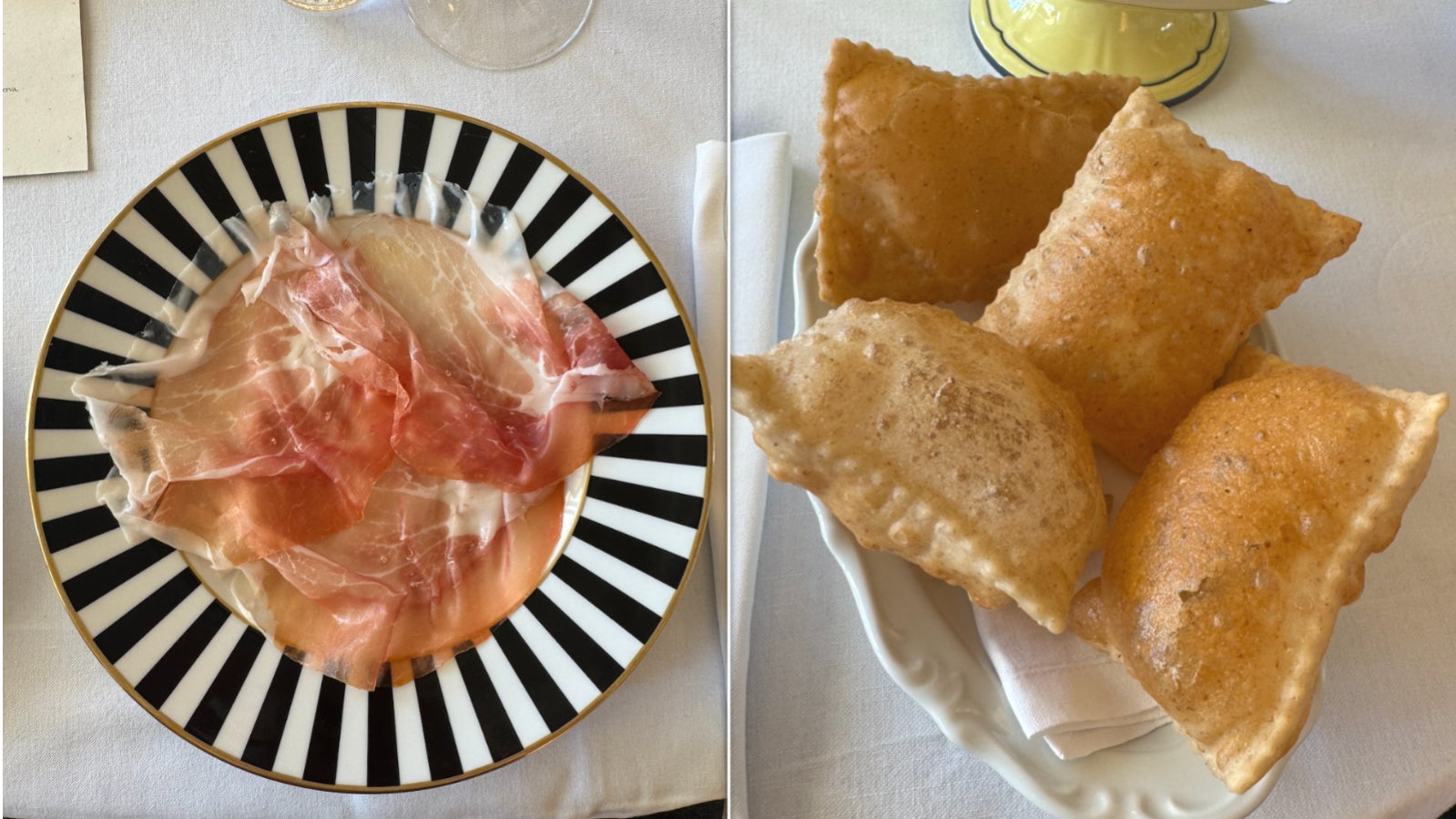
Cured meat and torta fritta are local staples.
In the broader province of Parma, I dined at Trattoria Antichi Sapori, Al Vedel and Trattoria Ai Due Platani. But the most exciting stop was Azienda Agricola Bertinelli, a family-owned dairy that offers Parmigiano Reggiano tastings and tours to educate visitors about the production process behind this highly regulated cheese.
Advertisement
Indeed, authentic Parmigiano Reggiano can only be made using three ingredients: raw cow’s milk, salt and rennet. Each wheel is aged for a minimum of 12 months, with most varieties on the market aged between 24 and 36 months.
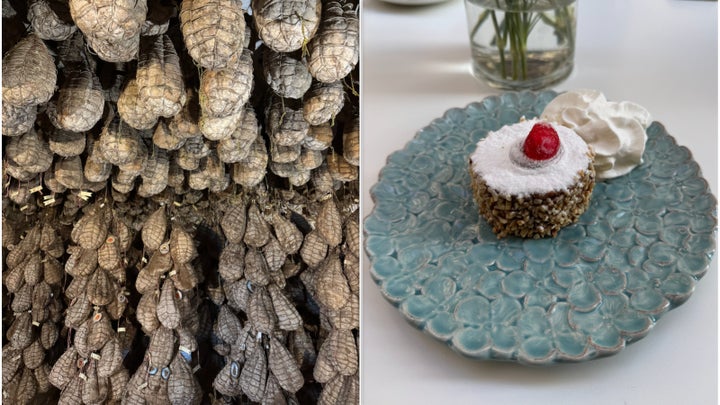
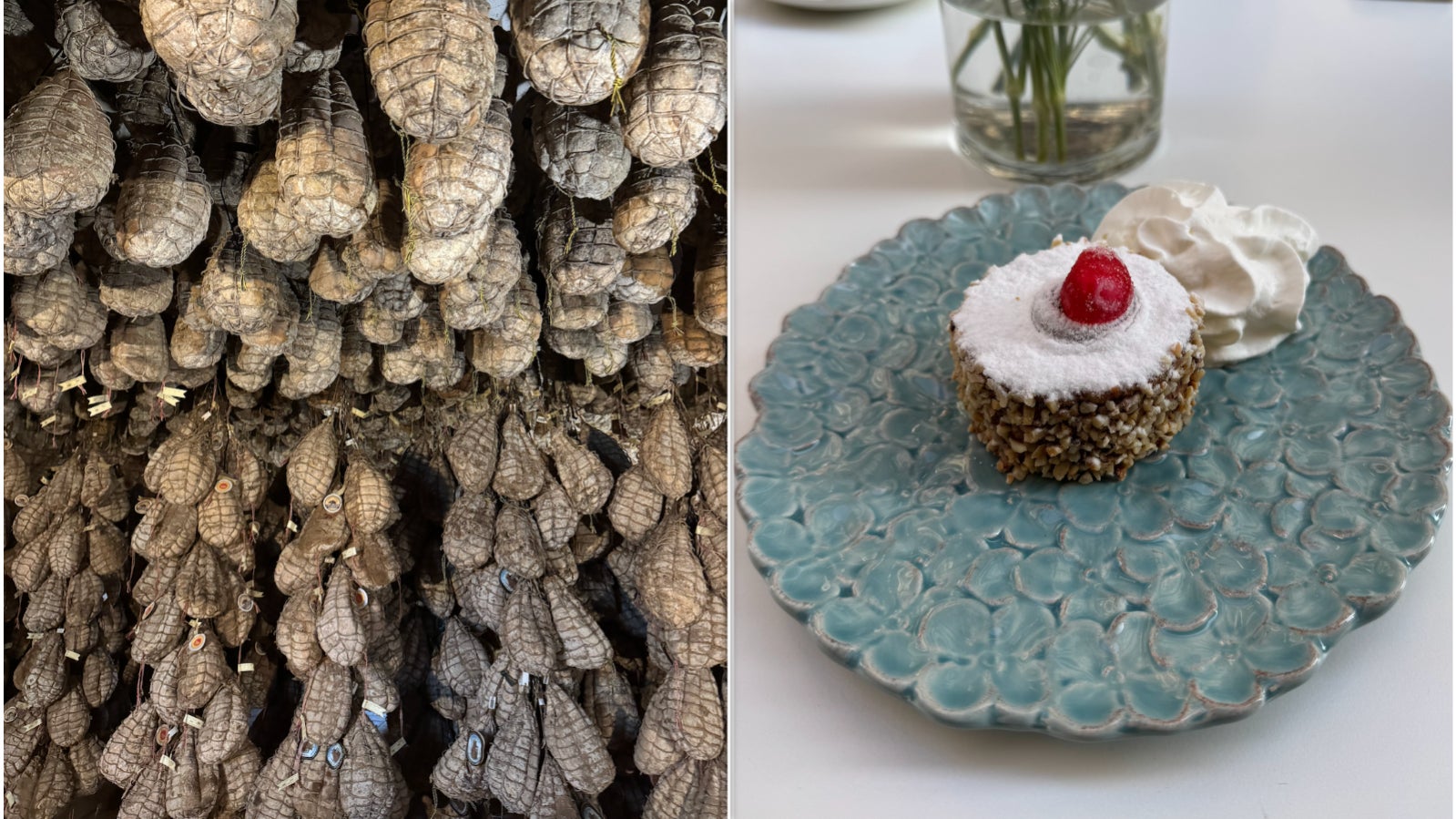
Beyond the cheese, Parma’s rich food culture also centres on the iconic Prosciutto di Parma and highly-prized Culatello di Zibello, aka the “king of salumi” – a rare cured meat that’s aged in a pig’s bladder. Cold cuts in the province are often served with torta fritta, a puffy fried dough.
Caroline Bologna/HuffPost
I had the chance to try Culatello di Zibello and “Duchess of Parma” cake.
Advertisement
Local restaurants tend to offer tortelli d’erbetta (pasta stuffed with cheese and greens), anolini in brodo (beef-filled pasta in broth) and a minced horse meat delicacy known as caval pist.
Other highlights of a Parma trip
Although my Parma visit understandably centred around food, I also took some time to explore the history of the city and province in between meals.
The Palazzo della Pilotta complex houses multiple interesting museums and sites, including the National Gallery of Parma, the National Archaeological Museum and the Bodoni Museum. The Palatina Library is particularly stunning, as is the wooden Farnese Theater, one of the largest baroque theatres in Europe.
Advertisement
Caroline Bologna/HuffPost
Beyond food, visitors to Parma can check out sites like the Palatina Library and Parma Cathedral.
Just across the street is the Glauco Lombardi Museum, a unique museum featuring personal belongings and items related to the life and times of Napoleon’s second wife, Marie Louise, Duchess of Parma. I fittingly followed my visit with a mini “Duchess of Parma” cake at a nearby cafe called San Biagio.
The impressive Parma Cathedral and octagonal baptistery next door were also worthwhile stops on my trip. The same goes for the Correggio frescoes in the former Monastery of San Paolo.
Advertisement
And I enjoyed strolling the Piazza Giuseppe Garibaldi and Parco Ducale in the afternoons, embracing the “slow travel” ethos and getting a real feel for the city.
Caroline Bologna/HuffPost
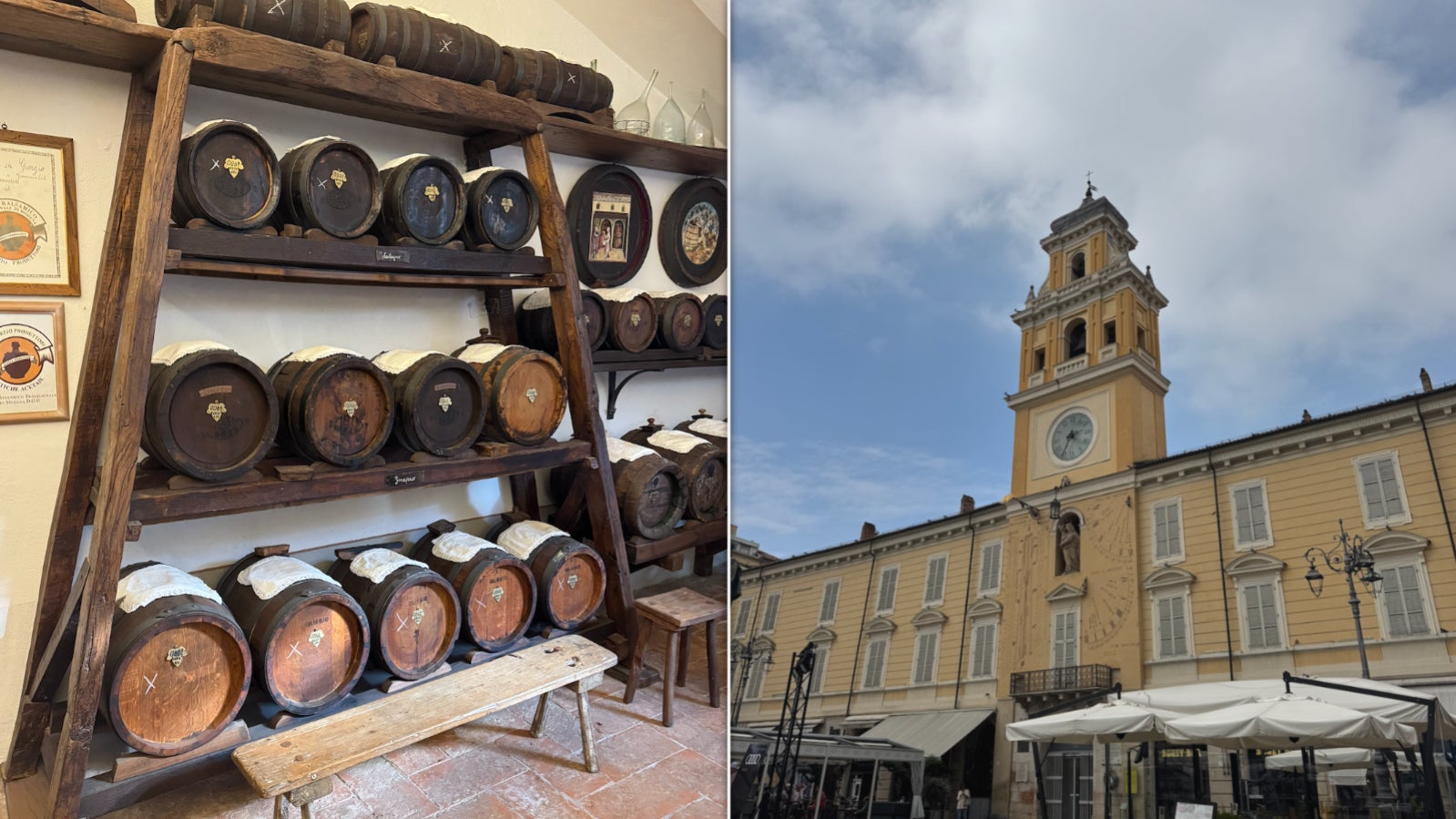
I ventured to Modena to try some authentic balsamic vinegar and then strolled around Piazza Giuseppe Garibaldi back in Parma.
Visitors to Parma can also add stops in other parts of the Emilia-Romagna region or plan a few easy half-day jaunts. I visited a small balsamic vinegar producer, Acetaia di Giorgio, in Modena and had lunch at the Michelin-starred Osteria del Viandante in Reggio Emilia. Many people also add in the Ferrari and Lamborghini museum experiences as well.
Advertisement
At a time when overtourism is straining destinations like Florence, Rome, Venice and the Amalfi Coast, travellers craving a relaxing and authentic Italian experience might want to consider adding Parma to their itineraries.
And if travel budgets are tight, a taste of real Parmigiano Reggiano at home may also help scratch the itch in the meantime.
TikTok users are ‘becoming Chinese’ this month by embracing traditional cultural habits to level up their modern beauty and wellness routines. If you haven’t heard of this, you may need to get working on your algorithm as there have been 3.2 million views of this topic on the clock app.
The practice that they’re all racing to take part in is formally known as Yang Sheng (meaning “nourishing life”) and users are joking that they are ‘turning Chinese’ by taking part. The most common practice, and the one that has gone wild in the app is drinking hot water before bed which promises glowing skin and a healthier body.
Advertisement
The trend focuses on removing “internal dampness” and aiding digestion by moving away from iced drinks in favour of thermal flasks. That’s right. Iced coffees are finally out of fashion. I never thought I’d see the day, either.
But, does it work? And how does introducing this to your night time routine affect your sleep? To answer this, nutritionists and sleep experts at Mattress Online explain the benefits and potential drawbacks of this practice.
Does the Chinese hot water trend work?
Helen Ruckledge, Registered Nutritionist at Mattress Online advises: “There is no consistent research that suggests hot water aids digestion or reduces bloating more than cold water. It is certainly not the case that hot water speeds up the metabolism or makes you wake up with a flat stomach.
Advertisement
“Hydration is fundamental to many aspects of health. For example, it is well established that being dehydrated can increase your risk of constipation.”
Ruckledge assures that whatever works best for you when it comes to drinking water is what you should stick to, saying: “The key to hydration is to drink water in whichever way you enjoy the most, to encourage you to drink plenty. There is certainly no research to suggest that cold water is detrimental. Many people find it more refreshing when cold.
“Others find hot drinks comforting and prefer drinking water hot. Just a cautionary note, if you opt for hot, do boil the water and cool it rather than taking it out of a hot tap. And of course, ensure the water is not scalding hot when you drink it.”
Advertisement
As for whether drinking hot water before bed helps us to sleep…
Hannah Shore, Head of Sleep Science at Mattress Online says: “Drinking a cup of hot water before bed probably won’t directly affect your sleep; however, it could have some benefits. Taking the time to sit and drink a hot cup of water could be the perfect thing to build into your wind-down routine.”
She emphasises that the habit of slowing down before bed with a hot drink may be more beneficial than the drink itself, saying: “As adults, we often forget the importance of a wind-down routine, which should help relax the mind and body, prompting us that it’s time for sleep.
“In turn, if this is done in the right environment, it can prompt the body to create sleep-promoting hormones, such as melatonin, helping you to drift off to sleep more easily.”
Advertisement
Stay hydrated and rested wherever possible, basically.
Confession: I love Christmas Dinner but I am deathly afraid of cooking it. I’m actually a great cook (if I do say so myself…) but the thought of spending almost the entire day in a roasting hot kitchen cooking and keeping up with timers etc is frankly unbearable.
I am wholly grateful to my lovely partner who takes on the duty every year as I swan about the living room reading my festive books and watching Christmas flicks on tv.
Advertisement
Don’t worry, I am the cook throughout the year.
This year though, I am determined to play more of a part in my festive feast and spoke with two chefs about what can be prepped and frozen ahead of the Big Day.
Which foods can be frozen ahead of Christmas Day
Robbie Smith, head chef at Glasgow restaurant Zique’s says: “There are plenty of things you can do ahead of time to make Christmas dinner feel a lot less daunting. Making your stuffing in advance is a big one. Roll it in clingfilm, freeze it, then simply slice and cook it on the day.
“If you’re making gravy, the stock can also be done well in advance. Roast your bones and vegetables, simmer, strain and freeze it, then bring it straight back to the stove on Christmas Day, adding the resting juices from your meat, of course.”
Advertisement
UM. Who knew?!
As for veg, he advises: “Braised red cabbage and roast potatoes are also ideal for prepping ahead. Parboil the potatoes, cool and freeze them, then defrost on the day and put them straight into hot oil in the oven.
“If I’m cooking Christmas dinner, I also like to have a batch of croquettes in the freezer, cooked straight from frozen, so people have something to snack on and are not constantly asking when the turkey will be ready.”
Snacking croquettes is definitely something I can get behind…
Danny Carruthers, head chef at Sebb’s advises that changing your choice of meat could help: “Beef is a brilliant alternative to turkey, especially if you need something that can be pre-cooked without losing quality.
Advertisement
“Cuts like beef short rib, feather blade or ox cheek are rich in fat and collagen, which means they really come into their own when slow-cooked or braised, and they reheat beautifully in the oven or even the microwave in small portions.”
As for vegetables, he suggests a good slow roast: “For veg, keep things whole or in large pieces and roast them slowly. You’re aiming for a deep, caramelised crust, which helps protect the veg when thawing and re-roasting.
“Think slow-roast carrots with plenty of butter and salt, or even those viral glass parsnips from chef Adam Byatt.”
Call me a hypocrite: even though I toss and turn when I sleep, I hate when my sausage bigs in their bacon blankets wiggle out of their salty duvets as they cook.
I’m always left with tough, rubbery rashers and half-burnt, half-pale sausages, neither of which taste anything like as good as their combined selves.
Advertisement
But executive head chef Aaron Craig at The Milner York said I may be “making Christmas dinner harder than it needs to be” – preventing them from bursting is simpler than you might think.
How can I stop pigs in blankets from splitting open?
It’s down to one factor, Craig said: your oven settings.
“If your pigs in blankets burst, it’s not the sausages – it’s the temperature,” he said.
“Once you’ve wrapped them, chill them. Pop them in the fridge for about 30 minutes or into the freezer for 10. It firms up the fat, so they cook evenly without splitting,” he explained.
Want even more delicious festive food? Try coating the pigs in blankets in a delicious dressing.
“Right before they go in the oven, brush them with a little honey and wholegrain mustard,” the chef said.
Advertisement
“You get a glossy, golden coating and a lovely sweet–savory kick.”
Any other tips?
Yes. The chef said gravies really complete the Yuletide meal, but too many of us rush the process.
“Most home gravies end up way too pale,” he said.
“If you want proper rich flavour, don’t rush the roasting stage. Get your onions, carrots, celery, garlic and any poultry trimmings really deep brown ― not just lightly golden. That colour gives you depth.”
After you add your stock, simmer it gently.
“And here’s a little chef trick: a teaspoon of soy sauce or Marmite gives it an incredible umami boost without making it taste any less ‘Christmas’. It just rounds everything out,” he added.
The thought of making cocktails for your friends and family right from your own home is extremely glamorous but in reality, you could end up playing mixologist for the evening and not getting a chance to actually enjoy the company of your loved ones.
Cocktail expert Abi Clephane from Bruichladdich Distillery agrees. She says: ”“I love the theatre of shaking cocktails,
Advertisement
“But when you’ve got people arriving in waves, you want drinks that taste brilliant without needing to stand there making each one like you’re on a shift. Christmas should be fun for the host too.”
Plus, how many of us just have a cocktail shaker kicking about?
The bottle-and-freezer method that replaces shaking entirely
Clephane says her number one hack is to pre-dilute your cocktails, bottle them, and then freeze them.
She explains: “Make your cocktail exactly as you normally would, same ingredients, same ratios, and then just add water. For a stirred drink, add 20%. For a shaken drink, add 25%. That gives you the dilution you’d normally get from ice, but without having to shake or stir anything.
Advertisement
“Freeze the bottle and pour it straight into a glass. It comes out cold, smooth, and perfectly balanced.”
She adds that this one trick avoids the classic hosting nightmare: “There is never, ever enough ice at Christmas for the amount of cocktails people expect. This solves that immediately.
“Just make sure you’re using a sturdy bottle. The ones we use at Bruichladdich are 60% recycled glass and can handle the freezer, so you can batch everything days ahead and not stress about anything breaking.”
Advertisement
Speaking of freezing glassware…
Clephane swears by frozen glassware because it improves everything without any effort at all: “A frozen glass just makes a drink so much more enjoyable. You don’t need fancy ice or special equipment.
“If you’ve got space to chill a few glasses before people arrive, that alone will make your drinks feel more intentional. You can use it for cocktails, wine, even beer – it improves every drink!”
If you want clear ice, the boiling water trick doesn’t actually work
Clearing up an old myth, Clephane says: “People always think boiled water will give you clear ice, but it genuinely doesn’t make a difference.
Advertisement
“If you actually want those really clear cubes, the only method that works is directional freezing. Get a small cool box, fill it with good-quality water, leave the lid off and put it in the freezer.
“It freezes from the top down, and that’s what creates proper clarity. Then you can cut it into cubes or use stretchy silicone moulds if you want to shape it.”
There are some wine “rules” that I, a non-expert, always believed all experts stood by – things like never putting ice in white wine and using the exact right glass for each drink.
Luckily, Lauren Denyer, a WSET School London wine educator, previously disabused me of those notions. Speaking to HuffPost UK, she said: “There is a certain amount of pretension that can come with wine, which can be very off-putting and often incorrect”.
Advertisement
But does that extend to what I thought was wine’s cardinal rule? In other words, are corked bottles always better than screw-top kinds?
Here’s what Lee Issacs, a WSET Educator Development Manager who previously taught us how to read a wine bottle, had to say on the topic.
Are corked wines always better?
“Seeking closure on a challenging life experience can often end with one needing a glass or two of wine,” the expert told us.
Advertisement
But, he explained, “Closure in wine… refers to how the bottle has been sealed”.
Wines can be closed by a variety of corks, including natural, synthetic, grainy, and even Champagne-specific types. They can also be closed with screw caps and, more rarely, crown caps.
“Thankfully,” Issacs said, “the days of people being judgmental and wary of screwcaps are almost completely behind us. The type of closure does not reflect the overall quality of the wine.”
In fact, the wine educator thinks even canned versions can hold their own these days.
“The days of canned wine just being a vehicle for any old naff alcohol” are gone, he wrote.
“As consumers globally look to moderate their alcohol intake, wine in cans are a great option.”
Advertisement
Why do different wines have different closures?
I was surprised to hear from Isaacs previously that “Most wines are made to be consumed without the need for ageing, and a good rule to follow is if the wine is particularly cheap and more than a year old, it may be a bit past it”.
That’s partly why screw caps are quite common.
“Screwcap wines tend to be designed for younger, fresher drinking, with cork stoppers still the choice for wines aiming to change and develop over time in bottle,” the pro advised.
“If nothing else, a screwcap bottle is easy to reseal and stick in the fridge to keep [for] the next day… and there’s no need for a corkscrew.”