Police say they are investigating reports relating to “an apparent case of assisted dying” in 1981.


Police say they are investigating reports relating to “an apparent case of assisted dying” in 1981.
People prescribed semaglutide may have a higher risk of developing a rare eye condition, a study suggests.
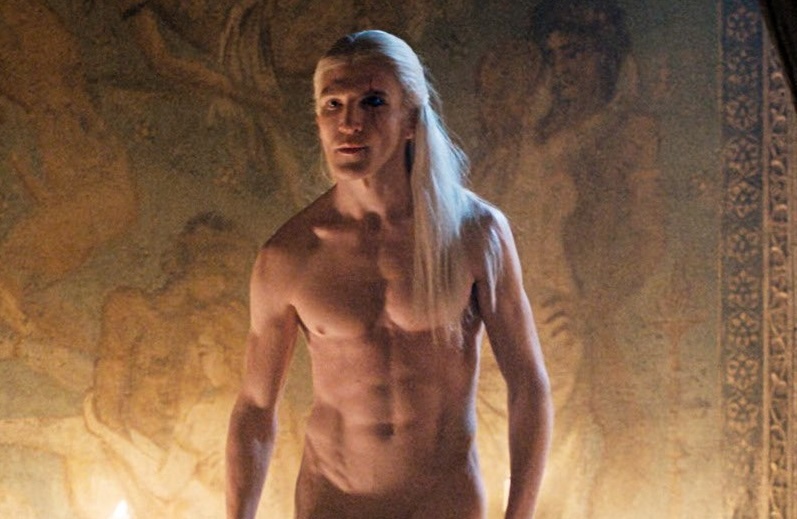
One of the biggest criticisms levelled at Game Of Thrones was its disparity between male and female on-screen nudity – and it seems spin-off House Of The Dragon is keen to remedy that.
The latest instalment of the prequel series featured an extended sequence set in a brothel, which made TV history of sorts as the first scene in any Game Of Thrones show to feature an erect penis.
Advertisement
Not only that, the scene came to a climax (sorry!) with Aegon Targaryen catching his brother Aemond in the act, only to wind up humiliating him in a manner reminiscent of the bullying Aegon subjected Aemond to in their younger years.
At the end of the exchange, Aemond coldly walks away from the scene without bothering to dress, with director Geeta Vasant Patel telling Variety that Ewan Mitchell threw himself into going fully nude for the sequence, rather than using a double or prosthetic.
“Ewan is such a great actor. He understands what he needs to do in order to portray Aemond,” she enthused.
“When I spoke with him originally about the nudity, I said to him, ‘Let’s just go through the story. If you don’t feel comfortable being nude, then you’re not going to be nude’. We were both on the same page in that way. We started walking through, and he walked me through his character.
Advertisement
“One thing about directing that’s really important is to surrender to the actors, and the actors surrender. It’s a mutual surrendering. In this case, Ewan knew his character so well that I was listening to him and walking with him as we went through every episode before this.”

She explained: “What we came to is that Aemond was hurt. He was bullied when he was little. Since he was hurt, he had created this persona that was the exact opposite of how he was feeling.
“He created the persona of a someone who is callous and has no regard for what others think of him. That shift, from someone who’s vulnerable to literally watching him put on his armour, was what we were going for in that scene. It’s one of the few times you see the young child in him and you see the pain in him.
“Slowly he starts putting on his armour and when he stands up, the fact that he doesn’t care that you see his penis is such a strong visceral shift. And so, of course, Ewan was like, ‘I want to be fully nude in that moment. It’s important to me because that’s who my character is. That’s what he would do’. And that’s what we did.”
Advertisement

Arturo Holmes via Getty Images
In a separate interview with Vulture, Ewan agreed it was “encoded in Aemond’s DNA” for the character to leave the scene in the way he does.
“He’s humiliated by his brother and all his crew, and it’s like this switch flips,” he said of his character.
“The madam is no more. All of these people in front of him? They mean nothing. He stands up, he owns it. ‘Yeah, I’m bulletproof. Anything you say, it will not work’.”
Ewan added: “Scenes like this start with a conversation about how far you’re prepared to go. It wasn’t a choice we made lightly. But it’s true to Aemond that he shocks the audience. Weakness is not part of Aemond’s vocabulary.”
Advertisement
House Of The Dragon airs on Mondays on Sky and Now.




The Sun newspaper has officially endorsed the Labour Party just one day before the public head to the polls in a major victory for Keir Starmer.
The best-selling tabloid, owned by media mogul Rupert Murdoch, announced “it’s time for a change” in an editorial published online.
Advertisement
This afternoon, the newspaper shared an early version of Thursday’s front page, complete with the headline: “As Britain goes to the polls, it’s time for a new manager (and we don’t mean Southgate).”
The paper has a track record of backing election winners.
It famously claimed to have swayed 10 million readers to vote for Tory John Major in 1992, leading to its well-known headline: “It was the Sun wot won it.”
It later supported Labour shortly before Tony Blair took the party into three election victories, only to move away from the party in 2009.
Advertisement
It stayed loyal to the Conservatives over the next 15 years – which is why today’s switch is a major win for Starmer.
The editorial admitted that PM Rishi Sunak “has many policies which we can support” such as the Rwanda deportation plan, and the pledge to drop National Insurance contributions for workers.
It also praised the “ban on teaching harmful gender ideology in schools”, “putting the brakes on the headlong rush towards Net Zero” and Sunak’s commitment to “our Brexit freedoms”.
However, the pro-Brexit newspaper said the party has become “a divided rabble, more interested in fighting themselves than running the country”.
The Sun said the party needs to be in Opposition to unite “around a common set of principles”.
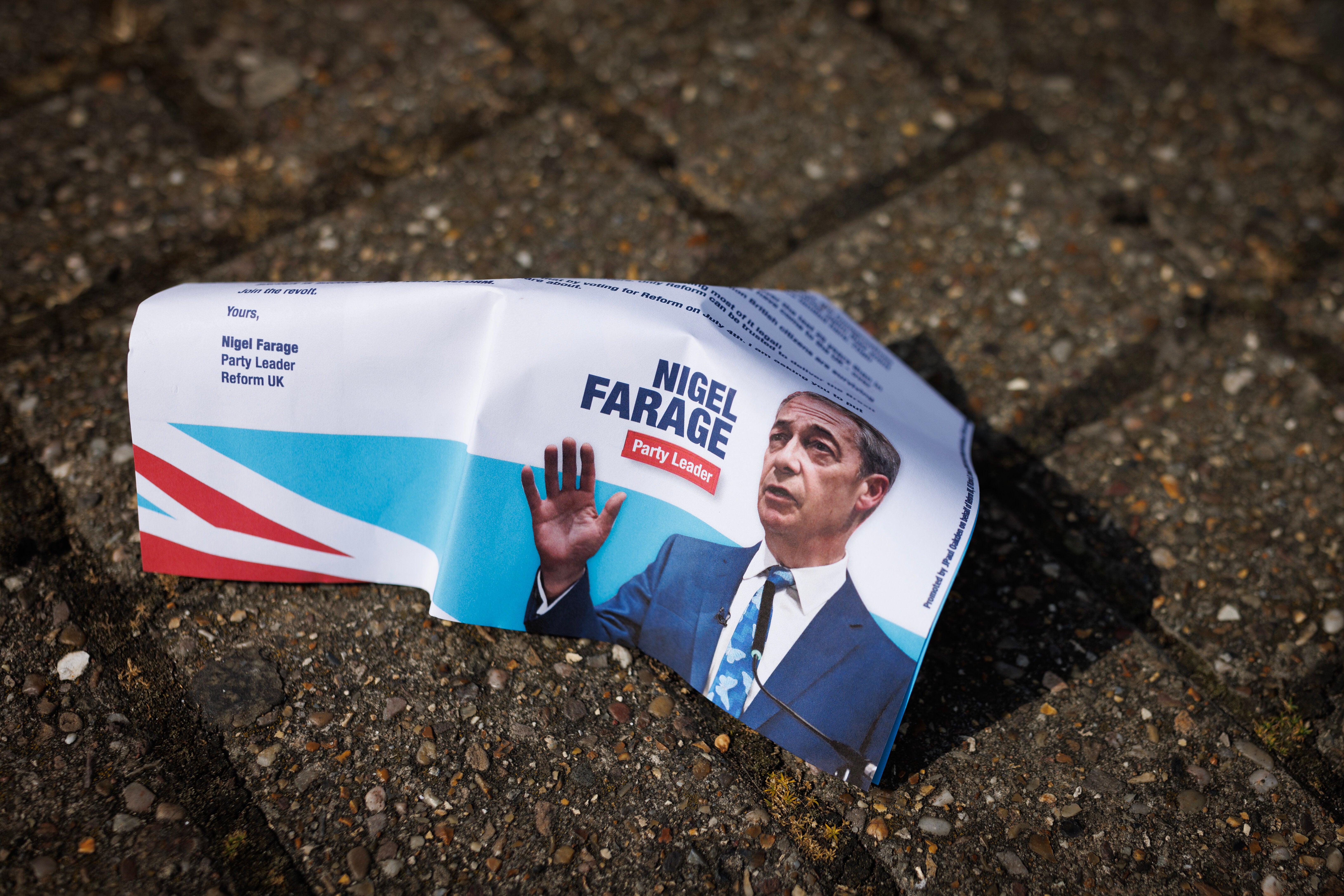
It also stopped short of endorsing Nigel Farage’s populist party Reform, saying those his manifesto “has struck a chord with millions” it is “a one-man band” – and swiftly described the Liberal Democrats as “a joke”.
Advertisement
The editorial seems to come around to Labour through a process of elimination, saying while it was “still a work in progress” and there are “plenty of concerns” remaining, Starmer has pulled his “party back to the centre ground of British politics for the first time since Tony Blair was in No.10”.
The endorsement comes as all signs point to a landslide victory for Labour.
A Survation poll of more than 30,000 people predicted the party would take more seats than Blair did in 1997, winning 484 in total – leaving the Tories with just 64 MPs.
The Sun joined the Financial Times, the The Sunday Times, the Daily Mirror and the Guardian, along with The Economist, in backing the Opposition.
The Daily Mail and the Daily Telegraph have backed the Conservatives.


Police have concluded “no criminal offence” was committed by Reform UK activists after reviewing the recent expose into the party’s activists.
Last week, an undercover reporter for Channel 4 News secretly filmed supporters of Nigel Farage’s party using racist and misogynistic language.
Advertisement
A party canvasser, Andrew Parker, was filmed saying: “I’ve always been a Tory voter, but what annoys me is that fucking P*** we’ve got in.
“What good is he? You tell me, you know. He’s just wet. Fucking useless.”
He was also heard advocating shooting people arriving in the UK by small boats across the England Channel, saying,“fucking just shoot them”, and suggested Reform should “kick Muslims out of mosques and turn them into Wetherspoons”.
A senior Farage aide was also seen in the footage looking at a police car with a Pride flag displayed. They said: “What are the old bill doing promoting that crap? They should be out catching nonces not promoting the fuckers.”
The investigation prompted the local police force to announce they were “urgently assessing” the material.
Advertisement
But on Wednesday, Essex Police said they had reviewed the footage and found no evidence of a crime.
In a statement, the force said: “Having assessed the comments made during a Channel 4 news programme, and all other information available to us, we have concluded that no criminal offences have taken place.”
PM Rishi Sunak responded to the racist term used about him last Friday by saying “it makes me angry” and said Farage “has some questions to answer”.
The Reform leader then released a statement saying he was ’dismayed by the reported comments of a handful of people associated with my local campaign” and said they would no longer be with the campaign.
Channel 4 and Parker both had to deny last week that the activist was an actor who was paid to be in the video, after Farage stoked the conspiracy.
He claimed on X: “Andrew Parker was the man that made the astonishing racist comments that have given us so much negative coverage. We now learn that he is an actor by profession.”
Advertisement
Channel 4 said it stood by “our rigorous and duly impartial journalism which speaks for itself”, and explained its reporters first met Parker at Reform UK headquarters when he was a party canvasser.
Parker himself apologised to Press Association for his remarks, saying: “Of course I’m sorry. They were off-the-cuff things that everyone says.”
Reform confirmed Parker was a volunteer for the party but said he was longer part of the campaign.
Less than a week after those comments were first publicised, two Reform candidates officially defected to the Conservatives.
Georgie David said she believed the “vast majority” of those standing for the party are “racist, misogynistic and bigoted”, while Liam Booth-Isherwood accused the leadership of not taking racism within Reform seriously.
With 16 million disabled people in the UK, what are the main political parties offering?

A major challenge in developing a vaccine for HIV is that the virus mutates fast — very fast. Although a person initially becomes infected with one or a few HIV strains, the virus replicates and mutates quickly, resulting in a “swarm” of viral strains existing in a single body. But scientists at Scripps Research; IAVI; the Ragon Institute of Mass General, MIT, and Harvard; La Jolla Institute for Immunology; and additional institutions have conducted a series of preclinical trials indicating that they’re potentially closer to an immunization regimen than ever before — one that could produce rare antibodies that would be effective against a wide range of HIV strains.
Published in Science, Science Immunology, and Science Translation Medicine on May 16, 2024, the findings are outlined in four individual papers and build on a 2022 phase I clinical trial conducted by the nonprofit scientific research organization IAVI. The findings represent a key step forward in an immunization strategy that could protect against the virus.
“All in all, these studies show that we have a good chance at creating an effective HIV vaccine — we just need to keep iterating and build on these findings in future clinical trials,” says co-senior author of all four studies, William Schief, PhD, who is also a Scripps Research professor; vice president for antigen design and selection, Infectious Disease Research, at Moderna, Inc.; and executive director of vaccine design at IAVI’s Neutralizing Antibody Center.
The HIV vaccine strategy involves stimulating the body to produce mature broadly neutralizing antibodies (bnAbs). bnAbs are among the immune system’s key players in fighting HIV, since they can block many variants of the virus. The problem is that bnAbs produced by the human body are rare. The IAVI trial, spearheaded in part by Schief, focused on inducing the immune cells that could eventually evolve into the right bnAbs — ones that could protect host cells from multiple HIV strains. These precursor immune cells, known as B cells, were stimulated with the help of a priming immunogen — a customized molecule to “prime” the immune system and elicit responses from the correct precursor cells.
But the primer also requires additional “booster” immunogens to coax the immune system into producing not just precursor cells, but coveted VRC01-class bnAbs — a rare and specific class of antibodies known to neutralize more than 90 percent of diverse HIV strains. Boosters are also needed for the production of BG18 — another important bnAb class that binds to sugars on the HIV spike protein. That’s where the new studies come in: Researchers developed immunization regimens that could prime either VRC01 or BG18 precursors, and subsequently boost those precursors further down the path toward becoming bnAbs.
“The results contained in these papers are deeply exciting and further support the germline-targeting strategy to HIV vaccine development that IAVI and our partners are pursuing,” says Mark Feinberg, MD, PhD, president and CEO of IAVI. “We look forward to continuing our collaboration with Scripps Research and partners to advance further research building on these promising findings.”
This groundbreaking science is enabled by collaboration between scientific institutions and funding partners. Without the ongoing, critical support of the Scripps Consortium for HIV/AIDS Vaccine Development (CHAVD), the Collaboration for AIDS Vaccine Discovery (CAVD), the Bill & Melinda Gates Foundation, and Moderna (the manufacturer of the mRNA used in these studies), this research would not have been possible.
Priming rare antibodies
In the first study, which focused on BG18, Scripps Research scientists collaborated with co-senior authors Shane Crotty, PhD, chief scientific officer at La Jolla Institute for Immunology, and Devin Sok, PhD, former vice president, discovery and innovation at IAVI. Using a priming immunogen, they consistently primed exceptionally rare BG18 precursors in a wild-type animal model.
To confirm they were able to prime the correct precursors, the researchers then teamed up with Andrew Ward, PhD, Scripps Research integrative structural and computational biology professor and co-senior author of the study. Using cryo-EM structural analysis, they validated that the antibodies were indeed part of the BG18 class.
“The fact that priming worked well in macaques suggests that it has a good chance of succeeding in humans,” says co-first author, Jon Steichen, PhD, an institute investigator in the Department of Immunology and Microbiology at Scripps Research.
Steichen was also co-first author on a second study, in which mice were modified to produce a low frequency of BG18 precursors. Scripps Research and IAVI scientists, along with the team of co-senior author Facundo Batista, PhD, associate director and scientific director of the Ragon Institute of MGH, MIT, and Harvard, used priming methods similar to the ones used in the first paper. However, a key difference was that this time, they also administered one of two boost immunogens using RNA technology. This resulted in boosting the primed B cells to adapt to recognize more native-like versions of HIV.
“This study showed that we can start to walk the B cells along toward bnAb development,” Steichen explains.
Supercharging the immune system into action
For the third study, Schief and his team worked with IAVI scientists, wherein they primed a mouse model with the same immunogen used in the 2022 IAVI clinical trial. This resulted in mice that produced VRC01-class precursor B cells similar to those found in people. But the researchers also designed a new booster immunogen to drive the antibody response toward becoming matured bnAbs — the next vital step in a sequential immunization series that could effectively fight HIV. The results: a “prime-boost” regimen that can drive VRC01-class B cells toward bnAb development.
“The findings demonstrate that we are able to make the antibody responses go in the right direction using this heterologous booster, which administers a different version of the vaccine than was given previously,” says Christopher Cottrell, PhD, a senior staff scientist at Scripps Research who was the first co-author on this study.
Understanding the immunology
In the fourth and final study, on which Cottrell was also a co-first author, the team worked again with Batista’s team at the Ragon Institute and used the same immunogens — but in a different mouse model where his team could control the frequency of bnAb precursors that were modified to be similar to those found in humans. This allowed the researchers to take a deeper dive into the immunology associated with HIV vaccination by examining the germinal centers — specialized microstructures in the body that protect against viral reinfection. Germinal centers provide B cells with a space to rapidly increase and mutate their antibody genes, ultimately helping the immune system fight off viral strains.
In addition, the researchers examined how germinal centers accumulate HIV mutations over time. They found that a prime-boost regimen increased precursor B-cell activity in germinal centers across different lineages, which could eventually lead to an increase in matured VRC01-class bnAbs.
What’s next
Overall, all four papers confirm that the priming step to turn on the right bnAb precursors is possible when it comes to developing an HIV vaccine. Three of those papers specifically demonstrate that it’s also possible to guide antibody precursors toward becoming bnAbs that can fight HIV.
“Taken together, the findings give us more confidence that we’re able to prime precursors from multiple bnAb targets, and they also show that we’re starting to learn the rules for how to advance precursor maturation through heterologous boosting,” Schief added.
Following these results, the researchers are advancing phase 1, experimental medicine trials for both the VRC01 and BG18 projects. Vaccines aiming to prime and boost VRC01-class antibodies are being further evaluated in two clinical trials run by IAVI, IAVI G002 and IAVI G003, and a vaccine to prime BG18-class responses is being evaluated in HVTN144. These studies use both adjuvanted protein immunizations (IAVI G001 and HVTN144) and mRNA delivery (IAVI G002 and G003).
The results of these studies will guide the critical next steps on the discovery path to an HIV vaccine.

Scientists have identified a gene which, when missing or impaired, can cause obesity, behavioural problems and, in mothers, postnatal depression. The discovery, reported today in Cell, may have wider implications for the treatment of postnatal depression, with a study in mice suggesting that oxytocin may alleviate symptoms.
Obesity and postnatal depression are significant global health problems. Postnatal depression affects more than one in 10 women within a year of giving birth and is linked to an increased risk of suicide, which accounts for as many as one in five maternal deaths in high income countries. Meanwhile, obesity has more than doubled in adults since 1990 and quadrupled in adolescents, according to the World Health Organization.
While investigating two boys from different families with severe obesity, anxiety, autism, and behavioural problems triggered by sounds or smells, a team led by scientists at the University of Cambridge, UK, and Baylor College of Medicine, Houston, USA, discovered that the boys were missing a single gene, known as TRPC5, which sits on the X chromosome.
Further investigation revealed that both boys inherited the gene deletion from their mothers, who were missing the gene on one of their X chromosomes. The mothers also had obesity, but in addition had experienced postnatal depression.
To test if it was the TRPC5 gene that was causing the problems in the boys and their mothers, the researchers turned to animal models, genetically-engineering mice with a defective version of the gene (Trpc5 in mice).
Male mice with this defective gene displayed the same problems as the boys, including weight gain, anxiety, a dislike of social interactions, and aggressive behaviour. Female mice displayed the same behaviours, but when they became mothers, they also displayed depressive behaviour and impaired maternal care. Interestingly, male mice and female mice who were not mothers but carried the mutation did not show depression-like behaviour.
Dr Yong Xu, Associate Director for Basic Sciences at the USDA/ARS Children’s Nutrition Research Center at Baylor College of Medicine, said: “What we saw in those mice was quite remarkable. They displayed very similar behaviours to those seen in people missing the TRPC5 gene, which in mothers included signs of depression and a difficulty caring for their babies. This shows us that this gene is causing these behaviours.”
TRPC5 is one of a family of genes that are involved in detecting sensory signals, such as heat, taste and touch. This particular gene acts on a pathway in the hypothalamus region of the brain, where it is known to control appetite.
When the researchers looked in more detail at this brain region, they discovered that TRPC5 acts on oxytocin neurons — nerve cells that produce the hormone oxytocin, often nicknamed the ‘love hormone’ because of its release in response to displays of affection, emotion and bonding.
Deleting the gene from these oxytocin neurons led to otherwise healthy mice showing similar signs of anxiety, overeating and impaired sociability, and, in the case of mothers, postnatal depression. Restoring the gene in these neurons reduced body weight and symptoms of anxiety and postnatal depression.
In addition to acting on oxytocin neurons, the team showed that TRPC5 also acts on so-called POMC neurons, which have been known for some time to play an important role in regulating weight. Children in whom the POMC gene is not working properly often have an insatiable appetite and gain weight from an early age.
Professor Sadaf Farooqi from the Institute of Metabolic Science at the University of Cambridge said: “There’s a reason why people lacking TRPC5 develop all of these conditions. We’ve known for a long time that the hypothalamus plays a key role in regulating ‘instinctive behaviours’ — which enable humans and animals to survive — such as looking for food, social interaction, the flight or fight response, and caring for their infants. Our work shows that TRPC5 acts on oxytocin neurons in the hypothalamus to play a critical role in regulating our instincts.”
While deletions of the TRPC5 gene are rare, an analysis of DNA samples from around 500,000 individuals in UK Biobank revealed 369 people — around three-quarters of whom were women — that carried variants of the gene and had a higher-than-average body mass index.
The researchers say their findings suggests that restoring oxytocin could help treat people with missing or defective TRPC5 genes, and potentially mothers experiencing postnatal depression.
Professor Farooqi said: “While some genetic conditions such as TRPC5 deficiency are very rare, they teach us important lessons about how the body works. In this instance, we have made a breakthrough in understanding postnatal depression, a serious health problem about which very little is known despite many decades of research. And importantly, it may point to oxytocin as a possible treatment for some mothers with this condition.”
There is already evidence in animals that the oxytocin system is involved in both depression and in maternal care and there have been small trials into the use of oxytocin as a treatment. The team say their work provides direct proof of oxytocin’s role, which will be crucial in supporting bigger, multi-centre trials.
Professor Farooqi added: “This research reminds us that many behaviours which we assume are entirely under our control have a strong basis in biology, whether that’s our eating behaviour, anxiety or postnatal depression. We need to be more understanding and sympathetic towards people who suffer with these conditions.”
This work was supported by Wellcome, the National Institute for Health and Care Research (NIHR), NIHR Cambridge Biomedical Research Centre, Botnar Fondation and Bernard Wolfe Health Neuroscience Endowment.

Randomized controlled trials, or RCTs, are believed to be the best way to study the safety and efficacy of new treatments in clinical research. However, a recent study from Michigan State University found that people of color and white women are significantly underrepresented in RCTs due to systematic biases.
The study, published in the Journal of Ethnicity in Substance Abuse, reviewed 18 RCTs conducted over the last 15 years that tested treatments for post-traumatic stress and alcohol use disorder. The researchers found that despite women having double the rates of post-traumatic stress and alcohol use disorder than men, and people of color having worse chronicity than white people, most participants were white (59.5%) and male (about 78%).
“Because RCTs are the gold standard for treatment studies and drug trials, we rarely ask the important questions about their limitations and failings,” said Nicole Buchanan, co-author of the study and professor in MSU’s Department of Psychology. “For RCTs to meet their full potential, investigators need to fix barriers to inclusion. Increasing representation in RCTs is not simply an issue for equity, but it is also essential to enhancing the quality of our science and meeting the needs of the public that funds these studies through their hard-earned tax dollars.”
The researchers found that the design and implementation of the randomized controlled trials contributed to the lack of representation of people of color and women. This happened because trials were conducted in areas where white men were the majority demographic group and study samples almost always reflected the demographic makeup where studies occurred. Additionally, those designing the studies seldom acknowledged race or gender differences, meaning they did not intentionally recruit diverse samples.
Furthermore, the journals publishing these studies did not have regulations requiring sample diversity, equity or inclusion as appropriate to the conditions under investigation.
“Marginalized groups have unique experiences from privileged groups, and when marginalized groups are poorly included in research, we remain in the dark about their experiences, insights, needs and strengths,” said Mallet Reid, co-author of the study and doctoral candidate in MSU’s Department of Psychology. “This means that clinicians and researchers may unknowinglyremain ignorant to how to attend to the trauma and addiction challenges facing marginalized groups and may unwittingly perpetuate microaggressions against marginalized groups in clinical settings or fail to meet their needs.”
Moderna is being given $176m to work on a bird-flu vaccine, in case there is ever a human pandemic.
