The past couple of years have been incredible for Alzheimer’s research with experts seemingly getting closer to the truth of how Alzheimer’s is developed, and, crucially, how it can be prevented.
Now, researchers have revealed that the gut health link to Alzheimer’s is becoming more apparent with gut inflammation being tied to an increased risk of developing the neurodegenerative disease.
Advertisement
69 humans with Alzheimer’s disease and 64 healthy humans donated blood for research with some also providing gut microbiota via stool samples.
The gut microbiota from Alzheimer’s patients was then transplanted into 16 young adult rats whose microbiomes had been depleted by antibiotics for a week. A matching group of 16 rats received gut microbiota from humans in the healthy control group.
The researchers found that Alzheimer’s could be given to young rats through a transfer of gut microbes, confirming a link between the digestive system and the health of the brain.
This news could mean earlier diagnosis is possible
Lead researcher Yvonne Nolan said: “People with Alzheimer’s are typically diagnosed at or after the onset of cognitive symptoms, which may be too late, at least for current therapeutic approaches.
Advertisement
“Understanding the role of gut microbes during prodromal – or early stage- dementia, before the potential onset of symptoms may open avenues for new therapy development, or even individualised intervention.”
Professor Sandrine Thuret, Professor of Neuroscience at King’s College London and one of the study’s senior authors said: “Alzheimer’s is an insidious condition that there is yet no effective treatment for. This study represents an important step forward in our understanding of the disease, confirming that the make-up of our gut microbiota has a causal role in the development of the disease.
“This collaborative research has laid the groundwork for future research into this area, and my hope is that it will lead to potential advances in therapeutic interventions.”
The desert moss Syntrichia caninervis is a promising candidate for Mars colonization thanks to its extreme ability to tolerate harsh conditions lethal to most life forms. The moss is well known for its ability to tolerate drought conditions, but researchers report June 30 in the journal The Innovation that it can also survive freezing temperatures as low as −196°C, high levels of gamma radiation, and simulated Martian conditions involving these three stressors combined. In all cases, prior dehydration seemed to help the plants cope.
“Our study shows that the environmental resilience of S. caninervis is superior to that of some of highly stress-tolerant microorganisms and tardigrades,” write the researchers, who include ecologists Daoyuan Zhang and Yuanming Zhang and botanist Tingyun Kuang of the Chinese Academy of Sciences. “S. caninervis is a promising candidate pioneer plant for colonizing extraterrestrial environments, laying the foundation for building biologically sustainable human habitats beyond Earth.”
A small number of previous studies have tested the ability of microorganisms, algae, lichens, and plant spores to withstand the extreme environments of outer space or Mars, but this is the first study to test whole plants.
Syntrichia caninervis is a common moss species with a widespread global distribution. It grows in remarkably extreme desert environments including Tibet, Antarctica, and the circumpolar regions as part of the biological soil crust — a widespread and resilient type of ground cover often found in arid lands. Given the moss’s ability to survive extreme environmental conditions, the researchers decided to test its limits in the lab.
To test the moss’s cold tolerance, the researchers stored plants at −80°C (in an ultra-cold freezer) for 3 and 5 years and at −196°C (in a liquid nitrogen tank) for 15 and 30 days. In all cases, the plants regenerated when they were defrosted, though their rebound was less rapid compared to control specimens that had been dehydrated but not frozen, and plants that were not dehydrated prior to freezing rebounded more slowly than plants that were dried, then frozen.
The moss also demonstrated the ability to survive gamma radiation exposure that would kill most plants, and doses of 500 Gy even seemed to promote the plants’ growth. For comparison, humans experience severe convulsions and death when exposed to around 50 Gy. “Our results indicate that S. caninervis is among the most radiation-tolerant organisms known,” the researchers write.
Finally, the researchers tested the moss’s ability to endure Mars-like conditions using the Chinese Academy of Sciences’ Planetary Atmospheres Simulation Facility. The simulator’s Martian conditions included air composed of 95% CO2, temperatures that fluctuated from −60°C to 20°C, high levels of UV radiation, and low atmospheric pressure. Dried moss plants achieved a 100% regeneration rate within 30 days after being subjected to the Martian conditions for 1, 2, 3, and 7 days. Hydrated plants, which were only subjected to the simulator for one day, also survived, though they regenerated more slowly than their desiccated counterparts.
“Although there is still a long way to go to create self-sufficient habitats on other planets, we demonstrated the great potential of S. caninervis as a pioneer plant for growth on Mars,” the researchers write. “Looking to the future, we expect that this promising moss could be brought to Mars or the Moon to further test the possibility of plant colonization and growth in outer space.”
This research was supported by the Chinese Academy of Sciences, the Leading Talents in Technological Innovation Program, and The Third Xinjiang Scientific Expedition Program.
Reform UK has also gone to war with Channel 4 after it broadcast secretly recorded footage showing one of the party’s canvassers, Andrew Parker, advocating shooting people arriving in the UK on small boats across the Channel.
Farage has insisted it was a “set-up” because Parker is an actor – claims denied by the broadcaster.
On Sunday Morning With Trevor Philips, the presenter asked him: “Do you ever ask yourself this question, in the words of the immortal Mrs Merton, what was it about you, Nigel Farage, that first attracted these racists and homophobes and anti-Semites to your party?”
But Philips hit back: “Come on, Reform is your party, you own it, they knew it’s your party. So answer my question, what is it about you that attracted them?”
Farage said: “Ironically, destroying the BNP, means people who are minded that way don’t any longer have a home to go to, and some will gravitate in our direction. When we find out who they are they’ll be gone.”
The presenter then asked: “Why do you think that is? Why do they think that you are the person that’s going to give them a home?”
But Farage pointed out that at a Reform UK election rally in Birmingham later today, the “star of the show” will be Zia Yusuf, who he described as “a practicing Muslim who is going to say things about the growth of Islamic extremism”.
He added: “I can assure you that anybody who has a racist point of view, I don’t want to know.”
Rishi Sunak has insisted has insisted he is “proud” of the Tories’ disastrous general election campaign.
The prime minister made the surprising comment during an ill-tempered interview with Laura Kuenssberg this morning.
Advertisement
With just four days to go until the country goes to the polls, the Conservatives remain as far behind Labour as they were when Sunak called the election nearly six weeks ago.
Since then, the PM has been hit by a string of gaffes, controversy and scandal.
Despite this, Sunak said: “This campaign is something that I am proud of, and that’s what I’m here to talk about.”
An incredulous Kuenssberg replied: “Really? After everything, you’re proud of the campaign.”
The PM said: “Yes, I am.”
Sunak’s troubles began on the very first day of the campaign, when he was soaked to the skin while announcing the election date outside the front door of No.10.
The last two weeks of the campaign have also been overshadowed by the Tory gambling scandal, which saw Sunak eventually dump two candidates accused of betting on the date of the election.
Two senior party official have also taken leaves of absence over the controversy, while one of Sunak’s close protection team has been arrested.
Dozens of opinion polls throughout the campaign have also confirmed that the Tories are on course for their worst ever election result, with predictions that they could even end up with fewer than 100 seats.
Oliver Dowden was told the Tories are “on the brink of destruction” with just four days to go until the general election.
Sky News presenter Trevor Phillips also told the deputy prime minister his party’s campaign had been “a mess”.
The pair clashed as voters prepare to go to the polls on Thursday and with Labour still miles ahead of their rivals.
Phillips said: “This is your 738th weekend in charge. How does it feel to be essentially on the eve of destruction for your party, because that’s what every signal tells us.”
Dowden replied: “In an election campaign you can have commentators and you can have participants. I’m a participant, and my job, whether it’s on the doorstep or in this television studio speaking to you and your viewers at home, is to make the case for the Conservative Party and to warn – mark my words, dogs bark, cats meow and Labour put up taxes.
“Don’t take that risk, it’s in your hands. We have a clear plan to control migration, to start to reduce taxes. The game is on, the fight is on, now is the time for people to make up their minds about the future of this country.”
But Phillips hit back: “Liz Truss essentially made the party of sound money into the party of market chaos, and Boris Johnson made the party of law and order the party of lawbreakers.
“It’s really striking that in this interview you seem to refuse to accept that you’re carrying that burden – the gambling, D-Day, the rain. I mean, it’s been a mess.”
Dowden said: “Having been in power for 14 years, of course we haven’t got everything right. I totally accept that and apologies have been made for various things you’ve mentioned there.
“But fundamentally this is a choice about where we go as a country for the future.”
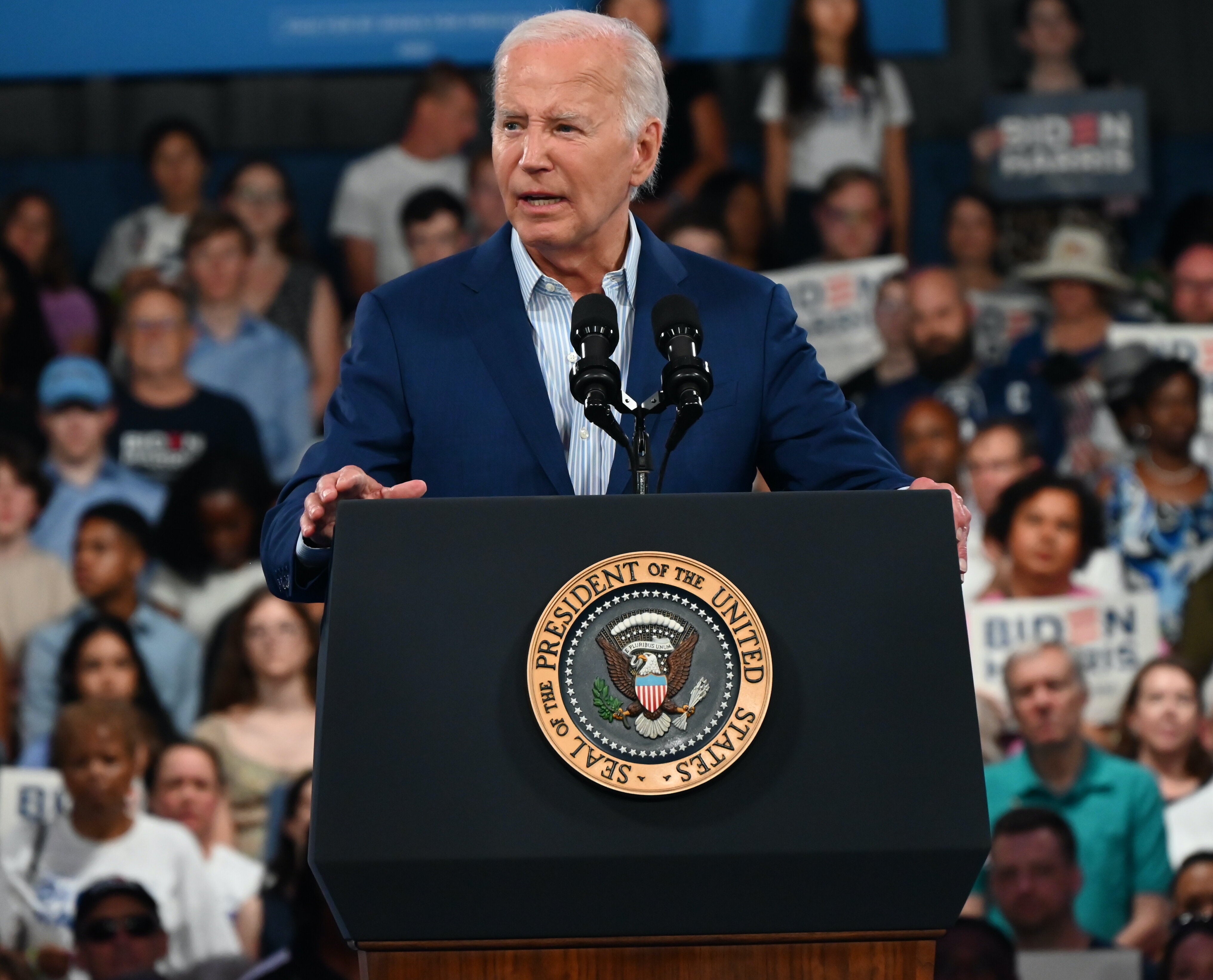
Following President Joe Biden’s poor debate performance on Thursday night, a number of prominent Democrats are privately hoping he withdraws from the presidential race and gives the party a chance to nominate someone younger who may have a better chance of beating Donald Trump.
But the logistics of any hypothetical attempt to replace Biden are complicated.
Things are different now. At this stage, Biden has locked up enough convention delegates to clinch the nomination, and party elders have no mechanism for forcing him out. He would have to voluntarily withdraw from the presidential race.
Advertisement
Neither Biden nor his campaign has shown any sign of openness to stepping aside. He spoke with defiant exuberance at a campaign rally in Raleigh, North Carolina, on Friday. “I might not debate as well as I used to,” he said. “But what I do know is how to tell the truth.” Former President Barack Obama offered words of support in a social media post linking to Biden’s campaign website.
But if Biden were to change his mind in the coming weeks, it would be simpler if it happened before the Democratic National Convention in August, when his status as the presidential nominee will be official.
If the August 19 convention convenes in Chicago without a presumptive Democratic nominee, the nearly 4,000 pledged delegates would be free to pick a different candidate on the first ballot. And, thanks to reforms passed in 2018, if no candidate achieved a majority on the first ballot, the group of 749 unpledged delegates known as “superdelegates,” which includes all Democrats in Congress and other party dignitaries, would only be able to cast votes on the second ballot.
In the scenario of such a contested or brokered convention, rival candidates for the Democratic nomination would duke it out for the loyalties of state party officers, precinct captains, union leaders, nonprofit officials and Democratic activists.
Advertisement
“It would be very chaotic – like the Wild West out there,” said Casey Burgat, a specialist in political conventions at George Washington University.
“We have a strong party system playing out in a weak party era.”
– Casey Burgat, George Washington University
Party leaders could seek to steer the process to make it more orderly. Biden himself would likely have the biggest influence, since he could appeal to delegates on the basis that they were previously dedicated to him. Former President Barack Obama has also played a role in corralling disparate party factions in the past.
On the one hand, Obama, Biden and other party leaders lack some of the tools top Democrats wielded before reforms passed after the 1968 election democratized the nominating process.
Party elders in the pre-reform era were able to tap vast state and local-level political machines to overcome ideological and regional differences with promises of patronage jobs and other political perks.
Advertisement
“We have a strong party system playing out in a weak party era,” Burgat said. “There isn’t a strong party cabal or leader or group of leaders who can basically point to a candidate and say, ‘Everyone fall in line.’”
At the same time, the Democratic Party is, relatively speaking, less ideologically divided than it was in the era when segregationist Southern conservatives made up a major party faction.
“The policy differences that exist among Democrats today, while they seem big, are trivial compared to what they had in the past,” said Hans Noel, a presidential nomination process expert at Georgetown University. “And they all agree that they don’t want Donald Trump.”
It would ultimately be up to the individual delegates themselves, however. And in a contest where perceived electability is likely to take precedence, the choices before them would be politically thorny.
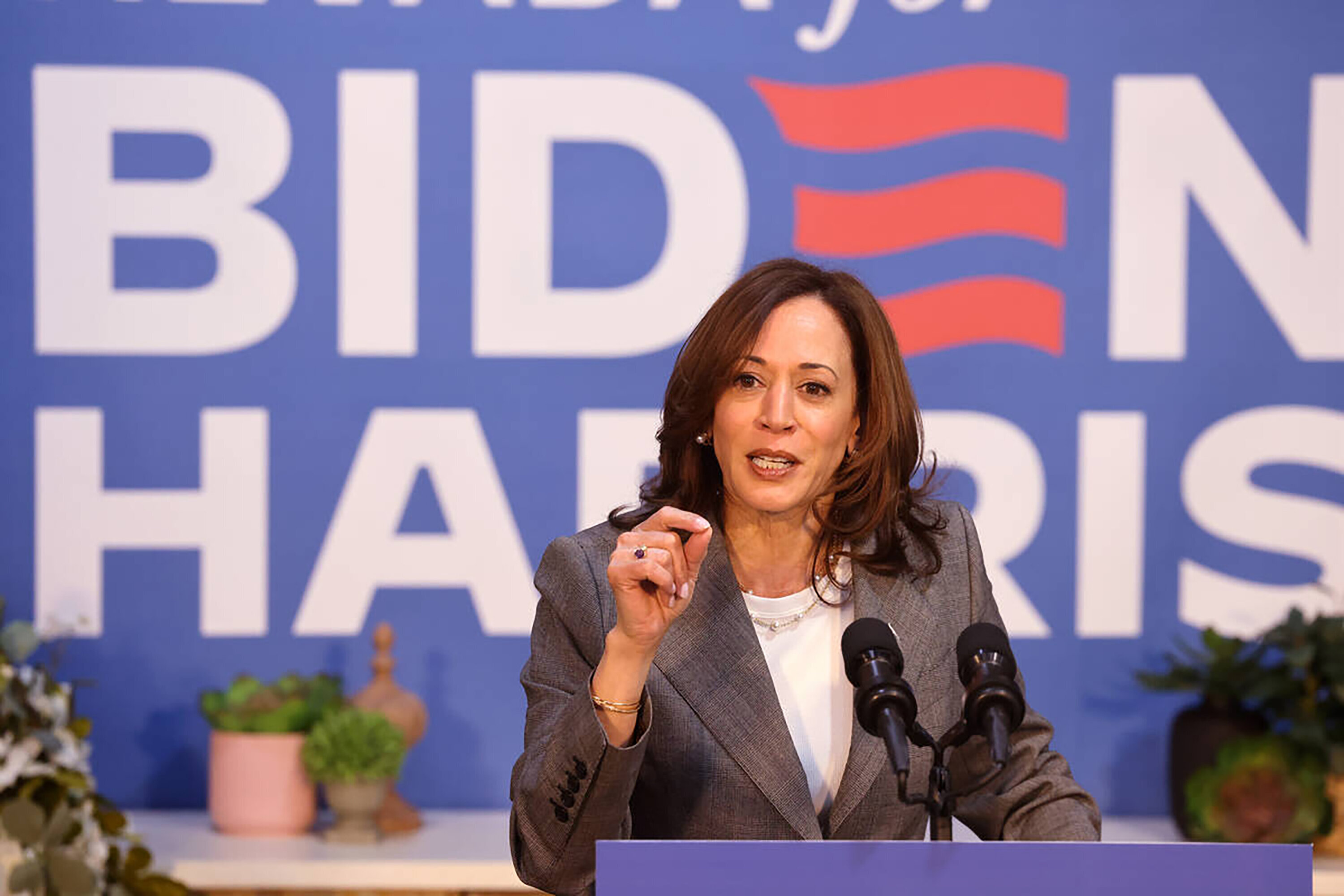
Vice President Kamala Harris, an increasingly prominent surrogate for Biden, has a dedicated constituency within the Democratic Party, but also detractors who worry about her electability.
K.M. Cannon/Las Vegas Review-Journal/Getty Images
Advertisement
Biden’s logical successor is Vice President Kamala Harris, who did a capable job spinning Biden’s performance in a CNN interview last night. As the nation’s first Black, first Asian, and first female vice president, she has made history.
But many Democrats lack confidence in Harris’ ability to win a general presidential election. In 2019, when she ran her own presidential campaign before joining the Biden ticket, her candidacy failed to take off and she ultimately dropped out before any votes were cast.
Harris now rates as only nominally more popular than Biden. The number of voters who disapprove of her job performance exceeds the number of voters who approve of her job performance by 10 percentage points, according to an average of available polls.
Meanwhile, there is a bench of prospective alternatives to Harris — California Governor Gavin Newsom, Michigan Governor Gretchen Whitmer, Illinois Governor J.B. Pritzker, and Pennsylvania Governor Josh Shapiro — who each have their own strengths and weaknesses.
Rejecting Harris, though, would likely alienate Black officials and voters, who are the backbone of the Democratic base. And with the possible exception of Newsom, the other potential contenders would be new to the national stage.
Advertisement
“You’re jumping over someone who would not only be presumptively in that place, you’re jumping over a Black woman, and so that’s going to have all kinds of frustration and spawn a lot of anger among Democrats,” Noel predicted.
There are practical advantages to a Harris nomination as well. Biden would be able to transfer his campaign war chest since she is already part of his presidential ticket.
If it were another candidate, Biden would be able to transfer funds earmarked for the primary, which has concluded, but would have to offer refunds on donations earmarked for the general election. The Democratic National Committee, the joint victory fund and pro-Biden super PACs would be constrained by those limitations.
“You’re jumping over someone who would not only be presumptively in that place, you’re jumping over a Black woman, and so that’s going to have all kinds of frustration and spawn a lot of anger among Democrats.”
– Hans Noel, Georgetown University
Biden withdrawing from the race after already accepting the nomination at the Democratic National Convention would be even trickier.
Advertisement
It would be up to the Democratic National Committee to name a replacement, and it’s not clear if that responsibility would fall solely on Chair Jaime Harrison; a powerful panel within the DNC, such as the Rules and Bylaws Committee; or all 448 voting members of the party body.
Withdrawing at that late date would also make ballot access considerably harder since many states restrict presidential candidates from withdrawing after accepting the nomination. In Wisconsin, for example, a presidential nominee can only withdraw from the ballot in case of death.
The conservative Heritage Foundation’s Oversight Project issued a memorandum in April outlining the potential legal hurdles to ballot access that would face a Democratic nominee in the event of Biden’s withdrawal.
“This isn’t as easy as ‘abracadabra,’” Mike Howell, executive director of Heritage’s Oversight Project, said in a Friday call with reporters.“There is going to be a lot of litigation.”
Howell and other Heritage attorneys maintain that there could be legal challenges to a new candidate even if they are nominated in lieu of Biden at the convention.
Advertisement
But a Democratic elections attorney told HuffPost that ballot access is mainly only an issue after the formal acceptance of the party nomination.
Party officials are unlikely to allow Biden to be nominated at the convention only to have him withdraw later on, save for a reason related to his health, according to Noel.
Then again, in the absence of a consensus choice to replace Biden, Noel also suspects party elders will decide against pressuring Biden to withdraw altogether.
“There are so many people who not just want the job, but to whom Democrats want to give it, that it’s really messy,” he said. “The party is risk-averse, and I think that’s how they’re going to behave.”
CNN fact-checker Daniel Dale offered a breathless breakdown of the misleading claims and false statements that former President Donald Trump made during his first 2024 presidential debate with President Joe Biden, which the network hosted in Atlanta on Thursday.
The presumptive Republican presidential nominee’s list of false claims is “way, way longer” than the president’s, Dale noted before reeling off and then debunking the many, many falsehoods uttered by Trump.
Advertisement
Dale, during his near-3-minute segment, described Trump’s claim that Biden wants to quadruple people’s taxes as “pure fiction” and said his line about Biden only creating jobs for “illegal immigrants” was “total nonsense.”
CNN’s Jake Tapper and Dana Bash, who moderated the debate, were criticised for not fact-checking Trump’s false claims in real time for the audience’s benefit.