‘Ugly’ fossil places extinct saber-toothed cat on Texas coast

Important scientific finds don’t always come in the biggest, buzziest packages. Sometimes new discoveries come in little ugly rocks. Such is the case of a 6-centimeter-wide, nondescript mass of bone and teeth that helped a scientist at The University of Texas at Austin expand the geographic footprint of a large cat that roamed the Earth tens of thousands of years ago.

“You can’t even tell what it is, let alone which animal it came from,” said John Moretti, a doctoral student at the UT Jackson School of Geosciences who led research. “It’s like a geode. It’s ugly on the outside, and the treasure is all inside.”

The research was published in the May issue of The Anatomical Record.

The fossil looks like a lumpy, rounded rock with a couple of exposed teeth that are a little worse for wear, having been submerged and tumbled along the floor of the Gulf of Mexico for thousands of years before washing up on a beach. But when the fossil was X-rayed at the Jackson School’s University of Texas Computed Tomography Lab, Moretti saw there was more to the fossil that met the eye: a hidden canine tooth that had not yet erupted from the jaw bone.

It was just what Moretti needed to identify the fossil as belonging to a Homotherium, a genus of large cat that roamed much of the Earth for millions of years. Because this specific cat wasn’t fully grown when it died, its distinctive saber-like canine tooth had not fallen into its permanent position. Nestled inside the jaw, the tooth was protected from the elements.

“Had that saber tooth been all the way erupted and fully in its adult form, and not some awkward teenage in-between stage, it would have just snapped right off,” Moretti said. “It wouldn’t have been there, and we wouldn’t have that to use as evidence.”

Homotherium spanned across habitats in Africa, Eurasia and the Americas. It was a large, robust cat about the size of a jaguar, with an elongated face, lanky front legs, and a sloping back that ended in a bobtail. Their serrated canine teeth were covered by large gum flaps, similar to domestic dogs today.

Their fossils have been found in several areas of Texas, but this fossil shows for the first time that the big cat roamed the now-submerged continental shelf that connects Texas and Florida. Scientists hypothesize that this stretch of land was a Neotropical corridor. Animals such as capybaras and giant armadillos that wouldn’t have ventured farther north used this strip of humid grassland to move from Mexico to Texas to Florida.

The discovery that Homotherium lived along this corridor gives scientists a small glimpse into the ecology of this landscape during the Late Pleistocene, Moretti said. Big carnivores such as these cats helped shape the broader animal community, tamping down prey-animal populations and influencing regional biodiversity.

The fossil specimen was discovered more than 60 years ago on McFaddin Beach, south of Beaumont, by Russell Long, a professor at Lamar University, but was donated by U.S. Rep. Brian Babin, a former student of Long’s who worked for 38 years as a dentist. Babin said that his training in paleontology and dentistry helped him recognize that what seems like a strange rock at first glance is actually an upper jaw bone and teeth.

“Without question, my professional knowledge and what I’ve learned as a dentist helped me in that regard,” he said.

The research is part of a larger initiative on McFaddin Beach fossils started in 2018 by William Godwin, curator at the Sam Houston State University Natural Science Museum and a co-author of the study. Co-authors also include Deanna Flores, Christopher J. Bell, Adam Hartstone-Rose, and Patrick J. Lewis. The research was funded by UT, Sam Houston State University and North Carolina State University.


Share Button

Medium and mighty: Intermediate-mass black holes can survive in globular clusters

Joint research led by Michiko Fujii of the University of Tokyo demonstrated a possible formation mechanism of intermediate-mass black holes in globular clusters, star clusters that could contain tens of thousands or even millions of tightly packed stars. The first ever star-by-star massive cluster-formation simulations revealed that sufficiently dense molecular clouds, the “birthing nests” of star clusters, can give birth to very massive stars that evolve into intermediate-mass black holes. The findings were published in the journal Science.

“Previous observations have suggested that some massive star clusters (globular clusters) host an intermediate-mass black hole (IMBH),” Fujii explains the motivation for the research project. “An IMBH is a black hole with a mass of 100-10000 solar masses. So far, there has been no strong theoretical evidence to show the existence of IMBH with 1000-10,10.1126/science.adi4211000 solar masses compared to less massive (stellar mass) and more massive (supermassive) ones.”

Birthing nests might conjure up images of warmth and tranquility. Not so with stars. Globular star clusters form in turmoil. The differences in density first cause stars to collide and merge. As the stars continue to merge and grow, the gravitational forces grow with them. The repeated stellar collisions in the dense, central region of globular clusters are called runaway collisions. They can lead to the birth of very massive stars with more than 1000 solar masses. These stars could potentially evolve into IMBHs. However, previous simulations of already-formed clusters suggested that stellar winds blow away most of their mass, leaving them too small. To investigate whether IMBHs could “survive,” researchers needed to simulate a cluster while it was still forming.

“Star cluster formation simulations were challenging because of the simulation cost,” Fujii says. “We, for the first time, successfully performed numerical simulations of globular cluster formation, modeling individual stars. By resolving individual stars with a realistic mass for each, we could reconstruct the collisions of stars in a tightly packed environment. For these simulations, we have developed a novel simulation code, in which we could integrate millions of stars with high accuracy.”

In the simulation, the runaway collisions indeed led to the formation of very massive stars that evolved into intermediate-mass black holes. The researchers also found that the mass ratio between the cluster and the IMBH matched that of the observations that originally motivated the project.

“Our final goal is to simulate entire galaxies by resolving individual stars,” Fujii points to future research. “It is still difficult to simulate Milky Way-size galaxies by resolving individual stars using currently available supercomputers. However, it would be possible to simulate smaller galaxies such as dwarf galaxies. We also want to target the first clusters, star clusters formed in the early universe. First clusters are also places where IMBHs can be born.”

Share Button

People are altering decomposition rates in waterways

Humans may be accelerating the rate at which organic matter decomposes in rivers and streams on a global scale, according to a new study from the University of Georgia, Oakland University and Kent State University.

That could pose a threat to biodiversity in waterways around the world and increase the amount of carbon in Earth’s atmosphere, potentially exacerbating climate change.

Published in Science, the study is the first to combine a global experiment and predictive modeling to illustrate how human impacts to waterways may contribute to the global climate crisis.

“Everyone in the world needs water,” said Krista Capps, co-author of the study and an associate professor in UGA’s Odum School of Ecology and Savannah River Ecology Laboratory. “When human activities change the fundamental ways rivers work, it’s concerning. Increases in decomposition rates may be problematic for the global carbon cycle and for animals, like insects and fish, that live in streams because the food resources they need to survive will disappear more quickly, lost to the atmosphere as carbon dioxide.”

Global warming, urbanization, increased nutrients altering global carbon cycle

Rivers and streams play a key role in the global carbon cycle by storing and decomposing large amounts of leaves, branches and other plant matter.

Typically, the process would go something like this: Leaf falls into river. Bacteria and fungi colonize the leaf. An insect eats the bacteria and fungi, using the carbon stored in the leaf to grow and make more insects. A fish eats the insect.

The study found that this process is changing in areas of the world impacted by humans.

Rivers impacted by urbanization and agriculture are changing how quickly leaf litter decomposes.

And when the process speeds up, that insect doesn’t have a chance to absorb the carbon from the leaf. Instead, the carbon is released into the atmosphere, contributing to greenhouse gas pollution and ultimately disrupting the food chain.

“When we think of greenhouse gas emissions, we tend to think of tailpipes and factories,” said Scott Tiegs, co-author of the study and a professor of biological sciences at Oakland. “But a lot of carbon dioxide and methane comes from aquatic ecosystems. This process is natural. But when humans add nutrient pollution like fertilizer to fresh waters and elevate water temperatures, we increase the decomposition rates and direct more CO2 into the atmosphere.”

Reducing human impact could improve water quality, help fight climate change

The researchers collected field data from 550 rivers across the globe, collaborating with more than 150 researchers in 40 countries.

Based on that data, the scientists generated one of the first estimates of decomposition rates in rivers and streams throughout the world, including understudied areas such as the tropics.

The authors compiled the data into a free online mapping tool that shows how fast different kinds of leaves decompose in local waterways.

Using predictive modeling, the researchers also identified environmental factors responsible for increased decomposition rates, such as higher temperatures and increased nutrient concentrations.

“Both of these factors are impacted by human activities,” said David Costello, co-author of the study and an associate professor at Kent State. “Reducing human impacts on decomposition will keep more carbon in rivers, preventing it from entering the atmosphere as carbon dioxide and contributing to climate change.”

The study was co-authored by John Paul Schmidt, from UGA’s Odum School of Ecology; Christopher J. Patrick, Virginia Institute of Marine Science; Jennifer J. Follstad Shah, University of Utah; Carrie J. LeRoy, The Evergreen State College; and the CELLDEX Consortium.

Share Button

This Is How Being A People Pleaser Is Ruining Your Career

Being a ‘people pleaser’ sounds like a good thing on the surface, right? You please people?

However, as the British composer Elizabeth Parker once said: “The only thing wrong with trying to please everyone is that there’s always at least one person who will remain unhappy. You.”

This couldn’t be more true in the workplace. While working hard and helping your colleagues can feel good and progress your career, you may soon find yourself burnt out and bitter.

Careers expert and founder of Social Media Jobs, Rob Phelps, spoke with us to explain why people pleasing in the workplace can be harmful, and how to break the cycle.

The dangers of people pleasing in the workplace

It’s a recipe for burnout

While it may just feel like doing ‘small’ things to help others, Phelps warns that saying yes to everything, taking on extra work on top of your own to-do list and prioritising other people’s needs over your own can lead to ‘serious burnout’.

Phelps said: “The constant state of busyness can take over and make it difficult to focus on your core responsibilities, and potentially mean mistakes or missed deadlines, for the sake of helping too many people with their own deadlines.”

It can make you almost invisible

If you spend a lot of your time making sure that you’re helping other people, it’s likely that your own voice and needs will get lost.

Phelps said: “People pleasers often shy away from advocating for themselves or putting forward their ideas, so it can be difficult to get noticed for your contributions and ideas.”

He also warned that this lack of visibility can reduce your chances of getting a promotion or being put forward for new challenges or projects.

It can weaken boundaries

Phelps warned: “People pleasing often means weakening your boundaries, both professionally and personally.

“Your time, expertise, and energy are valuable, and constantly giving them away for free can lead to frustration and resentment, and this can start to bleed into your personal life too.”

He said that you may find yourself checking work emails while on holiday, or saying yes to taking on more tasks when you’re actually off sick, or even accepting friend requests from colleagues on private social media accounts — all of which are ignoring your own boundaries and comfort levels.

How to break free from people-pleasing

Understand why you do it

Phelps said: “The first step is understanding why you feel the need to please everyone around you.

“Is it a fear of disapproval? A lack of clarity on your own goals that makes you take on extra work to avoid having time to work out what you really want?”

He added that talking to somebody you admire at work or even friends and family can help you to get to the root of the underlying cause and address the patterns and start saying no.

Know your own worth

Recognise your skills and contributions! You deserve to be valued for what you bring to the table, and when you feel invisible it can have a serious impact on your confidence in your abilities.

Phelps advised: “Take time to reflect on your accomplishments and successes, to boost your confidence and help you advocate for yourself more effectively.”

Set and keep boundaries

Phelps said: “Setting boundaries isn’t just about saying no to others, it’s about saying yes to yourself. When you prioritise your own growth and wellbeing, you become a more efficient and fulfilled member of the team.”

To do this, you need to learn to politely say no to taking on tasks that aren’t part of your job, explain that you’re prioritising your own workload and offer alternatives solutions if possible.

Phelps added: “You might be surprised at how understanding people are when you stick to your boundaries rather than saying yes to everything.”

Advocate for yourself

Sometimes you have to remind people of everything you do if they’re not paying attention. Don’t be afraid to share your ideas and opinions, even if they’re different from what everyone else is saying. Your perspective is valuable and deserves to be heard.

Be patient with yourself

Finally, Phelps urged, you need to be patient with yourself.

He said: “Remember that change is a gradual process, and after years of saying yes, it can feel strange to start saying no. Be patient with yourself and celebrate progress.

“By putting yourself first, you’ll be able to achieve a healthier work-life balance, and ultimately have a more fulfilling and successful career, rather than letting your desire to keep everyone else happy hold you back.”

Share Button

Ayo Edebiri Proves She Can Literally Do Everything In This Behind-The-Scenes Clip Recording Inside Out 2 Lines

As if we needed another reason to be even more obsessed with Ayo Edebiri…

From her stand-out roles in The Bear, Theater Camp and Bottoms to her commitment to the bit as the new Irish people’s princess, the award-winning comic actor knows the way to our hearts.

A new clip of Ayo has been doing the rounds on social media this week, revealing just how multi-talented a performer she really is.

She’s part of the cast of Disney’s new Inside Out sequel, which is slated for release next month, nine years after we were first introduced to Riley Andersen and the many emotions who live inside her head.

With Riley turning 13 in the second instalment, Inside Out 2 welcomes some intriguing new characters into the mix, including Anxiety, Ennui, Embarrassment and Envy, who Ayo lends her voice to.

In a behind-the-scenes snippet showing Ayo energetically recording her lines, fans have been blown away by just how effortless the star made it look.

“Perfect casting,” one X user enthused, while another agreed: “No need for a trailer after this.”

“Didn’t know I’d be jumping up and down for Inside Out 2 but here we are,” a third shared.

Unsurprisingly, it’s been a pretty unanimous response…

Inside Out 2 will also star returning cast members Amy Poehler as Joy, The Office’s Phyllis Smith as Sadness and Lewis Black as Anger, though Bill Hadar’s Fear has been recast to Tony Hale and Mindy Kaling’s Disgust to Liza Lapira.

Riley will also be voiced by Kensington Tallman, who’s replacing Kaitlyn Dias.

New cast members include Stranger Things’ Maya Hawke as Anxiety, Passages’ Adèle Exarchopoulos as Ennui, Black Bird’s Paul Walter Hauser as Embarrassment and Nebraska’s June Squibb as Nostalgia.

Inside Out 2 is due for release on Friday 14 June.

Share Button

Dua Lipa’s ‘Sanitised’ Documentary On Camden’s Music Scene Hasn’t Quite Hit The Right Note

In her new Disney+ documentary, Camden, Dua Lipa pays tribute to the London district that she describes as the “beating heart of music”.

The chart-topping singer served as executive producer of the four-part docuseries, which dives into the history of a world-famous music scene, looking at how it shaped the life and careers of countless iconic musicians.

Directed by Asif Kapadia (Amy), the series features archival footage and celebrity interviewees like Coldplay’s Chris Martin, The Libertines and Yungblud,

The musicians “relive their Camden experiences; from their very first gigs to sell-out concerts, the highs and lows of nights out and a youth spent discovering music,” according to a description.

But despite the big names attached to it, the series hasn’t gone down too well with critics, after many criticised its historical blindspots and “style over substance” approach.

Here’s what the reviews are saying so far…

“Less informative than a five-minute Google… Strap in for three hours of annoyingly vague celeb analyses of the London musical hotspot’s cultural significance – featuring no punks and almost no history. It’s downright cringeworthy.”

“Lipa, one of the series’ executive producers, spent several years living here as a child and recorded her first YouTube songs in a Camden flat aged 15, but – such is the major pop star mindset – she seems far more concerned with lauding the biggest names that lived and played here than getting under the gritty fingernails of the place.”

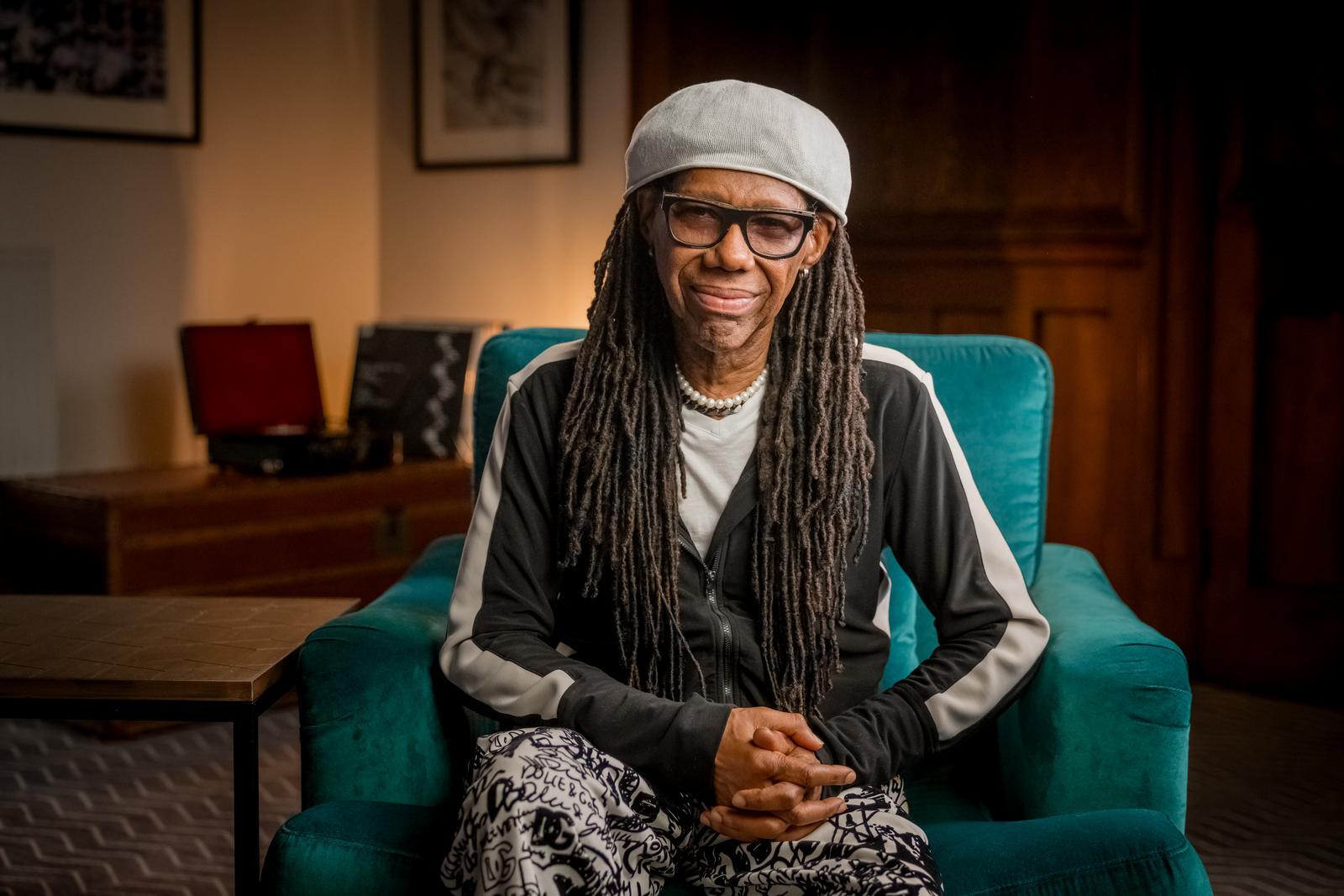
Nile Rodgers was among the contributors to Disney+'s Camden
Nile Rodgers was among the contributors to Disney+’s Camden

Ben Blackall

“Disney+’s documentary is smug and sanitised… A documentary about one of London’s most raucous musical boroughs should be more frank and unvarnished than this Dua Lipa-produced docuseries.”

“Dua Lipa’s documentary is a love letter to endangered independent venues…Trying to condense the history of the postcode into four (roughly) hour-long episodes means that Camden is entertaining, but occasionally scattershot and lacking focus.”

“The series has a tendency to veer into a hagiography of Camden and misses out on hitting truly classic documentary territory. That said, it is a very entertaining ride through the living memory of the area.”

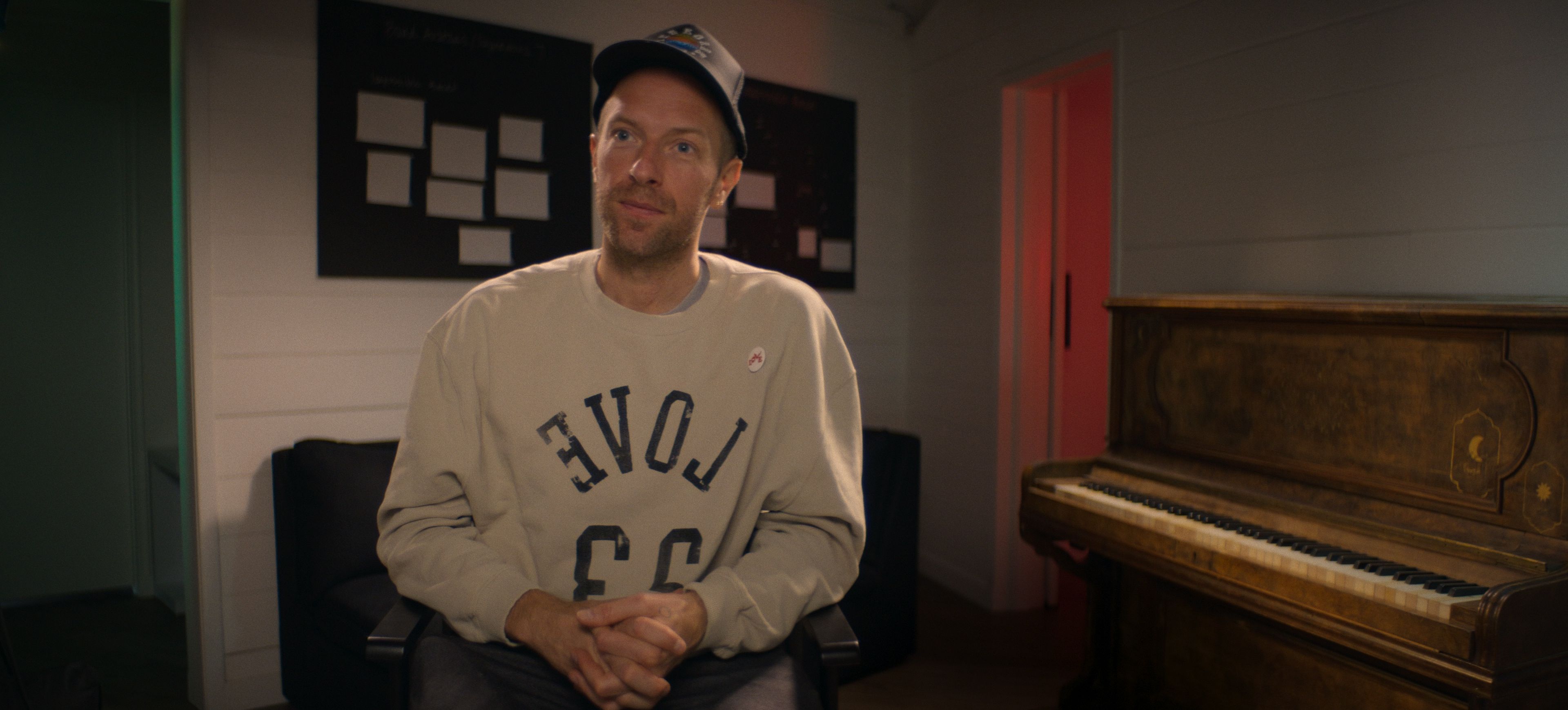
Coldplay frontman Chris Martin was also interviewed for the documentary

“You can’t help but want to hit the town after hearing the loud music and seeing all these celebrities gleefully talk about their crazy nights and all the callbacks to their time at The Jazz Café… It did at times feel like the episodes went on a bit too long, but never to the point that it overstayed its welcome.”

“Don’t get us wrong; we’re fans of [Dua Lipa’s], and we do get that she’s an executive producer of the show. But she’s 28 years old, and her career didn’t really start until around 2010. As much as she knows about the history of the venues and the acts that played there, her personal interaction with the music scene there likely only reaches back to her early 2000s childhood, if we’re being generous. There is more than 20 years of history that came before that, and she has no personal perspective on it.

Camden is available to watch on Disney+ now.

Share Button

Widespread NHS computer issues linked to patient harm

IT failures have been linked to the deaths of three patients and more than 100 cases of serious harm.

Share Button

NHS computer issues linked to patient harm

IT failures have been linked to the deaths of three patients and more than 100 cases of serious harm.

Share Button

Junior doctors call five-day pre-election strike

Ministers accuse doctors’ union of “cynical” tactics with walkout due to start on 27 June in England.

Share Button

Grow the skin you’re in: In vivo generation of chimeric skin grafts

Skin grafting is an essential procedure used to treat severe skin wounds. In the case of extensive wounds, however, it can be challenging to harvest enough donor skin, and generating artificial skin substitutes that include hair follicles and sweat glands and can engraft on deep wounds has not been successful. Now, researchers from Japan report a new way to “grow your own” donor skin that could help improve the success of skin graft generation.

In a study published last month in Nature Communications, researchers from Tokyo Medical and Dental University (TMDU) have revealed that growing donor skin in another species yields surprisingly robust and functional skin grafts.

The gold standard for treating burn wounds is autologous skin grafting, a process in which sheets of skin containing both the epidermis (the outer layer) and the dermis (the deeper layer) are transferred from other parts of the patient’s body to cover the wounded area. However, for large wounds it can be difficult to harvest enough skin from the limited donor sites. Split-thickness grafts that contain mostly epidermis with only some of dermis can be used to cover larger areas, but they do not include features like hair and sweat glands, and are more prone to shrinkage and scarring.

“As alternatives to autologous skin grafts, artificial skin substitutes including cultured epidermis and reconstituted skins have been developed,” says the lead author of the study Dr. Hisato Nagano. “These options are inferior, though, as cultured epidermis can only be used for shallow wounds, and the engraftment rate of reconstituted skins is low.”

To provide proof-of-concept for a new way to produce autologous skin grafts, the researchers generated skin grafts by introducing a mutation into mouse fetuses that made them unable to grow mature epidermis. These fetuses were then injected with mouse stem cells and allowed to develop normally until birth, when their skin growth was analyzed.

“The results were very surprising,” explains Dr. Naoaki Mizuno, the corresponding author. “Not only were the chimeric mice born covered with large patches of skin derived from the injected cells, but these patches also survived up to 3 months when grafted onto mature mice, and even grew fur.”

Intriguingly, injecting the same mutated mouse embryos with human skin cells yielded similar results: as the mice developed in utero, they grew sheets of human skin that mimicked the structure and organization of mature epidermis.

“Our findings suggest that semi-autologous skin grafts containing hair follicles and other skin appendages can be generated in vivo and engrafted successfully,” says Dr. Hiromitsu Nakauchi, senior author.

Given that mouse embryos can only grow small amounts of skin, the next step would be to scale up the process to larger animals with a longer gestation period to generate large human skin grafts. This approach, which involves generating only skin tissue, could help avoid ethical concerns about using human-animal chimeras to produce organs for medical use.

Share Button