A majority of UK adults say they’ve dealt with stress so intense that it’s left them feeling completely overwhelmed.
And chronic stress – worries and/or pressures that keep you in a state of high alert for long, continuous periods of time – has been linked to worse health outcomes, like sleep issues and higher blood pressure.
Advertisement
Sometimes, though, chronic stress lasts so long that it can be hard to tell it apart from “regular life”.
Thankfully, Dr Bijal Chheda, a consultant psychologist and founder of Nos Curare, has shared seven signs your body might give to suggest you’re dealing with the ongoing issue.
1) Persistent headaches
“Stress is a well-recognised trigger for tension-type headaches because it can cause the muscles around the scalp and neck to remain tense,” the psychologist said.
Advertisement
“Over time, the nervous system may become more sensitive to these pain signals, meaning headaches that were once occasional begin occurring more regularly.”
If you’re experiencing this symptom, keep a diary detailing when the headaches happen, how long they last, and what, if anything, helps. If the problem keeps coming back or don’t improve, speak to your GP.
Advertisement
2) Stomach cramps
Yep – stress really can mess up your stomach. For instance, the NHS said, it can slow digestion down.
“During periods of prolonged stress, communication between the brain and gut can become disrupted, affecting how the gut functions,” Dr Chheda added.
“The bowel muscles may contract irregularly, triggering cramps and leaving the stomach feeling unsettled.”
Advertisement
If this happens, she advised that diaphragmatic breathing may help – though again, see your doctor if the symptom doesn’t let up.
3) Tense muscles
When we’re chronically stressed, “the body may remain slightly prepared for action, maintaining a low level of muscle contraction,” the expert explained.
“Over time, this can make it difficult for certain muscles to fully relax, leaving areas such as the shoulders or neck feeling tight.”
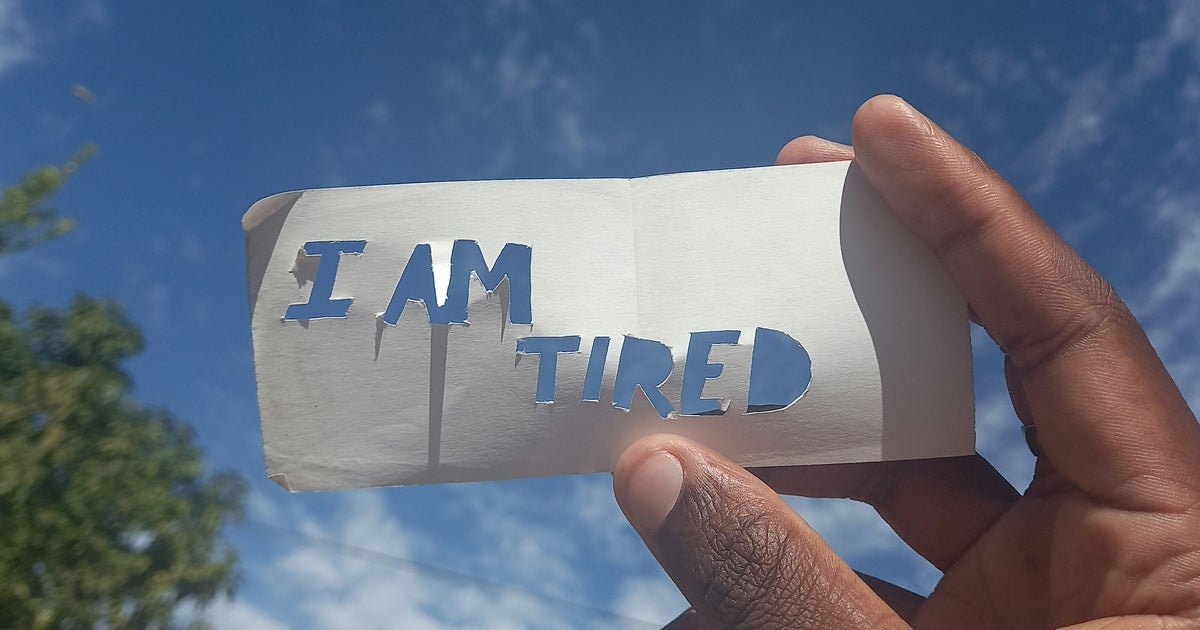
I know, I know: supposedly, everyone’s tired. But that doesn’t mean you have to accept constant low-level exhaustion, or that it’s normal.
“Under stress, the body shifts its energy towards responding to whatever feels threatening, and away from the processes that help it recover. This is why so many people under pressure find it difficult to fully relax, even when there is nothing immediate left to respond to,” the psychologist stated.
“Over time, chronic stress can become exhausting, causing even routine tasks to feel more physically demanding. Rather than trying to push through the fatigue, build short periods of genuine recovery into the day.”
Advertisement
5) Disrupted sleep
Though settling down for a good night’s sleep sounds relaxing, Dr Chheda said these quiet periods can make stressful thoughts louder. “This may also keep cortisol levels elevated later than usual, making it harder for the body to shift naturally into rest,” she said.
“As a result, falling asleep may take longer, while small disturbances may be more likely to wake you during the night.”
Following a consistent sleep routine, avoiding screens before bed, and a relaxing hobby like reading can all help, she ended.
Advertisement
But if the issue persists – you guessed it – it might be time to speak to a medical professional.
When a famous person dies unexpectedly, people who enjoyed their work often feel the loss deeply. The news of Hayden Panettiere’s death at 36 has particularly hit manymillennials who grew up watching her performances in a way that can be hard to articulate.
Therapists and mental health experts say that reaction is completely understandable, and it says something meaningful about the generation that grew up with her.
Advertisement
“I hear this from clients all the time – that there is this confusion about why they’re crying over someone they’ve never even met,” Gina Moffa, a grief therapist and author of Moving On Doesn’t Mean Letting Go: A Modern Guide to Navigating Loss, told HuffPost.
“We have all felt it at some point with a favourite public figure. And what I say is this: Your brain doesn’t actually care whether the relationship was mutual. It bonds with what’s familiar, what’s constant, what’s shown up for you again and again, even if that showing up only ever went one direction over a TV screen or a radio.”
The clinical term that helps explain what many people are feeling right now is a parasocial relationship – a one-sided bond that the brain forms with a public figure through repeated exposure. But experts say the term doesn’t entirely capture what these connections actually feel like from the inside.
Advertisement
“If someone’s voice or presence has been an important or meaningful part of your life for years, through your breakups, your late nights trying to fall asleep, your growing up, your body doesn’t check whether they knew your name or were an actual part of your life in any reciprocal way,” Moffa said. “It only registers that this was steady, this was meaningful to me, and now it’s gone.”
“Our brains process the familiar faces and voices of celebrities we come to know and love the same way they process real friends because we see them on our screens, often daily, in our own homes,” she said.
“This is partly rooted in mirror neurons, which fire when we observe someone else’s emotions and allow us to internally mimic or feel connected to what we see as we may be experiencing many of the same emotions and events in our own lives,” she continued.
Advertisement
“When we watch a celebrity on TV, these mirror neurons let us resonate with their emotions, creating a bridge of identification.”
That’s why your brain doesn’t need a two-way relationship to form a meaningful attachment. Spending formative years with a pop culture figure creates a sense of familiarity, which can foster a genuine sense of companionship.
“Whether it is music, movies, sports, television or social media, we can feel like our paths have mirrored the path of the celebrity and we have ‘grown up with them’ or they represent a particular moment or time in our lives,” said Dr. Jessi Gold, a psychiatrist and chief wellness officer at the University of Tennessee System.
Advertisement
“I think about this like, ‘Oh, that movie meant so much to me when…’ and we have feelings that associate with that movie, that time, that character, and those translate to the human who portrayed them.”
“
As we age as millennials, the death of celebrities shakes us out of our egocentric internal teenage feeling and forces us into the fragile reality that our own mortality is real.
– Tychelle Graham-Moskowitz, therapist
So when that celebrity dies, you might feel grief over who they were to you or that time in your life. For nostalgia-driven millennials, it can be a powerful gut punch.
Advertisement
“I do believe there is a special relationship with millennial grief of celebrities,” Moffa said. “With my millennial clients, what I notice is that the grief they experience is not really just about the person, but also about the version of themselves that existed the last time they watched them and how they felt about their own life and themselves in the world.
“These weren’t just actors and actresses – they were sitting on the couch with us as kids, shaping what we thought friendship or relationships or love looked like. So when they’re gone, part of what’s actually being mourned is that chapter of your life feeling unreachable in a new way.”
Because Panettiere was a child actor as well, many millennials literally grew up alongside her and feel her death in a deeply personal way.
Advertisement
“As we age as millennials, the death of celebrities shakes us out of our egocentric internal teenage feeling and forces us into the fragile reality that our own mortality is real,” Graham-Moskowitz said.
Public figures remind us of the passage of time and our own place within it.
“When a person who represented those memories or versions of ourselves dies, it can feel like a piece of history lost, or it can make us confront our own age more and the idea that we are getting older, our friends are getting older, and we will have more loss as a result,” Gold said. “Death reminds us that time has passed – even if part of us still feels like we were watching them on TV yesterday.”
Jon Kopaloff via Getty Images
Hayden Panettiere died on Aug. 16, just days before what would have been her 37th birthday.
Advertisement
Panettiere and other former child actors who have recently passed away – like Michelle Trachtenberg and Daveigh Chase – served as role models and influential peers in a sense.
“Celebrities who were present during your developmental years become part of your internal reference system,” said Chloë Bean, a licensed marriage and family therapist.
“They model resilience, sexuality, independence and aspirational qualities when you’re just starting to figure out who you are. You looked up to them in your youth for guidance and self-direction. So you’re grieving that chapter, your childhood, and the part of you that felt so connected to them.”
Advertisement
She also pointed to the role cable TV played in cementing these bonds as well.
“For many millennials, the TV was the babysitter and an escape,” Bean said. “These actresses felt like friends because they were in your home multiple nights a week, sometimes for years. You weren’t just watching them on the screen, the experience felt like you lived and grew up alongside them. Millennials compare themselves to millennial celebrities in a way that no other generation has before. We aged with them, watching them getting married, struggling, hitting their 30s and 40s.”
Other technological advancements further deepened the connection and the sense of certain celebrities as a constant, stable presence in life.
“Millennials were the first generation to have access to the internet in our homes as a regular occurrence, so not only did we see our favourite celebrities in movies, on television, in magazines and so on, but we got a chance to search more about them on the internet and eventually in the palms of our hands,” Graham-Moskowitz noted.
Advertisement
It’s safe to assume Gen Z may feel celebrity losses even more intensely due to their lifelong parasocial access as well.
“The loss of a celebrity can also be a grief trigger to other grief – other relationships we’ve lost or represent a loss of time, innocence and childhood, or even symbolise our own death or mortality,” Gold said. “And, the communal reaction on social media can also amplify the expression of it all. The grief is usually about more than just the person.”
Therapists pointed to another profound dimension in grieving Panettiere’s death.
“With Hayden specifically, I think what made this loss land so [personal] for so many people is that she wasn’t just a face we grew up watching – she used her platform to speak openly about postpartum depression and trauma and battles with drug use, at a time when very few public figures are willing to say those things out loud and be this vulnerable,” Moffa explained.
Advertisement
Indeed, Panettiere’s recent memoir and interviews added to the depth of connection.
“Unlike many celebrities who have struggled with mental health or substance abuse, Hayden was extraordinarily open about her experiences, and that kind of vulnerability results in followers truly rooting for her and wanting her to overcome these obstacles, which makes her loss even more devastating,” said licensed marriage and family therapist Becky Stuempfig.
“When someone visible says ‘me too,’ it gives people permission to stop hiding their own pain,” Moffa added. “She didn’t just play characters we loved; she showed up as herself, in her own struggle, and that kind of honesty tells people watching from their own dark moments that they’re not alone in the struggle. That can be a whole other part of the grief experience we don’t talk enough about.”
Bean captured what makes this grief so uniquely hard to put into words.
“The millennial generation will feel every celebrity passing because we grew up believing we knew them,” she said. “Social media provides intimacy and daily access, but growing up watching these actresses on shows created a fantasy that felt real. We’re grieving them like we’d grieve a friend who turned out to be a stranger, someone we only knew from one direction. That’s where the grief hits hardest, and it’s what makes it so difficult to articulate.”
Advertisement
“
She didn’t just play characters we loved; she showed up as herself, in her own struggle.
– Gina Moffa, grief therapist and author
If you’re feeling blindsided by how much a celebrity death is affecting you, therapists have some guidance.
“Don’t let anyone talk you out of feeling the shock and grief, because the relationship wasn’t ‘real’ in any traditional sense, or because they were ‘just a celebrity,’” Moffa said.
Advertisement
“Grief doesn’t require reciprocity to be legitimate. It only requires attachment and meaning. If someone shaped who you became, at any age, or time in your life, in any way, that grief deserves the same gentleness you’d give any other loss.”
She emphasised that you don’t need permission to feel deep sadness and loss.
“When a death is sudden and shocking, the unanswered questions and uncertainty about the death being accidental or intentional [exacerbate] the complicated nature of the grief process,” Stuempfig said. “This is very different than an anticipated dying process from a medical illness or ageing. Our brains and bodies have a harder time processing emotions when there are unanswered questions.”
Talk about those feelings with a trusted friend or family member, ideally even someone who was also a fan or can help identify these emotions.
Advertisement
“The concept of ‘name it to tame it’ can be helpful with grief as it is critically important to identify the various feelings that arise so they can be validated,” Stuempfig said.
Be mindful of social media consumption, too.
“You don’t need to read every tribute, every post, and every statement if you feel impacted,” Gold said. “You can still care about an event or person and their death, and detach and take time away from the news, if needed. You also should not feel like you have to post or comment if you don’t know what to say. You can take time to figure out your feelings about something or grieve alone, that is OK, too. You don’t have to say something to show you care.”
Remember that grief, as painful as it can be, may also be a source of social connection.
“As we mourn the deaths of our favourite celebrities, know that we collectively mourn together, much like to do when we mourn in our own family members,” Graham-Moskowitz said. “The connected space that the internet creates can bring us a sense of comfort and togetherness, where we feel seen. This can be helpful. Also, go call a friend!”
Advertisement
And when these experiences bring up heavier feelings around your own mental health, Gold encouraged reaching out.
“If any of these deaths make you think more about your own mental health, I hope you reach out and ask for help,” she said. “There are hotlines, local therapists and everything in between. You can also start with a trusted family member or friend. Just start somewhere.”
Advertisement
Help and support:
Mind, open Monday to Friday, 9am-6pm on 0300 123 3393.
Samaritans offers a listening service which is open 24 hours a day, on 116 123 (UK and ROI – this number is FREE to call and will not appear on your phone bill).
CALM (the Campaign Against Living Miserably) offer a helpline open 5pm-midnight, 365 days a year, on 0800 58 58 58, and a webchat service.
The Mix is a free support service for people under 25. Call 0808 808 4994 or email help@themix.org.uk
Rethink Mental Illness offers practical help through its advice line which can be reached on 0808 801 0525 (Monday to Friday 10am-4pm). More info can be found on rethink.org.
You send your partner a text. Hours pass without a reply.
Logically, you know they’re probably busy. But emotionally, your brain starts spinning. Are they upset with you? Did you do something wrong? Do they still love you?
Most people have moments like this from time to time. But for many people with attention-deficit/hyperactivity disorder (ADHD), those feelings can be much more intense, and may be tied to something often referred to as emotional permanence.
Advertisement
Emotional permanence is a non-clinical term used to describe the ability to hold on to the feeling that someone loves, values or cares about you even when they aren’t physically present or regularly communicating with you.
“Emotional permanence is not an officially recognised diagnostic symptom of ADHD, although many individuals with ADHD report experiencing symptoms that closely resemble it,” said therapist Stephanie Lewis.
“Many report a lack of ability to maintain the emotional reality of a relationship as long as the individual involved is not physically present or actively engaged in communication with them. The phenomenon is much more than simply forgetting another person exists; rather it involves loss of access to the feeling of being loved, valued and/or connected to another person during short periods of time.”
Advertisement
A delayed text, a missed call or a quiet day from a partner or friend can suddenly feel like evidence that the relationship has changed and can cause not only anxiety for the person with ADHD, but also possible friction within a relationship.
Catherine Falls Commercial via Getty Images
Although it’s not a clinical diagnostic symptom, people with ADHD often struggle with “emotional permanence,” according to experts.
How A Lack Of Emotional Permanence Affects Relationships
People who struggle with emotional permanence don’t necessarily doubt their relationships all the time. Rather, they may suddenly feel as though an emotional connection has disappeared simply because it hasn’t been recently reinforced.
Advertisement
For example, someone with ADHD may intellectually know their partner loves them, but after a day without hearing from them, begin wondering whether something is wrong.
“In my work with individuals with ADHD I have met patients who intellectually understand their partner’s love for them,” Lewis said. “Yet, upon going one full day without receiving a text message from their partner, they begin to wonder whether something is wrong and/or if they have caused their partner to become upset with them.”
That uncertainty can quickly snowball.
“This emotional uncertainty will often result in anxiety, increased reassurance-seeking behavior or increased conflict within the relationship,” Lewis said.
Advertisement
The same pattern can show up outside romantic relationships. A delayed response from a friend can feel like rejection. A lack of feedback from a manager can feel like criticism. Even when nothing has objectively changed, the emotional certainty that someone cares can suddenly feel precarious.
Why Emotional Permanence Can Be Harder For Some People With ADHD
Although emotional permanence is not part of the diagnostic criteria for ADHD, experts say several characteristics commonly associated with ADHD may help explain why many people with ADHD identify with this experience.
Lewis points to working memory challenges, difficulties with emotional regulation and rejection-sensitive dysphoria – an intense emotional response to perceived criticism or rejection that many, though not all, people with ADHD experience.
Advertisement
“A number of variables may also contribute to the existence of emotional permanence,” Lewis said. “For example, working memory deficits may limit the ability to retain emotional information, whereas difficulties with emotional regulation and rejection-sensitive dysphoria may increase the fear of rejection or disconnection.”
Clinical psychologist Navvab Tadjvar said these challenges can make the absence of emotional reassurance feel much more significant.
“Because the ADHD brain is so intensely bound to the immediate present, when the feedback stops, the internal anchor collapses,” Tadjvar explained. “Silence doesn’t evoke the possibility that the care will return; it evokes the feeling of total abandonment, leaving us helpless and all alone in the world.”
Advertisement
That doesn’t mean someone with ADHD doesn’t understand that they are loved or cared for. But it does make it difficult for them to access emotional connection in the moment, especially when there’s a gap in communication or they’re missing reassurance.
The Impact Extends Beyond Romantic Relationships
While emotional permanence is often discussed in the context of dating and relationships, ADHD coach Dom Passantino, who also has ADHD, said one of its biggest impacts is actually how people see themselves.
“People often flop into discussions of ADHDers’ lack of emotional permanence with the mindset, ‘They forget they’re in love if someone isn’t there,’” he said. “But it’s a lot more than that, and I feel like the darkest impacts of it are on how we view ourselves and not others.”
Advertisement
According to Passantino, many people with ADHD find themselves craving validation from people who rarely offer it while dismissing reassurance from the people who do.
“And when hypersensitivity is thrown on top, you turn these traits from upsetting to actively damaging,” he explained. “This becomes a breeding ground for dysfunctional and abusive relationships for both parties.”
Justin Paget via Getty Images
Developing “evidence files” full of thoughtful texts and other proof of love can be helpful for people trying to strengthen emotional permanence.
Advertisement
How To Strengthen Emotional Permanence
Lewis said: “A critical first step would be the recognition of the phenomenon without judgment.”
One strategy she often recommends is creating an “evidence file”: saving thoughtful text messages, kind emails, handwritten notes or voice messages from loved ones that can be revisited when self-doubt starts creeping in.
“I frequently instruct my clients to develop ‘evidence files,’” Lewis added. “They may then refer back to the evidence file at times when insecurity regarding their partner increases.”
She also says cognitive behavioral therapy (CBT), dialectical behaviour therapy (DBT) and ADHD coaching can help people learn to pause before assuming silence equals rejection and become more comfortable tolerating uncertainty.
Advertisement
Passantino agreed that keeping reminders of positive interactions can be especially helpful for people with ADHD. He compares it to the everyday systems many people with ADHD already use to remember tasks.
“In very much the same way that an ADHDer will need a Post-it note stuck on their monitor to remind them to buy milk or brush their teeth, we need to remind ourselves of the positive interactions we have with people,” he said.
He said this can be particularly important for people who have spent years masking their ADHD traits and learning to question whether positive feedback is genuine.
Advertisement
“Because we spend so much time masking, we just assume any positive interaction is fake, that people were just humouring us or being polite,” Passantino said. “Celebrating your own personality, not turning down the colours on it, is very important – it’s the classic ADHD coach mantra of ‘being yourself on purpose.’”
According to Tadjvar, strengthening emotional permanence is not only an individual process; loved ones can also help by creating more predictability and consistency within relationships.
“Cultivating emotional permanence requires a collective commitment to building a predictable world,” he said.
Advertisement
He encourages partners, friends and family members to create that sense of security through small, consistent acts of communication. “Sending a quick, ‘Thinking of you, buried in work until 5 p.m.,’ text rather than going radio silent provides the sturdy, predictable scaffolding the ADHD brain needs to feel safe,” he explained.
Ultimately, Tadjvar said, “Cultivating this skill is a practice of rewriting the intervals of absence: transforming silence from a terrifying void of abandonment into a secure, shared space where the connection remains safely intact.”
Keep in mind that it’s important not to self-diagnose. While many people with ADHD relate to emotional permanence, Lewis stressed that it is not unique to ADHD.
Advertisement
Similar experiences can also occur in people living with anxiety disorders, depression, post-traumatic stress disorder (PTSD) or attachment-related difficulties.
According to Lewis: “If you find that your inability to emotionally connect with others consistently affects your relationships and/or your daily functioning, consider consulting with a licensed professional mental health provider.”
You might have heard of the “loneliness epidemic”, which the World Health Organisation has dubbed a “global public health concern”.
Over nine million people in the UK say they feel lonely all or most of the time, the Red Cross reports.
Advertisement
But stigma around loneliness, and in turn lonely people, remains.
Speaking to HuffPost UK, psychologist and CEO of Male Allies UK, Lee Chambers, said: “Loneliness isn’t always understood well. People tend to fall into lazy stereotypes based on what we expect a lonely person to be”.
Here, he shared what we get wrong about lonely people:
There’s no one “type” of person that becomes lonely
“The biggest misconception when it comes to loneliness is that it happens to a certain type of person,” Chambers told us.
“Loneliness doesn’t have a type, and it can affect anyone. You can feel lonely even when you are surrounded by people.”
Advertisement
Sometimes, he added, life transitions like divorce, parenthood, retirement, or changing jobs can bring it about. It can reach all demographics and personality types.
“Like with many associated challenges, men are less likely to speak about it or seek help and support. And research shows that both younger and older adults report the highest levels of loneliness, but there are differences in why they feel it,” Chambers explained.
“The societal expectation that personality traits dictate loneliness are a distraction, it’s about meaningful connection, not whether your extroverted or introverted. And we need to be mindful of those care for others and those who lead, as they are often seen as the supporter rather than needing support.”
Advertisement
Additionally, he continued, loneliness is not always the same as being alone.
“The quality of your relationships matter a lot more than the quantity, and in the modern world we live in, social contact is becoming less, spaces to build relationship depth are more scarce and many people are searching for meaningful connection and somewhere to belong.
“Loneliness is much more to do with peoples life circumstances and the social structures around them, and much less to do with individual personalities.”
Advertisement
What can we do to tackle loneliness?
Chambers said that he thinks tackling the issue will prove “tough”, adding that he thinks we need more physical spaces to connect in person.
This, he thinks, may make our interactions with one another feel less transactional.
The psychologist, who runs a gender bias consultancy, added: “82% of the boys we surveyed said there were not enough spaces for them to play and connect in. We need these spaces in communities and in workplaces, and space at work to build deeper relationships…
“Normalising conversations around the topic also makes it easier for people to share what they are feeling. Something I’m passionate about is small moments of connection, rather than just waiting for big occasions, and moving from [focusing on the] number of friends to meaningful friendships.
Advertisement
“And finally, a powerful antidote to loneliness is belonging, and we can all be a part of inviting people in, and creating spaces where people feel welcome.”
When you think about social anxiety, you might imagine common symptoms like sweating, avoiding group conversations, and trembling.
But a 2025 paper called another lesser known sign of social anxiety – dubbed alexinomia – “important” and “overlooked”.
Advertisement
Alexinomia, which seems to have been coined in 2023 in a Frontiers study, may also be linked to autism and mental health conditions, though it is not an illness or diagnosis in and of itself. Research from 2024 suggests it may be more “widespread” than many of us realise.
Here, we spoke to BACP-certified therapists Kamalyn Kaur and Bhavna Raithatha about what the term means, who it might affect, and what to do if you think you have it.
What is alexinomia?
“Alexinomia is the fear of speaking someone’s name,” Raithatha told us.
Kaur described it as “when someone experiences extreme discomfort, difficulty, or even anxiety when using a person’s name in conversation, even when they know the person’s name and the person really well”.
Advertisement
An example, Kaur added, might be that someone is able to ask their friend Hannah, “Can you please pass me the salt?”, but would find it harder to say “Hannah, can you please pass me the salt?”.
“Using the person’s name can trigger feelings of vulnerability, self-consciousness, or emotional exposure,” Kaur added.
Mentioning someone’s name directly might feel too intimate or embarrassing: “Often the difficulty is less about the name itself and more about what the name represents emotionally,” Kaur continued.
Advertisement
“For some people saying the name out loud feels like suddenly acknowledging closeness in a relationship e.g. ‘If I say your name, I’m stepping into closeness I don’t fully safe in yet’.”
She said that “avoidants or anxious-avoidants” may find that “saying someone’s name brings up a fear of dependency or attachment, so not using the person’s name becomes a subtle way of staying emotionally regulated and feeling in control”.
Who might get alexinomia?
According to Kaur, the condition may be more likely among people who experience:
Social anxiety
Shyness or self-consciousness
Fear of being judged or noticed
Insecure attachment patterns
Difficulty with emotional intimacy or vulnerability
A history of feeling emotionally unsafe or unstable in relationships.
Then, Raithatha continued, there’s culture to consider. “Historically and culturally, many people are raised to address others as uncle or auntie, Mrs or Mr so and so. To then be expected (as I was) to address people not only by their names, but elders by their first name was incredibly anxiety provoking. I still address people with their titles out of respect,” she told us.
Meanwhile, others may be worried about saying someone’s name wrong, could have come from a background which involved a lot of bullying, and/or have been silenced often as a child – all of which the therapist said may increase your odds of developing alexinomia.
What should I do if I have alexinomia?
“Like many anxiety related behaviours, avoidance tends to strengthen the fear so it’s best to gradually expose yourself to saying the name rather than avoid it altogether,” Kaur shared.
Advertisement
Some first steps may include saying the person’s name when you are alone, using it in text messages before actually saying it, practising short greetings (e.g., ‘Hi Hannah’, ‘Nice to see you, Hannah,’” and gradually using people’s names in real conversations.
Small, repeated challenges can help over time, she advised.
Additionally, Alexinomia appears closely linked to social anxiety, so experts suggest working on this could also help with the former.
“Approaches such as cognitive behavioural therapy (CBT), nervous system regulation, somatic approaches, and self-compassion practices can help,” said Kaur.
Advertisement
The therapist also thinks becoming self-aware of, and staying present during, the discomfort can help. Ask yourself questions like:
What do I worry will happen if I say their name?
Does it feel too intimate?
Am I worried about sounding awkward?
Do I worry about drawing attention to myself?
Raithatha ended that, ultimately, the important thing is to have tried: “You should be proud for trying, the more you do it, the easier it will feel.”
But according to psychologist Dr Bijal Chheda of Nos Curare, not feeling particularly motivated can be caused by a range of issues and conditions.
Advertisement
She said that demotivation is “one of the brain’s early responses to ongoing stress,” explaining, “As stress builds, the brain shifts into energy-saving mode, making focus and initiating tasks feel difficult, which can drain motivation.”
This can be common among those with ADHD, for instance, she added.
While many of us may try to will ourselves out of these periods, the psychologist said this is a mistake.
What should I do if I feel demotivated?
Sometimes, Dr Chheda said, the stress and self-blame you feel about not being productive can, ironically, take a lot of energy. “Overwhelm and perfectionism” are common culprits.
Advertisement
But believing you’re a failure when you don’t give everything 100% – and thinking you can will yourself back into an A-star performance – is a trap that can sap your motivation, she continued.
“If this sounds familiar, it can help to stop relying on willpower and instead lower the barrier to entry. Start with a messy first version, giving yourself permission to do it badly just to get it moving.”
I’ve seen success with half-assed workouts, which helped to keep me way more consistent than all-or-nothing exercise regimens I inevitably dropped out of. Science says that tiny shifts in our eating, sleep, and exercise routines – we’re talking two minutes more movement and grams more vegetables a day – can help you to live longer, too.
Advertisement
Actively deciding it’s OK to do a less-than-optimal version of whatever task you’re hoping to achieve “makes it easier to re-engage with the task, without feeling pressure to succeed the first time round,” the expert said.
Speak to an expert if demotivation lasts a long time
As we’ve mentioned before, feeling demotivated for a long time can be related to anhedonia or dysthymia.
Advertisement
“If you feel this is a consistent pattern, it may be worth exploring whether ADHD could be a factor with a qualified mental health professional,” Dr Chheda added.
The NHS says that low mood, which can include not enjoying things you used to, not being able to concentrate, and feeling helpless, can be signs of depression, for which you should consider speaking to a professional.
It’s common to have fears about being a “bad person”, but for most people, these are fleeting thoughts and not true fears about being immoral.
However, this isn’t the case for people who suffer from a form of obsessive-compulsive disorder known as moral scrupulosity or moral OCD.
Advertisement
For folks with moral OCD, these “Am I bad?” thoughts can become permanent, leading to guilt, worry and rumination.
According to Joshua Curtiss, an assistant professor in the applied psychology department at Northeastern University in Boston, moral OCD is “a subtype of obsessive-compulsive disorder that’s characterised by really intense, intrusive thoughts of being immoral, bad or unethical in some way”.
This can also come out in someone’s relationship to religion, leading someone to worry that they are acting against their religion or offending God, said Meredith Hettler, the national director of the OCD and anxiety program at Newport Healthcare.
These kinds of thoughts can be debilitating and are very different than a quick worry about being “mean” or “bad.” Here’s what to know.
Moral OCD comes with compulsions
In OCD, compulsions are repetitive thoughts or behaviours that someone does in hopes of relieving anxiety. “And the compulsions are designed to neutralise or undo these types of thoughts or fears about being ‘bad,’” Curtiss said.
Advertisement
Compulsions look different depending on the type of OCD, but in the case of moral OCD, they could look like someone seeking reassurance from others to prove that they are “good” and not “bad”, according to Curtiss.
Perhaps after an interaction at work that made you feel like a “bad person”, you call your mum, tell her the story and gauge her reaction to determine whether you’re “bad”, Hettler offered as an example.
It could also look like “undoing behaviours,” Curtiss said, which means trying to do something really good to make up for any “bad” or “immoral” thoughts – like volunteering after thinking something mean about a neighbour.
Advertisement
It could also appear as rumination, so thinking about the same thing over and over again, worrying about it and seeking reassurance, even though the reassurance is “not going to be good enough,” Venker explained.
“It’s kind of like a hamster on the wheel. They’re not going anywhere, but they feel like they can solve the problem, but unfortunately, we can never solve the problem through OCD rumination, it only leads to more questions and more doubts,” Venker added.
OCD is often referred to as the “doubting disorder,” Hettler said. “OCD, no matter what the subtype is, is always looking for 1,000,000% certainty, which we all know we’re never going to get.”
Advertisement
J Studios via Getty Images
While it’s normal to occasionally wonder if you’re a “bad” person, it can be concerning if those thoughts occupy you continuously.
Moral OCD can lead to guilt and distress
Moral OCD is heavy. It can lead to guilt and “a questioning of one’s own character,” Curtiss said. “It’s almost as if you’re a judge, interrogating your own moral character in a way, as to whether you’re a good or a bad person.”
You almost put yourself on trial and overanalyse every moment, Venker added.
Constant, moral-based intrusive thoughts can be overbearing, overwhelming and distressing, Curtiss said.
Advertisement
Moral OCD feeds on a fear of being cast out socially
Moral OCD, and OCD as a whole, is embedding the self-protective part of our brains, according to Venker.
“Humans are wired to care about belonging, safety, morality, social acceptance, all of those things,” Venker added. Centuries ago, if you were rejected and kicked out by your group or village, you were put directly in harm’s way.
Moral OCD feeds off this inherent fear and the possibility of “rejection, shame, or even just losing one’s identity as being a good person,” she said.
Advertisement
Modern cancel culture amplifies this vulnerability in many folks with moral OCD, Venker said, in the form of “public call outs [and] constant exposure to other people’s opinions.”
This is not the same as having a fleeting thought about your morals
A one-time thought about being immoral isn’t the same as having moral OCD.
“Moments of self doubt are very, very normal and very human … everybody has intrusive thoughts,” Venker said.
“The difference is, OCD is a neurological condition … it’s like our brains are almost stuck on a highway loop, and they can’t get off the highway,” Venker said. Someone who does not have moral OCD can find an exit on the highway, so to speak, and rationally understand that one thought doesn’t make them a bad person, she added.
Advertisement
“People with OCD, they don’t get the all-clear signal, and so they feel like they have to obsessively try to figure out or make the right decisions in order to prove they are a good person or to find certainty that they are a good person,” Venker said.
The other defining factor of moral OCD versus a one-off moment of self-doubt is that OCD is looking for 100% certainty, Hettler said. Even if all of the people in the world tell someone with moral OCD that they’re kind and good, “there’s never going to be a thing that someone can say or do that’s going to fully stop this process forever and always,” Hettler added.
Moral OCD can disrupt a person’s daily life
Folks with moral OCD also experience something called “thought-action fusion,” Curtiss said. “It’s the belief that, in this case, thinking a bad thing is the equivalent of doing it.”
Advertisement
For example, someone with thought-action fusion believes that thinking about cheating on their partner is the same as doing it. “And it brings the stakes up that much higher,” Curtiss said.
Additionally, a common differentiator between someone having a mental health disorder and not is “both the amount of extreme levels of distress it causes and amount of interference it causes in someone’s life.”
Moral OCD disrupts someone’s life and takes up a lot of time. Someone with moral OCD may go to the grocery store, leave and worry they accidentally didn’t pay for something in their cart, which would make them “bad” and a thief. This could lead them to check the receipt again and again and even go back inside and insist on paying for the item again, Curtiss said. This is very different than a moment of self-doubt followed by reassurance.
Advertisement
Here’s what to do if you are struggling with these kinds of thoughts
If you think you may have moral OCD, experts told HuffPost the best next step is to reach out to a mental health professional who is trained in OCD treatment.
Not all mental health professionals are trained to treat OCD, so, instead of going to just anyone you find in your neighbourhood, experts recommend looking for a provider via the International OCD Foundation database.
It’s common for moral OCD to get missed and treated improperly. “The treatment for OCD is really, really important, because regular talk therapy can actually make OCD worse,” Hettler said.
Advertisement
Exposure and response prevention therapy is the gold standard treatment for OCD, said Venker, and, for some, treatment may also include medication.
“Moral OCD is definitely something that is under-appreciated among the general population, but it can be very distressing, very interfering,” Curtiss said.
As you seek treatment, be kind to yourself and know that there are trained professionals who specialise in helping people get past the limiting thoughts that come with moral OCD.
I often think about how tough it must be to be a teenager right now. Between the pressures of school life and the inability to get away from it all thanks to the 24/7 nature of social media, it sounds pretty exhausting.
But what is it actually like? And what’s keeping the nation’s teenagers up at night? A 2025 survey by BBC Radio 5 Live and BBC Bitesize shed some light.
Advertisement
The online poll of 2,000 kids aged 13-18 explored the issues shaping teenagers’ lives – from mental health and safety to the rise of AI.
What is the biggest worry for teens?
Getting kids to open up about what’s worrying them can be like drawing blood from a stone for plenty of parents. But the survey offered some insights into what teens worry about most.
Over two-thirds (69%) of all participants reported feeling anxious at least some of the time, with pressure around exams and grades being the biggest worry.
Advertisement
Its survey of 1,000 15- to 18-year-olds taking GCSE or A-Levels found 63% said it was hard to cope in the lead-up to, and during, these exams. Of these, 13% had suicidal thoughts and 13% self-harmed. More than half (56%) had trouble sleeping.
Among those struggling, 61% experienced anxiety and 40% worsening mental health, while 30% skipped meals and one in four (26%) had panic attacks.
Advertisement
The research also found exams were more than twice as likely to have a significant negative impact on mental health than social media.
May – which is when school exam season starts for most – is the peak season for children to call Childline about exam stress. Between 1 April 2025 and 31 March 2026; the free, confidential service for kids delivered 1,679 counselling sessions where exam or revision stress was mentioned.
The majority of concerns about exam stress were from children aged 12-18 years old, however younger students are also impacted, with 11% of contacts coming from children aged 11 and under.
Advertisement
One young person, aged 16, said: “If I’m not revising for exams, I feel this panic in my chest, but the panic also stops me focusing on the revision when I try and do it.”
Another 16-year-old girl said they have plans for their future, but have completely lost motivation to revise. “I have no idea why, my friends are trying to help get me back on track but I’m so overwhelmed,” they said.
What else did the BBC’s teen survey find?
It found 65% of teens feel overwhelmed at least some of the time and almost three-quarters (74%) of girls feel anxious at least some of the time.
Advertisement
Another eye-opening finding was just how much time teens are spending on their phones: more than a third (38%) spend five hours or more a day, while one in 20 spend eight hours or more.
When they are online, more than half reported having seen sexist and racist content. Two in five (44%) said they have seen extremely violent content.
In real life, 44% worry about knife crime in their local area and almost one third (30%) of teenage girls have experienced sexual harassment in school.
Advertisement
Artificial intelligence is becoming increasingly popular among the younger generation, with almost half (47%) using it to help with homework or coursework.
This is rising year-on-year – the figure was 36% in 2024 and 29% in 2023.
Despite the challenges teens face today, nearly eight in 10 (79%) are feeling positive about their future.
When we hear about the death of a child or young adult, we are unsettled, unmoored. Such deaths are out of the natural order. And if it could happen to your child, it could happen to mine. Life is never safe once you have children.
When my daughter died of cancer at age 40, some people remained silent, distancing themselves, as if the death of a child might be bad luck, contagious. Other well-intentioned people hesitated, retreated, reaching for a safe landing.
Advertisement
“There are no words.”
“Your loss is unimaginable.”
“I can’t imagine what you are going through.”
Why is it so easy to find words for joyous occasions – births, graduations, weddings – yet we lose language when seeking words to console and comfort the bereaved? Death humbles us, revealing the empty spaces in language.
I understand. I do. My daughter’s death left me without words. It is incomprehensible to lose a child. Grief isn’t one emotion; it is a tsunami of sadness, anger, shock, pain, helplessness and deep yearning. Perhaps reaching for the shorthand, “There are no words,” is an easier way to say: There will never be words large enough to express this sadness.
After Alex died, I fell into many empty spaces in language, especially the space where I had no name for myself, a parent who has lost her child. Names exist for a child who has lost a parent (orphan), or for a woman who loses her partner (widow), but what do we call an orphaned parent?
Advertisement
Recently, though, I stumbled upon vilomah – a Sanskrit word that means “against the natural order.” The word vilomah embraces the primal injustice of outliving one’s child, inverting the generational order, an upside-down world. Parents expect to predecease their children, not bury them. To be a vilomah is to become an unwanted messenger from a distant point of human existence.
Bereaved parents – vilomahs – aren’t surprised when we learn the word bereavement has its roots in Old English, meaning to deprive, rob, take away. The future tense has been rearranged: Our children have been deprived of their hopes and dreams – their future – and we, their parents, are robbed of our future with them.
Photo Courtesy Of Nancy Sommers
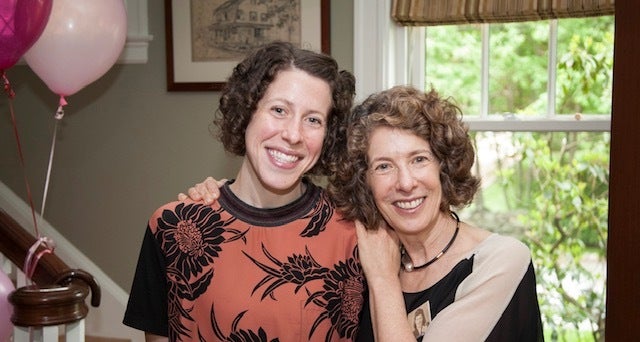
The author (right) with her daughter Alex at a family party.
Advertisement
But placeholders such as “there are no words” close off conversations when they most need to begin, forcing a parent who has lost so much to find words to comfort the speaker. Bereaved parents need their friends and families to be safekeepers, using specific words to describe our beautiful children, reminding us that our children live on in their memories.
I needed words of comfort to bring her back – stories about her light and love, her acts of kindness and courage. I needed to hear people say her name – Alex – and surround me with words of love.
Here’s what I want to say to everyone: be brave. There are no perfect words to comfort the bereaved, no comfortable words for something so uncomfortable. You can’t fix my loss, but you can hold in your hearts everything about Alex that made her specific and human – her love for birthdays and balloons, pandas and popsicles, dresses with pockets, Japanese art and fashion design, running marathons and then ultramarathons, making everything look so easy.
Advertisement
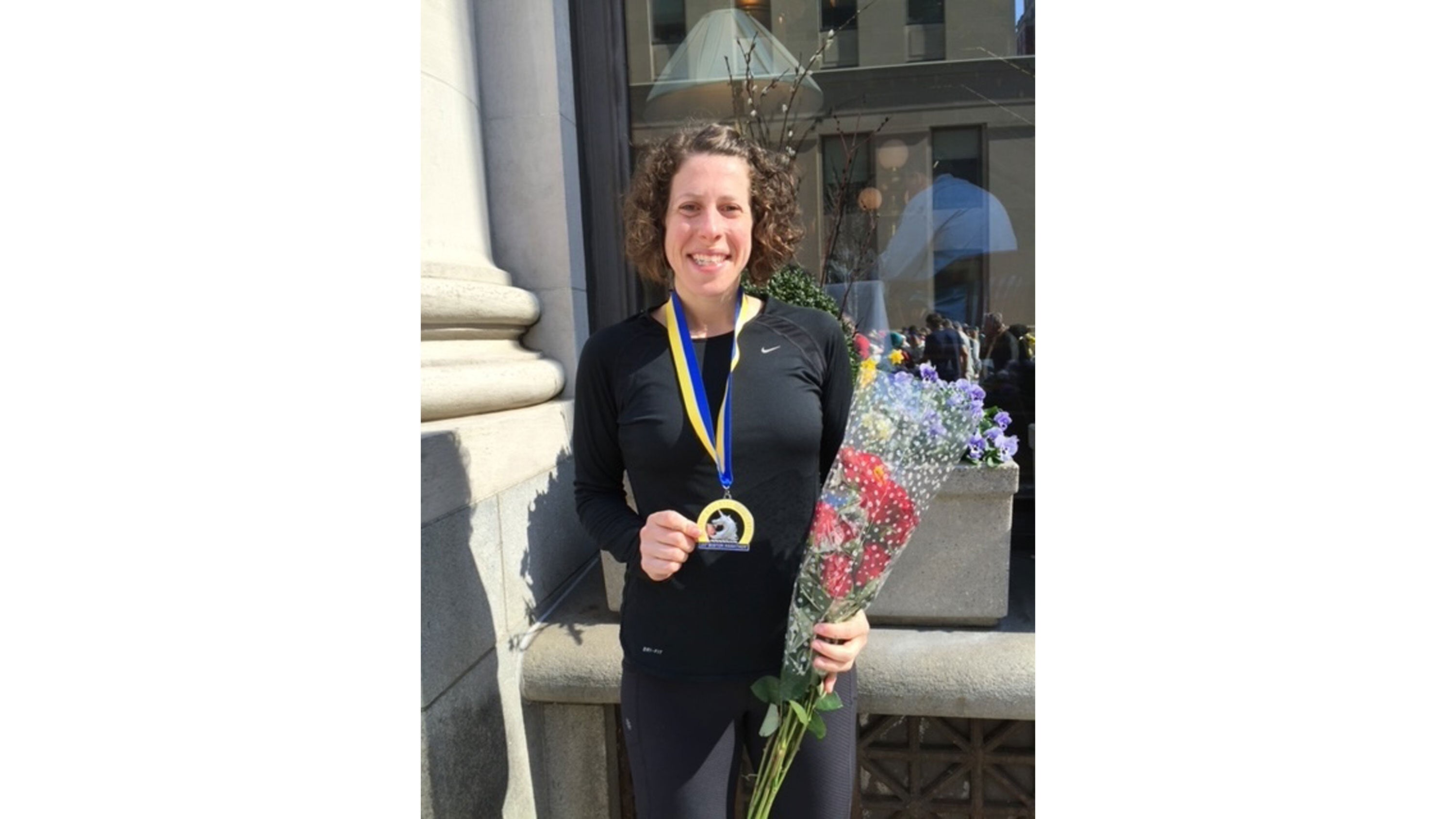
You can reminisce joyfully about photos of Alex at the finish line of her 100-mile runs, beaming with a thumbs-up, or about the ways in which she celebrated life’s small pleasures and brought family along for the celebration. Her beautiful curls and welcoming smile that felt like a hug, or the big-hearted gifts she gave – she was a spectacular gift-giver.
Or her love for s’mores and ice cream cake, sushi and dumplings, for growing dahlias and daisies, for the multitudes she contained. These loving, specific words capture the light Alex carried, the vividness with which she lived her life.
When someone says, “There are no words,” I hear “That’s all there is to say,” and when they say, “Your loss is unimaginable,” I hear “I will not try to imagine your loss.” These expressions allow speakers to retreat, staying emotionally adjacent to the bereaved parent’s loss, leaving us isolated, sealed off, deprived of moments of true connection.
Advertisement
When friends and family tell an Alex story or ask for one, they open the uncomfortable spaces in language and let my daughter live on in words.
Bereaved parents live with the geography of our grief, becoming familiar with its peaks and valleys, its edges. Our grief doesn’t disappear; its tail is long. No worries if you didn’t bring the casserole or cannoli; there is plenty of time to offer comfort to a bereaved parent and honour a child’s memory.
I am grateful to the many friends who continue to lift up Alex’s name and carry grief with me – like the neighbour who cooked Alex’s favourite dumplings each month for an entire year, leaving them on our front porch with a simple one-word note reading “love”. For the friends who plant dahlias to honour Alex, or wear dresses with pockets remembering her, and the friends who are listening presences, lingering in the backyard to talk about Alex.
Advertisement
And I am always grateful to the wonderful friends and family who put April 2, Alex’s birthday, and July 15, the day she died, on their calendars, knowing these are both rough days for me and important days to honour Alex’s memory.
A Jewish proverb reminds us of why we need to try to fill the empty spaces in language: “One dies twice – the first time when a body stops breathing; the second time when a name is no longer spoken.”
To a bereaved parent, silence feels like forgetting. Whenever someone speaks the name of my beloved child and asks about her, her life story is kept alive.
Advertisement
If you know a bereaved parent, reach out with loving words and gestures, show up and help carry their grief – and do it again. And again. Become safekeepers of memory – tell a story; ask for a story. Help a bereaved parent find the spaces where their beloved child continues to live.
Mind, open Monday to Friday, 9am-6pm on 0300 123 3393.
Samaritans offers a listening service which is open 24 hours a day, on 116 123 (UK and ROI – this number is FREE to call and will not appear on your phone bill).
CALM (the Campaign Against Living Miserably) offer a helpline open 5pm-midnight, 365 days a year, on 0800 58 58 58, and a webchat service.
The Mix is a free support service for people under 25. Call 0808 808 4994 or email help@themix.org.uk
Rethink Mental Illness offers practical help through its advice line which can be reached on 0808 801 0525 (Monday to Friday 10am-4pm). More info can be found on rethink.org.
“Is there anyone we can call?” the EMT asks, standing over me as I raise a shaky hand to my left collarbone and feel the bulge that shouldn’t be there. I am sitting on the pavement, my Madewell jeans now covered by a long black streak down the left leg, still wearing my motorcycle helmet. My elbow is shattered into three pieces, and the pain radiates down my arm to my pinky and ring finger, where my wedding band always used to be.
“No, there’s no one. I have no one!”
I panic about who will take my elderly, rescued basset hound for her bedtime walk if I go to the emergency room. I look over at my Vespa — an impractical divorce gift to myself — laying on her side with huge dents and scuffs ruining her beautiful mint green body. My phone and rainbow pride keychain are trapped in the storage compartment under the tan leather seat.
Just a few months before, after undergoing ketamine treatments as a last-ditch effort to ameliorate my relentless existential depression, I told my husband that I couldn’t be married to him anymore because I was meant to be with a woman. Now I am desperately alone in the back of an ambulance experiencing a cataclysmic life event. And yet a feeling of “It’s supposed to be this way” reassures me that just like ending my marriage and coming out as a lesbian, this accident is part of my life path.
Advertisement
A year earlier, when I started the IV ketamine treatments that ultimately led to my sexual awakening, no one warned me that I might experience an ego death. “If this is what death feels like, I’m totally OK with it,” I thought as I sank deeper into the blissful emptiness. I remembered all the times I wanted to end my own life over the years. Suddenly, without the fear of the unknown keeping me from acting, the thought of returning to my “waking life” terrified me. Death seemed like a better option than perpetual self-hatred.
I broke down in tears as the nurse removed the IV from my arm.
“I don’t want to live like this anymore!” I wailed.
My sweet husband came in to hold my hand as I steadied my breathing.
“I don’t know what’s wrong with her,” the nurse told him quietly, as if I wasn’t in the room. “I’ve never seen anyone react this way.”
I thought back to our wedding all those years ago, and how I mistook the deep pit in my stomach for typical wedding day jitters. On the outside, I was smiling, but an unfamiliar voice within was screaming at me to run.
Advertisement
I hated myself for not being able to give my husband the love and intimacy he deserved. The infrequent times we did have sex, I was drunk and closed my eyes tightly and left my body until it was over. I felt broken and ashamed.
Throughout the years, we continued to grow and move forward in our lives, progressing in our careers and relocating to different cities and buying bigger houses, but the feeling that something was off persisted. As the depression worsened, my problematic binge drinking escalated.
I avoided the basement of our starter home because I imagined myself hanging from our cast-iron pipes. When we moved to Texas, I regularly drove home in my tiny convertible in a blackout drunk state, completely disregarding how much it hurt my dear husband, because I honestly didn’t care if I made it back to him or not.
Advertisement
One night, after downing two bottles of red wine, Googling local gay bars and failing another “Am I gay?” quiz online, I shut myself inside our closet, curled into the fetal position, and cried till I passed out.
I emerged from my office one evening and quietly admitted to him, “I think I’m bi. What does that mean?”
I knew the word I wanted to say was “gay,” but I wasn’t ready to utter it yet. I was still hoping we could somehow stay together, that maybe I wasn’t ruining our lives. And how could I possibly know that I’m gay without ever kissing a woman? He took a deep breath and eventually said, “I always knew this was coming.”
Advertisement
I looked down at my hands — half of my fingers were bandaged from picking at my cuticles until they bled. I remembered that wild animals chew off their own feet if caught in a trap as an attempt to save themselves from capture.
“I kept quiet as long as I could. It feels like I don’t have a choice anymore.”
I signed a lease for a small apartment in the city where the stores hang rainbow flags in their windows. With a houseplant in one arm and my basset hound’s leash in the other, I walked into the sun-filled space and felt the words “this is where you heal” rise inside me. I placed the plant on the counter and crumpled to the floor in a heap of tears and wrapped my arms around my dog.
“We’re gonna be OK,” I reassured both of us.
My upbringing hardwired my brain to believe that same-sex attraction was dirty, shameful, and something to be kept secret — locked away and buried so that I could fit into what people wanted for me. It’s like cutting out part of your soul so that you can be loved.
Advertisement
I flourished in my newfound freedom over the next few months. People said they’ve never seen me so happy. I took time to date myself, going to concerts alone, getting dressed up and making dinner reservations for one. I never imagined a fun night out would end with a life-changing accident.
The physical recovery was excruciating. I spent eight weeks lying in my living room waiting for my surgical incisions and bones to heal, and another three months doing physical therapy to regain full range of motion in my elbow and shoulder.
My collection of thrifted travel books stared back at me from their shelf and reminded me of the life I always wanted. Amid overwhelming despair and pain, I realised that I am so lucky to be alive. I thought back to my ego death and remembered being surrounded by divine love and protection, and feeling like something was guiding me toward the life I was meant for. I thought about all the experiences I still hoped to have, and started dreaming of ways to make them happen.
Advertisement
“I think you’ll be really happy with the settlement amount,” my personal injury lawyer said, as I muted the phone so I could burst into tears of joy without judgment. “Just sign the paperwork, come get your check, and you’ll be all set.”
My ex-husband moved home, and met someone to build a new life with. I know he now has the loving marriage he deserves — the one that I could never give him, despite how much I wanted to. Me speaking up — and him letting me go — allowed us both to find happiness.
The travel guides are finally being used, and I’ve discovered the joy of solo trips abroad. I found healing in Mexico, and gratitude in Italy. I recently went to Paris alone, but never felt lonely.
Advertisement
I continue to go on dates, and apart from a casual romance, am yet to find a first girlfriend. I remind myself that I needed this time alone to build community, to make precious friends, to heal physically and emotionally, and to undo a lifetime of hiding.
I am still looking for the love I knew I had to make myself available for when I realised I could no longer be married. I am confident I will feel it in my now-healed bones when I find her. I trust that she is out there, on her way to me, and that we will both know it when the time is right.
That night in the ambulance I had the thought, None of this would be happening if I were still married. Had I not been confronted with an ultimatum from the Universe during that ego death, directing me to speak up or never be happy, I would still be pretending. I would have the comfort and security of a marriage to my best friend, but I would not love myself. Even in that moment of desperation and pain, I knew I had made the right choice by speaking my truth. I felt reassured that this was the divine path that was meant for me all along.
Advertisement
When we are confronted with life-altering choices — “Do I say something? Do I ruin our lives?” — we can make our decision from a place of fear or love. Staying quiet and staying with my ex-husband would have been the path guided by fear. In the face of absolute uncertainty, I chose love by honouring my inner voice.
I know now that I am meant to be here, despite years of wishing that I wasn’t. Though I haven’t yet found my person, I feel more joy than I ever thought possible, and I am so freaking grateful for that.
Erika Hearthstone is a pseudonym of an author who lives in Texas and writes about identity and healing. Her work centres on queerness, spirituality, and courageous self-acceptance, and is working on a collection of personal essays.