Astronomers spot oldest ‘dead’ galaxy yet observed

A galaxy that suddenly stopped forming new stars more than 13 billion years ago has been observed by astronomers.

Using the James Webb Space Telescope, an international team of astronomers led by the University of Cambridge have spotted a ‘dead’ galaxy when the universe was just 700 million years old, the oldest such galaxy ever observed.

This galaxy appears to have lived fast and died young: star formation happened quickly and stopped almost as quickly, which is unexpected for so early in the universe’s evolution. However, it is unclear whether this galaxy’s ‘quenched’ state is temporary or permanent, and what caused it to stop forming new stars.

The results, reported in the journal Nature, could be important to help astronomers understand how and why galaxies stop forming new stars, and whether the factors affecting star formation have changed over billions of years.

“The first few hundred million years of the universe was a very active phase, with lots of gas clouds collapsing to form new stars,” said Tobias Looser from the Kavli Institute for Cosmology, the paper’s first author. “Galaxies need a rich supply of gas to form new stars, and the early universe was like an all-you-can-eat buffet.”

“It’s only later in the universe that we start to see galaxies stop forming stars, whether that’s due to a black hole or something else,” said co-author Dr Francesco D’Eugenio, also from the Kavli Institute for Cosmology.

Astronomers believe that star formation can be slowed or stopped by different factors, all of which will starve a galaxy of the gas it needs to form new stars. Internal factors, such as a supermassive black hole or feedback from star formation, can push gas out of the galaxy, causing star formation to stop rapidly. Alternatively, gas can be consumed very quickly by star formation, without being promptly replenished by fresh gas from the surroundings of the galaxy, resulting in galaxy starvation.

“We’re not sure if any of those scenarios can explain what we’ve now seen with Webb,” said co-author Professor Roberto Maiolino. “Until now, to understand the early universe, we’ve used models based on the modern universe. But now that we can see so much further back in time, and observe that the star formation was quenched so rapidly in this galaxy, models based on the modern universe may need to be revisited.”

Using data from JADES (JWST Advanced Deep Extragalactic Survey), the astronomers determined that this galaxy experienced a short and intense period of star formation over a period between 30 and 90 million years. But between 10 and 20 million years before the point in time where it was observed with Webb, star formation suddenly stopped.

“Everything seems to happen faster and more dramatically in the early universe, and that might include galaxies moving from a star-forming phase to dormant or quenched,” said Looser.

Astronomers have previously observed dead galaxies in the early universe, but this galaxy is the oldest yet — just 700 million years after the big bang, more than 13 billion years ago. This observation is one of the deepest yet made with Webb.

In addition to the oldest, this galaxy is also relatively low mass — about the same as the Small Magellanic Cloud (SMC), a dwarf galaxy near the Milky Way, although the SMC is still forming new stars. Other quenched galaxies in the early universe have been far more massive, but Webb’s improved sensitivity allows smaller and fainter galaxies to be observed and analysed.

The astronomers say that although it appears dead at the time of observation, it’s possible that in the roughly 13 billion years since, this galaxy may have come back to life and started forming new stars again.

“We’re looking for other galaxies like this one in the early universe, which will help us place some constraints on how and why galaxies stop forming new stars,” said D’Eugenio. “It could be the case that galaxies in the early universe ‘die’ and then burst back to life — we’ll need more observations to help us figure that out.”

The research was supported in part by the European Research Council, the Royal Society, and the Science and Technology Facilities Council (STFC), part of UK Research and Innovation (UKRI).


Share Button

Schizophrenia and aging may share a common biological basis

Researchers from the Broad Institute of MIT and Harvard, Harvard Medical School, and McLean Hospital have uncovered a strikingly similar suite of changes in gene activity in brain tissue from people with schizophrenia and from older adults. These changes suggest a common biological basis for the cognitive impairment often seen in people with schizophrenia and in the elderly.

In a study published in Nature, the team describes how they analyzed gene expression in more than a million individual cells from postmortem brain tissue from 191 people. They found that in individuals with schizophrenia and in older adults without schizophrenia, two brain cell types called astrocytes and neurons reduced their expression of genes that support the junctions between neurons called synapses, compared to healthy or younger people. They also discovered tightly synchronized gene expression changes in the two cell types: when neurons decreased the expression of certain genes related to synapses, astrocytes similarly changed expression of a distinct set of genes that support synapses.

The team called this coordinated set of changes the Synaptic Neuron and Astrocyte Program (SNAP). Even in healthy, young people, the expression of the SNAP genes always increased or decreased in a coordinated way in their neurons and astrocytes.

“Science often focuses on what genes each cell type expresses on its own,” said Steve McCarroll, a co-senior author on the study and an institute member at the Broad Institute. “But brain tissue from many people, and machine-learning analyses of those data, helped us recognize a larger system. These cell types are not acting as independent entities, but have really close coordination. The strength of those relationships took our breath away.”

Schizophrenia is well-known for causing hallucinations and delusion, which can be at least partly treated with medications. But it also causes debilitating cognitive decline, which has no effective treatments and is common in aging as well. The new findings suggest that the cognitive changes in both conditions might involve similar cellular and molecular alterations in the brain.

“To detect coordination between astrocytes and neurons in schizophrenia and aging, we needed to study tissue samples from a very large number of individuals,” said Sabina Berretta, a co-senior author of the study, an associate professor at Harvard Medical School, and a researcher in the field of psychiatric disorders. “Our gratitude goes to all donors who chose to donate their brain to research to help others suffering from brain disorders and to whom we’d like to dedicate this work.”

McCarroll is also director of genomic neurobiology for the Broad’s Stanley Center for Psychiatric Research and a professor at Harvard Medical School. Berretta also directs the Harvard Brain Tissue Resource Center (HBTRC), which provided tissue for the study. Emi Ling, a postdoctoral researcher in McCarroll’s lab, was the study’s first author.

SNAP insights

The brain works in large part because neurons connect with other neurons at synapses, where they pass signals to one another. The brain constantly forms new synapses and prunes old ones. Scientists think new synapses help our brains stay flexible, and studies — including previous efforts by scientists in McCarroll’s lab and international consortia — have shown that many genetic factors linked to schizophrenia involve genes that contribute to the function of synapses.

In the new study, McCarroll, Berretta, and colleagues used single-nucleus RNA sequencing, which measures gene expression in individual cells, to better understand how the brain naturally varies across individuals. They analyzed 1.2 million cells from94 people with schizophrenia and 97 without.

They found that when neurons boosted expression of genes that encode parts of synapses, astrocytes increased the expression of a distinct set of genes involved in synaptic function. These genes, which make up the SNAP program, included many previously identified risk factors for schizophrenia. The team’s analyses indicated that both neurons and astrocytes shape genetic vulnerability for the condition.

“Science has long known that neurons and synapses are important in risk for schizophrenia, but by framing the question a different way — asking what genes each cell type regulates dynamically — we found that astrocytes too are likely involved,” said Ling.

To their surprise, the researchers also found that SNAP varied greatly even among people without schizophrenia, suggesting that SNAP could be involved in cognitive differences in healthy humans. Much of this variation was explained by age; SNAP declined substantially in many — but not all — older individuals, including both people with and without schizophrenia.

With better understanding of SNAP, McCarroll says he hopes it might be possible to identify life factors that positively influence SNAP, and develop medicines that help stimulate SNAP, as a way to treat the cognitive impairments of schizophrenia or help people maintain their cognitive flexibility as they age.

In the meantime, McCarroll, Berretta, and their team are working to understand if these changes are present in other conditions such as bipolar disorder and depression. They also aim to uncover the extent to which SNAP appears in other brain areas, and how SNAP affects learning and cognitive flexibility.

Funding:

This work was supported by the Stanley Family Foundation, the Simons Collaboration on Plasticity and the Aging Brain, and the National Institute of Mental Health and the National Human Genome Research Institute at the National Institutes of Health.

Share Button

Taxpayers Forced To Pay Out £15,000 After Tory Minister Accused Academic Of Supporting Hamas

The government has spent £15,000 of taxpayers’ money to cover the damages incurred by a cabinet minister’s inaccurate claim against a professor.

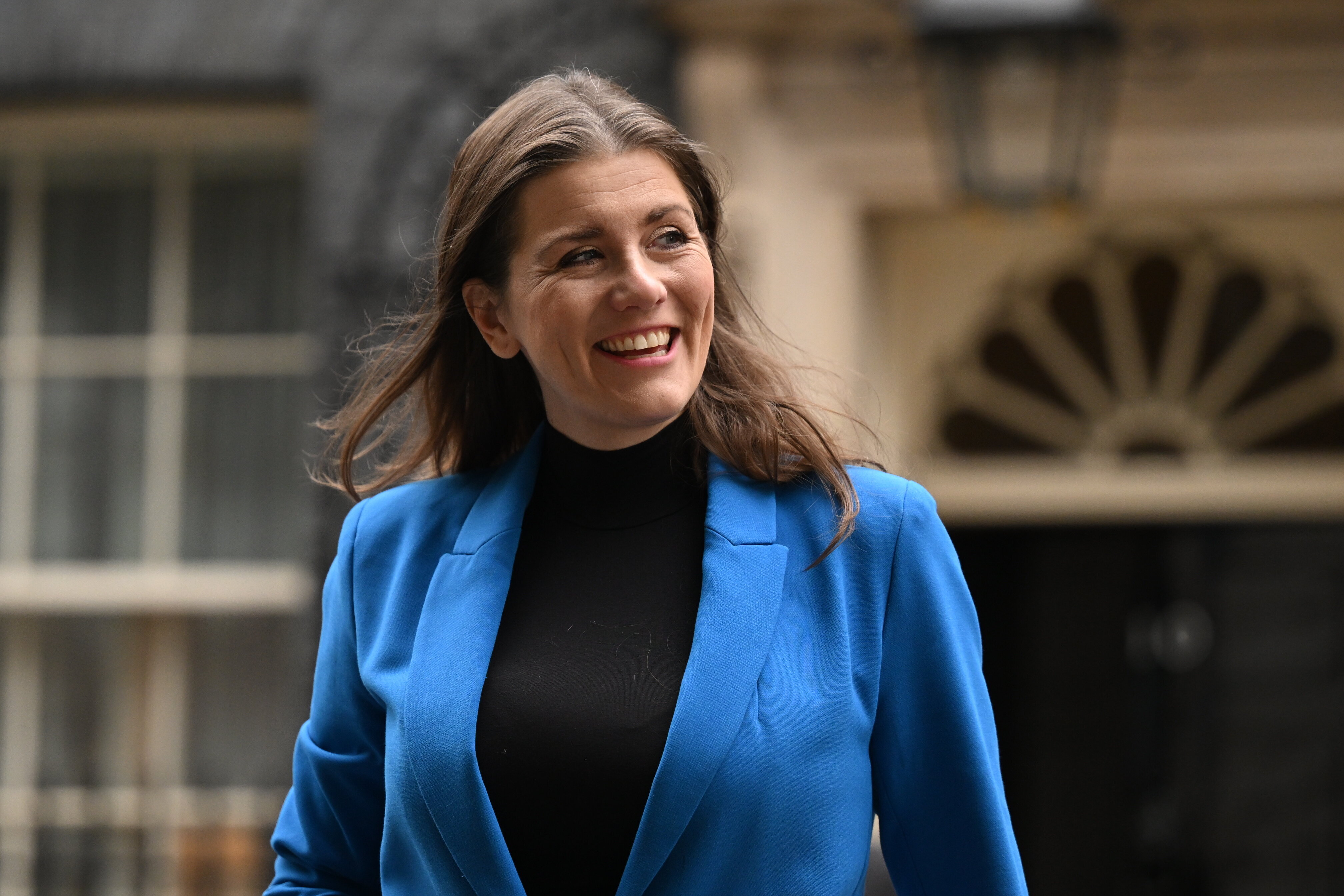
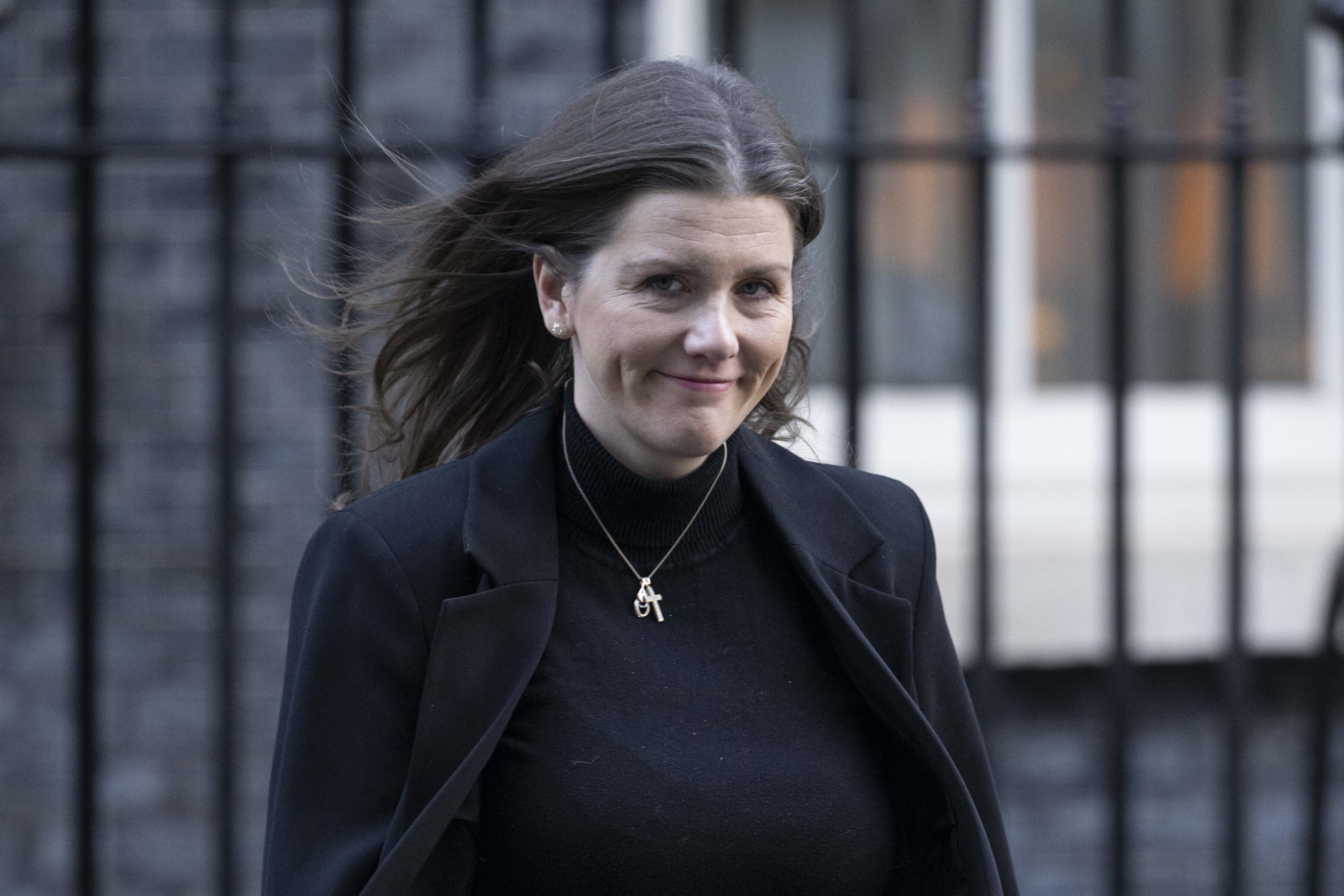
The science secretary, Michelle Donelan, wrongly accused Professor Kate Sang of expressing sympathy for the Palestinian militant group, Hamas, on X (formerly Twitter).

The professor then took out a libel action against the cabinet minister, which was settled with Donelan agreeing to pay damages – with the public purse picking up the bill.

It has now emerged that the payment was £15,000, which the Department for Science, Innovation and Technology, said was paid “without admitting any liability”.

“There is an established precedent under multiple administrations that ministers are provided with legal support and representation where matters relate to their conduct and responsibilities as a minister, as was the case here,” the department said in a statement.

“The Secretary of State received the appropriate advice from relevant officials at all times.

“A sum of £15,000 was paid without admitting any liability. This approach is intended to reduce the overall costs to the taxpayer that could result from protracted legal action, no matter what the result would have been.”

The government is yet to reveal the full legal costs of the incident, and Donelan is now facing calls to resign from the University and College Union.

The minister misinterpreted a social media post where Professor Sang posted a link to a Guardian article about the aftermath in the UK after Hamas’ attack on Israel on October 7 last year.

At the time, Donelan also wrote to the UK Research and Innovation government agency (UKRI) suggesting Professor Sang and a second academic Dr Kamna Patel had shared extremist material.

Both faced a lengthy investigation by the UKRI.

Donelan retracted her accusations in a post on X on Tuesday afternoon this week.

She said: “I have never thought or claimed that Professor Sang, or any member of the Board, committed a criminal offence.

“I fully accept that she is not an extremist, a supporter of Hamas or any other proscribed organisation and I note that an independent investigation has concluded that there is no evidence that she is. I have deleted my original post to my X account.”

Professor Sang’s legal representative confirmed this week that Donelan has now withdrawn her false allegations and agreed to pay damages and costs to the academic.

The academic herself said the cabinet minister “made a cheap political point at my expense and caused serious damage to my reputation”, adding: “I propose to donate part of the damages she has paid to a charity.”

The Liberal Democrats also suggested Donelan’s salary – £159,38 year, including her £86,584 MP pay – should be docked.

The party said that amount of money could have funded 5,928 free school meals or 357 GP appointments.

Shadow science secretary Peter Kyle said: “It is outrageous that £15,000 of taxpayers money has been spent on the Science Secretary calling a scientist a terrorist sympathiser on social media, without any evidence at all.

“Michelle Donelan should be embarrassed, she should apologise, and she should repay the full amount back to the taxpayer. Her conduct falls so far below that expected of a minister.

“It is emblematic of this Tory government’s arrogance and recklessness that a Minister is forcing the taxpayer to pick up the legal bill for hurling abuse at a scientist online.”

Lib Dem deputy leader Daisy Cooper said this incident was “nothing short of a scandal”.

She said: “If Michelle Donelan had a shred of integrity left, she would pay for this bill out of her own pocket instead of asking taxpayers to pick up the tab. If she refuses to do so, Rishi Sunak should dock her pay.

“This news will come as a kick in the teeth to people who are seeing their finances clobbered by the cost of living crisis while local health services are on their knees.

“This is yet another scandal that proves it’s time to kick this sleaze-ridden Conservative Government out of office for good.”

Share Button

Health staff start court fight over long Covid

They say they are disabled after catching Covid at work, with no protection from employers.

Share Button

We Can’t Believe What Erin From The US Office’s Character Name Actually Is

Bursting onto the show in the fifth series, Erin Hannon, played by Ellie Kemper, soon became the sweetheart of The Office, befriending Kelly, dating Andy and taking her role as receptionist far more seriously than Pam ever did.

A ray of sunshine in an otherwise quite cynical office, Erin was a truly welcome addition to the show and as Andy, played by Ed Helms said: “You’re the nicest person I’ve ever met.”

Whether you loved or hated her, Erin really made a name for herself in the workplace and was soon just as familiar as Michael, Dwight, and Pam herself.

However, her name, uh, actually wasn’t Erin. It was Kelly. And they even told us that.

How did we forget?!

Why Erin from The Office didn’t use her real name

According to NBC, audiences originally met her as “Kelly,” her actual first name. But every time the new boss, Charles Miner (Idris Elba) called for her, Kelly Kapoor (Mindy Kaling) would run into his office and say, “Yes, you wanted me?” so he decided they needed to differentiate between the two Kellys.

Erin then very sweetly offered to use her middle name instead and continued to for the rest of the series.

I mean, would you try to compete with Kelly Kapoor? I know I wouldn’t.

Plus, as ScreenRant said, it worked out for the best: “The closest thing Erin had to an actual friend on The Office was definitely Kelly. Some of their friendship was developed in online web videos like “Subtle Sexuality,” but they were also shown to hang out with one another during the show as well.”

While the two didn’t have a perfect relationship and Erin was often naive to Kelly’s more manipulative behaviour’s, they were an iconic duo and dropping Erin’s real name was a small price to pay.

The US Office is available to stream on Netflix.

Share Button

What is the new vaping tax and when will it start?

The government will introduce a new vaping tax on top of measures to stop children vaping.

Share Button

Hospital patient given ‘corridor care’ for 14 hours

A patient at a hospital experiencing “record admissions” says he had no access to water.

Share Button

Budget 2024: Jeremy Hunt To Cut National Insurance Again In Bid To Avoid Tory Wipeout

Jeremy Hunt will cut another 2p off national insurance as he mounts a last-ditch attempt to prevent a Tory meltdown at the general election.

The chancellor will unveil the move as part of a “Budget for long-term growth” that he hopes will turn around the Conservative’s miserable poll numbers with speculation mounting the voters could go to the polls in May.

But he has ruled out the cuts to income tax demanded by Tory MPs and thought to be favoured by Rishi Sunak.

Hunt announced an identical cut to to national insurance in last November’s autumn statement, but that did nothing to close the huge opinion poll gap with Labour.

Treasury officials say that taken together, the two reductions in national insurance will leave an average earner around £900 better off.

The chancellor will tell MPs: “In recent times the UK economy has dealt with a financial crisis, a pandemic and an energy shock caused by a war on the European continent.

“Yet despite the most challenging economic headwinds in modern history, under Conservative governments since 2010 growth has been higher than every large European economy.

“Unemployment has halved, absolute poverty has gone down, and there are 800 more people in jobs for every single day we’ve been in office.

“Of course, interest rates remain high as we bring down inflation. But because of the progress we’ve made because we are delivering on the prime minister’s economic priorities we can now help families with permanent cuts in taxation.

“We do this not just to give help where it is needed in challenging times. But because Conservatives know lower tax means higher growth. And higher growth means more opportunity and more prosperity.”

Hunt will add: “Our plans mean more investment, more jobs, more productive public services and lower taxes – sticking to our plan in a Budget for long term growth.”

The latest cutting national insurance by 2p in the pound will cost the Treasury around £10 billion a year, paid for by a combination of tax rises and spending cuts.

Hunt is expected to scrap the “non-dom” tax status enjoyed by wealthy foreigners living in the UK in a move which could raise up to £3.2 billion, while he is also set to extend the windfall tax on the profits of oil and gas firms.

A tax on vaping products is also expected to raise much-needed cash for the Treasury.

Hunt is expected to extend the 5p cut in fuel duty, first announced by Sunak in 2022 when he was still chancellor, at a cost of £5bn to the Treasury.

The chancellor is also set to usher in a new wave of austerity by slowing down the rate at which public spending goes up in future from 1% a year in real terms to 0.75%. That would save the government around £5 billion.

However, Hunt will defend this approach by insisting: “An economy based on sound money does not pass on its bills to the next generation.”

He will say Labour have “opposed our plans to reduce the deficit every step of the way”.

The chancellor will add: “With the pandemic behind us, we must once again be responsible and increase our resilience to future shocks. That means bringing down borrowing so we can start to reduce our debt.”

But shadow chancellor Rachel Reeves accused the Tories of presiding over “fourteen years of economic failure”.

“The Conservatives promised to fix the nation’s roof, but instead they have smashed the windows, kicked the door in and are now burning the house down,” she said.

“Taxes are rising, prices are still going up in the shops and we have been hit by recession. Nothing the chancellor says or does can undo the economic vandalism of the Conservatives over the past decade.

“The country needs change, not another failed Budget or the risk of five more years of Conservative chaos.”

Share Button

Cabinet Minister Admits Wrongly Accusing Academic Of Supporting Hamas

A cabinet minister has agreed to pay damages after wrongly accusing a senior academic of supporting Hamas.

Michelle Donelan, the secretary of state for science, innovation and technology, suggested on X that Professor Kate Sang had expressed sympathy for the militant group.

In fact, the top Tory had misinterpreted a post on the social media platform in which Professor Sang linking to a Guardian article on the aftermath in the UK to Hamas’ attack on Israel on October 7 last year.

The academic took out a libel action, which has now been settled – with the taxpayer picking up the bill.

Ms Donelan also wrote to the UK Research and Innovation government agency suggesting that Professor Sang and a second academic, Dr Kamna Patel, had shared extremist material.

The pair, who had both appointed to the Equality, Diversity and Inclusion board, were then subjected to a months-long investigation by the UKRI.

In a post this afternoon on X, Donelan said she had withdrawn her allegations.

She said: “I have never thought or claimed that Professor Sang, or any member of the Board, committed a criminal offence.

“I fully accept that she is not an extremist, a supporter of Hamas or any other proscribed organisation and I note that an independent investigation has concluded that there is no evidence that she is. I have deleted my original post to my X account.”

Tamsin Allen, who represented Professor Sang in her libel complaint, said: “Michelle Donelan has now withdrawn her false allegations and agreed to pay damages and costs to Professor Sang.”

Professor Sang said: I am delighted that this matter has now concluded, but very disturbed by the way in which Michelle Donelan and UKRI behaved.

“Had they asked me at the start, I would have explained the true position. Instead, Michelle Donelan made a cheap political point at my expense and caused serious damage to my reputation. I propose to donate part of the damages she has paid to a charity.”

Shadow science, innovation and technology secretary Peter Kyle said: “The secretary of state must prove she still has the confidence of the research community after using her department to make false allegations against academics.

“Accusing researchers of sharing extremist material and sympathising with a proscribed group, without any proof, is a new low in government standards.”

Share Button

New method measures the 3D position of individual atoms

Since more than a decade it has been possible for physicists to accurately measure the location of individual atoms to a precision of smaller than one thousandth of a millimeter using a special type of microscope. However, this method has so far only provided the x and y coordinates. Information on the vertical position of the atom — i.e., the distance between the atom and the microscope objective — is lacking. A new method has now been developed that can determine all three spatial coordinates of an atom with one single image. This method — developed by the University of Bonn and University of Bristol — is based on an ingenious physical principle. The study was recently published in the journal Physical Review A.

Anyone who has used a microscope in a biology class to study a plant cell will probably be able to recall a similar situation. It is easy to tell that a certain chloroplast is located above and to the right of the nucleus. But are both of them located on the same plane? Once you adjust the focus on the microscope, however, you see that the image of the nucleus becomes sharper while the image of the chloroplast blurs. One of them must be a little higher and one a little lower than the other. However, this method cannot give us precise details about their vertical positions.

The principle is very similar if you want to observe individual atoms instead of cells. So-called quantum gas microscopy can be used for this purpose. It allows you to straightforwardly determine the x and y coordinates of an atom. However, it is much more difficult to measure its z coordinate, i.e., the distance to the objective lens: In order to find out on what plane the atom is located, multiple images must be taken in which the focus is shifted across various different planes. This is a complex and time-consuming process.

Turning round specks into dumbbells

“We have now developed a method in which this process can be completed in one step,” explains Tangi Legrand from the Institute of Applied Physics (IAP) at the University of Bonn. “To achieve this, we use an effect that has already been known in theory since the 1990s but which had not yet been used in a quantum gas microscope.”

To experiment on the atoms, it is first necessary to cool them down significantly so that they are barely moving. Afterwards, it is possible, for example, to trap them in a standing wave of laser light. They then slip into the troughs of the wave similar to how eggs sit in an egg box. Once trapped, to reveal their position, they are exposed to an additional laser beam, which stimulates them to emit light. The resulting fluorescence shows up in the quantum gas microscope as a slightly blurred, round speck.

“We have now developed a special method to deform the wavefront of the light being emitted by the atom,” explains Dr. Andrea Alberti. The researcher, who has now moved from the IAP to the Max Planck Institute of Quantum Optics in Garching, also participated in the study. “Instead of the typical round specks, the deformed wavefront produces a dumbbell shape on the camera that rotates around itself. The direction in which this dumbbell points is dependent on the distance that the light had to travel from the atom to the camera.”

“The dumbbell thus acts a bit like the needle on a compass, allowing us to read off the z coordinate according to its orientation,” says Prof. Dr. Dieter Meschede. The IAP researcher, whose research group carried out the study, is also a member of the transdisciplinary research area “Matter” at the University of Bonn.

Important for quantum mechanics experiments

The new method makes it possible to precisely determine the position of an atom in three dimensions with one single image. This is important, for example, if you want to carry out quantum mechanics experiments with atoms because it is often essential to be able to precisely control or track their position. This allows researchers to make the atoms interact with one another in the desired way.

Furthermore, the method could also be used to help develop new quantum materials with special characteristics. “For example, we could investigate which quantum mechanical effects occur when atoms are arranged in a certain order,” explains Dr. Carrie Weidner from the University of Bristol. “This would allow us to simulate the properties of three-dimensional materials to some extent without having to synthesize them.”

Share Button