Physicists find evidence for magnetically bound excitons

In art, the negative space in a painting can be just as important as the painting itself. Something similar is true in insulating materials, where the empty spaces left behind by missing electrons play a crucial role in determining the material’s properties. When a negatively charged electron is excited by light, it leaves behind a positive hole. Because the hole and the electron are oppositely charged, they are attracted to each other and form a bond. The resulting pair, which is short lived, is known as an exciton [pronounced exit-tawn].

Excitons are a key part of many technologies, including solar panels, photodetectors and sensors, as well as light-emitting diodes found in televisions and digital display screens. In most cases, the exciton pairs are bound by electrical, or electrostatic, forces, also known as Coulomb interactions. Now, in a new study in Nature Physics, Caltech researchers report detecting excitons that are not bound via Coulomb forces but rather by magnetism. This is the first experiment to detect how these so-called Hubbard excitons, named after the late physicist John Hubbard, form in real-time.

“Using an advanced spectroscopic probe, we were able to observe in real time the generation and decay of magnetically bound excitons, the Hubbard excitons,” says study lead author Omar Mehio (PhD ’23), a recent graduate student at Caltech who worked with David Hsieh, the Donald A. Glaser Professor of Physics at Caltech. Mehio is now a postdoctoral fellow at the Kavli Institute at Cornell.

“In most insulators, oppositely charged electrons and holes interact with one another just as an electron and a proton bind to form a hydrogen atom,” Mehio explains. “However, in a special class of materials known as Mott insulators, the photo-excited electrons and holes instead bind through magnetic interactions.”

The results could have applications in the development of new exciton-related technologies, or excitonics, in which the excitons would be manipulated through their magnetic properties. “Hubbard excitons and their magnetic binding mechanism demonstrate a drastic departure from the paradigms of traditional excitonics, creating the opportunity to develop a whole ecosystem of novel technologies that are fundamentally unavailable in conventional excitonic systems,” Mehio says. “Having excitons and magnetism strongly intertwined in a single material could lead to new technologies that harness both properties.”

To create the Hubbard excitons, the researchers applied light to a type of insulating material known as an antiferromagnetic Mott insulator. These are magnetic materials in which the electron spins are aligned in a repeating, stable pattern. The light excites the electrons, which jump to other atoms, leaving holes behind.

“In these materials, when an electron or hole moves through the lattice, they leave in their wake a string of magnetic excitations,” Mehio says. “Imagine you tie one end of an elastic rope around your friend, and the other end around yourself. If your friend runs away from you, you will feel the rope pull you in that direction and you will begin to follow. This scenario is analogous to what happens between a photo-excited electron and the hole it leaves behind in a Mott insulator. With Hubbard excitons, the string of magnetic excitations between the pair serves the same role as the rope connecting you to your friend.”

To demonstrate the existence of the Hubbard excitons, the researchers used a method called ultrafast time-domain terahertz spectroscopy, which allowed them to look for the very short-lived signatures of the excitons at very low-energy scales. “Excitons are unstable because the electrons want to go back into the holes,” Hsieh explains. “We have a way of probing the short time window before this recombination occurs, and that allowed us to see that a fluid of Hubbard excitons is transiently stabilized.”

Share Button

Covid jab could be available privately from 2024

Moderna is hoping to make its Covid jab available privately in the UK.

Share Button

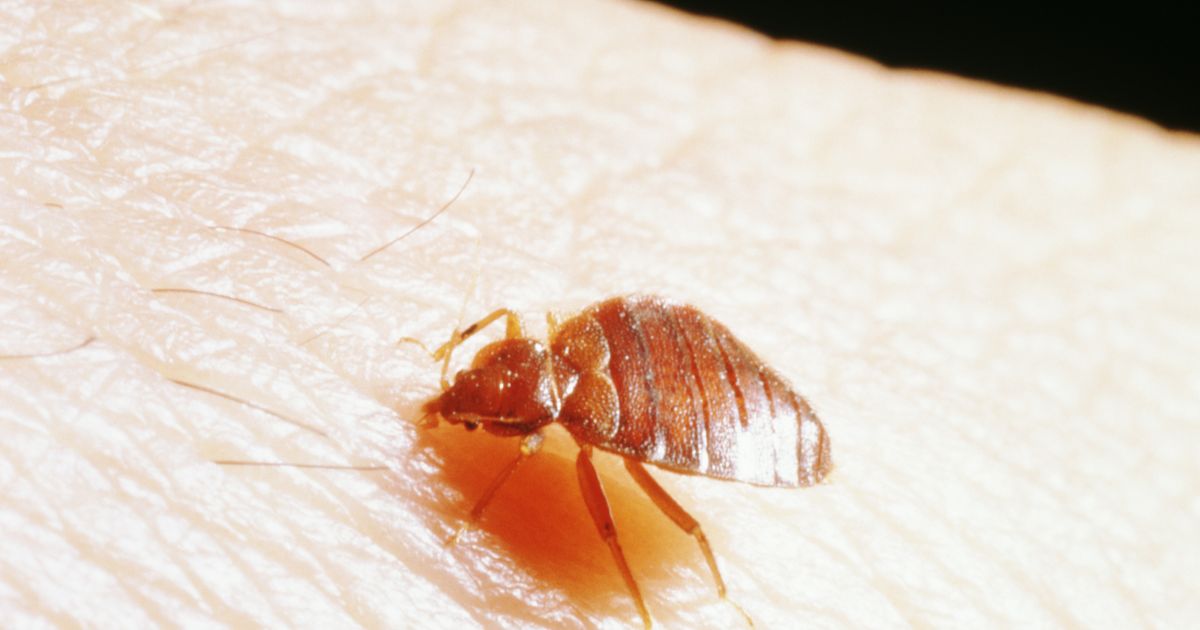
How to get rid of bedbugs and are they in the UK?

Although uncomfortable, bedbug bites are not typically dangerous and are often easily dealt with.

Share Button

The 1 Thing To Fight Bed Bugs Is Probably Already In Your Pantry

Oh 2023, the year that just keeps givinhg! As if we didn’t have dramatic climate change events and the cost of living crisis to battle with, we now have the fear of, uh, bed bugs. Love this for all of us.

In case you missed it, there’s been a huge breakout of bed bugs in Paris and while TFL has urged people to stay optimistic, there are still fears that bed bugs could enter the UK and cause chaos here, too.

While it may seem alarmist to worry about bed bugs making their way over to us, we have our own bed bugs problem here already. Back in August it was reported that there has been a 65% year-on-year increase in bedbug infestations in the UK

Additionally, they are incredibly difficult to get rid of and over the past couple of weeks, X has been filled with stories about how much having bed bugs can impact your life and mental health.

Home remedies for bed bugs

Of course, if you have a bed bug infestation, it’s best to call in the experts but if you can’t afford to or if there’s a waiting time to get them into your home, some home remedies could be exactly what you need to keep these pests at bay.

According to the experts at Nectar Sleep, these are some of the best solutions for a bed bugs infestation:

If bed bugs seem to making themselves at home on your bedding, clothes, blankets etc, giving them a wash on the highest setting that they can withstand in order to kill the critters. Nectar Sleep add, “Heat treatment is an effective method for getting rid of these pesky creatures because they get dehydrated due to the intense heat.”

Baking soda

Apparently, if you sprinkle a light later of baking soda on the areas where you think bed bugs are nestling, you can effectively “dry them out” by soaking up their moisture which kills them. It’s advised that the baking soda is left for a week before being vacuumed up. Keep doing this until there are no bugs or eggs left.

Speaking of vacuuming, you’re about to do more than you’ve ever done before. Nectar Sleep recommend that you vacuum your bedding, furniture, and any cracks in your bed frame, walls, and wallpaper. You might feel a bit weird doing it but it’s an effective solution.

The experts add that using a brush to loosen up bugs and eggs that you see on our mattress and upholstered furniture is useful in the vacuuming process, too.

Once you’re done, ensure that you seal the contents of your vacuum into a bag before binning it and clean your vacuum every single time, too.

Tea tree oil

Finally, if you only have a mild infestation on your hands, diluting 20 drops of tea tree oil in a spray bottle of water and spraying onto all affected surfaces can help to eliminate the bugs though washing these fabrics is still the most important step!

How to avoid bed bugs

The pest experts at Rentokil suggest that for anybody trying to avoid letting these restless critters in their house, the following steps are taken:

  • Wash and dry clothes at the highest possible temperatures
  • Eliminate clutter so that they have less places to hide
  • Don’t take clothes, suitcases or furniture to your loved one’s homes to avoid spreading or getting bed bugs
  • Tidy all areas of your bedroom, especially the floor around and under your bed and bedside cabinets
  • Vacuum often

Brb, I’m off to vacuum every single inch of my house,.

Share Button

Gorka Márquez Is A Genuine Dead Ringer For Ryan Gosling As Strictly Teases Epic Barbie Routine

Well, the moment is finally upon us. And we’re happy to report that it looks like our prayers have been answered.

On Thursday morning, the official Strictly Instagram page shared a teaser clip of the show’s resident Kens lip syncing to Ryan Gosling’s big solo number from the hit movie.

And no, that’s not Ryan himself they’ve drafted in for the occasion, but long-serving professional Gorka Márquez, who is more than “Kenough” in his fur coat, headband and, of course, custom Ken pants.

Fingers crossed that this means we’ll get to see Nadiya Bychkova taking the lead as Disco Barbie in a Dance The Night performance this weekend…

In addition to a return trip to Barbieland, Strictly’s Movie Week promises to be as weird and wonderful as ever.

Meanwhile, the rest of the cast will be performing routines inspired by films as varied as Grease, Bridget Jones’s Diary, Batman, Men In Back and… The Super Mario Bros Movie. Check out the full list here.

Strictly Come Dancing continues on Saturday night at 6.30pm on BBC One.

Share Button

If You Go Through This Many Rounds Of Job Interviews, It’s A Red Flag

For Tejal Wagadia, some of the job interviews she had after getting laid off a few years ago are her “villain origin story.”

Back when she was unemployed, Wagadia applied for a staffing agency’s technical recruiter role. It was a “super frustrating” process, she said. The recruiter initially promised that it would be just two rounds of interviews to meet teammates, a hiring manager and the business co-owner. But then the interviews kept coming until it became a total of five rounds at an office, lasting at least two hours each.

“They’re like, ‘The other owner also wants to meet with you.’ OK. ‘You know what? One more hiring manager wants to meet with you.’ OK,” Wagadia recalled.

By the third interview, she realised her time was being wasted. “None of the questions that they asked me were about my skill set or my qualifications. Especially at the owner level, they asked me questions about my employer that had just laid me off,” Wagadia said. Still, she participated in two more rounds due to the “sunk cost fallacy” of investing so much time already and because she was “desperate at that time to find a job,” she said. But she still didn’t get the role.

And Wagadia’s not alone in enduring excessive interviews like these. There are countless stories of job candidates being strung along through an indefinite number of interviews.

So, exactly how many interview rounds is too many? Hiring experts shared their tipping point.

Employers that do more than 5 rounds usually don’t know what they want — and that’s a big red flag.

Eddiana Rosen, a human resources specialist with recruiting experience who coaches job seekers, said that if a company doesn’t know who it wants to hire after five rounds of interviews, it has “a broken system.”

Rosen went through this herself in one memorably indecisive hiring process, where she had eight in-person interviews and one final Zoom interview for a promising startup job in New Jersey.

“I was driving and paying for parking every single time,” she said. She got the job, but she knew her time had been wasted.

“The majority of people who are interviewing have another job, and I think that asking people to come in more than a certain amount of time to interview is just ridiculous,” Rosen said.

Companies that drag out their hiring do not know what they want, experts say.

“They’re afraid of making the bad hire,” Rosen said. “But at the end of the day, the more that they take time, the more they risk losing good candidates, because essentially, the more qualified the candidate, the less they’re willing to put up with these bad hiring practices.”

Rosen said she saw employers hire faster in 2021, when job seekers had more leverage. But in this tight labor market, she has seen the number of interview rounds balloon to around five or more. “Five [rounds] would be like the absolute maximum if I’m really interested in that company, but four is more of where it should be,” Rosen said.

Wagadia, who now works as a technical recruiter, also firmly believes that an organisation’s hiring process should take no more than five rounds of interviews, from the first screener call to the offer or rejection.

She said that after five, “you’re telling them, ‘Hey, a) we don’t have a process, we are not organised enough to have a process,’ or b) ‘You’re not important enough, or good enough for this role. So we’re going try and figure out whether you are good enough.’”

Ebony Joyce, a career coach and diversity consultant, finds that for midlevel non-management roles, “typically any more than four [rounds] is too many.” But for more senior roles with potential employers, that number can increase.

In general, she said candidates should ask themselves: “Did I learn something about them? Did they learn something about me? … You should be going to each interview learning more about what the company’s problems are, and how you can solve that problem.”

If you’re not learning anything new, that may be your sign that the rounds have gone too far, Joyce said.

Employers should be upfront about their expectations.

Although a job candidate can sometimes get the job after many interview rounds, a company’s wishy-washy behavior is not a good sign that you are the preferred candidate.

“If you are a top candidate for an employer, they will make you a priority,” Wagadia said.

Now when she talks to job candidates, Wagadia models what she wishes she had seen in her job interviews. She shares that she may not be able to give an exact date for when the hiring process will end, but she can explain what an average hiring timeline looks like, “such as six to eight weeks,” and what the interview rounds will entail.

Rosen, who previously had a sponsorship with Teal, said that more employers should use the career development platform because its job listings let candidates know upfront about the number of interviews, who they will be interviewing with, the questions that they can anticipate, and how long each interview will take.

For example, a current listing for a senior backend engineer at Teal explicitly states that there will be four interviews and that the first one will be a 30-minute Zoom call with the chief technical officer, where the goal is “high level qualifications & mutual fit.”

In this way, there are no surprises and candidates can decide for themselves if this is a job they want to apply for. “That way you can opt out,” said David Fano, Teal’s CEO. ”[You] know exactly what [you’re] getting into.”

Fano said interviews are typically no more than three rounds for Teal candidates. The first is a “smell test”; it assesses if they are who they say they are. Then the second interview’s goal is to answer “Are they technically capable?” The third is about work culture: “Are they a culture add?” Candidates meet team members and can decide if they want to join.

“At the end of that, we feel like we have enough information to make the decision,” Fano said, adding that hiring “doesn’t benefit from groupthink where more voices and more opinions is necessarily better.”

Here’s how to gently push back when your time is not being respected with job interviews.

If an employer doesn’t set a time boundary and keeps scheduling more interviews, set it for yourself in the beginning of the hiring process.

Joyce said she successfully coached a client to ask what the interview process would look like in the first round and to state, “I have a five-interview max.”

You can also make the call to bow out of consideration when the number of rounds is becoming egregious.

Rosen suggested you do this by saying something like: “It’s been quite a bit of a lengthy process so far, and I’ve had to say no to other commitments. … I would really appreciate if you can let me know how much longer I’ll have to be in the process, because if I have to go much longer, I’ll have to get myself out of the race, just to respect each other’s time.” With this approach, your tone is more politely curious than demanding.

And if you’re not interested in continuing the relationship, Rosen suggested that you simply state: “Hey, I am so appreciative of the time so far. Unfortunately, I’ll have to take myself out of the race, considering this process has been so lengthy for me.”

Ultimately, employers disrespecting a candidate’s time can be a bad omen for how they may one day disrespect your work-life boundaries as an employee.

“At the end of the day, your time is just as valuable as theirs,” Rosen said. “Being respectful of your own time is very commendable.”

Share Button

Rishi Sunak defends his plan to ban smoking for younger generation

The prime minister tells the BBC he backs the move because there is “no safe level of smoking”.

Share Button

Smoking: Prof Sir Chris Whitty backs tobacco phase-out plan

The chief medical officer says as a doctor he sees people in hospital desperate to stop smoking.

Share Button

Bedbugs: Eurostar introduces preventative measures amid Paris infestation

Cleaning on the Paris-London route is “highly effective at eliminating bugs”, Eurostar says.

Share Button

Ruffed grouse population more resilient than expected, genetic study finds

Despite decades of decline, a genetic analysis of ruffed grouse reveals that Pennsylvania’s state bird harbors more genetic diversity and connectivity than expected. The findings suggest that the iconic game bird could be maintained in persistent numbers if appropriate protections are implemented. The study, led by Penn State and Pennsylvania Game Commission researchers, published in the journal Molecular Ecology.

According to the researchers, Pennsylvania’s ruffed grouse populations have declined by up to 70% since the early 1960s, with birds in the southern part of the state particularly affected by West Nile virus, which is spread by mosquitoes, and by habitat fragmentation due to development.

“By all typical metrics, the ruffed grouse is in a state of rapid decline,” said Julian Avery, associate research professor of wildlife conservation at Penn State and co-author of the paper. “Yet, until now, no one had used genetic tools to investigate the effects of this decline at a deeper level. By applying whole-genome sequencing, we have found that the bird is genetically better off than we suspected, which means that habitat protection and other management interventions can work to protect this species.”

Leilton Luna, postdoctoral researcher at Penn State and corresponding author of the paper, explained that when an organism’s population size drops too low because of disease or habitat loss, inbreeding can occur, which can lead to a decline in genetic diversity over time.

“Populations with low genetic diversity have a harder time evolving in response to changing environmental conditions and are at greater risk of extinction,” Luna said. “In the case of the Pennsylvania ruffed grouse, due to the sharp population decline, it certainly doesn’t have the same healthy genetic conditions as it did in the past. Even so, the current levels of genetic diversity and connectivity give us great hope for the preservation of this species.”

As an initial step, the team produced the first high-quality reference genome for ruffed grouse. A reference genome, Luna said, is a representative example of a particular organism’s genes.

“This reference genome serves as a standardized genetic baseline, facilitating accurate comparisons of genome-wide diversity between individuals and populations,” Luna said. “Additionally, this genomic resource will enable us to investigate important questions, such as whether specific genetic components, like adapted genes, contribute to varying population responses to West Nile virus in different ruffed grouse populations.”

To investigate the population health of the ruffed grouse in Pennsylvania, the research team sequenced 54 individual bird genomes within habitats that were both fragmented by development and intact. The researchers examined the sequence data for evidence of gene flow, which indicates that genetic material is readily exchanged among migrating populations.

advertisement


“We compared each individual to every other individual that we sampled,” Luna said. “By doing this, we were able to tell if the birds all belong to a single geographic population or to different populations, as well as how environmental factors such as habitat fragmentation and terrain elevation shape the effective dispersal of birds and, therefore, the exchange of genes.”

He said the team’s DNA analysis provided weak evidence of population subdivision across the state, although the researchers identified reduced genetic connectivity in the south, where the bird’s habitat is fragmented by human development.

“This tells us that the population may not be doing as bad as we expected,” Luna said. “It also helped us to inform wildlife managers which areas would most benefit from the development of habitat corridors. However, it is just a snapshot of the population at this particular moment. In the future, we hope to analyze the DNA of museum specimens so we can compare the genetic diversity and connectivity of today’s populations with those from before West Nile virus was present and before the habitat was so fragmented.”

Surprisingly, the team said, it also stumbled onto the presence of two genetic “anomalies,” called chromosomal inversions. These occur when a segment of DNA breaks off and then reattaches in reverse order.

“We found chromosomal inversions within some of the individuals we sampled, and these were found in individuals from across the Commonwealth,” said co-author David Toews, assistant professor of biology at Penn State.

“The data are very clear,” he said. “There are these two large chunks of the ruffed grouse genome that are highly differentiated from the rest of the genome, and they are not associated with any obvious geographic pattern among the birds. It adds a fun ruffle to the story.”

Toews noted that chromosomal inversions previously were found in other bird species and were expressed via different plumage patterns or more aggressive behaviors, for example. He said the team does not yet know how the inversions might affect the ruffed grouse. It’s a topic the team plans to further investigate.

advertisement


In the meantime, Toews said, the chromosomal inversions have important implications for conservation.

“On the surface, all ruffed grouse look fairly similar, but they actually have deep genetic differences,” he said. “In the context of conservation, it may be important to think beyond the species overall to consider protecting individuals with these genetic variations.”

Avery noted that Penn State has a long history of working with state agencies — such as the Pennsylvania Game Commission, Pennsylvania Fish and Boat Commission and Pennsylvania Department of Conservation and Natural Resources — to collect and analyze scientific data that can help inform conservation strategies. He said the team’s findings suggest that certain management interventions may help the bird to maintain healthy populations. These include:

  • Creating and maintaining habitats that functionally connect forested regions and populations
  • Evaluating the impact of hunting to ensure harvest is not contributing to the decline of more vulnerable populations
  • Implementing periodic genetic monitoring to track changes and assess whether habitat interventions lead to positive genetic changes

“Not only do ruffed grouse play an important role in the ecosystem, but they are also really interesting,” Avery said. “The males make this drumming sound in the spring to attract mates. You can physically feel the bass when they’re drumming in the woods. They also pair the drumming with a flashy display of ornamental feathers and a spread tail, similar to the over-the-top performance of a male peacock. To top it off, during the fall, ruffed grouse grow these fascinating extensions of their toe scales that may help to increase surface area during the winter months. They’re just beautiful and bizarre, and they deserve our conservation attention.”

Other authors on the paper include Lisa Williams, wildlife biologist; Kenneth Duren, game bird section supervisor; and Reina Tyl, wildlife biologist, all at the Pennsylvania Game Commission.

The Pennsylvania Game Commission supported this research.

Share Button