Last year, 136,000 visas were issued to the dependants of foreign students – up from 16,000 in 2019.
In a New Year’s Day post on X (formerly Twitter), the prime minister said the policy showed the government was “already delivering for the British people” in 2024.
Advertisement
From today, the majority of foreign university students cannot bring family members to the UK.
But Sunak was condemned in the replies to his post on X.
One user said: “Imagine bragging about this. Embarrassing.”
Another added: “Performative spite as a policy. How low have we sunk?”
Others pointed out that it could lead to foreign students choosing to enrol at universities abroad.
Cambridge University lecturer Sir Richard Evans said: “This is so short-sighted and arrogant. It affects, above all, international graduate students in their mid to late 20s, many with families. Research-intensive universities depend heavily on them for income since they can charge economic fees for them, unlike for undergraduates.”
But home secretary James Cleverly said the government has “set out a tough plan to rapidly bring numbers down, control our borders and prevent people from manipulating our immigration system”.
He added: “Today, a major part of that plan comes into effect, ending the unreasonable practice of overseas students bringing their family members to the UK,” he added.
Advertisement
“This will see migration falling rapidly by the tens of thousands and contribute to our overall strategy to prevent 300,000 people from coming to the UK.”
He said at the time: “No tricks, no ambiguity – we’re either delivering for you or we’re not.”
Shadow home secretary Yvette Cooper described the fall in small boat crossings since 2022 as “modest” and “helped by the weather”.
She said: “This has been the second highest number of small boat crossings on record, 100 times higher than it was five years ago – evidence of the failure of Rishi Sunak’s promise to stop the boats this year.
“We also have record high numbers in asylum hotels, 20% higher than when the Prime Minister promised to end them a year ago, costing the taxpayer £8m a day.
Advertisement
“The Tories have lost control of our border security and broken our asylum system. They are failing to tackle the criminal gangs where smuggler convictions have dropped by 30%, they’ve let the backlog soar and returns of failed asylum seekers are 50% lower than under the last Labour government.
“Too often they focus on gimmick rather than getting a grip.”
Lib Dem home affairs spokesperson Alistair Carmichael said: “The idea this is a victory for Rishi Sunak is absolutely laughable.
“In any other walk of life, someone meeting less than a third of their target would be in line for the sack. Yet Sunak expects praise. What a farce.
“This has been a mess of the government’s own making. Rishi Sunak promised the British public to stop all small boat crossings, anything less will be seen as a failure come the election this year.”
Sunak admitted last month that there is “no firm date” for when the small boat crossings will finally end.
Advertisement
He is pinning his hopes on parliament passing his Safety of Rwanda Bill, which could finally lead to asylum seekers being deported to the east African country.
Ministers say that will act as a deterrent to immigrants trying to reach the UK, despite little evidence to back that up.
Sunak has so far only met one of his five pledges by halving the rate of inflation.
Just last month, his promise to grow the economy was dealt a major blow when it emerged that GDP fell by 0.3% in October.
Florida Governor Ron DeSantis is now promising that if he’s elected president in 2024, he’ll pardon Donald Trump if the former president, who is facing 91 felony charges in four indictments, has been convicted.
The Republican presidential candidate, during a stop in Iowa, declared that he “already said that long ago” when questioned about whether he’d pardon the Republican nomination’s front-runner.
Advertisement
“I think we’ve got to move on as a country and, you know, like Ford did to Nixon, because the divisions are not in the country’s interest,” said DeSantis, adding that he “said that months ago” when asked about pardoning the former president.
DeSantis’ recent remarks about the former president arrive months after he was asked whether he’d look at potentially pardoning Trump supporters convicted in the January 6, 2021, riot at the U.S. Capitol and Trump himself, whose charges include attempting to overturn the 2020 election and mishandling classified documents taken from the White House when he left office.
Advertisement
“On day one, I will have folks that will get together and look at all these cases, who are people, who are victims of weaponization or political targeting, and we will be aggressive at issuing pardons,” he said in May on “The Clay Travis & Buck Sexton Show,” a right-wing talk radio program.
“I would say any example of disfavoured treatment based on politics or weaponization would be included in that review, no matter how small or how big,” he said on the radio show.
In July, he said on “The Megyn Kelly Show” that he’s “going to do what’s right for the country,” adding that he didn’t think it’d be “good for the country to have an almost 80-year-old former president go to prison.”
“It doesn’t seem like it would be a good thing,” he continued, citing a pardon decision he deemed a historicmistake.
“And I look at, like, you know, Ford pardoned Nixon, took some heat for it, but at the end of the day, it’s like, do we want to move forward as a country?” Gerald Ford, who had been been Nixon’s vice president, pardoned him after Nixon resigned in 1974 amid the Watergate investigation, elevating Ford to the presidency.
Advertisement
Other 2024 Republican candidates have also weighed in on the pardon question, including former U.N. Ambassador Nikki Haley, who sided with doing “what’s in the best interest of the country,” and Ohio biotech entrepreneur Vivek Ramaswamy, who vowed he would pardon Trump as a first act as president.
Only 17% want to wait until next autumn, widely thought to be the most likely date.
The prime minister confirmed earlier this month that the general election will definitely take place in 2024.
Advertisement
However, it is still unclear whether the PM will opt to go to the country in the spring or wait until the autumn.
The latest the election can possibly be is January, 2025 – an option supported by just 9% of the public.
The poll also showed that three-quarters of Brits believe that Brexit has increased the cost of their weekly shop, while nearly two-thirds think it has stunted the UK’s economic growth.
Naomi Smith, chief executive of Best for Britain, said: “The message in our polling from voters is clear – they want an election, they think Brexit has hurt them in their pockets, and they’re prepared to vote tactically for change.
“Labour may be on course for a victory, but under our broken electoral system nothing can be taken for granted.
Advertisement
“With the possibility of Nigel Farage’s party offering a life raft to his vulnerable friends on the Conservative right, tactical voting will be more important than ever.”
Most voters want a general election by next summer – with one in three demanding one as soon as possible.
A new mega-poll also shows that just 17% want to wait until next autumn to give their verdict on Rishi Sunak’s government.
Advertisement
The prime minister confirmed earlier this month that the general election will definitely take place in 2024.
However, it is still unclear whether the PM will opt to go to the country in the spring or wait until the autumn.
The latest the election can possibly be is January, 2025 – an option supported by just 9% of the public.
According to the poll of more than 10,000 by Focaldata for the Best for Britain group, 61% want it to be held by June. Of those, 36% want it to be as soon as possible.
The Focaldata poll also found that 38% of voters would consider voting tactically to change the government, with just 13% saying they would do so to keep Sunak in No.10.
Rishi Sunak must decide whether to go to the country in the spring or autumn.
JACOB KING via Getty Images
Meanwhile, Keir Starmer is the most popular choice to be prime minister in 390 of the country’s 650 constituencies, including Sunak’s seat of Richmond.
The poll also showed that three-quarters of Brits believe that Brexit has increased the cost of their weekly shop, while nearly two-thirds think it has stunted the UK’s economic growth.
Advertisement
Naomi Smith, chief executive of Best for Britain, said: “The message in our polling from voters is clear – they want an election, they think Brexit has hurt them in their pockets, and they’re prepared to vote tactically for change.
“Labour may be on course for a victory, but under our broken electoral system nothing can be taken for granted.
“With the possibility of Nigel Farage’s party offering a life raft to his vulnerable friends on the Conservative right, tactical voting will be more important than ever.”
A staggering proportion of the world’s population will be able to head to the ballot box for major elections next year – a fifth, in fact – meaning the international stage as we know it could look very different next year.
Of course, politicians will probably still be grappling with many of the global issues which appeared in 2023 – the international cost of living crisis; the Israel–Gaza war; the Ukraine–Russia war; post-pandemic recovery; the climate crisis; among plenty of other geo-political issues – and that’s before we even look at domestic politics.
Advertisement
But, new faces in positions of power could help trigger incremental changes, which ripple around the world.
The first election will kick off in Taiwan, in January, but there will be total of 40 national elections, representing 41% of the world’s population (and 42% of GDP, according to Bloomberg) throughout the year.
So, just changes could a batch of newly elected political leaders bring – if any at all?
Here’s a look at just a handful of the elections which could have major consequences for international diplomacy.
1. UK’s general election
Rishi Sunak, right, and Keir Starmer, left, will go head to head
WPA Pool via Getty Images
Advertisement
Looking at the most immediate change next year’s elections may bring, let’s start with the UK’s general election.
Technically, the Conservatives could choose not to call a slightly early election and hold on until January 28, 2025.
The Conservatives are trailing in the polls though, meaning Labour’s Keir Starmer is widely expected to get into office. That would be the first time the party has been in Downing Street since 2010.
He is expected to improve the relationship between the UK and the rest of Europe in the wake of Brexit, and has vowed to provide 100% clean power by 2030 – following serious backlash over the Tories’ decision to water down green pledges – and plans to bring in 1.5 million new homes over the course of he next five years.
Advertisement
Labour want to invest an extra £1.1 billion in the NHS, too.
It’s perhaps not surprising then, that an Ipsos poll from October found voters think a Starmer-led Labour government is more likely to improve public services, offer a fresh start for the country, act with integrity and reduce regional inequalities.
2. US’s presidential election
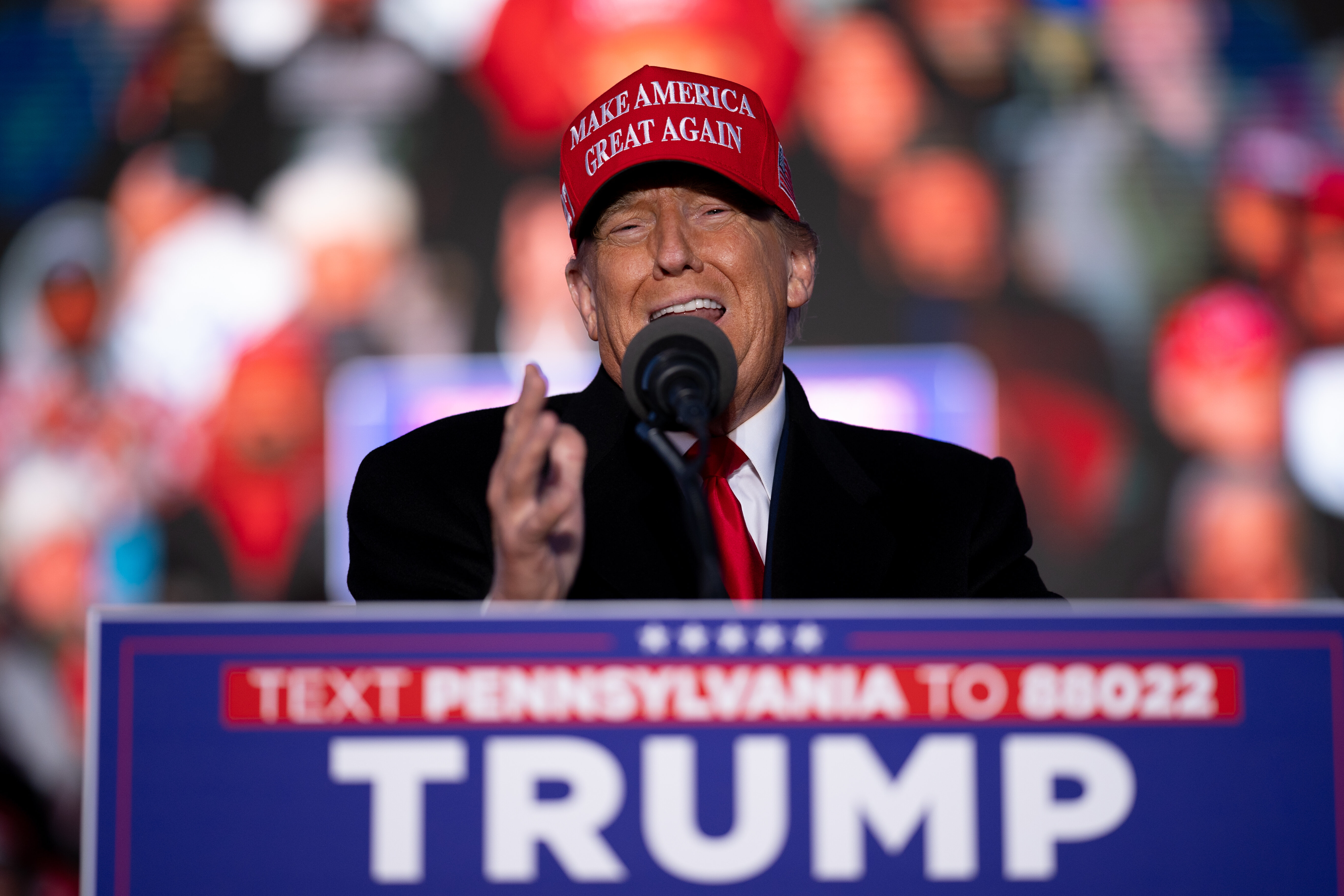
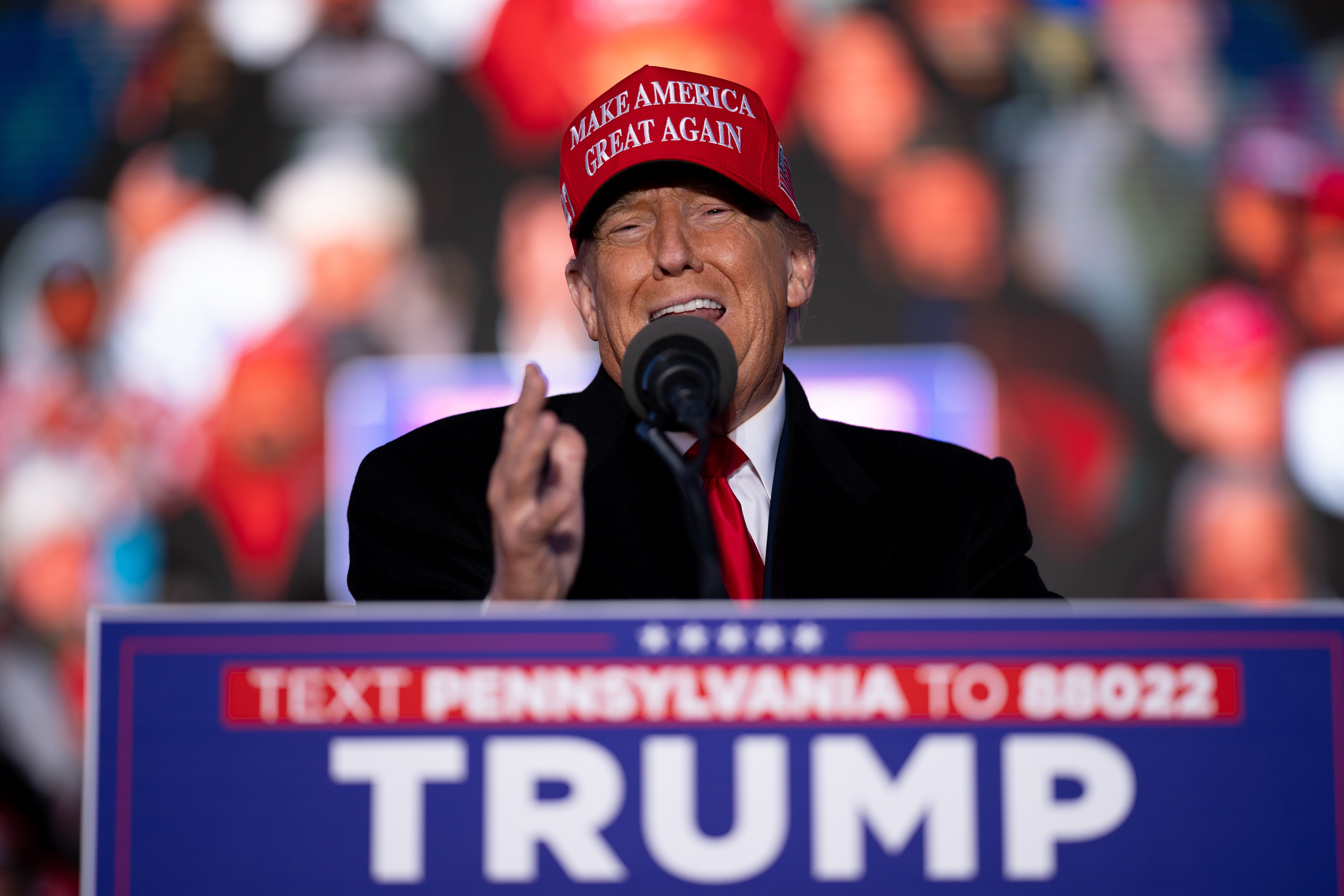
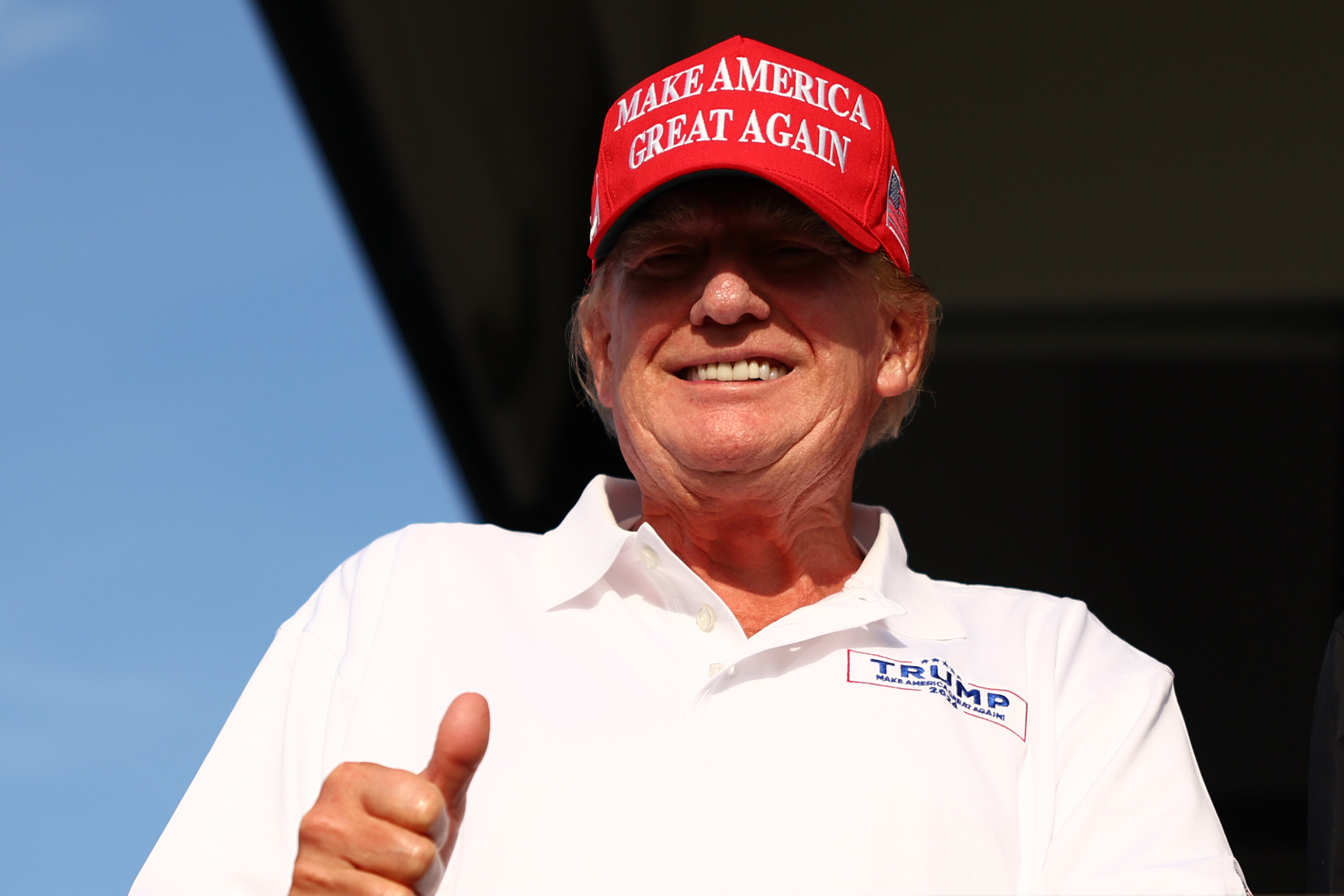
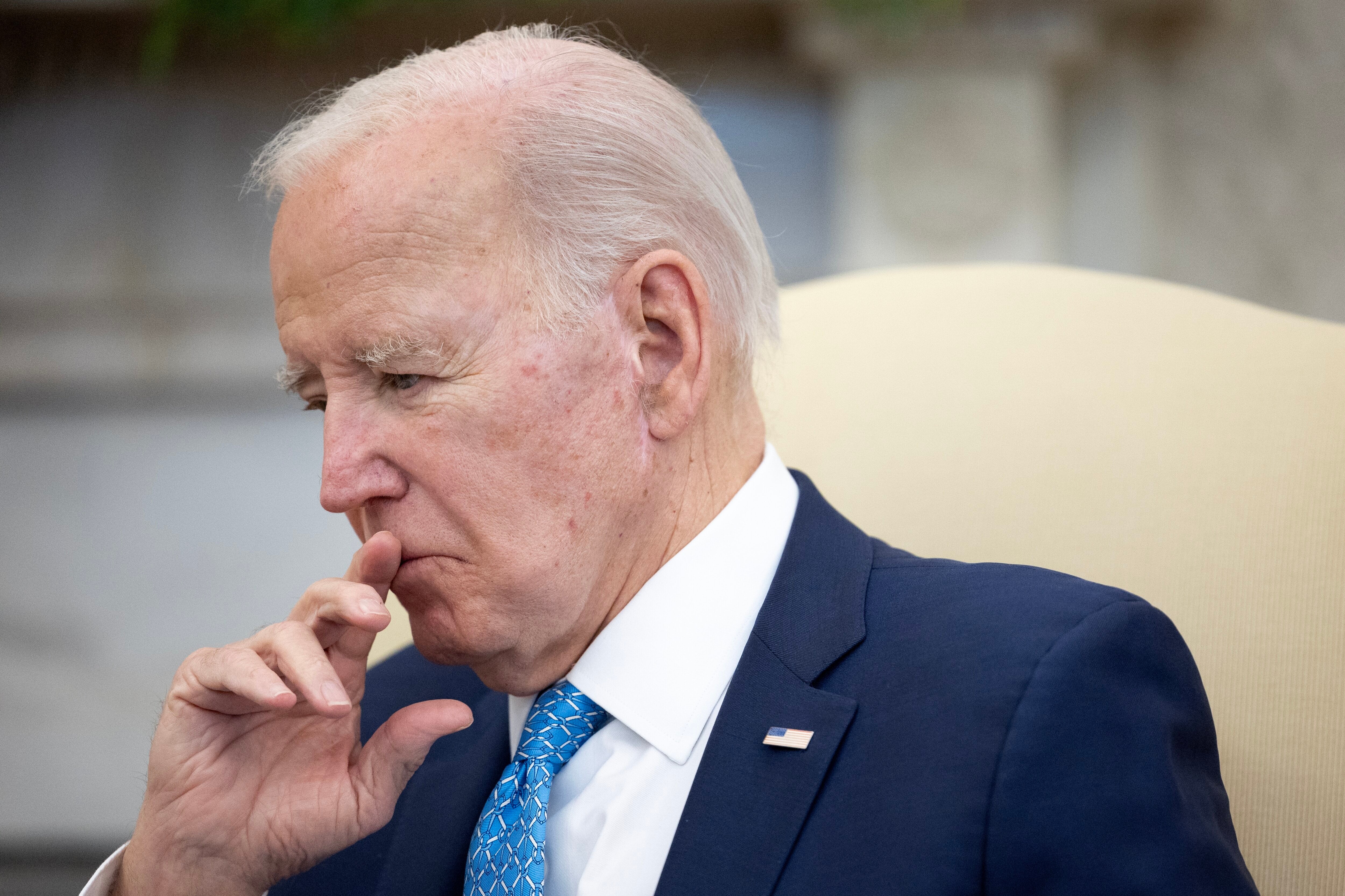
US president Joe Biden and his Republican predecessor Donald Trump are expected to run as opponents again in November
via Associated Press
Looking further afield, people in North America head to the polls on November 5, 2024 – the last election of the year. The winner will serve four years from their inauguration on January 20, 2025.
The Republican Party is yet to choose their final candidate, but it is widely expected that former US president Donald Trump will be on the Republican ticket against the incumbent Joe Biden will be on the Democrats – just like in the 2019 race.
Trump has been charged in four separate criminal cases and could be put on trial as soon as March. He has pleaded not guilty in all cases, but two states have already removed him from the primary ballot, Maine and Colorado.
Advertisement
However, if he does still manage to get into the Oval Office again, he has already hinted he would be even more controversial than in his previous stint.
He has accused immigrants of “poisoning the blood of our country” and has called “communists, Marxists, fascists and the radical-left thugs” “vermin”.
Trump has announced plans to “dismantle the deep state” too.
On the international stage, there’s a chance his presence in the White House could impact the Ukraine-Russia war in Vladimir Putin’s favour, while US-China tensions could skyrocket, too.
3. Russia’s presidential election
Vladimir Putin is almost certainly going to be re-elected in the Russian presidential election
DMITRY ASTAKHOV via Getty Images
Vladimir Putin is almost definitely expected to win this election with a staggering proportion of the vote. As an authoritarian leader, he has been in office since 1999.
Advertisement
Set to take place in March 2024, the Russian election is not exactly going to be a level playing field.
Putin’s press secretary Dmitry Peskov told the New York Times that the “presidential election is not really democracy, it is costly bureaucracy”, and that Putin would be “re-elected next year with more than 90% of the vote”.
However, Peskov later claimed his comments had been interpreted “in an absolutely the wrong way”.
Still, Putin has no main political opposition – his primary opposition, Kremlin critic Alexi Navalny, in currently in a penal colony beyond the Arctic Circle as part of his 19-year sentence for extremism charges.
Another candidate, former TV journalist and anti-war campaigner Yekaterina Duntsova, has been banned for running against Putin supposedly after errors were discovered on her application.
That doesn’t mean there’s no risk for Putin, though.
As Chatham House pointed out, elections where there’s just one contender up for office again and again means they still have to “match or beat their own results in prior votes to maintain a winning image” – that could be a challenge, considering the fatigue towards the Ukraine war creeping into Russia.
Advertisement
Still, a fifth term of Putin would strengthen and legitimise his efforts in Ukraine, especially as this will be the first presidential election since he ordered the invasion back in February 2022.
In that time, Putin has been declared a war criminal by the International Criminal Court, thousands have fled the country and at least 300,000 mobilised to fight in the war.
4. Taiwan’s presidential election
Taiwan’s Vice President William Lai and frontrunner in the presidential elections
via Associated Press
Taiwan may not be a huge country but the results of its presidential election in January could rock the boat for both China and the US.
Taiwan, split from China in a civil war in the 1940s, has since become self-governed with democratically elected leaders and around 300,000 active troops in its armed forces.
Advertisement
Beijing, however, thinks Taiwan should still be part of China – and has repeatedly hinted at seizing the island.
The US has irked China by offering Taiwan the means to defend itself, even if the White House insists that it does not officially recognise the state’s independence.
China has warned it will use force if Taiwan ever formally declares independence, while Taiwan has maintained it is still an independent state and it will still protect itself.
So, tensions are pretty high ahead of Taiwan’s January 13 elections – especially as the island plays an essential role in the global economy because of its supply of microchips.
China is expected to look for means to undermine the ruling Democratic Progressive Party in any possible.
Advertisement
Right now, Tsai’s DPP vice-president William Lai, is the frontrunner and known for pushing for formal Taiwan independence, which means Beijing is desperately hoping he does not get into office.
Meanwhile, his main opposition, the candidate for the nationalist group Kuomintang, Jaw Shaw Kong, is looking to build a relationship with China by suggesting one day the two can be reunited again, without any form of war.
There are domestic issues at play, too, such as rising costs and a housing crisis, which has helped populist candidate Ko Wen-je of the Taiwan People’s Party win support. He has also promised to build a better relationship with Beijing.
Lai and the DPP are expected to win an unprecedented third term, but on a narrow margin – and the election itself could still mean China gets a chance to strengthen anti-DPP propaganda on social media.
Israeli Prime Minister Benjamin Netanyahu was heckled Monday by family members of hostages who are believed to still be in captivity in Gaza.
In an address to the country’s parliament, Netanyahu spoke about the ongoing Israeli offensive in the territory and said that “we will not stop until victory.” As he spoke, families in the gallery held up photos of the hostages who have not yet been freed and chanted for them to be released “now.”
Advertisement
“We wouldn’t have succeeded up until now to release more than 100 hostages without military pressure,” Netanyahu said. “And we won’t succeed at releasing all the hostages without military pressure.”
He also said Monday that the fight against Hamas “isn’t close to finished,” despite growing calls from some of Israel’s allies for a cease-fire.
Around 240 people were taken hostage during Hamas’ Oct. 7 attack on Israel, with the country saying that the assault killed around 1,200 as well. After a short period in which some hostages were released, more than 100 are thought to remain in captivity, according to The Associated Press. Earlier this month, the Israeli military said that it had mistakenly killed three of the hostages.
Advertisement
Israel’s retaliation against Hamas has killed more than 20,000 people in Gaza, according to officials in the Palestinian enclave. Around 2 million people have been displaced there, and more than half a million people are starving following Israel’s siege of the territory, according to a report released this month by the United Nations and other agencies.
The AP reported Tuesday that Israeli forces had made moves signaling an expanded ground offensive.
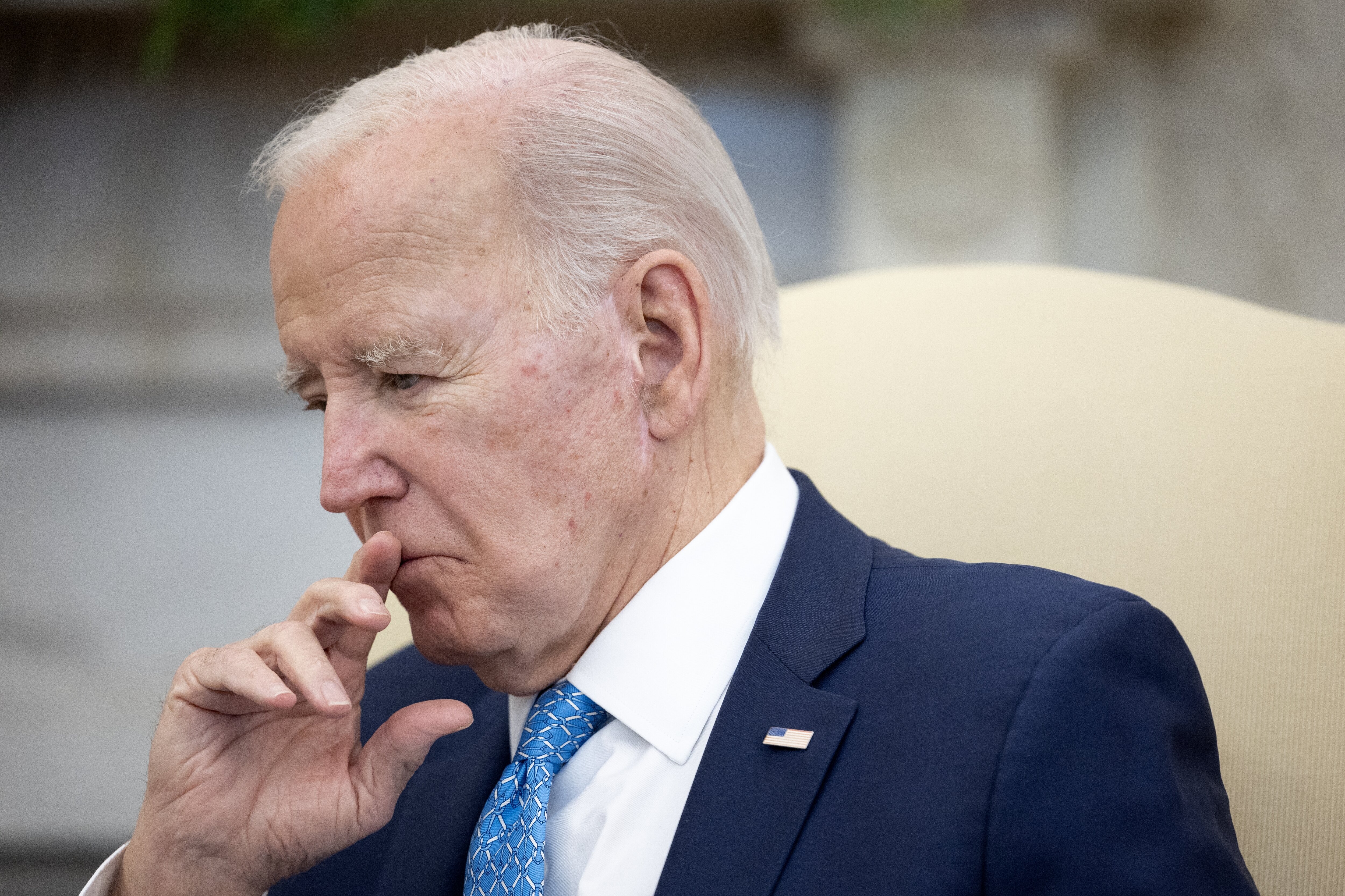
Visiting the State Department 10 days after his inauguration, President Joe Biden said his foreign policy would prioritize an approach to diplomacy defined by: “defending freedom, championing opportunity, upholding universal rights, respecting the rule of law, and treating every person with dignity.”
Nearly three years later, Biden’s handling of the biggest international crisis of his presidency — a shock Hamas attack on Israel on Oct. 7 and a devastating U.S.-backed Israeli campaign of retaliation since — has shattered any credibility he had in claiming those guiding lights.
Advertisement
Biden’s narrative of championing human rights globally crumbled in striking ways throughout his presidency. But foreign affairs watchers say his actions over the last three months have dealt a knockout blow to that image — and to Biden’s pledge to represent America in the world in a meaningfully more humane way than his predecessor and likely 2024 presidential election rival Donald Trump.
“Biden and his administration told us in their own words … how all this stuff is important, so this is the standard that they created for themselves,” said Yousef Munayyer, a senior fellow at the Arab Center think tank. “The scale of destruction of Palestinian life, the mass killing, the cruelty that we’re seeing the United States support and stand by is unlike anything we have ever seen, and not like anything we saw during the Trump administration.”
Israel’s onslaught in Gaza, where Hamas is based, has killed more than 20,000 Palestinians in Gaza, the vast majority women and children, local health officials say, and displaced nearly 2 million people. The Biden administration has rejected nearly all global calls to force Israeli restraint. Officials say they are encouraging Israel to avoid hurting civilians, but repeatedly note it is establishing no red lines in support for the U.S. ally that the president has long defended, even despite concerns from other Israel supporters who see its war strategy as self-defeating.
The U.S.’s reluctance to rein in Israel drove United Nations Secretary General António Guterres to invoke a rarely used emergency article of the U.N. charter for the first time in his seven-year tenure, and has sparked huge anxiety among American partner nations and U.S. officials.
Advertisement
The internal effect of Biden’s hardline views on Israel-Palestine was clear to Josh Paul, a veteran State Department official who resigned over the Gaza policy in a development first reported by HuffPost. “I have had my fair share of debates and discussions,” he told HuffPost in his first interview after quitting. “It was clear that there’s no arguing with this one.”
Yet the president’s specific influence over foreign policy makes the Biden administration’s rights record even more disturbing for many observers.
“No principal in this administration is an equivalent heavyweight when it comes to experience or foreign policy to the president himself,” Munayyer noted. He anticipates political headwinds for Biden in 2024 given his prominence on global affairs and his limited ability to sell himself as different.
“I don’t find it a very convincing argument to tell people your only chance of saving democracy is voting for this one candidate because the alternative is you’re going to get deported,” Munayyer said, referring to the Biden reelection’s campaign’s recent focus on emphasizing Trump’s hardline immigration policies. “That’s not exactly how democracy works, and the fact that it’s come to that speaks volumes about how much things have deteriorated already.”
Advertisement
Early Hope, Rapid Disappointment
In his first months in office, rights advocates celebrated as Biden took steps to address a policy that began with President Barack Obama and expanded under Trump, ultimately creating the world’s worst humanitarian crisis: U.S. support for one side in the civil war in Yemen.
Biden barred American offensive weapons for Saudi Arabia and the United Arab Emirates, close U.S. partners in the Middle East that had been bombing Yemen since 2015 and arming fighters there to battle an Iran-backed militia called the Houthis. He appointed a special envoy to try to end the Yemen war. And he moved to make good on his campaign promise of a less pro-Saudi policy than Trump by declassifying a U.S. intelligence determination that de facto Saudi ruler Crown Prince Mohammed bin Salman ordered the killing of journalist Jamal Khashoggi in 2018.
Yet it soon became clear the old-school president would not truly break with the old U.S. foreign policy habit of treating human rights as a secondary concern. In April 2021, HuffPost broke the news that Biden greenlit the biggest arms deal of the Trump era, a $23 billion package for the UAE that many lawmakers and national security experts saw as destabilizing, given the Emirates’ pattern of fueling conflicts across the Middle East.
A U.S.-backed campaign of air strikes by Saudi Arabia and the United Arab Emirates devastated Yemen. Biden promised to alter the policy but quickly drew close to the Saudis and Emiratis.
In the interim, Biden sparked worldwide horror by fulfilling his promise to withdraw from Afghanistan through a chaotic August 2021 pull-out that abandoned thousands of Afghans who worked with the U.S. and ushered in mass rights violations, particularly against women and religious minorities, by Taliban militants.
The trauma remains deep years later, current and former officials told HuffPost this spring, as well as the impression that Biden botched it: “There were challenges that were inherited, but I do not believe they couldn’t have been overcome,” noted civilian protection expert Marla Keenan.
The administration continued to try to bolster its pro-human rights credentials. It restored U.S. membership to the U.N. Human Rights Council, which Trump had ended, and launched a new program of Summits for Democracy which, while controversial, spurred some hope among analysts of resisting the trend of resurgent global authoritarianism.
Biden’s team also rolled out new regulations U.S. officials and outside experts described as valuable tools to prevent and seek justice for rights violations internationally. Those include a new Pentagon plan to reduce the civilian toll of American military operations; a new policy governing arms deals that bars weapons transfers if U.S. officials determine it is “more likely than not” those arms will be used to violate international law; and a new system for tracking whether American partners use U.S. equipment to injure or kill civilians. They additionally wound down America’s drone program to some degree.
But Biden continued to be selective in treating concerns about universal values as his priority.
Earlier this year, he hosted Indian Prime Minister Narendra Modi for a high-level White House visit without securing any serious commitment by India — the world’s largest country — to address its worsening repression of its minority communities, primarily Muslims, and of anti-Modi voices. “Modi’s red-carpet treatment was a significant endorsement of his governance, and one few world leaders have received,” wrote Knox Thames, a senior State Department official under both Biden and Trump. “Modi’s damaging policies should not lead to self-censorship.”
Advertisement
And since the Israel-Hamas war began, the administration’s refusal to challenge Israeli actions widely seen as war crimes — from collective punishment of Gaza’s civilian population to attacks on civilians — has made it impossible for most observers to take Biden seriously on human rights.
Annie Shiel, the U.S. advocacy director for the rights group CIVIC, reflected on the contrast in a Dec. 21 statement reacting to the Defense Department’s announcement of a policy to shield civilians.
“For this policy to be meaningful, it must be applied consistently. The department’s response to catastrophic civilian harm and destruction in Gaza, caused by Israeli operations directly supported by U.S. assistance, has failed to live up to and actively undermined U.S. civilian protection efforts like this policy,” Shiel said. “A true commitment to protecting civilians must go beyond rhetoric and be backed by action and leverage — including the political will to suspend military aid that is directly contributing to the deaths of thousands of civilians.”
The same day, The New York Times reported that Biden was lifting his ban on offensive weapons for the Saudis — a shift HuffPost first reported as under consideration despite deep wariness about it among U.S. national security officials.
The Overwhelming Pain Of Gaza
Israel’s U.S.-backed operation in Gaza has created a crisis that United Nations officials and humanitarian experts call unprecedented and horrifying.
Advertisement
Amid Biden’s refusal to seriously limit American support for the campaign and attempts to shield the U.S. ally from global accountability for actions from killing journalists and destroying tens of thousands of homes to repeatedly striking medical facilities, the Israeli offensive has continued to expand.
Palestinians killed in Israeli attacks are buried in a mass grave as some cemeteries run out of space due to the rising death toll as Israeli attacks continue in Gaza City, Gaza, on Dec. 23.
Anadolu via Getty Images
U.S. officials and outside analysts say the upshot is deep unnecessary civilian suffering and an erosion of any American ability to promote human rights globally, from Europe to Asia.
Tobita Chow, the founding director of the advocacy group Justice Is Global, noted the hollowness of American condemnations of China’s deepening crackdown in Hong Kong.
“Gestures like this might be more effective coming from a government that was not busy sacrificing its international legitimacy along with the lives of the people of Gaza,” Chow wrote on X in response to a recent statement from Secretary of State Antony Blinken.
Advertisement
Antonio De Loera-Brust, a former aide to Blinken, has warned against the administration’s approach to seeking a new aid package for Israel and Ukraine, which involves accepting reduced U.S. protections for migrants. “U.S. support for Ukraine must be attentive to the perspectives and interests of the Global South, especially given the wedge the conflict in Gaza is already creating between the United States and nations in Latin America, Africa and the Middle East. The negative optics of U.S. aid to Ukraine (and Israel) coming at the expense of Latin America would be unavoidable,” he wrote in The Washington Post.
And within the administration, officials say the president’s treatment of Israel policy conflicts with his claims of improving American foreign policy by boosting diversity among national security personnel.
“One reason to want a diverse staff is to have a variety of inputs into your decision-making, not just to check a box on a little quota sheet,” a person in the administration told HuffPost in October. “The inner, inner circle on [Gaza] is not at all diverse. Does that completely explain the monstrous disregard for innocent Palestinian lives? No, but it’s hard to think these things are entirely disconnected.”
A sliver of faith in Biden persists among human rights advocates going into 2024, but it could quickly dissipate.
“From India, to Ethiopia, to Saudi Arabia, and beyond, the administration has appeared to put partnerships over human rights,” said Amanda Klasing, the national director of government relations and advocacy at Amnesty International USA. “It is also hard to imagine the unfolding catastrophe in Gaza will not define [Biden’s] legacy, without a significant shift in policy.”
Advertisement
“In 2024, we hope to see actions that match the administration’s rhetorical commitment to human rights,” Klasing told HuffPost.
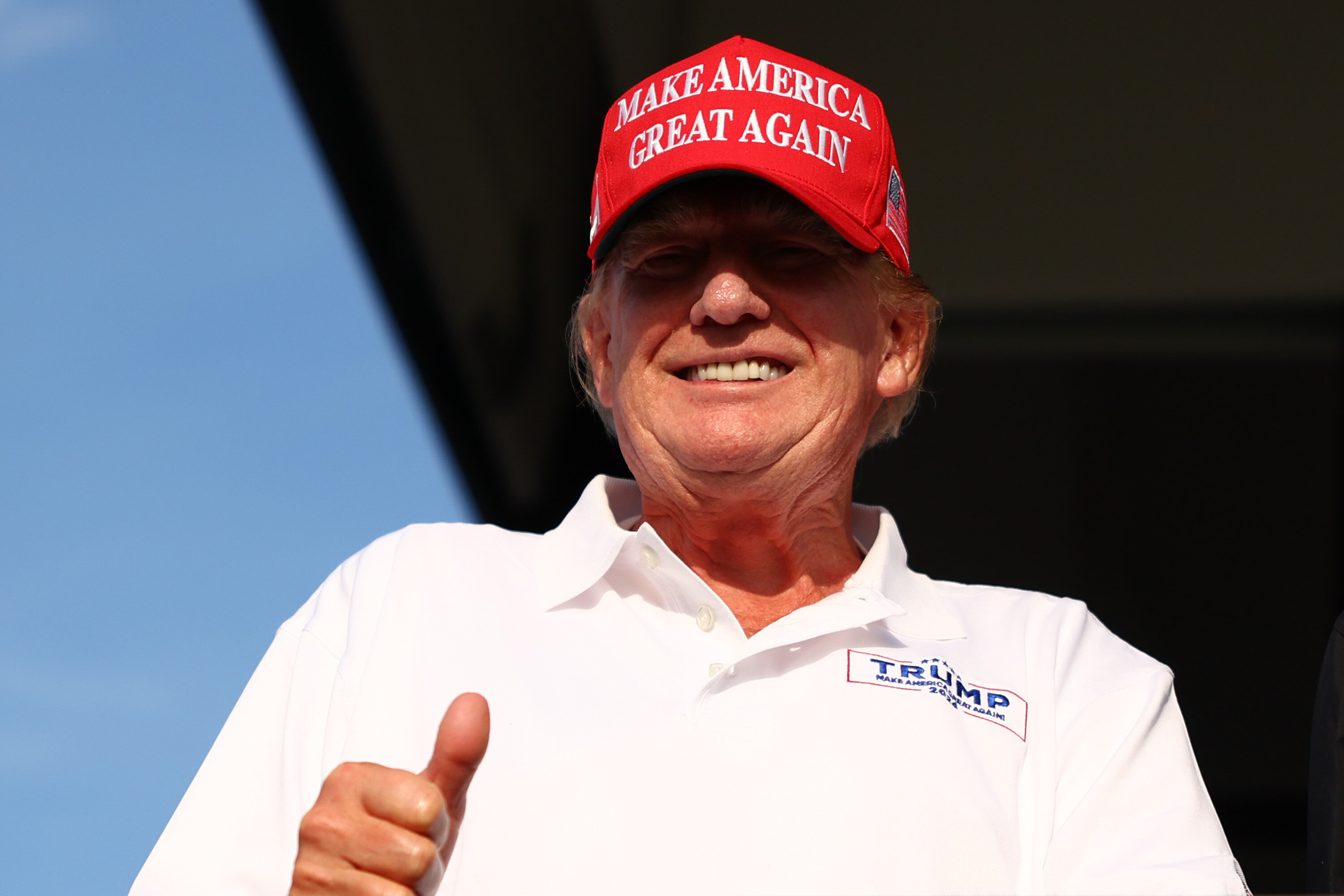
The former president hopped on his Truth Social platform to unwrap a number of festive screeds to foes including one that criticized Jack Smith, the special counsel who has brought two cases against Trump.
“Merry Christmas to all, including Crooked Joe Biden’s ONLY HOPE, Deranged Jack Smith, the out of control Lunatic who just hired outside attorneys, fresh from the SWAMP (unprecedented!), to help him with his poorly executed WITCH HUNT against ‘TRUMP’ and ‘MAGA,’” the former president wrote on Monday.
Advertisement
The unhinged, frosty rant comes just days after the Supreme Court, on Friday, rejected Smith’s request to fast-track consideration of Trump’s presidential immunity claim in his 2020 election case.
Trump, who celebrated Christmas by launching into a rant full o’ caps last year, later directed his holiday wishes to “both good and bad” world leaders before comparing them to his adversaries in America.
He continued: “But none of which are as evil and ‘sick’ as the THUGS we have inside our Country who, with their Open Borders, INFLATION, Afghanistan Surrender, Green New Scam, High Taxes, No Energy Independence, Woke Military, Russia/Ukraine, Israel/Iran, All Electric Car Lunacy, and so much more, are looking to destroy our once great USA. MAY THEY ROT IN HELL. AGAIN, MERRY CHRISTMAS!”
The former president – elsewhere on Christmas Day – claimed Biden would interfere in next year’s election, warned of looming “MADNESS & DOOM,” boasted about his polling performance and declared that people “will be happy, not sad” with his Obamacare alternative.
Trump remains the GOP presidential frontrunner, leading Florida Gov. Ron DeSantis by over 50 percentage points in an average of national polls, according to polling aggregator FiveThirtyEight.