Ex-health secretary says planning focused more on burying the dead rather than averting disaster.


Ex-health secretary says planning focused more on burying the dead rather than averting disaster.

A Cretaceous origin for placental mammals, the group that includes humans, dogs and bats, has been revealed by in-depth analysis of the fossil record, showing they co-existed with dinosaurs for a short time before the dinosaurs went extinct.
The catastrophic destruction triggered by the asteroid hitting the Earth resulted in the death of all non-avian dinosaurs in an event termed the Cretaceous-Paleogene (K-Pg) mass extinction. Debate has long raged among researchers over whether placental mammals were present alongside the dinosaurs before the mass extinction, or whether they only evolved after the dinosaurs were done away with. Fossils of placental mammals are only found in rocks younger than 66 million years old, which is when the asteroid hit Earth, suggesting that the group evolved after the mass extinction. However, molecular data has long suggested an older age for placental mammals.
In a new paper published in the journal Current Biology, a team of palaeobiologists from the University of Bristol and the University of Fribourg used statistical analysis of the fossil record to determine that placental mammals originated before the mass extinction, meaning they co-existed with dinosaurs for a short time. However, it was only after the asteroid impact that modern lineages of placental mammals began to evolve, suggesting that they were better able to diversify once the dinosaurs were gone.
The researchers collected extensive fossil data from placental mammal groups extending all the way back to the mass extinction 66 million years ago.
Lead author Emily Carlisle of Bristol’s School of Earth Sciences said: “We pulled together thousands of fossils of placental mammals and were able to see the patterns of origination and extinction of the different groups. Based on this, we could estimate when placental mammals evolved.”
Co-author Daniele Silvestro (University of Fribourg) explained: “The model we used estimates origination ages based on when lineages first appear in the fossil record and the pattern of species diversity through time for the lineage. It can also estimate extinction ages based on last appearances when the group is extinct.”
Co-author Professor Phil Donoghue, also from Bristol, added: “By examining both origins and extinctions, we can more clearly see the impact of events such as the K-Pg mass extinction or the Paleocene-Eocene Thermal Maximum (PETM).”
Primates, the group that includes the human lineage, as well as Lagomorpha (rabbits and hares) and Carnivora (dogs and cats) were shown to have evolved just before the K-Pg mass extinction, which means their ancestors were mingling with dinosaurs. After they survived the asteroid impact, placental mammals rapidly diversified, perhaps spurred on by the loss of competition from the dinosaurs.

Cambridge scientists have created a stem cell-derived model of the human embryo in the lab by reprogramming human stem cells. The breakthrough could help research into genetic disorders and in understanding why and how pregnancies fail.
Published today in the journal Nature, this embryo model is an organised three-dimensional structure derived from pluripotent stem cells that replicate some developmental processes that occur in early human embryos.
Use of such models allows experimental modelling of embryonic development during the second week of pregnancy. They can help researchers gain basic knowledge of the developmental origins of organs and specialised cells such as sperm and eggs, and facilitate understanding of early pregnancy loss.
“Our human embryo-like model, created entirely from human stem cells, gives us access to the developing structure at a stage that is normally hidden from us due to the implantation of the tiny embryo into the mother’s womb,” said Professor Magdalena Zernicka-Goetz in the University of Cambridge’s Department of Physiology, Development and Neuroscience, who led the work.
She added: “This exciting development allows us to manipulate genes to understand their developmental roles in a model system. This will let us test the function of specific factors, which is difficult to do in the natural embryo.”
In natural human development, the second week of development is an important time when the embryo implants into the uterus. This is the time when many pregnancies are lost.
The new advance enables scientists to peer into the mysterious ‘black box’ period of human development — usually following implantation of the embryo in the uterus — to observe processes never directly observed before.
Understanding these early developmental processes holds the potential to reveal some of the causes of human birth defects and diseases, and to develop tests for these in pregnant women.
Until now, the processes could only be observed in animal models, using cells from zebrafish and mice, for example.
Legal restrictions in the UK currently prevent the culture of natural human embryos in the lab beyond day 14 of development: this time limit was set to correspond to the stage where the embryo can no longer form a twin.
Until now, scientists have only been able to study this period of human development using donated human embryos. This advance could reduce the need for donated human embryos in research.
Zernicka-Goetz says the while these models can mimic aspects of the development of human embryos, they cannot and will not develop to the equivalent of postnatal stage humans.
Over the past decade, Zernicka-Goetz’s group in Cambridge has been studying the earliest stages of pregnancy, in order to understand why some pregnancies fail and some succeed.
In 2021 and then in 2022 her team announced in Developmental Cell, Nature and Cell Stem Cell journals that they had finally created model embryos from mouse stem cells that can develop to form a brain-like structure, a beating heart, and the foundations of all other organs of the body.
The new models derived from human stem cells do not have a brain or beating heart, but they include cells that would typically go on to form the embryo, placenta and yolk sac, and develop to form the precursors of germ cells (that will form sperm and eggs).
Many pregnancies fail at the point when these three types of cells orchestrate implantation into the uterus begin to send mechanical and chemical signals to each other, which tell the embryo how to develop properly.
There are clear regulations governing stem cell-based models of human embryos and all researchers doing embryo modelling work must first be approved by ethics committees. Journals require proof of this ethics review before they accept scientific papers for publication. Zernicka-Goetz’s laboratory holds these approvals.
“It is against the law and FDA regulations to transfer any embryo-like models into a woman for reproductive aims. These are highly manipulated human cells and their attempted reproductive use would be extremely dangerous,” said Dr Insoo Hyun, Director of the Center for Life Sciences and Public Learning at Boston’s Museum of Science and a member of Harvard Medical School’s Center for Bioethics.
Zernicka-Goetz also holds position at the California Institute of Technology and is NOMIS Distinguished Scientist and Scholar Awardee.
The research was funded by the Wellcome Trust and Open Philanthropy.
Two states are seeing locally acquired cases- the first spread inside the US in 20 years.

CNN obtained audio of former US president Donald Trump discussing sensitive military documents he took with him after leaving the White House.
In the two-minute audio clip, Trump can be heard describing a document compiled by General Mark Milley, chairman of the Joint Chiefs of Staff when Trump was president, on the potential attacks against Iran. The discussion of the file was recorded during a 2021 meeting in Bedminster, New Jersey, with people working on Milley’s memoir.
Advertisement
“He said that I wanted to attack Iran. Isn’t it amazing?” Trump says of Milley in the audio clip as the sound is heard of that appears to be shuffling papers. “I have a big pile of papers. This thing just came up. Look. This was him. They presented me this ― this is off the record, but ― they presented me this. This was him. This was the Defense Department and him.”
“All sorts of stuff, pages long. Let’s see here,” the former president continues. “Isn’t that amazing. This totally wins my case, you know, except that it is like highly confidential, secret, this is secret information.”
Trump went on to say the papers he was showing his guest were classified.
“See, as president I could have declassified it,” Trump said in the clip. “Now I can’t, you know, but this is still a secret.”
Advertisement
Trump also joked with several people in the room after his aides laughed about former Secretary of State Hillary Clinton’s email server, saying she would “print that out all the time”.
“No,” Trump added, “she’d send it to Anthony Weiner, the pervert,” referring to the former Democratic congressman who resigned after it was revealed he sent explicit texts.
The recording is reportedly a key piece of evidence in special counsel Jack Smith’s case into Trump’s handling of classified files after his presidency.
Federal prosecutors indicted Trump on 37 criminal counts this month, accusing the former president of repeatedly risking national security and undermining the government’s efforts to see the return of boxes of documents from his Mar-a-Lago club in Florida. The indictment cites the conversation obtained by CNN.
Trump has rejected the claims and pleaded not guilty to all counts. He has said he had the absolute right to take anything he wanted when he left the White House under the Presidential Records Act and that he had a standing order to declassify anything removed from the Oval Office during his presidency.
Advertisement
Prosecutors, however, appear to have homed in on Trump’s own words during their investigation. The indictment lays out at least two conversations — including the one in the CNN file — in which he acknowledged material in his possession was still classified.
US District Judge Aileen Cannon, who is overseeing the case, set an initial trial date of August 14. The Justice Department has asked for a postponement until December, a timeline that would give Trump’s attorneys time to obtain security clearances necessary to review the hoard of classified files referenced in the indictment.

The inside story of the Nigerian market trader whose case exposed illegal organ removal in the UK.

Nearly every woman and non-binary person with a uterus will experience menopause – yet some feel that their experiences aren’t being considered.
Following 25 years of research from the Study of Women’s Health Across the Nation – also known as SWAN – they’ve found that 51% of women from black, Asian, and minority ethnic backgrounds believe that current menopause advice is not representative and too focused on the experience of white women.
Advertisement
In fact, a quarter of women from minority ethnic communities find it difficult to access menopause support relevant to their specific backgrounds.
A little goes a long way, as nearly a third of those surveyed believe being able to speak to a healthcare professional of the same ethnicity and gender as them would have made a difference to their menopause experience. 15% even went as far as saying that being able to communicate in their mother tongue would make a positive difference.
Cross-cultural research shows a person’s race and cultural background may impact how a woman may feel about menopause, the severity of their symptoms, when the symptoms might start, and even how long they will last.
Black women are more likely to have worse symptoms when experiencing menopause.
Additionally, Black women reach menopause 8.5 months earlier than White women. They’re also more likely to deal with worse symptoms such as hot flashes, depression, and sleep disturbances.
Advertisement
However, they are also less likely to receive hormone therapy, as well as help from medical and mental health services.
As a result of this, Holland & Barrett, is continuing its menopause campaign work to make “every menopause matter” with the help of Olympian and menopause campaigner, Michelle Griffith Robinson and expert Meera Bhogal.
The retailer is launching several new initiatives to make its information and support on menopause more inclusive by offering more diverse and personalised advice and content, tailored to different needs.
“In the South Asian community, women’s health isn’t talked about generally, so when I started experiencing perimenopausal symptoms at 40, I had no clue what was happening to me,” Meera Bhogal, says.
She wishes she was equipped with the right information when she was dealing with menopause. “I really want to help remove the stigma of menopause and open-up conversations and help women from all communities be able to access the advice and support they need,” Bhogal adds.
Advertisement
As part of the Every Menopause Matters campaign, customers will find menopause content online in different languages, and in a pilot, its ad campaign will be translated into Hindi to reach and support a wider community of women for whom language may be a barrier.
As well as this, the retailer has also partnered with leading women’s health charity, Wellbeing of Women, to launch The Women’s Health Community Fund.
They will provide resources to individuals and groups in under-served communities, with a specific focus on those from lower income families, from the LGBTQ+ community, ethnically diverse communities, and those with disabilities to raise awareness and provide information on menopause in the way that best reaches and serves the needs of their community.
“There are stark inequalities for women and people when accessing menopause information and care which are generally not designed to meet the particular needs of Black, Asian or other ethnic minority groups, as well as those from economically disadvantaged backgrounds or with disabilities and LGBTQ+,” Janet Lindsay, CEO, Wellbeing of Women, said.

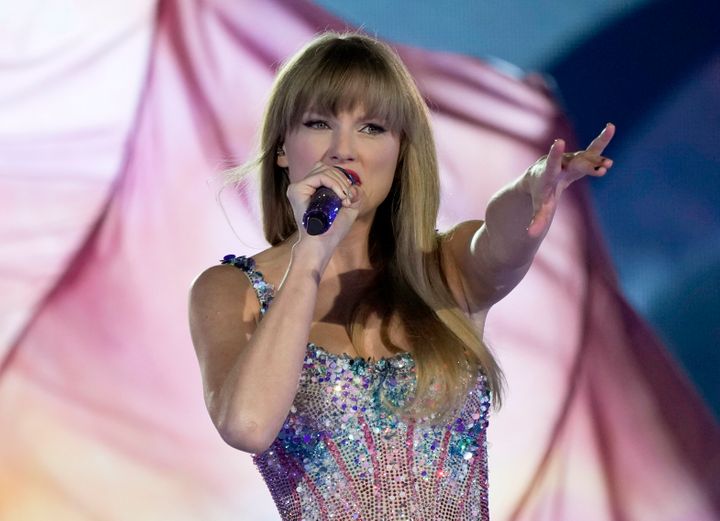
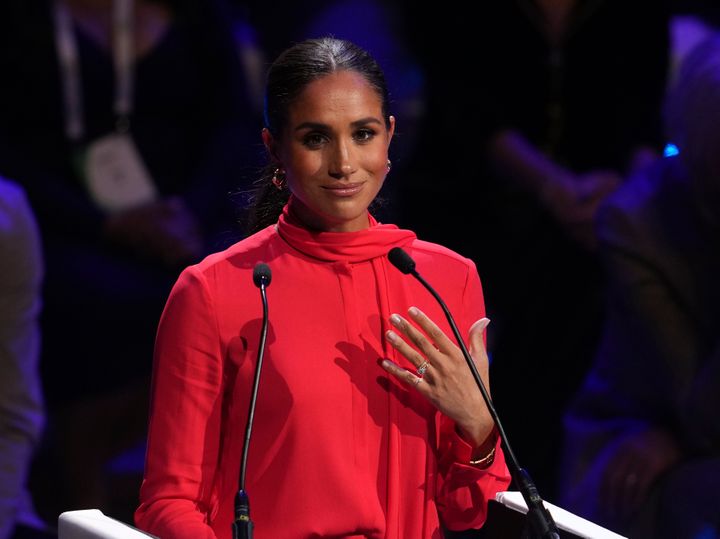
Even a personal plea from Meghan Markle couldn’t convince Taylor Swift to appear on the duchess’ now-defunct podcast, Archetypes.
New reports are offering more insight into Markle and husband Prince Harry’s ill-fated partnership with Spotify, which came to an abrupt end earlier this month.
Advertisement
Despite their own fame, the Sussexes were said to have trouble finding big guests to book on their flagship show.
A personal note from Markle wasn’t even enough to merit a real response from Swift. According to insiders at the Wall Street Journal, the pop star turned down the invitation via a representative.
via Associated Press
Beyond getting snubbed, sources say the royals struggled to find guests and “material consistent with their brand”.
Advertisement
Archetypes’ 12-episode run still featured A-listers like Serena Williams, Mariah Carey and Paris Hilton, however.
Though there were discussions about a second season, plans did not move forward on a follow-up.
via Associated Press
Spotify and the Sussexes announced they were ending their partnership in a joint statement on June 16, where each said they “mutually agreed to part ways and are proud of the series we made together”.
Harry and Meghan’s camp called the move more of a pivot than a problem, with a representative for the couple’s production company Archewell telling WSJ: “New companies often make changes in their start up phase, both with people and strategy, and we are no exception. We’re more equipped, focused and energised than ever before.”
The Duke and Duchess announced their partnership with Spotify in 2020 after striking a deal which was reportedly worth millions.
Advertisement
Prior to that, the pair had teamed up with Netflix, producing the 2022 docuseries Harry & Meghan and presenting the series Live To Lead, which featured interviews with late Supreme Court Justice Ruth Bader Ginsburg and environmental activist Greta Thunberg.



The rate at which women eliminate alcohol from their bloodstream is largely predicted by their lean body mass, although age plays a role, too, scientists found in a new study. Women with obesity — and those who are older — clear alcohol from their systems 52% faster than women of healthy weights and those who are younger, the study found.
Lean body mass is defined in the study — published in the journal Alcohol Clinical and Experimental Research — as one’s total body weight minus fat.
“We believe the strong relationship we found between participants’ lean body mass and their alcohol elimination rate is due to the association that exists between lean body mass and lean liver tissue — the part of the liver responsible for metabolizing alcohol,” said research group leader M. Yanina Pepino, a professor of food science and human nutrition at the University of Illinois Urbana-Champaign.
To explore links between body composition and alcohol elimination rates, the team conducted a secondary analysis of data from a study performed at the U. of I and another at Indiana University, Indianapolis. Both projects used similar methods to estimate the rate at which alcohol is broken down in the body.
The combined sample from the studies used in the analysis included 143 women who ranged in age from 21 to 64 and represented a wide range of body mass indices — from healthy weights to severe obesity. Among these were 19 women who had undergone different types of bariatric surgery.
In a subsample of 102 of these women, the researchers had measured the proportions of lean and fat tissue in their bodies and calculated their body mass indices. Based on their BMI, those in the subsample were divided into three groups: normal weight, which included women with BMI ranging from 18.5-24.9; overweight, those with BMI ranging from 25-29.9; and obese, participants with BMI above 30.
As the researchers expected, women with higher BMI had not only more fat mass than women of healthy weights, they also had more lean mass. On average, the group with obesity had 52.3 kg of lean mass, compared with 47.5 kg for the normal weight group.
The two studies both used an alcohol clamp technique, where participants received an intravenous infusion of alcohol at a rate controlled by a computer-assisted system. The system calculated personalized infusion rates based upon each participant’s age, height, weight and gender and was programmed so they would reach a target blood alcohol concentration of .06 percent within 15 minutes and maintain that level for about two hours
Using a breathalyzer, breath samples were collected at regular intervals throughout the experiments to estimate participants’ blood alcohol concentration and provide feedback to the system.
“We found that having a higher fat-free body mass was associated with a faster alcohol elimination rate, particularly in women in the oldest subgroups,” said Neda Seyedsadjadi, a postdoctoral fellow at the university and the first author of the study.
“The average alcohol elimination rates were 6 grams per hour for the healthy weight group, 7 grams for the overweight group, and 9 grams for the group with obesity,” she said. “To put this in perspective, one standard drink is 14 grams of pure alcohol, which is found in 12 ounces of beer, 5 ounces of table wine or 1.5 ounces shot of distilled spirits.”
The interaction between participants’ age and lean body mass accounted for 72% of the variance in the time required to eliminate the alcohol from their system, the team found.
Pepino, who also holds an appointment as a health innovation professor at Carle Illinois College of Medicine, has conducted several studies on alcohol response in bariatric surgery patients.
The findings also shed light on alcohol metabolism and body composition in women who have undergone weight loss surgery. Researchers have long known that bariatric surgery alters women’s response to alcohol but were uncertain if it affected how quickly they cleared alcohol from their systems.
Some prior studies found that these patients metabolized alcohol more slowly after they had weight loss surgery. The new study’s findings indicate that these participants’ slower alcohol elimination rates can be explained by surgery-induced reductions in their lean body mass. Weight loss surgery itself had no independent effects on patients’ alcohol elimination rates, the team found.
Additional co-authors of the current study were Dr. Blair Rowitz, associate dean for clinical affairs with the Carle Illinois College of Medicine; Vijay A. Ramchandani, a senior investigator in the section on human psychopharmocology at the National Institute on Alcohol Abuse and Alcoholism; and psychiatry professors Dr. Martin H. Plawecki and Dr. Sean J. O’Connor, and scientist in neurology Ann E.K. Kosobud, all of the Indiana University School of Medicine.

A new study shows that current trends in environmental degradation will lead to large economic losses in the coming decades, hitting the poorest countries hardest. But there is hope: investing in nature can turn those losses into gains.
Researchers from the University of Minnesota and Purdue University published their findings in Proceedings of the National Academy of Sciences. The team developed a first-of-its-kind, global earth-economy model to capture interactions between the economy and the environment. Crucially, these interactions include how nature benefits humans by pollinating crops, providing timber, storing carbon, and providing catch for marine fisheries, and how those benefits end up affecting the economy overall.
“We have long thought of the economy and the environment as working against each other,” said Justin Johnson, an assistant professor of Applied Economics at the University of Minnesota. “Investing in nature does not stifle the economy, it boosts the economy. But it has been difficult to model those interactions until recently.”
The researchers found:
The researchers combined a global general equilibrium economic model, GTAP (developed at Purdue University’s Center for Global Trade Analysis), with a suite of ecosystem service models, InVEST (developed at Stanford University’s Natural Capital Project). GTAP and InVEST are both widely used across the world by governments, non-governmental organizations and the private sector, but putting them together was a significant undertaking.
“Traditional economic models of this kind almost completely neglect the fact that the economy relies on nature,” said Tom Hertel, a distinguished professor of Agricultural Economics at Purdue University. “This new study required a detailed understanding of how and where land use patterns change as a result of economic activity, with enough spatial detail to understand environmental consequences of these changes. It is a huge achievement.”
The results from this research highlight how public goods and services provided by the environment are often most important for the world’s poorest, who have less access to alternative options when the environment is degraded. Consequently, investing in nature tends to make the world a more equitable place. This research only looks at a small subset of the ways in which the economy and the environment interact, nevertheless finding strikingly large effects.
“Of course nature provides much more than pollinators, timber, carbon and fish,” said Johnson. “Our future work will incorporate many more ecosystem services, leading to much more informed decision-making. This is just the beginning: we hope to make this kind of analysis a standard tool in a policy-maker’s toolbox.”
Financial support for the study came from the University of Minnesota, Purdue University and the National Science Foundation. Researchers from the World Bank and the University of Victoria also contributed to this study.
