Thousands Denied A Vote Because Of Tory Voter ID Law, Say Election Chiefs

Thousands of voters were barred from taking part in last month’s local elections because of the Tories’ voter ID law, election chiefs have revealed.

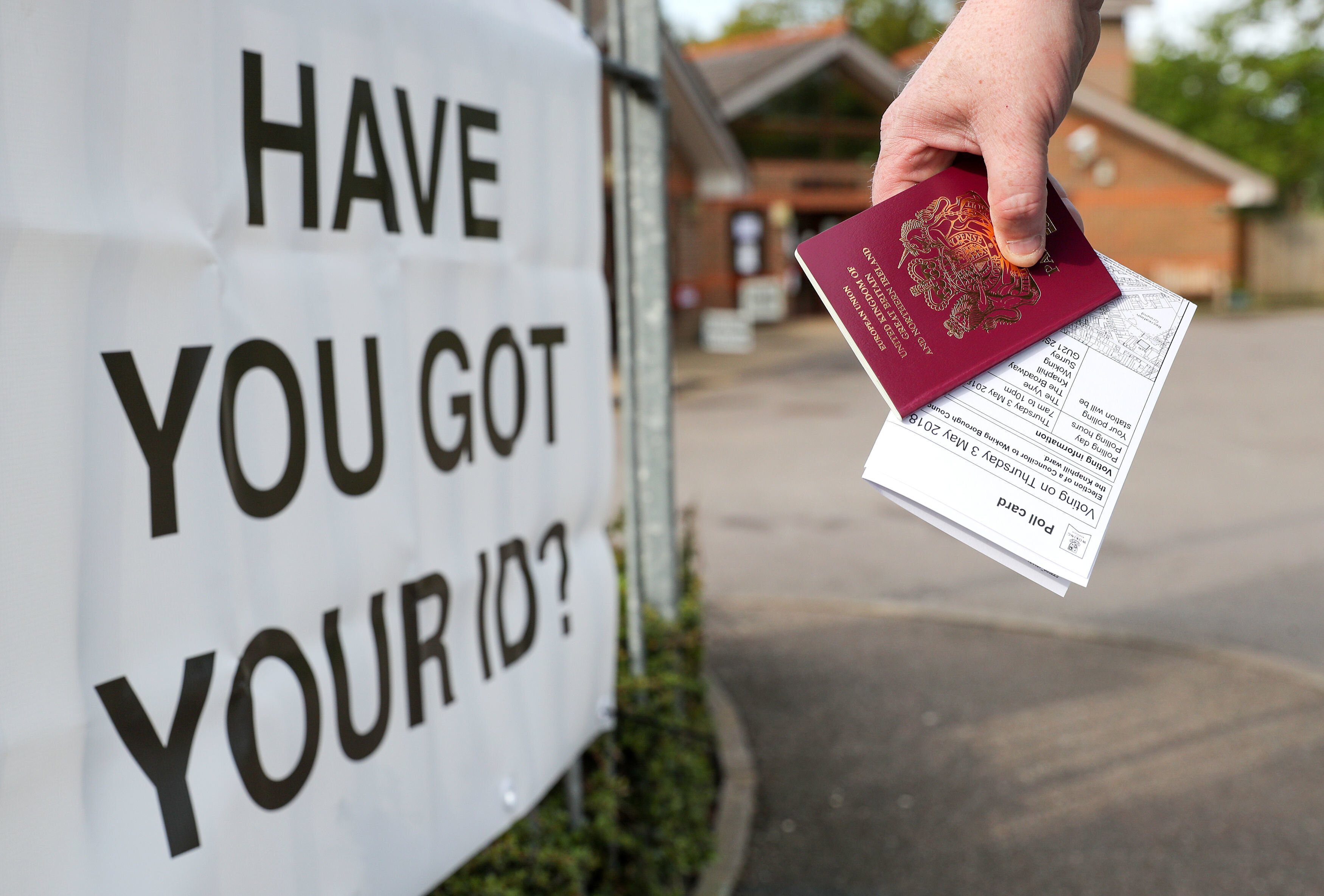
For the first time ever in Britain, voters were required to provide photographic proof of their identity in order to collect their ballot paper.

Ministers had argued that it was necessary to prevent voter fraud, despite there being no evidence that it is widespread problem in this country.

A report out today by the Electoral Commission found that around 14,000 who went to their polling station on May 4 were not given a ballot paper because they did not have the correct photographic identification.

Research found that 4% of all people who said they did not vote identified the new ID requirement as the reason.

The Electoral Commission said their data also suggested that disadvantaged groups were more likely to be impacted by the voter ID arrangements.

Opposition politicians said the report showed the new law was “a transparent attempt at voter suppression by Conservative ministers”.

Craig Westwood, the Electoral Commssion’s director of communications, policy and research, said: “The evidence suggests that the vast majority of voters were able to present an accepted form of ID at the May elections.

“But it also shows that some people were prevented from voting in polling stations due to the requirement, and significantly more did not attempt to because they lacked the required ID.”

He added: “We don’t want to see a single voter lose the opportunity to have their say. We are working to understand the challenges people faced, and will make recommendations that, with the engagement of Government and wider electoral community, will support the participation of all voters.”

Former cabinet minister Jacob Rees-Mogg admitted last month that the voter ID policy was an attempt at “gerrymandering” to boost the Tories – but that it had backfired because it kept more of their supporters out of the polling booths.

Labour deputy leader Angela Rayner said: “No legitimate voter should be locked out of democracy but that has been the effect of the Tories’ failed voter ID regulations.

“This evidence suggests shows that as well as those turned away at polling stations, many others did not attempt to vote because they lacked the required ID.

“It’s particularly alarming that under-represented groups look to have been more likely to have denied their say by these new barriers to voting. These strict rules are having a chilling effect on democracy.”

Lib Dem local government spokesperson Helen Morgan MP said: “It is an outrage that thousands of people were denied a voice at the local elections because of the Conservative Party’s Voter ID rules.

“Obstructing people’s right to vote like this in such a disproportionate way is a complete waste of money that undermines our democracy.

“It looks like a transparent attempt at voter suppression by Conservative ministers who are desperate to stop people from holding them to account by any means possible.”

Councillor James Jamieson, chairman of the Local Government Association, said: “It is a fundamental part of the democratic process that elections can run smoothly and effectively where every citizen is able to exercise their right to vote.

“It is therefore of concern to councils that this review has found that some groups may have been more impacted than others by the introduction of voter ID, with a small number being left unable to vote.”

Share Button

Question Time Audience Member Calls Out Claim UK Hasn’t ‘Properly Brexited’

A Brexit voter appearing on BBC Question Time has called out the excuses made by politicians for leaving the European Union not living up to the promises – as a prominent supporter of quitting the bloc claimed the country hasn’t “properly Brexited”.

The corporation’s flagship politics show on Thursday held a “special” in Clacton-on-Sea in Essex to mark the seventh anniversary of the 2016 vote. Some 70% of people in the area voted to get out of the union and only Brexit voters were in the audience for the programme.

It was held on the same day interest rates were hiked for the 13th month in a row as the UK’s rate of inflation remains higher than other major economies, with Brexit in part being blamed.

On the show, panellist Ben Habib, a businessman and former Brexit Party MEP, who is now part of the successor Reform UK, claimed the country hasn’t “properly Brexited” and blamed former prime minister Boris Johnson for being “loose in his association with the truth when he promised to get Brexit done”.

But it was too much for one audience member, who responded directly to Habib’s comments.

She said: “Literally the first thing that people with your opinion say … it’s like Brexit could be good if it went to a different school. I’m so sick of that.

“Where is the gumption from both Labour and the Conservatives to say, actually, no, this is what we’re going to do about it.

“This boils my blood when all that is rolled out is ‘well, there could have been a good Brexit if …’”

Habib later claimed that Irish prime minister Leo Varadkar and then deputy Simon Coveney “weaponised the border and threatened violence”.

Another audience member also said Brexit “hasn’t started” as a result of the pandemic and war in Ukraine.

Campbell, the Tony Blair-era Labour Party spin chief, said they had been told it “would be pain-free” and “all be upsides”, as he pointed to the fall in the pound, a lack of a trade deal with the US and the claim of more money for the NHS.

Share Button

Alastair Campbell Tells Question Time Brexit Voters ‘You Were Lied To’ By ‘Conmen’ Johnson And Farage

Alastair Campbell has hit out at “conmen” Boris Johnson and Nigel Farage as he told Brexit voters on BBC Question Time they were “lied to”.

The corporation’s flagship politics show on Thursday held a “special” in Clacton-on-Sea in Essex to mark the seventh anniversary of the 2016 vote. Some 70% of people in the area voted to get out of the bloc and only Brexit voters were in the audience for the programme.

Campbell, the Tony Blair-era Labour Party spin chief, has been a fierce critic of leaving the European Union. On the show, the Rest is Politics podcaster said he understood why the audience members wanted to exit the EU – but that they were “lied to” and told it “would be pain-free” and “all be upsides”, as he pointed to the fall in the pound, a lack of a trade deal with the US and the claim of more money for the NHS.

He said: “Look, I understand why a lot of you guys voted for Brexit because you felt that Johnson, Farage … these conmen were coming along offering you something that was going to make your lives better.

“And I was in a school today, just a few minutes away from here. Clacton Coastal Academy. Really bright kids. Really nice teachers. Fantastic school in a very tough area, and I asked the kids what they thought of Brexit and all but two said they would vote to rejoin the European Union if they had the chance.”

He went on: “I don’t blame you for voting. I blame them for lying to you. They lied. They’ve not been properly held to account.

“Johnson’s gone from lying about Covid. He’s still not properly been held accountable for Brexit.

“And we’re all of us paying a higher price in our cost of living and everything else because of the lies that we were told.”

He later said Brexit is “one of the biggest acts of self-harm that we as a country have ever inflicted upon ourselves”, and that Johnson “never believed in Brexit”.

“Boris Johnson went for the referendum as a way of advancing his own career and becoming prime minister,” Campbell said. “The mess he’s left this country in, he should never be forgiven.”

Critics of leaving the EU have cited the impact on the pound, imports and labour costs, and other economies on the continent powering ahead. Britain’s higher rate of inflation compared to other major economies has also been blamed in part on Brexit thanks to higher administration costs and a small pool of workers.

Share Button

Surprise! Weaker bonds can make polymers stronger

A team of chemists from MIT and Duke University has discovered a counterintuitive way to make polymers stronger: introduce a few weaker bonds into the material.

Working with a type of polymer known as polyacrylate elastomers, the researchers found that they could increase the materials’ resistance to tearing up to tenfold, simply by using a weaker type of crosslinker to join some of the polymer building blocks.

These rubber-like polymers are commonly used in car parts, and they are also often used as the “ink” for 3D-printed objects. The researchers are now exploring the possible expansion of this approach to other types of materials, such as rubber tires.

“If you could make a rubber tire 10 times more resistant to tearing, that could have a dramatic impact on the lifetime of the tire and on the amount of microplastic waste that breaks off,” says Jeremiah Johnson, a professor of chemistry at MIT and one of the senior authors of the study, which appears today in Science.

A significant advantage of this approach is that it doesn’t appear to alter any of the other physical properties of the polymers.

“Polymer engineers know how to make materials tougher, but it invariably involves changing some other property of the material that you don’t want to change. Here, the toughness enhancement comes without any other significant change in physical properties — at least that we can measure — and it is brought about through the replacement of only a small fraction of the overall material,” says Stephen Craig, a professor of chemistry at Duke University who is also a senior author of the paper.

This project grew out of a longstanding collaboration between Johnson, Craig, and Duke University Professor Michael Rubinstein, who is also a senior author of the paper. The paper’s lead author is Shu Wang, an MIT postdoc who earned his PhD at Duke.

The weakest link

Polyacrylate elastomers are polymer networks made from strands of acrylate held together by linking molecules. These building blocks can be joined together in different ways to create materials with different properties.

One architecture often used for these polymers is a star polymer network. These polymers are made from two types of building blocks: one, a star with four identical arms, and the other a chain that acts as a linker. These linkers bind to the end of each arm of the stars, creating a network that resembles a volleyball net.

In a 2021 study, Craig, Rubinstein, and MIT Professor Bradley Olsen teamed up to measure the strength of these polymers. As they expected, they found that when weaker end-linkers were used to hold the polymer strands together, the material became weaker. Those weaker linkers, which contain cyclic molecules known as cyclobutane, can be broken with much less force than the linkers that are usually used to join these building blocks.

As a follow-up to that study, the researchers decided to investigate a different type of polymer network in which polymer strands are cross-linked to other strands in random locations, instead of being joined at the ends.

This time, when the researchers used weaker linkers to join the acrylate building blocks together, they found that the material became much more resistant to tearing.

This occurs, the researchers believe, because the weaker bonds are randomly distributed as junctions between otherwise strong strands throughout the material, instead of being part of the ultimate strands themselves. When this material is stretched to the breaking point, any cracks propagating through the material try to avoid the stronger bonds and go through the weaker bonds instead. This means the crack has to break more bonds than it would if all of the bonds were the same strength.

“Even though those bonds are weaker, more of them end up needing to be broken, because the crack takes a path through the weakest bonds, which ends up being a longer path,” Johnson says.

Tough materials

Using this approach, the researchers showed that polyacrylates that incorporated some weaker linkers were nine to 10 times harder to tear than polyacrylates made with stronger crosslinking molecules. This effect was achieved even when the weak crosslinkers made up only about 2 percent of the overall composition of the material.

The researchers also showed that this altered composition did not alter any of the other properties of the material, such as resistance to breaking down when heated.

“For two materials to have the same structure and same properties at the network level, but have an almost order of magnitude difference in tearing, is quite rare,” Johnson says.

The researchers are now investigating whether this approach could be used to improve the toughness of other materials, including rubber.

“There’s a lot to explore here about what level of enhancement can be gained in other types of materials and how best to take advantage of it,” Craig says.

Share Button

The clue is in the glue — Nature’s secret for holding it together

An obscure aquatic plant has helped to explain how plants avoid cracking up under the stresses and strains of growth.

The finding by researchers Dr Robert Kelly-Bellow and Karen Lee in the group of Professor Enrico Coen at the John Innes Centre, started with a curious observation in a dwarf mutant of the carnivorous plant Utricularia gibba.

The stems of this floating plant are filled with airspaces and this hollowness means that the vascular column inside the stem can buckle when under stress. This effect would not be apparent in most plants, which have solid stems.

The researchers saw that in a dwarf mutant the central column was wavy instead of straight. They hypothesised that this wobbly spine was caused by an internal conflict, a disparity between what was happening inside the plant stem and the epidermis or skin. Computational modelling by coauthor Dr Richard Kennaway showed this idea could account for what was observed.

“We realized that in these types of dwarf, only the epidermis, the skin of the stem, wants to be short, the internal tissue still wants to be long hence the buckling effect,” explains Professor Enrico Coen of the John Innes Centre, an author of the study which appears in Science.

“This was a surprise — previously people had thought that dwarf varieties, which are very important in agriculture, would be dwarf because everything in the stem is affected to grow less but in fact it’s just the skin in this case, creating a sort of straitjacket.”

Further investigations revealed that the Utricularia gibba dwarf mutant lacked a growth hormone called brassinosteroid.

They theorized that this hormone normally allows the skin to stretch, giving a more forgiving straitjacket and allowing the plant stem to elongate.

To test this idea, they used a mutant in the model plant Arabidopsis that weakens the glue between cells, to see if reducing brassinosteroid would cause major cracks to form in the skin of the stem as a result of the stresses.

“That is exactly what we saw,” explains Professor Coen. “Normally an Arabidopsis stem with weakened glue will crack slightly because the hormone is there to loosen the straitjacket. But when the hormone was missing, the skin was completely ripped off and the plant was almost skinless.”

Computational modelling by coauthor Professor Richard Smith showed brassinosteroid hormone was likely easing the straitjacket by loosening fibres in the epidermal cell walls.

“Plant cells are stuck together and are forced to behave in a coordinated way just by their pectin, their glue, that binds them. What we show in this study is that this is an incredibly powerful force; the glue is so strong you only need to change growth in one layer and the other cells will follow,” explains Professor Coen.

“Previous studies have emphasised that plants send molecular signals to grow in a coordinated way, and this is still a part of the explanation. But what our study shows is that the glueyness of plant cells is also a vital component in coordinating growth. Sticking together is very important.”

Coauthor Dr Christopher Whitewoods at the Sainsbury Laboratory, Cambridge University, emphasizes the potential importance of these findings for future research. “The fact that mechanical interactions between cell layers control growth in the stems of two wildly different species raises the question of whether they control other aspects of plant development, such as the complex internal patterning of leaves. We are excited to test whether this is the case.”

The findings shed light on dwarfing varieties of crops, like wheat and rice, which underpin agriculture’s Green Revolution, explaining how genes control their growth and how we might improve their efficiency in future.

Their findings also relate to developmental processes in animals, such as formation of crocodile skin cracks and shaping of the intestine, where mechanical interactions between layers are also thought to play a part.

Many hypotheses look promising to begin with but then fail to last the full experimental course. Not so in this case, reflects Professor Coen.

“The first glimpse of the wobbly tissue in our dwarf aquatic plant was exciting because as soon as we saw that, we had an idea of what might be going on. But the biggest excitement came from testing the idea in a completely different system.

“Nature is elusive. Ninety-nine percent of nice ideas fall flat on their face when put to a critical test. But occasionally an idea survives and you then know that nature has revealed one of its secrets to you,” he says.

Brassinosteroid co-ordinates cell layer interactions in plants via cell wall and tissue mechanics, appears in Science.

Share Button

Do hummingbirds drink alcohol? More often than you think

You may not realize it, but that backyard hummingbird feeder filled with sugar water is a natural experiment in fermentation — yeast settle in and turn some of the sugar into alcohol.

The same is true of nectar-filled flowers, which are an ideal gathering place for yeast — a type of fungus — and for bacteria that metabolize sugar and produce ethanol.

To University of California, Berkeley biologist Robert Dudley, this raises a host of questions. How much alcohol do hummingbirds consume in their daily quest for sustenance? Are they attracted to alcohol or repelled by it? Since alcohol is a natural byproduct of the sugary fruit and floral nectar that plants produce, is ethanol an inevitable part of the diet of hummingbirds and many other animals?

“Hummingbirds are eating 80% of their body mass a day in nectar,” said Dudley, UC Berkeley professor of integrative biology. “Most of it is water and the remainder sugar. But even if there are very low concentrations of ethanol, that volumetric consumption would yield a high dosage of ethanol, if it were out there. Maybe, with feeders, we’re not only farming hummingbirds, we’re providing a seat at the bar every time they come in.”

During the worst of the COVID-19 pandemic, when it became difficult to test these questions in the wilds of Central America and Africa, where there are nectar-feeding sunbirds, he tasked several undergraduate students with experimenting on the hummers visiting the feeder outside his office window to find out whether alcohol in sugar water was a turn-off or a turn-on. All three of the test subjects were male Anna’s hummingbirds (Calypte anna), year-round residents of the Bay Area.

The results of that study, published this week in the journal Royal Society Open Science, demonstrate that hummingbirds happily sip from sugar water with up to 1% alcohol by volume, finding it just as attractive as plain sugar water.

They appear to be only moderate tipplers, however, because they sip only half as much as normal when the sugar water contains 2% alcohol.

“They’re consuming the same total amount of ethanol, they’re just reducing the volume of the ingested 2% solution. So that was really interesting,” Dudley said. “That was a kind of a threshold effect and suggested to us that whatever’s out there in the real world, it’s probably not exceeding 1.5%.”

When he and his colleagues tested the alcohol level in sugar water that had sat in the feeder for two weeks, they found a much lower concentration: about 0.05% by volume.

“Now, 0.05% just doesn’t sound like much, and it’s not. But again, if you’re eating 80% of your body weight a day, at .05% of ethanol you’re getting a substantial load of ethanol relative to your body mass,” he said. “So it’s all consistent with the idea that there’s a natural, chronic exposure to physiologically significant levels of ethanol derived from this nutritional source.”

“They burn the alcohol and metabolize it so quickly. Likewise with the sugars. So they’re probably not seeing any real effect. They’re not getting drunk,” he added.

The research is part of a long-term project by Dudley and his UC Berkeley colleagues — herpetologist Jim McGuire and bird expert Rauri Bowie, both professors of integrative biology and curators at UC Berkeley’s Museum of Vertebrate Zoology. They seek to understand the role that alcohol plays in animal diets, particularly in the tropics, where fruits and sugary nectar easily ferment, and alcohol cannot help but be consumed by fruit-eating or nectar-sipping animals.

“Does alcohol have any behavioral effect? Does it stimulate feeding at low levels? Does it motivate more frequent attendance of a flower if they get not just sugar, but also ethanol? I don’t have the answers to these questions. But that’s experimentally tractable,” he said.

Part of this project, funded by the National Science Foundation, involves testing the alcohol content of fruits in Africa and nectar in flowers in the UC Botanical Garden. No systematic studies of the alcohol content of fruits and nectars, or of alcohol consumption by nectar-sipping birds, insects or mammals, or by fruit-eating animals — including primates — have been done.

But several isolated studies are suggestive. A 2008 study found that the nectar in palm flowers consumed by pen-tailed tree shrews, which are small, ratlike animals in West Malaysia, had levels of alcohol as high as 3.8% by volume. Another study, published in 2015, found a relatively high alcohol concentration — up to 3.8% — in the nectar eaten by the slow loris, a type of primate, and that both slow lorises and aye-ayes, another primate, preferred nectar with higher alcohol content.

The new study shows that birds are also likely consuming alcohol produced by natural fermentation.

“This is the first demonstration of ethanol consumption by birds, quote, in the wild. I’ll use that phrase cautiously because it’s a lab experiment and feeder measurement,” Dudley said. “But the linkage with the natural flowers is obvious. This just demonstrates that nectar-feeding birds, not just nectar-feeding mammals, not just fruit-eating animals, are all potentially exposed to ethanol as a natural part of their diet.”

The next step, he said, is to measure how much ethanol is naturally found in flowers and determine how frequently it’s being consumed by birds. He plans to extend his study to include Old World sunbirds and honey eaters in Australia, both of which occupy the nectar-sipping niche that hummingbirds have in America.

Dudley has been obsessed with alcohol use and misuse for years, and in a 2014 book, The Drunken Monkey, Why we drink and abuse alcohol, presented evidence that humans’ attraction to alcohol is an evolutionary adaptation to improve survival among primates. Only with the coming of industrial alcohol production has our attraction turned, in many cases, into alcohol abuse.

“Why do humans drink alcohol at all, as opposed to vinegar or any of the other 10 million organic compounds out there? And why do most humans actually metabolize it, burn it, and use it pretty effectively, often in conjunction with food, but then some humans also consume to excess?” he asked.

“I think, to get a better understanding of human attraction to alcohol, we really have to have better animal model systems, but also a realization that the natural availability of ethanol is actually substantial, not just for primates that are feeding on fruit and nectar, but also for a whole bunch of other birds and mammals and insects that are also feeding on flowers and fruits,” he said. “The comparative biology of ethanol consumption may yield insight into modern day patterns of consumption and abuse by humans.”

In addition to McGuire and Bowie, other co-authors of the paper are former undergraduates Julia Choi and Lilianne Lee, graduate student Aleksey Maro and postdoctoral researcher Ammon Corl, all of UC Berkeley. The work was supported by the National Science Foundation (DEB-1831833) and UC Berkeley’s Undergraduate Research Apprentice Program.

Share Button

Einstein and Euler put to the test at the edge of the Universe

The cosmos is a unique laboratory for testing the laws of physics, in particular those of Euler and Einstein. Euler described the movements of celestial objects, while Einstein described the way in which celestial objects distort the Universe. Since the discovery of dark matter and the acceleration of the Universe’s expansion, the validity of their equations has been put to the test: are they capable of explaining these mysterious phenomena? A team from the University of Geneva (UNIGE) has developed the first method to find out. It considers a never-before-used measure: time distortion. The results are published in Nature Astronomy.

The theories of Leonhard Euler (1707-1783) and Albert Einstein (1879-1955) revolutionised our understanding of the Universe. With the famous equation that bears his name, Euler gave scientists a powerful tool for calculating the movements of galaxies in the Universe. With his theory of general relativity, Einstein demonstrated that the Universe is not a static framework: it can be distorted by star clusters and galaxies.

Physicists have tested these equations in all sorts of ways, which have so far proved successful. However, two discoveries continue to put these models to the test: the acceleration of the Universe’s expansion and the existence of invisible dark matter, which is thought to account for 85% of all matter in the cosmos. Do these mysterious phenomena still obey the equations of Einstein and Euler? Researchers are still unable to answer this question.

The missing ingredient

“The problem is that current cosmological data do not allow us to differentiate between a theory that breaks Einstein’s equations and one that breaks Euler’s equation. This is what we demonstrate in our study. We also present a mathematical method for solving this problem. This is the culmination of ten years of research,” explains Camille Bonvin, associate professor in the Department of Theoretical Physics in the UNIGE Faculty of Science and first author of the study.

Researchers were unable to differentiate between the validity of these two equations at the very edge of the Universe because they were missing an “ingredient”: the measurement of time distortion. “Until then, we only knew how to measure the speed of celestial objects and the sum of the distortion of time and space. We have developed a method for accessing this additional measurement, and it’s a first,” says Camille Bonvin.

If the time distortion is not equal to the sum of time and space — i.e. the result produced by the theory of general relativity — this means that Einstein’s model does not work. If the time distortion does not correspond to the speed of the galaxies calculated with the Euler equation, this means that the latter is not valid. “This will allow us to discover whether new forces or matter, which violate these two theories, exist in the Universe,” explains Levon Pogosian, professor in the Department of Physics at Simon Fraser University, in Canada, and co-author of the study.

Reality check

These results will make a crucial contribution to several missions whose aim is to determine the origin of the accelerated expansion of the Universe and the nature of dark matter. These include the EUCLID space telescope, which will be launched in July 2023 by the European Space Agency (ESA), in collaboration with the UNIGE, and the Dark Energy Spectroscopic Instrument (DESI), which began its 5-year mission in 2021 in Arizona. There is also the international SKA (Square Kilometre Array) giant radio telescope project in South Africa and Australia, which will begin observations in 2028/29.

“Our method will be integrated into these different missions. This is already the case for DESI, whom we have become external collaborators thanks to this research,” Camille Bonvin enthuses. The research team has successfully tested its model on synthetic catalogues of galaxies. The next stage will involve testing it using the first data supplied by DESI, as well as identifying the obstacles and minimising the systematic features that could hamper its application.

Share Button

Sinking seamount offers clues to slow motion earthquakes

Scientists have long puzzled over what happens when seamounts — mountains and volcanoes on the seafloor — are pulled into subduction zones. Now, new research from The University of Texas at Austin shows that when seamounts sink, they leave behind a trail of soft sediments. The researchers think the sediment patches help tectonic pressure escape gradually in slow slip earthquakes instead of violent tremors.

The findings, published June 7, 2023, in the journal Nature Geoscience, can be used to adjust earthquake models and help scientists unravel the mechanisms that drive earthquakes.

The research was led by Nathan Bangs, a senior research scientist at the University of Texas Institute for Geophysics. In 2018, Bangs led an ocean seismic survey that resulted in the first ever 3D scan of a large subducting seamount. Known as the Pāpaku Seamount, the long extinct volcano lies some three miles under the seafloor inside the Hikurangi subduction zone off the coast of New Zealand.

Images from the scan show the seamount colliding with the subduction zone and the pattern of stresses, fluids and sediments surrounding it. Previous models suggested sediments are pushed down the subduction zone ahead of the seamount, but the scan revealed something different: a massive sediment trail in Pāpaku’s wake.

In another surprise, the scientists spotted the fading trail of a much larger seamount that had long since sunk beneath New Zealand’s North Island.

According to Bangs, the discovery suggests that sinking seamounts drag down enough water-rich sediment to create conditions in the crust suitable for slow slip earthquakes, at least in New Zealand.

“That older one seems to be very much linked to an uplifted ridge that’s really in the bullseye of where recent slow slip activity has been,” Bangs said. “There could be other places like Cascadia (in the U.S. Pacific Northwest) that have subducting seamounts and a lot of sediment, but because the subducting crust there typically has less water than Hikurangi, they may be less likely to have the same kind of shallow slow slip activity.”

Slow slip earthquakes are slow motion versions of large earthquakes, releasing similar levels of pent-up tectonic energy but in a harmless creeping fashion that can take days or weeks to unfold. Scientists believe that the make-up of the crust is a major factor in how tectonic energy is released, with softer, wetter rocks allowing plates to slip slowly, while drier, brittle rocks store energy until they fail in violent and deadly megaquakes.

The new findings reveal how those conditions sometimes come about and importantly, said Bangs, tell scientists what to look for at the world’s other subduction zones.

The research and seismic survey were funded by the National Science Foundation and similar scientific agencies in New Zealand, the United Kingdom and Japan. The University of Texas Institute for Geophysics is a research unit of the Jackson School of Geosciences.

Share Button

Molecular filament shielded young solar system from supernova

Isotope ratios found in meteorites suggest that a supernova exploded nearby while the Sun and Solar System were still forming. But the blast wave from a supernova that close could have potentially destroyed the nascent Solar System. New calculations shows that a filament of molecular gas, which is the birth cocoon of the Solar System, aided the capture of the isotopes found in the meteorites, while acting as a buffer protecting the young Solar System from the nearby supernova blast.

Primitive meteorites preserve information about the conditions at the birth of the Sun and planets. The meteorite components show an inhomogeneous concentration of a radioactive isotope of aluminum. This variation suggests that an additional amount of the radioactive aluminum was introduced shortly after the Solar System started forming. A nearby supernova explosion is the best candidate for this injection of new radioactive isotopes. But a supernova that was close enough to deliver the amount of isotopes seen in meteorites would have also created a blast wave strong enough to rip the nascent Solar System apart.

A team led by Doris Arzoumanian at the National Astronomical Observatory of Japan proposed a new explanation of how the Solar System acquired the amount of isotopes measured in meteorites while surviving the supernova shock. Stars form in large groups called clusters inside giant clouds of molecular gas. These molecular clouds are filamentary. Small stars like the Sun usually form along the filaments and large stars, which will explode in a supernova, usually form at the hubs where multiple filaments cross.

Assuming that the Sun formed along a dense molecular gas filament, and a supernova exploded at a nearby filament hub, the team’s calculation showed that it would take at least 300,000 years for the blast wave to break up the dense filament around the forming Solar System. The components of meteorites enriched in radioactive isotopes formed in approximately the first 100,000 years of Solar System formation inside the dense filament. The parent filament may have acted as a buffer to protect the young Sun and helped catch the radioactive isotopes from the supernova blast wave and channel them into the still forming Solar System.

Share Button

Covid Inquiry: Abuse of experts must stop, says Whitty

Sir Chris laments treatment as he gives evidence to Covid Inquiry on pandemic preparedness.

Share Button