Without fully implementing net-zero pledges, the world will miss climate goals

Without more legally binding and well-planned net-zero policies, the world is highly likely to miss key climate targets.

In the new study, led by Imperial College London and published today in Science, researchers ranked 90% of global net-zero greenhouse gas emissions pledges as providing low confidence in their full implementation.

The researchers recommend nations make their targets legally binding and back them up with long-term plans and short-term implementation policies to increase the likelihood of avoiding the worst impacts of climate change.

Lead researcher Professor Joeri Rogelj, director of research for the Grantham Institute at Imperial, said: “Climate policy is moving from setting ambitious targets to implementing them. However, our analysis shows most countries do not provide high confidence that they will deliver on their commitments. The world is still on a high-risk climate track, and we are far from delivering a safe climate future.”

Assigning confidence

Climate goals set out in the Paris Agreement include keeping temperature rises well below 2°C above the average temperature before the industrial revolution and ideally below 1.5°C. The main way to achieve this is the reach ‘net-zero’ greenhouse gas emissions as soon as possible, where any remaining emissions are effectively offset.

Most countries have set net-zero goals and Nationally Determined Contributions (NDCs) — non-binding national plans proposing climate actions. Taking these plans at face value, and assuming they will all be fully implemented, gives the world a chance of keeping warming to 1.5-2 degrees C. But taking current policies only, with no implementation of net-zero pledges, means models predict temperature rises could be as much as 2.5-3 degrees C by 2100, with warming still increasing.

To reduce the uncertainty in which of these scenarios is likely to happen, the team, including researchers from the UK, Austria, USA, Netherlands, Germany, and Brazil, assigned a ‘confidence’ to each net-zero policy. They assessed 35 net zero targets, covering every country with more than 0.1% of current global greenhouse gas emissions.

The confidence assessment was based on three policy characteristics: whether the policy was legally binding, whether there was a credible policy plan guiding implementation, and whether short-term plans would already put emissions on a downward path over the next decade.

Based on this, policies were given ‘higher’, ‘lower’ or ‘much lower’ confidence of being fully implemented. Some regions scored highly, including the European Union, the United Kingdom and New Zealand, but around 90% scored ‘lower’ or ‘much lower’ confidence, including China and the US, which together account for more than 35% of current emissions.

Modelling emissions

From this assessment, the team modelled five scenarios of future greenhouse gas emissions and resulting temperatures. These were: considering only current policies (the most conservative scenario); only adding in policies that have a high confidence of being implemented; adding policies with high and low confidence; adding all policies regardless of confidence as if they are implemented; and a scenario where all policies are fully implemented and all NDCs are met (the most forgiving scenario).

The most conservative scenario had the largest uncertainty, with a range of 1.7-3°C and a median estimate of 2.6°C. The most optimistic scenario has a range of 1.6-2.1, with a median estimate of 1.7°C. This might suggest that, if all net-zero policies are fully implemented, the Paris Agreement goals are withing reach. However, with so many policies ranked in the low-confidence end of the scale, this would be wishful thinking in absence of further efforts.

Co-author Taryn Fransen, from the World Resources Institute in Washington DC, and the Energy and Resources Group at the University of California-Berkeley, said: “Climate change targets are by their nature ambitious — there’s no point in setting a target for a foregone conclusion. But implementation must follow.”

Catalysing action

Only twelve out of 35 net zero policies are currently legally binding, and the researchers say increasing this number would help ensure the policies survive long-term and catalyse action. Countries also need clear implementation pathways for different sectors, outlining exactly what changes are needed and where the responsibility lies.

Co-author Dr Robin Lamboll, from the Centre for Environmental Policy at Imperial, said: “Making targets legally binding is crucial to ensure long-term plans are adopted. We need to see concrete legislation in order to trust that action will follow from promises.”

The team included researchers from Imperial College London (UK) the International Institute for Applied Systems Analysis (Austria), the World Resources Institute (US), the University of California-Berkeley (US), the Netherlands Environmental Assessment Agency, the Institute for Environmental Studies (Netherlands), the NewClimate Institute (Germany), the Copernicus Institute of Sustainable Development (Netherlands), and the Universidade Federal do Rio de Janeiro (Brazil).


Share Button

Breakthrough: Scientists develop artificial molecules that behave like real ones

Scientists from the Radboud University have developed synthetic molecules that resemble real organic molecules. A collaboration of researchers, led by Alex Khajetoorians and Daniel Wegner, can now simulate the behaviour of real molecules by using artificial molecules. In this way, they can tweak properties of molecules in ways that are normally difficult or unrealistic, and they can understand much better how molecules change.

Emil Sierda, who was in charge of conducting the experiments at Radboud University: ‘A few years ago we had this crazy idea to build a quantum simulator. We wanted to create artificial molecules that resembled real molecules. So we developed a system in which we can trap electrons. Electrons surround a molecule like a cloud, and we used those trapped electrons to build an artificial molecule.’ The results the team found were astonishing. Sierda: ‘The resemblance between what we built and real molecules was uncanny.’

Changing molecules

Alex Khajetoorians, head of the Scanning Probe Microscopy (SPM) department at the Institute for Molecules and Materials of Radboud University: ‘Making molecules is difficult enough. What is often harder, is to understand how certain molecules react, for example how they change when they are twisted or altered.’ How molecules change and react is the basis of chemistry, and leads to chemical reactions, like the formation of water from hydrogen and oxygen. ‘We wanted to simulate molecules, so we could have the ultimate toolkit to bend them and tune them in ways that are nearly impossible with real molecules. In that way we can say something about real molecules, without making them, or without having to deal with the challenges they present, like their constantly changing shape.’

Benzene

Using this simulator, the researchers created an artificial version of one of the basic organic molecules in chemistry: benzene. Benzene is the starting component for a vast amount of chemicals, like styrene, which is used to make polystyrene. Khajetoorians: ‘By making benzene, we simulated a textbook organic molecule, and built a molecule that is made up of elements that are not organic.’ Above that: the molecules are 10 times bigger than their real counterparts, which makes them easier to work with.

Practical uses

The uses of this new technique are endless. Daniel Wegner, assistant professor within the SPM department: ‘We have only begun to imagine what we can use this for. We have so many ideas that it is hard to decide where to start.’ By using the simulator, scientists can understand molecules and their reactions much better, which will help in every scientific field imaginable. Wegner: ‘New materials for future computer hardware are really hard to make, for instance. By making a simulated version, we can look for the novel properties and functionalities of certain molecules and evaluate whether it will be worth making the real material.’ In the far future, all kinds of things may be possible: understanding chemical reactions step by step like in a slow-motion video, or making artificial single-molecule electronic devices, like shrinking the size of a transistor on a computer chip. Quantum simulators are even suggested to perform as quantum computers. Sierda: ‘But that’s a long way to go, for now we can start by beginning to understand molecules in a way we never understood before.’

Share Button

Sunak Hails ‘Atlantic Declaration’ Despite Abandoning UK-US Free Trade Deal

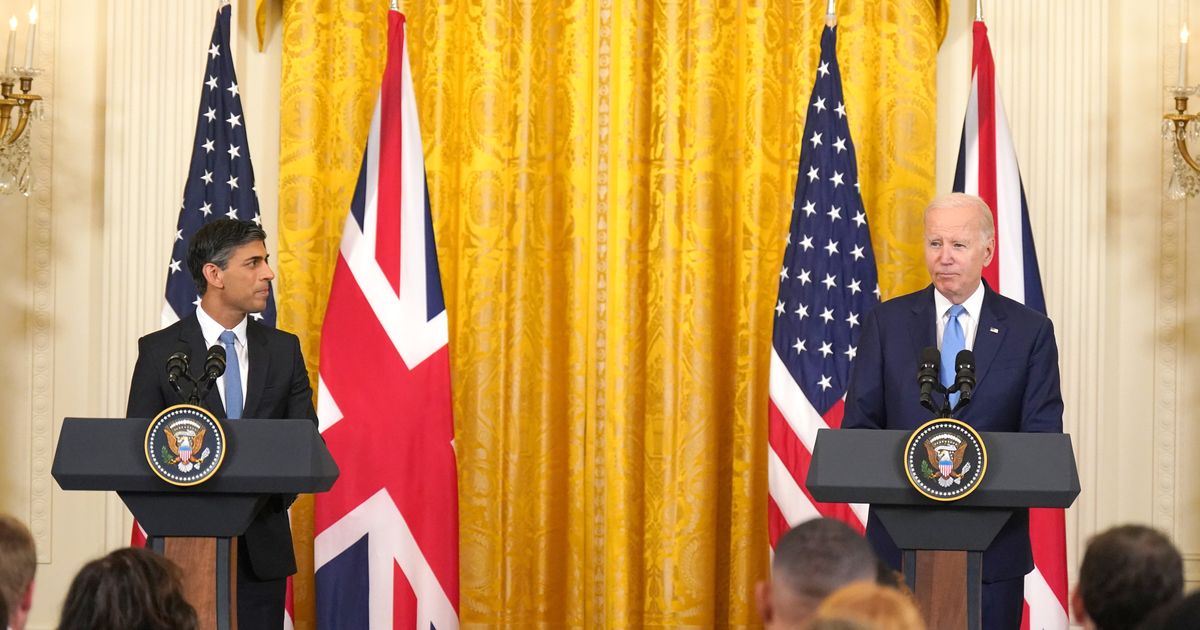
Rishi Sunak and Joe Biden have agreed a new partnership that the British prime minister said cements the “indispensable alliance” between the UK and US – but the deal fell well short of a prized and full-blown free trade deal.

The Atlantic Declaration, announced as the PM and US president met in the White House, includes commitments on easing trade barriers, closer defence industry ties and a data protection deal.

UK officials insisted the new, “targeted” approach was a better response to the economic challenges posed by China and Russia’s invasion of Ukraine than a trade deal – which has long been hailed by Brexiteers as one of the potential benefits of leaving the EU.

During a joint press conference in Washington DC where the declaration was announced, Sunak was pressed by the BBC’s political Chris Mason on whether the lack of a free trade deal represented “failure” to deliver on a 2019 manifesto promise.

Sunak replied the declaration was a response to the “particular opportunities and challenges we face right now and into the future” and that the UK-US relationship is “strong and booming”.

For the president’s part, Biden said: “It’s a testament to the depth, breadth and I would argue the intensity of our co-operation and coordination which continues to exist between the United Kingdom and the United States.

“There’s no issue of global importance – none – that our nations are not leading together.”

What’s in The Atlantic Declaration?

The deal mitigates some of the issues cause by Biden’s Inflation Reduction Act (IRA), with proposals for a critical minerals agreement to remove barriers which affected trade in electric vehicle batteries.

An agreement would give buyers of vehicles made using critical minerals processed, recycled or mined by UK companies access to tax credits in line with the IRA.

The Inflation Reduction Act provides a $3,750 incentive for each vehicle, on conditions including that the critical minerals used in its production – principally used in the battery – are sourced from the US or a country with whom the US has a critical minerals agreement.

An agreement could help companies all over the UK, including firms carrying out nickel production in Wales and lithium processing in Teesside.

Biden has committed to ask Congress to approve the UK as a “domestic source” under US defence procurement laws, allowing for greater American investment in British firms.

Work will be carried out to improve the resilience of supply chains and efforts will be stepped up to shut Vladimir Putin’s Russia out of the global civil nuclear market.

The agreement will also include a push for mutual recognition of qualifications for engineers, although this could require state-by-state approval in the US.

A deal on data protection will ease burdens for small firms doing transatlantic trade, potentially saving £92 million.

The two nations will also collaborate on key industries – artificial intelligence, 5G and 6G telecoms, quantum computing, semiconductors and engineering biology.

It also commits the UK and US to partnership across all forms of space activity, including on communications and space nuclear power and propulsion.

Why not a proper trade deal?

Officials believe the deal is a less sentimental and more pragmatic approach to the UK-US “special relationship”, based on the need to ensure the allies can maintain their economic power and security.

The global energy shock caused by Russia’s invasion of Ukraine illustrated the vulnerability of major economies reliant on supply chains beyond their political allies.

There are fears that a Chinese invasion of Taiwan could cause a similar economic meltdown due to the disputed territory’s significance in global semiconductor supplies.

Labour said the absence of a trade deal in the Atlantic Declaration represented a “failure”.

Shadow foreign secretary David Lammy said: “This statement shows the Conservative government has failed to deliver the comprehensive trade deal they promised in the 2019 manifesto, or to secure the ally status under the Inflation Reduction Act that is so important for the automotive sector and for the green transition.

“While the Biden administration have enacted the Inflation Reduction Act to de-risk its economy from China and create jobs at home, the Conservatives have left Britain’s cupboards bare. Instead of taking similar action, the chancellor has attacked the US approach as ‘dangerous’ and ‘not the British way’.”

Share Button

‘You Couldn’t Run A Whelk Stall’: BBC Question Time Audience Member Blasts Politicians

A BBC Question Time audience member has let rip at Britain’s political class – claiming it is so “incompetent” the two main parties “couldn’t run a whelk stall”.

This week’s show, which came from King’s Lynn in Norfolk, came against the backdrop of more partygate revelations, a backlash to Boris Johnson’s resignation honours list and tensions over the Covid-19 public inquiry.

One question – what could the Tories could do to turn around their fortunes and win at the general election next year – prompted a diatribe from one member of the audience, who appeared dissatisfied with the way the country is being run regardless of who is charge.

He said: “We’ve heard it all before from both of you, from both parties. You’re absolutely incompetent. Those that are not incompetent and corrupt.

“I have no idea why any of us bothered to vote for any of you. You couldn’t run a whelk stall, let alone the country. Either of you.

“And all you can do is bat off each other and not make any sense whatsoever. Stay behind afterwards. Both of you. Have a word from me, I’ll give you some home truths.“

He added: “I’m sick to death of you. The only person who went in parliament with good intentions was Guy Fawkes.”

Both Conservative Lee Rowley and Labour’s Jonathan Ashworth – on the panel – agreed to meet the man afterwards to discuss his concerns. He claimed the recent local elections was the first time he has not voted.

Share Button

Former Porn Star Jenna Jameson Marries Girlfriend Jessi Lawless

Former porn star Jenna Jameson just got married for the third time — her first to a woman.

Jameson, 49, told People on Thursday that she married her girlfriend, 40-year-old Jessi Lawless, in Las Vegas last month, and has ”found the person that I truly should have always been with”.

Jameson first said she was bisexual in 2004, but told Fox News in 2008 that she was “totally hetero”. She told People that she now wonders why she ever dated or married men at all.

“It’s selfish and bad to say, but I think my driving force were children,” said Jameson, a mother of three. “And now that I’ve really found myself, I’m just accepting of everything that I feel inside and don’t shove everything down.”

Jameson and Lawless met after Jameson became a fan of Lawless’ TikTok videos and started commenting on them.

Lawless, a social media personality and hair stylist, didn’t recognise Jameson at first.

“I was like, ‘Who is this Jenna Can’t Lose?’” she told People. “It’s Jenna fucking Jameson. Oh my God.”

Jameson was interested in pursuing Lawless, who had a girlfriend when they first connected. Because of that, Lawless said she didn’t act on Jameson’s advances until that relationship ended last year.

The two began dating in January.

“I knew I would get what I wanted,” Jameson said. “She was worth it. But she presented a challenge and I’m very driven when it comes to challenges, so I knew I just had to lie and wait. And she came back around.”

Lawless admitted that after the breakup, she considered having some casual encounters, but said she’s “happy that it went to a more serious level, and I’ve never been so comfortable with anyone”.

The wedding took place May 23 in front of a few people at Little Church of the West in Nevada, which is also where Lawless’ parents exchanged vows. The couple plans a bigger wedding in the future.

Jameson’s dad is dead, so Lawless asked her own father to walk her bride down the aisle.

“I was standing up there waiting for her, and I looked at the back of the church and I saw her standing there and I looked at my dad and I said, ‘Dad.’ And he looked over at me and I said, ‘Go walk Jenna down the aisle right now,’” Lawless said.

Jameson said she plans on taking her wife’s last name, and already refers to herself as “Jessi’s girl” on her Instagram page.

Share Button

Weekend hot weather alert escalated to amber

High temperatures from Friday could affect all ages and impact the health service, a UK agency says.

Share Button

Taurine may extend life and health, scientists find

Researchers say the nutrient may be an “elixir of life” but warn against buying it until more research is done.

Share Button

Glastonbury: Disposable vapes added to ‘what not to bring’ list

The festival extends its “reduce, reuse, recycle” slogan to “environmentally hazardous” e-cigarettes..

Share Button

Diet tracking: How much is enough to lose weight?

Keeping track of everything you eat and drink in a day is a tedious task that is tough to keep up with over time. Unfortunately, dutiful tracking is a vital component for successful weight loss, however, a new study in Obesity finds that perfect tracking is not needed to achieve significant weight loss.

Researchers from UConn, the University of Florida, and the University of Pennsylvania tracked 153 weight loss program participants for six months where users self-reported their food intake using a commercial digital weight loss program. The researchers wanted to see what the optimal thresholds were for diet tracking to predict 3%, 5%, and 10% weight loss after six months.

“We partnered with WeightWatchers, who was planning on releasing a new Personal Points program, and they wanted to get empirical data via our clinical trial,” says co-author and Department of Allied Health Sciences Professor Sherry Pagoto.

Pagoto explains that the new program takes a personalized approach to assigning points including a list of zero-point foods to eliminate the need for calculating calories for everything,

“Dietary tracking is a cornerstone of all weight loss interventions, and it tends to be the biggest predictor of outcomes. This program lowers the burden of that task by allowing zero-point foods, which do not need to be tracked.”

Researchers and developers are seeking ways to make the tracking process less burdensome, because as Pagoto says, for a lot of programs, users may feel like they need to count calories for the rest of their lives: “That’s just not sustainable. Do users need to track everything every single day or not necessarily?”

With six months of data, Assistant Professor in the Department of Allied Health Sciences Ran Xu was interested to see if there was a way to predict outcomes based on how much diet tracking participants did. Ran Xu and Allied Health Sciences Ph.D. student Richard Bannor analyzed the data to see if there were patterns associated with weight loss success from a data science perspective. Using a method called receiver operating characteristics (ROC) curve analysis they found how many days people need to track their food to reach clinically significant weight loss.

“It turns out, you don’t need to track 100% each day to be successful,” says Xu. “Specifically in this trial, we find that people only need to track around 30% of the days to lose more than 3% weight and 40% of the days to lose more than 5% weight, or almost 70% of days to lose more than 10% weight. The key point here is that you don’t need to track every day to lose a clinically significant amount of weight.”

This is promising since Pagoto points out that the goal for a six-month weight loss program is typically 5% to 10%, a range where health benefits have been seen in clinical trials.

“A lot of times people feel like they need to lose 50 pounds to get healthier, but actually we start to see changes in things like blood pressure, lipids, cardiovascular disease risk, and diabetes risk when people lose about 5-to-10% of their weight,” says Pagoto. “That can be accomplished if participants lose about one to two pounds a week, which is considered a healthy pace of weight loss.”

Xu then looked at trajectories of diet tracking over the six months of the program.

The researchers found three distinct trajectories. One they call high trackers, or super users, who tracked food on most days of the week throughout six months, and on average lost around 10% of their weight.

However, many participants belonged to a second group that started tracking regularly, before their tracking gradually declined over time to, by the four-month mark, only about one day per week. They still lost about 5% of their weight.

A third group, called the low trackers, started tracking only three days a week, and dropped to zero by three months, where they stayed for the rest of the intervention. On average this group lost only 2% of their weight.

“One thing that is interesting about this data is, oftentimes in the literature, researchers just look at whether there is a correlation between tracking and overall weight loss outcomes. Ran took a data science approach to the data and found there is more to the story,” Pagoto says. “Now we’re seeing different patterns of tracking. This will help us identify when to provide extra assistance and who will need it the most.”

The patterns could help inform future programs which could be tailored to help improve user tracking based on which group they fall into. Future studies will dig deeper into these patterns to understand why they arise and hopefully develop interventions to improve outcomes.

“For me, what’s exciting about these digital programs is that we have a digital footprint of participant behavior,” says Xu. “We can drill down to the nitty-gritty of what people do during these programs. The data can inform precision medicine approaches, where we can take this data science perspective, identify patterns of behavior, and design a targeted approach.”

Digitally delivered health programs give researchers multitudes of data they never had before which can yield new insights, but this science requires a multidisciplinary approach.

“Before, it felt like we were flying in the dark or just going by anecdotes or self-reported measures, but it’s different now that we have so much user data. We need data science to make sense of all these data. This is where team science is so important because clinical and data scientists think about the problem from very different perspectives, but together, we can produce insights that neither of us could do on our own. This must be the future of this work,” says Pagoto.

Xu agrees: “From a data science perspective, machine learning is exciting but if we just have machine learning, we only know what people do, but we don’t know why or what to do with this information. That’s where we need clinical scientists like Sherry to make sense of these results. That’s why team science is so important.”

No longer flying in the dark, these multi-disciplinary teams of researchers now have the tools needed to start tailoring programs even further to help people achieve their desired outcomes. For now, users of these apps can be assured that they can still get significant results, even if they miss some entries.

Share Button

Colorful fresh foods improve athletes’ vision

Nutrition is an important part of any top athlete’s training program. And now, a new study by researchers from the University of Georgia proposes that supplementing the diet of athletes with colorful fruits and vegetables could improve their visual range.

The paper, which was published in Exercise and Sport Sciences Reviews, examines how a group of plant compounds that build up in the retina, known as macular pigments, work to improve eye health and functional vision.

Previous studies done by UGA researchers Billy R. Hammond and Lisa Renzi-Hammond have shown that eating foods like dark leafy greens or yellow and orange vegetables, which contain high levels of the plant compounds lutein and zeaxanthin, improves eye and brain health.

“A lot of the research into macular lutein and zeaxanthin has focused on health benefits, but from a functional perspective, higher concentrations of these plant pigments improve many aspects of visual and cognitive ability. In this paper, we discuss their ability to improve vision in the far distance or visual range,” said lead author Jack Harth, a doctoral candidate in UGA’s College of Public Health.

Visual range, or how well a person can see a target clearly over distance, is a critical asset for top athletes in almost any sport.

The reason why objects get harder to see and appear fuzzier the farther they are from our eyes is thanks in part to the effects of blue light.

“From a center fielder’s perspective, if that ball’s coming up in the air, it will be seen against a background of bright blue sky, or against a gray background if it’s a cloudy day. Either way, the target is obscured by atmospheric interference coming into that path of the light,” said Harth.

Many athletes already take measures to reduce the impact of blue light through eye black or blue blocker sunglasses, but eating more foods rich in lutein and zeaxanthin can improve the eye’s natural ability to handle blue light exposure, said Harth.

When a person absorbs lutein and zeaxanthin, the compounds collect as yellow pigments in the retina and act as a filter to prevent blue light from entering the eye.

Previous work had been done testing the visual range ability of pilots in the 1980s, and Hammond and Renzi-Hammond have done more recent studies on how macular pigment density, or how much yellow pigment is built up in the retina, is linked to a number of measures of eye health and functional vision tests.

“In a long series of studies, we have shown that increasing amounts of lutein and zeaxanthin in the retina and brain decrease glare disability and discomfort and improve chromatic contrast and visual-motor reaction time, and supplementing these compounds facilitates executive functions like problem-solving and memory. All of these tasks are particularly important for athletes,” said corresponding author Billy R. Hammond, a professor of psychology in the Behavior and Brain Sciences Program at UGA’s Franklin College of Arts and Sciences.

This paper, Harth said, brings the research on these links between macular pigment and functional vision up to date and asks what the evidence suggests about optimizing athletic performance.

“We’re at a point where we can say we’ve seen visual range differences in pilots that match the differences found in modeling, and now, we’ve also seen it in laboratory tests, and a future goal would be to actually bring people outside and to measure their ability to see contrast over distance through real blue haze and in outdoor environments,” said Harth.

But before you start chowing down on kale in the hopes of improving your game, he cautions that everybody is different. That could mean the way our bodies absorb and use lutein and zeaxanthin varies, and it could take a while before you notice any improvements, if at all.

Still, the evidence of the overall health benefits of consuming more lutein and zeaxanthin are reason enough to add more color to your diet, say the authors.

“We have data from modeling and empirical studies showing that higher macular pigment in your retina will improve your ability to see over distance. The application for athletes is clear,” said Harth.

Share Button