Exploding Your Mindset Box

Some of the biggest traps in self-development are mindset traps, usually because they’re invisible to us. We get ourselves into a mindset box but can’t see the walls.

What if the mindset box you’re in doesn’t contain any solutions to your biggest problems? What if those answers exist only outside the box?

A common symptom of this trap is when you think you’ve tried just about everything and still aren’t getting results in a particular area. This is often true of financial, career, relationship, and health challenges.

What you’ve really done is tried many solutions that are accessible within the same mindset box. None of them have worked for you because the mindset box itself is the problem.

For instance, one mindset box is the self-absorption box that I shared in yesterday’s post. When you’re in this box, you frame your problems self-referentially, as if the whole world revolves around you. While that can be an empowering frame for some types of problems, it’s especially weak for overcoming with financial and relationship challenges. Consequently, you’ll often find self-absorbed people struggling with their finances and relationships. And they’re usually blind to how much the self-absorption mindset is limiting them.

Would you want to be in a relationship with someone who’s highly self-absorbed and has a hard time considering other people’s perspectives? Would you want to do business with such a person? When you look at this mindset box from the outside, its limitations become apparent, but when you’re inside the box, you probably won’t realize that the mindset itself is the problem.

This is a key point to understand. You’re in your own mindset box right now, and it’s limiting you. Moreover, you can’t even see how it’s limiting you. What you can see, however, is your frustrating lack of results in a particular area.

Consider some area of your life that stubbornly refuses to progress towards greater results, no matter how much you work on it. Now ask yourself this: How could your own mindset box could be preventing you from making progress? Ask yourself what other mindsets people use to get results in this area. Consider how someone with a different mindset might approach this problem.

Most importantly, test different behaviors that conflict or disagree with your current mindset. Play with them by taking actions that you’d only take if you adopted an opposing mindset. You don’t have to agree with a mindset to test its behaviors. New behaviors can generate new results for you, even if you still vehemently disagree with the mindset behind that behavior.

Which behaviors have you rejected because they don’t agree with your current mindset box? Try some of those behaviors, and see where they lead. This is how you can start exploring beyond your mindset box.

A key limiting belief to overcome here is that you can only test actions and behaviors that align with your current mindset box. That isn’t true at all. You’re free to test behaviors that conflict with your mindset. Your ability to take action isn’t beholden to obey any particular mindset. Behaviors stem from thoughts, and mindsets stem from thoughts, and those thoughts needn’t agree with each other. Your brain is plenty big enough to hold space for opposing thoughts.

So be deliberately disagreeable with the mindset that’s generating behaviors that aren’t getting results for you. Be disobedient. Be willing to explore in direct violation of that mindset.

For instance, if you have a neediness or a self-absorption mindset, those mindsets are traps that will limit your results. What behaviors would be in conflict with such mindsets? How about volunteering? If you’re needy or self-absorbed, you’re not going to volunteer to help others. Only someone who has a mindset of kindness, generosity, or abundance will volunteer their time and energy to help others, right? So this behavior will clearly irritate your neediness or self-absorption mindset. Perfect! That’s exactly what to you ought to do then.

Your old mindset box will raise plenty of objections about why you can’t do a behavior that conflicts with it. Wonderful! Let it object because you have a much bigger counter-objection. Here’s your counter-objection:

Oh yeah… well you suck at getting results!

Let your old mindset chew on that for a while. Now matter how much it whines at you, face it down with the hard truth it doesn’t want to hear: You’re not getting results, old mindset. You’ve repeatedly let us down.

This approach has turned my life around multiple times. I did the volunteering thing when I was broke and going bankrupt. My old mindset objected vehemently, but my attitude was that the old mindset never worked for me anyway, so what did I have to lose by trying something totally different? My finances turned around that same year, and I haven’t had any problems with scarcity since. That was 21 years ago. The old mindset could never solve that problem for me. But a simple new behavior solved it beautifully.

New behaviors will crack your old mindsets that didn’t work, eventually leading you to new mindsets that align with the new behavior. And now you’re outside of the old box, and now your new mindset will generate still more behaviors, and some of those behaviors will help you get better results. Quite often you won’t figure out the new mindset though till you explore the behaviors that lead you to it.

So it’s not always true that your first behavioral exploration outside your old mindset will create breakthrough results, but by cracking the old mindset, you’ll gain access to even more behaviors. You’ll expand the possibility space by tearing down the old walls. This gives you a much better chance of finding and adopting behaviors that generate better results than your old mindset box ever could.

The benefits of exploring beyond my own mindset boxes have been profound. This is a key reason I do so many personal growth experiments that other people would find questionable. I like to explore behaviors that challenge and push the boundaries my mindset box.

Some of these behavioral experiments include:

  • Going to Disneyland for 30 days in a row
  • Eating a low-fat raw diet for 30 days
  • Going skydiving
  • Going vegan
  • Joining Toastmasters and doing speech contests
  • Doing live events on the Vegas Strip
  • Water fasting for 40 days
  • Training for and running a marathon
  • Traveling through Europe for several weeks without paying for a place to stay
  • Doing lots of manifestation experiments
  • Becoming a hugger
  • Going to a cuddle party
  • Learning to play guitar
  • Moving to Las Vegas
  • Learning card counting for blackjack
  • Becoming an early riser
  • Starting a computer games business fresh out of college
  • Seeing 200+ independent theater productions (and assisting in some)
  • Shifting from a fenced relationship to an open relationship
  • Blogging every day for a year (my current one)
  • Inviting and experiencing threesomes
  • Joining the Church of Scientology and going to one of their centers for a few months
  • Going on a 4000-mile road trip
  • Converting to a smart home with cleaning robots, voice-controlled thermostats, and numerous smart devices from Apple, Amazon, and Google
  • Traveling many times with a one-way ticket, not knowing when I’d return
  • Joining an improv troupe for a few months
  • Doing ayahuasca four nights in a row

Did all of these experiments fit neatly into my mindset at the time I tried them? Heck no!

You try walking into a Scientology center without your mind generating a slew of objections. You try showing up at Disneyland with the expectation that you’re going to spend a full month of your life there. You try pulling out your credit card to reserve a meeting room on the Vegas Strip for a 3-day workshop when you’ve never done one before. Of course your mind is going to object when you step outside its boundaries!

I revel in these kinds of experiments though because they keep destroying the walls of old mindset boxes that no longer serve me. Sometimes even a good mindset that generates pleasing results for a while can feel limiting after a while. Maybe you start feeling bored and listless. That’s a good time to mix things up by violating your current mindset with some objectionable behaviors.

One of my next mindset box violations that I want to attempt this year is to write a novel. I’ve never written a novel before, so of course my mind objects to that idea. I have written millions of words of published content, including my nonfiction book Personal Development for Smart People, but fiction feels like a different beast entirely.

So of course my current mindset objects to this idea. What if I write a novel and it absolutely sucks? What if everyone trashes it as the worst piece of crap they’ve ever read? What if it takes way longer than I expect? What if I can’t get the story to converge on a decent ending? Yada yada yada.

When I see objections like that, to me that’s a damned good reason to take action and try out the new behavior. If my old mindset objects so much, then its walls must be feeling vulnerable. Just making the attempt could lead me to some fresh mindset territory. Regardless of how the novel turns out, the path of exploring fiction will be an expansive one.

Probe the limitations of your current mindset. Look for behaviors that your current mindset says you can’t possibly do. Then explore those behaviors anyway. Smash the walls of your old mindset box, and you’ll surely discover more empowering mindsets and behaviors. And don’t stop. Keep smashing!

The key benefit here is that when you violate a limiting mindset, you gain access to new results. Do you want better results, or would you prefer to continue wallowing in freakish misery?

I don’t have to deal with being broke anymore because I smashed down the walls that caused me to get stuck there. I spent most of my 20s behind those walls, but my 30s and 40s were free of them. Have you smashed the walls of brokeness yet? If not, then your current mindset probably sucks and needs to be smashed. So find a behavior that violates that mindset, and go test it for a month or two.

I don’t have to deal with a lack of affection in my life anymore. I smashed those walls too. So I get to enjoy a super affectionate wife who hugs, kisses, and cuddles me every day. Have you smashed the walls of emotional neediness yet? What behavior would violate the old mindset that isn’t getting the job done? Yup, that one!

If I didn’t explore beyond the mindset boxes that limited me, I’d probably still be dealing with crappy, unwanted results in many areas of life. Now whenever I don’t like my results, I have a method for getting past the “I’ve tried everything and none of it works” nonsense.

The best part is that it’s actually fun to do this kind of smashing, once you get used to it. Sometimes it’s fun just to see other people’s reactions. Sometimes it’s exciting thinking about how different life will be for a while. I really enjoyed the 30 days at Disneyland, for instance. Somehow I never got bored, and that experience pushed me to think bigger. I realized that Walt Disney got that whole monstrosity going by stepping into behaviors that made other people think he was crazy. I don’t think I’d have started Conscious Growth Club if I hadn’t done that Disney experiment.

I challenge you to violate a mindset box that limits you. Commit yourself to a course of action that the old mindset box tells you is out of bounds. If the old mindset isn’t generating the results you want anyway, throw that back in its face when it objects. Don’t blame yourself for the lack of results. Blame your old mindset.

When you do this often enough, you’ll start to trust the process more. I know it’s scary the first few times, but that fear is just one more mindset box to blow up. So many awesome results in life can be found on the other side of fear… the other side of worry… the other side of playing small.

Share Button

Committing to the Stretch

One thing I love about blogging is that by writing about many aspects of personal growth, I improve and deepen my understanding of those aspects. Writing helps me glean fresh insights connect the dots in new ways.

This has been especially true of workshops and courses. Initially such projects felt daunting, but eventually I got the hang of them. Now a big part of my motivation for selecting such projects is the rich personal gains I’ll make in my ability to understand and apply the material.

The next major deep dive I want to create is a course on creative productivity called Amplify. I expect to start working on it this summer. Just knowing that this project is coming me up is making me extra observant of my daily habits and workflows. I’ve made a lot of tweaks and improvements to how I work this year as I seek to better understand how to flow through a variety of creative projects, large and small.

One frame that works especially well is committing to a project before you know how to complete it. It’s extremely limiting to only say yes to projects when you can already see the finish line. Where’s the fun in that? Where’s the growth and challenge?

When you demand that you’re going to have to teach something where you aren’t 100% certain about the outcome, that kind of commitment feels edgier. It keeps you on your toes, feeling awake and alert.

You don’t have to fake it. You don’t have to overextend yourself. You can challenge yourself to make a commitment at the edge of your comfort zone while still feeling confident that you can pull it off.

This kind of confidence goes beyond your belief in your own knowledge and skills. You have to stretch further into trusting reality, expecting that if you take on something bold and worthwhile, reality will back you up.

I’ve noticed that when I set well-aligned goals, reality meets me halfway. The goal has to include some kind of personal stretching though. It can’t be too easy. If reality thinks that I’m copping out and taking it easy, it won’t lend a hand. But if reality sees that I’m offering to stretch into the unknown, it just seems to love that kind of offer.

Sometimes I think that this is a big part of our collective life purpose here. We’re here to explore the unknown, and that requires stretching ourselves beyond the familiar and the comfortable. We have to push into the dark areas of life that we don’t 100% understand.

Life opens the floodgates of support when it detects a real commitment to exploring the unfamiliar and the uncomfortable. When we play it safe, however, life just yawns at us.

People often struggle to achieve easy and accessible goals. What they don’t often realize is that this is why they’re failing. They set their sights so low that life (and other people) mostly ignore them. And no fire burns within them for pursuing life’s low-hanging fruit. Stretch for the upper branches; don’t just hug the trunk.

Consider your biggest upcoming goal. Are you playing it safe by setting a small and easy goal? Are you playing it safe by keeping your options open and not really committing to it 100%? If you’re playing it safe at all, you know it, and life knows it. There’s no hiding. Life won’t reward you for playing small.

What’s the goal that scares you a bit? What’s the goal that stirs up some desire when you think about it, but you also think it could be too much? Where are the edgy goals?

Have you committed to the edginess? What would life say about that? How would you know what life thinks? Well, has it clearly indicated that it accepts your offer? Or does it seem to be ignoring you?

When you make a good offer to life, life responds. It demonstrates that your offer is accepted. When you get no response, make a stronger offer.

Your goals are offers to life. Life will respond well if it likes your offers. If life doesn’t respond, it doesn’t mean that you’re unworthy or that life doesn’t like you. It just means that life declined your offer.

It takes time to discover what types of offers life appreciates from you. So make a lot of offers. Learn what life accepts and what it ignores. The pattern I keep seeing is that life loves stretch offers backed by a clear willingness to commit.

Share Button

Training Your Mind

This morning I got up at 4:30am and set out to do a 6.5-mile run (10.5km), which would be my longest in at least the past year. The weather was nice, starting out at 76 degrees, and I knew would continue to get cooler into the morning, at least until an hour or so after the sun came up.

I enjoyed the run very much, especially watching the sunrise while passing a local shopping mall and a baseball stadium.

I breezed through the 6.5 miles and decided to push myself a bit more, so I widened my intended loop on the way back to tackle an extra long hill. I ended up going a little over 8 miles (13km). I felt good afterwards. I’m sure I could have cranked out a few more miles, probably a half marathon if I really wanted to go that far. Maybe I’ll build up to that in the weeks ahead.

I’ve done lots of distance running before and ran the L.A. Marathon 20 years ago, but it’s different when building back up to distances that I’ve previously run. It was a big deal to me the first time I ran 10+ miles… and then a half marathon. In those days I was running distances I’d never run before. It’s been years since I’ve run 8+ miles, but it seemed easier because I’ve already gone way past that distance before.

When retracing distances I’ve already reached, it feels less dramatic and not as big of a deal. I still have to retrain my body to get there, but that’s easier than retraining my mind. Since my mind already knows I can do it, it doesn’t put up extra barriers. My mind doesn’t resist so much. It already knows how to cope with longer runs.

When I would train for longer distances 20+ years ago, I had to wrestle my mind into cooperating. It used to generate thoughts like:

  • This seems really far.
  • Won’t it be boring to run for that long?
  • Not even halfway yet… argh.
  • What if I run out of water along the way?
  • Still 3 more miles to go… that’s a lot.

But this morning I noticed my mind behaving differently, generating thoughts like these:

  • Twenty minutes done already… that was easy.
  • Remember that when the mind feels like it’s done, you’re only at 40% of capacity, so you’ve got way more in the tank that you realize.
  • Halfway… no problem, still feeling great.
  • What a beautiful sunrise. Let’s take a pic to remember this morning.
  • Six miles done. Not even a challenge. Let’s go to seven.
  • I could surely do another half mile.
  • We’re so close to eight miles… might as well top it off.
  • I could do more, but let’s save some for next week. This one feels complete.

Running with an untrained mind is more difficult. The untrained mind makes the physical effort feel harder. But when the mind is trained, it’s positive and cooperative, and it makes the experience of effort feel more pleasant and enjoyable. Even breathing hard and sweating up a hill feels good when the mind is aligned with it.

I’ve noticed this same effect in business too. The mind often resists when trying something new, but then as the mind gains more experience, it puts up less resistance and flows into positive cooperation.

One of the biggest barriers my mind put up was for international travel. My mind voiced so many objections that it’s no wonder I couldn’t make this part of my reality for many years. Once I pushed through that resistance though, international travel became relatively easy to access and enjoy.

One of the best ways to train the mind is to keep doing what it resists. Seek out its limitations, and create counter-experiences to destroy those limitations.

Maybe it seems odd to prove your own mind wrong, but it’s incredibly practical. What’s the alternative? Accept the limitations your mind foists upon you, and let them always limit you. No thanks.

What makes your mind become scared and whiny? What causes it to raise objection after objection till it wears you down with its “logic”? What makes your mind say, “You can’t do that”? Do you really need to own those thoughts? Why not annihilate those thoughts instead? They’re just thoughts, not reality.

I think it’s good to shove your mind kicking and screaming into those territories where it dares not explore. Push it to reconsider and reframe how it sees reality. Prove it wrong enough times, and it will begin to doubt its own certainties about failure, which opens the door to seeing more possibilities instead.

The mind can be trained, but not if you tolerate its whininess. When it gets whiny, give it the equivalent of extra push-ups instead. You say it’s too far? Great, now you have to surpass that. You say we can’t? Great, now you have to do it!

Share Button

Strengthening Your Future Self

I often think about how to create a better life for my future self. What can I do now that will make his life better?

Everything I do today affects my future self in some way. I can make decisions that will cause him stress, or I can make decisions and take action that will make his life better.

For the first four months of this year, I worked very hard, and I expected to do this going into the year because I wanted the results. Working extra hard for those first four months laid the foundation for a strong year, including the creation of a new character sculpting course, the annual opening of Conscious Growth Club, two six-figure launches, daily blogging, and many smaller projects. Work-wise it’s been an incredible year so far.

In a way this was my past self’s gift to my present self. I accepted back in December that if I put in a lot of work during the first four months of 2020, it would be a challenge, but I also saw that it would be a nice gift to my future self. I figured that sometime in May, I’d be able to work at a more modest pace if I wanted to, and I’d have some really nice results to appreciate from those first four months of 2020. I’d also have more space for interesting personal projects and travel afterwards.

It’s the opposite of procrastination. Work harder than usual to achieve some goals that your future self will surely appreciate. Caring about your future self is good motivation for putting in some extra hours. Feeling that connection across time really helps.

When you procrastinate, you do the opposite. You slack off and thereby sentence your future self to play catch up, which could include extra stress. You’re basically being a jerk to your future self. This is hard to do when you tune in to the energy of your future self and consider the impact. It’s easier to be cruel to your future self when you sever the connection.

Consider that you have a relationship with your future selves and your past selves. Consider how your decisions and actions affect those relationships. What will it do to you as a person if you strengthen those relationships by making good decisions and taking aligned actions? What effect will it have if you ignore those relationships or pretend they don’t exist?

When I reflect back on all the effort and experimentation that my past self invested in personal growth, I feel grateful. His decisions gifted me with some fabulous knowledge and skills that I very much appreciate. I feel blessed and lucky to live the life I get to live, but I also know how many times that could have been derailed if I’d made different past decisions.

I feel delighted that my past self worked extra hard this year to put me in a better position today. I appreciate him for doing that. His choice was beneficial for our relationship. He made some modest sacrifices to send me this gift, and I send him lots of appreciation back in time. And I know that he knew that I’d appreciate this gift.

What if the energy you transmit through time actually gets picked up by your other selves somehow? What kind of energy do you send to your past selves? What kind of energy do you imagine your future selves might be sending back to you today? What could you do differently today to make these transmissions feel more aligned and empowering?

Are these energy transmission across time really happening? Who knows? But I find that this is an empowering model to lean into. Considering how my decisions and actions could impact these transmissions (whether imaginary or real) helps me make better decisions today.

Lately I’ve been amping up my exercise routine too, and I feel that it’s creating a better relationship with my other selves across time. I love the energy boost, and feeling more flexible in my body is nice too. Now I’m thinking about pushing myself even more next week to gift my future self with even more energy and flexibility. I know that he’ll appreciate it, and I sense that he already does appreciate it, like I can perceive his gratitude flowing back through time.

What kind of gift do you think your future self would most appreciate?

I think it’s limiting to think about making my future self’s life easier. I don’t necessarily wish for him to have an easier life. When my past self tried to give me an easier life, I didn’t appreciate as much as he thought I would. Some ease is nice, but I wouldn’t want to stay there.

What I do appreciate is when my past self makes me stronger. I like when he trains up and gains new knowledge and skills. I like when he creates interesting memories. What I want from my past self isn’t an easier life – I don’t need that because I like challenges. Instead I want my past self to put me in a position of being able to access more, better, and different types of challenges. I want him to help me gain access to new growth experiences that currently seem out of reach.

How’s your relationship with your past self? Your future self? Do you send appreciation to your past self? Or scorn, regret, or disappointment instead? Are you kind and loving towards your past self?

How’s your relationship with your future self? Do you care enough to make your future self stronger? Do you tune into the flow of appreciation from your future self? Do you commit that when you do something nice for your future self, you will remember to pause and send some genuine appreciation back through time?

How could you improve these relationships? What would it do for you to feel an empowering sense of connection to your other selves across time?

Share Button

You Can’t Do That

This morning while running, I started listening to The Art of Possibility audiobook, which is about stepping outside of our mental boxes.

The first tool in the book is to acknowledge that whatever story you tell yourself is all an invention anyway, so you may as well create your own story. If your old story is keeping you stuck, change it.

Sometimes it’s hard to see what your old story actually is. I’ve found that a good way to see the limitations of my old story is to consider a stretch goal and then pay attention to my objections. Why do I see that goal as being a stretch? Why do I think it would be difficult to achieve?

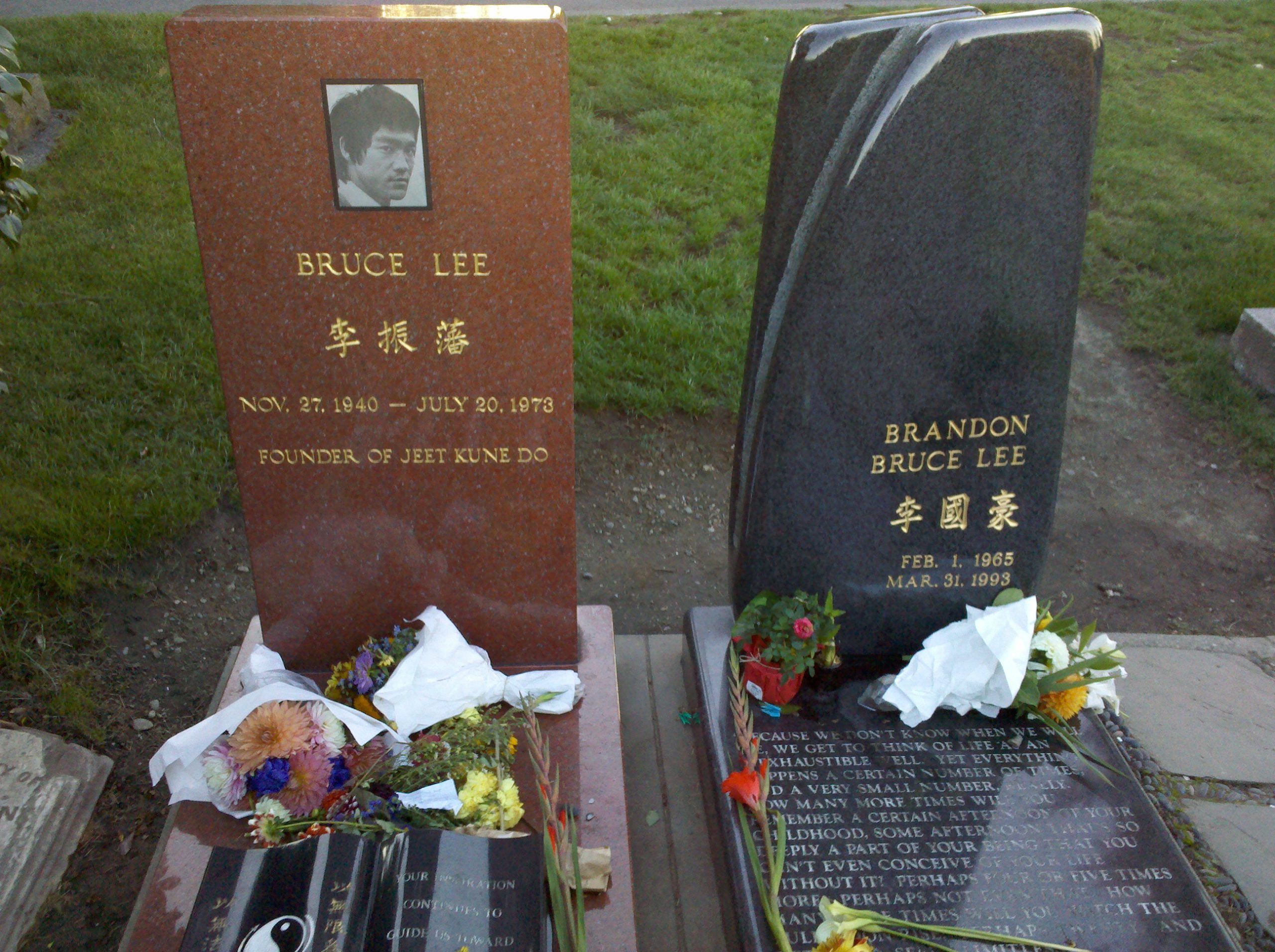
When I learned that Bruce Lee used to run 10 kilometers (6.2 miles) per day, I thought, Wow… that’s a lot of running. Then I wondered if I could do that too someday and what it would be like to run that much every single day.

I immediately started thinking of the obstacles, like the fact that I live in a very hilly neighborhood, and running 10K of these hills is a lot harder than running on a flat route. I could drive to a flatter area in less than 10 minutes, but then that would add some driving time for every run. Or I could go to a closer but fairly short semi-flat stretch and just run back and forth, which would be pretty boring to do every day.

I’ve done a lot of distance running, mostly in my 20s, including running a marathon. But running 10K per day seems like a lot to maintain as an ongoing habit.

I can easily run 5K of hills every day. That would be in my comfort zone. But 10K feels like it’s across some imaginary boundary line. What makes it a lot though? There are people who wouldn’t consider 10K per day a big deal, but my mindset frames it as being a big deal, which makes it seem harder than it has to be.

I’ve surely crossed into areas that other people would see as being beyond their own imaginary lines. Going 40 days without food might be one example. Being vegan for 23+ years could be another.

For some people making a living without a job would be a big deal to them. To me it’s just normal life. Why would I ever need a job? Making someone the boss of me seems silly and unnecessary. I’d rather choose my own projects.

Our stories define our boundaries. When we make something a big deal, we push it away. By defining 10K per day as a big deal, I push it away.

Could I actually do it though? Physically yes. I ran more than 10K on Sunday, then 7K yesterday and 7K this morning. So I’m in the vicinity. The barrier isn’t physical because I can physically run 10K no problem – all hills too. The barrier to doing it daily is mental. The mind gets in the way.

Is 10K per day a super important goal for me? Not really. But I’d like to keep leaning in that direction for a while and push through that mental barrier to see what it’s like on the other side. I’m used to 5K runs, so bumping to 7K daily runs already feels like a bit of a stretch. Eventually 7K will start to feel normal. I want to reach the point where after running 7K of hills each morning, it doesn’t feel like I did a long run; it just feels like I did a run. Then I can work up to 8K, 9K, and see if I can hold at 10K for a while, like for at least a month.

When my mind says, “You can’t do that. That’s too far, too much, too excessive,” another part of my mind wants to prove it wrong. It wants to push through that limited mindset to make sure it doesn’t define me.

What matters most is the ongoing practice of identifying personal limitations and busting them up, so they can’t hold you back. It’s not that any one limitation is that big of a deal, but what is a big deal is letting those limitations box you in you when you might want something more from life.

What personal limitation would you like to demolish? Is it financial? Physical? Social? Creative?

Realize that it’s all mental. Financially it’s possible. Physically it’s possible. Socially it’s possible. Creatively it’s possible. The invitation is to bust up the mental patterns that make it seem impossible. And to do that you must cross some of those lines that you’re framing as uncrossable.

Share Button

Pushing Yourself

This morning I went for my usual run, starting before dawn. Lately I’ve been going for 45-50 minutes. This time, however, I was listening to the audiobook Can’t Hurt Me by David Goggins. After hearing the part about his 100-mile run and how he had to push himself to get through it, I felt like I should push myself more as well. So I kept running for an hour, then 75 minutes, and finally decided to stop at 93 minutes.

This was hill running since my neighborhood is very hilly, so almost all the running I do nearby is either uphill or downhill.

Normally after a morning run, I feel pretty good. It gives me a sense of accomplishment early in the day and gets me off to a good start. I see a strong link between focus and productivity and cardio exercise. No matter how much I’ve experimented with other types of exercise, nothing takes the place of cardio in terms of the mental and emotional benefits.

This morning instead of feeling a modest sense of accomplishment, it felt way better to run twice as far as I normally would. I’ve done many 90-minute runs before, but not lately and not this year. It felt so nice to stretch beyond what I’m used to. It wasn’t physically difficult, but I had to nudge myself mentally to go beyond what feels normal to me now. Running for 45 minutes feels pretty routine. Running 90 minutes feels different though, somehow beyond normal. It makes the whole day feel special.

There’s something magical about pushing beyond normal, going outside of the usual zone of comfort. The barrier is usually mental or emotional. Even if it’s a physical challenge, the mind wants to stop before the body needs to.

This got me thinking about other areas of life where I’ve had to stretch myself mentally in order to improve my results. I remember when making an extra $1K seemed like a big deal. Then I eventually reached the point where $1K seemed easy, and I projected those earlier limitations onto $10K. Then I stretched that limit to $50K, and eventually $50K felt easy to earn, like in a week or a month. Now $100K feels easy and seems like a modest amount. And $250K is starting to feel like it’s probably not that hard to earn in one chunk. I just need to be a bit more creative. Earning $500K in a week or so is starting to look like it might be even more fun. It seems within the realm of reach, not inaccessible but a bit more of a stretch to get there.

What I like about financial stretching, as I shared in yesterday’s post on overcoming financial pressure, is that it’s very measurable, and the mind has different associations to different amounts of money. The way you feel about $10K won’t be the same as you feel about $100K or $1M. Some amounts will seem small. Others will seem big. But those judgments have nothing to do with the actual sums; they just expose the limitations and blocks of the mind.

The fun part that leads to breakthroughs starts with deciding to do something financially that’s on the other side of a mental block. Take a clear goal like earning $100K in a week. How does your mind classify that? Is it accessible and doable for you? Is it trivially easy for you? Or is it on the other side of a mental barrier that says it’s inaccessible, out of reach, or unrealistic to even think about?

If you don’t push through your mental barriers and challenge them, they become real for you. Your life becomes boxed in because you don’t push beyond the walls of the box.

To keep progressing in any area of life, we have to stretch the mind first. We have to decide to do something that seems like it’s too much, too far, or too out of reach. The mind will initially resist, but the resistance can be overcome.

Many aspects of my life that feel normal used to feel out of reach. Getting up at 5am daily was one of those. I struggled with that habit for a long time, but the main barrier was mindset. Initially I framed it as something hard to do, something barely accessible for me. But when I just decided to absolutely do it no matter what, the resistance crumbled. Now it’s easy. If the decision is made to get up at 5am daily, it’s a done deal. A long time ago, I broke the part of my mind that said I couldn’t become an early riser by proving it wrong till it finally surrendered.

I used a similar approach to figure out how to make a living without getting a job. The key was to decide not to get one and to figure out some other path. One the decision was made, there was no looking back and no second-guessing. Now I’ve gone almost three decades without a job. And the 2006 article 10 Reasons You Should Never Get a Job has inspired countless other people to discover that they too can do just fine without ever having to get a job (unless they really want one).

I feel like I enter a different zone of being when I push myself. Doing what’s expected and satisfying my own expectations feels good, but it’s nowhere near as satisfying as going beyond my comfort zone and stretching.

What limits are holding you back right now? What would you like to experience or achieve, but your mind tells you that’s out of reach? Prove your mind wrong. Go pursue the goal that’s out of reach. Decide that you’ll find a way.

Here’s a personal challenge for you: Do something within the next 24 hours that breaks one of your mental barriers. Find a way to push yourself, and notice how satisfying that feels.

Share Button

How to Overcome Financial Pressure

We just wrapped up the 2020 launch of Conscious Growth Club, and our next opening will be in April 2021. The launch did very well. We have 87 members enrolled in our next CGC year together. Financially this was our second six-figure launch of the year, the previous one being for the Stature course in January.

I received some feedback from people who really wanted to join CGC this year (some of them waiting months to sign up) but couldn’t do it because of financial challenges, especially related to the virus. Some had been recently laid off. Others have been reporting a business slowdown. Others are uncertain about the economy and want to conserve cash. All of this is totally understandable, and I’d never pressure anyone to join CGC if it would mean overextending themselves financially.

I spent most of my 20s broke and in debt and went through a bankruptcy in 1999. Financial stress was a big issue for me back then. So let me share some insights on how to reframe financial pressure, so it doesn’t keep haunting you and stressing you out for the rest of your days.

Framing Financial Pressure

How do you frame the presence of financial pressure, such as bills or expenses you’re not sure you can cover?

One way is to see such pressure as an annoyance. Maybe it’s something that pushes your buttons emotionally. But if you see it as something that irritates or bothers you, you’ll probably try to avoid dealing with it. Since this framing doesn’t help you resolve the source of the pressure, the pressure just continues.

The annoyance framing often leads to escapism. Many people try to retreat into using the law of attraction to fix their money problems, but that doesn’t usually work when the underlying relationship with financial pressure is rooted in annoyance.

Another option is to escalate it into a threat. Sometimes this will happen as an extension of framing financial pressure as an annoyance. If you avoid dealing with financial problems, they can multiply, and eventually the pressure becomes great enough that some part of your livelihood feels like it’s under threat. Maybe you’re at risk of losing your home, for instance.

Beyond that, you could try surrendering, which can grant some temporary relief emotionally, but by itself this doesn’t resolve the financial pressure either. You may feel a bit better, but you could still lose your home.

There’s also the obligation framing. I think this is mostly the annoyance framing in disguise. You may see financial pressure as a part of life where you just have to suck it up and deal with what arises. It’s not pretty, so just grit your teeth and handle it. But this framing tends to result in punting the problems to the future. You’ll do the minimum necessary to handle the immediate pressure, but it will just keep coming back for another round.

A Framing That Works

A framing that worked very well for me was to see financial pressure as an invitation. I imagine that reality is trying to help me train up my character in a positive way. The existence of financial pressure is an important part of the character training.

Imagine hiring a personal trainer to help you improve your fitness, and then framing your workouts as annoying, threatening, or obligatory. Are these really the best frames to use? How would your trainer feel about that?

It would make more sense to reconnect with the purpose for hiring the trainer and then connect with that purpose-driven frame as the reason for doing your workouts. This would establish a better relationship with your trainer as well, one based on mutual respect.

Do you respect the trainer that is financial pressure? Do you frame its presence as purposeful? Or do you treat it disrespectfully, like it’s some kind of scourge?

Having a strong purpose is a good motivator. Seeing the greater purpose behind a challenge makes the challenge feel more engaging and less stressful.

Be Trainable

When I was in my 20s, I wasn’t very trainable. I was most uncooperative when financial pressure made its presence known. I rejected its offer again and again, repeatedly slamming the door in its face. I kept trying to run from it and find respite. If only I could somehow make enough money, then it would stop chasing me.

Because of my framing, I believed that the solution to my problems was to make more money. But this is like saying that the best way to avoid doing difficult workouts is more fitness. If only you could become fit enough, then you wouldn’t have to workout anymore, and you’d no longer have to deal with that annoying personal trainer. So forget the trainer and just become more fit. Then you can ditch the trainer. Yeah, that makes sense. 😕

That sounds pretty silly when we look at it this way, right? Can you also recognize just equally silly it is to imagine that more money is the solution to financial pressure?

Embracing your financial pressure and respecting its purpose in your life is the solution. Say yes to the training invitation.

Do Your Financial Workouts

Just as I learned to accept and embrace the importance of physical exercise, I learned to embrace the importance of doing financial workouts too.

And just as it’s helpful to find exercise that you’ll like, it’s also helpful to discover the financial workouts you like. You have many options.

A financial workout could mean getting all of your accounting in good order. That’s pretty basic, but if that’s all you do, it will probably get a bit boring. There are people, however, who like this kind of financial workout, including updating their accounts daily. I’m happy to do these kinds of workouts monthly or quarterly though.

The financial workouts I enjoy most include exploring and testing creative and purposeful ways to generate income while serving others and enjoying the process. So they’re compound workouts that hit a lot of muscle groups.

I started small and worked my way into bigger workouts, just like you might do with physical training.

In the mid-1990s, I started learning how to generate income without having a job – badly at first and eventually with some modest degree of competence. I remember launching a computer game in 1999 that sold 50 copies at $10 each in its first month, so $500. The next month it did $1000… and $1500 the month after that. That was an exciting experience. But the real workout was to stretch my creative skills to design and code a game that could generate that result. Then I had to stretch myself to promote it widely.

I didn’t really frame it quite like this at the time, but looking back I realize that I kept giving myself interesting progressive training challenges with respect to money. I kept doing financial workouts of one kind or another. And the more I did that, the more my finances improved.

If you want to survive in business, then of course you have to find ways to generate income. But I think it’s especially helpful to frame these activities as financial workouts.

Doing your financial workouts is an intelligent way to deal with financial pressure. Build up your financial skills, so you can face that pressure from strength. And don’t get complacent.

Slacking Off

Just as we can slack off of exercise, we can also slack off from doing our financial workouts. I fell into that trap too. I could say I was focused on other parts of life, which was true, but I also let myself stagnate in the area of finances for some years. I kept doing token financial workouts (like affiliate deals) that were easy for me, but I wasn’t progressing.

What got me back in the game was to discover financial workouts that looked fun and engaging again. Just trying to make more money doesn’t cut it for me. I find that rather boring.

But if the constraints for a financial workout are just right, then it appeals to me, perhaps even excites me. If the workout looks fun and rewarding, then I’m much more drawn to do it. But if I only see boring workouts being accessible, then I’ll slack off.

And of course where do we find those interesting workouts? We find them outside of our comfort zones. We find them where we don’t dare to look.

Embrace the Training

Training is challenging, whether physical or financial. Don’t expect it to be otherwise if you’re doing it right.

Good training takes us outside of our comfort zones. When we become too comfortable, that’s when we need to mix things up and reintroduce novel forms of challenge.

Daily blogging is a form of training for me. I’ve never blogged every single day for a year, but I’m doing it this year. It’s not always easy, but I like what it’s doing for my character. It’s helping me become more focused, disciplined, and organized. My life and work have much better structure this year than last year.

For my financial workouts, I like doing creative launches. I love to use my creativity, resourcefulness, playfulness, and personal growth experience to create value for people. Then I like to combine that with making honest and ethical offers. This combo is challenging. It stretches me to train in areas that are weaknesses for me, such as advertising. But I like seeing myself continuing to get stronger. This last launch went very smoothly, and I’m seeing the benefits of my skills improving from doing the training – while also spotting more areas where I’d like to train harder.

The money isn’t the reward. That’s like saying that the reward is being able to lift a certain amount of weight. Money is just a number, and the weight is just a hunk of metal. Making more money isn’t the point at all.

The point is to train up your character to grow stronger.

When you use this framing, you won’t have to see financial pressure as your enemy. Allow it to be your friend instead. It’s an invitation to grow stronger.

You have many options for how you train. It matters more that you exercise than what kind of exercise you do, as long as you’re challenged and you’re growing and improving from the training effect.

If, however, you disrespect this invitation, reality isn’t going to reward you for that. The financial pressure will just keep haunting you year after year until you respect and accept its invitation.

Believe it or not, I actually like financial pressure these days. It’s fun. It’s like the invitation to lace up my running shoes and hit the road for a delightful pre-dawn run of a few miles. I used to majorly dislike financial pressure, but since that mindset didn’t work, I opted to befriend the pressure instead. That does work – very well in fact.

Just as there’s such as thing as runner’s high, it’s also fun to experience a high from financial workouts. Having a six-figure week is fun and stimulating. It’s so not about the money though, just as weight training isn’t about the weights. It’s about the experience and the training effect. It’s about being present to the challenge.

Financial pressure is not a demon, so don’t demonize it. If you do that, you’ll just stress yourself out. The trainer isn’t your enemy. Make the trainer of financial pressure your friend instead. Accept the invitation to push yourself. Find the financial workouts that appeal to you, and do them. Keep upping the challenge, so you don’t remain stuck in your comfort zone.

Most importantly, don’t train with the goal of making more money. Train with the goal of strengthening your character. Choose financial workouts that with this in mind, and you’ll make better choices. Otherwise you may try to find shortcuts to circumvent the training, equivalent to lifting heavier weights by using a forklift, which would defeat the purpose.

I chose to develop and launch courses as well as CGC not because these were convenient shortcuts to greater financial abundance but because they’re hard workouts. These projects challenge me deeply. They cause me to spend a lot of time training outside of my comfort zone. And I like the results of that. They’re great workouts for my character.

Making more money isn’t the real progression here. The progression is to transform yourself from a person who tries in vain to stay in your comfort zone into a person who embraces the growth benefits of uncomfortable challenges.

Share Button

Creative Productivity

One goal that’s been on my Someday / Maybe list for many years is to write a novel (or even multiple novels). I’ve done lots of nonfiction writing, so I think it would be interesting to explore fiction writing. I like the idea of delving deeper into my imagination and connecting dots through a different medium.

I also love to turn personal goals into social goals by inviting people to join in such experiences.

This aligns well with the next deep dive I have planned, which is on the topic of creative productivity, tentatively called Amplify. I’d like to start creating this course during the summer.

I have a pretty large body of published work, including video games, articles, videos, podcasts, personal development courses, and hundreds of books published under my name in various languages. I wrote one of those books myself, and the others were compilations of different articles that people created from my uncopyrighted blog posts. I’ve also done many speeches and live workshops and even a little music.

Since 1993 the creative professional path has been my way forward in life. I got to see my first published commercial product (a collection of computer games) on the shelf at Comp USA shortly after I graduated from college. Those games weren’t very good, but that project got me started. I’m glad I got an early since since it took time to figure out how to earn a living from creative work and to become proficient.

The relationship between creativity and productivity fascinates me. It’s such a dance of yin and yang, part exploration and discovery and part disciplined action and goal focus. If this balance is off, it’s hard to converge on creative work that feels worthy of publishing. Either we crank out uninspired drivel, or we get lost in the idea space too long.

I’d love to explore this relationship between creativity and productivity more deeply this year and invite people to delve into this with me. So that’s the basis of our next deep dive. How can we be brilliantly creative and consistently productive at the same time?

I’d like to do something a bit more hands-on this time though. In addition to creating an all new course, I think it would be worthwhile to invite each person who participates to commit to creating some kind of creative work. What each person creates is up to them.

Possible creative works could include:

  • book (fiction or nonfiction)
  • screenplay
  • video game (at least a playable prototype)
  • software app
  • music album (or perhaps one well-polished song)
  • stand-up comedy routine
  • artwork
  • blogging / writing series
  • YouTube videos (build a following)

Alternatively, people could also use the deep dive to focus on creative skill building through exploration with smaller projects. This could include:

  • musical instrument practice
  • photography
  • painting
  • 3D art
  • programming
  • cooking
  • chess
  • parenting

Many creative skills have much in common, especially when it comes to being productive. The lessons I learned from designing computer games apply well to designing personal growth courses or laying out a book. One key lesson I struggled to learn was how to adapt certain media to fit my strengths. It took me years to figure out how to create and publish courses efficiently after so many years of blogging. I had to learn different methods for managing short-form and long-form creative projects.

I’m still in the very early phase of figuring out the scope of this new deep dive, but the initial inspiration is leaning me towards inviting participants to work on a real creative project as they go through the course, so they can apply the lessons to a genuine project.

In fact, I would like to do the same by writing a novel as we go through the deep dive together. Since that’s a new medium for me, it would make it extra challenging. If I’m to weave two major projects together like this though (a major new course and a novel), I’d need to go at a gradual enough pacing, so I can devote sufficient time to each. So I may develop and publish the lessons of this course more slowly if I go that route. That would likely be fine since then it would give people doing the course more time to work on their own creative projects while they go through the course.

An alternative approach would be to have two phases: First we do the deep dive course, and then we tackle our creative projects as a separate phase. Perhaps we could have check-in calls for that second phase, do some Q&A, share lessons, and help each other work through any blocks that arise.

For now I’m just sharing an early version of this idea, which still needs a lot of development. If you find this theme of creative productivity appealing and want to share feedback about it, please let me know your thoughts. I think it has some potential to be a really engaging and rewarding deep dive.

If you join Conscious Growth Club next week – we open for new members April 27 to May 1 – you’ll get access to this new deep dive as part of your membership automatically. Then we can also use the CGC forums to support each other as we go through it. I’ll also make it available as a standalone deep dive, as with our other courses.

Share Button

The Beauty of Endless Projects

One thing that Walt Disney loved about Disneyland was that it was an endless project. He could always continue tinkering with it. He knew that it would never be finished.

In contrast to Disney films like Snow White, Bambi, and Mary Poppins, Walt found it appealing to pour his energy into a project that he could never complete. This allowed him to make continuous improvements. He would walk around Disneyland often, especially on Saturday mornings, and note issues that could be improved. Sometimes he’d even tell team members to relocated trees that they’d planted, so the views for guests would be better. He was good at noticing how small details contributed to the overall experience.

Conscious Growth Club is that kind of project for me. We’re about to enter our fourth year, opening for new members April 27 – May 1. We’ve made numerous improvements to the group since we first opened for early access in April 2017. And there are many more improvements yet to be made.

From one perspective, the list of potential improvements can seem daunting. Whenever I invite members to share ideas for improvement, like I recently did in our private forums, there’s a flow of great suggestions that will take time to implement. I capture these ideas and integrate them into my project planning system, so I can keep track of them. The hardest part is prioritizing what we’ll do next.

For the early months and years of CGC, much of my focus was to get the big rocks in place: the forums, the coaching calls, and some courses. We now have three major courses and a nice flow of three coaching calls per month. We’ve had significant daily activity in the forums since we started. The core pieces have all been working well for quite a while now. And we can maintain a nice flow of continuing to add to these resources.

We’ve also added other stable elements to the group: a 24/7 video chat channel where members can connect (called the CGC Watercooler), new 30-day challenges every month, 5-step quarterly planning sessions for members to clarify their goals, and lots of spinoff projects and experiments that members have come up with, including a writing mastermind group, a CGC movie club, and an online co-working group.

CGC is my own version of personal growth Disneyland. It’s a project that will never be completed. Ideally I’d love it to outlive me – always evolving in different ways. With so many growth-oriented people inside contributing to it, it’s been expanding in interesting directions since we started.

Here are some of the aspects I want to improve for the upcoming year of CGC.

Helping Members Feel at Home

CGC is great for people who are very growth-oriented and have sufficient time to delve into all the resources and opportunities the group provides. But it can feel a bit intimidating to new members, and it takes a while for some people to warm up to it and feel socially integrated into the group, even though the people inside are very friendly and welcoming.

We always welcome new members in the forums after they introduce themselves. Rachelle and I do our best to welcome everyone personally too. That’s a good start, but we need to build upon that to help people feel even more welcomed and to help them feel comfortable enough to start using CGC’s resources regularly, especially on the social side.

After our 2020 opening, I plan to host an orientation webinar in the first half of May. All members are welcome to attend. This may be followed by a video Watercooler welcome party (either right away or shortly thereafter). The orientation will be recorded and added to the CGC member portal, so members can rewatch it whenever they want. If someone has gone inactive for a while, rewatching this could help reacquaint them with the key features quickly and help them re-engage.

As part of the orientation process, I could also invite some members who’ve been in CGC for at least a year to share their tips and suggestions for getting the most out of the group. I think some of our members would be happy to share, especially in terms of what they wish they understood better when they first joined.

I plan to create a nice onboarding email sequence too (instead of just a single welcome email), so when new members join, they’ll receive a series of emails gradually introducing them to different features of CGC one by one. They can reply to these emails to ask questions too. I’ll set it up so that previous members can opt-in to this sequence too if they want a gentle refresher.

Helping Members Build Comfort and Trust

I do the coaching calls personally, and even though I find them fun, casual, and stimulating, for some members it’s still a bit intimidating to raise their hands to participate in a live video coaching call.

Even after a year or more in CGC, many members have never participated in the live coaching (other than watching), and a key reason is that they don’t feel comfortable enough with it yet, especially when it comes to talking about personal growth challenges. We’re pretty gentle and encouraging on these calls, which are geared towards helping people find solutions to their problems. But it can take time for people to get used to this level of intimacy.

I don’t think I could get nervous doing these coaching calls if I tried, and it seems like I’ve been sharing intimate details of my life online forever, so this can be a blind spot for me. It’s easy for me to forget what it’s like to just be getting started with this level of sharing and trust. So I’m looking into adding more intermediate steps to help people bridge this gap.

One idea is to host occasional “office hours” or hangouts in the video Watercooler for members who want to connect and chat with me in a less structured format than the coaching calls. This could help members feel more comfortable talking with me on video if they find the regular coaching calls too big of a step.

There are other ideas we’re considering along these lines as well.

In the beginning our focus was on adding a lot of value to CGC. This year we’ll continue doing that, and I also want to do more to help members leverage the value that’s already there.

When you first enter Disneyland, you have to walk down Main Street. That’s the only way in. Then you get to the round courtyard in front of the castle, and from there you have options. It’s basically a hub-and-spoke design.

For some members the experience of joining CGC is like starting the Disneyland experience right in front of the castle. You’re dropped into the middle of the park, which can seem a little overwhelming. Which way do I go first? Should I go through one of the courses? Hop on a coaching call? Join a 30-day challenge? Start posting in the forums? Just lurk and read the forums for a bit?

So we need to build a Main Street for CGC. I can see that it would be helpful to provide a more linear channel into CGC to help guide people into the experience. Help them warm up to the new reality they’re entering. Then point out the options for further exploration when they’re ready.

Experimenting

I’m also interested in doing more experimentation this year. We already have lots of daily engagement in the forums, and members are finding wonderful ways to leverage CGC’s tools to create extra value, such as using the video Watercooler for mastermind meetups and co-working challenges. I’d love to do more along these lines. Lots of good ideas bubble up from observing how members are using the different tools.

Here are some ideas that I’d love to experiment with:

  • Investigate ways to add games to make CGC more fun and to help members connect in different ways.
  • Look into team-based projects, experiments, and challenges in CGC. What about a team-based 30-day challenge now and then? This could increase accountability for those who want more motivation and support to complete all 30 days.
  • Explore the video co-working idea in more depth. See if more members want to engage with it and if we could do more with it, such as team productivity challenges.
  • Explore adding some competitive aspects or contests to CGC for members who’d find that fun and motivating. Team 30-day challenges could be one version.
  • Brainstorm what we could do with multiple Watercooler-type video channels.
  • Consider having occasional Watercooler check-in chats for the more popular 30-day challenges, so people can discuss progress and sticking points. See if we can help more people finish all 30 days.

Most of these features will be of greatest benefit for the members who feel right at home in CGC and want to keep exploring and growing together. So I want to be careful to balance the addition of new features (including experimental ones) with making sure that we’re doing enough to invite members to engage with these features.

In this next year, I also want to give members more authority to help manage and implement some of these features. I’d like to explore adding some positions with paid stipends, so members who contribute a lot to the community can generate some extra income from their participation. This seems like a good year to lean into that.

I’m excited about the future of CGC. We have a really interesting mix of structure and organic elements within the group. It’s rewarding to have this endless project that can continue evolving year after year.

In some ways the most difficult years are the early ones because there’s so much to figure out and improve. Walt Disney and his team were constantly testing different ideas for Disneyland. They failed early and often, building rides that didn’t work well, tearing them down, and trying something else.

Sometimes I think of CGC as an amusement park of different experiences, although we focus primarily on growth experiences instead of entertainment. When I think about what Disneyland was like when it first opened in 1955 and how much it evolved over time, it helps me understand how far constant experimentation, improvement, and iteration can take us if we simply persist and keep striving to serve our members well.

Sometimes I dream about what it would be like to visit Disneyland in the 1950s or 60s. I’ve been there every decade from the 70s onward, but I’ve never seen the park during its earlier years. By the time I saw it, it had already been evolving for at least two decades. That would be a fun experience to recreate in virtual reality someday. Perhaps a smart enough future AI could build a decent simulation of that experience by researching historical footage and reading first-hand accounts from people who were there in the 50s or 60s. In creating some aspects of Disneyland, Walt realized that the past could be brought back to life. Imagine what past experiences we could recreate and experience with advanced enough technology.

Share Button

Personal Desires

As a follow-up to yesterday’s post on facing personal weaknesses, one step I took to deal with such weaknesses many years ago was to brainstorm a list of qualities I wanted to experience instead of those weaknesses.

Here’s what I came up with back then:

  1. Confidence – holding a strong belief in my own self worth and my abilities
  2. Courage – the willingness to face any fear and conquer it
  3. Passion – love and zest for my life and my work
  4. Gratitude – feeling grateful that I have so many gifts and blessings
  5. Worthiness – feeling that I am a worthy person and that I deserve all my success because I’ve earned it
  6. Generosity – feeling that I always want to give more than I expect to receive
  7. Victory – feeling that I am the best in my field, because I’m willing to give more than anyone else
  8. Intelligence – making smart decisions and benefiting tremendously from the results
  9. Enthusiasm – doing my work with vigor, energy, and passion
  10. Leadership – devoting my life to evolving the planet
  11. Persistence – sticking to a task until it is complete by holding the vision of the goal in mind
  12. Humility – knowing that I must continue to make myself worthy of my success
  13. Growth – becoming a more evolved person
  14. Contribution – changing the world for the better in a significant way
  15. Being the best – consistently outperforming my competition
  16. Patience – being willing to delay gratification for bigger future rewards
  17. Wealth – feeling totally rich, being a financial wizard
  18. Drive – pursuing my goals with energy no matter what
  19. Ambition – visualizing the future as I want it to be
  20. Achievement – achieving my goals one after the other in rapid succession
  21. Success – reaching my goals successfully
  22. Speed – working quickly to accomplish tasks faster than expected
  23. Integrity – being honest with myself, keeping every promise I make
  24. Vitality – experiencing abundant energy to achieve everything I want
  25. Honesty – simplifying my life by always telling the truth
  26. Sacrifice – being willing to do without something in the present in order to achieve a better future
  27. Honor – keeping my word to myself and others
  28. Communication – being able to communicate easily with others, especially on the phone
  29. Spirituality – maintaining a connection to my higher self
  30. Order – being well organized and efficient
  31. Creativity – finding creative solutions to problems
  32. Uniqueness – following a different path from others and expressing my individuality
  33. Management – being good at managing my life and the work of others
  34. Self Esteem – feeling good about myself
  35. Health – living in a state of physical well-being, vitality, and energy
  36. Action-orientation – jumping onto opportunity and acting quickly to take advantage of it
  37. Commitment – finishing tasks that I start
  38. Concentration – being able to work for long periods of time in a state of concentrated effort
  39. Focus – keeping all my attention on the task at hand
  40. Flow – enjoying a state of peace and serenity as I work
  41. Peace – a feeling of oneness with the world and my spiritual self
  42. Faith – belief that everything that happens will turn out for the best and that I am led by a higher source
  43. Abundance – having more than enough for the rest of my life, having quick access to anything I want
  44. Mental toughness – sticking to my goals no matter what obstacles there are
  45. Open-mindedness – a willingness to be open to new opportunities and solutions
  46. Flexibility – the ability to change my approach whenever my current actions aren’t delivering the results
  47. Resourcefulness – using all the resources at my disposal and stretching to accomplish my goals
  48. Power – feeling strong, vital, and in control of my life and my destiny
  49. Responsibility – taking charge of my lot in life, knowing that I am fully responsible for my own situation
  50. Happiness – enjoying my life and maintaining a positive mental outlook
  51. Adventure – living life to the fullest
  52. Mastery – feeling that I am a master of my own destiny
  53. Wonder – feeling a sense of awe
  54. Appreciation – feeling happy for what I have and taking time to stop and enjoy it
  55. Discipline – sticking to my current tasks and goals even when progress is difficult
  56. Curiosity – asking questions to increase my knowledge and identify areas where I want new distinctions
  57. Vision – knowing exactly what I want in life
  58. Clarity – keeping a crystal-clear vision of what I want
  59. Persuasiveness – being able to influence others and persuade them to take actions that will benefit us both
  60. Service – serving the planet by utilizing my greatest talents
  61. Wisdom – making decisions wisely with consideration of their consequences
  62. Strength – having a strong character that others can quickly recognize and relate to
  63. Aggression – a go-getter in active pursuit of my goals
  64. Expert – being a master in my field of interest
  65. Efficiency – working quickly on my highest payoff tasks
  66. Take immediate action – seize opportunity as soon as I find it
  67. Investing – spend less money than I earn, invest the difference, and reinvest the returns
  68. Money is a score – seeing money as my score and working to reach higher and higher scores
  69. Planning – focusing on what I can control and creating plans to make it a reality
  70. Leverage – being able to use things without needing to understand them completely
  71. Seeing success on the other side of frustration – knowing that when frustrated, success is coming soon
  72. Determination – strong commitment to follow through on a plan in order to achieve the goal
  73. Time management – using my time wisely on my highest payoff tasks
  74. Sleeping four hours a night – and awakening with my body fully restored
  75. Love – growing closer to my wife every day
  76. Compassion – caring for other people deeply
  77. Cleanliness – keeping a clean environment, cleaning up on a regular basis
  78. Purity – living a moral, goal-oriented life that is consistent with my highest values
  79. Listening – being able to relate to others effectively by really listening deeply to them
  80. Sensuality – taking time for slow, physical pleasure
  81. Intimacy – a feeling of closeness and knowledge of another’s true self
  82. Warmth – a feeling of connection with others and feeling love towards them
  83. Humor – laughing at the world
  84. Playfulness – maintaining a child-like quality and being able to enjoy the simple things
  85. Loyalty – feeling a strong connection to those who share my path
  86. Stimulating – able to stimulate an open emotional response in others by touching them deeply

I made this list when I was in my 20s. While many of these items still resonate with me today, I estimate that about a third of them don’t, especially the ones related to victory, aggression, competition, and entitlement.

In reviewing this list today, I recognize some strong desire for more control over life, stemming from neediness and frustration. There’s a need to prove myself and to feel worthy. This list shows me why I felt stuck so often in my 20s. These values actually slowed me down.

I often see similar values expressed by people today who are just as stuck and frustrated as I was in my 20s.

Creating such a list was a good place to start though. It helped me take a conscious look at the contents of my desires. Even though my list had some problems, it gave me hope that I could keep making improvements. In the years after I brainstormed this list, I made many changes to my life – new city, new business, new relationship, and new lifestyle.

This lengthy list showed me some genuine desires that I wanted to keep working on, and it also revealed some socially conditioned desires that were actually getting in my way and slowing me down.

Looking back, I feel that I made the fastest progress not so much by focusing on what I wanted but by releasing problematic desires that slowed me down. For instance, I advanced more easily – and faster – through cooperation than competition.

The list above looks overly yang to me now. It’s represents a version of me who believed that more power and aggression was the solution to scarcity in most areas of life, which was actually counter-productive. I made smoother progress when I learned to be kinder and more patient with myself.

Nevertheless, I can still see myself in most of the items on this list. It’s gratifying to recognize that the person I am today can still feel connected to values that I cared about in my 20s. It’s nice to reflect on how much progress I’ve made in aligning with and expressing these values. My 20-something self would likely be surprised by some of the experiences I’ve had.

What’s missing from this list is trust. Today I have a really deep trust in reality. It’s one of my most important values. Unearthing that importance of trust really changed the balance and flow of my life. I lean into this trust when I write, speak, connect with people, and do creative projects. I lacked this trust in my 20s, and I can see how much that lack of trust held me back. I think that’s why my values were so aggressive back then. Since I didn’t trust life, my approach was to control as many aspects of life as I could.

Back then, I thought that the solution to many of my problems was to push harder. But I got much better results when I learned to trust more deeply, especially trusting myself and trusting reality.

Perhaps the most important shift I made since then was to repair that relationship with reality. First I worked through the logic of trust, which helped me see that I couldn’t expect to have a good life without it. Then as that mindset took hold over a period of many years, I invested in building unshakable trust in reality.

Eventually I condensed those years of realizations and experiments into a 60-day deep dive to share with others, which became the Submersion course. It’s great to see how transformational that’s been for others as well. I don’t think we can really understand trust unless we actively test and experiment with it, which is why the course includes 60 days worth of simple experiments to do – and lots and lots of reframes to remove blocks and limiting beliefs.

I encourage you to make a similar list to see what comes out of you. What do you value? What do you care about? What qualities do you wish to develop? Even if you do nothing else with your list, you may appreciate reviewing it a decade or two later to see how much you’ve grown. And such a list will also contain seeds of your future. If you really care about certain values, you’ll probably find ways to express them.

Share Button