Alison Hammond And Vanessa Feltz Under Fire For Comments Over Singing Along At Musicals

This Morning has come under fire over comments made by presenter Alison Hammond and guest Vanessa Feltz about singing along at musicals, which were branded “incredibly stupid”.

On Friday’s programme, Alison and co-host Dermot O’Leary were joined by guest Vanessa Feltz where they discussed the banning of singing at the Manchester production of The Bodyguard musical.

Ahead of each performance at the Palace Theatre, staff carry signs asking the audience to ‘refrain from singing’.

Reading off a script during Friday’s show, Alison said that staff were taking the new rules “very, very seriously” and are “regularly walking up and down the aisles.”

As Dermot burst into laughter, Alison said: “I can’t believe it. I’d be devastated. I’m not even going to go to that show now.”

Vanessa then added: “Isn’t the whole point of going to a musical that you know that you sing along to all the bits you know and when you don’t know the words you just make them up.

“Isn’t that what everybody does? And very, very loudly while eating an ice cream.”

On Friday evening, two audience members were thrown out of Manchester’s Palace Theatre for singing loudly along to I Will Always Love You, which caused the production of The Bodyguard to be cut short.

Many viewers and performers have shared their outrage over the comments made on This Morning, with theatre actor Alice Fearn, who stars in the musical Wicked, describing them as “so incredibly stupid”.

“Who the hell do they think you are?! I am incredibly disappointed with all of the presenters here,” Alice tweeted.

“To actually think you have the RIGHT to sing along to a professional production is mind-blowing to me. If you want that… go to karaoke. I’m totally furious.”

Many others echoed Alice’s thoughts on social media…

This Morning had no comment to make when contacted by HuffPost UK.

The two leads in the Manchester production of The Bodyguard musical apologised to fans after Friday’s performance of the show was forced to end early.

Former Pussycat Dolls member Melody Thornton, who plays the lead role, spoke out after the last 10 minutes of the musical at the Palace Theatre was cut after some members of the audience refused to remain seated and refrain from loudly singing.

Speaking in a video posted to her Instagram story on Friday evening, Melody said: “I respect that you paid your money and I am so grateful to everyone who respects the people on stage who want to give you a beautiful show. For everything that happened tonight, I don’t have all of the details, I just am very, very sorry that we couldn’t finish the show. I fought really hard. It feels awful, and I just hope that we see you again.”

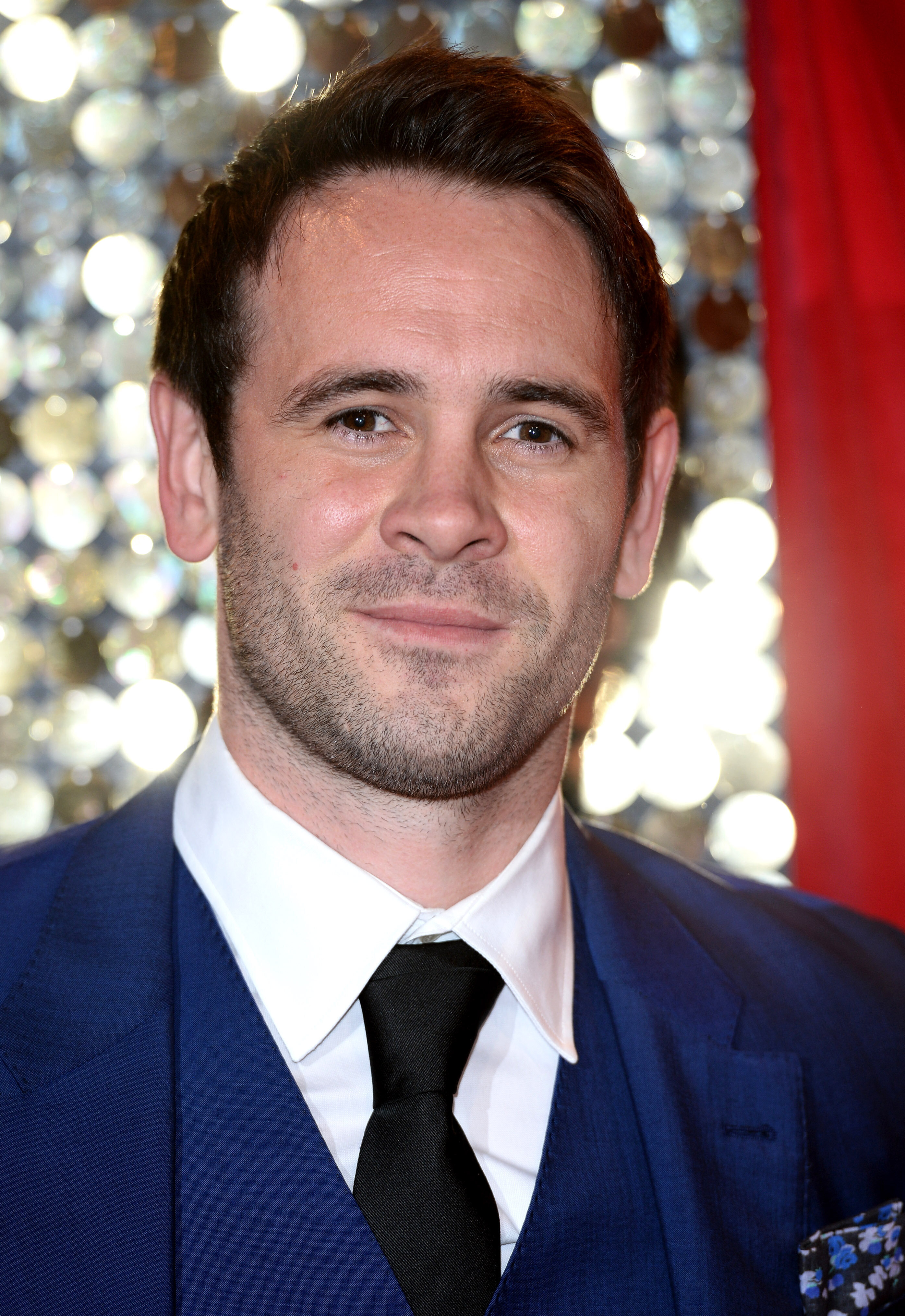
Her co-star, former Emmerdale and Hollyoaks actor Ayden Callaghan, tweeted that a “few badly behaved individuals ruined it”.

He said there had been “disgusting behaviour” and though the cast “wanted to carry on”, they were unable to because “it had become a major incident”.

He added that he was “really sorry to what was 99.9% a brilliant audience”.

Share Button

NHS patient ‘stuck in hospital with months to live’

Charlotte Mills-Murray, 34, said decisions over her home care had been repeatedly delayed.

Share Button

Labour Launches Fresh Attack On Rishi Sunak Despite Tweet Row

Labour has stepped up its attacks on Rishi Sunak by claiming he does not want thieves to be punished.

The latest move comes despite fierce criticism of an earlier ad accusing the prime minister of not wanting child sex offenders to be jailed.

And it follows a second tweet which said Sunak did not want to imprison adults convicted of gun possession.

The latest online graphic, which again features a picture of the PM alongside his signature, says: “Do you think thieves should be punished? Rishi Sunak doesn’t.”

It adds: “Under the Tories, only 180 of the 4,500 thefts a day will see someone charged this year.”

HuffPost UK revealed yesterday that Labour was planning to step up its personal attacks on Sunak despite widespread condemnation of the tweet about child sexual assault.

In an unusual move, Twitter has added a “context” note making clear the Tories do not want to end the jailing of child sex offenders.

Critics of the campaign included former shadow chancellor John McDonnell, who said Labour is “better than this”.

Shadow culture secretary Lucy Powell also repeatedly refused to say she agreed with the ad when quizzed about it yesterday.

But appearing on Radio Four’s Any Questions programme last night, shadow attorney general Emily Thornberry said: “I heard a lot of people criticising it, and a lot of people who I like and respect criticising it and saying they felt very uncomfortable about it. Some people said that they thought it was racist.

“I have to say, I think they’re wrong. I just disagree with that. I think the truth is we do need to have a debate in this country, and Rishi Sunak is the Prime Minister and he is responsible for a broken justice system.”

Asked if she genuinely thinks Sunak held these views, Thornberry said: “If he believes that everyone responsible for child abuse should get a custodial sentence, why are so many not getting a custodial sentence?”

Share Button

Nicola Sturgeon Says She Will ‘Fully Cooperate’ If Police Want To Quiz Her On SNP Finances

Nicola Sturgeon has said she will “fully co-operate” with the police if they want to quiz her in their investigation into the SNP’s finances.

In her first public comments since the arrest of her husband, Peter Murrell, the former first minister also asked for “privacy” as she tries to “get on with life”.

She was speaking outside the home the couple share on the outskirts of Glasgow.

Detectives swooped on the house earlier this week, taking Murrell into custody and erecting a large incident tent in the front garden as they carried out a thorough search of the property.

He was later released without charge after being quizzed for 11 hours.

Asked if she had also been interviewed by the police, Sturgeon said: “I haven’t but I will fully cooperate with the police … if they do.”

The probe are centres around the whereabouts of around £660,000 which was earmarked for Scottish independence campaigning.

The investigation, called Operation Branchform, was launched following allegations that the money, which was meant to be in a ring-fenced fund, had been misappropriated. The party has denied any wrongdoing.

Sturgeon cancelled a public appearance she had been due to make the day after Murrell’s arrest.

Speaking this afternoon, she said: “I’m also entitled to a little bit of privacy in my own home, and my neighbours I think are also entitled to a wee bit of privacy as well.

“Over the years, as a result of living next door to me, they’ve been subjected to more than their fair share of disruption and inconvenience.

“And that has obviously been particularly the case over the last couple of years.

“So as all of you do your jobs, I hope and I know you’ll get some respect to that. So that’s really all I needed to say.”

She added: “So that’s all really I’m able to say just now, other than I intend to get on with life and my job as you would expect.”

The SNP has been plunged into crisis following Sturgeon’s shock resignation in February.

Humza Yousaf was narrowly elected her successor as SNP leader following a bruising leadership election, during which it also emerged that the party has lost 30,000 members in recent months.

Party officials had initially denied the story when it was reported by the Sunday Mail, but eventually confirmed it was true.

That led to the resignation of the SNP’s head of press, Murray Foote, followed by Peter Murrell quitting as the party’s chief executive.

He said: “Responsibility for the SNP’s responses to media queries about our membership number lies with me as chief executive.

“While there was no intent to mislead, I accept that this has been the outcome.

“I have therefore decided to confirm my intention to step down as chief executive with immediate effect.”

Share Button

The Bodyguard Cast Apologise To Fans After Disruptive Audience Members Cause Show To Be Cut Short

The two leads in the Manchester production of The Bodyguard musical have apologised to fans after Friday’s performance of the show was forced to end early because of two disruptive audience members.

Former Pussycat Dolls member Melody Thornton, who plays the lead role, spoke out after the last 10 minutes of the musical at the Palace Theatre was cut after some members of the audience refused to remain seated and refrain from loudly singing.

Speaking in a video posted to her Instagram story on Friday evening, Meody said: “I wanted to send a really special message to people in Manchester who came to the show tonight to say thank you so much.

“I respect that you paid your money and I am so grateful to everyone who respects the people on stage who want to give you a beautiful show. For everything that happened tonight, I don’t have all of the details, I just am very, very sorry that we couldn’t finish the show. I fought really hard. It feels awful, and I just hope that we see you again.

“The Bodyguard is a great show. It’s a wonderful story and love story. And I know people were out to see just a really beautiful show. I thank everyone who was respectful of the performers, and I’m very sorry for those who weren’t. I hope that we see you soon. That’s it. Thank you love you.”

Her co-star, former Emmerdale and Hollyoaks actor Ayden Callaghan, tweeted that a “few badly behaved individuals ruined it”.

He said there had been “disgusting behaviour” and though the cast “wanted to carry on”, they were unable to because “it had become a major incident”.

He added that he was “really sorry to what was 99.9% a brilliant audience”.

Greater Manchester Police said: “Officers were called to the Palace Theatre last night (April 7 2023) after staff reported a number of people in the audience causing a disturbance.

“Two people removed by security staff were spoken to by police and a decision about any further action will be made once the evidence has been reviewed.”

Tash Kenyon, a 27-year-old payroll clerk from the Wirral, told the PA news agency that she and her mother Jan Kenyon, a nurse, had gone to see the show for Jan’s 65th birthday.

Tash said: “Before the performance the stewards were walking up and down the aisles with signs saying ‘please refrain from singing along’ – they were incredibly hard to miss. Two announcements were made as well saying ‘please don’t sing’ and that the audience would have a chance to join in in the finale.

“The show was halted about 20 minutes in as some guests were singing. The guests were removed, and the show continued. The show had about 10 minutes left when the lead started performing I Will Always Love You.

“Someone shouted ‘Does this mean we can start singing now?’ Which set the audience off laughing, and that’s when the singing started over the top of the lead’s vocals.

“The show stopped a minute later, the lights went on, and I couldn’t see from my seat but I could hear the commotion from the 2nd tier of seats, and people were looking up shocked.

“I’m pretty sure some women were being forcibly removed. There was already a police van outside.

A 60-year-old audience member told PA that following the shouts of ‘can we sing now’ “security intervened and a scuffle broke out and police were called – one police van and two police cars”.

Ayden Callaghan
Ayden Callaghan

Karwai Tang via Getty Images

A spokesperson for The Palace Theatre confirmed that despite the disruption on Friday, scheduled performances of the show will take place as normal.

A statement said: “The performance of The Bodyguard at The Palace Theatre, Manchester, was stopped at 9.40pm last night and not continued.

“We are disappointed that the last 10 minutes of the show needed to be cancelled due to disruptive customers refusing to stay seated and spoiling the performance for others.

“We are grateful to our venue teams for dealing with these difficult circumstances in a professional and calm way, and to Greater Manchester Police for their assistance.

“Future performances will continue as planned and we ask that customers are considerate towards the cast, fellow audience members and theatre team so that everyone can enjoy the wonderful entertainment on stage.”

Melody plays Rachel Marron in the touring theatre production, which follows Secret Service agent-turned-bodyguard Frank Farmer, played by Ayden, as he is hired to protect superstar Rachel from an unknown stalker.

Share Button

Junior doctors’ strike could hit up to 250,000 appointments, health bosses warn

Hospitals in England will be cancelling operations and other appointments, health bosses warn.

Share Button

Webb reveals never-before-seen details in Cassiopeia A

The explosion of a star is a dramatic event, but the remains the star leaves behind can be even more dramatic. A new mid-infrared image from NASA’s James Webb Space Telescope provides one stunning example. It shows the supernova remnant Cassiopeia A (Cas A), created by a stellar explosion seen from Earth 340 years ago. Cas A is the youngest known remnant from an exploding, massive star in our galaxy, which makes it a unique opportunity to learn more about how such supernovae occur.

“Cas A represents our best opportunity to look at the debris field of an exploded star and run a kind of stellar autopsy to understand what type of star was there beforehand and how that star exploded,” said Danny Milisavljevic of Purdue University in West Lafayette, Indiana, principal investigator of the Webb program that captured these observations.

“Compared to previous infrared images, we see incredible detail that we haven’t been able to access before,” added Tea Temim of Princeton University in Princeton, New Jersey, a co-investigator on the program.

Cassiopeia A is a prototypical supernova remnant that has been widely studied by a number of ground-based and space-based observatories, including NASA’s Chandra X-ray Observatory. The multi-wavelength observations can be combined to provide scientists with a more comprehensive understanding of the remnant.

Dissecting the Image

The striking colors of the new Cas A image, in which infrared light is translated into visible-light wavelengths, hold a wealth of scientific information the team is just beginning to tease out. On the bubble’s exterior, particularly at the top and left, lie curtains of material appearing orange and red due to emission from warm dust. This marks where ejected material from the exploded star is ramming into surrounding circumstellar gas and dust.

Interior to this outer shell lie mottled filaments of bright pink studded with clumps and knots. This represents material from the star itself, which is shining due to a mix of various heavy elements, such as oxygen, argon, and neon, as well as dust emission.

“We’re still trying to disentangle all these sources of emission,” said Ilse De Looze of Ghent University in Belgium, another co-investigator on the program.

The stellar material can also be seen as fainter wisps near the cavity’s interior.

Perhaps most prominently, a loop represented in green extends across the right side of the central cavity. “We’ve nicknamed it the Green Monster in honor of Fenway Park in Boston. If you look closely, you’ll notice that it’s pockmarked with what look like mini-bubbles,” said Milisavljevic. “The shape and complexity are unexpected and challenging to understand.”

Origins of Cosmic Dust — and Us

Among the science questions that Cas A may help answer is: Where does cosmic dust come from? Observations have found that even very young galaxies in the early universe are suffused with massive quantities of dust. It’s difficult to explain the origins of this dust without invoking supernovae, which spew large quantities of heavy elements (the building blocks of dust) across space.

However, existing observations of supernovae have been unable to conclusively explain the amount of dust we see in those early galaxies. By studying Cas A with Webb, astronomers hope to gain a better understanding of its dust content, which can help inform our understanding of where the building blocks of planets and ourselves are created.

“In Cas A, we can spatially resolve regions that have different gas compositions and look at what types of dust were formed in those regions,” explained Temim.

Supernovae like the one that formed Cas A are crucial for life as we know it. They spread elements like the calcium we find in our bones and the iron in our blood across interstellar space, seeding new generations of stars and planets.

“By understanding the process of exploding stars, we’re reading our own origin story,” said Milisavljevic. “I’m going to spend the rest of my career trying to understand what’s in this data set.”

The Cas A remnant spans about 10 light-years and is located 11,000 light-years away in the constellation Cassiopeia.

Share Button

How to see the invisible: Using the dark matter distribution to test our cosmological model

It feels like a classical paradox: How do you see the invisible? But for modern astronomers, it is a very real challenge: How do you measure dark matter, which by definition emits no light?

The answer: You see how it impacts things that you can see. In the case of dark matter, astronomers watch how light from distant galaxies bends around it.

An international team of astrophysicists and cosmologists have spent the past year teasing out the secrets of this elusive material, using sophisticated computer simulations and the observations from the one of the most powerful astronomical cameras in the world, the Hyper Suprime-Cam (HSC). The team is led by astronomers from Princeton University and the astronomical communities of Japan and Taiwan, using data from the first three years of the HSC sky survey, a wide-field imaging survey carried out with the 8.2-meter Subaru telescope on the summit of Maunakea in Hawai’i. Subaru is operated by the National Astronomical Observatory of Japan; its name is the Japanese word for the cluster of stars we call the Pleiades.

The team presented their findings at a webinar attended by more than 200 people, and they will share their work at the “Future Science with CMB x LSS” conference in Japan.

“Our overall goal is to measure some of the most fundamental properties of our universe,” said Roohi Dalal, a graduate student in astrophysics at Princeton. “We know that dark energy and dark matter make up 95% of our universe, but we understand very little about what they actually are and how they’ve evolved over the history of the universe. Clumps of dark matter distort the light of distant galaxies through weak gravitational lensing, a phenomenon predicted by Einstein’s General Theory of Relativity. This distortion is a really, really small effect; the shape of a single galaxy is distorted by an imperceptible amount. But when we make that measurement for 25 million galaxies, we’re able to measure the distortion with quite high precision.”

To jump to the punchline: The team has measured a value for the “clumpiness” of the universe’s dark matter (known to cosmologists as “S8“) of 0.776, which aligns with values that other gravitational lensing surveys have found in looking at the relatively recent universe — but it does not align with the value of 0.83 derived from the Cosmic Microwave Background, which dates back to the universe’s origins.

The gap between these two values is small, but as more and more studies confirm each of the two values, it doesn’t appear to be accidental. The other possibilities are that there’s some as-yet unrecognized error or mistake in one of these two measurements or the standard cosmological model is incomplete in some interesting way.

“We’re still being fairly cautious here,” said Michael Strauss, chair of Princeton’s Department of Astrophysical Sciences and one of the leaders of the HSC team. “We’re not saying that we’ve just discovered that modern cosmology is all wrong, because, as Roohi has emphasized, the effect that we’re measuring is a very subtle one. Now, we think we’ve done the measurement right. And the statistics show that there’s only a one in 20 chance that it’s just due to chance, which is compelling but not completely definitive. But as we in the astronomy community come to the same conclusion over multiple experiments, as we keep on doing these measurements, perhaps we’re finding that it’s real.”

Hiding and uncovering the data

The idea that some change is needed in the standard cosmological model, that there is some fundamental piece of cosmology yet to be discovered, is a deliciously enticing one for some scientists.

“We are human beings, and we do have preferences. That’s why we do what we call a ‘blinded’ analysis,” Strauss said. “Scientists have become self-aware enough to know that we will bias ourselves, no matter how careful we are, unless we carry out our analysis without allowing ourselves to know the results until the end. For me, I would love to really find something fundamentally new. That would be truly exciting. But because I am prejudiced in that direction, we want to be very careful not to let that influence any analysis that we do.”

To protect their work from their biases, they quite literally hid their results from themselves and their colleagues — month after month after month.

“I worked on this analysis for a year and didn’t get to see the values that were coming out,” said Dalal.

The team even added an extra obfuscating layer: they ran their analyses on three different galaxy catalogs, one real and two with numerical values offset by random values.

“We didn’t know which of them was real, so even if someone did accidentally see the values, we wouldn’t know if the results were based on the real catalog or not,” she said.

On February 16, the international team gathered together on Zoom — in the evening in Princeton, in the morning in Japan and Taiwan — for the “unblinding.”

“It felt like a ceremony, a ritual, that we went through,” Strauss said. “We unveiled the data, and ran our plots, immediately we saw it was great. Everyone went, ‘Oh, whew!’ and everyone was very happy.”

Dalal and her roommate popped a bottle of champagne that night.

A huge survey with the world’s largest telescope camera

HSC is the largest camera on a telescope of its size in the world, a mantle it will hold until the Vera C. Rubin Observatory currently under construction in the Chilean Andes, begins the Legacy Survey of Space and Time (LSST) in late 2024. In fact, the raw data from HSC is processed with the software designed for LSST. “It is fascinating to see that our software pipelines are able to handle such large quantities of data well ahead of LSST,” said Andrés Plazas, an associate research scholar at Princeton.

The survey that the research team used covers about 420 square degrees of the sky, about the equivalent of 2000 full moons. It’s not a single contiguous chunk of sky, but split among six different pieces, each about the size that you could cover with an outstretched fist. The 25 million galaxies they surveyed are so distant that instead of seeing these galaxies as they are today, the HSC recorded how they were billions of years ago.

Each of these galaxies glows with the fires of tens of billions of suns, but because they are so far away, they are extremely faint, as much as 25 million times fainter than the faintest stars we can see with the naked eye.

“It is extremely exciting to see these results from HSC collaboration, especially as this data is closest to what we expect from Rubin Observatory, which the community is working towards together,” said cosmologist Alexandra Amon, a Senior Kavli Fellow at Cambridge University and a senior researcher at Trinity College, who was not involved in this research. “Their deep survey makes for beautiful data. For me, it is intriguing that HSC, like the other independent weak lensing surveys, point to a low value for S8 — it’s important validation, and exciting that these tensions and trends force us to pause and think about what that data is telling us about our Universe!”

The standard cosmological model

The standard model of cosmology is “astonishingly simple” in some ways, explained Andrina Nicola of the University of Bonn, who advised Dalal on this project when she was a postdoctoral scholar at Princeton. The model posits that the universe is made up of only four basic constituents: ordinary matter (atoms, mostly hydrogen and helium), dark matter, dark energy and photons.

According to the standard model, the universe has been expanding since the Big Bang 13.8 billion years ago: it started out almost perfectly smooth, but the pull of gravity on the subtle fluctuations in the universe has caused structure — galaxies enveloped in dark matter clumps — to form. In the present-day universe, the relative contributions of ordinary matter, dark matter, dark energy are about 5%, 25% and 70%, plus a tiny contribution from photons.

The standard model is defined by only a handful of numbers: the expansion rate of the universe; a measure of how clumpy the dark matter is (S8); the relative contributions of the constituents of the universe (the 5%, 25%, 70% numbers above); the overall density of the universe; and a technical quantity describing how the clumpiness of the universe on large scales relates to that on small scales.

“And that’s basically it!” Strauss said. “We, the cosmological community, have converged on this model, which has been in place since the early 2000s.”

Cosmologists are eager to test this model by constraining these numbers in various ways, such as by observing the fluctuations in the Cosmic Microwave Background (which in essence is the universe’s baby picture, capturing how it looked after its first 400,000 years), modeling the expansion history of the universe, measuring the clumpiness of the universe in the relatively recent past, and others.

“We’re confirming a growing sense in the community that there is a real discrepancy between the measurement of clumping in the early universe (measured from the CMB) and that from the era of galaxies, ‘only’ 9 billion years ago,” said Arun Kannawadi, an associate research scholar at Princeton who was involved in the analysis.

Five lines of attack

Dalal’s work does a so-called Fourier-space analysis; a parallel real-space analysis was led by Xiangchong Li of Carnegie Mellon University, who worked in close collaboration with Rachel Mandelbaum, who completed her physics A.B. in 2000 and her Ph.D. in 2006, both from Princeton. A third analysis, a so-called 3×2-point analysis, takes a different approach of measuring the gravitational lensing signal around individual galaxies, to calibrate the amount of dark matter associated with each galaxy. That analysis was led by Sunao Sugiyama of the University of Tokyo, Hironao Miyatake (a former Princeton postdoctoral fellow) of Nagoya University and Surhud More of the Inter-University Centre for Astronomy and Astrophysics in Pune, India.

These five sets of analyses each use the HSC data to come to the same conclusion about S8.

Doing both the real-space analysis and the Fourier-space analysis “was sort of a sanity check,” said Dalal. She and Li worked closely to coordinate their analyses, using blinded data. Any discrepancies between those two would say that the researchers’ methodology was wrong. “It would tell us less about astrophysics and more about how we might have screwed up,” Dalal said.

“We didn’t know until the unblinding that two results were bang-on identical,” she said. “It felt miraculous.”

Sunao added: “Our 3×2-point analysis combines the weak lensing analysis with the clustering of galaxies. Only after unblinding did we know that our results were in beautiful agreement with those of Roohi and Xiangchong. The fact that all these analyses are giving the same answer gives us confidence that we’re doing something right!”

Share Button

Here’s how a worm’s embryonic cells changed its development potential

Researchers have spotted how specific proteins within the chromosomes of roundworms enable their offspring to produce specialized cells generations later, a startling finding that upends classical thinking that hereditary information for cell differentiation is mostly ingrained within DNA and other genetic factors.

The Johns Hopkins University team reports for the first time the mechanisms by which a protein known as histone H3 controls when and how worm embryos produce both highly specific cells and pluripotent cells, cells that can turn certain genes on and off to produce varying kinds of body tissue. The details are published today in Science Advances.

The new research could shed light on how mutations associated with these proteins influence various diseases. In children and young adults, for example, histone H3 is closely associated with various cancers.

“These mutations are highly prevalent in different cancers, so understanding their normal role in regulating cell fate and potentially differentiation of tissues may help us understand why some of them are more prevalent in certain diseases,” said lead author Ryan J. Gleason, a postdoctoral fellow in biology at Johns Hopkins. “The histones that we’re looking at are some of the most mutated proteins in cancer and other diseases.”

Histones are the building blocks of chromatin, the structural support of chromosomes within a cell’s nucleus. While histone H3 is particularly abundant in multicellular organisms such as plants and animals, unicellular organisms teem with a nearly identical variant of H3. That’s why scientists think the difference in rations of H3 and its variant hold crucial clues in the mystery of why pluripotent cells are so versatile during early development.

The researchers revealed that as C. elegans roundworm embryos grew, increasing H3 levels in their systems restricted the potential or “plasticity” of their pluripotent cells. When the team changed the worm’s genome to lower the amount of H3, they successfully prolonged the window of time for pluripotency that is normally lost in older embryos.

“As cells differentiate, you start to get a hundredfold histone H3 being expressed at that time period, which coincides with that lineage-specific regulation,” Gleason said. “When you lower the amount of H3 during embryogenesis, we were able to change the normal path of development to adopt alternative paths of cell fate.”

In pluripotent cells, histones help switch certain genes on and off to commit to specific cell types, be they neurons, muscles, or other tissue. Highly regulated by histones, genes act as a voice that tell cells how to develop. How quiet or loud a gene is determines a cell’s fate.

The new findings come from the gene-editing technique CRISPR, which helped the team track the role the two histones played as the worm’s offspring developed. CRISPR has made it much easier for scientists in the last decade to study the nuts and bolts of changing genetic material and spot what that does to animal, plant, and microbe traits, Gleason said.

Even though the C. elegans roundworm gives finer insights into how these pluripotent cells evolve, further research is needed to zero in on how histones might also underpin embryogenesis in humans and animals composed of hundreds of types of cells, said Xin Chen, a Johns Hopkins biology professor and co-investigator.

“Even though we are using this small worm to make these discoveries, really this finding should not be specific to one animal,” Chen said. “It’s hard to imagine the findings are only going to be applicable to one histone or one animal but, of course, more research needs to be done.”

The team includes Yanrui Guo of Johns Hopkins, Christopher S. Semancik of Tufts University, Cindy Ow of University of California, San Francisco, and Gitanjali Lakshminarayanan of Dana-Farber Cancer Institute.

The research is supported by grants NIGMS/NIH F32GM119347, NICHD/NIH K99HD09605, NIGMS/NIH R35GM127075, and a Faculty Scholarship and Investigator program from Howard Hughes Medical Institute.

Share Button

King Charles Shows Support For Research Examining Royal Family’s Ties To Slavery

Buckingham Palace has said that King Charles takes a new research project looking into the British royal family’s connection to slavery “profoundly seriously” in a significant new statement on Thursday.

The palace issued a statement after it was contacted by The Guardian, following the news organisation’s discovery of a document from the Royal African Company, which at one point held a monopoly in the British slave trade, showing a transfer to King William III in 1689.

“This is an issue that His Majesty takes profoundly seriously,” the palace said before citing the king’s speech at the opening ceremony of the Commonwealth Heads of Government Meeting in Rwanda last year.

In the speech, Charles spoke of “the depths of my personal sorrow at the suffering of so many as I continue to deepen my own understanding of slavery’s enduring impact”.

The palace said that Charles’ “process has continued with vigour and determination since His Majesty’s accession” before mentioning how the institution is aiding the research project investigating “the links between the British monarchy and the transatlantic slave trade during the late 17th and 18th centuries”.

The statement concluded: “As part of that drive, the royal household is supporting this research through access to the royal collection and the royal archives.”

The PhD project in question comes from historian Camilla de Koning, co-sponsored by the Historic Royal Palaces charity. The research is expected to conclude in 2026.

The royals have increasingly faced calls to apologize for their role in the slave trade, as some groups have also called for reparations.

Prince William condemned slavery as “abhorrent” during the then-Duke and Duchess of Cambridge’s controversial tour of the Caribbean last year.

“I strongly agree with my father, the Prince of Wales, who said in Barbados last year that the appalling atrocity of slavery forever stains our history,” William said during a speech in Jamaica in March 2022. “I want to express my profound sorrow. Slavery was abhorrent. And it should never have happened.”

Share Button