Redness of Neptunian asteroids sheds light on early Solar System

Asteroids sharing their orbits with the planet Neptune have been observed to exist in a broad spectrum of red colour, implying the existence of two populations of asteroids in the region, according to a new study by an international team of researchers. The research is published in the journal Monthly Notices of the Royal Astronomical Society: Letters.

The team of scientists from the USA, California, France, the Netherlands, Chile and Hawaii observed 18 asteroids sharing the orbit of Neptune, known as Neptunian Trojans. They are between 50 and 100 km in size and are located at a distance of around 4.5 billion kilometres from the Sun. Asteroids orbiting this far away are faint and so are challenging for astronomers to study. Before the new work, only about a dozen Neptunian Trojans had been studied, requiring the use of some of the largest telescopes on Earth.

The new data were gathered over the course of two years using the WASP wide field camera on the Palomar Observatory telescope in California, the GMOS cameras on the Gemini North and South telescopes in Hawaii and Chile, and the LRIS camera on the Keck Telescope in Hawaii.

Of the 18 observed Neptunian Trojans, several were much redder than most asteroids, and compared with other asteroids in this group looked at in previous studies. Redder asteroids are expected to have formed much further from the Sun; one population of these is known as the Cold Classical trans-Neptunian objects found beyond the orbit of Pluto, at around 6 billion kilometres from the Sun. The newly observed Neptunian Trojans are also unlike asteroids located in the orbit of Jupiter, which are typically more neutral in colour.

The redness of the asteroids implies that they contain a higher proportion of more volatile ices such as ammonia and methanol. These are extremely sensitive to heat, and can rapidly transform into gas if the temperature rises, so are more stable at large distances from the Sun.

The location of the asteroids at the same orbital distance as Neptune also implies that they are stable on timescales comparable to the age of the Solar System. They effectively act as a time-capsule, recording the initial conditions of the Solar System.

The presence of redder asteroids among the Neptunian Trojans suggests the existence of a transition zone between more neutral coloured and redder objects. The redder Neptunian asteroids may have formed beyond this transition boundary before being captured into the orbit of Neptune. The Neptunian Trojans would have been captured into the same orbit as the planet Neptune as the ice giant planet migrated from the inner solar system to where it is now, some 4.5 billion kilometres from the Sun.

Lead author Dr Bryce Bolin of the NASA Goddard Space Flight Centre said, “In our new work we have more than doubled the sample of Neptunian Trojans studied with large telescopes. It’s exciting to find the first evidence of redder asteroids in this group.”

“Because we have a larger sample of Neptunian Trojans with measured colours, we can now start to see major differences between asteroid groups. Our observations also show that the Neptunian Trojans are also different in colour compared to asteroid groups even further from the Sun. A possible explanation may be that the processing of the surfaces of asteroids by the Sun’s heat may have different effects for asteroids at varying solar distances.”

Share Button

Preschoolers prefer to learn from a competent robot than an incompetent human

Who do children prefer to learn from? Previous research has shown that even infants can identify the best informant. But would preschoolers prefer learning from a competent robot over an incompetent human?

According to a new paper by Concordia researchers published in the Journal of Cognition and Development, the answer largely depends on age.

The study compared two groups of preschoolers: one of three-year-olds, the other of five-year-olds. The children participated in Zoom meetings featuring a video of a young woman and a small robot with humanoid characteristics (head, face, torso, arms and legs) called Nao sitting side by side. Between them were familiar objects that the robot would label correctly while the human would label them incorrectly, e.g., referring to a car as a book, a ball as a shoe and a cup as a dog.

Next, the two groups of children were presented with unfamiliar items: the top of a turkey baster, a roll of twine and a silicone muffin container. Both the robot and the human used different nonsense terms like “mido,” “toma,” “fep” and “dax” to label the objects. The children were then asked what the object was called, endorsing either the label offered by the robot or by the human.

While the three-year-olds showed no preference for one word over another, the five-year-olds were much more likely to state the term provided by the robot than the human.

“We can see that by age five, children are choosing to learn from a competent teacher over someone who is more familiar to them — even if the competent teacher is a robot,” says the paper’s lead author, PhD candidate Anna-Elisabeth Baumann. Horizon Postdoctoral Fellow Elizabeth Goldman and undergraduate research assistant Alexandra Meltzer also contributed to the study. Professor and Concordia University Chair of Developmental Cybernetics Diane Poulin-Dubois in the Department of Psychology supervised the study.

The researchers repeated the experiments with new groups of three- and five-year-olds, replacing the humanoid Nao with a small truck-shaped robot called Cozmo. The results resembled those observed with the human-like robot, suggesting that the robot’s morphology does not affect the children’s selective trust strategies.

Baumann adds that, along with the labelling task, the researchers administered a naive biology task. The children were asked if biological organs or mechanical gears formed the internal parts of unfamiliar animals and robots. The three-year-olds appeared confused, assigning both biological and mechanical internal parts to the robots. However, the five-year-olds were much more likely to indicate that only mechanical parts belonged inside the robots.

“This data tells us that the children will choose to learn from a robot even though they know it is not like them. They know that the robot is mechanical,” says Baumann.

Being right is better than being human

While there has been a substantial amount of literature on the benefits of using robots as teaching aides for children, the researchers note that most studies focus on a single robot informant or two robots pitted against each other. This study, they write, is the first to use both a human speaker and a robot to see if children deem social affiliation and similarity more important than competency when choosing which source to trust and learn from.

Poulin-Dubois points out that this study builds on a previous paper she co-wrote with Goldman and Baumann. That paper shows that by age five, children treat robots similarly to how adults do, i.e., as depictions of social agents.

“Older preschoolers know that robots have mechanical insides, but they still anthropomorphize them. Like adults, these children attribute certain human-like qualities to robots, such as the ability to talk, think and feel,” she says.

“It is important to emphasize that we see robots as tools to study how children can learn from both human and non-human agents,” concludes Goldman. “As technology use increases, and as children interact with technological devices more, it is important for us to understand how technology can be a tool to help facilitate their learning.”

Share Button

Jeremy Corbyn Set To Run Against Labour After Being Blocked By Keir Starmer

Jeremy Corbyn has dropped a major hint that he will stand against Labour at the next general election.

The former party leader said he had “no intention of stopping” being the MP for Islington North, the seat he has represented for 40 years.

He spoke out after Labour’s ruling NEC backed Keir Starmer’s bid to stop him being a candidate for the party next year.

Corbyn has been sitting as an independent since losing the Labour whip in 2020 after claiming anti-semitism in the party while he was leader had been “overstated” by his political opponents.

Officials voted 22-12 in favour of a motion in Starmer’s name which said Labour’s election chances would be “significantly diminished” if Corbyn is allowed to run again.

Corbyn, who led Labour from 2015 until 2020, said the move was “a shameful attack on party democracy, party members and natural justice”.

In a statement, he said: “Today’s disgraceful move shows contempt for the millions of people who voted for our party in 2017 and 2019, and will demotivate those who still believe in the importance of a transformative Labour government.

“Keir Starmer has instead launched an assault on the rights of his own Labour members, breaking his pledge to build a united and democratic party that advances social, economic and climate justice.

“I will not be intimidated into silence. I have spent my life fighting for a fairer society on behalf of the people of Islington North, and I have no intention of stopping now.”

Corbyn supporters have also condemned the decision to block his candidacy.

John McDonnell, who was shadow chancellor when Corbyn was leader, told Times Radio: “We’ve got a general election in 18 months time. We need to mobilise the whole of the party: left, right and centre. And this is so divisive, and it’ll demoralised quite a few people.

“And actually I think it might, in many ways, cost us votes in a number of constituencies. So I think it’s a really bad mistake.”

Meanwhile, Momentum founder Jon Lansman compared Starmer to Russian president Vladimir Putin.

Share Button

‘She Told Him Where To Stick It’: Kate Forbes Rejects Humza Yousaf Job Offer

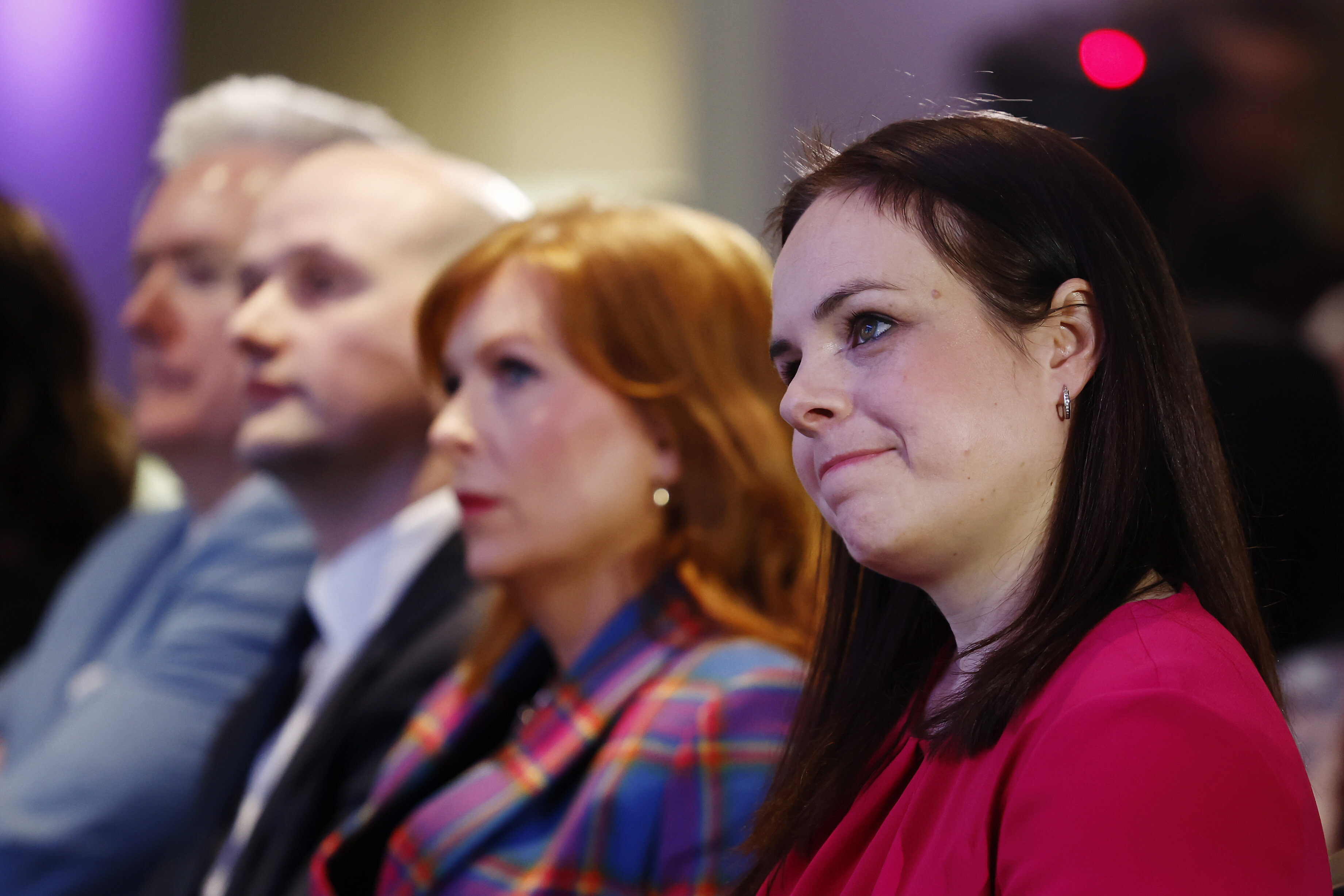
Kate Forbes has quit the Scottish government after new first minister Humza Yousaf tried to demote her.

The former finance secretary, who was narrowly defeated by Yousaf in the race to succeed Nicola Sturgeon, was offered the rural affairs brief in his new cabinet.

A source close to Forbes said she “told him where to stick it” and resigned instead.

The move is a major setback for Yousaf as he tries to unite the SNP after being elected party leader yesterday.

Yousaf defeated Forbes by 52% to 48% following a bitter five-week leadership contest, during which she criticised his record as a minister.

However, he had signalled he intended to heal the divisions by taking a “Team SNP” approach to forming his new government.

He said: “Where there are divisions to heal, we must do so quickly.”

Forbes will now return to the backbenches.

A senior SNP figure told HuffPost UK: “It’s a very poor start by Humza. He’s essentially ignoring the wishes of nearly half the party members.”

Share Button

UK cosmetic procedure numbers recover after Covid

Breast augmentation remains the most popular procedure, figures from a national audit show.

Share Button

Justine Bateman Dismisses Plastic Surgery: ‘My Face Represents Who I Am’

Justine Bateman accepts her changing physical features ― even if the internet won’t.

The former “Family Ties” star opened up about aging in the public eye in an interview with “60 Minutes Australia” that aired last week.

“I needed to Google something to do a little research and remind myself of something that happened when I was famous,” she said. “So, I put in my name, Googled my name ― Justine Bateman ― and then the autocomplete came up, which was ‘looks old.’” Bateman, 57, estimated she was 40 or 42 at the time.

Actor and author Justine Bateman visits AOL's Build Series to discuss her book 'Fame: The Highjacking of Reality' on Oct. 10, 2018, in New York City.
Actor and author Justine Bateman visits AOL’s Build Series to discuss her book ‘Fame: The Highjacking of Reality’ on Oct. 10, 2018, in New York City.

Gary Gershoff via Getty Images

“I was like, ‘What?’ And I looked at the pictures that they had as evidence, and I couldn’t see what they were talking about,” she said. “I just don’t give a shit” about what people think, she added.

“I think I look rad,” Bateman continued. “I think my face represents who I am. I like it.”

The actor, who wrote a book about beauty two years ago, also said in the interview that she feels “sad” for women who use fillers and Botox to hide the effects of aging, as they’re “not enjoying life.”

“I feel sad they are distracted from the things that they’re meant to do in life, with this consuming idea that they’ve gotta fix their face before anything else can happen,” Bateman said.

“I’m saying, forget about your face! That is what I’m saying,” she added. “Get rid of the fear that is making you think that the fact that your face is wrinkled is going to X-out a bunch of opportunities for you.”

<div class="js-react-hydrator" data-component-name="YouTube" data-component-id="4641" data-component-props="{"itemType":"video","index":12,"contentListType":"embed","code":"

","type":"video","meta":{"author":"60 Minutes Australia","author_url":"https://www.youtube.com/channel/UC0L1suV8pVgO4pCAIBNGx5w","cache_age":86400,"description":"Subscribe here: http://9Soci.al/chmP50wA97J Full Episodes: https://9now.app.link/uNP4qBkmN6 | Grey is the New Black (2023)\n\nIt’s time to boot the Botox and flick the facial-fillers. In other words, out with the new, in with the old. Wrinkles are sexy and grey is the new black. More and more women, and especially those over 50, have decided there’s nothing more beautiful than welcoming, and then embracing, the age of ageing.\n\nAs Amelia Adams discovers, the leaders of this revolution can be found in some rather surprising places. They include stars of Hollywood, as well as beauty industry icons like one-time supermodel Paulina Porizkova, proudly 57 years old, who says growing old gracefully is cool, and better still, no one needs to spend a cent to look – and feel – like a million bucks.\n\nWATCH more of 60 Minutes Australia: https://www.60minutes.com.au \nLIKE 60 Minutes Australia on Facebook: https://www.facebook.com/60Minutes9 \nFOLLOW 60 Minutes Australia on Twitter: https://twitter.com/60Mins \nFOLLOW 60 Minutes Australia on Instagram: https://www.instagram.com/60minutes9\n\nFor over forty years, 60 Minutes have been telling Australians the world’s greatest stories. Tales that changed history, our nation and our lives. Reporters Liz Hayes, Tom Steinfort, Tara Brown, Nick McKenzie and Amelia Adams look past the headlines because there is always a bigger picture. Sundays are for 60 Minutes.\n\n#60MinutesAustralia","options":{"_cc_load_policy":{"label":"Closed captions","value":false},"_end":{"label":"End on","placeholder":"ex.: 11, 1m10s","value":""},"_start":{"label":"Start from","placeholder":"ex.: 11, 1m10s","value":""},"click_to_play":{"label":"Hold load & play until clicked","value":false}},"provider_name":"YouTube","thumbnail_height":720,"thumbnail_url":"https://i.ytimg.com/vi/XsV-yTTlNzw/maxresdefault.jpg","thumbnail_width":1280,"title":"The women who are turning grey into the new black | 60 Minutes Australia","type":"video","url":"https://www.youtube.com/watch?v=XsV-yTTlNzw","version":"1.0"},"flags":[],"enhancements":{},"fullBleed":false,"options":{"theme":"news","device":"desktop","editionInfo":{"id":"us","name":"U.S.","link":"https://www.huffpost.com","locale":"en_US"},"slideshowAd":{"scriptTags":[],"otherHtml":""},"slideshowEndCard":{"scriptTags":[],"otherHtml":""},"isMapi":false,"isAmp":false,"isVideoEntry":false,"isMt":false,"entryId":"6422f428e4b0ec7dfe487701","entryPermalink":"https://www.huffpost.com/entry/justine-bateman-plastic-surgery-aging_n_6422f428e4b0ec7dfe487701","entryTagsList":"aging,plastic-surgery,botox,justine-bateman","sectionSlug":"entertainment","deptSlug":"entertainment","sectionRedirectUrl":"https://www.huffpost.com/entertainment","subcategories":"celebrity","isWide":false,"headerOverride":null,"noVideoAds":false,"disableFloat":false,"isNative":false,"commercialVideo":{"provider":"custom","site_and_category":"us.entertainment","package":null},"isHighline":false,"vidibleConfigValues":{"cid":"60afc111dcf87c2cd2f5d8bf","overrides":{"front_page_top_videos":{"desktop":"60b64354b171b7444beaff4d","mobileweb":"60b64354b171b7444beaff4d"},"top_media":{"desktop":"60b8e6bdc5449357a7ada147","mobile":"60b8e701c5449357a7ada2ee","iphone":"60b8e643cdd90620331bb1f6","ipad":"60b8e643cdd90620331bb1f6","androidphone":"60b8e699c5449357a7ada04c","androidtablet":"60b8e699c5449357a7ada04c"},"anthology":{"desktop":"60b8e616cdd90620331bb0ba","mobile":"60b8e671c5449357a7ad9f66","iphone":"60b8e643cdd90620331bb1f6","ipad":"60b8e643cdd90620331bb1f6","androidphone":"60b8e699c5449357a7ada04c","androidtablet":"60b8e699c5449357a7ada04c"},"content":{"desktop":"60b8e616cdd90620331bb0ba","mobile":"60b8e671c5449357a7ad9f66","iphone":"60b8e643cdd90620331bb1f6","ipad":"60b8e643cdd90620331bb1f6","androidphone":"60b8e699c5449357a7ada04c","androidtablet":"60b8e699c5449357a7ada04c"}},"playerUpdates":{"5668ae6ee4b0b5e26955d6a6":"60d2472d9340d7032ad7e443","56aa41bae4b091744c0440d8":"60e869dc7c5f3b17b6741b81","5841b2b5cc52c716ec6e5a7f":"60b8e355cdd90620331ba185","58b5e2b8d85a10302feee895":"60b64316b171b7444beafdb2","58b74698f78ced31417819ae":"60b8e5bec5449357a7ad9b52","58b74ccecebcea57e2c3a3d1":"60b8e5eac5449357a7ad9ca5","58cff690d85a100b9992bc39":"60b8e616cdd90620331bb0ba","58cffb3fb6d9b972a49a3c9d":"60b8e643cdd90620331bb1f6","58cffdd74d96935d7d6ec180":"60b8e671c5449357a7ad9f66","58d03a84f78ced6518eb2fa7":"60b643c82e76be41f112735c","592edf20e0fa177b0c26f7fd":"60b8e699c5449357a7ada04c","5b35266b158f855373e28256":"60b64354b171b7444beaff4d","5c116f29f79c4171d82b7c2a":"60b64440b171b7444beb040b","5c1170fc600c9a697bf0c6b9":"60b646102e76be41f1127ffc","5c47791afa1b317df8ae0c4f":"60b8e6bdc5449357a7ada147","5c477987a6b48b35f164773d":"60b8e701c5449357a7ada2ee","5c4779ee943c3c2a64f28371":"60b8e747cdd90620331bb861","5c477a26fcd67b26879bc7c2":"60b8e788c5449357a7ada67b","5d8921a78c3ae845f366c9b6":"60ae7be5f3a7c13a30417ff9","58b98b00ba82aa39a6534321":"60d0de7c9340d7032ad1146c","58b9d14cb6d9b96c9ec32af3":"60d0dec19340d7032ad115a0","58cff8eccebcea42931e0436":"60d0e005b627221e9d819d44","592edf5de0fa177b0c26f95b":"60d0e38fb627221e9d81adcf","58cff72fd85a100b9992c112":"60d0e447b627221e9d81b0da","56b4d34fe4b022697697c400":"60d2472d9340d7032ad7e443","60b8e4c0c5449357a7ad957d":"60e869dc7c5f3b17b6741b81"}},"connatixConfigValues":{"defaultPlayer":"ff7fdddc-5441-4253-abc4-f12a33fad58b","clickToPlayPlayer":"d014396e-b366-4c17-aeac-3ce906fa3fd0","videoPagePlayer":"f010447b-d244-4111-a314-7b4542ae4145","verticalPlayer":"e58cb05a-0bc8-4210-9108-fea82726c065"},"customAmpComponents":[],"ampAssetsUrl":"https://amp.assets.huffpost.com","videoTraits":null,"positionInUnitCounts":{"buzz_head":{"count":0},"buzz_body":{"count":0},"buzz_bottom":{"count":0}},"positionInSubUnitCounts":{"article_body":{"count":4},"blog_summary":{"count":0},"before_you_go_slideshow":{"count":0}},"connatixCountsHelper":{"count":1},"buzzfeedTracking":{"context_page_id":"6422f428e4b0ec7dfe487701","context_page_type":"buzz","destination":"huffpost","mode":"desktop","page_edition":"en-us"},"tags":[{"name":" aging","slug":"aging","links":{"relativeLink":"topic/aging","permalink":"https://www.huffpost.com/topic/aging","mobileWebLink":"https://www.huffpost.com/topic/aging"},"department":{"name":"Life","slug":"lifestyle"},"section":{"title":"Wellness","slug":"healthy-living"},"topic":{"title":"How We Live: Wellness","slug":"how-we-live-wellness","overridesSectionLabel":false},"url":"https://www.huffpost.com/life/topic/how-we-live-wellness"},{"name":"Plastic Surgery","slug":"plastic-surgery","links":{"relativeLink":"topic/plastic-surgery","permalink":"https://www.huffpost.com/topic/plastic-surgery","mobileWebLink":"https://www.huffpost.com/topic/plastic-surgery"},"department":{"name":"Life","slug":"lifestyle"},"section":{"title":"Wellness","slug":"healthy-living"},"topic":{"title":"Plastic Surgery","slug":"plastic-surgery","overridesSectionLabel":false},"url":"https://www.huffpost.com/life/topic/plastic-surgery"},{"name":"botox","slug":"botox","links":{"relativeLink":"topic/botox","permalink":"https://www.huffpost.com/topic/botox","mobileWebLink":"https://www.huffpost.com/topic/botox"},"url":"https://www.huffpost.com/topic/botox"},{"name":"Justine Bateman","slug":"justine-bateman","links":{"relativeLink":"topic/justine-bateman","permalink":"https://www.huffpost.com/topic/justine-bateman","mobileWebLink":"https://www.huffpost.com/topic/justine-bateman"},"url":"https://www.huffpost.com/topic/justine-bateman"}],"isLiveblogLive":null,"cetUnit":"buzz_body","bodyAds":["

\r\n\r\n HPGam.cmd.push(function(){\r\n\t\treturn HPGam.render(\"inline-1\", \"entry_paragraph_1\", false);\r\n });\r\n\r\n","

\r\n\r\n HPGam.cmd.push(function(){\r\n\t\treturn HPGam.render(\"inline-2\", \"entry_paragraph_3\", false);\r\n });\r\n\r\n","

\r\n\r\n HPGam.cmd.push(function(){\r\n\t\treturn HPGam.render(\"inline-infinite\", \"repeating_dynamic_display\", false);\r\n });\r\n\r\n"],"adCount":0},"isCollectionEmbed":false,"isLiveblogEmbed":false}”>


Bateman joins a small but mighty number of prominent women ― including supermodel Paulina Porizkova, who was also featured in the “60 Minutes Australia” interview ― who shun cosmetic procedures.

Oscar winner Jamie Lee Curtis shared her thoughts on Botox during an interview with “Today” last year in which she said she was dissatisfied with the cosmetic injection.

“I did plastic surgery. I put Botox in my head,” the “Everything Everywhere All At Once” star said. “Does Botox make the big wrinkle go away? Yes. But then you look like a plastic figurine.”

Now, Curtis said, she tells her daughters: “Don’t mess with your face.”

Share Button