It’s Not Just You: Making Friends After 60 Is Really Hard

Having quality relationships is the top predictor of happiness and overall health, according to an 85-year longitudinal study from Harvard University. But as you get older, maintaining these connections and making new ones can be challenging.

Earlier this month, journalist Josie Duffy Rice asked her Twitter followers about ways that people over 60 can make friends or build community, after a pal of hers expressed that their parent was feeling “very isolated.”

Her question reflects the struggles with loneliness that people face throughout their lives, but particularly as they age. One study found that 43% of Americans over 60 reported feeling lonely. Research has shown that loneliness and social isolation are linked with an increased risk of negative health outcomes like dementia, heart disease, stroke, depression and even premature death.

Loneliness is a state of mind in which you feel alone. Social isolation means you have few social contacts or people to interact with regularly. “Social isolation can lead to loneliness in some people, while others can feel lonely without being socially isolated,” according to the Centers for Disease Control and Prevention.

After age 60, certain life changes may explain why a person can feel alone or have a hard time making new connections. Maybe they’re an empty nester, divorced or widowed, or they’ve recently moved to a new place.

Maybe they’re retired, nearing retirement or watching their longtime work friends retire. “The loss of work relationships can be an important contributor to loneliness,” Los Angeles psychologist David Narang told HuffPost.

“You may also be developing chronic health issues such as heart problems or back pain. And unfortunately, feeling physically vulnerable can injure your social confidence as well,” said Narang, the author of “Leaving Loneliness.”

“You might feel, for example, that if you are unable to do everything — like long hikes, traveling the world, working long days — that you once could, that you are no longer as valuable to others.”

And for some, the time, effort and initial discomfort that come with trying a new activity or getting to know someone may seem like too big of a hurdle.

“I’ve hit my 60s, and my social circle is the size of a Cheerio.”

– Craig Tomashoff, a 63-year-old writer and producer.

Ten years ago, Anne R. — a divorced mother of two grown kids — retired from her career as a surgeon. She went from talking to 50 or 100 people a day at the office to not speaking with anyone on some days, she said.

After she retired, her work friends stopped reaching out to her.

“If I had to talk to them for one reason or another, they go, ‘Oh, let’s go for lunch.’ I was like: ‘OK, you let me know. You’re working, I’m retired. I’ll come whenever you can come.’ Never heard from them,” said the 67-year-old, whose last name has been withheld to protect her privacy.

“It was a complete shock,” she said. “These are people that I would have considered friends, people that I talked to multiple times a week.”

Anne still stays in touch with a few dear friends she’s known for decades. “I don’t necessarily talk to them every day,” she said. “But I know if I pick up the phone and they hear I’m not right, they’re right there.”

She has also met some people through her local gym and training classes for her dogs. In recent years, though, these new acquaintances haven’t turned into genuine, lasting connections.

“There are a whole lot of people that I’ve met through my dogs, but I have not really found the energy or desire to meet them outside of the dogs as a friend,” she said.

These days, she said she’s “much more selective” and “much more cautious” with her friendships.

“I’m finding people are getting very egocentric. And so they might say, ‘Oh, I’m having surgery.’ You say, ’Oh, OK, I’ll drive you.’ Then you say to them, ‘I’m having surgery, will you drive me?’ They’re like, ‘Oh, I’ve got to do this, I’ve got to do that,’” Anne said.

“So if I’m going to give of myself what I consider the energy that you should give in a friendship, I need to know there’s going to be some reciprocity.”

Making new friends requires more effort in your 60s than in your early adulthood.

Watsamon Tri-yasakda via Getty Images

Making new friends requires more effort in your 60s than in your early adulthood.

Craig Tomashoff, a divorced 63-year-old father, writer and producer, said he’s noticed that after 60, making new friends “is something that requires effort in a way making friends in your 20s doesn’t.”

“When you’re young, you have co-workers and roommates around all the time. You go out in groups where you meet other people. You find a mate, and his or her friends become yours,” Tomashoff told HuffPost.

“At my age now — with the only thing shrinking more than the working days I have left are the ages of my co-workers — there’s no natural way to just meet people who you want to share time with. It’s all about signing up for classes or, as I recently had to do, using apps not to date but to just make acquaintances.”

Tomashoff realized that he had spent so much of his adult life focused on his kids and working hard to save for retirement that he left little time for socializing and making friends.

Between your 20s and 50s, you’re constantly “reminded that you need to save money for your golden years. Everything is geared toward putting every dollar you can into savings so you’ll live a comfortable life when you hit your 60s,” he said.

“The one thing you never hear about, though, is doing the same for your social life. Seldom do you read articles or watch commercials telling you to bank as many friends as you can for the lonely years ahead.”

He called this the “biggest mistake” of his life.

“I’ve hit my 60s, and my social circle is the size of a Cheerio,” Tomashoff said. “I do wish I projected ahead not so much to how I’ll pay my mortgage, [but] more to how I’ll spend those days once the mortgage gets paid.”

So How Can You Make Friends In Your 60s And Beyond?

To find your people as an older adult, tap into your interests. That might mean signing up for an art class, getting a part-time job, looking for a book club at the local library, trying a new activity like pickleball, or joining a religious, political or volunteer group for a cause that’s close to your heart.

No matter what you choose, expect some initial awkwardness as you get to know people in this new community. Tolerating that temporary discomfort is a “required part of the process,” Narang said.

“In young adulthood, we expect everything to feel new and are less bothered if the experience of joining a new group is initially uncomfortable,” he said. “We can keep that openness to new experiences throughout our lives by expecting new experiences to feel awkward for a time, and allowing for that temporary discomfort required to rebuild social community.”

Because society isn’t “organized around having gathering places that everyone visits on a regular basis,” Narang said, know that you do have to be intentional about seeking out these social connections.

“If I have a standing date with you, you’re probably going to come. … It allows us a better support system for each other because we come regardless of how we feel.”

– Anne R., a 67-year-old retired surgeon.

Choosing a class, activity or group that meets on a regular basis can be key for building new relationships. Repeated exposure to the same people can bring you closer and help you feel like you’re part of something.

“You’re around people,” Anne said. “And if you don’t show up, people say: ‘Where are you? What are you doing?’ Sometimes they’ll call — ‘Why haven’t you been here for a week?’ And that makes you feel connected.”

Anne also has a scheduled bagel date once a week with a friend she’s known since kindergarten. This ensures they spend time face to face on a regular basis. Putting it on the calendar means they’re more likely to stick to it.

“What we’ve found is that if I call you today and say, ‘Hey, you want to go have lunch?’ — if you’re not feeling quite up to it, you’re probably going to bag,” she said.

“If I have a standing date with you, you’re probably going to come. And what it does is it allows us a better support system for each other because we come regardless of how we feel.”

And finally, remind yourself that you have something valuable to offer and that your people are out there.

“Everybody has the need to connect, to be understood, to get close to others and to have companionship,” Narang said. “If you can offer that connection and companionship, there is someone out there with those needs whose personality would mesh well with yours, and that person would want you as a friend.”

Need help with mental health or substance use disorder issues? In the U.S., call 800-662-HELP (4357) for the SAMHSA National Helpline.

Share Button

Feel Like The Work Slog Never Ends, With No Reward In Sight? This Is For You

Another workplace label just landed, and you’re probably going to relate to it: rust-out.

Somewhere between boredom and burnout, rust-out isn’t a case of being fed up with your job but more about how you’re being treated within that role.

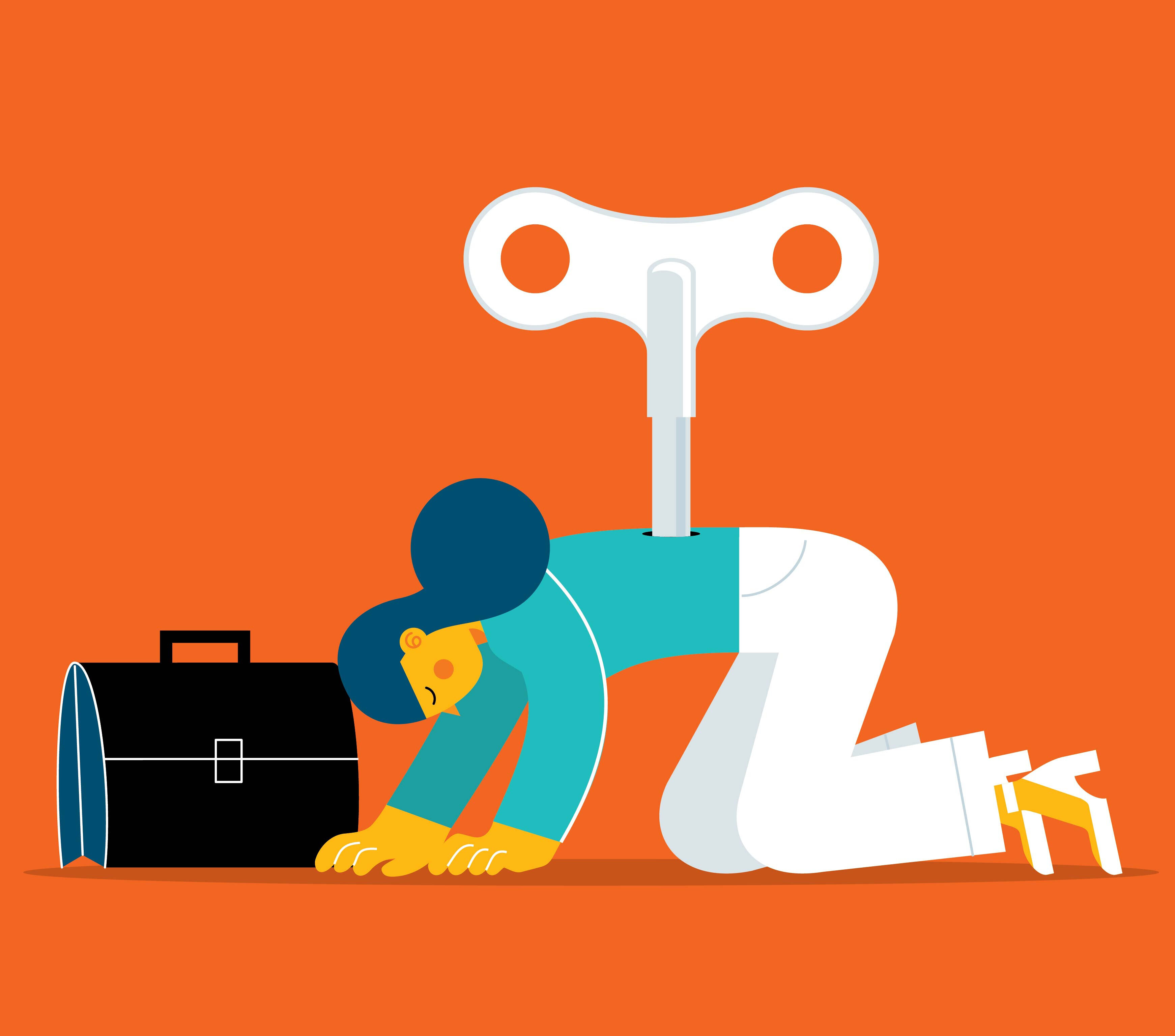
If burnout is when you push yourself too far, rust-out is when you’ve effectively been forgotten by your manager – leading to frustration, exhaustion and just… a desire to quit. You’re stuck in a position, and can’t go anywhere else.

Teena Clouston, author of Challenging Stress, Burnout and Rust-Out, told Cosmopolitan: “Rust-out is a lot deeper and more profound than boredom.

“It’s where people don’t feel they’re don’t anything purposeful or being recognised.

“They often feel blocked – as if there’s nowhere for them to progress to, and it can be a much harder issue to address than burnout.”

Burnout is already recognised by the World Health Organisation (WHO) as an occupational phenomenon, but it’s worth putting rust-out on your radar too.

After all, not everyone joined the Great Resignation during the Covid pandemic – there are bills to pay (and they’re only getting more expensive thanks to the cost of living crisis).

Analytics company Gallup found in 2022 that just 21% of respondents were engaged with their jobs around the world.

And a Workforce Hopes and Fears survey from PwC in 2022 found that Gen Z and millennials were the most likely age group to switch employers in the next year in the search of a more fulfilling job.

This is pretty evident just from what is going round online, too.

The famous term “quiet quitting” went seriously viral before, and involves people doing the absolute bare minimum at work, diverting the rest of their energy into searching for something else.

But with rust-out it seems like motivation is gone altogether.

Clouston explained: “The mental impact of rust-out can be quite dark. You can feel depressed – like you’re stuck in the mud, unable to move.”

She claimed this then had a domino effect on the rest of our everyday lives outside of work, too.

miodrag ignjatovic via Getty Images

And rust-out doesn’t help anyone, including your employers.

“As a general rule, once someone starts to rust out, the quality of work goes downhill, as the employee loses interest, finding the job unfulfilling,” Clouston said, leading to cynicism.

But Clouston said that experiencing rust-out doesn’t mean you have to quit completely.

She suggested speaking to your manager to see if you can amplify the parts of your role you really enjoy, or create a progression plan for your role.

“This can help you review what you want in the workplace and help you find that opportunity for change,” she explained.

Clouston advised moving the focus back onto your wellbeing too, and remembering the pastimes which gave you joy before.

But if this doesn’t help, and it doesn’t seem like you can develop at work even when you try, you might want to start looking for a new job.

Share Button

Record revenue for staff agencies supplying NHS

Companies thrive as the health service struggles with staffing gaps and increased patient demand.

Share Button

What Happens If… You Hold In A Fart?

Holding in a fart, sometimes, feels an absolute necessity.

Not all (read: most) social settings are appropriate for you to let one free or for you to run to the nearest toilet to do the right thing.

Farts are, of course, a natural part of digestion so it’s not safe to just never let them out.

But, are there are any real health consequences to just clenching your cheeks together and hoping for the best?

US health information website, Healthline, explains that if you keep one in, some of the gas from the fart will then be “reabsorbed” into your circulatory system.

Then it goes into your lungs – and yes, it’s about to get grosser – and into the pulmonary circulation system, before being expelled via…exhalation.

But: this is not a mouth fart.

It’s just gas which would have contributed to the fart coming out via a… different route. It will not taste of anything.

Farts are made up of swallowed air and gas released by bacteria in your colon, from undigested carbohydrates. In fact, 75% comes from this bacteria which hasn’t been able to break down some of your meals.

“It smells bad due to the breakdown of various foods into certain gases, primarily sulphur containing gases.

“These aren’t reabsorbed by your body,” Healthline explained.

The rest of the fart usually contains hydrogen, carbon dioxide and methane, gases which don’t smell.

And while you might think it’s therefore OK to just hold in a ripe one because it will just get diverted to your mouth (grim), it might also cause you to bloat, or trigger a lot of burping.

It’s also likely to be uncomfortable especially if there’s a build-up of a lot of gas. Think cramping, think pain.

Then there’s the risk it could cause diverticulitis, a digestive condition where pouches form in your digestive tract which can then become inflamed and infected.

So, it’s pretty important to let out a fart when one comes knocking – as Dr Karan Rajan pointed out in this viral TikTok two years ago…

He said people fart 14 times a day on average, with the average daily fart volume being enough to “fill a medium sized balloon”.

Elsewhere on his page, the viral doctor also said the first trump of the day is usually the largest, and that most farts travel at around 7mph.

The more you know, hey?

Share Button

If You’re On The Mini Pill You Might Want To Read This

Any woman who takes the pill knows it comes with risks: mood changes, irregular periods, mental health issues, and cancer.

If you’re on the ‘mini pill’ there’s a slight chance you could develop breast cancer, researchers now say.

The new study in PLoS Medicine journal is the first of its kind to analyse the risks for users of the mini pill. We know that taking the pill can be a negative experience for women but some hormonal contraceptives can lower the risk of womb and ovarian cancers. All in all, women need to weigh up their options before choosing a contraceptive pill.

What is the mini pill?

The mini pill also known as the progesterone-only pill stops pregnancy by thickening the mucus in the cervix to stop sperm from reaching an egg, according to the NHS.

It must be taken every day at the same time in order for it to work. If taken correctly, it’s more than 99% effective.

There are two different types of progesterone-only pills:

  • 3-hour progestogen-only pill – (traditional progestogen-only pill) this must be taken within 3 hours of the same time each day
  • 12-hour progestogen-only pill (desogestrel progestogen-only pill) this must be taken within 12 hours of the same time each day

What are the risks of developing breast cancer?

The risk of developing breast cancer on the mini pill increases with age. Younger women are less likely to be diagnosed with breast cancer although this age group is most likely to be on the pill.

30,000 patient records that were held by family doctors were analysed by the researchers. The risk of a woman developing cancer within the next 15 years increased by 20-30% if she’s been on the pill for five years, but it’s contingent on the age of the woman.

The researchers in this study concluded that in a group of 100,000 women aged 35-39, nearly 2000 of them are likely to develop breast cancer within the next 15 years though this is determined by several factors which are not linked to being on the pill. So in actuality, it isn’t a large number.

“I don’t really see that there’s any indication here to say that women need to necessarily change what they’re doing,” Oxford University researchers, Prof Gillian Reeves, said.

“The main purpose of doing this research was really to fill a gap in our knowledge.”

What are the signs of breast cancer?

Manveet Basra, head of public health and wellbeing at Breast Cancer Now, says many women may know that a lump can be a possible symptom of breast cancer, but it’s “vital” to know that there are other signs to be aware of too.

These are:

  • A lump
  • Thickening of breast tissue that feels different from the rest of the breast
  • Nipple discharge
  • Dimpling or puckering of the skin of the breast (looks like orange peel)
  • The breast looking red or inflamed
  • Swelling in the upper chest or armpit
  • A change in breast size or shape
  • Your nipple becomes inverted or changes shape
  • Constant pain in your breast or armpit

While most breast changes won’t be cancer, it’s crucial you get any new or unusual breast changes checked by your GP right away. But, what does a lump actually feel like?

“It can either be deep or toward the skin itself. Typically it is not painful. It’s typically not easily movable but oftentimes fixed in a particular space, meaning it doesn’t shift in its location all that easily. In terms of shape, it is oftentimes round but sometimes it can be a little bit more irregular than that.”

Some experts have suggested the size of a breast lump ranges from as small as a pea to larger than a golf ball. Indeed, Kamal notes that many of his patients have compared it to a pea.

Share Button

London Lonely Girls Club gains thousands of new members

The London Lonely Girls Club has “grown spectacularly” since pandemic restrictions were lifted.

Share Button

Long Covid: University of East Anglia study finds women more likely affected

Research shows women are more likely to develop long Covid but vaccination nearly halves the risk.

Share Button

Utah is first US state to limit teen social media access

One of the bills will give parents full access to their children’s online private messages.

Share Button

Eye color genes are critical for retinal health

Metabolic pathways consist of a series of biochemical reactions in cells that convert a starting component into other products. There is growing evidence that metabolic pathways coupled with external stress factors influence the health of cells and tissues. Many human diseases, including retinal or neurodegenerative diseases, are associated with imbalances in metabolic pathways.

Elisabeth Knust leads a team of researchers from the Max Planck Institute of Molecular Cell Biology and Genetics (MPI-CBG) in Dresden, Germany, who describe an essential role for one such metabolic pathway in maintaining retinal health under conditions of stress. They studied the classic Drosophila genes cinnabar, cardinal, white, and scarlet, originally characterized decades ago and named due to their role in eye color pigmentation, in particular the formation of the brown pigment of the fly eye. These genes encode components of the kynurenine pathway, whose activity converts the amino acid tryptophan by various steps into other products. In this study, the authors have highlighted the function of this metabolic pathway in retinal health, independent of its role in pigment formation.

The Kynurenine pathway is an evolutionary conserved metabolic pathway that regulates a variety of biological processes. Its disruption can result in the buildup of either toxic or protective biomolecules or metabolites, which can worsen or improve, respectively, the health of the brain, including the retina. Knowledge on this important metabolic pathway was recently extended by the research team, led by Elisabeth Knust, Director Emerita at the MPI-CBG, in their publication in the journal Plos Genetics. Being aware of the remarkable conservation of this metabolic pathway and the genes that regulate it, they used flies as a model system to unravel the role of individual metabolites in retinal health. The researchers looked at four genes — cinnabar, cardinal, white, and scarlet – named after abnormal eye colors following their loss in flies. “Since the Kynurenine pathway is conserved from flies to humans, we asked whether these genes regulate retinal health independent of their role in pigment formation,” says Sarita Hebbar, one of the lead authors of the study.

To find this out, the scientists used a combination of genetics, dietary changes, and biochemical analysis of metabolites to study different mutations of the fruit fly, Drosophila melanogaster. Sofia Traikov, a co-author, developed a method for the biochemical analysis of the metabolites of the Kynurenine pathway. This allowed the researchers to link different metabolite levels to the health state of the retina. They found that one metabolite, 3-hydroxykynurenine (3OH-K), is damaging to the retina. More importantly, they could show that the degree of degeneration is influenced by the balance between toxic 3OH-K and protective metabolites, such as Kynurenic Acid (KYNA), and not just by their absolute amounts. Sarita continues: “We also fed two of these metabolites to normal (non-mutant) flies and found that 3OH-K enhanced stress-induced retinal damage, whereas KYNA protected the retina from stress-related damage.” This means that retinal health in certain conditions can be improved by altering the ratio of metabolites of the Kynurenine pathway.

Furthermore, by targeting these four genes and therefore four distinct steps within the pathway, the researchers were able to demonstrate that not only the accumulation of 3OH-K as such, but also its location in the cell and hence its availability in further reactions, is important for retinal health.

“This work shows that the Kynurenine pathway is important not only in pigment formation but that the level of individual metabolites fulfills important roles in maintaining retinal health,” says Elisabeth Knust, who supervised the study. She concludes, “In the future, the ratio of the various metabolites and the specific sites of their accumulation and activity should be taken into account in therapeutic strategies for diseases with impaired Kynurenine pathway function, observed in various neurodegenerative conditions.”

Share Button

Candida auris: What is the deadly fungus sweeping through US hospitals?

A drug-resistant yeast fungus has been detected in more than 30 countries. What do we know about it?

Share Button