Meghan Markle And Prince Harry Dismiss Jeremy Clarkson’s Apology And Dispute He Wrote To Both Of Them

The Duke and Duchess of Sussex have rejected Jeremy Clarkson’s apology over his column in The Sun newspaper in which he said he “hated” Meghan, and disputed that he wrote to both of them.

On Monday, the former Top Gear presenter shared a lengthy statement on Instagram claiming he had sent an email to both Meghan and Prince Harry on Christmas Day to say his language in the column had been “disgraceful” and he was “profoundly sorry”.

However, a statement issued by the couple’s spokesperson on Monday in response to Clarkson’s Instagram post, states that he only wrote to Prince Harry, not his wife.

It goes on to question Clarkson’s excuse that he wrote the offending column in a “hurry” and addressed his “long standing pattern of writing articles that spread hate rhetoric, dangerous conspiracy theories, and misogyny”.

Prince Harry, Duke of Sussex and Meghan, Duchess of Sussex.

Chris Jackson via Getty Images

Harry and Meghan’s spokesman said: “On December 25, 2022, Mr Clarkson wrote solely to Prince Harry, The Duke of Sussex. The contents of his correspondence were marked Private and Confidential.

“While a new public apology has been issued today by Mr Clarkson, what remains to be addressed is his long standing pattern of writing articles that spread hate rhetoric, dangerous conspiracy theories, and misogyny.

“Unless each of his other pieces were also written “in a hurry”, as he states, it is clear that this is not an isolated incident shared in haste, but rather a series of articles shared in hate.”

In December, the presenter faced widespread backlash after the publication of the opinion piece in which he described how much he “hates” the Duchess of Sussex on a “cellular level”.

The TV star added that he dreams of the day “when [Meghan] is made to parade naked through the streets” while crowds “throw lumps of excrement at her”.

Jeremy Clarkson
Jeremy Clarkson

Ian West – PA Images via Getty Images

In the days that followed, the column incited a record-breaking number of complaints to the press regulator Ipso, with The Sun eventually issuing an apology after removing the article from their website, at its author’s request.

In his Instagram apology, Jeremy said: “Usually, I read what I’ve written to someone else before filing, but I was home alone on that fateful day, and in a hurry. So when I’d finished, I just pressed send. And then, when the column appeared the next day, the land mine exploded.”

He concluded: “I emailed Harry and Meghan in California to apologise to them too.

“I said I was baffled by what they had been saying on TV but that the language I’d used in my column was disgraceful and that I was profoundly sorry.

“Over the last thirty years, I have written very nearly five thousand newspaper and magazine columns, so it was inevitable that one day, I’d do a Harry Kane and sky one of the damn things. Which is what happened with the piece about Meghan.”

The Duke of Sussex brought up the column while discussing “accountability” during Prince Harry: The Interview, which aired earlier this month.

Harry said: “Not only was what he said horrific, and is hurtful and cruel towards my wife, but it also encourages other people around the UK, and around the world – men particularly – to think that it’s acceptable to treat women that way.

“To use my stepmother’s words recently as well, there is a global pandemic of violence against women.”

He added: “It’s no longer a case of me asking for accountability, but at this point the world is asking for accountability, and the world is asking for some form of comment from the monarchy but the silence is deafening. To put it mildly.

“Everything to do with my wife, after six years, they haven’t said a single thing.”

Amid the controversy last month, Clarkson said he was “horrified to have caused so much hurt”, but stopped short of an actual apology at the time.


Share Button

16 Year Olds Are Old Enough To Decide Gender Change, Education Secretary Says

The Education Secretary has suggested that 16 year olds are old enough to decide to change their gender.

Gillian Keegan knocked back suggestions that 16 was too young, saying: “I was making decisions for myself at 16.”

It comes after Rishi Sunak moved to block Scottish reforms of the gender recognition process passed by Holyrood.

The new law would make it easier for trans people to change gender by reducing the time the process takes and lowering the age at which it can happen to 16.

Asked if she would be content for children in schools at 16 to say whether they want to change their gender, Keegan told Sky News: “We have to be very sensitive to children. We are actually going to publish some guidance and consult because it is a very tricky area to get right.

“It has to be age-appropriate, but children have to be supported as well.”

Pressed on her personal view, the minister was asked if 16 was too young.

“No I don’t actually. “I was working at 16, I was paying tax at 16, I was making decisions for myself at 16,” she replied.

“But it’s not really about what I think, it’s how we make sure we get that right balance of supporting children, but also making sure that what they’re getting taught in schools is age-appropriate.”

Labour leader Keir Starmer said he has “concerns” over Scotland’s gender recognition law because he considers 16 to be too young to decide to change gender.

Yesterday, the UK government took the unprecedented step of blocking Scotland’s gender reforms from becoming law.

It is the first time Westminster has used the power since devolution came into being nearly 25 years ago.

Scottish secretary Alister Jack wrote to Scottish first minister Nicola Sturgeon to inform her that he was making a so-called “section 35 order” vetoing the bill which was passed at Holyrood before Christmas.

It followed advice from government lawyers that the bill would cut across the UK-wide Equality Act.

In a statement, Jack said: “Transgender people who are going through the process to change their legal sex deserve our respect, support and understanding. My decision today is about the legislation’s consequences for the operation of GB-wide equalities protections and other reserved matters.”

Responding to the news, Sturgeon accused the UK government of “a full-frontal attack” on the Scottish parliament.

Share Button

Antidepressants exit must happen in stages, says medical watchdog

The National Institute for Health and Care Excellence says this is to avoid withdrawal symptoms.

Share Button

Nurses’ strike: New dates as union escalates dispute

Two days of action – on 6 and 7 February – are announced in England and Wales, in the biggest walkout yet.

Share Button

Genetically modified rice could be key to tackling food shortages caused by climate change

Genetically modified rice could be key to tackling food shortages caused by climate change

  • Reducing the number of stomata that rice have makes them more tolerant to salt water, according to researchers at the University of Sheffield
  • As sea levels rise, seawater is reaching places it previously wouldn’t, causing increasing damage to crops
  • Sheffield scientists had already discovered that rice with fewer stomata are more drought resistant, needing up to 60 per cent less water — now, they have shown that the same plants are also able to grow in salty conditions
  • Rice is arguably the most important food crop on earth — it is relied on by 3.5 billion people every single day, and 30 per cent of the world’s freshwater supply is used to grow the crop

Genetically engineering rice to have better salt tolerance could allow it to be grown in places it would otherwise fail, new research from the University of Sheffield has found.

As sea levels rise as a result of climate change, more and more places around the world are struggling with seawater inundation — where salt water from the sea is flooding further inland and destroying crops which can’t cope with the increased salinity.

Rice is one of the worst affected crops — the most important carbohydrate on earth, it is relied on by 3.5 billion people every day, but in countries like Vietnam it is becoming harder and harder to grow due to increasing seawater interference.

However, findings from the University of Sheffield’s Institute for Sustainable Food have revealed that genetically modifying rice to reduce the number of stomata is has — tiny openings used for water loss — makes it more salt-resistant.

Stomata are openings that most plants have which regulate carbon dioxide uptake for photosynthesis, along with the release of water vapour. Several years ago, Sheffield scientists revealed that reducing the number and size of stomata rice plants have allows them to use up to 60 per cent less water, making them hugely beneficial in places prone to drought.

Those findings, along with these new results, published in the New Phytologist, mean that rice can be adapted to survive in environments that are becoming harsher due to climate change, which will help in tackling food insecurity around the globe.

The researchers also discovered, however, that reducing the number and size of stomata could make rice harder to grow in extremely hot temperatures. As a result, to make sure that rice can grow as effectively as possible in different countries and environments, different modifications will need to be made. For example — rice with fewer, larger stomata, could be better suited to growing in extremely warm temperatures.

Dr Robert Caine, Lead Author of the study from the University of Sheffield’s School of Biosciences, said: “Rice is a hugely important food crop eaten by over half the world’s population on a daily basis. Ensuring that it can survive in harsher conditions caused by climate change will be integral to feeding a growing population that is projected to reach 10 billion in 60 years’ time.

“Our findings reveal how rice can be modified to grow as effectively as possible in different climates — varieties of rice that have less stomata can survive with less water and in places with salt water. Meanwhile, natural rice varieties with fewer, bigger stomata are able to thrive in hotter temperatures.”

The researchers from the University of Sheffield, working alongside the High Agricultural Technology Research Institute (HATRI) in Vietnam, studied 72 rice varieties, both natural and genetically modified. They are now planning to investigate whether they can make dwarf rice varieties, which produce the highest crop yields, more heat-resistant.

Share Button

Study finds active galactic nuclei are even more powerful than thought

Powered by supermassive black holes swallowing matter in the centers of galaxies, active galactic nuclei are the most powerful compact steady sources of energy in the universe. The brightest active galactic nuclei have long been known to far outshine the combined light of the billions of stars in their host galaxies.

A new study indicates that scientists have substantially underestimated the energy output of these objects by not recognizing the extent to which their light is dimmed by dust.

“When there are intervening small particles along our line of sight, this makes things behind them look dimmer. We see this at sunset on any clear day when the sun looks fainter,” said Martin Gaskell, a research associate in astronomy and astrophysics at UC Santa Cruz.

Gaskell is lead author of a paper on the new findings published January 16 in Monthly Notices of the Royal Astronomical Society.

Although the possibility of dust dimming the light from active galactic nuclei has been recognized for a long time, the amount was controversial and was widely believed to be negligible, he said.

“We have shown that this is not the case and that the far ultraviolet light of a typical active galactic nucleus is dimmed by a large factor,” Gaskell said.

The team reached this conclusion by studying the reddening effect of dust on the light from one of the most well-studied active galactic nuclei, known as NGC 5548. Just as the Earth’s atmosphere makes the sun appear redder as well as dimmer at sunset, so dust in active galactic nuclei also makes them appear redder than they really are. The amount of reddening is related to the amount of dimming.

Scientists quantify the colors of something by measuring the ratios of the intensity of its light at different wavelengths. While we know what the unreddened color of the sun is, there has been much debate over the unreddened colors of the various types of emission from active galactic nuclei. This is because, although simple theories predict the intrinsic, unreddened colors, there were doubts about whether these simple theories applied to active galactic nuclei.

In the new study of NGC 5548, the UCSC researchers used seven different indicators of the amount of dust and found them all to be in good agreement. Furthermore, the dimming of NGC 5548 due to dust was found to be large, more than ten times the dimming caused by dust as we look out of our own galaxy, the Milky Way.

“The good agreement between the different indicators of the amount of reddening was a pleasant surprise,” said Gaskell. “It strongly supports simple theories of emission from active galactic nuclei. Exotic explanations of colors are not needed. This makes life simpler for researchers and is speeding up our understanding of what happens as black holes swallow material.”

The colors of NGC 5548 are typical of other active galactic nuclei, he said, which has wide-ranging implications. Because of the dimming effects of dust, active galactic nuclei are even more powerful than had been realized. The results imply that in the ultraviolet, where most of the energy is radiated, a typical active galactic nucleus is putting out an order of magnitude more energy than previously thought, Gaskell said.

Another implication, he said, is that active galactic nuclei are very similar, and what had hitherto been thought to be major fundamental differences between them are really just the consequences of different amounts of reddening by dust.

Gaskell’s coauthors — Frances Anderson (now at Harvey Mudd College), Sufia Birmingham (now at Princeton University), and Samhita Ghosh (now at UC Berkeley) — worked on this project as high school seniors participating in the UCSC Science Internship Program.

Share Button

Climate conundrum: Study finds ants aren’t altering behavior in rising temperatures

Researchers at North Carolina State University found in a recent study that ants did not adjust their behavior in response to warming temperatures and persisted in sub-optimal microhabitats even when optimal ones were present. The finding suggests ants may not be able to adjust their behavior in response to warming ecosystems.

Ants are ectotherms — animals whose body temperature depends on the environment. While these animals experience a range of temperatures in daily life, most ectotherms prefer habitats that are slightly cooler than the so-called optimal functioning temperature in which an ectothermic animal is able to best perform all of life’s functions. If it encounters an environment warmer than the optimal point, an ectotherm risks approaching the lethal end of its physiology’s spectrum. In other words, if it gets too hot, ectotherms will die.

Little is known, however, about how — or if — insect ectotherms will adjust their behavior to avoid warmer but sublethal temperature ranges — where functioning is physiologically possible but not optimal — which are increasingly likely due to global climate change.

To learn more about how insect species may respond to those warmer, sublethal temperatures, researchers at NC State studied five species of ants common in North Carolina. The researchers counted and collected ants in forest ecosystems and measured air temperatures at the collection sites to identify the distribution of available microhabitats. The researchers also used a unique ant thermometer to measure the temperature of the ants themselves (which varied by ant color and body size). Lastly, to determine each species’ preferred temperature, the researchers collected some ants for the lab and placed them in a rectangular chamber with a controlled temperature gradient.

The researchers found that ants in the lab did have distinct thermal preferences, but ants in the field were active in their preferred climates only slightly more often than expected by chance. Instead, most species were collected in sites that were warmer than preferred, suggesting lack of awareness or some limitation in their ability to adjust to increasing temperatures.

“It’s interesting that the worker ants we observed were willing to put themselves in uncomfortable situations while foraging,” says Sara Prado, an adjunct professor and co-author of the study. “I wonder if the food was ‘profitable’ enough for the ants to stretch their comfort levels, or if they are simply willing to sacrifice their well-being for the sake of the colony.”

“Warmer times and places make warmer ants, and they’re not adjusting their activity to match their preferred conditions,” says Elsa Youngsteadt, a professor of applied ecology at NC State and co-author of the study. “For now, this may be a tradeoff that works out fine for them. But if you think of the huge biomass of ants underfoot, their metabolic rates are all creeping upward as the climate changes. Even if it doesn’t kill them outright, what does that amped-up metabolism mean for their life cycle and even the whole forest ecosystem?”

Youngsteadt plans to further investigate this question with urban ants that are effectively living in the future of climate change in comparatively warm cities.

The paper, “Can behavior and physiology mitigate effects of warming on ectotherms? A test in urban ants,” will be published January 16 in the Journal of Animal Ecology. The paper was co-authored by Michelle Kirchner from NC State University and Kirsten Keleher from Cornell University. The work was supported by the USDA National Institute of Food and Agriculture, Hatch Project #1018689 to Youngsteadt, and by North Carolina State University.

Share Button

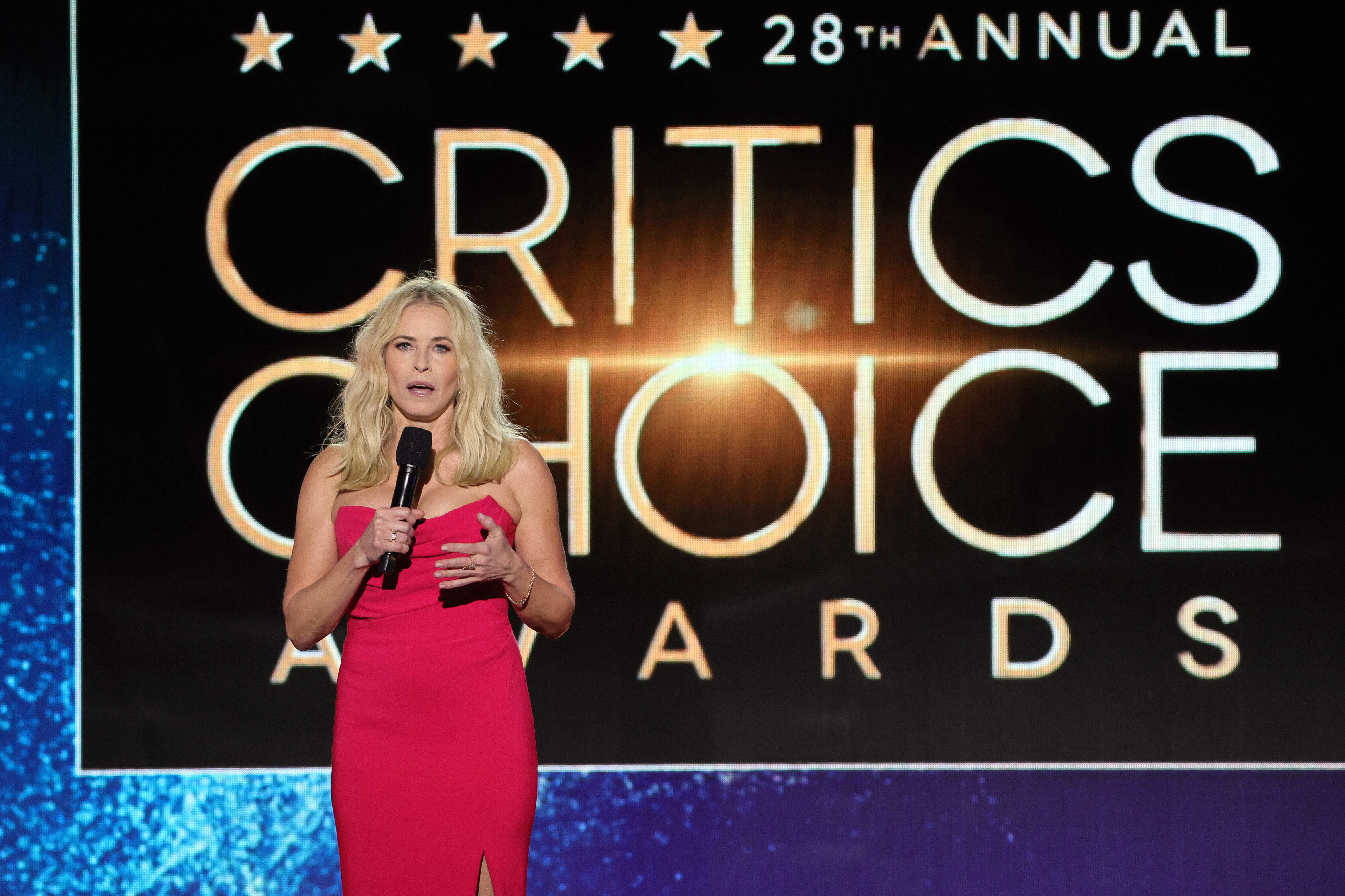
Chelsea Handler Hilariously Roasts James Corden And Prince Harry’s ‘Frostbitten Penis’ In Critics’ Choice Awards Opening Monologue

<div class="js-react-hydrator" data-component-name="YouTube" data-component-id="1409" data-component-props="{"itemType":"video","index":0,"contentListType":"embed","code":"

","type":"video","meta":{"author":"Inside USA","author_url":"https://www.youtube.com/channel/UCW-2dBZBvYpbsD08CRaa-Xw","cache_age":86400,"description":"Chelsea Handler’s Monologue Critics’ Choice Awards 2023\nCritics Choice Awards 2023\n28th Critics’ Choice Awards\nCritics Choice Awards 2023 Winners List\nComplete Winners Critics Choice Awards 2023","options":{"_cc_load_policy":{"label":"Closed captions","value":false},"_end":{"label":"End on","placeholder":"ex.: 11, 1m10s","value":""},"_start":{"label":"Start from","placeholder":"ex.: 11, 1m10s","value":""},"click_to_play":{"label":"Hold load & play until clicked","value":false}},"provider_name":"YouTube","thumbnail_height":720,"thumbnail_url":"https://i.ytimg.com/vi/vcync0k-Htg/maxresdefault.jpg","thumbnail_width":1280,"title":"Chelsea Handler’s Monologue Critics’ Choice Awards 2023","type":"video","url":"https://www.youtube.com/watch?v=vcync0k-Htg","version":"1.0"},"flags":[],"enhancements":{},"fullBleed":false,"options":{"theme":"news","device":"desktop","editionInfo":{"id":"uk","name":"U.K.","link":"https://www.huffingtonpost.co.uk","locale":"en_GB"},"slideshowAd":{"scriptTags":[],"otherHtml":""},"slideshowEndCard":{"scriptTags":[],"otherHtml":""},"isMapi":false,"isAmp":false,"isVideoEntry":false,"isMt":false,"entryId":"63c50a20e4b0fe267cbbb070","entryTagsList":"prince-harry,awards-season,james-corden,chelsea-handler,critics-choice-awards","sectionSlug":"entertainment","deptSlug":null,"sectionRedirectUrl":null,"subcategories":"","isWide":false,"headerOverride":null,"noVideoAds":false,"disableFloat":false,"isNative":false,"commercialVideo":{"provider":"custom","site_and_category":"uk.entertainment","package":null},"isHighline":false,"vidibleConfigValues":{"cid":"60afc140cf94592c45d7390c","disabledWithMapiEntries":false,"overrides":{"all":"60b8e525cdd90620331baaf4"},"whitelisted":["56c5f12ee4b03a39c93c9439","56c6056ee4b01f2b7e1b5f35","59bfee7f9e451049f87f550b","5acccbaac269d609ef44c529","570278d2e4b070ff77b98217","57027b4be4b070ff77b98d5c","56fe95c4e4b0041c4242016b","570279cfe4b06d08e3629954","5ba9e8821c2e65639162ccf1","5bcd9904821576674bc55ced","5d076ca127f25f504327c72e","5b35266b158f855373e28256","5ebac2e8abddfb04f877dff2","60b8e525cdd90620331baaf4","60b64354b171b7444beaff4d","60d0d8e09340d7032ad0fb1a","60d0d90f9340d7032ad0fbeb","60d0d9949340d7032ad0fed3","60d0d9f99340d7032ad10113","60d0daa69340d7032ad104cf","60d0de02b627221e9d819408"],"playlists":{"default":"57bc306888d2ff1a7f6b5579","news":"56c6dbcee4b04edee8beb49c","politics":"56c6dbcee4b04edee8beb49c","entertainment":"56c6e7f2e4b0983aa64c60fc","tech":"56c6f70ae4b043c5bdcaebf9","parents":"56cc65c2e4b0239099455b42","lifestyle":"56cc66a9e4b01f81ef94e98c"},"playerUpdates":{"56c6056ee4b01f2b7e1b5f35":"60b8e525cdd90620331baaf4","56c5f12ee4b03a39c93c9439":"60d0d8e09340d7032ad0fb1a","59bfee7f9e451049f87f550b":"60d0d90f9340d7032ad0fbeb","5acccbaac269d609ef44c529":"60d0d9949340d7032ad0fed3","5bcd9904821576674bc55ced":"60d0d9f99340d7032ad10113","5d076ca127f25f504327c72e":"60d0daa69340d7032ad104cf","5ebac2e8abddfb04f877dff2":"60d0de02b627221e9d819408"}},"connatixConfigValues":{"defaultPlayer":"8b034f64-513c-4987-b16f-42d6008f7feb","clickToPlayPlayer":"5a777b9b-81fe-41a6-8302-59e9953ee8a2","videoPagePlayer":"19654b65-409c-4b38-90db-80cbdea02cf4"},"customAmpComponents":[],"ampAssetsUrl":"https://amp.assets.huffpost.com","videoTraits":null,"positionInUnitCounts":{"buzz_head":{"count":0},"buzz_body":{"count":0},"buzz_bottom":{"count":0}},"positionInSubUnitCounts":{"article_body":{"count":6},"before_you_go_slideshow":{"count":0}},"connatixCountsHelper":{"count":0},"buzzfeedTracking":{"context_page_id":"63c50a20e4b0fe267cbbb070","context_page_type":"buzz","destination":"huffpost","mode":"desktop","page_edition":"en-uk"},"tags":[{"name":"Prince Harry","slug":"prince-harry","links":{"relativeLink":"news/prince-harry","permalink":"https://www.huffingtonpost.co.uk/news/prince-harry","mobileWebLink":"https://www.huffingtonpost.co.uk/news/prince-harry"},"url":"https://www.huffingtonpost.co.uk/news/prince-harry/"},{"name":" awards season","slug":"awards-season","links":{"relativeLink":"news/awards-season","permalink":"https://www.huffingtonpost.co.uk/news/awards-season","mobileWebLink":"https://www.huffingtonpost.co.uk/news/awards-season"},"url":"https://www.huffingtonpost.co.uk/news/awards-season/"},{"name":"james corden","slug":"james-corden","links":{"relativeLink":"news/james-corden","permalink":"https://www.huffingtonpost.co.uk/news/james-corden","mobileWebLink":"https://www.huffingtonpost.co.uk/news/james-corden"},"url":"https://www.huffingtonpost.co.uk/news/james-corden/"},{"name":"Chelsea Handler ","slug":"chelsea-handler","links":{"relativeLink":"news/chelsea-handler","permalink":"https://www.huffingtonpost.co.uk/news/chelsea-handler","mobileWebLink":"https://www.huffingtonpost.co.uk/news/chelsea-handler"},"url":"https://www.huffingtonpost.co.uk/news/chelsea-handler/"},{"name":"critics choice awards","slug":"critics-choice-awards","links":{"relativeLink":"news/critics-choice-awards","permalink":"https://www.huffingtonpost.co.uk/news/critics-choice-awards","mobileWebLink":"https://www.huffingtonpost.co.uk/news/critics-choice-awards"},"url":"https://www.huffingtonpost.co.uk/news/critics-choice-awards/"}],"cetUnit":"buzz_body","bodyAds":["

\r\n\r\n HPGam.cmd.push(function(){\r\n\t\treturn HPGam.render(\"inline-1\", \"entry_paragraph_1\", false);\r\n });\r\n\r\n","

\r\n\r\n HPGam.cmd.push(function(){\r\n\t\treturn HPGam.render(\"inline\", \"entry_paragraph_2\", false);\r\n });\r\n\r\n","

\r\n\r\n HPGam.cmd.push(function(){\r\n\t\treturn HPGam.render(\"inline-2\", \"entry_paragraph_3\", false);\r\n });\r\n\r\n","

\r\n\r\n HPGam.cmd.push(function(){\r\n\t\treturn HPGam.render(\"inline-infinite\", \"repeating_dynamic_display\", false);\r\n });\r\n\r\n"],"adCount":0}}”>

Prince Harry, James Corden and Ellen DeGeneres were among the famous faces roasted by Chelsea Handler during her opening monologue at Sunday night’s Critics’ Choice Awards.

The US star didn’t hold back in having a jokey dig at the headline makers of the last 12 months as she opened this year’s bash in Los Angeles.

“It is an honour to be your host tonight after everything that we have all been through together over the past few years between Covid, monkeypox, the Don’t Worry Darling press tour,” Chelsea began. “It’s been a lot.”

And just a week after he released his memoir, Spare, it didn’t take long for Chelsea to have a dig at Prince Harry – or rather the royal’s “frostbitten penis”.

Chelsea Handler speaks onstage during the 28th Annual Critics Choice Awards.

Kevin Winter via Getty Images

“Niecy Nash-Betts is nominated for Dahmer,” Chelsea continued. “Dahmer became the third highest viewed show on Netflix, which a combined watch time of 1 billion hours, which, apparently, is the same amount of time we’re going to have to listen to Prince Harry talk about his frostbitten penis. Enough already.”

Prince Harry’s mate James Corden wasn’t spared either, following his alleged behaviour towards waiting staff that saw him briefly banned from NYC restaurant Balthazar.

Acknowledging the cast of the restaurant-based dramedy The Bear, Chelsea said: “They showed us how gruelling and how absolutely miserable working in the restaurant industry can be, and they didn’t even have to wait on James Corden.”

Kevin Winter via Getty Images

She went on to take aim at another talk show host, Ellen DeGeneres, and the toxic workplace allegations by staffers on her former daytime show, although Chelsea didn’t go as far as naming Ellen.

“In the movie Tár, Cate [Blanchett] portrayed an iconic lesbian whose career is affected by her toxic behaviour. And she didn’t even have to host her own daytime talk show,” Chelsea told the audience.

Jennifer Coolidge and Brendan Fraser were among the winners at Sunday night’s awards, which are often an indicator of success at the Academy Awards.

Watch Chelsea’s opening monologue in full above.

Share Button