A Trust knew about the exposure for more than a year before informing staff, documents show.


A Trust knew about the exposure for more than a year before informing staff, documents show.
How doctors are spotting problems early and offering treatments at home – BBC Panorama.
Health Secretary Steve Barclay says voluntary arrangements could not ensure public’s safety.
What do you think of when you hear the word family? More often than not, it may be a heterosexual couple – a mum and dad – and their two biological children. The classic nuclear family setup.
But the reality is that many families no longer look like this in the UK, despite the those old stereotypes holding fast. In 2021, there were 19.3 million families in the UK – of these, 3 million were solo parent families.
Advertisement
Around 1.1 million children in England and Wales are estimated to live in a stepfamily, while statistics on same-sex parent families are harder to come by. According to charity FFLAG, the most recent statistics for the number of same-sex couples raising children are from 2013, when 12,000 couples were doing so. It’s safe to say there’s probably a lot more now.
For children who come from single parent, LGBTQ+, adoptive, blended, foster and kinship families (where family members or friends raise children), being bombarded with the message there’s only one type of family can cut deep.
Journalist Freddy McConnell – a self-described solo seahorse father – issued a plea on Instagram recently after his tearful child came home from school and said everyone in his class had a mum and dad.
“I don’t know if this was someone else’s observation or his,” wrote McConnell, before urging parents to tell their children what families actually look like. “If your kid has a mum and a dad, please don’t let them out into the world under the misconception that *that* = family,” he said.
Advertisement
“Please take every single opportunity to point out that ‘family’ is a huge and never-ending idea,” he said. “That love makes a family, not who’s in it. That everyone’s family means the world to them, so be gentle.”
Sadly, the othering McConnell’s children’s faced is not unique. But while there are some amazingly diverse books and TV shows for kids out there, as well as references to different types of families when learning at school, the classic 2.4 family is still very much the norm in lots of the media kids consume from a young age. Bluey and Peppa Pig, for example (though a shout out to Hey Duggee for doing things a bit differently).
Lots of the classic children’s books we end up buying our kids (mainly for our own nostalgic pleasure) also centre around very ‘traditional’ family units, not necessarily reflective of 2023. Think: Mog, The Tiger That Came For Tea, Peepo.
Louisa Herridge, a solo mum who is 43 and from Warrington, says films and books can sometimes be triggering for her daughter Emilie if they’re just about dads.
“I would love to see a single mum narrative in books and kid’s films and one where they are thriving and not just trying to get back with dad,” says Herridge, a positive psychology and mindset coach, and founder of Mamas Ignited.
She praises the latest Disney films which “have much more powerful messages for young girls in particular – and we do see different family makeups.”
The mum actively teaches her daughter about how families are all different, and says her daughter’s school makes an effort in this area too. One example she gives is that they say “grown-ups at home” instead of mum and dad.
“But schools are still portraying stereotypical norms,” she adds. “In her school Nativity this year, they portrayed four family setups showing how they celebrate Christmas. In each scene, there was a mum, dad and two kids.”
Discussing the impact, the solo mum suggests children who do not come from nuclear families “have the potential to feel different – and very early on in life” which, she says, can impact their self-worth and self-esteem.
“Children that stand out as different are at risk of bullying – and as an ex-teacher this is something that I have experienced,” she adds.
Advertisement
““I remember the stigma attached to single mums and the societal message was that I should aspire to get married and have a baby.””
– Louisa Herridge
Herridge recalls feeling guilt when she separated from Emilie’s father because she didn’t want her daughter to “come from a broken home” – something that was shaped by her own perception of what a family should look like growing up.
“I grew up terrified that my parents would split up and that I would come from a ‘broken home’,” she says. “Looking back this stigma of a ‘broken home’ comes from how family life is portrayed in society.
“I remember the stigma attached to single mums and the societal message was that I should aspire to get married and have a baby.”
Her daughter has, on occasion, been impacted by the narrow view of family that is sometimes portrayed in society and culture. “The first time I can remember it having an impact on her was at her Reception Nativity,” she recalls. “After the Nativity she was very upset that she didn’t have her dad there and, in her head, everyone else did.”
“I promised my brother I would keep his memory alive and be there for the girls. And I have done that. They have a wonderful mother and I am their father figure,” says O’Keeffe, who is married.

svetikd via Getty Images
“They were flower girls at my wedding and mean the world to me. My sister-in-law says we are the modern family,” he adds. “We certainly are unique at sports day!”
The children – who are now all teenagers – “think it is quite cool to have a gay uncle as a father figure,” says O’Keeffe, who is 53 and splits his time between Chelsea in London, and Abergavenny, Wales.
Advertisement
Their experience as a family unit, while tinged with tragedy, has been an overwhelmingly positive one – helped, O’Keeffe says, by their extended family who live in Spain.
“The aunts and uncles and grandma are loving and welcoming to the girls,” he says. “They spend summers in Spain and, in many ways, my girls may have lost a father, but as a result have more loving and invested adult role models than they might have had if he had lived.”
The historian says he’s had a positive experience with their schools, who have accepted him as the father figure in the girls’ lives – something that came about after he and his sister-in-law set up a meeting to explain their situation. “Both their junior and high schools were 100% supportive,” he adds.
“I have not experienced any negativity around what my sister-in-law and I call ‘our modern family’. I have found that the girls’ friends and parents have been totally accepting of me as a significant part of the girls’ lives.”
Advertisement
The UK is a more diverse place than it’s ever been – with so many families of all shapes and sizes. But it’s clear that some children are still being made to feel like outsiders because of the narrow view of family that still presents itself.
While schools and media are doing their best to move with the times, it’s clear more needs to be done. And caregivers – especially those in more ‘traditional’ family units – are the ones who can be doing some serious legwork here.
Freddy McConnell suggested parents must be the ones to “keep talking” to their kids about this stuff. “However you want to explain it, with however many picture books to help, please just make sure you *actively* do,” he said.
“So that kids with a solo dad or solo mum, two mums, two dads, more than two parents, adoptive families, donors, guardians, carers, blended families etc etc, don’t find themselves having to defend their loved ones at school or anywhere else.
“So that school is as safe a place for us as it is for your family. And, to put it bluntly, so that no one’s little one has to put on brave face in class, before letting it out through tears at bedtime.”
While parents are a great place to start, Herridge caveats that “unfortunately the same messages will not be given [by all parents] as there will be old prejudice and misrepresentation in some families”.
Given this is the case, schools have a huge opportunity to make a difference.
What are children taught in schools about family?
Guidance provided to primary schools states that children should be taught “families are important for children growing up because they can give love, security and stability”.
Children are told “that others’ families sometimes look different from their family, but that they should respect those differences and know that other children’s families are also characterised by love and care”.
The guidance says teachers must teach pupils that there are many types and sizes of families, for example:
- some children live with a parent or parents
- some children live with other family members such as grandparents or older siblings
- some children live with a foster family or in another type of home
- some people are the only child in their family while others have siblings.
Diversity is needed more widely is needed in the media, adds Herridge. “This is a much wider issue than just families as there needs to be more representation of colour, disability, gender and sexuality.
“Diverse resources in schools would be a great start, along with breaking down the patriarchal expectations of women that are still so often represented in books and films.”
So what is a family then? “Families come in many different varieties, changing and adapting over time,” says O’Keeffe. “They are no longer fixed entities, with traditional mother and fathers – and educational establishments are recognising this.”
Advertisement
“Family are the people who love you no matter what, who you want to be with and who add that extra spark to your life,” adds Herridge.
Her daughter Emilie, who is seven, says families “are happy, go on nice days out, are loved and [there’s] no falling out”.
“The people in families are mums, nannies, dads, children or maybe not a child, aunties, uncles and cousins. There doesn’t need to be a number of people,” she says.
“You are family because you were made a family. In any shape and sizes, you are still a good person.
“Just because you don’t have a dad, doesn’t mean you are different.”
A reading list for you and your kids to explore what different families look like
Do you have recommendations for more books or shows about the shape of families today. Email ukparents@huffingtonpost.co.uk to let us know about them.

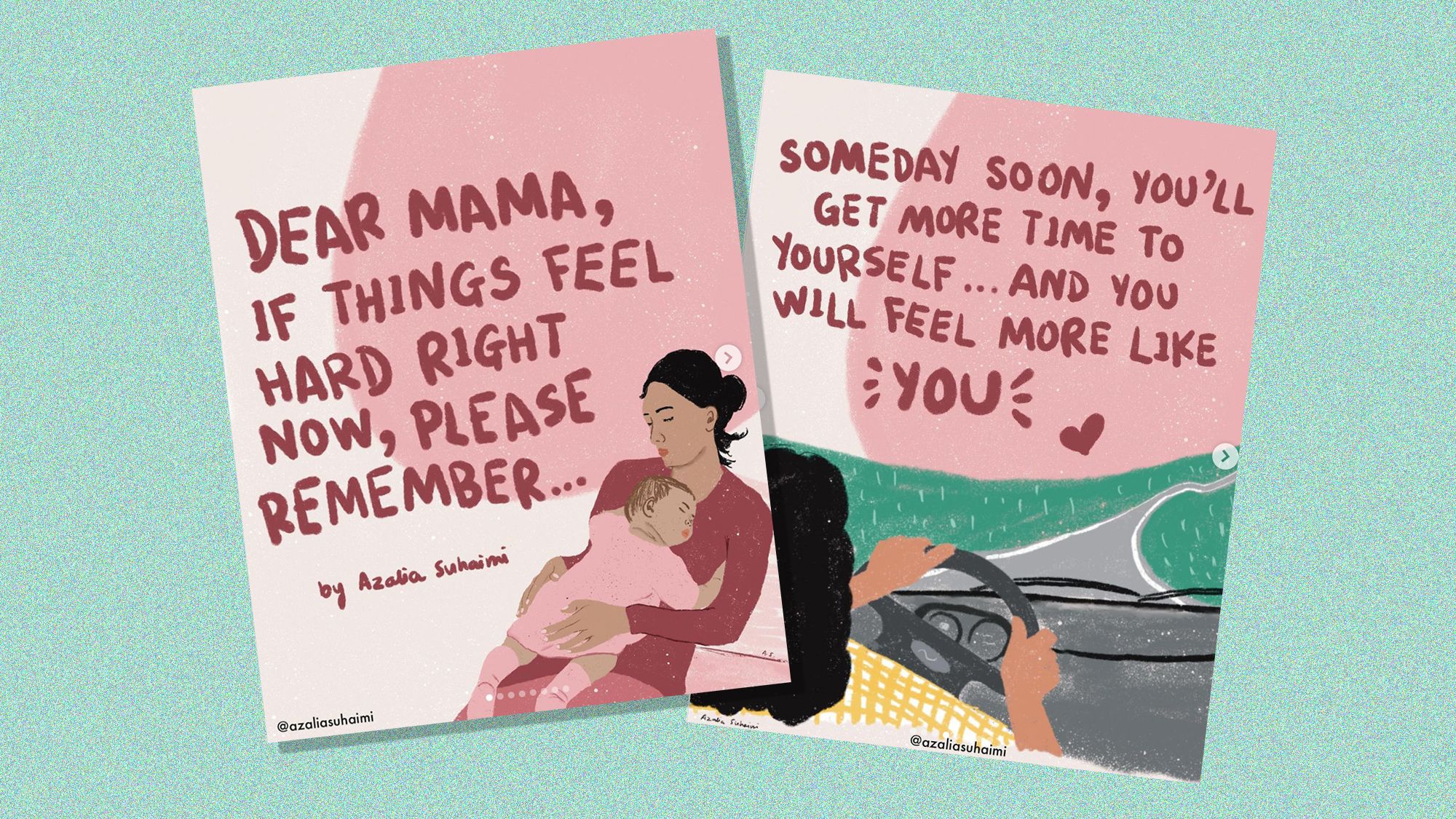
Motherhood is full of conflicting emotions. It can be beautiful and joyful and fun, but it can also be demanding and confusing and overwhelming at the same time.
In artist and poet Azalia Suhaimi’s illustrations, the Malaysia-based mother of two offers comforting reminders to parents navigating these ups and downs.
Many of her illustrations, which she shares on her Instagram account, @azaliasuhaimi, begin with the words “Dear Mama.” But she said they apply to dads and other caregivers, too.
Advertisement
“My artworks are titled ‘Dear Mama’ as they mostly began as love letters to myself, like self-reminders on a bad day,” Suhaimi told HuffPost. “When I decided to share them with the world, I then began building a community of like-minded mothers, all of whom I have really loved connecting and exchanging stories with.”
Suhaimi started her Instagram account several years ago when she was “going through the postpartum blues.” At that time, she would share her own photography with poetic captions that talked honestly about motherhood.
“I scrolled through social media and saw all these picture-perfect Instagram photos of mothers enjoying their new babies,” she said. “I felt weird and alone and left out, like I was the only one struggling with these difficult feelings while every other mother out there seemed to be having the best time of their lives.”
Advertisement
Then, during the Covid lockdowns, she took a digital art course online and began creating illustrations for her posts.
In her work, she enjoys capturing the raw and real moments of parenthood, raising awareness of maternal mental health issues and offering solidarity to other parents in the thick of it.
Suhaimi’s kids are now ages eight and four. She said this is her favourite phase of motherhood so far.
“I can finally sit a bit and reflect on all the lessons I’ve learned from the struggles of early motherhood the past few years. And you can see these reflections on my artworks.”
Advertisement
As an artist, Suhaimi hopes to make parents feel less alone in their own journeys, whatever they’re going through.
“Parenthood is hard and messy as it is, so it’s nice to have solidarity, and a safe space where we can talk about the hard things without being judged and where our feelings are validated,” she says. “And I hope my artworks provide that safe space.”
Another important part of Suhaimi’s message is reminding parents to give themselves more grace.
“Some of my darkest moments of parenthood were really made darker simply because I wasn’t kind to myself,” she said. “I easily judged myself and concluded myself as a bad mom when what I faced was simply just a bad day.”
For Suhaimi, learning to practise self-compassion made “a whole lot of difference” in how she parents her kids and in her motherhood experience.
Advertisement
“So I hope that my artwork can help remind other parents and myself too – I still need the reminder – to practise self-compassion,” she says.
To see more of Suhaimi’s work, you can follow her on Instagram or visit her website. Below, check some of her heartfelt illustrations.
Advertisement

The RCN wants progress in negotiations by the end of January or says it will ballot more members.
Four months ago, Geraint John lost his 43-year-old wife and the mother of his three children to cancer.
Alzheimer’s Research UK said the findings were encouraging but said more and larger studies were needed.
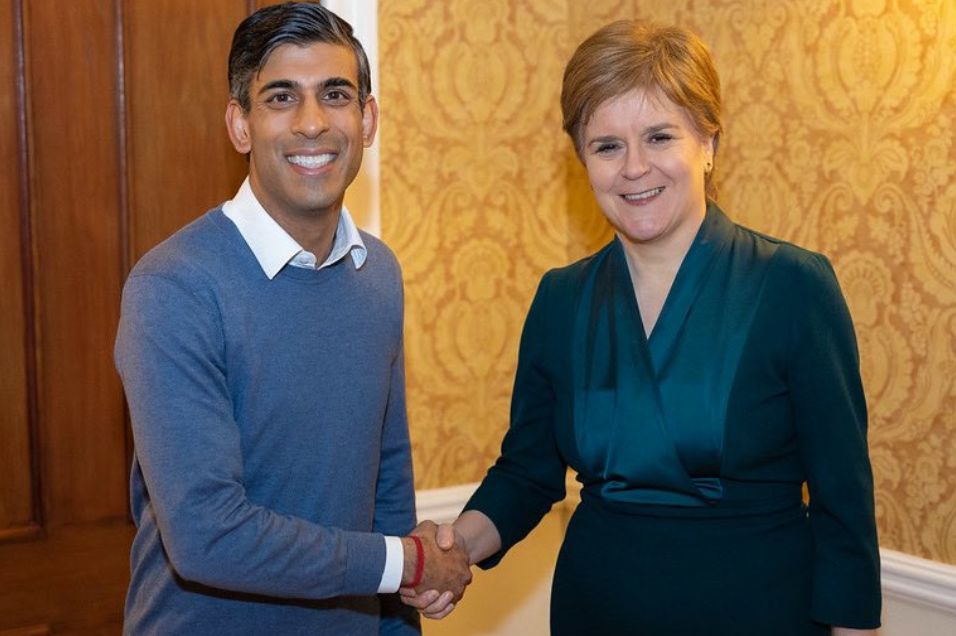
Rishi Sunak returns to London this morning after spending two days in Scotland.
His visit included a private dinner with Nicola Sturgeon on Thursday evening, during which the pair discussed, among other things, the many issues that divide them.
Nevertheless, the prime minister said he wanted the pair to “strengthen our working relationship and continue discussing our shared challenges and our joint efforts to deliver for people in Scotland”.
Advertisement
But that laudable intention will be blown to pieces next Wednesday if, as HuffPost UK understands, Sunak’s government takes the unprecedented step of blocking a bill passed at Holyrood from becoming law.
The legislation in question is the Gender Recognition Reform Act, which was passed by the Scottish Parliament before Christmas after a fierce debate which highlighted splits on the issue in the main parties.
In simple terms, the new law would make it easier for trans people to change gender by reducing the time the process takes and lowering the age at which it can happen.
The Westminster government has no intention of bringing in a similar bill, giving rise to potential legal problems over how the Scotland-only law would affect the application of the Equalities Act across the UK.
Advertisement
Ministers in London can block Holyrood legislation in such circumstances by triggering section 35 of the Scotland Act — which brought the Scottish Parliament into being in 1999.
That would prevent the presiding officer of the Scottish Parliament from sending the bill to the King for royal assent.
Whitehall sources say Alister Jack, the secretary of state for Scotland, will announce on Wednesday that the UK government will block the bill.
Coming at a time when the SNP are already accusing Westminster of “denying democracy” by not allowing another referendum on independence, this would be the political equivalent of throwing a match into a box of fireworks.
10 Downing Street
Advertisement
Asked about the issue while in Scotland, Sunak was giving little away.
“Obviously this is a very sensitive area and I know there were very robust debates and exchanges on it as the bill was passing in in Scotland,” he said.
“What I’m concerned about is the impact of the bill across the United Kingdom.
“There may be impacts across the UK that we need to be aware of and understand the impact of them, and that’s what we’re doing, and once the government has received final advice it will set out next steps.”
Stephen Flynn, the SNP leader at Westminster, gave a foretaste of what his party’s reaction will be if the UK government does indeed veto the Gender Reform Recognition Act.
He said: “This goes to the heart of Scotland’s democracy because Scotland’s democratically elected parliament has approved legislation in relation to gender recognition and the UK government is potentially going to try and undermine that. That’s simply not on.”
It’s not a straightforward issue for the SNP, however.
The debate in the Scottish Parliament saw the biggest rebellion against the party leadership since it came to power in 2007, with some SNP MSPs voting against what they see as an attack on women’s sex-based rights.
Advertisement
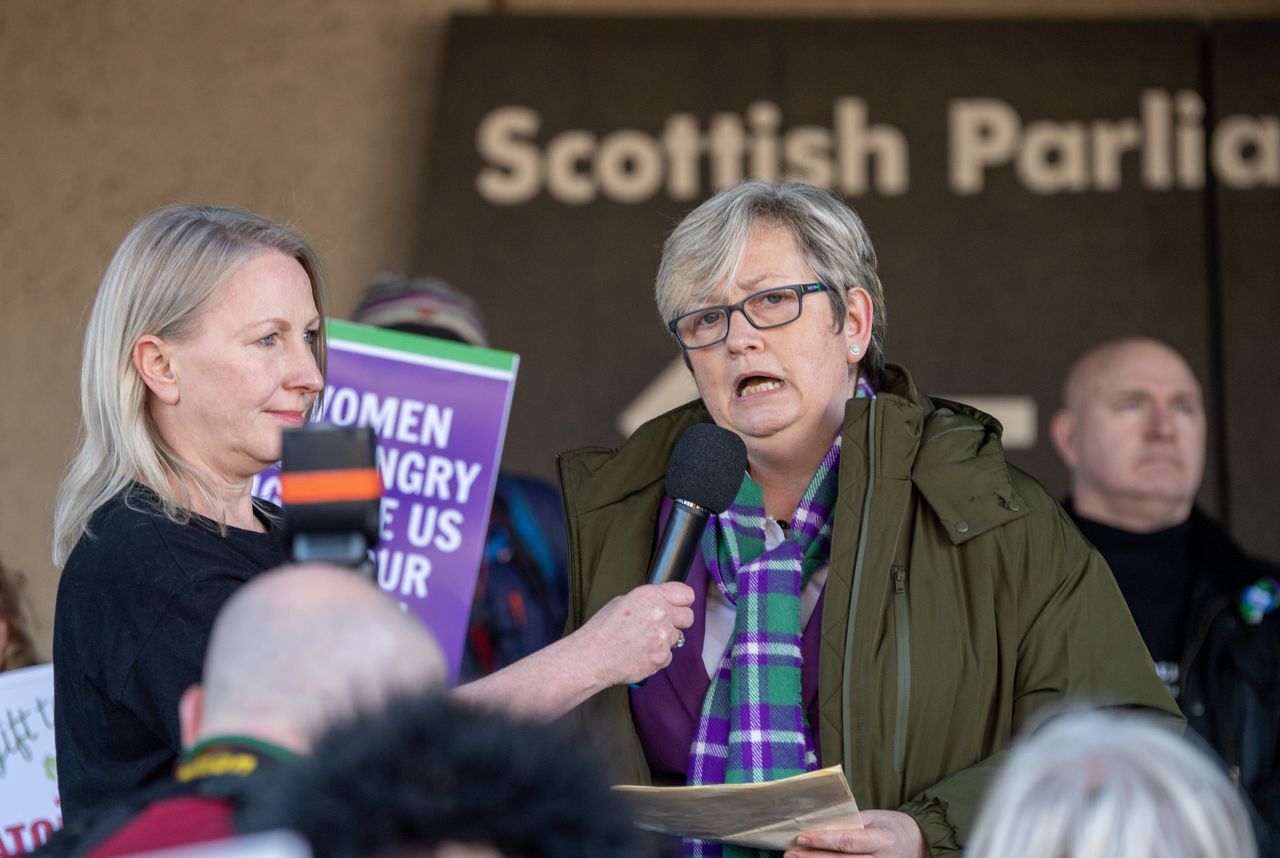
The SNP’s Westminster group is also split, with Edinburgh South West MP Joanna Cherry one of the most vocal opponents of the Scottish government’s position.
Will those SNP rebels back the UK government blocking a law they hate, or will they row in behind Sturgeon over what their party claims is an attack on devolution itself?
Lesley Martin via PA Wire/PA Images
One constitutional expert told HuffPost UK that the row will ultimately end up in the Supreme Court, which ruled in November that the Scottish Parliament does not have the power to organise its own independence referendum.
“Using such a radical mechanism as a veto power does rather play into the SNP narrative that Westminster is denying democracy, which seems to me to be politically risky,” they said.
Advertisement
“As we approach the 25th anniversary of devolution, it is a big moment.”
For all his warm words about co-operation with the Scottish government, it seems all-but certain that Sunak is just days away from a constitutional crisis which could end up defining the very future of the United Kingdom.

You’ve likely heard talk in the news about XBB1.5, an Omicron variant that has become a dominant strain of the Covid-19 virus in the US and that experts warn could soon become so in the UK, too.
According to the latest data from the Centers for Disease Control and Prevention, XBB1.5 accounted for 27.6% of overall US infections in the first week of January, inching closer to overtaking BQ.1.1 as the most common variant.
Advertisement
While for the most part this Omicron variant is similar to previous ones, there are a few things to know about XBB1.5, especially if you believe that it may have hit your household.
Experts agree that symptoms tend to be the same as those we’ve seen before.
“I have not seen any evidence to suggest the main symptoms of XBB variant are different from previous variants,” Dr. Ruth Kanthula, a paediatric infectious diseases specialist at MedStar Health, tells HuffPost.
Common symptoms in children can include:
“It’s hard to tell about loss of taste and smell in young kids,” says Dr. Tanya Altman, a paediatrician and author of Baby and Toddler Basics.
Advertisement
Altman says she has noticed that kids tend to be less interested in eating while they are sick, and ask for “more flavourful or spicy foods after they recover, which to me suggests their taste may not have fully recovered yet.”
Altman describes the majority of Covid infections that she is seeing now as mild – with kids having less serious symptoms than adults, such as shortness of breath. She adds that children seem to be recovering quickly after testing positive.
“This could be due to the fact that most of the population has some sort of immunity from previous infections or vaccines, or the virus is now weaker, and I think it’s likely a combination of both,” she continues.
It’s important to note, however, that a child can have two respiratory viruses at the same time, which may cause their symptoms to be more severe. Other viruses in heavy circulation right now include RSV and the flu, which some have dubbed, along with Covid-19, the “tripledemic”.
Advertisement
The “main difference that has been observed with XBB variant compared to other Covid-19 variants is that XBB variant spreads quickly,” says Kanthula.
Advertisement
Because the XBB1.5 variant has quickly come to account for a large portion of infections, scientists think that it may be more highly transmissible than other variants.
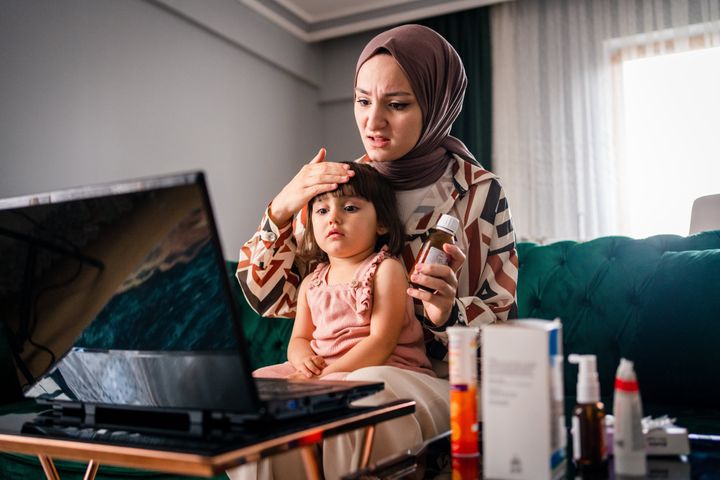
Phynart Studio via Getty Images
“The XBB.1.5 variant has a mutation virologists believe is helping the virus better bind to cells and thus be more transmissible,” Johns Hopkins professor of molecular microbiology and immunology Andy Pekosz explained in a Q&A on the university’s website.
Practically, this means that the virus could infect many members of a household, or a school classroom, in a short amount of time.
In addition to being more highly transmissible, XBB1.5 also seems to be “immune-evasive,” according to Pekosz, meaning that there may be a lot of breakthrough infections in people who have previously had Covid, are immunised, or both.
Advertisement
If your child has any of the symptoms listed above, it makes sense to give them a Covid-19 test. Note that these tests will only tell you whether your child is positive for Covid-19, not which viral strain they have.
Treat your child’s symptoms just as you would any other respiratory virus, with rest, fluids and acetaminophen/ibuprofen for fever or aches. As always, says Altman, if your child has a fever for more than four days, isn’t keeping fluids down, has trouble breathing or looks really sick, call your doctor.
For infants under three months, you should contact your doctor if they have a fever of 38°C or higher or miss two feeds, as young infants can become very sick with different respiratory viruses.
As the NHS website explains, you have Covid-19, you can pass on the virus to other people for up to 10 days from when your infection starts. Many people will no longer be infectious to others after five days.
Anyone with Covid is currently advised by the NHS to try to stay at home and avoid contact with other people for five days, and avoid meeting people at higher risk from Covid-19 for 10 days, even if those people have had a Covid-19 vaccine.
Advertisement
“If a child or young person aged 18 or under tests positive for Covid-19, they should try to stay at home and avoid contact with other people for 3 days. This starts from the day after they did the test,” the guidance continues.
“Children and young people tend to be infectious to others for less time than adults. If they’re well and do not have a temperature after 3 days, there’s a much lower risk that they’ll pass on Covid-19 to others.”
While it’s frustrating to have to keep your child home from school, particularly if they’re not feeling ill, Altman says: “Covid is one that you really don’t want to spread to others, especially those who are high risk, so please keep your kids home when sick, mask if you need to leave your house with sick kids and keep them away from others as much as possible.”
“I think the goal now is to learn to live with Covid, just as we live with flu, RSV and other contagious respiratory illnesses,” says Altman.
Stay home when sick, wash hands, disinfect surfaces, teach kids to cover their faces when they cough or sneeze, and mask when appropriate (such as days six to 10 of a Covid-19 infection.)
Advertisement
Even though XBB1.5 is known to evade immunity, “based on past experience we know that vaccination can protect against developing severe disease,” says Kanthula, so you should make sure your children have been vaccinated and had boosters.
Altman says she believes that the hybrid immunity of three doses of vaccination and one illness seems to offer the most protection against reinfection.
Experts are still learning about Covid-19. The information in this story is what was known or available at the time of publication, but guidance could change as scientists discover more about the virus. To keep up to date with health advice and cases in your area, visit gov.uk/coronavirus and nhs.uk