‘My Ends Were Dry, Frizzy, And Honestly Just Sad’ — Until This $15 Hair Mask

Sometimes, your regular shampoo and conditioner just don’t cut it, especially if your strands are changing due to age, a new environment or hormones. Thankfully, we’ve spotted a deep-conditioning mask that handles everything from dullness to frizz to more extensive damage. Briogeo’s “Don’t Despair, Repair!” at-home treatment that reviewers say makes hair “noticeably softer and less dry,” in as little as 15 minutes. Several reviewers swear this “saved” their hair to the point of straight-up happy tears. Its 2-ounce tube is $15 and if you need more, we spotted the more big jar for 50% off, TODAY only, as part of Sephora’s flash Hair Faves sales, running through May 4.

Reviewers say this quick, weekly treatment is “the real deal” for trading heartbreaking damage for salon-like soft and bouncy hair at home.

“My ends were dry, frizzy, and honestly just sad—but after using Briogeo Don’t Despair, Repair! once a week, my hair feels softer, smoother, and way more manageable,” one user, wrote about the magic in a tub. ”…I leave it on for about 10–15 minutes and rinse, and it instantly makes my hair feel like I just left a salon.”

“I had been experiencing so much shedding and breakage that I was gravely concerned and quite honestly, growing desperate,” another person wrote about their pre-mask curly challenges.

“After one use (yes just one) I can already tell a major difference in my hair! My curls have more definition and there is a “bounce” to them again. I haven’t seen my hair have that ‘bounce’ in so long! It made me so happy I literally teared up!! I’m looking forward to seeing the health of my hair improve even more thanks to this wonderful product! Definitely a 10 out of 10!!! ❤️”

Whether using it on straight, curly or multi-textured hair, several people love how easy the mask is to apply.

Say good by to kitchen concoctions and long stints underneath a dryer. Made with plant protein, biotin, algae extract and almond, argan and rosehip oils, this leave-in mask is designed to strengthen, repair and hydrate your hair quickly. The brand advises one-time application weekly for just 10 minutes, in place of your regular conditioner. Just let it sit, then rinse.

However, some users shared that they had a smooth experience with positive changes, even if they didn’t follow the directions to a tee. “The jar is actually bigger than I expected, well packaged and so soft and easy to glide through your hair,” shopper Florence said.

“Read directions because the product recommends you leave on for 10 minutes before rinsing,I didn’t have 10 minutes to wait and my hair still became manageable and looks wonderful again!”

And several folks report the product not only being easy to use but making styling their hair easier after rinse-out — from detangling to styling.

It’s especially loved by people with dry, gray hair and damage from hot tools and coloring.

One reviewer, who tried the mask from a Sephora sample, called the mask a “miracle tamer of the crazy white hairs!” “I am starting to go white (not gray, seriously, white) and those white hairs are course and have a mind of their own,” they wrote. “This seemed to tame them and keep them in line with the rest of my hair. To me that’s everything. Nothing worse than crazy white hairs sticking out everywhere.”

Others call the conditioner “great for greying hair,” especially for capturing the “shine and bounce” of the salon. “You’re going to be thrilled with the smooth and silky feel of the mask that’s done its magic,” one said. ”…Styling after using the mask is a breeze again and you’re going to look like you just walked out of the salon! When the grey hair shines, it looks healthy and blends better with the rest of your hair.”

Reviewers who had damaged hair from salon treatments report similair results. “I recently had my hair professionally colored, and it definitely dried out my hair,” one said, noting that after using the “magic” mask one time, “I’m shocked at how soft it is, and tangle free!”

“My hair felt like broom straw after it was bleached (never again!) and I bought this as a Hail Mary,” another wrote. “After 1 use my hair felt almost back to normal, after the 2nd use it felt soft, luxurious, and wonderful.”

Reviewers love this deep conditioning mask for making their locks softer and smoother. Read more 5-star Amazon reviews, then try the smaller size at Amazon for $15 or grab the large size on sale at Sephora.

“This hair mask is the real deal. My ends were dry, frizzy, and honestly just sad—but after using Briogeo Don’t Despair, Repair! once a week, my hair feels softer, smoother, and way more manageable. It smells amazing (clean and fresh without being too strong), and the texture is super creamy without weighing my hair down. I leave it on for about 10–15 minutes and rinse, and it instantly makes my hair feel like I just left a salon. Bonus: it’s clean and cruelty-free, which makes me feel even better about slathering it all over my head. Total game-changer for damaged or color-treated hair.” — Aura’s Of Amara

“This stuff is magic. I recently had my hair professionally colored, and it definitely dried out my hair. I had heard wonderful things about the whole Don’t Despair, Repair line and I decided to try this mask and the protein treatment. I just dried my hair and I’m shocked at how soft it is, and tangle free! Definitely give this a try if you have dry or damaged hair – I loved it so much I ordered the matching shampoo and conditioner! Can’t wait to try the whole line together!” — Phaedra

I’m 60+ and found out that when you have enough gray hair going, it comes in dull and lifeless, a little wiry and has a mind of its own. You may leave the salon with shine and bounce to discover all that disappears when you shampoo and condition yourself at home. Here is the solution. After shampooing, rinse, then load a small scoop of this mask onto your hair, massaging it into your scalp and through to the ends (I have longer than shoulder length hair ) don a conditioning cap to keep your wet hair from dripping everywhere and wait 10 minutes. Then rinse it out, add your usual conditioner and rinse again. You’re going to be thrilled with the smooth and silky feel of the mask that’s done its magic. Plus the confidence that you’ve elected to use a product that is not full of harmful petroleum chemicals, preservatives and the like, that seep into your scalp and cause breakouts, hormone disruption and other additives that they secretly add to lots of hair products. Styling after using the mask is a breeze again and you’re going to look like you just walked out of the salon! When the grey hair shines, it looks healthy and blends better with the rest of your hair. Love this stuff!” — Belinda W

Everyone’s hair is different. My hair is superfine, dyed, thinning and old (I am 73). I got a sample of this wonderful product a while ago and I am still rejoicing that it found me. It is great to be able to buy it in a larger quantity. My thin hair has much more volume and body after using this product. It is shiny and has a great texture. It never weighs my hair down and never dries it out. I simply love how my hair looks after using it.” — J.E. preston

Looking for more body and volume in your conditioned hair? Who isn’t! Check out these three on-sale finds for giving your strands a boost, courtsey of HuffPost Shopping.

Amazon

Werb’s volume dry texture spray (15% off)

Deemed a “godsend for really fine hair” this dry texture spray from Verb is loved for bringing volume and bounce to thin strands. Reviewers say its like a dry shampoo and hair spray mix, that holds hair in place and gives you body for days. Get it for 15% off.

Promising review: “Best stuff ever. This is the perfect balance between dry shampoo and hairspray. My hair is SO fine and thin, that any presence of oil looks like my hair is slicked back. I can get an extra WEEK out of one wash because of this stuff! It also really helps plump up my braids and ponytails. Ponytails are bouncy and lush, and braids look nice and big, instead of skinny rat tails! Having really fine hair (basically a type 1A/1B) I missed out on the 90s holdover of perms, floofs, super tall bangs, and volume to the max—and I finally can get it” — Moriah

Amazon

A K-Beauty root-enhancing rosemary water spray (15% off)

Another win for thinning hair — rosemary. More than a cooking herb, the plant is a potent, government-studied ingredient in body care, namely for boosting thinning or balding hair. We’ve covered the stuff quite a bit, speaking to dermatologists and even trichologists (hair and scalp specialists, yes that’s a thing) about rosemary’s ability to condition and strengthen hair, soothe the scalp and even its potential to accelerate new hair growth. Needless to say, we’re all for adding rosemary to your routine, so when we spotted this root-enhancing rosemary water spray from Korean beauty brand Aromatica and saw it was on sale, we knew we needed to tell the people. The spray is already cheaper on Amazon than it is on the brand’s website, so this sale is closer to 40% off its list price.

Amazon

The Ordinary’s multi-peptide serum for hair loss (23% off)

In a previous story about the best shampoos for hair loss, Dr. Dendy Engelman, a board-certified dermatologist at Shafer Clinic Fifth Avenue in New York City, mentioned that peptides, a common ingredient in anti-aging skin care, are actually a great ingredient for supporting the scalp and reducing shedding.

Armed with Engelman’s insights, we’ve got our eyes on this multi-peptide serum for hair density by the Ordinary, which reviewers call “magic in a bottle.” The serum is fragrance-free and sulfate-free (derms have previously warned against using sulfates if you’re concerned about hair loss, because they can strip the scalp of natural oils, leading to dryness and inflammation). It’s also so easy to use as a lightweight, water-based leave-in serum: Just apply a few drops to your clean, dry scalp once a day (the brand recommends at bedtime). Even better? It’s currently 23% off.

The Real Deal: We use deal trackers and commerce experience to sift through “fake” hike-and-drop deals and other deceptive sales tactics. Products will usually be rated at least 4 stars with a minimum 15% discount. (And when there’s an exception, we’ll tell you why.)


Share Button

Scientists finally solve mystery of strange “golden orb” found 2 miles deep

A strange object known as the “golden orb” puzzled scientists and captured public attention after it was collected during a 2023 NOAA expedition. More than two years later, researchers have finally identified what it is.

The unusual golden mass, discovered at a depth of 3,250 meters (over 2 miles) in the Gulf of Alaska, turned out to be the remains of dead tissue from a giant deep-sea anemone called Relicanthus daphneae. Specifically, it was part of the anemone’s base, which anchors the animal to rocky surfaces on the seafloor.

During NOAA Ocean Exploration missions aboard NOAA Ship Okeanos Explorer, encountering unfamiliar organisms is not unusual. In many cases, scientists can quickly identify these finds by sharing knowledge and collaborating. However, some discoveries resist easy answers, and the “golden orb” became one of those rare, lingering mysteries.

[See link to video below article.]

Discovery in the Gulf of Alaska

In 2023, the remotely operated vehicle Deep Discoverer (launched from Okeanos Explorer) was exploring more than 2 miles below the surface in the Gulf of Alaska when it spotted something unusual. Resting on a rock was a rounded, golden object with a small opening, unlike anything the team had seen before.

The discovery raised immediate questions. Could it be an egg case, a sponge, or something entirely new? Some even wondered whether a creature had entered or exited through the opening. The unusual appearance sparked widespread curiosity and speculation.

To investigate further, the team carefully collected the object using a suction sampler and sent it to the Smithsonian National Museum of Natural History (NMNH) for detailed study.

A Complex Investigation Using DNA and Microscopy

Solving the mystery of the “golden orb” took years of careful analysis. Unlike more straightforward identifications, this case required multiple scientific approaches and specialized expertise.

“We work on hundreds of different samples and I suspected that our routine processes would clarify the mystery,” explains Allen Collins, Ph.D, zoologist and director of NOAA Fisheries’ National Systematics Laboratory, which is physically located within the Smithsonian National Museum of Natural History. “But this turned into a special case that required focused efforts and expertise of several different individuals. This was a complex mystery that required morphological, genetic, deep-sea and bioinformatics expertise to solve.”

Researchers from NOAA Fisheries and the Smithsonian used an integrative taxonomic approach, combining physical examination with genetic testing. Early analysis showed that the object did not have typical animal features. Instead, it consisted of fibrous layers packed with cnidocytes (stinging cells), indicating it likely belonged to a cnidarian, the group that includes corals and anemones.

Further study by National Systematics Lab scientist Abigail Reft identified the cells as spirocysts, which are unique to the Hexacorallia subgroup of cnidarians. Scientists also compared the specimen to a similar object collected in 2021 during an expedition aboard Schmidt Ocean Institute’s Research Vessel Falkor, finding matching cellular structures.

Genetic Evidence Confirms the Answer

Initial DNA barcoding attempts did not provide clear results, possibly because the sample contained genetic material from other microscopic organisms. To get a more definitive answer, the team turned to whole-genome sequencing.

This deeper analysis confirmed the presence of animal DNA and revealed a strong genetic match to the giant deep-sea anemone Relicanthus daphneae. Sequencing of mitochondrial genomes from both specimens showed they were nearly identical to a known reference genome for this species.

What the Golden Orb Really Was

With all the evidence combined, scientists concluded that the “golden orb” was not an egg, sponge, or unknown organism. It was a leftover structure from a deep-sea anemone, specifically the base that once attached the animal to the seafloor.

Although this discovery answers the question of the orb’s identity, it also highlights how much remains unknown about life in the deep ocean.

The Deep Ocean Still Holds Many Mysteries

“So often in deep ocean exploration, we find these captivating mysteries, like the ‘golden orb’. With advanced techniques like DNA sequencing, we are able to solve more and more of them,” said CAPT William Mowitt, acting director of NOAA Ocean Exploration. “This is why we keep exploring — to unlock the secrets of the deep and better understand how the ocean and its resources can drive economic growth, strengthen our national security, and sustain our planet.”

Even with this mystery solved, scientists emphasize that the deep sea continues to be one of the least understood environments on Earth, filled with discoveries still waiting to be made.

Share Button

This hidden kind of stress may be damaging your memory as you age

Stress that people turn inward may be quietly increasing the risk of memory loss in older Chinese Americans, according to new research from Rutgers Health.

The study, published in The Journal of Prevention of Alzheimer’s Disease, was conducted by researchers at the Rutgers Institute for Health, Health Care Policy and Aging Research. It explored a range of factors that could either raise or reduce the risk of cognitive decline in Chinese adults over age 60.

This group was selected in part because older Chinese Americans have often been overlooked in research on brain aging, leaving important gaps in understanding how memory loss develops in this population.

“With the number of older Asian Americans growing significantly, it’s vital to better understand the risk factors of memory decline in this understudied population,” said Michelle Chen, a core member of the Center for Healthy Aging Research at Rutgers and the study’s lead author.

Cultural Pressures and Hidden Emotional Strain

The researchers noted that cultural expectations may play a role in shaping mental health outcomes. The model minority stereotype — which portrays Asian Americans as consistently successful, educated and healthy — can create added pressure while also masking emotional struggles.

At the same time, many older immigrants face challenges such as language barriers and cultural differences, which can contribute to ongoing stress. While these issues are not unique to Asian Americans, the researchers say they may be particularly relevant in this context.

“Stress and hopelessness may go unnoticed in aging populations, yet they play a critical role in how the brain ages,” said Chen, who is also an assistant professor of neurology at Rutgers Robert Wood Johnson Medical School. “Because these feelings are modifiable, our goal is for this research to inform culturally sensitive stress-reduction interventions to mitigate these feelings in older adults.”

Large Study Tracks Memory Changes Over Time

To better understand these effects, the team analyzed data from the Population Study of ChINese Elderly (PINE), the largest community-based cohort study focused on older Chinese Americans. The dataset included interviews conducted from 2011 to 2017 with more than 1,500 participants living in the Chicago area.

The researchers examined three key sociobehavioral factors: stress internalization, neighborhood or community cohesion and external stress alleviation.

Key Finding Points to Internalized Stress

Among these factors, internalized stress stood out. This form of stress includes feelings of hopelessness and a tendency to absorb stressful experiences rather than express or resolve them. It was strongly linked to worsening memory across three waves of the PINE study.

In contrast, the other factors did not show a significant connection to changes in memory over time.

Implications for Prevention and Support

Because internalized stress can potentially be addressed, the findings suggest an opportunity to develop targeted strategies that support emotional well-being and cognitive health in older adults. The researchers emphasize the importance of culturally sensitive approaches that take into account the unique experiences of aging immigrant populations.

The study was supported by the Rutgers-NYU Resource Center for Alzheimer’s and Dementia Research in Asian and Pacific Americans, co-led by William Hu of Rutgers Institute for Health and Rutgers Robert Wood Johnson Medical School. Coauthors include Yiming Ma, Charu Verma, Stephanie Bergren and William Hu of Rutgers Institute for Health.

Share Button

Students build a “cosmic radio” to listen for dark matter

Modern cosmology is often associated with massive observatories, advanced instruments, and large international collaborations backed by significant funding. However, meaningful progress does not always require such scale. Even in the complex search for dark matter, smaller teams with creative approaches and institutional support can still make important contributions.

A recent study published in the Journal of Cosmology and Astroparticle Physics (JCAP) highlights this idea. A group of undergraduate students from the University of Hamburg designed and built a cavity detector to search for axions, which are among the leading candidates for dark matter. Despite working with limited resources, they were able to establish new experimental limits on axion properties, demonstrating that smaller experiments can still advance one of physics’ biggest unresolved problems.

Student Funding and Institutional Support

The project was funded through a student research grant from the University of Hamburg, provided by the Hub for Crossdisciplinary Learning. This program supports independent research projects led by students.

“We were kind of embedded in the research group of the MADMAX dark matter experiment,” explains Nabil Salama, one of the study’s authors and a current M.Sc. student in Physics at the University of Hamburg. “MADMAX carries out a similar experiment on a much larger and more complex scale, and we benefited from their expertise and support.”

“We are very grateful for this help,” he adds, “and also to the University of Hamburg and the Quantum Universe Cluster of Excellence, which provided funding, access to key equipment such as the magnet, and invaluable support from researchers.”

Building a Simple Detector to Search for Axions

“The benefit of working with dark matter, or axions, is that we expect it to be present everywhere in our galaxy,” says Agit Akgümüs, the study’s first author, who is pursuing an M.Sc. in Mathematical Physics at the University of Hamburg. “So essentially, no matter where you perform the experiment, you have some dark matter on your hand you can do experiments with.”

Using their funding, the team assembled a compact experimental setup centered on a resonant cavity made from highly conductive materials. They also integrated the required electronics, cabling, structural supports, and measurement tools.

“The detector we built is essentially the simplest version of a cavity detector for dark matter,” says Salama.

The students did not begin entirely from scratch. They made use of existing facilities, equipment, and guidance provided by the university and collaborating research groups. After construction, the system was carefully tested, calibrated, and operated to collect data.

“We reduced very complex experiments to their essential components,” says Salama. “The result is a less sensitive setup, limited to a small search window, but still capable of producing new scientific data.”

No Detection, but Important New Constraints

“The search for axions involves exploring a wide range of possible parameters,” adds Akgümüs. “Our experiment covers only a small region, with limited sensitivity, but it still helps narrow down the possibilities. To actually find the particle, we need either much larger experiments or many different ones, each probing a specific region.”

After completing their data collection, the team did not detect any signal that could be attributed to axions. However, this outcome still carries scientific value. It allows researchers to rule out the existence of axions with certain characteristics within the tested mass range, especially those that would interact more strongly with photons. By excluding these possibilities, the study helps refine the search and guide future experiments.

A Model for Scalable Dark Matter Experiments

“I think the point of our experiment is that things can be done on a smaller scale,” says Salama. Akgümüs adds: “Our results are naturally more limited than those of larger experiments. Performance scales with resources and complexity. However, we have shown that it is possible to reduce these setups to a much smaller scale — even to projects developed almost independently by students — while still producing real scientific data.”

During peer review, one referee made an especially notable observation, Salama recalls. The referee suggested that once the axion is discovered and its properties — especially its mass — are known, experiments like this could become much more accessible and might even be used in teaching laboratories.

“We were told that setups like ours could one day become standard student lab experiments,” says Salama. “In a way, we may have anticipated that future, showing that it is already possible to build and operate such an experiment on a small scale.”

Share Button

Care home manager struck off over ‘horrific’ restraining of disabled person

A tribunal hearing criticised Janette Donnelly’s use of force at Millport Care Centre was “unnecessary”.

Share Button

UK healthy life expectancy falls by two years in past decade

Poor housing, obesity and the effects of deprivation have been suggested as underlying cause.

Share Button

My GP Said I Was ‘Fine’ — But I Had A Melon-Sized Tumour In My Chest And Acute Leukaemia

You know your body better than anyone – but what happens when no one listens? Welcome to Ms Diagnosed: a HuffPost UK series uncovering the reality of medical gaslighting. With new stats showing that 8 in 10 of women have felt unheard by medical professionals, we’re sharing the stories of seven whose lives were nearly lost to the gap between their symptoms and a system that refused to listen. As the UK introduces Jess’s Rule – a new mandate for GPs to ‘rethink’ after a third visit – we’re exploring why the medical system is still failing women and how we can start to fix it.

“Have you tried Head & Shoulders shampoo?,” asked my GP. ‘We think you might have a scalp infection.’

I stared at her, gobsmacked. I had between 20 and 50 hard, pea-sized lumps that kept appearing on my scalp, as well as horrible flaking. I knew it was more than a scalp infection.

“I’ve had a dry scalp all my life,” I said, eventually, “I use Head & Shoulders all the time.”

“Hmmm,” mused the GP. “Well, we’ll prescribe you some shampoo that will hopefully get rid of the lumps.”

I didn’t have a scalp infection. I had Acute Lymphoblastic Leukaemia (ALL); and this was diagnosed following a trip to A&E, after I’d gone to my GP surgery every week for ten weeks to no avail.

My symptoms started in July 2021, when I was 26. I’d had Covid for two weeks – then, things only got worse.

For a start, there were those lumps developing on my scalp; as well as down the back of my ear, down my neck and in my armpits.

I was losing a lot of hair; I had terrible night sweats; I was sick a lot; and I was very fatigued, to the point where my boyfriend was having to help dress me. Even walking 100 metres to my office from the carpark, I’d have to stop and catch my breath.

I first visited my GP that summer. ‘We’ve seen a lot of people come in with exactly what you’re saying,’ she said. ‘We think it could be Long Covid.’

That initially made sense; I’d had Covid, after all. But over the course of the following ten weeks, I went back to the GP again and again and she’d make me walk up and down the corridor to test my blood oxygen levels and my pulse. “You’re fine; you’re fine,” she’d say.

“Well…I’m obviously not fine, because I’m out of breath all the time,” I said, utterly bewildered. Once, I was just sitting on the grass watching my boyfriend playing sports when my watch notified me that my heart rate was too high.

But the GP kept saying, “No, no, you’re fine.” As it later turned out, I had a tumour the size of a melon on my chest.

I went back to the surgery again and again with the same symptoms. I’d be told things like, “You’ve got a history with asthma; we’ll give you an inhaler.”

I was prescribed the same shampoo again for the lumps on my scalp. Another time, they suggested the lumps were an allergic reaction to my hair dye.

I had blood test after blood test, but I kept hearing, “They’re fine, they’re fine, all your bloods are fine.”

Obviously, my blood was not fine.

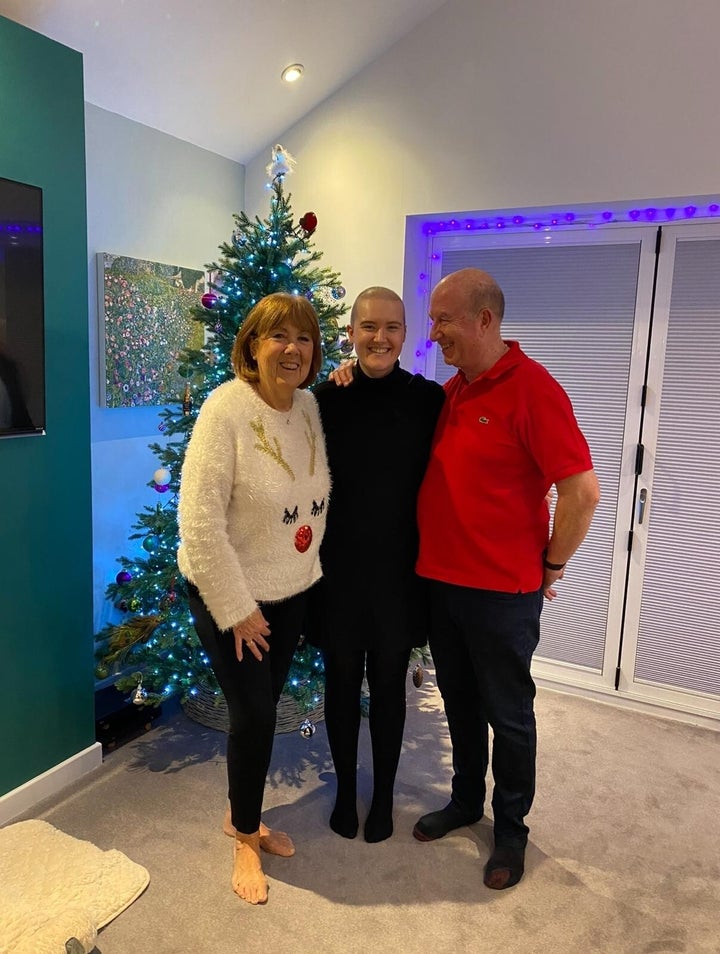
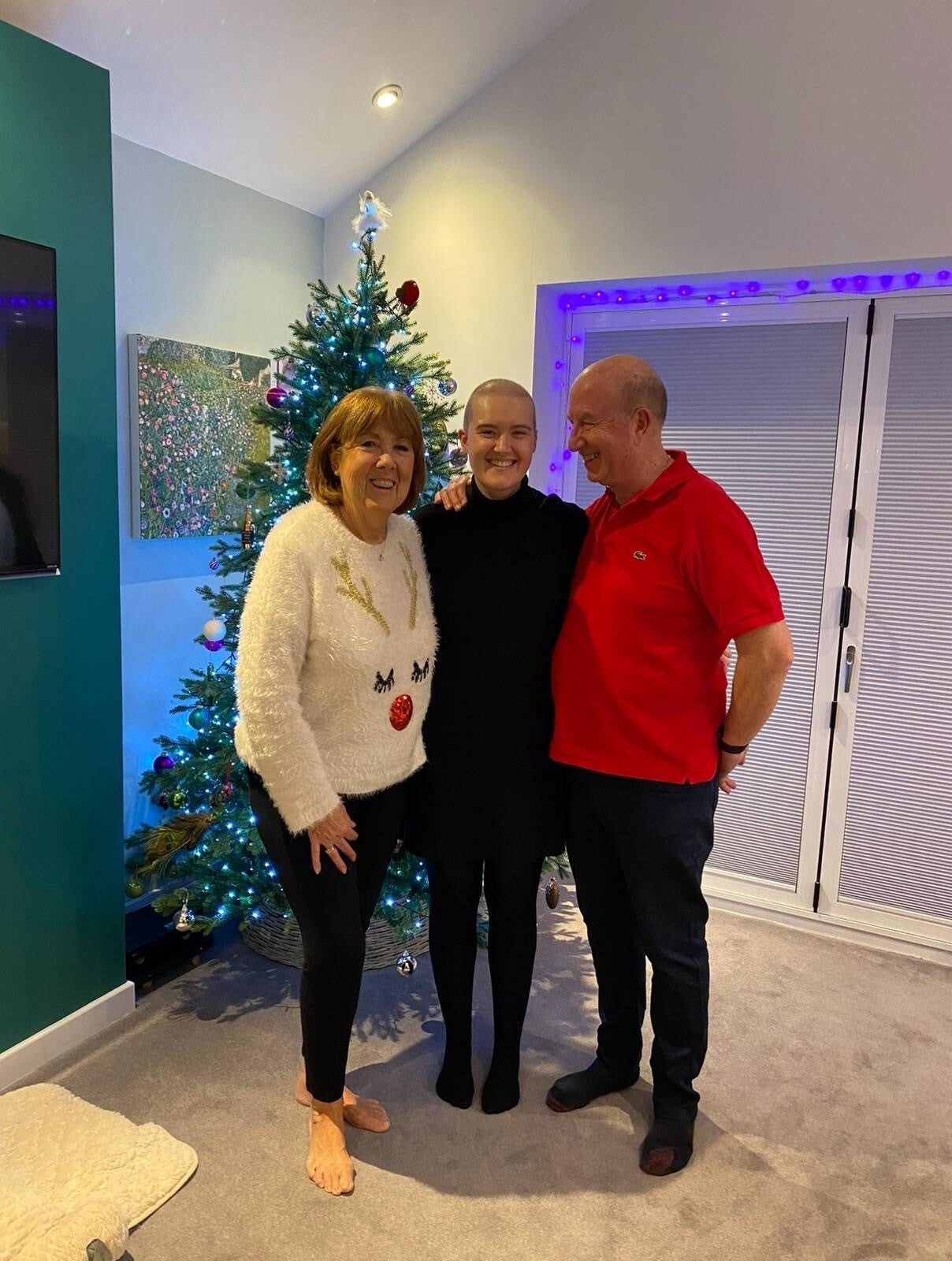
Lizzie with her parents

Lizzie Burbeary

Lizzie with her parents

Every time I left the GP’s office, I felt so let down. It seemed there was no end in sight; I’d just been pushed away again with an inhaler or some scalp treatment.

It was incredibly frustrating and very upsetting – all the more so because I knew, deep down, there was something very wrong. Once, when I was really struggling at work, I said to my manager: “Something’s not right. I know it.”

Another time, I messaged my mum: “What if it’s cancer?”. She replied: “If it was going to be cancer, it would have come back on your blood tests. Try not to worry.”

Those texts will always stick with me. Clearly, on some level, I knew.

In October 2021, I got a migraine at work. I do get migraines, but this was the worst head pain I’ve ever had. I couldn’t even open my eyes. I rang 111 and explained the migraine and all the symptoms I’d had since July; and they sent an ambulance.

I was taken to A&E, where I had a blood test, an ultrasound and a CT scan.

Then, because of Covid restrictions, I was left on my own in a little side room. After about four hours, a doctor came to see me. “We think you’ve got Hodgkin’s lymphoma,” he said.

“I’m sorry…I don’t know what that is,” I said, helplessly.

“It’s a type of cancer,” he said; and then he left. I was on my own trying to process that news; and I burst into floods of tears.

I was taken to the cancer ward, where I stayed for seven days while they did various tests. Eventually, I was diagnosed – not with Hodgkin’s lymphoma, but with ALL.

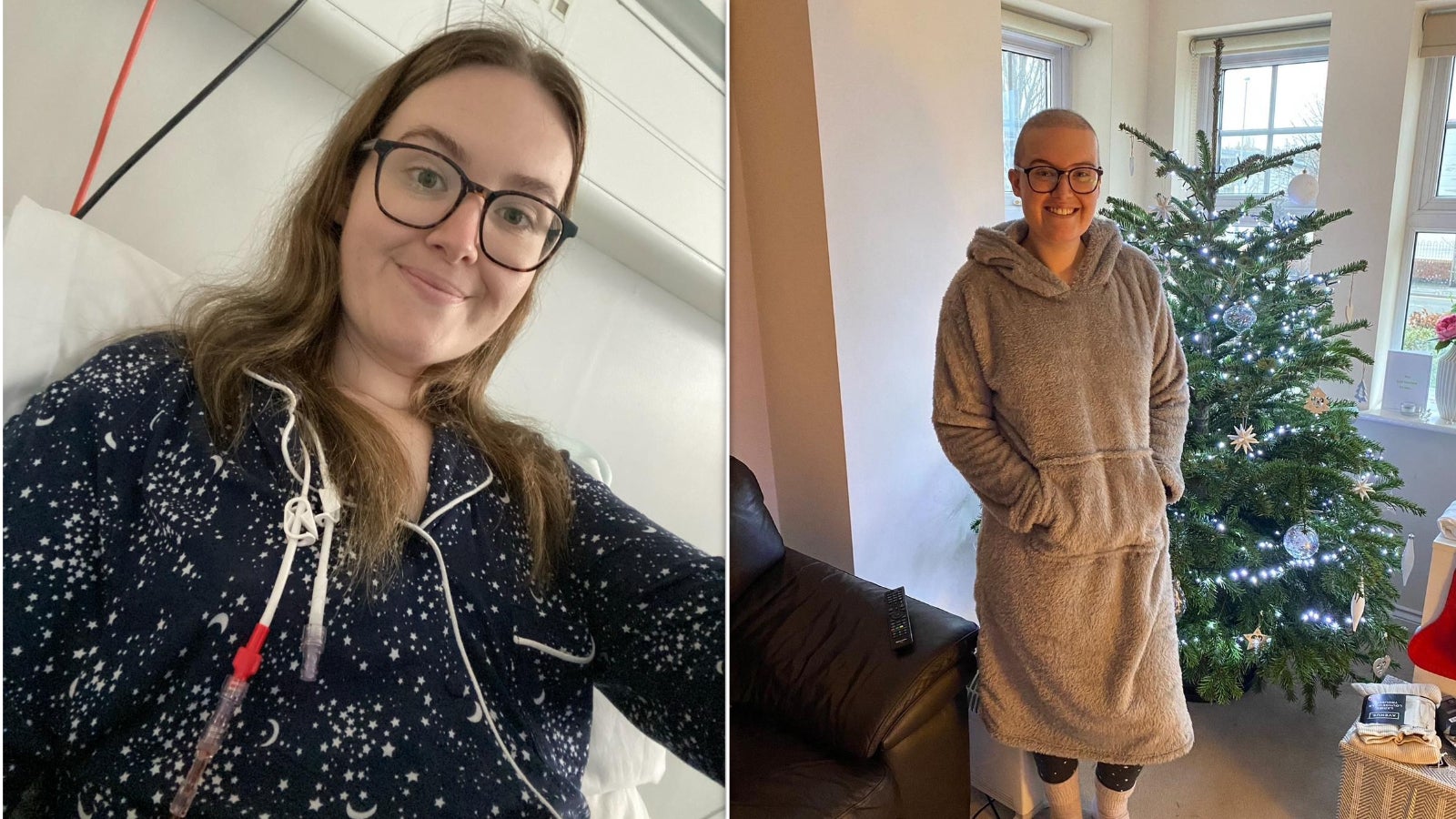
My treatment lasted for nearly three years, because I had a high percentage of leukaemia in my bone marrow as well as my blood. I had regular chemo, and a lumbar puncture every four weeks to take out spinal fluid and check for cancer in my brain. I also had a Hickman line – which was inserted into a vein in my neck and poked out of little valves in my chest – to administer chemotherapy and take regular blood samples. I never got used to that.

Eventually, I finished my treatment in June 2024 – and I’ve now been in remission for 21 months.

I visit my consultant every six months for blood tests and a check-up, and I have to take antibiotics if I get a cold because my immune system isn’t 100%. But with each month that passes, I get stronger. I’m going to the gym three or four times a week and my hair is so long, which feels amazing.

But while I’m a lot better physically, I still struggle mentally.

Even though my consultant told me my treatment would have been the same whether I’d been diagnosed on Day 1 or Day 100, I’m horrified when I think of how many times I was told by a GP that I was fine, when I unequivocally wasn’t – and, thanks to being misdiagnosed repeatedly, I’m left with health anxiety.

Every time I get a bruise on my leg, I automatically think: ‘The cancer’s back.’ If I ever get hot in the night, I worry that I’m getting night sweats again.

In November, a few symptoms were making me extremely anxious – night sweats, bruising, aching muscles and bones. I couldn’t wait for my next scheduled appointment, so I arranged an emergency appointment with my consultant. After reviewing some blood tests, he reassured me that I was a ‘picture of health’ and had nothing to worry about.

I think I’ll always have this anxiety – I went through such a tough journey, the thought of going back to that is incredibly scary – but feeling my strength returning has helped.

And my advice to anyone else struggling to get answers for certain symptoms is: Trust your instincts, and keep on pushing. Try to get a second opinion; if necessary, go to A&E and tell them about all your symptoms.

I’m so glad I kept pushing. I knew something was very wrong; and it turned out I was absolutely right.

Learn more about ALL:

ALL is a rare type of blood cancer, with just 790 new people diagnosed in the UK every year, according to Leukaemia UK. The most common symptoms are fatigue, frequent infections and bruising.

Share Button

Gladiators’ Giant Alleges He Was ‘Sacked’ Over Relationship With OnlyFans Model

Former Gladiators star Jamie Bigg – better known to viewers as Giant – has alleged that he was sacked from the show because of his relationship.

Last week, Giant made headlines when he announced he was stepping away from Gladiators after three seasons on the cast of the rebooted game show.

“What I do want to make clear is this wasn’t a decision I made to step away,” he said at the time.

“I was faced with a choice that didn’t align with my values. And if you know me, you know this… I stand by my people and I stand by what I believe in. That’s what being a role model means to me.”

He has since alleged that he was dropped by Gladiators because he wanted to go public with his relationship with his girlfriend Taylor Ryan, who is an OnlyFans model.

“I had to choose between dating Taylor and keeping my job,” he told The Sun over the weekend, noting that he was “shocked and very saddened about their choice to sack me”.

The firefighter and former professional bodybuilder alleged that he was told by Gladiators producers that by going public with his romance, he could be “providing an access to adult content for children”, something he branded “absurd”.

“One of the most disappointing things is that all I’ve tried to do is be a good person and a good role model, and the BBC haven’t been either of those things,” he lamented.

“Essentially, I don’t want to work for people like that either.”

The cast of Gladiators

BBC / Guy Levy

In a statement to the Daily Mail last week, Giant said: “I made it clear that I was planning to go public with my relationship, including the fact my partner works as an OnlyFans creator, and shortly after that I was told I wouldn’t be continuing on Gladiators.

“It wasn’t something I expected, especially given the commitment I’ve shown to the role. I’ve always taken being in the public eye seriously, and I believe being a role model is about honesty as well as professionalism. For me, that means not hiding parts of who I am or the people I care about.

“My partner is an incredible person, and I have huge respect for everything she does – I’m proud to stand by her.”

Giant then added: “I’m grateful to the BBC and everyone involved in the show for the opportunity and the experiences I’ve had. Now, my focus is on the future.”

A BBC spokesperson previously said: “After three formidable series, Giant is leaving Gladiators. We’d like to thank him for everything he has contributed to the show and wish him well for the future.”

HuffPost UK has contacted the BBC for additional comment.

Share Button

What The Renter’s Rights Act May Mean For Landlords And Tenants

On May 1, 2026, the first phase of the Renter’s Rights Act reforms will come into effect.

The government said the act was created to “empower renters by providing them with greater security, rights and protections so that they can stay in their homes for longer, build lives in their communities, and avoid the risk of homelessness.”

But what does it actually mean for tenants and landlords?

Here’s what Amy Rootham, home insurance expert at Compare the Market, told us about the most important changes for both groups.

How will the Renter’s Rights Act 2026 affect tenants?

“While the Renter’s Rights Act is largely focused on improving protections for tenants, it will also change how renting works day-to-day. Renters will have more flexibility and security, but may also need to plan more carefully around things like moving, budgeting, and maintaining the property,” said Rootham.

She said five significant changes will include:

  1. The end of ‘no-fault evictions’. “The end of ‘no-fault’ evictions means renters have greater protection against being asked to leave without reason. However, the shift to rolling tenancies also means contracts are more open-ended, making longer-term planning feel less predictable.”

  1. Greater flexibility to move. “Tenants will be able to leave with shorter notice, making it easier to relocate for work or personal reasons.”

  1. Better protection against poor living conditions. “Stricter rules on issues like damp and mould should lead to quicker fixes and improved housing standards, giving renters more confidence to raise concerns.”

  1. Easier access to renting with pets. “Tenants will have a stronger right to request a pet, which is a major shift for many households. However, renters should still be mindful of their responsibilities, as they may be expected to cover any damage caused.”

  1. Rent increases will follow a set process. “Under the new rules, landlords will need to use the Section 13 process to increase rent, with increases limited to once per year and at least two months’ written notice required. Tenants may also be able to challenge increases they believe are above market rate.”

How will the Renter’s Rights Act 2026 affect landlords?

Per Rootham, some of the most significant changes for landlords will be:

  1. Rolling tenancies. “As of the 1st May, all fixed-term contracts will move to rolling monthly contracts, removing the certainty of long-term contracts. Landlords must check that their loss-of-rent cover doesn’t lapse or become invalid if a tenant decides to leave. The new regulations mean tenants only need to give a minimum of two months’ notice.”

  1. Extended liability for missed rental payments. “The threshold for mandatory eviction due to arrears is increasing from two months to three. This means landlords could face significantly longer periods without income.”

  1. Stricter health and safety responsibilities. “With Awaab’s Law now applying to the private rented sector, landlords will be legally required to fix hazards like damp and mould within strict timeframes.”

  1. Reduced grounds for refusing pet ownership. ”One of the most significant changes likely to impact landlords relates to pets. Tenants will gain a legal right to request a pet – this cannot be refused without a ‘reasonable’ justification.

    “Crucially, consent will be legally implied unless landlords respond to the request within 28 days.”

  1. Removal of ‘no-fault’ legal protection. “The end of Section 21 ‘no fault’ evictions means all expulsions must now go through a ‘Section 8’ court process. This is often slower and more expensive. Landlords should consider reviewing their legal expenses cover to make sure it can help handle these more complex, evidence-based court hearings.”

  1. Mandatory database fees. “Landlords will have to join a new Private Rented Sector Database and an Ombudsman scheme. Unregistered landlords could find their insurance voided if they are not compliant with these new statutory registries.”

Shelter says this could be good news for tenants

Speaking to HuffPost UK, Sarah Elliott, chief executive of housing and homelessness charity Shelter, said: “For too long, renters have stayed silent about discrimination and endured hellish conditions, for fear of losing their homes. The Renters’ Rights Act has the potential to transform private renting, finally freeing tenants from the injustice of no-fault evictions, which have pushed record numbers into homelessness.

“But renters must understand that the current system remains in place until May 1, 2026. Until then, we stand ready to help them understand the vital changes the Act will introduce. Anyone in need of support should visit our website for housing advice or use the webchat to speak to one of our advisers.”

Share Button

This one change to your exercise routine could add years to your life

Regularly engaging in a variety of physical activities could be one of the most effective ways to extend lifespan, according to research published in the open access journal BMJ Medicine. The findings suggest the relationship is not simply about doing more exercise. Instead, benefits appear to level off after a certain point, indicating there may be an optimal amount of activity.

The results also show that variety itself matters. People who participate in different types of physical activity tend to have a lower risk of death regardless of how much total exercise they do. Still, the researchers emphasize that staying active overall remains important.

Why Exercise Variety Matters

Physical activity has long been linked to better physical and mental health, along with a reduced risk of death. However, it has been less clear whether certain types of exercise offer unique advantages, or whether mixing activities provides additional benefits beyond total volume.

To investigate this, researchers analyzed data from two major long-term studies: the Nurses’ Health Study (121,700 female participants) and the Health Professionals Follow-Up Study (51,529 male participants). These studies tracked participants for more than 30 years, with regular updates on lifestyle, health history, and exercise habits collected every 2 years through questionnaires.

Decades of Data on Movement and Lifestyle

Participants reported a wide range of physical activities over time. Since 1986, this included walking, jogging, running, cycling (including stationary machines), lap swimming, rowing or callisthenics, tennis and squash or racquetball.

Later surveys added more detail, covering weight training or resistance exercise; lower intensity exercise, such as yoga, stretching, and toning; vigorous tasks like lawn mowing; moderate outdoor work such as maintenance and gardening; and heavy outdoor work like digging and chopping.

Participants also reported how many flights of stairs they climbed daily, based on the estimate that each flight takes 8 seconds to ascend.

The analysis included 111,467 participants for total physical activity and 111,373 participants for activity variety. To measure activity levels, researchers used MET scores, calculated by multiplying the average time spent on each activity (in hours/week) by its MET value. METs indicate how much more energy an activity uses compared to resting.

Activity Levels, Habits, and Health Profiles

Across both groups, individuals could report up to 11 or 13 different activities depending on the study. Walking was the most common form of leisure exercise, while men were more likely than women to jog or run.

People who reported higher overall activity levels were generally healthier. They were less likely to smoke or have high blood pressure or high cholesterol. They also tended to have a lower body weight (lower BMI), eat healthier diets, drink alcohol, maintain stronger social connections, and take part in a wider range of activities.

Exercise and Risk of Death Over 30 Years

During more than three decades of follow-up, 38,847 participants died, including 9901 from cardiovascular disease, 10,719 from cancer, and 3,159 from respiratory disease.

Higher levels of physical activity, along with most individual types of exercise except swimming, were linked to a lower risk of death from any cause. However, the relationship was not linear. The benefits of total activity appeared to level off after about 20 weekly MET hours, suggesting there may be a point beyond which additional activity provides less added benefit.

Which Activities Were Linked to Lower Risk

Walking showed one of the strongest associations, with those who walked the most having a 17% lower risk of death compared with those who walked the least. Climbing stairs was linked to a 10% lower risk.

Other activities were also associated with reduced risk when comparing the least active to the most active participants. Tennis, squash, or racquetball were linked to a 15% lower risk. Rowing or callisthenics showed a 14% reduction. Weight training or resistance exercises and running were each linked to a 13% lower risk. Jogging was associated with an 11% reduction, while cycling showed a smaller 4% decrease.

The Added Benefit of Exercise Variety

Engaging in a wider range of activities was linked to even greater benefits. After accounting for total exercise levels, participants who performed the most diverse set of activities had a 19% lower risk of death from all causes.

They also showed a 13-41% lower risk of death from cardiovascular disease, cancer, respiratory disease, and other causes compared with those who engaged in fewer types of activity.

Study Limitations and What It Means

This research is observational, which means it cannot prove cause and effect. The researchers also point out several limitations. Physical activity was self-reported rather than directly measured, which may affect accuracy.

In addition, MET scores were calculated under the assumption that participants were fully engaged in each activity, and the lack of detailed information on intensity could have led to some misclassification of energy use. The study population was also mostly White, which may limit how widely the findings apply.

Even so, the researchers conclude: “Overall, these data support the notion that long term engagement in multiple types of physical activity may help extend the lifespan.”

Share Button