Researchers stress that simple lifestyle changes can still significantly reduce the risk of cancer.


Researchers stress that simple lifestyle changes can still significantly reduce the risk of cancer.

NASA’s Curiosity rover has identified a wide range of organic molecules on Mars, including compounds that scientists consider key ingredients for the origin of life on Earth.
The discovery comes from a chemical experiment carried out on another planet for the first time. Results show that the Martian surface is capable of preserving molecules that could act as potential signs of ancient life. However, the experiment cannot determine whether these organic compounds came from past life on Mars, natural geological processes, or meteorites that struck the planet.
To confirm any true evidence of past life, scientists would need to bring Martian rock samples back to Earth for detailed study.
New Experiment Reveals Preserved Ancient Chemistry
The research was led by Amy Williams, Ph.D., a geological sciences professor at the University of Florida and a member of both the Curiosity and Perseverance rover science teams. Curiosity arrived on Mars in 2012 to investigate whether the planet once had conditions suitable for microbial life. Perseverance, which landed in 2021, is focused on searching for direct signs of ancient life.
“We think we’re looking at organic matter that’s been preserved on Mars for 3.5 billion years,” said Williams, who helped develop the experiment. “It’s really useful to have evidence that ancient organic matter is preserved, because that is a way to assess the habitability of an environment. And if we want to search for evidence of life in the form of preserved organic carbon, this demonstrates it’s possible.”
Williams and an international team published the findings April 21 in the journal Nature Communications.
DNA-Like Molecule Among Key Discoveries
The experiment identified more than 20 different chemicals. Among them was a nitrogen-containing molecule with a structure similar to compounds involved in building DNA, something never before detected on Mars. The rover also found benzothiophene, a large sulfur-containing molecule with two connected rings, which is commonly delivered to planets by meteorites.
“The same stuff that rained down on Mars from meteorites is what rained down on Earth, and it probably provided the building blocks for life as we know it on our planet,” Williams said.
Gale Crater and Clay Minerals Preserve Organics
Curiosity, operated by NASA’s Jet Propulsion Laboratory, landed in Gale crater in August 2012. This site was once a lake bed. The experiment took place in 2020 in the Glen Torridon region, an area rich in clay minerals that formed in the presence of water. These clays are especially good at trapping and preserving organic material, making them ideal locations for this type of investigation.
SAM Instrument and TMAH Chemical Analysis
The analysis was carried out using the Sample Analysis at Mars instrument suite, known as SAM. Jennifer Eigenbrode, Ph.D., an astrobiologist at NASA’s Goddard Space Flight Center and co-author of the study, helps lead the instrument team. SAM has contributed many of the mission’s key discoveries about Mars’ chemistry, atmosphere, and potential habitability.
In this experiment, scientists used a chemical called TMAH to break down larger organic molecules into smaller fragments. These fragments could then be examined by SAM’s onboard instruments. Because Curiosity only carries about two cups of TMAH, researchers had to carefully plan the experiment and select the best possible sampling site.
Implications for Future Mars and Titan Missions
The success of this method is shaping future exploration plans. Upcoming missions, including the Rosalind Franklin rover on Mars and the Dragonfly mission to Saturn’s moon Titan, are expected to carry similar TMAH-based experiments to search for organic compounds.
“We now know that there are big complex organics preserved in the shallow subsurface of Mars, and that holds a lot of promise for preserving large complex organics that might be diagnostic of life,” Williams said.

One of the defining breakthroughs that set quantum physics apart from classical physics was the realization that matter behaves very differently at extremely small scales. Among the most important discoveries was wave-particle duality, the idea that particles can also act like waves.
This concept became widely known through the double-slit experiment. When electrons were fired through two narrow openings, they produced a pattern of alternating light and dark bands on a detector. This pattern revealed that each electron behaved like a wave, with its quantum wave-function passing through both slits at once and interfering with itself. Scientists later confirmed this effect with neutrons, helium atoms, and even larger molecules, establishing matter-wave diffraction as a key principle of quantum mechanics. However, despite these advances, this phenomenon had not been directly observed in positronium. Positronium is a short-lived, two-body system made up of an electron and a positron bound together and orbiting a shared center of mass. Because both components have equal mass, researchers have long sought to understand how such a system would behave when forming a beam and undergoing diffraction.
First Observation of Positronium Wave Behavior
A research team from Tokyo University of Science, Japan, led by Professor Yasuyuki Nagashima and joined by Associate Professor Yugo Nagata and Dr. Riki Mikami, has now achieved that goal. They successfully demonstrated matter-wave diffraction in a beam of positronium. The beam used in their experiment had the necessary energy range and coherence to produce clear interference effects. Their results, published in Nature Communications, provide strong new evidence of wave-particle duality in an unusual system.
“Positronium is the simplest atom composed of equal-mass constituents, and until it self-annihilates, it behaves as a neutral atom in a vacuum. Now, for the first time, we have observed quantum interference of a positronium beam, which can pave the way for new research in fundamental physics using positronium,” says Prof. Nagashima.
Creating a High-Quality Positronium Beam
The breakthrough relied on producing a highly controlled positronium beam. To do this, the researchers first generated negatively charged positronium ions. They then used a precisely timed laser pulse to remove an extra electron, resulting in a fast-moving, neutral, and coherent stream of positronium atoms.
This beam was directed toward a sheet of graphene. The spacing between atoms in the graphene closely matched the de Broglie wavelength of the positronium at the energies used in the experiment. As the positronium atoms passed through the two-to-three-layer graphene sheet, some of them made it through and were detected. The resulting measurements revealed a distinct diffraction pattern, confirming wave-like behavior.
Clear Diffraction Patterns and Quantum Behavior
Compared with earlier techniques, this method produces positronium beams with higher energies, reaching up to 3.3 keV. It also provides a narrower spread of energies and a more tightly directed beam. Conducting the experiment in an ultra-high vacuum kept the graphene surface clean, allowing the diffraction pattern to be observed more clearly.
The results showed that even though positronium consists of two particles, it behaves as a single quantum object. The electron and positron do not diffract separately but instead act together as one wave.
“This groundbreaking experimental milestone marks a major advance in fundamental physics. It not only demonstrates positronium’s wave nature as a bound lepton-antilepton system (a system that behaves like a tiny atom) but also opens pathways for precision measurements involving positronium,” says Dr. Nagata.
The team also investigated whether positronium would produce interference in the same way as a single particle like an electron. Their findings confirmed that it does, reinforcing the idea that it functions as a unified quantum entity.
Future Applications in Materials Science and Antimatter Research
In addition to confirming its quantum properties, positronium diffraction could lead to practical applications. Because positronium carries no electric charge, it may be useful for analyzing material surfaces without causing damage. This makes it especially valuable for studying insulators or magnetic materials that can interfere with charged particle beams.
Looking ahead, experiments involving positronium interference could also make it possible to test how antimatter responds to gravity. This remains an open question, as direct measurements have not yet been achieved, even for electrons.
About Professor Yasuyuki Nagashima from Tokyo University of Science
Dr. Yasuyuki Nagashima is a Professor in the Department of Physics at Tokyo University of Science, Japan, specializing in positron and positronium physics. His research focuses on the properties of negative ions of positronium and the positronium beam. He also studies positron annihilation-induced ion desorption from solid surfaces. In 2020, he received the Hiroshi Takuma Memorial Prize from the Matsuo Foundation. His laboratory conducts fundamental research on exotic particle-matter interactions while developing new positron-based experimental techniques for applied physics.
About Associate Professor Yugo Nagata from Tokyo University of Science
Dr. Yugo Nagata is an Associate Professor in the Department of Physics at Tokyo University of Science, Japan, specializing in positronium and atomic physics. In 2023, he received the Young Scientist Award of the Japanese Positron Science Society.
This work was supported by JSPS KAKENHI (Grants Nos. JP25H00620, JP21H04457, and JP17H01074).
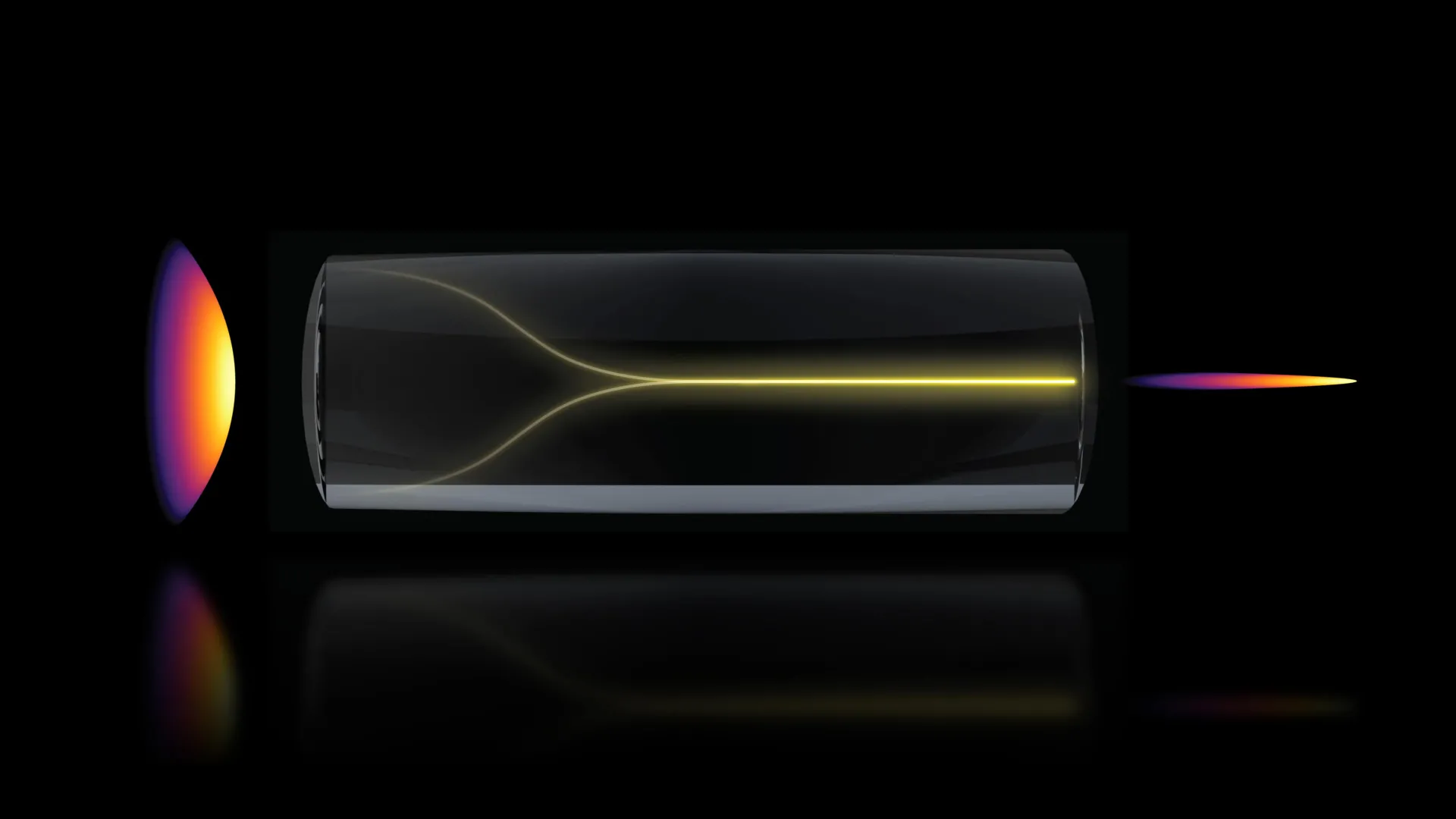
Researchers at MIT have identified an unexpected effect in optical physics that could lead to a faster and more detailed way to image living tissue. Under specific conditions, what normally looks like a scattered and disordered laser signal can reorganize itself into a narrow, highly focused “pencil beam.”
With this self-formed beam, the team produced 3D images of the human blood-brain barrier at speeds about 25 times faster than the current gold-standard approach, while preserving similar image quality. The method also makes it possible to watch individual cells absorb drugs in real time. This could help scientists evaluate whether treatments for conditions such as Alzheimer’s or ALS are actually reaching their intended targets in the brain.
“The common belief in the field is that if you crank up the power in this type of laser, the light will inevitably become chaotic. But we proved that this is not the case. We followed the evidence, embraced the uncertainty, and found a way to let the light organize itself into a novel solution for bioimaging,” says Sixian You, assistant professor in the MIT Department of Electrical Engineering and Computer Science (EECS), a member of the Research Laboratory for Electronics, and senior author of a paper on this imaging technique.
She is joined on the paper by lead author Honghao Cao, an EECS graduate student; EECS graduate students Li-Yu Yu and Kunzan Liu; postdocs Sarah Spitz, Francesca Michela Pramotton, and Federico Presutti; Zhengyu Zhang PhD ’24; Subhash Kulkarni, an assistant professor at Harvard University and the Beth Israel Deaconess Medical Center; and Roger Kamm, the Cecil and Ida Green Distinguished Professor of Biological and Mechanical Engineering at MIT. The paper appears today in Nature Methods.
A Surprising Laser Behavior Emerges
The finding began with an observation that did not fit expectations.
The researchers had previously built a precise fiber shaper, a device that allows careful control of laser light traveling through a multimode optical fiber, which is capable of carrying high levels of power.
Cao gradually increased the laser power to test the limits of the fiber.
Normally, increasing power causes the light to scatter more due to imperfections inside the fiber. Instead, as the power approached the threshold where the fiber might be damaged, the light suddenly concentrated into a single, extremely sharp beam.
“Disorder is intrinsic to these fibers. The light engineering you typically need to do to overcome that disorder, especially at high power, is a longstanding hassle. But with this self-organization, you can get a stable, ultrafast pencil beam without the need for custom beam-shaping components,” You says.
Conditions That Enable Self-Organizing Light
To reproduce this effect, the team identified two key requirements.
First, the laser must enter the fiber at a perfectly aligned, zero-degree angle, which is stricter than standard practice. Second, the power must be increased until the light begins interacting directly with the glass material of the fiber.
“At this critical power, the nonlinearity can counter the intrinsic disorder, creating a balance that transforms the input beam into a self-organized pencil beam,” Cao explains.
Such conditions are rarely explored because researchers typically avoid high power levels to prevent damaging the fiber. Precise alignment is also not usually necessary since multimode fibers can already carry large amounts of energy.
When combined, however, these factors allow the system to produce a stable beam without complex optical engineering.
“That is the charm of this method — you could do this with a normal, optical setup and without much domain expertise,” You says.
Sharper Imaging With Fewer Artifacts
Tests showed that this pencil beam is both stable and highly detailed compared to similar beams. Many conventional beams produce “sidelobes” — blurred halos that reduce image clarity.
In contrast, this beam remains clean and tightly focused.
The researchers then applied the technique to image the human blood-brain barrier, a dense layer of cells that shields the brain from harmful substances but also blocks many drugs.
Faster 3D Imaging of the Blood-Brain Barrier
Scientists often need to observe how drugs move through the blood vessels in this barrier and whether they successfully reach brain tissue. Traditional optical methods typically capture one 2D slice at a time, requiring repeated scans to build a complete 3D image.
Using the new pencil beam approach, the team generated rapid, high-precision images while also tracking how cells absorb proteins in real time.
“The pharmaceutical industry is especially interested in using human-based models to screen for drugs that effectively cross the barrier, as animal models often fail to predict what happens in humans. That this new method doesn’t require the cells to have a fluorescent tag is a game-changer. For the first time, we can now visualize the time-dependent entry of drugs into the brain and even identify the rate at which specific cell types internalize the drug,” says Kamm.
“Importantly, however, this approach is not limited to the blood-brain barrier but enables time-resolved tracking of diverse compounds and molecular targets across engineered tissue models, providing a powerful tool for biological engineering,” Spitz adds.
The system produced cellular-level 3D images with improved quality and did so roughly 25 times faster than existing methods.
“Usually, you have a tradeoff between image resolution and depth of focus — you can only probe so far at a time. But with our method, we can overcome this tradeoff by creating a pencil-beam with both high resolution and a large depth of focus,” You says.
Future Applications and Next Steps
Looking ahead, the researchers aim to better understand the physics behind this self-organizing beam and the mechanisms that allow it to form. They also plan to extend the method to other applications, including imaging neurons, and to explore ways to bring the technology into practical use.
This work was funded, in part, by MIT startup funds, the National Science Foundation (NSF), the Silicon Valley Community Foundation, Diacomp Foundation, the Harvard Digestive Disease Core, a MathWorks Fellowship, and the Claude E. Shannon Award.

An American pollster has eviscerated Keir Starmer over his “downright atrocious” popularity ratings with British voters.
CNN’s Harry Enten said the prime minister was even more unpopular than George W Bush or Richard Nixon ever were in the United States.
Advertisement
His comments came as Starmer fights for his political life over the Peter Mandelson scandal.
Enten said: “If you think things are bad here in the United States, let’s just go over the pond to the UK, because things are just downright atrocious over there for Keir Starmer.
“Just take a look here – Britons satisfied with Keir Starmer. Overall, 18%. You can’t even drink or smoke any more when you’re 18%. If you’re below that line, that’s not good.
“How about his own party, the voters who voted him in back in 2024. Less than 50% of Labour Party voters back in 2024 actually are satisfied with the job Keir Starmer is doing.
Advertisement
“When less than 50% of your own party voters are satisfied with what is shaking, you know you’re in bad, bad shape.”
Enten said Starmer was even more unpopular that Bush, who had the lowest ever popularity ratings for a US president at 20% when he left office in 2008.
He said: “Well I’ve got news for you; 20% is low, but it’s higher than 18%. Keir Starmer is less popular right now than the least popular American president ever.
Advertisement
“And Richard Nixon of course was coming in at about 24% just before he resigned office. So Keir Starmer is less popular than Richard Nixon was when he was forced out by Watergate.
“Keir Starmer – a very unpopular man. A lot of people want to put a lot of things in their tea when they look at Keir Starmer over in the UK.”
The pollster went on to point out that every other British prime minister who was as unpopular as Starmer either lost the next election or resigned from office.
Advertisement
“He’ll try and climb out of that hole, climb that ladder, but that ladder is going nowhere – he is on a highway to political hell,” Enten said.
He added: “The bottom line is this. Keir Starmer in massive political problems right now. Chances are, based upon history, he will either be forced out by the end of August or the voters will force him out at the end of general election.”
Advertisement
Subscribe to Commons People, the podcast that makes politics easy. Every week, Kevin Schofield and Kate Nicholson unpack the week’s biggest stories to keep you informed. Join us for straightforward analysis of what’s going on at Westminster.

The voting figures for the I’m A Celebrity: South Africa finale have been shared, revealing that Adam Thomas had the support of more than half of viewers in the end.
While the season was pre-recorded last year, the all-star season’s finale aired live on Friday night, with viewers casting their votes to decide who should be crowned the next I’m A Celebrity “Legend”.
Advertisement
By now, it’s well-documented that the live reunion took a decidedly chaotic turn, as campmates aired their grievances with one another, before the public chose Adam as their champion.
ITV has now announced that of the four contestants who made it to the live final, Adam received 51% of the votes cast.
Behind him on 32% was runner-up Sir Mo Farah, while Harry Redknapp and Craig Charles were on 9% and 8%, respectively.
Advertisement

ITV/Shutterstock
Posting on Instagram after the final aired, the soap star told his followers: “I walked through this journey with my heart first, no matter what came my way. It was not always easy, there were moments that could have broken me, but I stayed true to myself and that is something I will always be proud of.
“I have realised that when people try to dim your light, it says more about them than it ever will about you. This experience has shown me my strength in ways I never imagined. Not because of any title or recognition, but because I stayed kind, I stayed grounded and I stayed real.”
Advertisement
He continued: “Those who doubted me or tried to bring me down, I carry no negativity towards you. I have already won in the ways that matter most.
“I have love, I have happiness and I have stayed true to myself, and that is something no one can ever take away from me. I hope one day you can do the same.”
Advertisement
The Emmerdale actor previously admitted that since leaving I’m A Celebrity, he’s been undergoing therapy, as he feels like such a “changed” person because of his experiences on the show.



Helena Bonham Carter has shut down reports suggesting that an on-set “clash” with a fellow White Lotus cast member was responsible for her stepping away from the show.
A week into production, however, it was confirmed that Helena was leaving the show, after it was decided that her character would be retooled.
“With filming just underway on Season 4 of The White Lotus, it had become apparent that the character which Mike White created for Helena Bonham Carter did not align once on set,” a representative for the US broadcaster HBO said.
“The role has subsequently been rethought, is being rewritten and will be recast in the coming weeks. HBO, the producers and Mike White are saddened that they won’t get to work with her, but remain ardent fans and very much hope to work with the legendary actress on another project soon.”
Helena’s team initially declined to comment when contacted by HuffPost UK, after which the Daily Mail published an article citing an undisclosed “source” who alleged she “left because of a clash with Sandra Bernhard”.
The Oscar nominee’s team was quick to dispel this claim, though, pointing out that the two actors had not even met yet, let alone had time to have clashed.
It was previously announced that the fourth season of The White Lotus will explore different themes around fame and celebrity, and will be set at the Cannes Film Festival.

Sometimes, your regular shampoo and conditioner just don’t cut it, especially if your strands are changing due to age, a new environment or hormones. Thankfully, we’ve spotted a deep-conditioning mask that handles everything from dullness to frizz to more extensive damage. Briogeo’s “Don’t Despair, Repair!” at-home treatment that reviewers say makes hair “noticeably softer and less dry,” in as little as 15 minutes. Several reviewers swear this “saved” their hair to the point of straight-up happy tears. Its 2-ounce tube is $15 and if you need more, we spotted the more big jar for 50% off, TODAY only, as part of Sephora’s flash Hair Faves sales, running through May 4.
Advertisement

“My ends were dry, frizzy, and honestly just sad—but after using Briogeo Don’t Despair, Repair! once a week, my hair feels softer, smoother, and way more manageable,” one user, wrote about the magic in a tub. ”…I leave it on for about 10–15 minutes and rinse, and it instantly makes my hair feel like I just left a salon.”
Advertisement
“I had been experiencing so much shedding and breakage that I was gravely concerned and quite honestly, growing desperate,” another person wrote about their pre-mask curly challenges.
“After one use (yes just one) I can already tell a major difference in my hair! My curls have more definition and there is a “bounce” to them again. I haven’t seen my hair have that ‘bounce’ in so long! It made me so happy I literally teared up!! I’m looking forward to seeing the health of my hair improve even more thanks to this wonderful product! Definitely a 10 out of 10!!! ❤️”
Say good by to kitchen concoctions and long stints underneath a dryer. Made with plant protein, biotin, algae extract and almond, argan and rosehip oils, this leave-in mask is designed to strengthen, repair and hydrate your hair quickly. The brand advises one-time application weekly for just 10 minutes, in place of your regular conditioner. Just let it sit, then rinse.
However, some users shared that they had a smooth experience with positive changes, even if they didn’t follow the directions to a tee. “The jar is actually bigger than I expected, well packaged and so soft and easy to glide through your hair,” shopper Florence said.
“Read directions because the product recommends you leave on for 10 minutes before rinsing,I didn’t have 10 minutes to wait and my hair still became manageable and looks wonderful again!”
Advertisement
And several folks report the product not only being easy to use but making styling their hair easier after rinse-out — from detangling to styling.
One reviewer, who tried the mask from a Sephora sample, called the mask a “miracle tamer of the crazy white hairs!” “I am starting to go white (not gray, seriously, white) and those white hairs are course and have a mind of their own,” they wrote. “This seemed to tame them and keep them in line with the rest of my hair. To me that’s everything. Nothing worse than crazy white hairs sticking out everywhere.”
Others call the conditioner “great for greying hair,” especially for capturing the “shine and bounce” of the salon. “You’re going to be thrilled with the smooth and silky feel of the mask that’s done its magic,” one said. ”…Styling after using the mask is a breeze again and you’re going to look like you just walked out of the salon! When the grey hair shines, it looks healthy and blends better with the rest of your hair.”
Advertisement
Reviewers who had damaged hair from salon treatments report similair results. “I recently had my hair professionally colored, and it definitely dried out my hair,” one said, noting that after using the “magic” mask one time, “I’m shocked at how soft it is, and tangle free!”
“My hair felt like broom straw after it was bleached (never again!) and I bought this as a Hail Mary,” another wrote. “After 1 use my hair felt almost back to normal, after the 2nd use it felt soft, luxurious, and wonderful.”
Advertisement
“This hair mask is the real deal. My ends were dry, frizzy, and honestly just sad—but after using Briogeo Don’t Despair, Repair! once a week, my hair feels softer, smoother, and way more manageable. It smells amazing (clean and fresh without being too strong), and the texture is super creamy without weighing my hair down. I leave it on for about 10–15 minutes and rinse, and it instantly makes my hair feel like I just left a salon. Bonus: it’s clean and cruelty-free, which makes me feel even better about slathering it all over my head. Total game-changer for damaged or color-treated hair.” — Aura’s Of Amara
“This stuff is magic. I recently had my hair professionally colored, and it definitely dried out my hair. I had heard wonderful things about the whole Don’t Despair, Repair line and I decided to try this mask and the protein treatment. I just dried my hair and I’m shocked at how soft it is, and tangle free! Definitely give this a try if you have dry or damaged hair – I loved it so much I ordered the matching shampoo and conditioner! Can’t wait to try the whole line together!” — Phaedra
“I’m 60+ and found out that when you have enough gray hair going, it comes in dull and lifeless, a little wiry and has a mind of its own. You may leave the salon with shine and bounce to discover all that disappears when you shampoo and condition yourself at home. Here is the solution. After shampooing, rinse, then load a small scoop of this mask onto your hair, massaging it into your scalp and through to the ends (I have longer than shoulder length hair ) don a conditioning cap to keep your wet hair from dripping everywhere and wait 10 minutes. Then rinse it out, add your usual conditioner and rinse again. You’re going to be thrilled with the smooth and silky feel of the mask that’s done its magic. Plus the confidence that you’ve elected to use a product that is not full of harmful petroleum chemicals, preservatives and the like, that seep into your scalp and cause breakouts, hormone disruption and other additives that they secretly add to lots of hair products. Styling after using the mask is a breeze again and you’re going to look like you just walked out of the salon! When the grey hair shines, it looks healthy and blends better with the rest of your hair. Love this stuff!” — Belinda W
“Everyone’s hair is different. My hair is superfine, dyed, thinning and old (I am 73). I got a sample of this wonderful product a while ago and I am still rejoicing that it found me. It is great to be able to buy it in a larger quantity. My thin hair has much more volume and body after using this product. It is shiny and has a great texture. It never weighs my hair down and never dries it out. I simply love how my hair looks after using it.” — J.E. preston

Amazon
Deemed a “godsend for really fine hair” this dry texture spray from Verb is loved for bringing volume and bounce to thin strands. Reviewers say its like a dry shampoo and hair spray mix, that holds hair in place and gives you body for days. Get it for 15% off.
Promising review: “Best stuff ever. This is the perfect balance between dry shampoo and hairspray. My hair is SO fine and thin, that any presence of oil looks like my hair is slicked back. I can get an extra WEEK out of one wash because of this stuff! It also really helps plump up my braids and ponytails. Ponytails are bouncy and lush, and braids look nice and big, instead of skinny rat tails! Having really fine hair (basically a type 1A/1B) I missed out on the 90s holdover of perms, floofs, super tall bangs, and volume to the max—and I finally can get it” — Moriah
Amazon
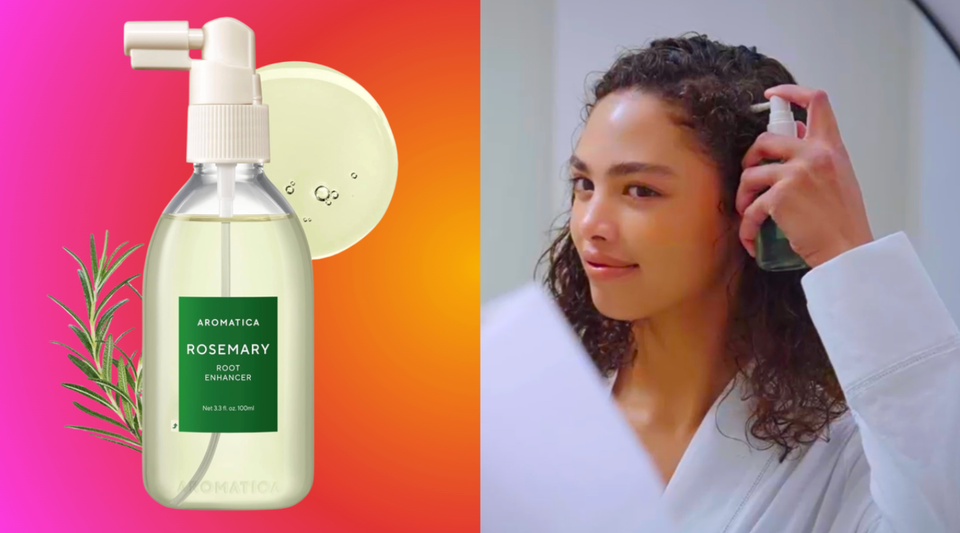
Another win for thinning hair — rosemary. More than a cooking herb, the plant is a potent, government-studied ingredient in body care, namely for boosting thinning or balding hair. We’ve covered the stuff quite a bit, speaking to dermatologists and even trichologists (hair and scalp specialists, yes that’s a thing) about rosemary’s ability to condition and strengthen hair, soothe the scalp and even its potential to accelerate new hair growth. Needless to say, we’re all for adding rosemary to your routine, so when we spotted this root-enhancing rosemary water spray from Korean beauty brand Aromatica and saw it was on sale, we knew we needed to tell the people. The spray is already cheaper on Amazon than it is on the brand’s website, so this sale is closer to 40% off its list price.
Amazon
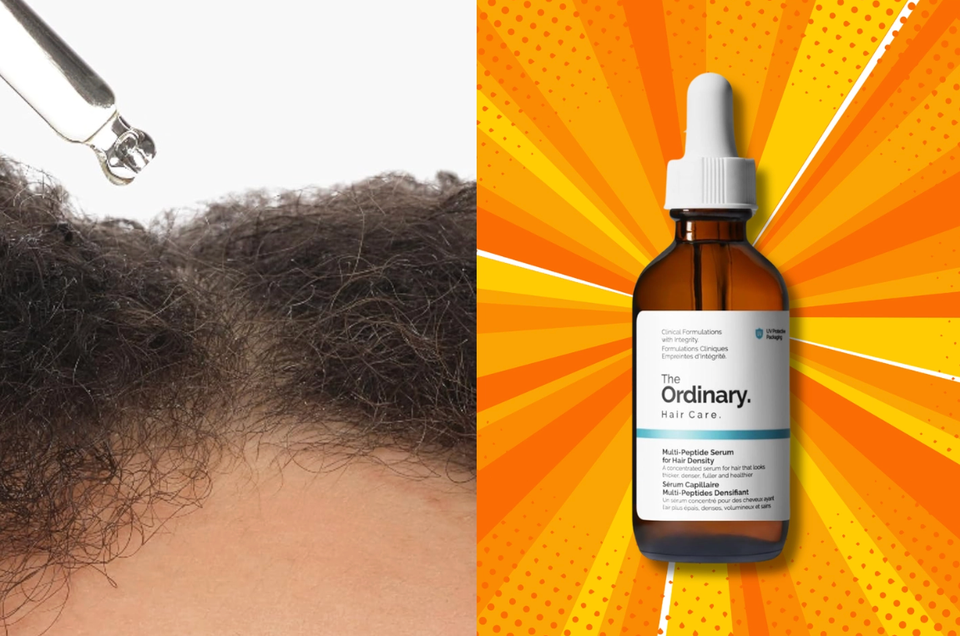
In a previous story about the best shampoos for hair loss, Dr. Dendy Engelman, a board-certified dermatologist at Shafer Clinic Fifth Avenue in New York City, mentioned that peptides, a common ingredient in anti-aging skin care, are actually a great ingredient for supporting the scalp and reducing shedding.
Armed with Engelman’s insights, we’ve got our eyes on this multi-peptide serum for hair density by the Ordinary, which reviewers call “magic in a bottle.” The serum is fragrance-free and sulfate-free (derms have previously warned against using sulfates if you’re concerned about hair loss, because they can strip the scalp of natural oils, leading to dryness and inflammation). It’s also so easy to use as a lightweight, water-based leave-in serum: Just apply a few drops to your clean, dry scalp once a day (the brand recommends at bedtime). Even better? It’s currently 23% off.
Advertisement
The Real Deal: We use deal trackers and commerce experience to sift through “fake” hike-and-drop deals and other deceptive sales tactics. Products will usually be rated at least 4 stars with a minimum 15% discount. (And when there’s an exception, we’ll tell you why.)
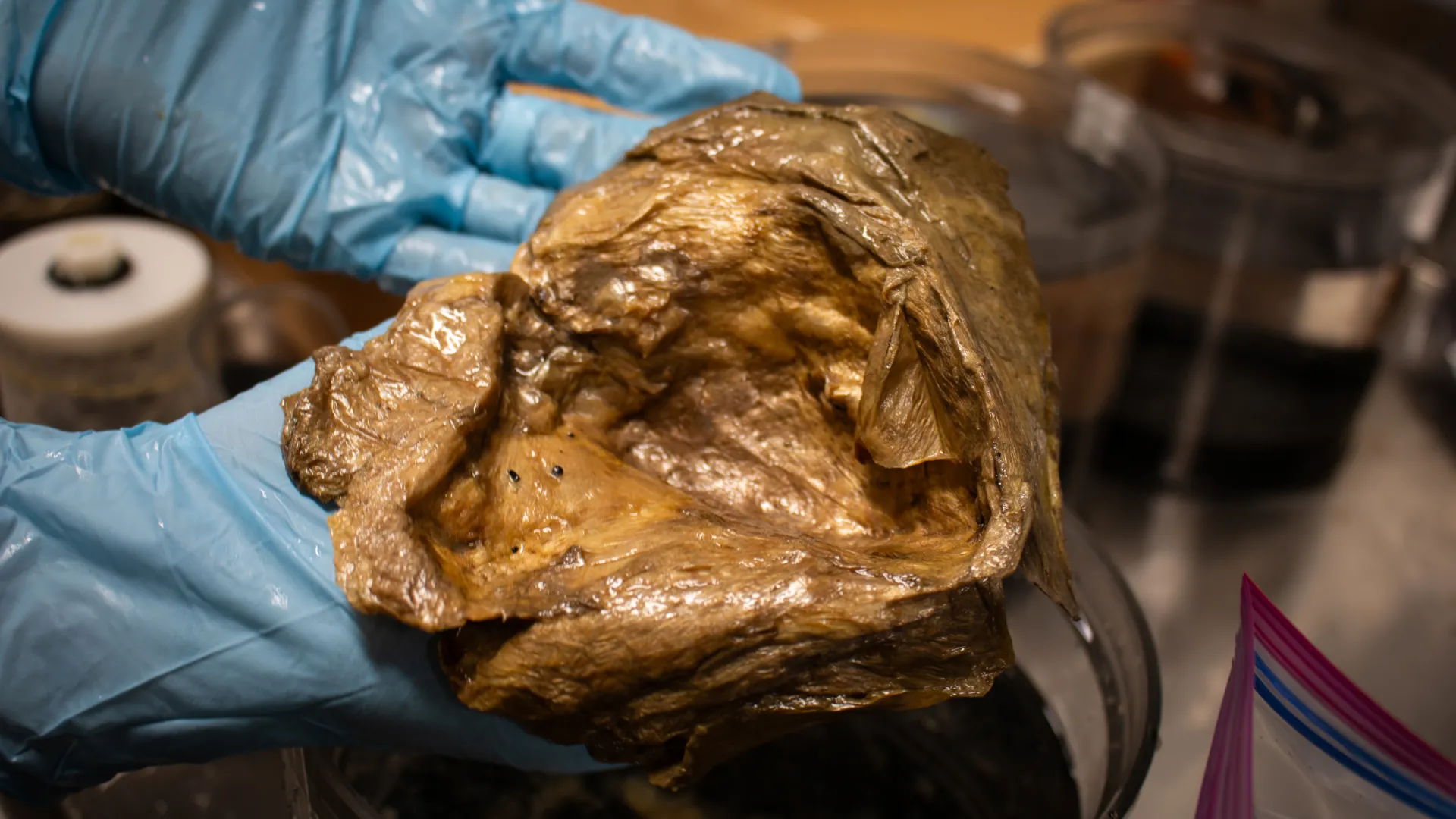
A strange object known as the “golden orb” puzzled scientists and captured public attention after it was collected during a 2023 NOAA expedition. More than two years later, researchers have finally identified what it is.
The unusual golden mass, discovered at a depth of 3,250 meters (over 2 miles) in the Gulf of Alaska, turned out to be the remains of dead tissue from a giant deep-sea anemone called Relicanthus daphneae. Specifically, it was part of the anemone’s base, which anchors the animal to rocky surfaces on the seafloor.
During NOAA Ocean Exploration missions aboard NOAA Ship Okeanos Explorer, encountering unfamiliar organisms is not unusual. In many cases, scientists can quickly identify these finds by sharing knowledge and collaborating. However, some discoveries resist easy answers, and the “golden orb” became one of those rare, lingering mysteries.
[See link to video below article.]
Discovery in the Gulf of Alaska
In 2023, the remotely operated vehicle Deep Discoverer (launched from Okeanos Explorer) was exploring more than 2 miles below the surface in the Gulf of Alaska when it spotted something unusual. Resting on a rock was a rounded, golden object with a small opening, unlike anything the team had seen before.
The discovery raised immediate questions. Could it be an egg case, a sponge, or something entirely new? Some even wondered whether a creature had entered or exited through the opening. The unusual appearance sparked widespread curiosity and speculation.
To investigate further, the team carefully collected the object using a suction sampler and sent it to the Smithsonian National Museum of Natural History (NMNH) for detailed study.
A Complex Investigation Using DNA and Microscopy
Solving the mystery of the “golden orb” took years of careful analysis. Unlike more straightforward identifications, this case required multiple scientific approaches and specialized expertise.
“We work on hundreds of different samples and I suspected that our routine processes would clarify the mystery,” explains Allen Collins, Ph.D, zoologist and director of NOAA Fisheries’ National Systematics Laboratory, which is physically located within the Smithsonian National Museum of Natural History. “But this turned into a special case that required focused efforts and expertise of several different individuals. This was a complex mystery that required morphological, genetic, deep-sea and bioinformatics expertise to solve.”
Researchers from NOAA Fisheries and the Smithsonian used an integrative taxonomic approach, combining physical examination with genetic testing. Early analysis showed that the object did not have typical animal features. Instead, it consisted of fibrous layers packed with cnidocytes (stinging cells), indicating it likely belonged to a cnidarian, the group that includes corals and anemones.
Further study by National Systematics Lab scientist Abigail Reft identified the cells as spirocysts, which are unique to the Hexacorallia subgroup of cnidarians. Scientists also compared the specimen to a similar object collected in 2021 during an expedition aboard Schmidt Ocean Institute’s Research Vessel Falkor, finding matching cellular structures.
Genetic Evidence Confirms the Answer
Initial DNA barcoding attempts did not provide clear results, possibly because the sample contained genetic material from other microscopic organisms. To get a more definitive answer, the team turned to whole-genome sequencing.
This deeper analysis confirmed the presence of animal DNA and revealed a strong genetic match to the giant deep-sea anemone Relicanthus daphneae. Sequencing of mitochondrial genomes from both specimens showed they were nearly identical to a known reference genome for this species.
What the Golden Orb Really Was
With all the evidence combined, scientists concluded that the “golden orb” was not an egg, sponge, or unknown organism. It was a leftover structure from a deep-sea anemone, specifically the base that once attached the animal to the seafloor.
Although this discovery answers the question of the orb’s identity, it also highlights how much remains unknown about life in the deep ocean.
The Deep Ocean Still Holds Many Mysteries
“So often in deep ocean exploration, we find these captivating mysteries, like the ‘golden orb’. With advanced techniques like DNA sequencing, we are able to solve more and more of them,” said CAPT William Mowitt, acting director of NOAA Ocean Exploration. “This is why we keep exploring — to unlock the secrets of the deep and better understand how the ocean and its resources can drive economic growth, strengthen our national security, and sustain our planet.”
Even with this mystery solved, scientists emphasize that the deep sea continues to be one of the least understood environments on Earth, filled with discoveries still waiting to be made.

Stress that people turn inward may be quietly increasing the risk of memory loss in older Chinese Americans, according to new research from Rutgers Health.
The study, published in The Journal of Prevention of Alzheimer’s Disease, was conducted by researchers at the Rutgers Institute for Health, Health Care Policy and Aging Research. It explored a range of factors that could either raise or reduce the risk of cognitive decline in Chinese adults over age 60.
This group was selected in part because older Chinese Americans have often been overlooked in research on brain aging, leaving important gaps in understanding how memory loss develops in this population.
“With the number of older Asian Americans growing significantly, it’s vital to better understand the risk factors of memory decline in this understudied population,” said Michelle Chen, a core member of the Center for Healthy Aging Research at Rutgers and the study’s lead author.
Cultural Pressures and Hidden Emotional Strain
The researchers noted that cultural expectations may play a role in shaping mental health outcomes. The model minority stereotype — which portrays Asian Americans as consistently successful, educated and healthy — can create added pressure while also masking emotional struggles.
At the same time, many older immigrants face challenges such as language barriers and cultural differences, which can contribute to ongoing stress. While these issues are not unique to Asian Americans, the researchers say they may be particularly relevant in this context.
“Stress and hopelessness may go unnoticed in aging populations, yet they play a critical role in how the brain ages,” said Chen, who is also an assistant professor of neurology at Rutgers Robert Wood Johnson Medical School. “Because these feelings are modifiable, our goal is for this research to inform culturally sensitive stress-reduction interventions to mitigate these feelings in older adults.”
Large Study Tracks Memory Changes Over Time
To better understand these effects, the team analyzed data from the Population Study of ChINese Elderly (PINE), the largest community-based cohort study focused on older Chinese Americans. The dataset included interviews conducted from 2011 to 2017 with more than 1,500 participants living in the Chicago area.
The researchers examined three key sociobehavioral factors: stress internalization, neighborhood or community cohesion and external stress alleviation.
Key Finding Points to Internalized Stress
Among these factors, internalized stress stood out. This form of stress includes feelings of hopelessness and a tendency to absorb stressful experiences rather than express or resolve them. It was strongly linked to worsening memory across three waves of the PINE study.
In contrast, the other factors did not show a significant connection to changes in memory over time.
Implications for Prevention and Support
Because internalized stress can potentially be addressed, the findings suggest an opportunity to develop targeted strategies that support emotional well-being and cognitive health in older adults. The researchers emphasize the importance of culturally sensitive approaches that take into account the unique experiences of aging immigrant populations.
The study was supported by the Rutgers-NYU Resource Center for Alzheimer’s and Dementia Research in Asian and Pacific Americans, co-led by William Hu of Rutgers Institute for Health and Rutgers Robert Wood Johnson Medical School. Coauthors include Yiming Ma, Charu Verma, Stephanie Bergren and William Hu of Rutgers Institute for Health.
