A new weapon against antibiotic-resistant bacteria

The over-use of antibiotics has pushed bacteria to develop resistance mechanisms to this type of treatment. This phenomenon, known as antibiotic resistance, is now considered by the WHO as one of the greatest threats to health. The lack of treatment against multi-resistant bacteria could bring us back to a time when millions of people died of pneumonia or salmonella. The bacterium Klebsiella pneumoniae, which is very common in hospitals and particularly virulent, is one of the pathogens against which our weapons are becoming blunt. A team from the University of Geneva (UNIGE) has discovered that edoxudine, an anti-herpes molecule discovered in the 60s, weakens the protective surface of Klebsiella bacteria and makes them easier to eliminate for immune cells. These results can be read in the journal PLOS One.

Klebsiella pneumoniae causes many respiratory, intestinal and urinary tract infections. Due to its resistance to most common antibiotics and its high virulence, some of its strains can be fatal for 40% to 50% of infected people. There is an urgent need to develop new therapeutic molecules to counter it. “Since the 1930s, medicine has relied on antibiotics to get rid of pathogenic bacteria,” explains Pierre Cosson, professor in the Department of Cell Physiology and Metabolism at the UNIGE Faculty of Medicine, who led this research. “But other approaches are possible, among which trying to weaken the bacteria’s defence system so that they can no longer escape the immune system. This avenue seems all the more promising as the virulence of Klebsiella pneumoniae stems largely from its ability to evade attacks from immune cells.”

An amoeba as a model

To determine whether or not the bacteria were weakened, the UNIGE scientists used an experimental model with surprising characteristics: the amoeba Dictyostelium. This single-cell organism feeds on bacteria by capturing and ingesting them, using the same mechanisms that immune cells use to kill pathogens. “We genetically modified this amoeba so that it could tell us whether the bacteria it encountered were virulent or not. This very simple system then enabled us to test thousands of molecules and identify those that reduced bacterial virulence,” explains Pierre Cosson.

Weakening the bacteria without killing them

Developing a drug is a long and expensive process, with no guarantee of results. The UNIGE scientists therefore opted for a quicker and safer strategy: reviewing existing drugs to identify possible new therapeutic indications. The research team evaluated the effect on Klebsiella pneumoniae of hundreds of drugs already on the market, with a wide range of therapeutic indications. A drug developed to combat herpes, edoxudine, proved particularly promising.

“By altering the surface layer that protects the bacteria from their external environment, this pharmacological product makes it vulnerable. Unlike an antibiotic, edoxudine does not kill the bacteria, which limits the risk of developing resistance, a major advantage of such an anti-virulence strategy,” says the researcher.

Although the effectiveness of such a treatment in human beings has yet to be confirmed, the results of this study are encouraging: edoxudine acts even on the most virulent strains of Klebsiella pneumoniae, and at lower concentrations than those prescribed to treat herpes. “Sufficiently weakening the bacteria without killing them is a subtle strategy, but one that could prove to be a winner in the short and long terms,” concludes Pierre Cosson.

Story Source:

Materials provided by Université de Genève. Note: Content may be edited for style and length.

Share Button

Psychological First Aid training could help improve care workers’ wellbeing

A new study has shown that Psychological First Aid, training originally created for people to support others, can help healthcare workers in care homes improve their own mental wellbeing.

First developed by the World Health Organisation, Psychological First Aid (PFA) is the globally recommended training for people, such as healthcare workers, who support others during emergencies.

It offers guidance on delivering psychosocial care in the immediate aftermath of an emergency event.

Although PFA training was originally created for people to support others, scientists from Northumbria University and the University of Highlands and Islands (UHI) have now also identified it as a suitable way of helping care workers look after their own mental health and wellbeing.

As part of the national response to the COVID-19 pandemic, in June 2020 the UK government introduced free to access online PFA training in an effort to support frontline staff, such the 1.8 million people working in care homes across the country.

Evaluating the effectiveness of this initiative, academics at Northumbria and UHI investigated the uptake of PFA training among healthcare workers in UK care homes and assessed its effects on their wellbeing.

Funded by the Royal College of Nursing Foundation, the study was the first of its kind and makes recommendations regarding further implementation of Psychological First Aid.

The researchers found that while the uptake of PFA training was low among healthcare workers — less than 10% of study participants had done the training — those who had undertaken PFA coped better.

The results suggest that PFA training helped in overcoming stress and coping via self-growth and improving relationships with others, but there was a concern around accessibility, which academics say could possibly explain the low uptake of training.

Some research participants described that it helped them cope better when thinking of giving up their job and promoted resilience, with one person commenting: “(PFA) has helped me cope better, it was a position I was thinking of giving up at one time and now I have the strength to carry on.”

Others described how it helped support them in their experiences of bereavement to overcome the trauma of the pandemic: “I found it (PFA) useful as it helped me cope with bereavement as well as the experience of seeing relatives affected by COVID-19.” Another participant went as far as to say that PFA training “should be made compulsory for all staff especially in nursing and care homes during the pandemic or not.”

Dr Mariyana Schoultz, the project lead and Associate Professor in Mental Health in Northumbria’s Department of Nursing, Midwifery and Health, said: “Findings suggest that PFA training has the potential to: strengthen resilience for staff in health and social care; promote anti-stigma messages and normalise help seeking behaviour; PFA holds the potential to minimise the risk of developing more serious psychological problems such as Post-Traumatic Stress Disorder (PTSD). But we need more research in this area.

“We therefore recommend that consideration be given to funding an integrated programme of research and development to further develop, implement, and evaluate a co-produced iteration of PFA for use in the UK care home sector and beyond.”

Deepa Korea, Director of the RCN Foundation, said “Staff working in social care during the pandemic faced significant pressures which inevitably had an impact on their own mental health and emotional wellbeing. That’s why I am delighted that the RCN Foundation was able to commission this important study which adds to the body of evidence about the practical ways in which we can support health and social care staff.”

Story Source:

Materials provided by Northumbria University. Note: Content may be edited for style and length.

Share Button

Covid infections falling in England and Wales, says ONS

About one in 35 people in the UK have the virus, the Office for National Statistics suggests.

Share Button

‘Distressing’ 999 wait highlights South West Ambulance delays

Steve Iles died while waiting 11 hours for an ambulance, despite six 999 calls to report bleeding.

Share Button

Poorer areas in England suffer most from GP shortage, study finds

Patients in more deprived parts of England feel the most let down by a lack of access to care.

Share Button

A Message From Your Simulator

Here’s a video version of the invitation to explore Subjective Reality with us in the Submersion Social Deep Dive. So far 317 people are signed up – with more still enrolling in the final hours before the deadline.

Enroll in Submersion by November 3, 2022 since we begin the live calls at 10 AM Pacific time on Friday, November 4.

I’ll see you inside!

Share Button

Young Brits Groomed And Killed Because System Fails Them – Damning Report Finds

Thousands of young people are being groomed, harmed and “even killed” because systems are failing them, a scathing report has found.

Primary school children are running drugs for gangs and teenagers are heading up county lines operations, according to the former children’s commissioner.

Anne Longfield is now calling on the government to create “Sure Start Plus” – a national plan to stop teenagers getting involved in gangs and violence.

Her report, Hidden In Plain Sight, warns of a crisis putting hundreds of thousands of children at risk in England.

Younger children are being targeted by gangs as well as children from typically middle class backgrounds, with social media used to lure them.

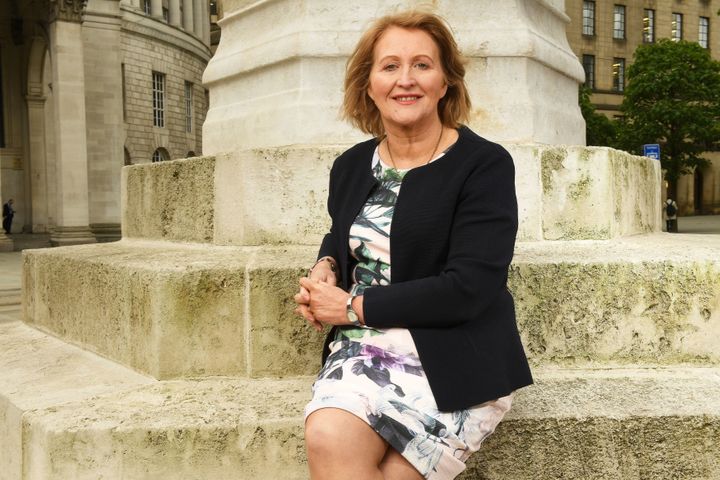
Former children's commissioner for England Anne Longfield.
Former children’s commissioner for England Anne Longfield.

Russell Sach/Children’s Commissioner for England via PA Media

The report said a combination of Covid, a cost-of-living crisis, and any return to austerity would be a “gift” to those who exploit children.

Longfield, who heads up the Commission on Young Lives, said: “There are parts of our country where the state is completely failing in its duty to protect vulnerable children from the ongoing epidemic of county lines, criminal exploitation, and serious violence.”

She described a housing estate where residents were being “terrorised” by a gang of drug dealing 14 year olds who wear balaclavas and “dish out acts of violence”.

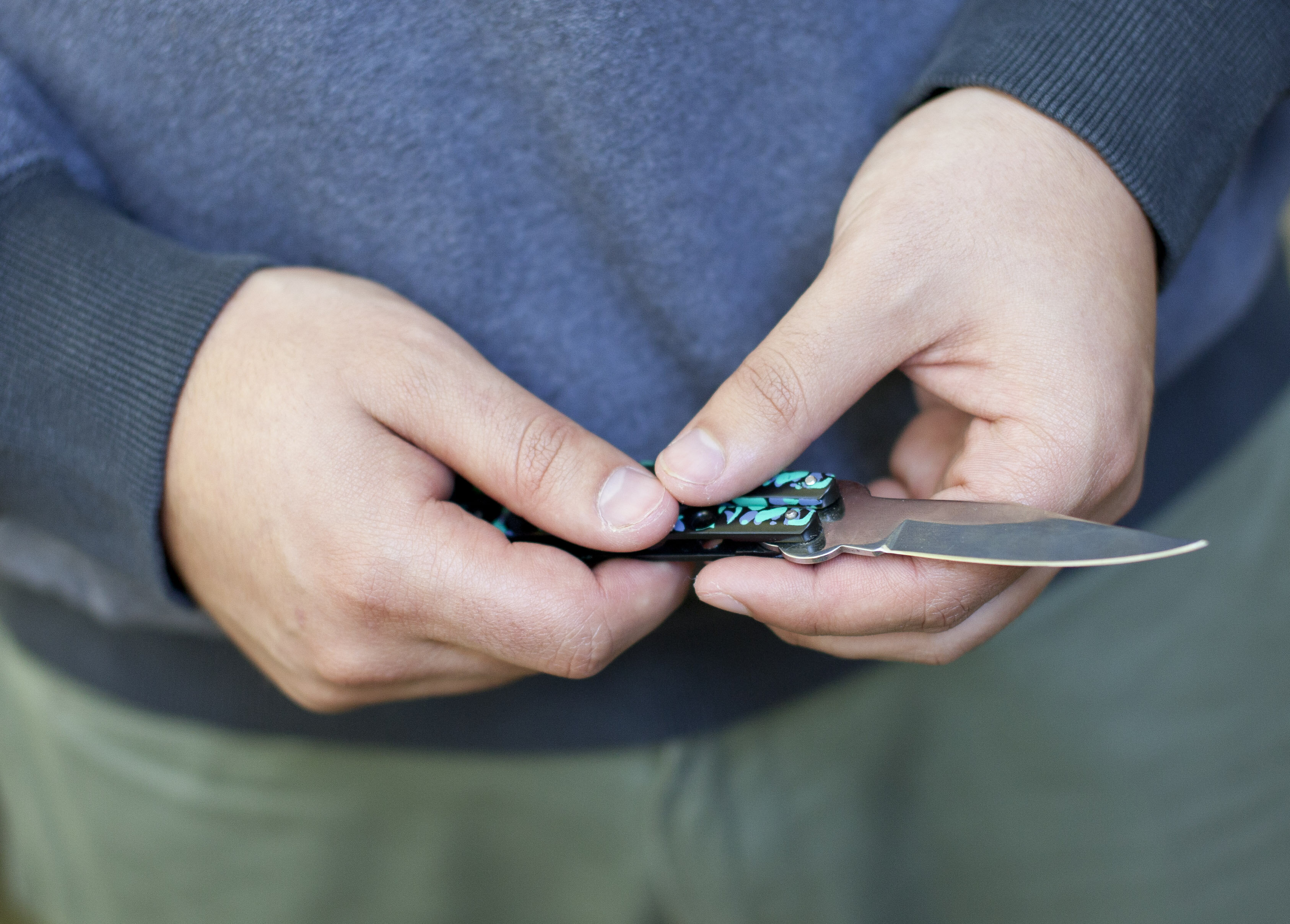
“They carried knives and other weapons, which in turn was encouraging other young people in the area to carry knives for protection,” her foreword said.

“What is happening on this estate may sound like an extreme example, but it is far from unique.

“Speak to youth workers in our towns and cities and they will tell you their own horror stories: of young people being chased in broad daylight by other teenagers waving machetes, of homes where the young people involved in the drugs trade are the main breadwinner in the family, of communities where organised criminals seek out and groom very vulnerable children who have fallen through gaps in the care, health, or education systems, almost with impunity.”

She said there were parts of the country where the state was “completely failing” in its duty to protect vulnerable children.

“So often these are already the most marginalised families. So often they are black, brown and minority ethnic. So often they are poor.”

However, she said the epidemic of country lines was not limited to inner cities, adding: “I have heard countless examples of children from suburban, middle-class England being groomed by criminals.”

Government figures covering 2021-22 show there were 11,600 instances where gangs were a factor and 10,140 instances where child criminal exploitation was a factor in assessments of children in need – which the commission believes is the tip of the iceberg.

Estimates suggest there could be as many as 200,000 children in England aged 11 to 17 who are vulnerable to serious violence.

Those most at risk are teenagers growing up in poverty, in deprived areas, and they are disproportionately from black, brown and minority ethnic backgrounds.

The commission warned that social care, education, family support, and children’s mental health systems were failing thousands of vulnerable teenagers and costing billions.

They said Sure Start Plus programmes could be partly financed by the millions of pounds recovered from the proceeds of crime every year.

They would initially be placed in the areas of greatest need and bring local services together to provide bespoke services for families and children who need it.

They are named after the New Labour “Sure Start” programme aimed at giving children the best start in life that was then scrapped by the Tory government.

The Commission suggested a one off £1 billion children and young people’s mental health recovery programme, part-financed by a levy on social media companies and mobile phone providers.

And they also called for the government to hold regular Cobra meetings to tackle the scourge of serious violence.

Labour’s shadow education secretary, Bridget Phillipson, said the Conservatives were failing children.

“12 years of Conservative neglect has eroded the systems that keep children safe and that put young people on the path to fulfilling futures, blighting lives and costing taxpayers in the process,” she said.

HuffPost UK contacted the department for education for comment.

Share Button

Need more fiber? Take 3 steps

Reprint Permissions

A single copy of these materials may be reprinted for noncommercial personal use only. “Mayo,” “Mayo Clinic,” “MayoClinic.org,” “Mayo Clinic Healthy Living,” and the triple-shield Mayo Clinic logo are trademarks of Mayo Foundation for Medical Education and Research.

Share Button

Fit more fiber into your diet

Reprint Permissions

A single copy of these materials may be reprinted for noncommercial personal use only. “Mayo,” “Mayo Clinic,” “MayoClinic.org,” “Mayo Clinic Healthy Living,” and the triple-shield Mayo Clinic logo are trademarks of Mayo Foundation for Medical Education and Research.

Share Button

Organoids reveal how SARS-CoV-2 damages brain cells — and a potential treatment

Using human brain organoids, an international team of researchers, led by scientists at University of California San Diego School of Medicine and Sanford Consortium, has shown how the SARS-CoV-2 virus that causes COVID-19 infects cortical neurons and specifically destroys their synapses — the connections between brain cells that allow them to communicate with each other.

The findings, published in the November 3, 2022 issue of PLOS Biology, also report that the antiviral drug sofosbuvir, already an approved treatment for hepatitis C, effectively inhibited SARS-CoV-2 replication and reversed neuronal alterations in infected brain organoids.

“Vaccines and emerging treatments have reduced the health consequences of COVID-19 in most patients,” said senior study author Alysson R. Muotri, PhD, professor in departments of Pediatrics and Cellular and Molecular at UC San Diego School of Medicine. “But the phenomenon of Long COVID, characterized by persisting symptoms that include neurological impairment, remains poorly understood and without any specific remedy.

“This work helps explain some of the neurological symptoms of COVID-19 and, more importantly, it suggests that an FDA-approved antiviral drug might be repurposed to restore infected brain cells to health and address long-term neurological outcomes of COVID-19.”

Though primarily considered to be a respiratory disease, COVID-19 can cause temporary or long-lasting neurological symptoms in some patients, ranging from loss of taste and smell, impaired concentration (brain fog), and psychological effects such as depression to stroke, epilepsy, and encephalopathy (a change in brain function or structure).

With evidence accumulating that the SARS-CoV-2 virus can infect and alter brain cells (including in developing fetuses), the research team focused on using organoids — self-organizing, three-dimensional tissues derived from cultured stem cells that can mimic some organ functions.

Researchers exposed the brain organoids to SARS-CoV-2, observed viral infection and replication and noted that the virus rapidly decreased the number of excitatory synapses in neurons within seven days post-infection. Excitatory synapses increase the firing action potential of a neuron, while their counterparts, called inhibitory synapses, decrease that potential.

However, when infected organoids were treated with sofosbuvir, viral replication was inhibited, and observed neurological impairments rescued or restored. The findings echo earlier computational models that suggested sofosbuvir could be a treatment and previous research by Muotri and colleagues that found sofosbuvir effectively protected and rescued neural cells infected by the Zika virus.

“The bottom line is that sofosbuvir appears to have the potential to arrest or prevent the development of neurological symptoms in COVID-19 patients,” Muotri said. “And because it has been shown to present no safety concerns in pregnant women, it might also be an option for preventing SARS-CoV-2 transmission to their unborn children.

“Further studies and clinical trials are needed, of course, but these findings offer a path forward for treating a condition (Long COVID) that has so far stymied remedy for millions of people wordwide.”

Co-authors include: Pinar Mesci, Janaina S. de Souza, Angela Macia, Aurian Saleh, Cedric Snethlage, Jason W. Adams, Angels Almenar-Queralt, Ryan A. Szeto, Gabriela Goldberg and Patrick T. Bruck, all at UC San Diego and Rady Children’s Hospital-San Diego; Laura Martin-Sancho, Yuan Pu and Sumit K. Chandra, Sanford Burnham Prebys Medical Discovery Institute; Simoni H. Avansini and Fabio Papes, UC San Diego and University of Campinas, Brazil; and Roberto H. Herai, Pontificia Universidade Catolica do Parana, Brazil and Lico Kaesemodel Institute, Brazil.

Share Button