Graham Norton Takes Aim At Matt Hancock In Savage Comedy Monologue

“We’ve got a great show for you tonight,” the host began, joking: “I tell you, I couldn’t be more excited than if I was a maggot about to crawl into Matt Hancock’s ear.”

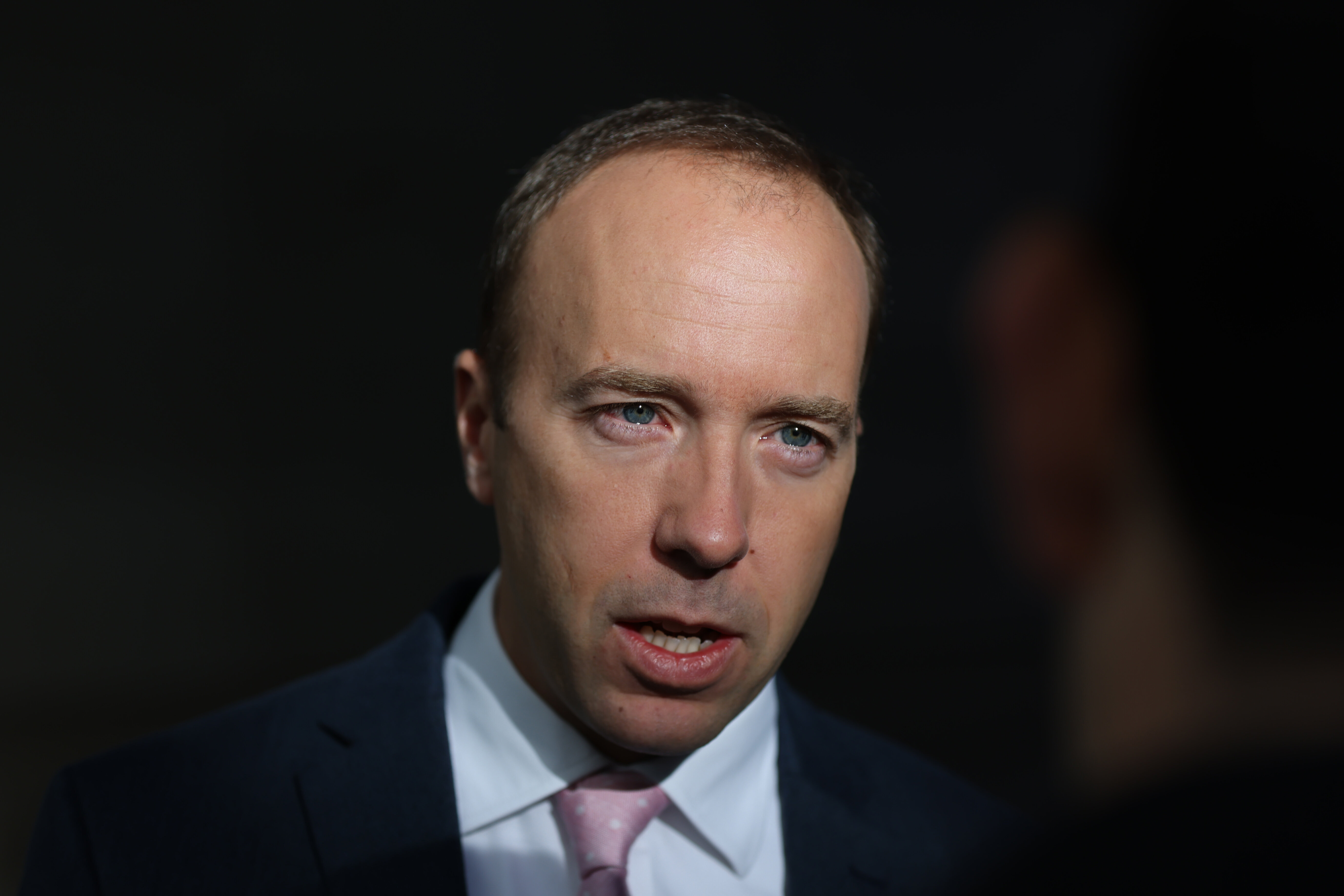
Flashing up a picture of Hancock arriving in Australia, Graham continued: “Do you think, has Hancock forgotten he’s got a job as an MP? I mean, I suppose it’s possible. For months, he had forgotten he was married.”

Graham concluded: “This here is the endless jungle Matt Hancock will be staying in. Dense and incredibly thick – just two of the things producers have called him.

“Personally, I think I speak for the nation when I say, ‘Matt Hancock should be given the sack’. And when he’s finished eating that, the testicles and penis.”

Hancock served as health secretary under former prime minister Boris Johnson throughout the early stages of the pandemic, but was eventually forced to resign when it emerged he’d broken Covid restrictions while conducting an extra-marital affair with an aide.

He is still the MP for West Suffolk, but was suspended from the Tory party shortly after it was first reported he’d be appearing in the jungle.

I’m A Celebrity returns on Sunday night at 9pm on ITV.

Share Button

US hospital flu cases hit 10-year high as vaccinations fall

Five million fewer influenza doses have been administered this year to US adults than this time last year.

Share Button

M&S Boss And Former Tory MP Calls Out Braverman’s Migrant ‘Invasion’ Rhetoric

A Marks and Spencer boss and former Tory frontbencher has criticised the government’s inflammatory language on immigration, warning that “the public is thirsting for a more civil discourse”.

Archie Norman, chairman of the retailer and an MP between 1997 and 2005, said Conservatives during his time in the shadow cabinet under William Hague “would never have used that language”.

Home secretary Suella Braverman claimed the UK was suffering an “invasion” over the numbers of migrants trying to reach the country.

It was followed on Friday by Home Office minister Chris Philp criticising the “cheek” of complaints from people arriving in the country “illegally” about processing centre conditions.

Appearing on Times Radio, Norman said under Hague “we would never have used that language, and the reason we didn’t is partly because it does mean that you trespass on very sensitive areas and you start appealing to people’s base emotions about race, about immigration, about people coming here from abroad”, and added: “I just think you have to be very careful.”

He continued: “I think one of things we saw with the Liz Truss episode, and probably with the Queen’s funeral, is the public is thirsting for a more civil sort of discourse, a more grown-up discourse.

“When you’re going into crisis, you really don’t want this partisanship. You want people willing to come together as a nation, as nations, and across the party divide.”

The comments come amid overcrowding chaos at the Manston holding centre in Kent, where at one point as many as 4,000 people were being detained for weeks in a site intended to hold 1,600 for a matter of days.

Meanwhile, immigration minister Robert Jenrick was heckled by some residents while visiting Dover with local MP Natalie Elphicke, while a woman in the town said her teenage son had been beaten up after she spoke out in the media over what has been happening.

Close to 40,000 migrants have arrived in the UK after crossing the Channel so far this year. But no crossings have been recorded by the Ministry of Defence over the last three days.

Share Button

Fecal microbial transplants show lack of predictability when no prior antibiotic treatment is given to recipient

A fecal microbial transplant — giving a recipient fecal matter from a donor to change the recipient’s gut microbial community in the colon — has been a successful last resort therapy for people with recurrent Clostridium difficile infection after multiple rounds of suppressive antibiotics have eliminated the recipient microbial community.

However, fecal microbial transplants have also been given to alter a recipient’s metabolism to reduce obesity or alter immunity to fight cancer, and in those transplants recipients are not given suppressive antibiotics to eliminate the microbial community prior to the transplant. In these cases, the initial gut community after transplant is a consortium of donor and recipient microbes that have to compete as new microbial strains are introduced into an established community.

University of Alabama at Birmingham researchers now report in the journal PLOS One that there is a lack of predictability for fecal microbial transplants to change the gut microbial community to correspond to that of the donor when there is no preconditioning to reduce the recipient microbe community. This contrasts with the C. difficile fecal microbial transplants after suppressive antibiotic therapy, where stable long-term colonization of donor strains is seen as long as two years post-transplant.

“The practical translation of our analysis suggests the use of pre-fecal microbial transplant treatments to reduce recipient microbial communities to facilitate a donor microbial strain-dominated gut microbial community following fecal microbial transplant,” said UAB researchers Hyunmin Koo, Ph.D., and Casey Morrow, Ph.D. “In addition, longitudinal sampling of individual fecal microbial transplant patients in combination with strain tracking analysis to monitor the status of the post-fecal microbial transplant microbial community would also be important to assess the stability and, ultimately, the success of the fecal microbial transplant.”

Koo and Morrow analyzed metagenomic sequencing published by Davar et al. in Science in 2021, using two established strain tracking methods, the WSS strain-tracking method developed at UAB and the strain-level population genomics tool StrainPhlAn. WSS can detect whether a donor strain or recipient strain of a particular species of gut microbes is dominant after fecal microbial transplants, and StrainPhlAn provides a phylogenetic tree of donor-related microbes or recipient-related microbes.

The Davar group gave fecal microbial transplants from patients who responded to anti-PD-1 immunotherapy for melanoma to recipient patients who were resistant to the immunotherapy, since it had been seen that the composition of the gut microbiota correlates with efficacy of anti-PD-1 therapy in animal models and cancer patients. Six out of 15 patients benefited.

Koo and Morrow analyzed five fecal microbial transplants by the Davar group where the recipient microflora was sampled multiple times for as long as 535 days post-fecal microbial transplant. This published metagenomic data allowed a time-series strain tracking analysis.

The UAB researchers found that three Alistipes bacterial species and one Parabacteroides species all had patterns, post-fecal microbial transplant, of either dominant donor or dominant recipient strains in the feces.

In contrast, Bacteroides uniformis and Bacteroides vulgatus showed inter-individual oscillation over time with the appearance of either donor or recipient fecal strain dominance. Adding further to the complexity, there were some instances of dominant strains of the two Bacteroides species that were unrelated to either the donor or the recipient strains. Also, one Bacteroides vulgatus strain showed a possible genetic recombination event between the donor and recipient strains.

“The complex oscillating patterns of the appearance of fecal dominant donor, recipient or unrelated strains following extended times post-fecal microbial transplant provide new insights into the dynamics of the microbial community interactions with the recipients following fecal microbial transplant,” Morrow said. “The result from our analysis has implications for the use of fecal microbial transplant to predictably change the biological functions of the gut community in metabolism and host immunity.”

Morrow is professor emeritus of the UAB Department of Cell, Developmental and Integrative Biology, and Koo is bioinformatician in the UAB Department of Genetics. Both departments are in the Marnix E. Heersink School of Medicine.

Story Source:

Materials provided by University of Alabama at Birmingham. Original written by Jeff Hansen. Note: Content may be edited for style and length.

Share Button

Elon Musk Begins Mass Layoffs At Twitter

Mass layoffs have begun at Twitter, where reports suggest upward of 50% of the social media site’s jobs ― roughly 3,700 ― could be eliminated.

Employees received a message on Thursday evening notifying them that layoffs were beginning, according to The New York Times. They were told not to come to the office on Friday.

Twitter employees began tweeting about their experiences as some said their access had already been cut off, probably as a precursor to being fired.

The drastic cuts coincide with other HR-focused directives, including plans to scrap the company’s work-from-anywhere policy, which affects some 1,500 employees. Those unwilling or unable to relocate to a physical office will likely contribute to the job loss totals.

There’s already been a lawsuit filed over the job cuts. In a suit seeking class-action status filed Thursday in San Francisco federal court, workers say Twitter is conducting the layoffs in violation of federal and California law by not giving enough notice, Bloomberg reported.

Friday marks the end of Elon Musk’s turbulent first week running Twitter, where the world’s richest man has embarked on a frantic mission to cut costs and find new revenue streams to keep the company afloat.

Soon after he took over, Twitter cut off access to some content moderation and policy enforcement tools, curtailing employees’ ability to moderate hate speech and misinformation, Bloomberg reports.

The early chaos has unsettled advertisers, with major brands pulling ads from the site while they await a more coherent vision for what, exactly, Musk envisions ― and how he intends to moderate the platform.

In a tweet on Friday amid the mass firings, Musk blamed “activist groups” for the mayhem and the corresponding “massive drop” in advertising, and attempted to portray advertisers as enemies of free speech.

Musk’s acquisition deal saddled Twitter with $13 billion in debt (and made Saudi Arabia the company’s second-largest investor). As a result, the company, which has never regularly turned a profit, will now have to pay about $1 billion a year in interest expenses alone.

So far, potential monetisation schemes have included charging users a monthly fee to be verified and allowing users to charge for video content, which would effectively set up Twitter as an OnlyFans competitor.

It’s unclear how much money either approach might actually generate. Indeed, if poorly executed, the latter option could prove quite costly.

And many users who are already verified have balked at being asked to pay for the blue check mark. While verification has come to be viewed as a status symbol on the platform, its original (and far more important) purpose was to cut down on rampant misinformation.

Author Stephen King summed it up succinctly in an exchange with Musk himself this week.

“$20 a month to keep my blue check?” King tweeted Monday to his 6.9 million followers. “Fuck that, they should pay me. If that gets instituted, I’m gone like Enron.”

“We need to pay the bills somehow!” Musk responded. “Twitter cannot rely entirely on advertisers. How about $8?”

Remarkably, Twitter employees told The Washington Post they haven’t heard from Musk or received any form of official communication from Twitter leadership since the deal closed on October 27 ― even after Musk fired many of Twitter’s top executives, including CEO Parag Agrawal and the rest of the C-suite.

Somewhere amid the madness of the week, Musk also found time to spread a false conspiracy theory on Twitter about the assassination attempt on House Speaker Nancy Pelosi that left her husband with severe injuries. He quietly deleted the tweet hours later.

Liza Hearon contributed to this article.

Share Button

The early bird may just get the worm

Night owls may be looking forward to falling back into autumn standard time but a new study from the University of Ottawa has found Daylight Saving Time may also suit morning types just fine.

Research from Dr. Stuart Fogel, a cognitive neuroscientist, professor at the University of Ottawa’s School of Psychology, and researcher at the Royal’s Institute for Mental Health Research, is shedding light into how the impact of a person’s daily rhythm and activity levels during both wake and sleep relate to human intelligence. Contrary to the adage “the early bird gets the worm,” previous work suggests that evening types, or “owls,” have superior verbal intelligence.

Yet, “once you account for key factors including bedtime and age, we found the opposite to be true, that morning types tend to have superior verbal ability,” says Stuart Fogel, Director of the University of Ottawa Sleep Research Laboratory. “This outcome was surprising to us and signals this is much more complicated that anyone thought before.”

Fogel’s team identified individual’s chronotype — their evening or morning tendencies — by monitoring biological rhythms and daily preferences. A person’s chronotype is related to when in the day they prefer to do demanding things, from intellectual pursuits to exercise.

Young individuals are typically “evening types” while older individuals and those more regularly entrenched in their daily/nightly activities are likely “morning types.” The juxtaposition here is that morning is critical for young people, especially school aged children and adolescents, who have their schedules set by their morning-type parents and their routines. This might be doing youngsters a disservice.

“A lot of school start times are not determined by our chronotypes but by parents and work-schedules, so school-aged kids pay the price of that because they are evening types forced to work on a morning type schedule,” says Fogel.

“For example, math and science classes are normally scheduled early in the day because whatever morning tendencies they have will serve them well. But the AM is not when they are at their best due to their evening type tendencies. Ultimately, they are disadvantaged because the type of schedule imposed on them is basically fighting against their biological clock every day.”

The study enlisted volunteers from a wide age range, who were rigorously screened to rule out sleep disorders and other confounding factors. They outfitted volunteers with a monitoring device to measure activity levels.

Establishing the strength of a person’s rhythm, which drives intelligence, is key to understanding the results of this nuanced study, says Fogel, with a person’s age and actual bedtime proving important factors.

“Our brain really craves regularity and for us to be optimal in our own rhythms is to stick to that schedule and not be constantly trying to catch up,” adds Fogel.

Story Source:

Materials provided by University of Ottawa. Original written by Paul Logothetis. Note: Content may be edited for style and length.

Share Button

Extreme temperatures take deadly toll on people in Texas prisons, study finds

The U.S. has the world’s largest population of prisoners, and Texas holds more incarcerated people than any other state. As climate change continues to increase the severity, frequency and duration of heat waves, the approximately 160,000 individuals in Texas prisons — as well as the people who work in these settings — come under intense physical duress in prisons without climate controls, according to a new study led by researchers at Brown University’s School of Public Health.

The study, published in JAMA Network Open on Wednesday, Nov. 2, examined the relationship between heat exposure and mortality risks in Texas prisons, focusing on how these risks vary between prisons with air conditioning and those without it.

The researchers analyzed data gathered between 2001 and 2019 showing that 271 people died due to extreme heat exposure during that timeframe.

Even a 1 degree increase above 85 degrees Fahrenheit can elevate the daily risk of dying by 0.7%, the researchers found.

The research team — which in addition to Brown also included scholars from Harvard University, Boston University and the organization Texas Prison Community Advocates — combined data from the U.S. Bureau of Justice Statistics on mortality in Texas prisons with temperature data from NASA and used a novel epidemiologic analysis to arrive at its findings. The team reported that approximately 13% of mortality during warm months may be attributable to extreme in Texas prison facilities without air conditioning.

It is important to note that while an average of 14 people died each year from heat-related causes in Texas prisons without air conditioning, not a single heat-related death occurred in climate-controlled prisons, said lead study author Julie Skarha, who received her Ph.D. in epidemiology from Brown in June 2022.

“The majority of Texas prisons do not have universal air conditioning,” Skarha said. “And in these settings, we found a 30-fold increase in heat-related mortality when compared to estimates of heat-related mortality in the general U.S. population.”

Study co-author Dr. David Dosa, an associate professor of medicine, and health services, policy and practice at Brown, pointed out that heat is often a silent killer.

“We have seen similar situations in nursing homes, where heat isn’t reported on the death certificate,” said Dosa, a practicing geriatrician with dual appointments at the Providence V.A. Medical Center and Rhode Island Hospital. “It’s only after we run these analyses that we can determine how much of a role heat played in someone’s death.”

The findings, the researchers said, suggest that an air conditioning policy for Texas prisons may be an important part of protecting the health of people living and working in these facilities.

Other study authors included Dr. Josiah Rich and David Savitz from Brown, Amite Dominick from Texas Prison Community Advocates, Keith Spangler from Boston University and Antonella Zanobetti from Harvard. The study was supported by grants from the National Institute on Minority Health and Health Disparities and from the National Institute of Environmental Health Sciences.

Story Source:

Materials provided by Brown University. Original written by Carl Dimitri, Senior Writer, School of Public Health. Note: Content may be edited for style and length.

Share Button

Lindsay Lohan Returns With A Christmas Tribute To Mean Girls 18 Years After Its Premiere

Lindsay Lohan got the holiday season ― and her long-awaited comeback ― off to a spirited start this week with a modern twist on a yuletide classic.

On Friday, the actor unveiled her rendition of Jingle Bell Rock, which will be featured in Falling For Christmas, her forthcoming Netflix comedy.

Jingle Bell Rock was made famous in 1957 by country musician Bobby Helms. Lohan’s version, of course, is a playful wink at her own cinematic legacy. She first performed the song in the smash 2004 film Mean Girls alongside co-stars Lacey Chabert, Rachel McAdams and Amanda Seyfried.

In the 18 years since the movie was released, their iconic rendition – which took place at a high school talent show, with Tina Fey on the piano – has gone on to inspire countless tributes on YouTube, TikTok and other platforms.

Listen to Lindsay Lohan’s Jingle Bell Rock below…

Due out 10 November, Falling For Christmas follows spoiled hotel heiress Sierra (Lohan), who is stricken with amnesia after being injured in a skiing accident.

In true rom-com fashion, Sierra begins her recovery in the care of a handsome ski lodge owner, Jake (Chord Overstreet), and his young daughter (Olivia Perez) just days before Christmas.

Directed by Janeen Damian, Falling For Christmas marks Lindsay’s first leading role in a major movie since 2013’s The Canyons. She’s also an executive producer on the film, which is the first in a three-picture deal with Netflix.

Chord Overstreet (left) and Lindsay Lohan in Netflix's Falling for Christmas, out 10 November
Chord Overstreet (left) and Lindsay Lohan in Netflix’s Falling for Christmas, out 10 November

Scott Everett White/Netflix

In recent years, Lindsay has maintained a low profile, and currently resides in Dubai with husband Bader Shammas, whom she married in July. She’s also been frank in interviews about her experiences with drug and alcohol addiction during her early years in Hollywood.

As of late, however, she has hinted that she’s eager to resume her career. She’s described being on the set of Falling For Christmas as a “rebirth.”

“It was really comforting to me, when I got the script, to see a movie that was a rom-com because it’s always fun to work on something lighthearted and family-oriented that makes people happy and provides a bit of an escape,” she told Cosmopolitan in an interview published on Monday. “And I was excited to kind of come back, to do something with Netflix, who is a big family in a way. It was the right fit for me, especially to be able to executive produce it.”

Share Button

Potential secret to viral resistance unearthed

Scientists from Trinity College Dublin have unearthed a secret that may explain why some people are able to resist viral infections, having screened the immune systems of women exposed to hepatitis C (HCV) through contaminated anti-D transfusions given over 40 years ago in Ireland.

The extraordinary work, just published in leading journal Cell Reports Medicine, has wide-ranging implications from improving our fundamental understanding of viral resistance to the potential design of therapies to treat infected people.

Between 1977-79 in Ireland, several thousand women were exposed to the hepatitis C virus through contaminated anti-D, which is a medication made using plasma from donated blood and given to Rhesus negative women who are pregnant with a Rhesus positive fetus. The medication prevents the development of antibodies that could be dangerous in subsequent pregnancies. Some of the anti-D used during the 1977-79 period was contaminated with hepatitis C.

From this outbreak, three groups of people were identifiable: those who were chronically infected; those who cleared the infection with an antibody response; and those who appeared protected against infection without making antibodies against hepatitis C.

Cliona O’Farrelly, Professor of Comparative Immunology in Trinity’s School of Biochemistry and Immunology, is the senior author of the research article. Cliona, who is based in the Trinity Biomedical Sciences Institute, said:

“We hypothesised that women who seemed to resist HCV infection must have an enhanced innate immune response, which is the ancient part of the immune system that acts as a first line of defence.

“To test this we needed to make contact with women exposed to the virus over forty years ago and ask them to help us by allowing us to study their immune systems to hunt for scientific clues that would explain their differing responses.

“After a nationwide campaign over 100 women came forward and we have gained some unique and important insights. That so many women — many of whom have lived with medical complications for a long time — were willing to help is testament to how much people want to engage with science and help pursue research with the potential to make genuine, positive impacts on society. We are deeply grateful to them.”

The scientists ultimately recruited almost 40 women from the resistant group, alongside 90 women who were previously infected.

In collaboration with the Institut Pasteur in Paris they then invited almost 20 women in each group to donate a blood sample that they stimulated with molecules that mimic viral infection and lead to activation of the innate immune system.

Jamie Sugrue, PhD Candidate in Trinity’s School of Biochemistry and Immunology, is first author of the research article. He said:

“By comparing the response of the resistant women to those who became infected, we found that resistant donors had an enhanced type I interferon response after stimulation. Type I interferons are a key family of antiviral immune mediators that play an important role in defence against viruses including hepatitis C and SARS-CoV-2, or COVID-19.

“We think that the increased type I interferon production by our resistant donors, seen now almost 40 years after the original exposure to hepatitis C, is what protected them against infection.

“These findings are important as resistance to infection is very much an overlooked outcome following viral outbreak, primarily because identifying resistant individuals is very difficult — since they do not become sick after viral exposure, they wouldn’t necessarily know that they were exposed. That’s why cohorts like this, though tragic in nature, are so valuable — they provide a unique opportunity to study the response to viral infections in an otherwise healthy population.”

The lab’s efforts are now focused on leveraging these biological findings to unpick the genetics of viral resistance in the HCV donors. Their work on HCV resistance has already helped ignite international interest in resistance to other viral infections, including SARS-CoV-2, the virus that causes COVID-19.

The O’Farrelly lab has expanded its search for virus-resistant individuals by joining in the COVID human genetic effort and by recruiting members of the public who have been heavily exposed to SARS-CoV-2 but never developed an infection.

Share Button

Plant fibers for sustainable devices

Plant-derived materials such as cellulose often exhibit thermally insulating properties. A new material made from nanoscale cellulose fibers shows the reverse, high thermal conductivity. This makes it useful in areas previously dominated by synthetic polymer materials. Materials based on cellulose have environmental benefits over polymers, so research on this could lead to greener technological applications where thermal conductivity is needed.

Cellulose is a key structural component of plant cell walls and is the reason why trees can grow to such heights. But the secret of its material strength actually lies in its overlapping nanoscopic fibers. In recent years, many commercial products have used cellulose nanofiber (CNF) materials because their strength and durability make them a good replacement for polymer-based materials such as plastics that can be detrimental to the environment. But now and for the first time, a research team led by Professor Junichiro Shiomi from the University of Tokyo’s Graduate School of Engineering has investigated previously unknown thermal properties of CNF, and their findings show these materials could be even more useful still.

“If you see plant-derived materials such as cellulose or woody biomass used in applications, it’s typically mechanical or thermally insulating properties that are being employed,” said Shiomi. “When we explored the thermal properties of a yarn made from CNF, however, we found that they show a different kind of thermal behavior, thermal conduction, and it’s very significant, around 100 times higher than that of typical woody biomass or cellulose paper.”

The reason yarn made from CNF can conduct heat so well is due to the way it’s made. Cellulose fibers in nature are very disorganized, but a process called the flow-focusing method combines cellulose fibers, orientating them in the same way, to create CNF. It’s this tightly bound and aligned bundle of rod-shaped fibers that allows heat to transfer along the bundle, whereas in a more chaotic structure it would dissipate heat more readily.

“Our main challenge was how to measure the thermal conductivity of such small physical samples and with great accuracy,” said Shiomi. “For this, we turned to a technique called T-type thermal conductivity measurement. It allowed us to measure the thermal conductivity of the rod-shaped CNF yarn samples which are only micrometers (a micrometer equaling one-thousandth of a millimeter) in diameter. But the next step for us is to perform accurate thermal tests on two-dimensional textilelike samples.”

Shiomi and his team hope that their investigation and future explorations into the use of CNF as a thermally conductive material could give engineers an alternative to some environmentally damaging polymers. In applications where heat transfer is important, such as certain electronic or computational components, it could greatly reduce the consequences of discarded electronic equipment, or e-waste, thanks to the biodegradable nature of CNF and other plant-based materials.

Story Source:

Materials provided by University of Tokyo. Note: Content may be edited for style and length.

Share Button