Food quality might be key for juvenile sockeye salmon growth and survival

The quality of food sockeye salmon eat along their migration routes is more important to their growth and condition than quantity, a new study has found, highlighting concerns about the effects of climate change on ocean conditions and salmon.

Researchers at the University of British Columbia’s Institute for the Oceans and Fisheries (IOF), the Department of Fisheries and Oceans (DFO), University of Toronto, Dalhousie University, and the Hakai Institute examined juvenile sockeye salmon from three locations along their migration route in coastal British Columbia. In 2016 and 2016, the body condition and nutritional health of juvenile sockeye was sampled in the northern Strait of Georgia, the highly tidally mixed Johnstone Strait, and Queen Charlotte Strait.

“We measured the fatty acids in the sockeye salmon tissues, specifically looking at stored fatty acids that are important for mobilizing energy during periods of starvation, such as what these salmon face in Johnstone Strait,” said lead author Dr. Jessica Garzke, an IOF postdoctoral fellow. “We found that short term changes in health differed between years but were not related to zooplankton biomass, abundance, average size, or species composition. Rather it was the quality of the zooplankton that played an important role.”

Leaving the generally productive and good foraging area of the Strait of Georgia, to the typically food-poor conditions of the Johnstone Strait has a powerful impact on the young salmon. When juvenile sockeye salmon entered Johnstone Strait in 2015, they were generally in good body and nutritional condition, and able to use stored energy resources to manage traversing this section, where prey availability was low, to get to Queen Charlotte Strait. In 2016, however, juvenile sockeye salmon entered Johnstone Strait with poor body and nutritional condition, and they struggled to regain condition when they reached Queen Charlotte Strait.

“It was clear from our study that differences in juvenile salmon condition between the two years were due to changes in the food quality available to the fish, more than any other factor. Incorporation of food quality measurements in addition to analysis of quantity of prey is vital to understanding changes in fish condition and survival between years,” Dr. Garzke said.

Understanding how diet affects the salmon’s growth and health during the early part of their lives could help researchers understand the long-term population trends of the species including their decline, says Dr. Garzke. Sockeye salmon are an iconic species in British Columbia, important both commercially and culturally, and are in decline.

The research highlighted how variable the ocean conditions are that juvenile salmon face in British Columbia, said senior author and IOF associate professor Dr. Brian Hunt, with migrating salmon experiencing “boom and bust” feeding conditions. “Importantly, feeding conditions are not consistent from one year to the next. They are impacted by changing climate, and areas that had good feeding conditions in one year can be bad the next. The more areas that switch to bad feeding conditions the tougher it is for juveniles to survive the coastal migration and their first winter at sea.”

Story Source:

Materials provided by University of British Columbia. Note: Content may be edited for style and length.


Share Button

New genetic research advances understanding of internal mechanisms of biological clocks

University of Massachusetts Amherst research into genetic mutations that affect circadian rhythms offers new insight into the rest-wake cycle and provides a new model for investigating human disease and ultimately developing medical treatments.

Disruptions to the body’s internal clock — which coordinates the timing of biochemical, physiological and behavioral processes — are associated with a range of diseases, including cancer, cardiovascular conditions and susceptibility to infections, as well as a higher risk for accidents. Common disruptions of circadian rhythms are jet lag and shift work, which is performed by some 30 million people in the U.S.

“We are studying two mutations, both of which affect our ability to respond to shifts of the light cycle,” says neurobiologist Eric Bittman, Professor Emeritus of Biology. “Both of them speed up the clock. They reveal how vulnerable we are to disruptions in the light:dark schedule.”

In mammals, circadian rhythms are generated internally by a master pacemaker in the suprachiasmatic nucleus of the hypothalamus in the brain. In addition, every cell in the body has its own circadian clock, which the master pacemaker coordinates. In the normal, light:dark and fluctuating environment, circadian clocks create 24-hour cycles. However, in constant conditions, such as when hamsters are studied in darkness, the rhythms generate cycles whose period is longer or shorter than 24 hours.

“What this reveals to us is that there’s some internal mechanism that is generating rhythmicity, and that the animals are using cues from the environment, the most powerful of which is the light:dark cycle, to sync it up to exactly 24 hours,” Bittman says.

In previous research, Bittman and team identified a recessive mutation, which they call duper, as a defect in the circadian regulator gene Cryptochrome 1 (CRY1) of Syrian hamsters. By improving the draft of the hamster genome using fast homozygosity mapping, they created a modern genetic research model for investigating human diseases.

In a follow-up paper published recently in the Proceedings of the National Academy of Sciences (PNAS), the research team focuses on the effects of duper in genetically altered hamsters. The scientists identify previously unsuspected functions of CRY1 in circadian entrainment, which is the synching of the biological clock with external signals, and heart disease.

“Duper speeds up the clock in constant conditions and it makes it be able to shift by as much as 180 degrees in response to even a brief pulse of light,” Bittman explains. “We suspect this might be relevant in understanding the effects of jet lag and shift work.”

The body’s organs reset their clocks at different rates after circadian disruption. This temporal misalignment is believed to cause the adverse health effects associated with shift work. “Almost all of our physiological processes are rhythmic,” Bittman says.

The researchers found that circadian re-entrainment is accelerated in duper mutant hamsters, independent of the speeding up of the clock. In an effort to understand more about the health consequences of circadian misalignment, the researchers examined effects of duper and phase shifts on a hamster model of heart disease known to be aggravated by phase shifts.

Simulated jet lag, in the form of eight-hour phase shifts every second week, shortened the lifespan of cardiomyopathic hamsters. However, the shortened lifespan was reversed in duper hamsters as the mutation accelerated their adjustment to the shift of the light:dark cycles. Bittman says the findings have implications for pinpointing the pathways involved in human biological clocks.

“For people with jet lag or the millions of shift workers, it can take days and sometimes weeks for the body — the different organs — to come back into their normal temporal relationship,” he says. Many of us disrupt our circadian system when we are exposed to light late in the evening, such as by looking at cell phones and computer screens. “It can take a couple of weeks until your brain is having the right relationship to your liver and kidneys,” Bittman adds.

The research suggests that we all need to be mindful of how the environment affects our biological clocks. Specifically, hospitals need to be sensitive to the timing of lights and darkness in patients’ rooms. “We need to pay attention to the temporal relationship between organs and between the master clock and the brain, and how it regulates the clock in the brain, as well as in the peripheral organs, and be sensitive to the light:dark environment,” Bittman says.

Additionally, understanding the rhythms of the organs is a crucial aspect in the timing of medical treatment. “An awful lot of drugs that are administered are more effective at one time of the day than another because the circadian clock is regulating all these metabolic pathways that in fact are being targeted by these drugs,” Bittman says.

Ongoing research will focus on identifying the underlying mechanisms of the biological clocks and their role in disease.

Share Button

Strictly Come Dancing’s Helen Skelton Opens Up About Signing Up For Show After Marriage Split

Helen Skelton has admitted she was in two minds about signing up for this year’s Strictly Come Dancing after splitting from her husband of nine years.

Back in April, the former Blue Peter presenter announced that she and rugby star Richie Myler – with whom she shares three children – had parted ways, telling her Instagram followers at the time: “Very sad to say that Richie and I are no longer a couple. He has left the family home. We will be doing our best to co-parent our small children.”

Just four months later, Helen was announced as one of 15 celebrities taking part in this year’s series of Strictly, which she revealed during a new interview with The Telegraph was not an easy decision.

“I was talking to my best friend about it and I was like, ‘I’m not sure, there’s the kids and the press and it will be full-on’,” she recalled.

“And she just went, ‘What a t*t! You’re going to get paid to dance around with a fit guy, people are going to put make-up on you, and you’ve got to work. It’s not real life, is it? Why wouldn’t you do it?’.”

Helen in her official Strictly press photo

Ray Burmiston via PA Media

Helen ultimately decided it would be “disrespectful” to turn the BBC show down, and said yes in the hope it would allow her family to see her “have a great time”.

The Countryfile host said: “When you’ve got kids, if they’re happy, you’re happy. My kid scored a hat-trick this week, and I was like, ‘Oh my God!’. And then I thought, ‘Oh, I do that to my mum and dad’.

“You don’t get it until you’ve got your own kids, do you? It gives you a different perspective.”

Prior to this year’s Strictly launch, Helen told HuffPost UK of her decision to sign up: “I just wanted to do something fun! It was a good chance for my family to see me smiling. And it’s a fun adventure.

“Anybody who’s had anything to do with Strictly will say, the make-up people are the best, the costume people are the best, the set designers are the best, the dancers are the best. So why wouldn’t you want to do something where everyone is literally at the top of their game and loving what they do?”

Helen has been partnered with professional dancer Gorka Marquez on the current series of Strictly, and while the pair have consistently received pretty good scores, she was told by the judges last week to work on her confidence and self-belief.

Helen Skelton and Gorka Marquez on the Strictly dance floor

Guy Levy/BBC via PA Media

After they received their critiques on Saturday night, Gorka took a moment to give his celebrity dance partner a pep talk on air, telling her: “I know you’ve been made to feel like you’re not beautiful or good enough or anything, but if you don’t believe in yourself, I believe in you. Everybody here believes in you, your family believes in you.

“It doesn’t matter how many times I say it or the judges say it, you are the one who needs to make the change and believe in you, because you are a very inspirational woman and amazing mum and a brilliant dancer.”

This week, Helen will be paying homage to her old stomping ground with a routine inspired by Blue Peter as part of Strictly’s one-off BBC 100 special to commemorate the broadcaster’s centenary.

Strictly Come Dancing continues on Saturday night at 6.40pm on BBC One.

Share Button

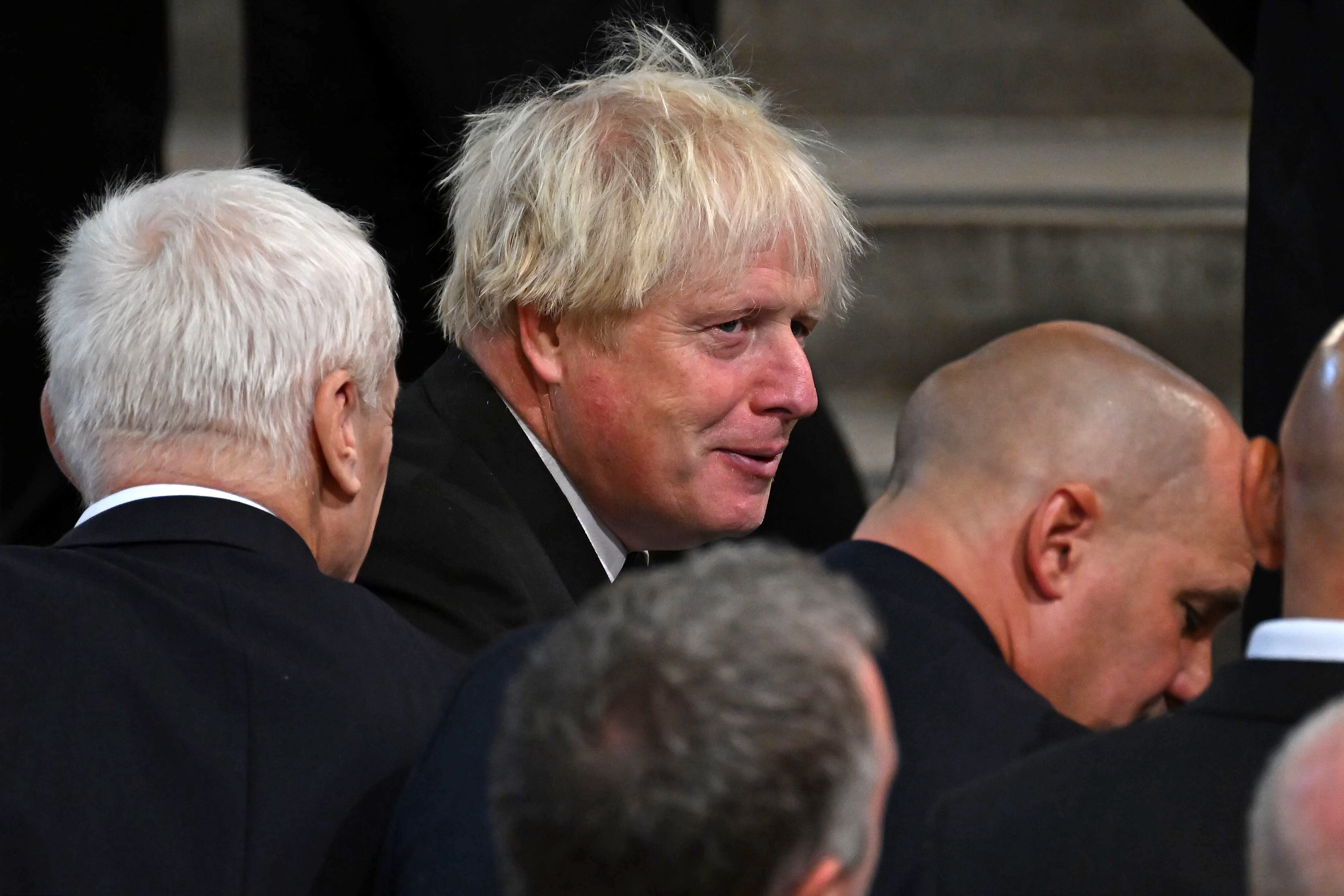
Could Boris Johnson Be About To Become Prime Minister For A Second Time?

Boris Johnson is planning to throw his hat into the ring to succeed Liz Truss as prime minister – just six weeks after he quit 10 Downing Street.

The former PM – who was forced to quit after a wave of resignations sparked by the Chris Pincher scandal – is taking soundings from his supporters before making a final decision.

When he resigned, he described being PM as “the best job in the world”.

He is currently in the Caribbean on holiday, but is preparing to cut it short to fly back to London before making a final decision.

But critics pointed out that he still faces a privileges committee investigation into whether he misled parliament over the partygate scandal, which could potentially see him thrown out of parliament.

Truss resigned earlier today and announced that her successor would be chosen within a week.

Sir Graham Brady, chairman of the 1922 Committee of Tory backbenchers, has hinted that an online ballot will take place, meaning party members will be given a say on the new PM.

That increases Johnson’s chances, given he is still popular with Conservative activists who remain angry at the way he was ousted by MPs in July.

Bookmakers have already slashed their odds on him being re-elected prime minister, making him second favourite behind Rishi Sunak, the man whose resignation as chancellor helped to bring him down.

Commons leader Penny Mordaunt – who lost out to Truss in the last leadership contest – has already confirmed that she will stand again, while other possible contenders include Kemi Badenoch, Ben Wallace and Suella Braverman.

Several Tory MPs have already given their support to Johnson coming back, including loyalists Nadine Dorries, Michael Fabricant and Andrea Jenkyns.

But health minister Robert Jenrick, who served in Johnson’s cabinet between 2019 and 2021, told the News Agents podcast: “The Boris that I supported when he stood in 2019 was one of the greatest campaigners in modern political history, somebody who was able to galvanise people to win that incredible general election, defeat Jeremy Corbyn, get Brexit done.

“So, there was definitely a case for Boris, and I think I was right to support him in 2019. You could argue that the Conservative Party is in such a difficult place, that his formidable campaigning skills are required once again.

“On the other hand, his premiership came to an end for a reason, which is that there were serious questions about competence, credibility, and ethics and does the Conservative Party want to go back to that?.”

And Tory MP John Baron said: “I believe – rightly or wrongly – he misled parliament on a number of occasions. We have to look forward not back.”

A Labour source told HuffPost UK: “The Tories all droning on about how they need a sensible, serious person to manage the party and deliver stability, then that honking pudding turns up with his travelling circus. Delicious.”

Lib Dem deputy leader Daisy Cooper called on the Tories to block Johnson’s possible return.

She said: “The fact that Conservative MPs are even considering putting Boris Johnson back in Number 10 shows how out of touch they really are. They think there’s one rule for them and another for everyone else.

“Boris Johnson was forced to resign in disgrace after countless lies, scandals and failures. He shattered public trust in the government and plunged the UK into a political crisis. He must never be allowed near Downing Street again.”

Share Button

How Will The Tory Leadership Race To Replace Liz Truss Work?

Westminster collapsed into chaos on Thursday as Liz Truss announced she was resigning as Tory leader.

Truss lasted just 44 days in office, making her the shortest serving prime minister in history.

The government’s death spiral means there must be another leadership contest to select the next Tory party leader and prime minister.

Just minutes after her resignation, chairman of the backbench 1922 Committee Sir Graham Brady announced the party would hold a contest to replace her within a week.

It follows complaints that the two-month contest to replace Boris Johnson over the summer paralysed government for too long.

Truss’s replacement will become their third leader in just two months. Brady held two brief press conferences on Thursday to explain how they would elect the next PM.

How It Will Work

Brady said the process should be concluded by Friday, October 28.

The hope is that a new prime minister would be in place in time for an important financial statement on October 31.

That crucial statement – on the following Monday – is intended to reassure the City that the government has a plan to repair the nation’s finances.

Truss will remain acting leader of the party until a successor is appointed.

Candidates to replace her will need at least 100 nominations from Conservative MPs – a considerably higher threshold than the start of the last election.

Nominations open Thursday night and will close at 2pm on Monday, October 24. There will be an indicative vote of MPs once there are two candidates.

The first ballot of MPs will then be held between 3.30pm and 5.30pm on Monday 24.

If there are three candidates, the candidate with the fewest number of votes will be eliminated.

The result will be announced at 6pm. If a second indicative vote is needed, this will be held between 6.30pm and 8.30pm on Monday. The result will be announced at 9pm.

Once the parliamentary process is completed, Conservative Campaign Headquarters will begin balloting the party membership – as long as two candidates remain.

The ballot of members will be conducted via secure online voting that will close at 11am on Friday 28 – the result will be announced later that day.

Only qualifying members, who have been a member for at least three months, can vote.

Brady told reporters that hustings for MPs would be held behind closed doors on Monday.

He said: “We’ve fixed a high threshold, but one that can be achievable by any serious candidate.

“We have no knowledge of who those candidates will be at the moment.”

Behind the scenes, Tory MPs have already started the horse trading ahead of the election.

For a run-through of who might throw their hat in the ring, follow our list of runners and riders.

Share Button

East of England Ambulance Service workers say conditions are diabolical

About 2,800 paramedics, technicians and call takers are voting on strike action from Monday.

Share Button

Black Death 700 years ago affects your health now

Mutations that saved lives from the plague are causing auto-immune diseases today.

Share Button

General practice is like calling an Uber, MPs say

They say a lack of continuity of care means patients are receiving an unacceptably poor service.

Share Button

Friends could be key to finding fitness motivation

Spending time with active people could be key to kick-starting a workout regime, research suggests.

Share Button

New research rewrites the evolutionary story of gills

Gills are best known for helping most fish species breathe underwater. But less well known is the fact gills regulate the salt and pH balance of fishes’ blood, a vital role played by the kidneys in other animals. Collectively known as ion regulation, this lesser-known gill function has been traditionally thought to have evolved in tandem with breathing.

But surprising new research published in Nature is adding a new, early chapter to the evolutionary story of gills.

“Our work suggests that the early, simplified gills of our worm-like ancestors played an important role in ion regulation. And that role might have originated as early as the very inception of gills, well before they played any role in breathing,” says Dr. Michael Sackville, a zoologist who led the study while with the University of British Columbia (UBC).

“This really does flip the script on our understanding of how gills and gill function evolved.”

The evolution of gills and lungs has fascinated biologists, including Darwin, for more than 100 years. Prior to this study, gills were thought to be first used for breathing and ion regulation near the very beginning of vertebrate life. In this traditional timeline, these two functions shifted from the skin to the gills in tandem, helping vertebrates transition from small, worm-like creatures to larger, active fishes. This transition from “small and wormy” to “big and fishy” is an iconic event in vertebrate evolution.

The study traced the evolutionary journey of gills by comparing three animals that are alive today, but belong to different lineages: lampreys, which are vertebrates, and amphioxus and acorn worms, which are close relatives of vertebrates. The researchers assumed that any gill functions shared between the animals were inherited from a common ancestor, which is believed to be when simple gills first appeared well over 500 million years ago.

“We found that gills were used for breathing in only our vertebrate representative, and only with increasing body size and activity,” says Dr. Colin Brauner, a UBC zoologist and senior author on the paper.

“But we found ion regulating cells in the gills of all three of our animals. This allowed us to trace the origin of ion regulation at gills all the way back to early deuterostome animals, when very simple gill structures are thought to have first evolved. The finding supports the classic story that gills were first used for breathing in early vertebrates, but adds an exciting new, earlier chapter to the story, clearly worthy of further study.”

The study was conducted in collaboration with researchers at the University of Montreal and Cambridge University, and funded by the Natural Sciences and Engineering Council of Canada and Royal Society.

Story Source:

Materials provided by University of British Columbia. Note: Content may be edited for style and length.

Share Button