Earlier mammograms for women with family history of breast cancer may not be needed

A new study released in the American Cancer Society journal Cancer reconsiders guidelines for when to start screening with mammograms if a woman has a mother, sister, or daughter who was diagnosed with breast cancer.

Women with a first-degree family relative diagnosed with breast cancer, who are otherwise at average risk, are often advised to get screened 10 years earlier than the relative’s diagnosis age. However, there is little evidence to support the long-standing recommendation.

UC Davis Comprehensive Cancer Center researcher Diana Miglioretti joined Danielle Durham, with the Department of Radiology at University of North Carolina at Chapel Hill, and five other researchers on the study. They analyzed data from the Breast Cancer Surveillance Consortium on screening mammograms conducted from 1996-2016 to evaluate when screenings should begin for women with a family history of breast cancer.

More than 300,000 women were included in the national study. Researchers compared cumulative 5-year breast cancer incidence among women with and without a first-degree family history of breast cancer by relative’s age at diagnosis and screening age.

“The study concluded that a woman with a relative diagnosed at or before age 45 may wish to consider, in consultation with her doctor, initiating screening 5-8 years earlier than their relative’s diagnosis age, rather than a decade earlier. That puts them at a risk that is equal to that of an average-risk woman who is age 50, which is the most recommended age for starting mammograms,” said Durham.

BRCA gene mutation carriers may benefit from starting screenings earlier. Women ages 30-39 with more than one first-degree relative diagnosed with breast cancer may wish to consider genetic counseling.

Increasing the age for initiating screening could reduce the potential harms of starting breast cancer screenings too early. These include increased radiation exposure and false positive results that require women to return to the clinic for diagnostic imaging and possibly invasive procedures, but do not result in a breast cancer diagnosis. The earlier a woman starts receiving mammograms, the more screenings they will undergo over their lifetime — and that increases the chances of experiencing these harms.

“Mammography also may not perform as well in younger women because they are more likely to have dense breasts which increase the difficulty of finding cancer on the images and results in more false-positives,” Miglioretti said.

The other authors on this study include Linn A. Abraham, Kaiser Permanente Washington Health Research Institute; Megan C. Roberts, UNC Eshelman School of Pharmacy; Carly P. Khan, Patient-Centered Outcomes Research Institute; Robert A. Smith, American Cancer Society and Karla Kerlikowske, UCSF Health. Miglioretti is an affiliate investigator with UC Davis Center for Healthcare Policy and Research and Kaiser Permanente Washington Health Research.

The study was supported through funding by the Cancer Prevention Fellowship Program, Division of Cancer Prevention and the National Cancer Institute (NCI) at the National Institutes of Health. Data collection by the Breast Cancer Surveillance Consortium was funded by the NCI (grant numbers P01CA154292, U54CA163303 and PCS-1504-30370).

Story Source:

Materials provided by University of California – Davis Health. Original written by Stephanie Winn. Note: Content may be edited for style and length.

Share Button

From Aunties To IG Hairdressers, Black Women’s Hair Ideals Are Changing

You’re reading Gen:Blxck, a series exploring Black culture, history, family and identity through the generations.

My earliest memories of having my hair done are all at home. My mother would braid mine and my sister’s hair before it got too thick for her to manage. Then I met my first hairdresser, a family friend of a friend, called Akosi. I’d travel to her house with my mum and spend the next few hours sitting in between her legs, getting curly box braids (my absolute go-to back then).

But in recent years, there’s been a surge of young Black women getting into the hair industry and using Instagram as a way to find clients. They’re labelled IG hairdressers by the community, and fewer women my age are now going to traditional Black hair salons where ‘Aunties’ typically styled your hair.

Aunties once ruled the Black hair landscape here – we grew up with them and we didn’t have anyone else to compare them to. But now there is a growing ‘Aunties versus IG hairdressers’ debate in the community. And of course there are pros and cons to each.

If you’re looking for a cheap price point, you’d probably want to get your hair done by an auntie. The trouble is, you’re more likely to be waiting a few hours to get your hair finished in the salon as they switch – and chat – between clients.

IG hairdressers, on the other hand, are easier to find and book online and more likely to be able to do a hairstyle they haven’t done before, but they also tend to charge more and often get called out for unprofessional behaviour like cancelling last minute.

Whoever we trust with our hair, the styles Black women are favouring are changing – and fast. For centuries our hair has been policed by whiteness, but now, Black women are finding a new sense of pride. We’re finding our unique styles, whether that’s braving the big chop or saying ‘no’ to wigs altogether.

It’s been a long journey to get here and even the biggest fans of IG hairdressers will acknowledge we’ve got decades of salon owners to thank for it.

“In the 1960s, Black hair was often either stylishly styled in a natural African look or chemically treated to give it a washed-out colour,” co-founder and CEO of Curl Centric, Akirashanti Byrd tells HuffPost UK,

Byrd is 45 and she’s been styling Black hair for 15 years. Her customers are mainly Black women who want to keep their hair in its natural state.

“Often, these women are not familiar with the various styling techniques and products available to them, so I spend a lot of time educating them on the available options,” Byrd says. She has seen many trends in her time as a hairdresser. “By the 1980s, Black women were experimenting with naturally kinky curls and Afros, greatly expanding their style options,” she says.

“In the 1990s, we saw celebrities like Viola Davis rocking bold Black hairstyles that stood out from all other styles. This decade also saw the introduction of blonde hair dye, which helped make light-skinned people’s dark locks more visible. Since then, many variations of Black hairstyles have continued to be popular today, including relaxed curls, cornrows, dreadlocks and afro.”

The ways you can treat and style Black hair have also expanded in this time – especially with the help of the natural hair movement.

Akirashanti Byrd: 'I spend a lot of time educating [women] on the available options.'

Akirashanti Byrd

Akirashanti Byrd: ‘I spend a lot of time educating [women] on the available options.’

The natural hair movement really kicked off in the 60s alongside the civil rights movement, and was spearheaded by political activist Angela Davis. Afros were worn to protest against white supremacy and champion Black liberation.

However, the early to mid 2000s saw a resurgence of this movement. More and more women in our community started to question why we relied so much on straight hair to make us feel worthy. So we put relaxers and the hot combs on pause and brought back the blue magic, afro combs and blow dryers.

Social media has played a big part in this. I learnt how to style my natural hair by watching YouTube. I watched to see how I could maintain a wash and go, slick down my 4C hair, and even attempted to learn how to cane roll (I’m still learning).

“The rise in popularity of natural hairstyles has led to an increase in demand for products and services that cater to this market and has resulted in more Black-owned businesses entering the industry,” Byrd says.

“The natural hair movement has positively influenced the Black hair industry. It has helped increase awareness of the need for products specifically designed for Black hair and has created a demand for these products. This has resulted in more companies developing Black hair care lines, helping to grow the industry.”

Brands like Ruka Hair, Cantu, Shea Moisture, KeraCare are Black girls’ go to for hair products. And women are investing their money into these brands. Black Women in the UK account for 10% of haircare spending, although they make up only 2% of the UK adult population, a survey by TreasureTress found.

“Today, I feel like hair trends seem to change with the season: seasonal colours, lengths and protective styles etc,” says hairstyilst Ayanda Soares. Soares has been a hairdresser for 14 years and describes her customers as those who want to embrace their natural hair and often opt for protective styling.

She began learning when she was a teenager. “I had always done my own hair, as my mum was terrible at doing mine and my sister’s hair – she had dreadlocks for most of our childhood,” she shared. “In secondary school, I would braid friends’ hair and I learned to do braided weaves around the same time.”

Soares tells HuffPost that in her time as a hairdresser, she’s seen a surge in demand for experimental methods such as tape-ins and keratin fusion. These options weren’t accessible in the UK in the same way they were in the US due to a lack of hair suppliers offering extensions for women with Black hair.

“These have been around for many years, but have not been seen at this level in the afro/Black hair space,” she adds.

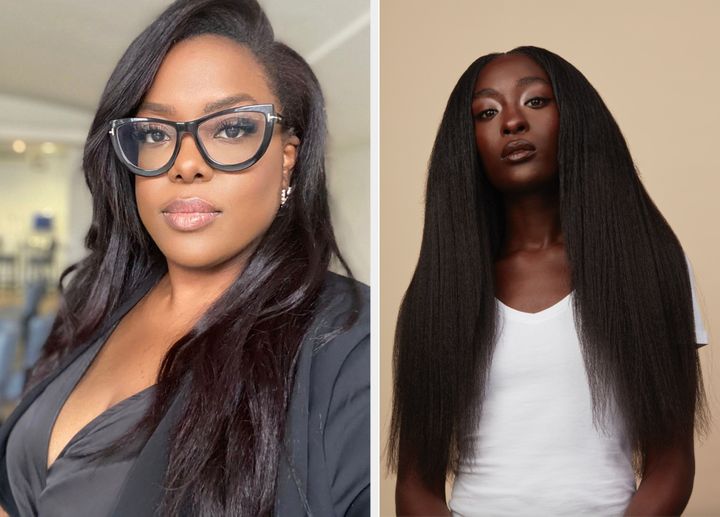
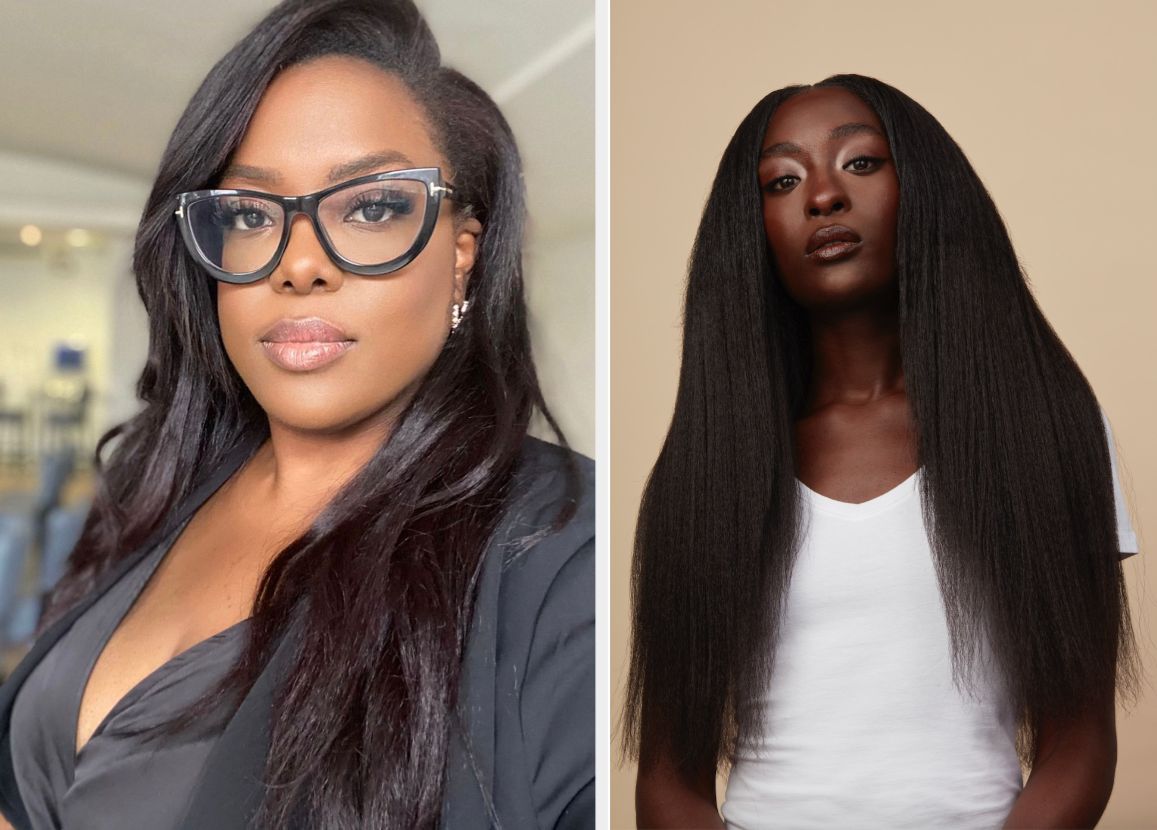
Ayanda Soares (left) and a model with tape-ins styled by her (right).

Ayanda Soares

Ayanda Soares (left) and a model with tape-ins styled by her (right).

Soares agrees that social media has played its part in changing the landscape of Black hair styling. “It has also has allowed us to showcase our work globally,” she says.

She is big on educating women about how to care for their hair, running training programmes that highlight how to clean and prolong your hair extensions, for example.

“Content creators also help sell the message for us business owners, in terms of education, so we tend to work with influencers often,” she adds.

The pandemic also affected the way Black women do their hair – 64.7% said the way the did their hair changed as a result of lockdowns, according to the TreasureTress research.

More of us made the decision to transition “back to natural”, where women grow out their chemically treated hair. Additionally, they actively sought out resources to educate themselves on how to take care of their hair because they were no longer able to visit professionals due to lockdowns.

And with a younger demographic booking clients, the hair styles Black women are choosing is shifting.

Marlene Gatrude Twinomugisha: 'I just kind of fell into it'

Marlene Gatrude Twinomugisha

Marlene Gatrude Twinomugisha: ‘I just kind of fell into it’

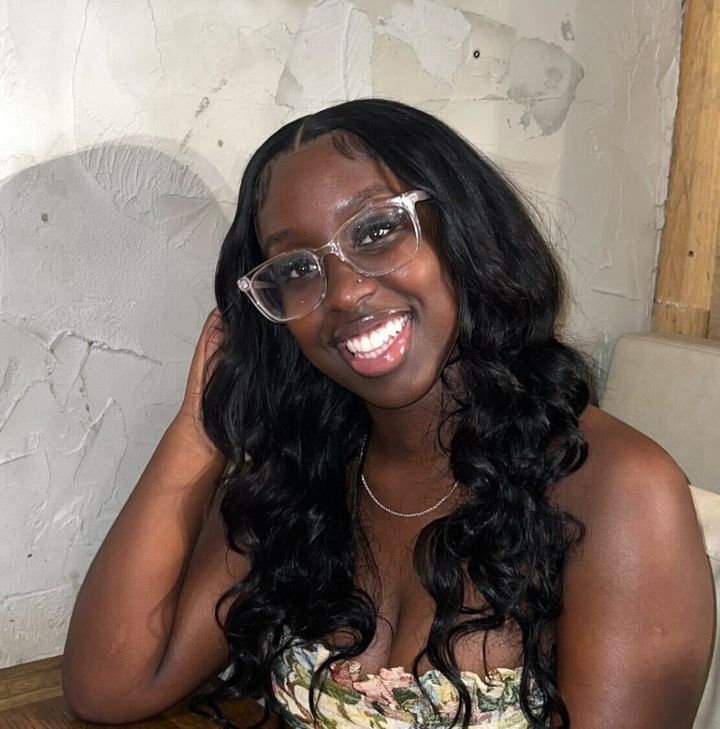
The most popular hairstyles today tend to be the more natural ones, like knotless braids, free-style feed in cane rolls or locs, Marlene Gatrude Twinomugisha, a 20-year-old hairdresser from London tells me.

She started doing hair by “accident”. Similar to Soares, she didn’t like the way her mum did her hair, so took it upon herself to learn how to style it. “I then moved on to to doing hair for my cousins, then my friends and more people were asking me to do their hair at school, so I just kind of fell into it,” she says.

“My experiences getting my hair done by aunties when I was younger was me showing them a hairstyle, them saying they can do it but whenever the style was done, it didn’t look the same at all,” says Twinomugisha, who posts her styles on Instagram under the name Crowned By Her UK.

She believes younger girls have moved to sourcing stylists from Instagram because IG hairdressers are able to jump on hair trends quicker. “Aunties can’t really keep up,” she adds.

However, IG hairdressers also have their issues. Writing for Refinery29 earlier this summer, Yolanthe Fawehinmi detailed how the convoluted booking process and poor customer service is causing young women to return to their roots.

“As more and more horror stories pile in about the last-minute cancellations, excessive fees, where you’ll need to pay a deposit via a booking system to secure an appointment and can be charged for being late, wanting extra length or colour, and of recent, even parting your hair — sometimes bad customer service, young people on social media are boycotting Instagram hairstylists, particularly those on TikTok, who are going back to Britain’s African braiders,” she reported.

Sade Idem, a 25-year-old hairstylist from Kent, says younger black stylists have more of a business mindset.

“With many of us growing up in the UK, we’ve seen how much Caucasian stylists would charge for less challenging hair services, and we realise £60 for seven hours of braiding with no breaks is criminal!” she says.

Idem has a lot of respect for older stylists as they’ve paved the way for the younger ones. “However, many older stylists are focused on the final look, rather than the health of the client’s hair long term,” she comments. “Their customer service can also be affected as they’re trying to fit in as many clients as possible to make up for the low prices they charge.”

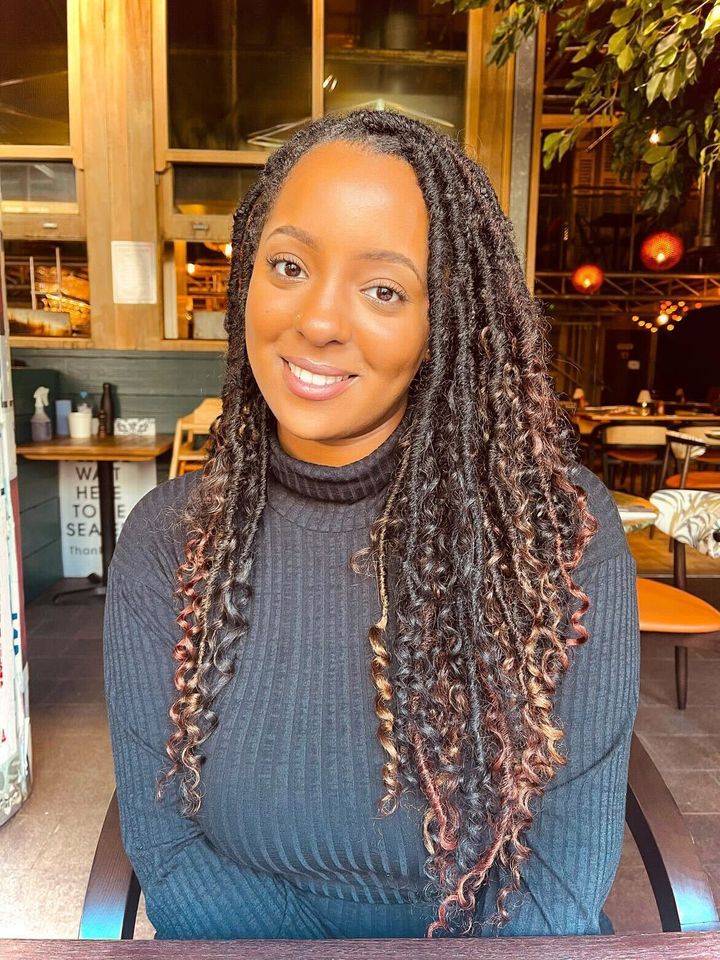
Sade Idem: 'We realise £60 for seven hours of braiding with no breaks is criminal.'
Sade Idem: ‘We realise £60 for seven hours of braiding with no breaks is criminal.’

So what does the future of Black hair and hairdressing look like from here? To me, it looks like versatility, growth and experimentation. As we move towards more protective and natural styles, I see us breaking away from the idea that we have to play it safe with our hair. Let’s enjoy it, and have fun.

I hope to see more young Black girls growing in the profession, but I do believe there’s a place for aunties in the Black hairdressing arena. They worked hard to build Black spaces for women to do hair in this country and paved the way for younger Black women to learn and grow as hairdressers.

As Byrd puts it: “There’s no doubt that Black hairdressing is a growing industry with immense potential. The future looks bright for those willing to put in the hard work and dedication required to succeed.”

What does it mean to be Black and British? Well, it depends which generation you ask. This Black History Month, HuffPost UK has teamed up with BuzzFeed’s Seasoned and Tasty UK to find out. Read more from Gen:Blxck here.

Share Button

Lucy Letby trial: Unusual finding in baby’s X-ray, court hears

A doctor tells a court of his findings after examining a baby allegedly murdered by nurse Lucy Letby.

Share Button

How Likely Is A General Election Now?

As the largest party in the Commons, this leader will also become the prime minister – despite not being elected by the general public, but by Tory MPs and the approximately 160,000 Tory members.

Liz Truss will remain in place until her successor is announced, hopefully by Friday, October 28.

But, as the Tories go through yet another change of hands, many are calling for the vote to go back to the public via a general election, while online petitions for the cause are growing.

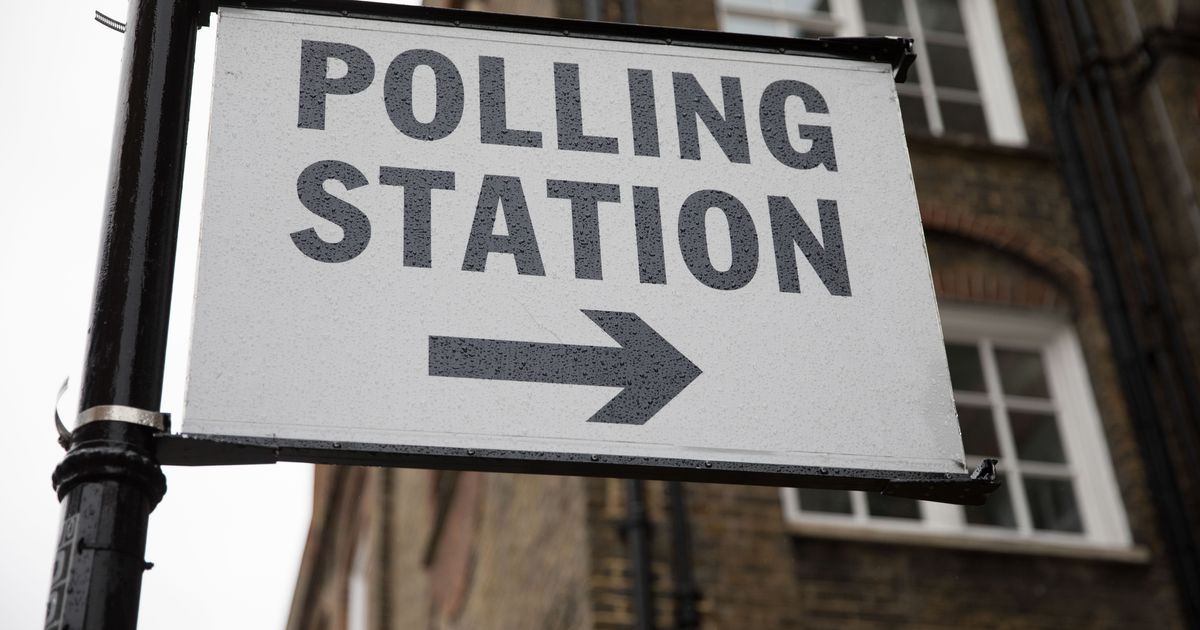
But just how likely is it that the electorate can go back to the polling stations early?

When would the next election be, without intervention?

Unless an announcement is made, the next general election is not set to happen for a while. That’s because Boris Johnson called the last snap general election in December 2019 and each term is five years’ long.

This is counted from the day the new parliament first met, so parliament would next be automatically dissolved on Tuesday, December 17, 2024.

Twenty-five days of polling would follow, meaning the last possible date for people to hit the ballot boxes would be Tuesday, January 24, 2025.

Elections are typically held on a Thursday so the public can find out who won on the Friday and a cabinet can be appointed over the weekend, but this is not a fixed rule.

Why do people want another general election?

Having another leader of the Conservative party – and potentially a third person standing leading the Tories in one term – is not a constitutional issue, and has happened before.

A prime minister was replaced twice without a general election being called in the 20th Century. Winston Churchill became prime minister after two other PMs resigned – there was no general election for him until 1945, due to the Second World War.

A similar situation occurred between 1900 and 1906.

Gordon Brown also did not call an early election when he took over from Labour PM Tony Blair in 2007, waiting until 2010 to call the public to vote. Theresa May entered Downing Street in 2016, but didn’t call an election until the following year and Johnson waited around six months before he dissolved parliament.

This is because each one of them wanted to shore up their mandate from the public, but were keen to establish themselves in office first.

But now, the leading party have been in power for 12 years and, with another leader entering No.10, many of the public feel disenfranchised.

How do you call a general election?

A prime minister usually has to call an early election.

While the power was handed to the House of Commons between 2011 and 2019, the Tories gave it back to the PM with a new law called the Dissolution and Calling of Parliament Act 2022.

The prime minister would have to make a “request” to the King to dissolve parliament (and as a constitutional monarch, the King could not reject it) and a polling day would be organised for 25 working days later.

All MPs lose their status once parliament is closed and have to campaign for re-election.

Labour cannot force a general election.

As the main party of the opposition, it can call a no-confidence vote against the government. But, some members of the Conservatives – as the majority party – would then have to vote against their own government, so it’s pretty unlikely to actually happen. The Tories currently have a majority of 71 seats, and probably wouldn’t want to lose it.

The King could technically invite somebody else to form a government, someone who would win a vote of confidence in the Commons. However, that hasn’t happened since King George V asked Ramsay MacDonald to create a government in January 1924, after Stanley Baldwin lost a vote in January 1924.

Who wants an early election?

Many on the opposition benches want to call a general election early, especially as an Opinium poll found voters have swung in the Labour Party’s favour, with a 39-point lead – adding up to a whopping 411 seats.

The Conservatives have dropped to a historic low in the opinion polls with Truss’s favourability dropping to -70 among the public according to YouGov.

The same data company also found that 63% of respondents want an early general election.

Labour leader Sir Keir Starmer said shortly after the resignation of Truss that his party have a manifesto ready “whenever an election is called”.

He said: “This is not just a soap opera at the top of the Tory party – it’s doing huge damage to the reputation of our country.

“We need a general election so the public can have their say on this utter chaos.

“There’s a manifesto that is going to be ready whenever an election is called,”

Lib Dem leader Sir Ed Davey spoke to BBC Breakfast on Friday and said the Conservatives have shown “they’re unfit to govern”, and that “we need to get rid of them”.

“I think the Conservative MPs now need to do their patriotic duty and work with the opposition parties to get that general election so that British people can have their say,” he continued.

SNP leader and Scotland’s First Minister Nicola Sturgeon has also said it was a “democratic imperative” for the next PM to call a general election.

Welsh party, Plaid Cymru, and the Green Party have called for an immediate general election too.

According to YouGov, just 19% of voters would back the Conservatives if a general election was held right now.

Share Button

Urgent recall of contaminated antibiotic powder

Patients using Targocid powder at home are advised to check the batch number.

Share Button

Flu comes early in England, with hospital cases rising

Cases have climbed quickly in the past week, suggesting the season has already begun, say officials.

Share Button

Lincolnshire GP receptionists taught to spot loneliness signs

Around 1 in 4 people in Lincolnshire reported feeling lonely some of the time during the pandemic.

Share Button

Cost of living: ‘It’s hard to eat proper food’

Young people speak to Newsbeat about how rising prices are impacting the food they can eat.

Share Button

Patients in England at risk as NHS and care ‘gridlocked’

England’s health and care system can no longer operate effectively as delays mount, regulators warn.

Share Button

New computing architecture: Deep learning with light

Ask a smart home device for the weather forecast, and it takes several seconds for the device to respond. One reason this latency occurs is because connected devices don’t have enough memory or power to store and run the enormous machine-learning models needed for the device to understand what a user is asking of it. The model is stored in a data center that may be hundreds of miles away, where the answer is computed and sent to the device.

MIT researchers have created a new method for computing directly on these devices, which drastically reduces this latency. Their technique shifts the memory-intensive steps of running a machine-learning model to a central server where components of the model are encoded onto light waves.

The waves are transmitted to a connected device using fiber optics, which enables tons of data to be sent lightning-fast through a network. The receiver then employs a simple optical device that rapidly performs computations using the parts of a model carried by those light waves.

This technique leads to more than a hundredfold improvement in energy efficiency when compared to other methods. It could also improve security, since a user’s data do not need to be transferred to a central location for computation.

This method could enable a self-driving car to make decisions in real-time while using just a tiny percentage of the energy currently required by power-hungry computers. It could also allow a user to have a latency-free conversation with their smart home device, be used for live video processing over cellular networks, or even enable high-speed image classification on a spacecraft millions of miles from Earth.

“Every time you want to run a neural network, you have to run the program, and how fast you can run the program depends on how fast you can pipe the program in from memory. Our pipe is massive — it corresponds to sending a full feature-length movie over the internet every millisecond or so. That is how fast data comes into our system. And it can compute as fast as that,” says senior author Dirk Englund, an associate professor in the Department of Electrical Engineering and Computer Science (EECS) and member of the MIT Research Laboratory of Electronics.

Joining Englund on the paper is lead author and EECS grad student Alexander Sludds; EECS grad student Saumil Bandyopadhyay, Research Scientist Ryan Hamerly, as well as others from MIT, the MIT Lincoln Laboratory, and Nokia Corporation. The research will be published in Science.

Lightening the load

Neural networks are machine-learning models that use layers of connected nodes, or neurons, to recognize patterns in datasets and perform tasks, like classifying images or recognizing speech. But these models can contain billions of weight parameters, which are numeric values that transform input data as they are processed. These weights must be stored in memory. At the same time, the data transformation process involves billions of algebraic computations, which require a great deal of power to perform.

The process of fetching data (the weights of the neural network, in this case) from memory and moving them to the parts of a computer that do the actual computation is one of the biggest limiting factors to speed and energy efficiency, says Sludds.

“So our thought was, why don’t we take all that heavy lifting — the process of fetching billions of weights from memory — move it away from the edge device and put it someplace where we have abundant access to power and memory, which gives us the ability to fetch those weights quickly?” he says.

The neural network architecture they developed, Netcast, involves storing weights in a central server that is connected to a novel piece of hardware called a smart transceiver. This smart transceiver, a thumb-sized chip that can receive and transmit data, uses technology known as silicon photonics to fetch trillions of weights from memory each second.

It receives weights as electrical signals and imprints them onto light waves. Since the weight data are encoded as bits (1s and 0s) the transceiver converts them by switching lasers; a laser is turned on for a 1 and off for a 0. It combines these light waves and then periodically transfers them through a fiber optic network so a client device doesn’t need to query the server to receive them.

“Optics is great because there are many ways to carry data within optics. For instance, you can put data on different colors of light, and that enables a much higher data throughput and greater bandwidth than with electronics,” explains Bandyopadhyay.

Trillions per second

Once the light waves arrive at the client device, a simple optical component known as a broadband “Mach-Zehnder” modulator uses them to perform super-fast, analog computation. This involves encoding input data from the device, such as sensor information, onto the weights. Then it sends each individual wavelength to a receiver that detects the light and measures the result of the computation.

The researchers devised a way to use this modulator to do trillions of multiplications per second, which vastly increases the speed of computation on the device while using only a tiny amount of power.

“In order to make something faster, you need to make it more energy efficient. But there is a trade-off. We’ve built a system that can operate with about a milliwatt of power but still do trillions of multiplications per second. In terms of both speed and energy efficiency, that is a gain of orders of magnitude,” Sludds says.

They tested this architecture by sending weights over an 86-kilometer fiber that connects their lab to MIT Lincoln Laboratory. Netcast enabled machine-learning with high accuracy — 98.7 percent for image classification and 98.8 percent for digit recognition — at rapid speeds.

“We had to do some calibration, but I was surprised by how little work we had to do to achieve such high accuracy out of the box. We were able to get commercially relevant accuracy,” adds Hamerly.

Moving forward, the researchers want to iterate on the smart transceiver chip to achieve even better performance. They also want to miniaturize the receiver, which is currently the size of a shoe box, down to the size of a single chip so it could fit onto a smart device like a cell phone.

The research is funded, in part, by NTT Research, the National Science Foundation, the Air Force Office of Scientific Research, the Air Force Research Laboratory, and the Army Research Office.

Share Button