Orthopaedics faculty at LSU Health New Orleans participated in a study comparing two antisepsis aqueous solutions in reducing the risk of infection in patients requiring surgery for open fractures. In the largest known randomized-controlled trial, the research team found that contrary to current international recommendations, chlorhexidine gluconate was not superior to povidone-iodine in an alcohol or aqueous solution in preventing surgical site infection. The results suggesting health care practitioners can select either aqueous-based antisepsis solution when treating open fractures on the basis of solution availability, patient contraindications, or product cost are published in The Lancet, available here.
Robert Zura, MD, Professor and Head of Orthopaedics, and Jessica Rivera, MD, PhD, Associate Professor of Orthopaedics, at LSU Health New Orleans School of Medicine, are also co-authors on the paper.
The authors highlight WHO estimates of millions of patients worldwide each year who have surgical site infections. The inherent risk of using fracture fixation in a contaminated or dirty wound is realized in about 10% of open fractures developing surgical site infections. Orthopaedic surgical procedures have the highest infection rate, greater than 20% for severe open tibia shaft fractures.
Previous reviews of general surgery, obstetrics and gynecology trials suggested the superiority of chlorhexidine over iodine. The Aqueous-PREP multiple-period, cluster-randomized,
crossover trial included 14 hospitals in Canada, Spain and the United States and 1,638 adults who underwent surgery for an open extremity fracture. It found that the odds of surgical site infection or unplanned fracture-related reoperations did not differ between patients assigned to receive skin antisepsis with aqueous 10% povidone or aqueous 4% chlorhexidine gluconate. The authors wrote, “Our findings contrast the superiority of chlorhexidine in alcohol that has been shown in clean or clean-contaminated surgery.”
The authors note their findings could have particular relevance to low- and middle-income countries, where both antiseptic solutions might not be readily available or procuring both products is unnecessarily costly.
They conclude, “Our findings are not only relevant to the management of open fractures but might also be applicable to the surgical treatment of other traumatic wounds.”
A study led by researchers at the Center for Advanced Bioenergy and Bioproducts Innovation (CABBI) improves understanding of leaf functional relationships and provides valuable new information for scientists modeling the productivity of C4 bioenergy crops.
The research team found that miscanthus and sorghum — both C4 plant species — occupy a distinct niche of the leaf economics spectrum (LES), with greater photosynthetic rates and nitrogen use efficiency than more common C3 plants.
The study, published in Plant, Cell & Environment, was led by Postdoctoral Researcher Shuai Li of CABBI, a U.S. Department of Energy-funded Bioenergy Research Center. Li works with Lisa Ainsworth, a Plant Physiologist with the U.S. Department of Agriculture’s Agricultural Research Service (USDA-ARS) Global Change and Photosynthesis Research Unit and Adjunct Professor of Plant Biology and the Carl R. Woese Institute of Genomic Biology (IGB) at the University of Illinois Urbana-Champaign.
LES describes relationships among leaf traits reflecting fundamental trade-offs underpinning key ecological strategies for resource acquisition and use in plants. It is largely based on information from C3 species in natural environments and has been studied rarely in C4 crops, which use a different carbon-fixation process: C4 plants convert sunlight energy into 4-carbon molecules, whereas the first photosynthesis product of C3 plants is a 3-carbon molecule. C4 plants make up about 3% of land plant species but include major sources of food and biofuels worldwide, such as maize, sorghum, and miscanthus.
The CABBI researchers showed that C4 bioenergy crops occupy a distinct range of the LES, with higher photosynthetic rates and greater nitrogen use efficiency. Additionally, Miscanthus × giganteus genotypes with different ploidy levels (or number of chromosome pairs) exhibit leaf trait divergence and distinct leaf functional relationships compared to C3 plants.
By expanding the trait relationships described in the LES to include C4 crops in agricultural conditions, the study enhances understanding of overall worldwide patterns in leaf functional relationships and offers insight into the potential for ploidy to improve resource use efficiency, Ainsworth said.
“This study took advantage of diverse plantings of miscanthus in Illinois and Mississippi to test how leaf properties vary in different lines and in different environments,” Ainsworth said. “We studied the investment that different miscanthus lines make in leaf structure and nutrient content — information that is crucial for modeling productivity of bioenergy crops and where they can be grown.”
CABBI co-authors on the study included University of Illinois Crop Sciences and IGB Professors Erik Sacks and D.K. Lee; Andrew Leakey, CABBI Director and Professor and Head of the Department of Plant Biology, also with IGB; Professor Brian Baldwin and Assistant Research Professor Jesse Morrison from Plant and Soil Sciences at Mississippi State University; and Nicholas R. Labonte, former Postdoc with Sacks.
Other co-authors: Christopher A. Moller and Noah G. Mitchell of IGB and USDA-ARS; Duncan G. Martin of Plant Biology at Illinois; Sampurna Saikia of Crop Sciences at Illinois; and John N. Ferguson of IGB and the Department of Plant Sciences at the University of Cambridge, UK.
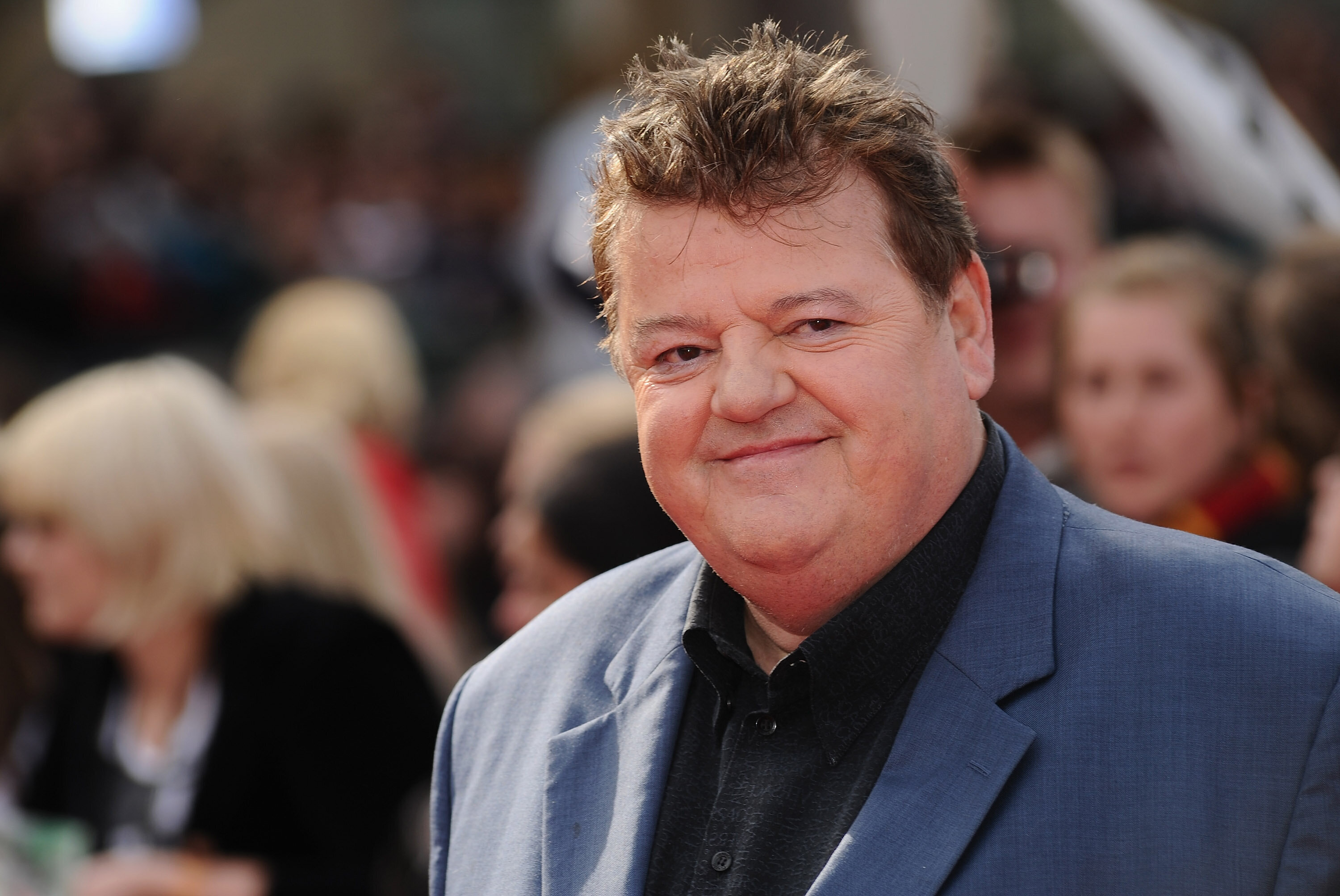
The Scottish star, who also starred as criminal psychologist Dr Eddie ‘Fitz’ Fitzgerald in ITV’s crime drama Cracker, passed away on Friday, according to his agent Belinda Wright.
His agent of 40 years thanked the medical staff at Forth Valley Royal Hospital in Larbert, near Falkirk in Scotland for their “care and diplomacy”.
Advertisement
In a statement, she said: “My client and friend Robbie Coltrane OBE passed away on Friday October 14. Robbie was a unique talent, sharing the Guinness Book of Records’ Award for winning three consecutive Best Actor Baftas for his portrayal of Fitz in Granada TV’s series Cracker in 1994, 1995 and 1996 with Sir Michael Gambon.
“He will probably be best remembered for decades to come as Hagrid in the Harry Potter films, a role which brought joy to children and adults alike all over the world, prompting a stream of fan letters every week for over 20 years.
“James Bond fans write too to applaud his role in GoldenEye and The World Is Not Enough.
“For me personally I shall remember him as an abidingly loyal client. As well as being a wonderful actor, he was forensically intelligent, brilliantly witty and after 40 years of being proud to be called his agent, I shall miss him.
“He is survived by his sister Annie Rae, his children Spencer and Alice and their mother Rhona Gemmell. They would like to thank the medical staff at Forth Valley Royal Hospital in Larbert for their care and diplomacy.
Advertisement
“Please respect Robbie’s family’s privacy at this distressing time.”
Coltrane was a larger-than-life character whose presence was immediately evident whenever he graced the screen.
The stars of film and TV have paid tribute to the actor, who starred in a number of classic British franchises and shows during his career including 007 and Blackadder as well as Harry Potter.
Hugh Laurie, who acted alongside Coltrane in the period sitcom Blackadder and in the sketch series Alfresco, recalled fond memories of his time with the actor.
“I hope it’s OK to spout memories: I used to ride with Robbie Coltrane between Manchester and London in his sort-of-restored MGA,” Laurie tweeted.
“I’d roll him cigarettes while he discoursed on the ways of the world, and I don’t think I’ve ever laughed or learned so much in my life.”
Advertisement
The Bond franchise’s long-term producers, Michael G Wilson and Barbara Broccoli, described the actor’s death as a “tragic loss to the world”.
In a joint post to Twitter, they added: “He was an exceptional actor whose talent knew no bounds.
“He was beloved to Bond audiences as Valentin Zukovsky in GOLDENEYE and THE WORLD IS NOT ENOUGH as well as to millions who saw him in his multitude of roles.
“We shall miss him as a dear friend. Rest in peace Robbie.”
Harry Potter stars were also among those who remembered their time with Coltrane fondly.
Emma Watson, best known for her role as Hermione Granger in the Harry Potter films alongside Coltrane, has paid tribute to the actor who “made it a joy to be Hermione”.
“Robbie was like the most fun uncle I’ve ever had but most of all he was deeply caring, and compassionate towards me as a child and an adult,” Watson wrote on her Instagram story with a picture of the two of them.
“His talent was so immense it made sense he played a giant – he could fill ANY space with his brilliance.
Advertisement
“Robbie, if I ever get to be so kind as you were to me on a film set I promise I’ll do it in your name and memory.
“Know how much I adore and admire you. I’ll really miss your sweetness, your nicknames, your warmth, your laughs and your hugs. You made us a family. Know you were that to us.
“There was no better Hagrid. You made it a joy to be Hermione.”
I hope it’s OK to spout memories: I used to ride with Robbie Coltrane between Manchester and London in his sort-of-restored MGA. I’d roll him cigarettes while he discoursed on the ways of the world, and I don’t think I’ve ever laughed or learned so much in my life.
Born Anthony Robert McMillan in Rutherglen, South Lanarkshire, on March 30 1950, Coltrane took his the stage name in a tribute to jazz saxophonist John Coltrane.
After working in theatre and comedy, he secured a role in BBC comedy series A Kick Up The Eighties, which brought him further roles in The Comic Strip Presents movies The Supergrass (1985) and The Pope Must Die (1991), and a series of comedy sketch shows.
Advertisement
He also memorably appeared as dictionary creator Samuel Johnson in Blackadder The Third in 1987 before reuniting with the cast for the 1988 special Blackadder’s Christmas Carol.
Coltrane also appeared in eight films with a former member of Monty Python’s Flying Circus.
Eric Idle was his opposite number in Nuns On The Run (1990) and National Lampoon’s European Vacation (1985).
He also played Big Jazza in the TV mini series Tutti Frutti, where he appeared in six episodes.
One of his highest-profile TV roles was in the 1990s playing Dr Eddie “Fitz” Fitzgerald, a forensic psychologist in the TV series Cracker (1993).
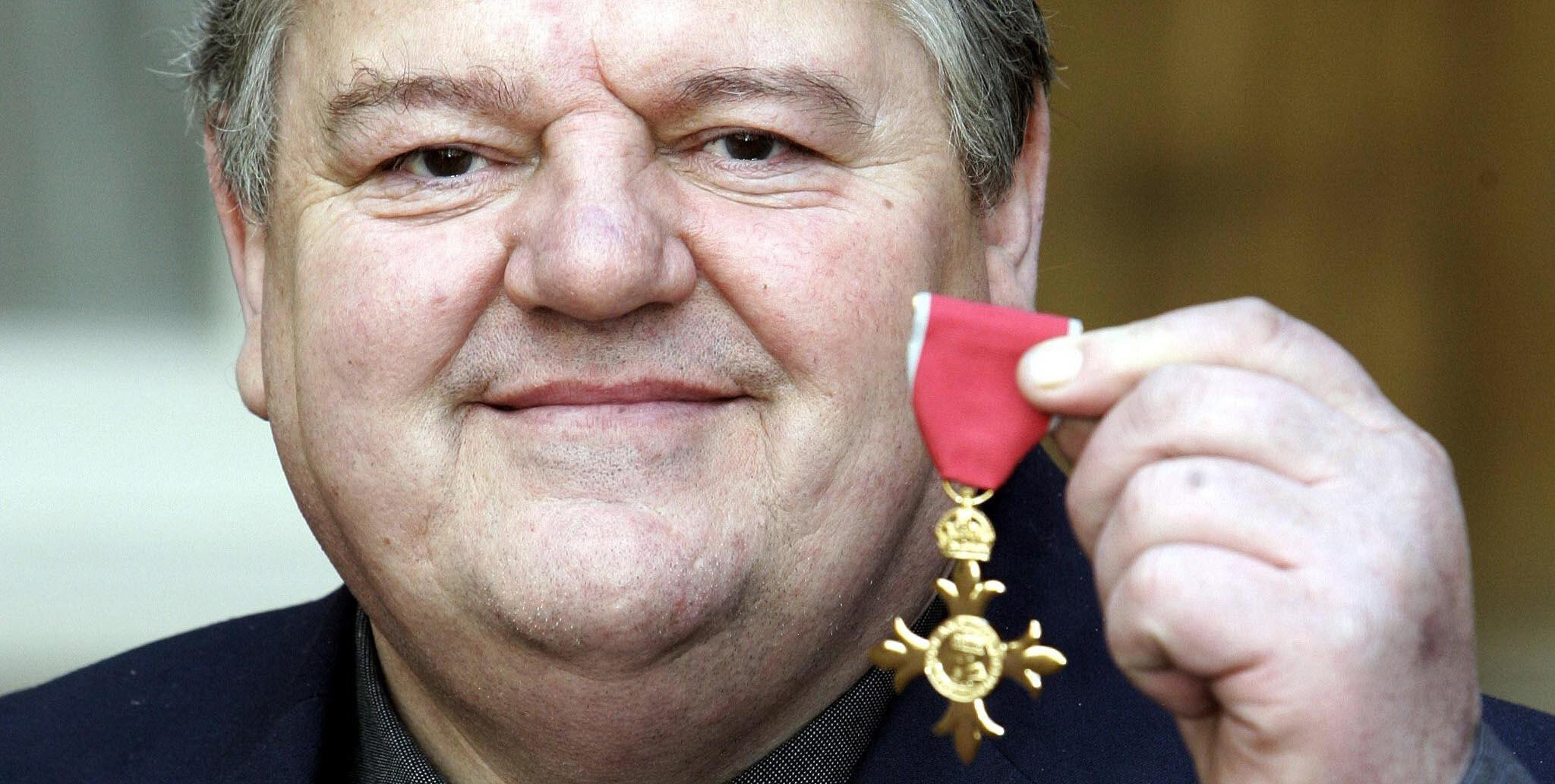
<img class="img-sized__img landscape" loading="lazy" alt="Robbie Coltrane with his OBE after receiving it from the Queen at Buckingham Palace.” width=”720″ height=”363″ src=”https://www.wellnessmaster.com/wp-content/uploads/2022/10/robbie-coltrane-harry-potter-and-cracker-actor-dies-aged-72-2.jpg”>
Robbie Coltrane with his OBE after receiving it from the Queen at Buckingham Palace.
Andrew Parsons via PA Wire/PA Images
It was not until his performance as KGB man Valentin Zukovsky in Bond film Goldeneye (1995) that he became internationally-known, revisiting the same character in The World Is Not Enough.
Advertisement
It led to him securing a role in the lucrative Harry Potter franchise for which he was personally selected by author JK Rowling, which led to appearances as Rubeus Hagrid in all the eight films.
Coltrane’s collection of accolades culminated with an OBE award from the Queen in 2006 for services to drama.
In an interview with The Scotsman in April 2014, Coltrane revealed he was writing his own memoirs after reaching a reflective stage in his life.
He said: “I’m writing my biography at the moment.
“I just think I’ve lived such an interesting life. I’ve written three books, I’ve made more than 700 hours of television, I’ve made 78 movies, I’ve made a lot.
“I’ve lived in New York, I was in Britain when alternative comedy happened, I was in Tutti Frutti, I was in Cracker, I’ve been fortunate enough to be connected with a lot of really important moments in drama, and then there is Harry Potter, obviously.”
Advertisement
Coltrane won three Baftas for his work in Cracker and also won an outstanding achievement award from Bafta Scotland in 2011.
Apart from acting and comedy, his talents also extended to voicing characters for animated films such as Brave in 2012 where his voice was used to bring colour to the character Lord Dingwall. He was also the voice of the Gruffalo in the 2009 TV film.
After a break from television, he returned to the small screen in 2016 for the Channel 4 drama National Treasure, where he played a comedian accused of raping a 15-year-old girl several years earlier.
Based on Operation Yewtree, Coltrane worked alongside Dame Julie Walters in the topical series which was broadcast in autumn 2016.
In his later years, he appeared less frequently in film and television, but returned to be interviewed for HBO’s Harry Potter 20th Anniversary: Return To Hogwarts – where he spoke of how his legacy as Hagrid would live long beyond him.
Advertisement
Speaking on the special, he said: “The legacy of the movies is that my children’s generation will show it to their children, so you could be watching it in 50 years’ time easy.
The 90s TV personality appeared on stage at the ceremony alongside her Challenge Anneka co-star, Dave the sound man, to present the prize for Best Quiz Game Show.
A video package showing clips from nominated shows Beat the Chasers, In for a Penny, Michael McIntyre’s The Wheel and The 1% Club was played, but things went awry when it came to announcing who had one.
As the camera then cut back to Anneka, she proclaimed: “The 1% Club!”
The audience then began cheering, but as no music played, Anneka quickly realised her mistake.
“No!” she said, before then reading out the list of nominations again.
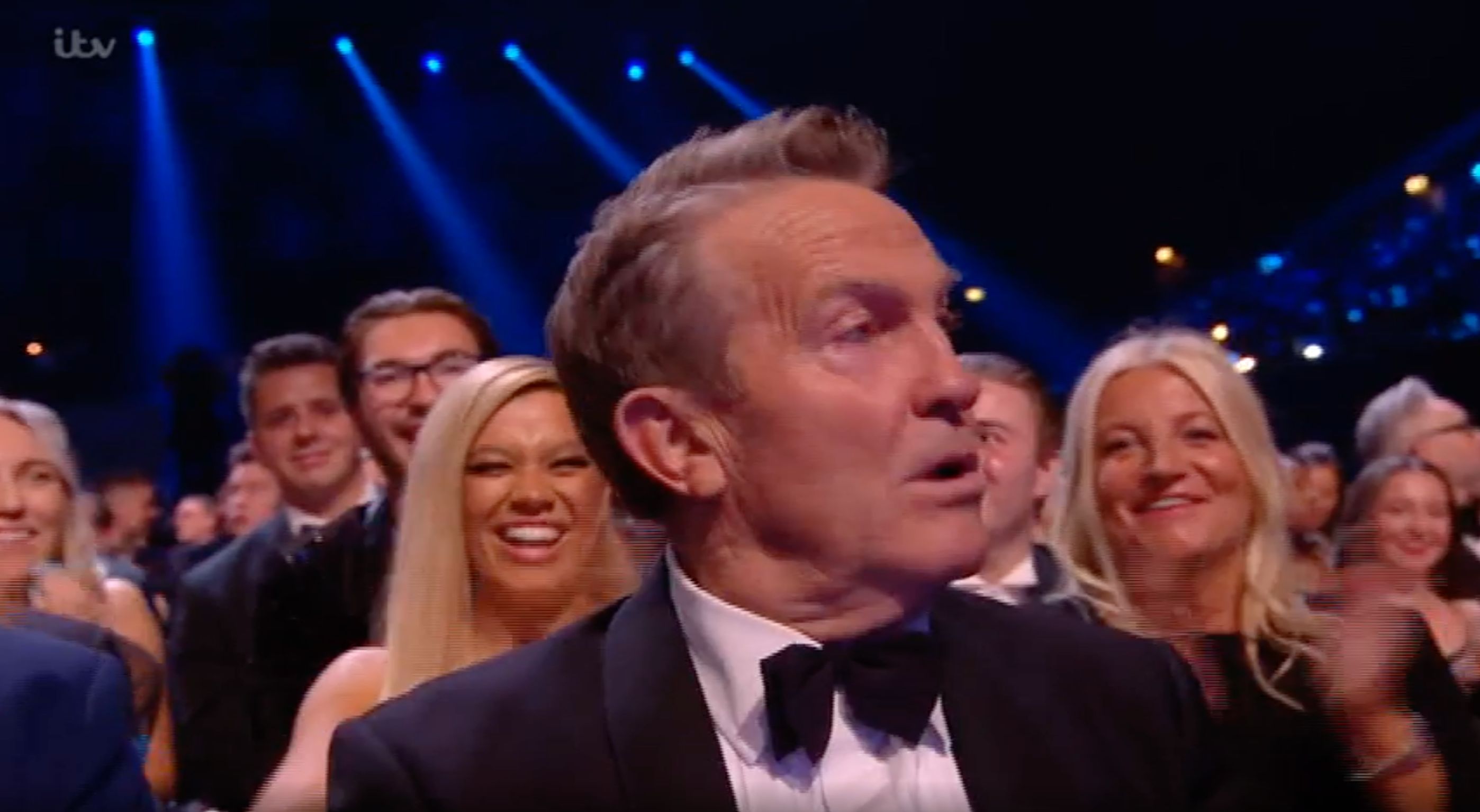
As she then declared Beat The Chasers as the winner, the show’s host Bradley Walsh appeared to not have realised he’d actually won.
However, as his co-stars headed to collect the prize, he then joined them on stage.