Early study suggests our genes may play a part in how well protected we are after Covid jabs.


Early study suggests our genes may play a part in how well protected we are after Covid jabs.

Published in the Journal of Hospital Medicine, University of Minnesota Medical School researchers examined whether the general public understands the medical jargon that physicians typically use in their introductions to patients. They found speciality names and seniority titles are sources of misunderstanding.
“Jargon is pervasive in medicine and the opportunity for misunderstanding due to this terminology begins the instant that physicians introduce themselves to patients,” said Emily Hause, MD, MPH, a pediatric rheumatology fellow at the U of M Medical School. “We found that most people can’t define specialty names nor correctly rank medical seniority titles. Physicians should describe their medical specialty and role on the patient’s care team in plain language to help reduce this source of potential confusion.”
Volunteer participants at the 2021 Minnesota State Fair completed an electronic survey that measured their knowledge of medical specialties and titles. Of the 14 specialties included in the survey, six specialties were correctly defined by less than half of the respondents:
When asked to rank medical roles, only 12% of participants correctly placed these titles in order: medical student, intern, senior resident, fellow and attending.
Further research is suggested to survey knowledge on additional specialties and obtain more demographic information.
This research was supported by the National Institutes of Health’s National Center for Advancing Translational Sciences grant UL1TR002494. Funding was also provided by the University of Minnesota Driven to Discover grant.
Story Source:
Materials provided by University of Minnesota Medical School. Original written by Alex Smith. Note: Content may be edited for style and length.

Modern agriculture uses a lot of plastic, especially in the form of mulch film that farmers use to cover field soils. This keeps the soils moist for crops, suppresses weeds and promotes crop growth.
However, it is usually very time-consuming and costly for farmers to collect and dispose of conventional polyethylene (PE) film after use. In addition, it isn’t possible to re-collect all of the thin PE films, as they tear easily. This means PE-pieces remain on and in the soil and accumulate there, because PE doesn’t degrade.
Biodegradable mulch film is a promising alternative, because — in contrast to PE film — it ideally does not to leave behind any polymer components in the soil environment. The biodegradable polymers it contains are deliberately designed so that microorganisms can use them to generate energy and build cell biomass. The biodegradable polymers have intended chemical “breaking points” in their backbone structure. Naturally occurring microorganisms, such as those in soil, can release enzymes into their environment that attack these points in the polymers and break them down. The small degradation products released are then taken up by the microbes and ultimately respired to form the final product, CO2.
That’s why proving CO2 formation from polymer carbon is crucial for biodegradation. Also because in addition to truly biodegradable plastics, there are falsely labelled ones based on PE containing specific additives. These films break down only into very small microplastics that are no longer visible to the naked eye. And because these aren’t degraded by microorganisms, they accumulate in the environment.
New approach captures all aspects of biodegradation
Until now based on existing methods, it hasn’t been possible to follow the process of polymer biodegradation in its entirety. But over the past few years, the Environmental Chemistry Group at ETH Zurich has developed a new approach to track and measure whether and to what degree a polymer biodegrades in a soil. Their findings have just been published in NatureCommunications.
These results could change the way polymer biodegradation is studied in the future. The project also involved researchers from ETH’s Earth Sciences department and Eawag, in addition to employees from the chemical company BASF.
This new approach is based on using polymers labelled with stable carbon isotopes (13C). This labelling allows the researchers to selectively track the polymer’s 13C during biodegradation in the soil, so they can unmistakably demonstrate that biodegradation is indeed occurring. Until now, plastic biodegradability had been tested only with non-isotopically labelled polymers. A polymer (or a plastic material consisting of one or more polymers) is certified as biodegradable if the fraction of added polymer carbon converted into CO2 exceeds a predefined level over a specific incubation period. The standard for biodegradable mulch film, for example, requires two-year soil incubations in which at least 90 percent of the mulch film carbon is “mineralised” into CO2.
These test methods are well established as a suitable means for detecting polymer mineralisation. However, they do not capture the full extent of the biodegradation, as they measure only CO2 formation. Consequently, researchers using today’s standard methods have been unable to detect the amount of polymer carbon remaining in the soil at the end of an incubation period. In addition, it was unclear whether this remaining carbon was present still in the form of the added polymer or whether microorganisms had already incorporated it into their biomass.
Closed carbon mass balances
The approach developed by the ETH researchers and their colleagues eliminates these ambiguities. In their tests, they used 13C-labelled polybutylene succinate, or PBS — a commercially important biodegradable polyester that is also used in mulch films.
The researchers were now able to selectively track the 13C in the PBS during biodegradation: in addition to determining mineralisation to 13CO2, the authors demonstrated complete mass balances for the PBS carbon by quantifying the residual amount of PBS-derived 13C that remained in the soil after incubation.
“It was gratifying for us to see closed carbon mass balances over the 425 days of soil incubation. This showed that we can accurately determine where the polymer carbon ends up — about two-thirds in CO2 and one-third in soil — over these very long incubation periods,” explains the study’s lead author, Taylor Nelson, who earned his doctorate in the Environmental Chemistry Group.
The researchers also wanted to know in which form the carbon added as PBS remained in the soil. How much was incorporated into the microbial biomass and how much was still present as residual PBS?
To answer this question, the authors extracted and quantified the residual PBS from the soil at the end of the incubations. They were able to show that while most of the carbon was still present as PBS, a significant amount — 7 percent — of the added PBS carbon had been incorporated into the microbial biomass.
The ability to determine exactly how much polymer remains and how much polymer carbon has been incorporated into biomass is essential for future studies and for the development of new biodegradable polymers. “We can now systematically test for soil conditions and polymer properties that allow for complete biodegradation of the polymers to CO2 and to microbial biomass — and we can assess factors that may slow down polymer biodegradation over time,” explains Michael Sander, Professor in the ETH Environmental Chemistry Group.
This work is already underway: using the new approach, the group is currently investigating the biodegradation of further polymers in various agricultural soils, including in the field. “In this way, we want to ensure that biodegradable polymers live up to their name and don’t remain in the environment,” says Kristopher McNeill, Professor of Environmental Chemistry at ETH Zurich and head of an eponymous research subgroup.
“Replacing conventional polymers with biodegradable ones can help reduce plastic pollution, especially for applications in which polymers are used directly in the environment such that there’s a high likelihood that the polymers will remain there after use,” Sander points out.

Even months after critical illness for sepsis, children are at risk for new or worsening medical conditions, a study suggests.
One in five children in a national cohort either developed or experienced progressing disease within six months of leaving the intensive care unit for sepsis, according to the research in JAMA Pediatrics.
Researchers compared data from 5,150 children who received ICU care for sepsis to 96,361 who experienced critical illness from other conditions. Those with sepsis were more likely to later experience chronic respiratory failure, problems requiring nutritional dependence and chronic kidney disease. Children in both groups were also at risk of developing a seizure disorder.
“Children who survive severe sepsis are at risk of long-term health consequences that impact their quality of life and future health needs,” said lead author Erin Carlton, M.D., MSc., a pediatric intensivist at University of Michigan Health C.S. Mott Children’s Hospital.
Not all children who recover from critical illness from sepsis are impacted equally, the study suggests. Those with pre-existing illnesses were three times more likely to experience new or worsening disease.
Meanwhile, younger children — particularly those under age one — were twice as likely to require supplemental nutrition, such as needing a feeding tube, or develop a new seizure condition such as epilepsy, than older children.
Every year, 70,000 children in the U.S. are hospitalized with sepsis, a life-threatening condition that occurs when a body’s response to infection goes into overdrive, causing damage to vital organs. It is a leading cause of death among children and newborns.
“Many children who require critical care for sepsis have debilitating physical, cognitive or emotional challenges long after recovery,” Carlton said. “Our findings suggest a need for improved follow up care focused on identifying and treating new or worsening medical conditions.”
Story Source:
Materials provided by Michigan Medicine – University of Michigan. Original written by Beata Mostafavi. Note: Content may be edited for style and length.
More than 10,000 appointments have been booked in the past 24 hours.
Krishnan Guru-Murthy brought Wednesday’s edition of Channel 4 News to a hilarious end after a guest used some choice language during the broadcast.
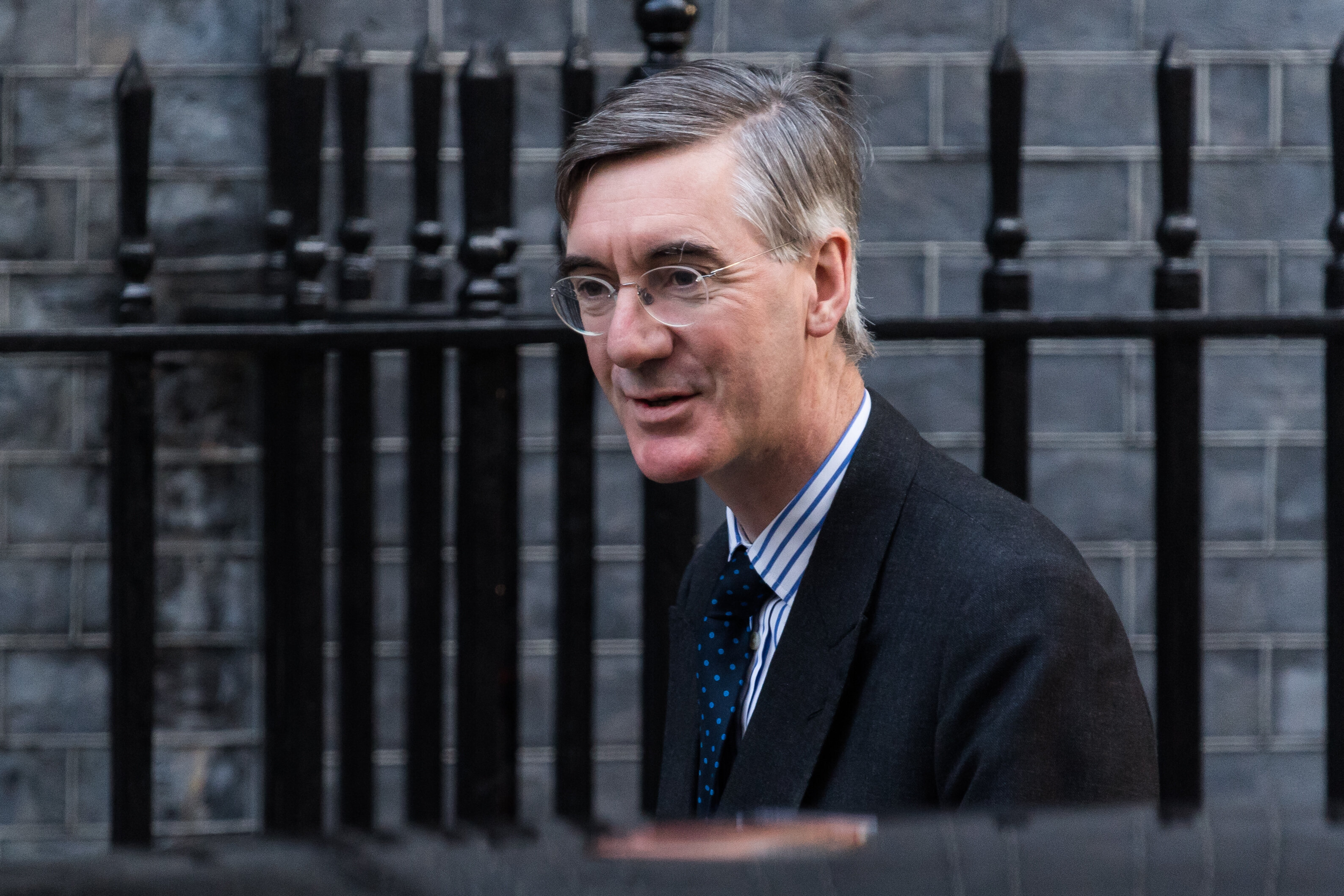
As part of the live show, Krishnan interviewed journalist Gillian Tett about cabinet minister Jacob Rees-Mogg after he claimed that the recently-announced mini-budget was not responsible for the market turmoil in the UK.
Advertisement
She responded: “To use a non-technical term, that is pretty much bollocks.”
“I think for the most part it really was the budget and the way it was delivered and the message inside, which sparked the beginning of the crisis,” Gillian added.
As the show drew to a close, Krishnan responded to Gillian’s use of the term “bollocks”, revealing he’d done some quick Googling to decipher whether or not it was inappropriate.

“Before we go, I’ve had time to clarify whether that word Gillian Tett used to describe Jacob Rees Mogg’s explanation was within the rules,” he told viewers, smart-phone in hand.
Advertisement
“And on the Ofcom regulator website, it describes [the word] as ‘medium language, potentially unacceptable, less problematic when used to mean nonsense’.”
However, Krishnan then added that Channel 4 did technically have cause to apologise for a somewhat unexpected reason.
“I should, however, apologise to people who are relying on subtitles, for whom it was spelled ‘bullocks’,” he added, before concluding: “That’s all for tonight.”
Krishnan’s comments certainly raised a smile among viewers, as the clip quickly began doing the rounds on social media:
Advertisement
Advertisement
Advertisement
Channel 4 News airs every weekday at 7pm.

Surgeons left frustrated as lack of beds and staff mean operating theatres are going unused.
Imtiaz Fazil, who had 17 miscarriages and saw five children die, says she wants more discussion about loss.
About 12 million more people will be able to book their winter vaccinations from Friday.

Jacob Rees-Mogg has taken aim at the independent fiscal watchdog that analyses government budgets despite the huge market unrest.
On the day the pound plunged again, the business secretary trashed Office for Budget Responsibility (OBR) forecasting and even suggested chancellor Kwasi Kwarteng could ignore them if they were overly negative.
Advertisement
OBR assessments of the UK economy will accompany the chancellor’s plan to pay for his economic measures and reduce debt on October 31.
A lack of such forecasts during last month’s seismic mini-budget are thought to have contributed to the recent chaos in financial markets – with the cost of government borrowing soaring and the Bank of England forced to intervene.
In a pre-recorded interview on ITV’s Peston, the cabinet minister said: “Let’s see what the Office for Budget Responsibility has to say rather than guessing what it may say.
Advertisement
“But its record of forecasting accurately hasn’t been enormously good.
“So, the job of chancellors is to make decisions in the round rather than to assume that there is any individual forecaster who will hit the nail on the head…
“There are other sources of information. The OBR is not the only organisation that is able to give forecasts.”
His comments are unlikely to reassure investors seeking a firm commitment from the Government to get the nation’s finances under control.
Rees-Mogg also lashed out at the International Monetary Fund (IMF) after it called for the UK’s economic support package to be more targeted and for fiscal policy to be tightened.
He said: “I think the IMF is wrong on both counts. I think it’s particularly wrong on energy, and frankly doesn’t know what it’s talking about…
Advertisement
“The IMF is not holy writ and the IMF likes having a pop at the UK for its own particular reasons. I’m afraid I would never lose too much sleep about the IMF.”
Earlier, the senior Conservative accused Today programme presenter Mishal Husain of failing to meet the BBC’s impartiality standards after she suggested the mini-budget had unleashed the market turmoil.
Rees-Mogg sought to claim that the Bank of England’s decisions on interest rates had caused the turbulence, rather than Kwarteng’s plans to borrow more to fund tax cuts.
Advertisement
Labour’s shadow chief secretary to the Treasury Pat McFadden said: “Even now, Tory cabinet ministers do not appear to have learned lessons since their disastrous mini budget.
“The more they publicly trash economic institutions like the OBR, the more they undermine market confidence in their plans and their management of the UK economy.
“The Tories are out of control and working people are being made to pay the price with higher mortgage payments.”
Financial experts have roundly rejected the business secretary’s analysis that interest rates were to blame for the market turmoil.
Gillian Tett, Financial Times US editor-at-large, told Channel 4 News: “To use a non-technical term, that’s pretty much bollocks.”
Advertisement