Tom Felton Fondly Recalls Alan Rickman Hurling F-Bomb At Him On Harry Potter Set

Tom Felton reminisced this week about a time when Alan Rickman was a complete accio-hole to him — in the most loving way possible.

The Harry Potter star, who played the entitled Draco Malfoy in the film franchise, shared a story about the late Die Hard actor in which Alan made Tom as nervous as Ron Weasley around spiders.

The incident occurred during a night shoot for a scene in 2009’s Harry Potter and the Half-Blood Prince, in which Felton and a group of Death Eaters — essentially the Wizarding World equivalent of Nazis — are following Alan, aka Professor Severus Snape, through Hogwarts.

Alan was wearing a long cloak during the scene, and gave Tom a severe warning before a take.

“Eventually I was told in no uncertain terms by Alan Rickman, ‘Don’t step on my fucking cloak,’” Tom recounted in an Instagram video. (The actual expletive is bleeped out in the video.) “I sort of giggled. The Death Eaters and I looked at each other and thought, ‘Is he joking?’ It quickly became apparent: He’s definitely not joking.”

The situation got even more riddikulus, Tm said, when director David Yates asked him to “walk as close as [he] can to Alan” in the scene. Felton said the take went smoothly until they “got about halfway through the Great Hall”… and Tom stepped on Alan’s robe.

Tom said Alan “turned around and gave me a look you never, ever want to see.”

Considering that Alan’s Snape was a cold authority figure with a sharp tongue and an intimidating leer, it’s hard not to feel for Felton, who was just a kid at the time.

But Tom said in his video he understood why Alan would be upset.

“You have to bear in mind his cloak’s attached around his neck — I nearly killed the poor man!” he said.

Thankfully, in the next take Tom said “someone else” accidentally stomped on Snape’s cape.

“That kind of took the heat away from me,” Tom quipped. “But I’ll never forget those words: ‘Don’t step on my fucking cloak.’”

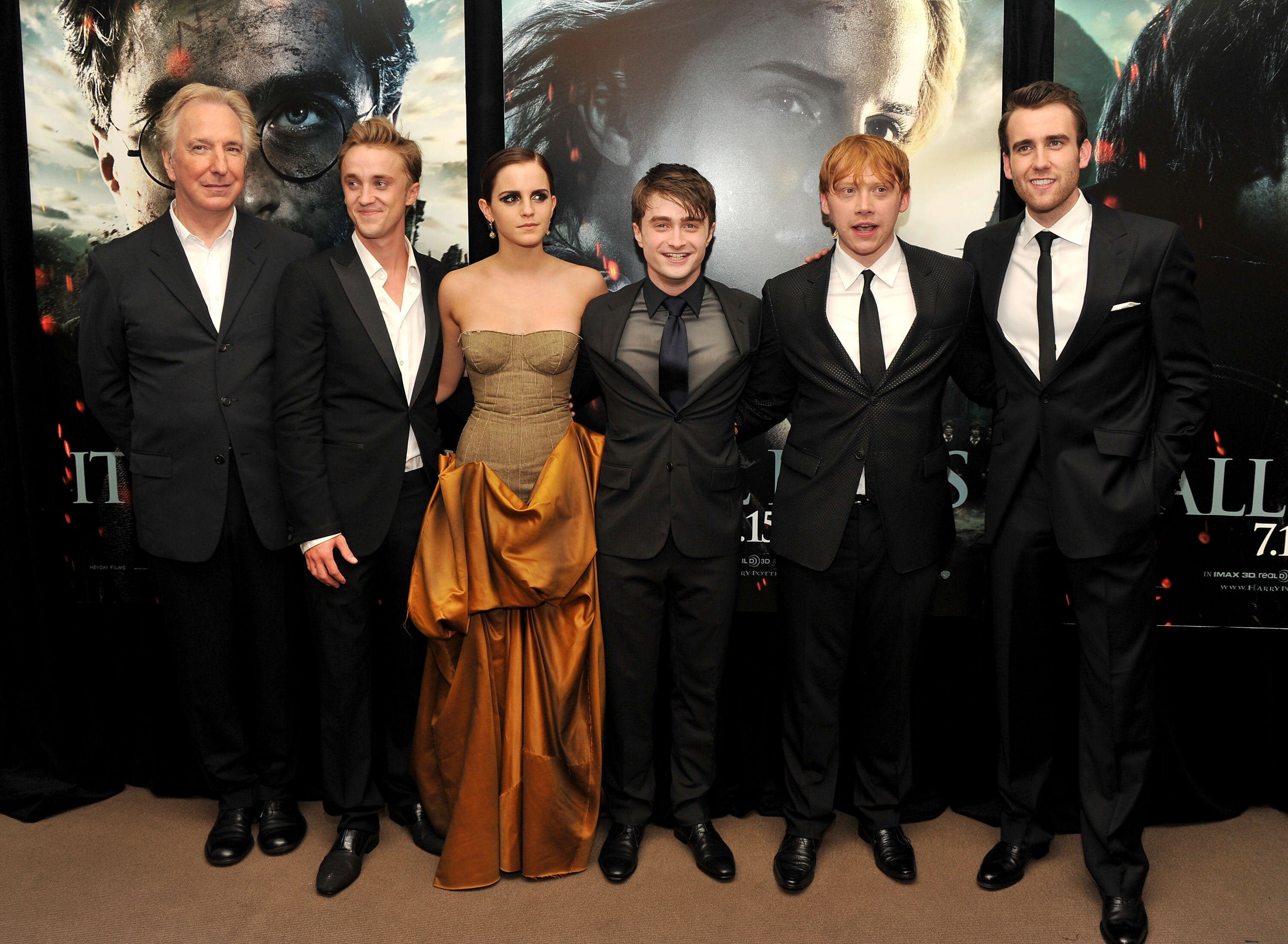
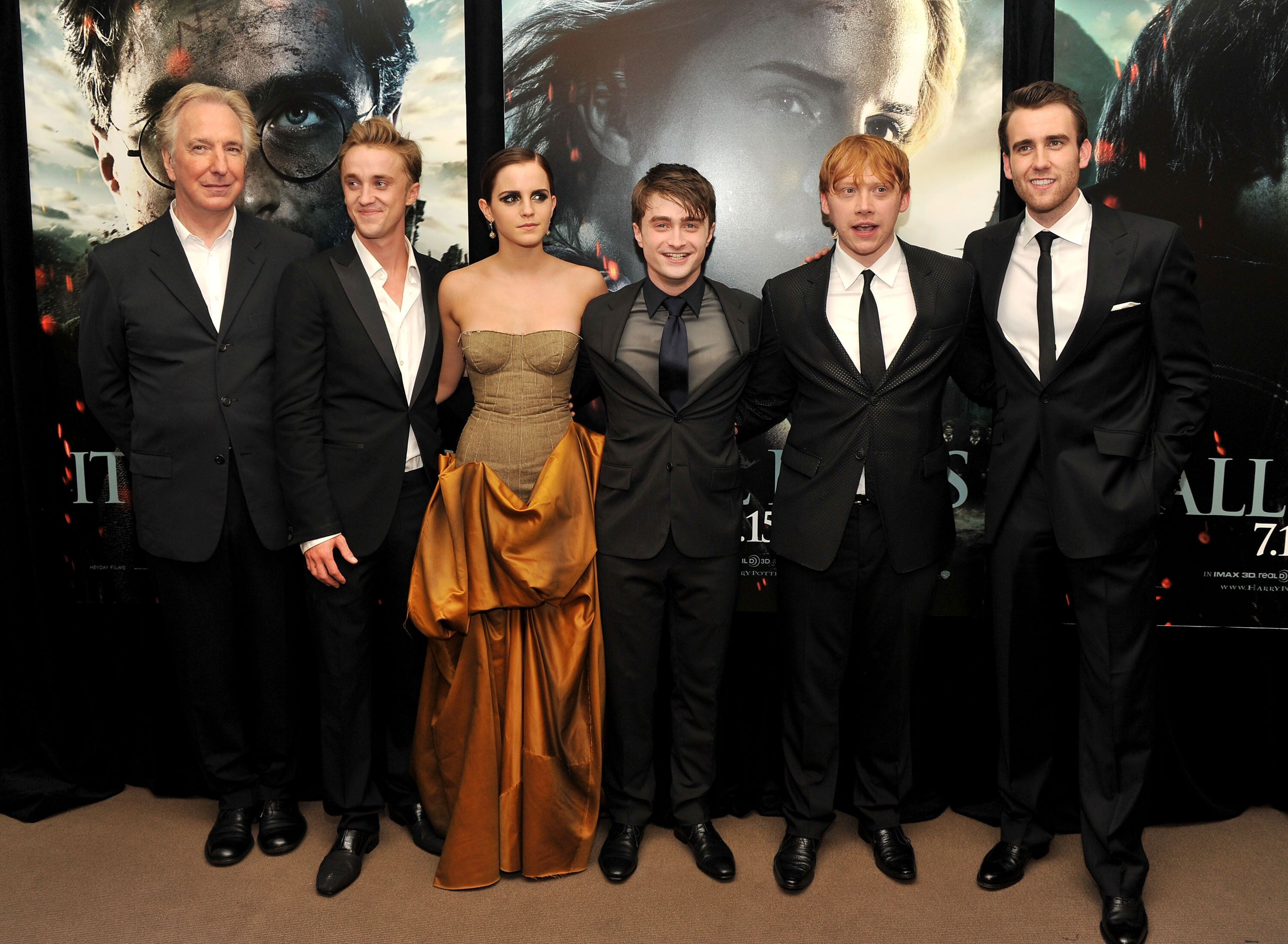
Alan Rickman, Tom Felton, Emma Watson, Daniel Radcliffe, Rupert Grint and Matthew Lewis attend the New York premiere of Harry Potter And The Deathly Hallows: Part 2 in 2011.

Stephen Lovekin via Getty Images

Felton shared the story to promote his new memoir, “Beyond the Wand: The Magic and Mayhem of Growing Up a Wizard.” But he’s told the story before, speaking to a much smaller audience at the 2019 London Film & Comic Con.

In a Q&A with fans there, Tom expressed affection for Rickman, who died in 2016. But he admitted Alan was also the person on set he was “scared most of,” because “he stays in character pretty much the whole time.”

“I remember, there was once we were night shooting, and he’s just standing there, ominously. And eventually I plucked up the courage to say ‘Are you all right, Alan?’” Tom said. “And he just turned, ever so slowly, and just ― ‘I’ve peaked.’”

Tom said that he remembered “not laughing at the time.”

“And then I realised it later: He was a very funny man.”

Share Button

Jennifer Aniston Shares Her Valuable Fake Tan Lesson After Suffering Fail While Filming The Morning Show

The actor revealed she’d suffered a dreaded fake tan fail while filming the new series of The Morning Show.

Jen shared a series of snaps and videos from behind the scenes of the hit Apple TV+ show, which is currently in production of its third season.

In one of the videos, she is seen with her feet in the sink as her friend tries to scrub away the orange colour she’d been left with after getting a spray tan.

“Note to self, hands and feet you must lotion before a spray tan, otherwise… a situation,” she told her followers.

Referring to her friend, Jen joked: “This is what love is.”

The Morning Show is returning to Apple TV+ next year, and will see Jon Hamm join the cast.

The Hollywood actor will play corporate titan Paul Marks, who sets his sights on the fictional UBA News TV network.

Jennifer is returning to the show alongside Reese Witherspoon and Billy Crudup, where her character – The Morning Show host Alex Levy – was last seen after contracting Covid-19 following her visit to see the now deceased Mitch Kessler, played by Steve Carell, in Italy.

The Morning Show seasons 1-2 are available to stream now on Apple TV+.

Share Button

Stranger Things Writers Reveal Infamous Season 2 Death Nearly Happened In A Very Different Way

The writers of Stranger Things have revealed they originally planned to kill off character Bob Newby in a very different way.

The Radio Shack manager – played by Sean Astin – was introduced in season two as the boyfriend of Joyce Byers, but met his maker when he was killed by several Demodogs.

However, the writers’ Twitter account revealed this week that Bob was originally going to die at the hands of a possessed Will Byers (played by Noah Schnapp).

“Crazy shit that almost happened #1: In season 2, a possessed Will was going to kill Bob,” the writers tweeted.

Stranger Things bosses previously revealed that a change of heart during the production process stopped one of the show’s main characters from being axed in the most recent season finale.

In the action-packed episode, Max (Sadie Sink) came close to death thanks to Vecna’s curse, with the gang discovering that she is in a coma in hospital.

The show’s creators the Duffer Brothers have admitted they considered killing off the character during the writing process.

Speaking on Stranger Things’ official companion show Unlocked, Matt said: “[Max’s death] was discussed as a possibility. For a while that is what was going to happen. But [in the end we decided] we wanted to end it with a little more of a question at the end of the season.”

However, he insisted that Max isn’t quite out of the woods yet.

“It’s still really dark and if Max is going to be okay, we just don’t really know,” he added. “We wanted to leave it up in the air moving forward into season five.”

Earlier this year, the Duffer Brothers responded to criticism from cast member Millie Bobby Brown about their reluctance to kill off characters within the show.

Stranger Things seasons 1-4 are available to stream on Netflix now.

Share Button

Awake patients can have kidney stones moved, blasted

A new technique which combines the use of two ultrasound technologies may offer an option to move kidney stones out of the ureter with minimal pain and no anesthesia, according to a new feasibility study published today in The Journal of Urology.

In the procedure, the physician uses a handheld transducer placed on the skin to direct ultrasound waves towards the stone. The ultrasound can then be used to move and reposition the stones to promote their passage, a process called ultrasound propulsion, or the break up the stone, a technique called burst wave lithotripsy (BWL).

Unlike shock wave lithotripsy, which is the standard procedure now in use and requires sedation, this technology doesn’t hurt, said lead author Dr. M. Kennedy Hall, a UW Medicine emergency medicine doctor. “It’s nearly painless, and you can do it while the patient is awake, and without sedation, which is critical.”

The research team hopes that, with this new technology, the procedure of moving or breaking up the stones could eventually be performed in a clinic or emergency room setting, Hall added.

Stones in the ureter, which leads from the kidney to the bladder, can cause severe pain and are a common reason for emergency department visits. Most patients with ureteral stones are advised to wait to see if the stone will pass on its own. However, this observation period can last for weeks, with nearly one-fourth of patients eventually requiring surgery, Hall noted.

One in 11 Americans will have a urinary stone over the course of their lifetime. The incidence appears to be increasing, according to one UW Medicine study looking at this same technology. Up to 50% of patients with a stone event will recur within five years, the study noted.

Hall and colleagues evaluated the new technique to meet the need for a way to treat stones without surgery.

The study was designed to test the feasibility of using the ultrasonic propulsion or using BWL to break up stones in awake, unanaesthetized patients, Hall said.

Twenty-nine patients participated in the study. Sixteen were treated with propulsion alone and 13 with propulsion and burst wave lithotripsy. In 19 patients, the stones moved. In two cases, the stones moved out of the ureter and into the bladder.

Burst wave lithotripsy fragmented the stones in seven of the cases. At a two-week follow up, 18 of 21 patients (86%) whose stones were located lower in the ureter, closer to the bladder, had passed their stones. In this group, the average time to stone passage was about four days, the study noted.

One of these patients felt “immediate relief” when the stone was dislodged from the ureter, the study stated.

The next step for the researchers would be to perfom a clinical trial with a control group, which would not receive either BWL bursts or ultrasound propulsion, to evaluate the degree to which this new technology potentially aids stone passage, Hall said.

Development of this technology first started five years ago, when NASA funded a study to see if kidney stones could be moved or broken up, without anesthesia, on long space flights, such as the Mars missions. The technology has worked so well that NASA has downgraded kidney stones as a key concern.

“We now have a potential solution for that problem,” Hall said.

This study began in 2018 and was conducted on patients at Harborview Medical Center, University of Washington Medical Center-Montlake and the Northwest Kidney Stone Center at University of Washington Medical Center-Northwest. It involved the University of Washington School of Medicine’s departments of emergency medicine, urology and radiology, and the UW Applied Physics Laboratory.

Other UW Medicine trials have looked at breaking apart kidney stones inside the kidneys. This is the first trial to look at moving the stones or breaking them apart in the ureter with BWL, Hall said.

Share Button

Critical information about the size and growth speed of gliomas

An important new clue for preventing and treating brain tumors known as gliomas has been identified in research led by the Lunenfeld-Tannenbaum Research Institute (LTRI) at Mount Sinai Hospital in Toronto and Mayo Clinic Comprehensive Cancer Center and Mayo Clinic Center for Individualized Medicine. The study, published in the journal Science, provides a rare window into the biological changes behind glioma development.

Researchers found that animal models who carry a change in DNA known as germline alteration rs55705857 developed gliomas much more frequently — and in half the time — compared to animal models without the alteration. In addition to brain tumors, the findings are relevant to other cancers and diseases.

“While we understand much of the biologic function of germline alterations within genes that code for proteins, we know very little about the biologic function of germline alterations outside of genes that code for proteins. In some way, these germline alterations interact with other mutations in cells to accelerate tumor formation,” says co-lead author Robert Jenkins, M.D., Ph.D., a genetics researcher at Mayo Clinic in Rochester. “Based on this new understanding of its mechanism of action, future research may lead to novel and specific therapies that target the rs55705857 alteration.”

The study offers new knowledge that may help clinicians determine, pre-surgery, whether a patient has a glioma.

“We expected that rs55705857 would accelerate low-grade glioma development, but we were surprised by the magnitude of that acceleration,” says co-lead author Daniel Schramek, Ph.D., a researcher at Lunenfeld-Tannenbaum Research Institute.

There are many alterations, likely thousands, outside of genes associated with the development of cancer and other diseases, but the mechanism of action is only understood for very few, Dr. Schramek says.

This study demonstrates that, with the tools of modern molecular/cell biology, it is possible to decipher much of the mechanism of action of such alterations.

Dr. Jenkins is a Ting Tsung and Wei Fong Chao Professor in Individualized Medicine Research and researcher in Mayo Clinic’s Department of Laboratory Medicine and Pathology.

Dr. Schramek is a senior investigator and holds a Kierans & Janigan Research Chair at the LTRI and is an associate professor, Department of Molecular Genetics, Faculty of Medicine, University of Toronto.

Story Source:

Materials provided by Mayo Clinic. Original written by Kelley Luckstein. Note: Content may be edited for style and length.

Share Button

Minister To Reverse Scrapping Free Remembrance Services Train Travel For Veterans

The transport secretary is to reverse a decision to scrap free train travel for military veterans to attend remembrance services.

On Friday evening, the Guardian reported the government was said to have revoked the offer, previously funded by the public purse in 2021, because the cost to the taxpayer would be “too great”.

The decision was revealed in an internal briefing for staff by the Rail Delivery Group, which represents rail companies. A RDG spokesperson confirmed “we are unable to offer free travel to veterans on Remembrance Sunday this year”.

But following an immediate online backlash from senior Tories – among others – it was reported by the PA News agency that transport secretary Anne-Marie Trevelyan is looking at reversing the move.

It added neither Trevelyan nor her ministers signed off on the decision.

In response to the suggestion the offer had been scrapped, she tweeted: “As a proud champion of our armed forces, I’m appalled by reports veterans would pay for their travel to commemorate the fallen. Incorrect.

“Our #ArmedForcesCovenant is a commitment to go the extra mile for our military. Train travel for veterans for remembrance remains free.”

Former transport secretary Grant Shapps had said ministers should “urgently” review the decision.

“Our military veterans have given of themselves to protect us all,” he said.

“It cannot be right to remove this small piece of recognition for their service to the country.”

Share Button

Vegan Activists Pour Out Milk In London Department Stores

Animal rights activists have poured out milk in two high-end London department stores in a protest against the use of dairy products.

Two activists from Animal Rebellion targeted Fortnum & Mason and Selfridges on Friday.

Animal Rebellion said that the man and woman involved were Steve Bone, a photographer from Thorpe-Le-Soken, Essex and Sofia Fernandes Pontes, a student from Madeira, Portugal.

Bone and Fernandes Pontes entered Fortnum & Mason on Piccadilly at 11.35am, took milk from the shelves and emptied it onto the floor of the shop.

A video showed them then being escorted towards the exit by security staff. The same two activists then entered Selfridges on Oxford Street around 12.30pm.

They were filmed pouring milk over a cheese display. One person off-camera asked staff: “Do you guys not intervene?”

The member of staff replied: “We’re not allowed to.”

Another onlooker said: “F***ing ashamed of yourselves.”

As the activists started to leave, he said: “Yeah, toss off, now. Bugger off.”

Grab from video issued by Animal Rebellion of supporters of Animal Rebellion pouring out milk in Fortnum & Mason in London.

Animal Rebellion via PA Media

Another onlooker blocked Fernandes Pontes as she walked away, catching her neck with his outstretched arm.

The activists were then escorted to the exit by security staff.

Animal Rebellion said that the pair took action “to highlight the need to transition to a plant-based food system and a sustainable way of feeding the planet, without exploitation of animals”.

Fernandes Pontes said: “I don’t want to see my children grow up in a world surrounded by drought, destruction of nature, and food shortages. I want them to see a world full of wildlife and beauty.

“Transitioning to a plant-based future is simply essential if we want to see a better world for everyone, supporting farmers to move into profitable and sustainable plant-based production is a no-brainer for (prime minister) Liz Truss and (environment secretary) Ranil Jayawardena.”

Bone said: “I took action throughout September to push for a plant-based future, and I am taking action again today because Liz Truss and Ranil Jayawardena are still refusing to listen.

“My little girl’s future is on the line and the government’s response is to ignore advice from Oxford and Harvard and, instead, opt to drive us all further into the climate, ecological, and cost-of-living crises.”

The action comes the day before Animal Rebellion plan to occupy the capital.

The activists will gather outside Green Park tube station at 11am on Saturday for a demonstration and march.

Share Button

Eurovision Song Contest 2023 UK Host City Revealed As Liverpool

Liverpool will host the Eurovision Song Contest for the first time in 2023, the BBC has confirmed.

Earlier this year, the annual music event was won by the Ukrainian representatives Kalush Orchestra, which would traditionally mean that the contest would be held in Ukraine in 2023.

However, due to the ongoing conflict, organisers made the decision that Eurovision would not be able to take place in Ukraine, and instead will be held in the UK, who finished in second place this year.

Following this, seven UK cities were originally revealed to have been shortlisted based on their “capability, capacity and experience” in hosting large-scale events, with Birmingham, Glasgow, Leeds, Liverpool, Manchester, Newcastle and Sheffield all making the cut.

This was later narrowed down to just Glasgow and Liverpool, with Graham Norton confirming during Friday’s edition of The One Show that the latter city had been selected for the event.

Eurovision’s executive supervisor Martin Österdahl said after the announcement that Liverpool is “the ideal place” to host the competition next year.

“The city is synonymous with music and Liverpool Arena exceeds all the requirements needed to stage a global event of this scale,” he continued.

“We have been very impressed with the passion the city has shown in embracing the Contest and their inclusive ideas for placing last year’s winners, Ukraine, front and centre when thousands of fans visit next May. ”

Reigning winners Kalush Orchestra also said in a statement: “We are very pleased that next year’s Eurovision Song Contest will take place in Liverpool.

“Though we haven’t had the privilege of visiting yet, the musical heritage of the city is known all over the world. Playing in the same place that The Beatles started out will be a moment we’ll never forget!”

They added: “Although we are sad that next year’s competition cannot take place in our homeland, we know that the people of Liverpool will be warm hosts and the organisers will be able to add a real Ukrainian flavour to Eurovision 2023 in this city.”

Kalush Orchestra performing in Turin earlier this year

picture alliance via Getty Images

During his appearance on The One Show, Graham also confirmed that the final will be taking place on Saturday 13 May 2023, with the semi-finals airing on BBC One for the first time earlier that week.

In addition to the other shortlisted cities, the BBC previously shared that Aberdeen, Belfast, Brighton, Bristol, Darlington and London had all also considered before the initial shortlist announcement in August.

While Eurovision is be held in the UK next year, the BBC has insisted it is still “committed to delivering a truly unique Song Contest that celebrates wonderful Ukraine and champions British music and creativity in all its diversity”.

Ukrainian broadcaster UA:PBC will work closely with the BBC to develop Ukrainian elements of the 2023 show.

Due to Kalush Orchestra’s victory, Ukraine will also automatically qualify for next year’s Eurovision final, along with the so-called “Big 5”, which are the countries that contribute the most towards the event financially (France, Germany, Italy, Spain and the UK).

Share Button

Climate change made the 2022 summer droughts more likely

The 2022 Northern Hemisphere summer was one of the hottest ever recorded in Europe with over 24,000 heat-related fatalities, and brought intense heatwaves to parts of China and North America. It was also very dry, and the resulting drought caused widespread water shortages, wildfires and crop failures leading to higher food prices, as well as impacts on electricity supply.

An international team of climate scientists led by the research group of Sonia Seneviratne, Professor for Land-?Climate Dynamics at ETH Zurich, now analysed the possible influence of climate change on this extreme weather event. Their study published by the World Weather Attribution group estimates that human-caused climate change made soil moisture drought conditions in the Northern Hemisphere at least 20 times more likely, threatening crop production and adding further pressure to food prices and food security.

Intense agricultural and ecological droughts

For their study, the researchers analysed soil moisture levels in June, July and August 2022, across the whole Northern Hemisphere, excluding the tropics. They also focused on Western and Central Europe, which experienced particularly severe drought with substantially reduced crop yields. Soil moisture dryness in the top metre of soil, known as the root zone where plants extract water, is often referred to as agricultural and ecological drought.

Human-caused climate change made agricultural and ecological droughts in the North Hemisphere extratropics at least 20 times more likely, the researchers found. They calculated that drought conditions like this summer’s can be expected around once in 20 years in today’s climate. If humans had not warmed the planet, the agricultural drought conditions in the Northern Hemisphere would only have been expected around once in 400 years or less.

In the case of West-Central Europe, human-induced climate change made the agricultural and ecological drought about 3 to 4 times more likely. This does not mean that climate change has had less influence on Europe than elsewhere in the Northern Hemisphere; the different sizes of the regions mean the results cannot be directly compared.

“The 2022 summer has shown how human-induced climate change is increasing the risks of agricultural and ecological droughts in densely populated and cultivated regions of the North Hemisphere,” Seneviratne says.

High temperatures as human-made driver

The main factor driving the heightened agricultural and ecological drought risk were increasing temperatures, with changes to rainfall relatively less important. Climate change increased temperatures across the Northern Hemisphere to such an extent that a summer as hot as this year’s would have been virtually impossible without human-induced climate change, the scientists found.

“The results of our analysis also give us an insight on what is looming ahead,” says Dominik Schumacher, postdoc in Seneviratnes research group and first author of the study. “With further global warming we can expect stronger and more frequent summer droughts in the future.”

“That’s why we need to phase-out the burning of fossil fuels if we want to stabilise climate conditions and avoid a further worsening of such drought events,” concludes Seneviratne.

This article is based on a press release by the World Weather Attribution group, an international collaboration that analyses and communicates the possible influence of climate change on extreme weather events.

Story Source:

Materials provided by ETH Zurich. Note: Content may be edited for style and length.

Share Button

Age vs. genetics: Which is more important for determining how we age?

Amid much speculation and research about how our genetics affect the way we age, a University of California, Berkeley, study now shows that individual differences in our DNA matter less as we get older and become prone to diseases of aging, such as diabetes and cancer.

In a study of the relative effects of genetics, aging and the environment on how some 20,000 human genes are expressed, the researchers found that aging and environment are far more important than genetic variation in affecting the expression profiles of many of our genes as we get older. The level at which genes are expressed — that is, ratcheted up or down in activity — determines everything from our hormone levels and metabolism to the mobilization of enzymes that repair the body.

“How do your genetics — what you got from your sperm donor and your egg donor and your evolutionary history — influence who you are, your phenotype, such as your height, your weight, whether or not you have heart disease?” said Peter Sudmant, UC Berkeley assistant professor of integrative biology and a member of the campus’s Center for Computational Biology. “There’s been a huge amount of work done in human genetics to understand how genes are turned on and off by human genetic variation. Our project came about by asking, ‘How is that influenced by an individual’s age?’ And the first result we found was that your genetics actually matter less the older you get.”

In other words, while our individual genetic makeup can help predict gene expression when we are younger, it is less useful in predicting which genes are ramped up or down when we’re older — in this study, older than 55 years. Identical twins, for example, have the same set of genes, but as they age, their gene expression profiles diverge, meaning that twins can age much differently from each other.

The findings have implications for efforts to correlate diseases of aging with genetic variation in humans, Sudmant said. Such studies should perhaps focus less on genetic variants that impact gene expression when pursuing drug targets.

“Almost all human common diseases are diseases of aging: Alzheimer’s, cancers, heart disease, diabetes. All of these diseases increase their prevalence with age,” he said. “Massive amounts of public resources have gone into identifying genetic variants that predispose you to these diseases. What our study is showing is that, well, actually, as you get older, genes kind of matter less for your gene expression. And so, perhaps, we need to be mindful of that when we’re trying to identify the causes of these diseases of aging.”

Sudmant and his colleagues reported their results this week in the journal Nature Communications.

Medawar’s hypothesis

The findings are in line with Medawar’s hypothesis: Genes that are turned on when we are young are more constrained by evolution because they are critical to making sure we survive to reproduce, while genes expressed after we reach reproductive age are under less evolutionary pressure. So, one would expect a lot more variation in how genes are expressed later in life.

“We’re all aging in different ways,” Sudmant said. “While young individuals are closer together in terms of gene expression patterns, older individuals are further apart. It’s like a drift through time as gene expression patterns become more and more erratic.”

This study is the first to look at both aging and gene expression across such a wide variety of tissues and individuals, Sudmant said. He and his colleagues built a statistical model to assess the relative roles of genetics and aging in 27 different human tissues from nearly 1,000 individuals and found that the impact of aging varies widely — more than twentyfold — among tissues.

“Across all the tissues in your body, genetics matters about the same amount. It doesn’t seem like it plays more of a role in one tissue or another tissue,” he said. “But aging is vastly different between different tissues. In your blood, colon, arteries, esophagus, fat tissue, age plays a much stronger role than your genetics in driving your gene expression patterns.”

Sudmant and colleagues also found that Medawar’s hypothesis does not hold true for all tissues. Surprisingly, in five types of tissues, evolutionary important genes were expressed at higher levels in older individuals.

“From an evolutionary perspective, it is counterintuitive that these genes should be getting turned on, until you take a close look at these tissues,” Sudmant said. These five tissues happen to be the ones that constantly turn over throughout our lifespan and also produce the most cancers. Every time these tissues replace themselves, they risk creating a genetic mutation that can lead to disease.

“I guess this tells us a little bit about the limits of evolution,” he said. “Your blood, for instance, always has to proliferate for you to live, and so these super-conserved, very important genes have to be turned on late in life. This is problematic because it means that those genes are going to be susceptible to getting somatic mutations and getting turned on forever in a bad, cancerous way. So, it kind of gives us a little bit of a perspective on what the limitations of living are like. It puts bounds on our ability to keep living.”

Sudmant noted that the study indirectly indicates the effect on aging of one’s environment, which is the impact of everything other than age and genetics: the air we breathe, the water we drink, the food we eat, but also our levels of physical exercise. Environment amounts to up to a third of gene expression changes with age.

Sudmant is conducting similar analyses of the expressed genes in several other organisms — bats and mice — to see how they differ and whether the differences are related to these animals’ different lifespans.

UC Berkeley graduate students Ryo Yamamoto and Ryan Chung are co-first authors of the paper. Other co-authors are Juan Manuel Vazquez, Huanjie Sheng, Philippa Steinberg and Nilah Ioannidis. The work was supported by the National Institute of General Medical Sciences (R35GM142916) of the National Institutes of Health.

Share Button