95% success rate: This new trick lures termites straight to their death

Here is a substantially reworded, engagement-optimized version for a general audience, with the original facts preserved and a light update in context.

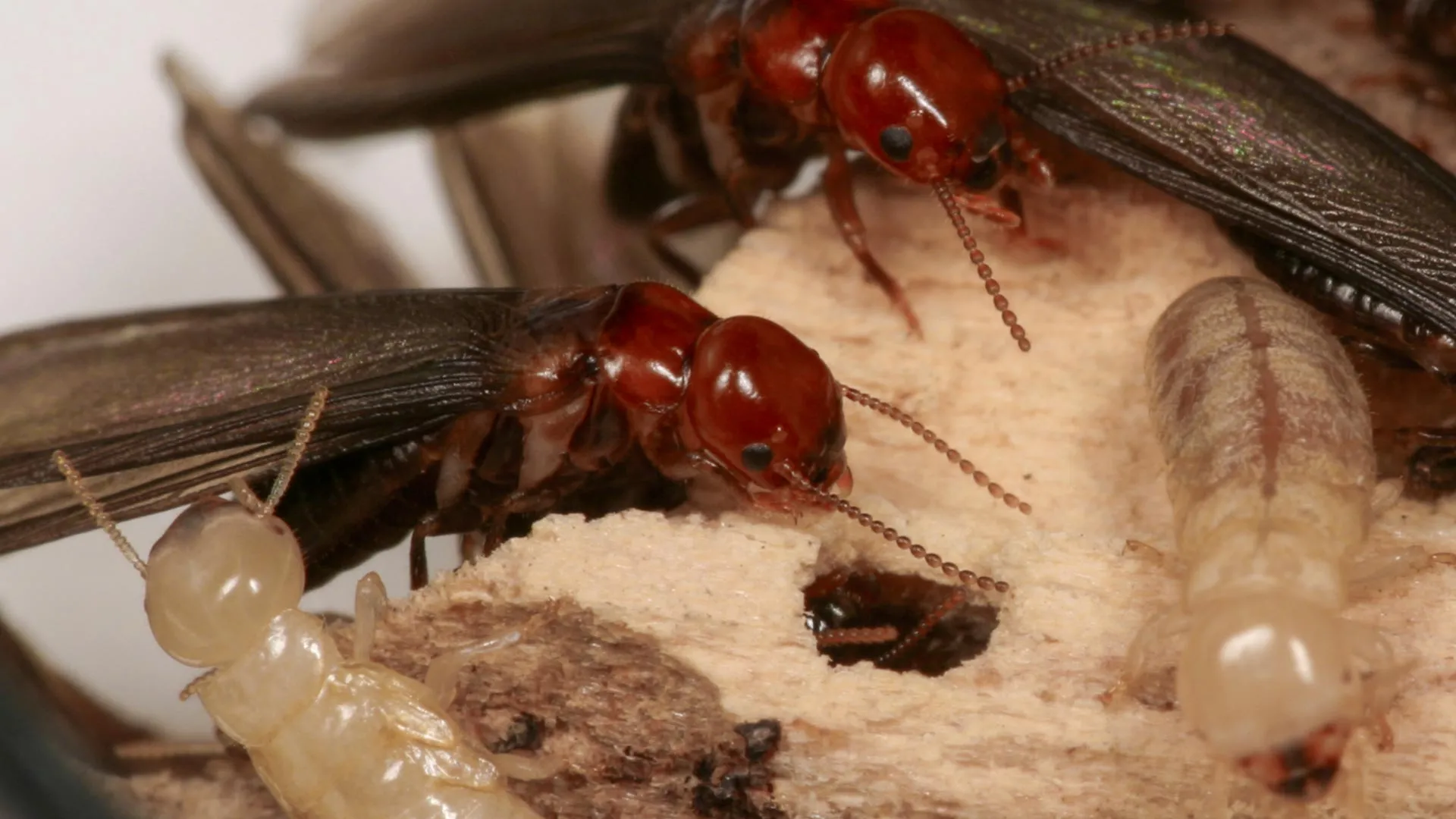
Scientists at UC Riverside have identified a cheaper, highly effective way to kill western drywood termites by drawing them toward insecticide instead of trying to track down every hiding place. In experiments tied to a study in the Journal of Economic Entomology, the team used pinene, a pleasant-smelling compound released by forest trees, to make the insects move toward treated wood. The result was a major jump in effectiveness, from about 70% mortality with insecticide alone to more than 95% when pinene was added.

“We saw significant differences in the death rates using insecticide alone versus the insecticide plus pinene,” said UCR entomologist Dong-Hwan Choe, who led the discovery. “Without pinene, we got about 70% mortality. When we added it in, it was over 95%.”

Why western drywood termites are such a problem

Western drywood termites are native to North America and play a real role in nature by helping break down dead wood above ground with help from microorganisms in their guts. “They are recyclers,” Choe said. “And they’re very common.”

That ecological role becomes a serious headache when the same insects move from dead trees into houses. They do not distinguish between natural wood and structural lumber, which is why they are a persistent concern in places such as California and Florida, as well as parts of Canada and Mexico. “It’s only a matter of time before termites attack a house, especially in warmer parts of the states,” Choe said.

The limits of fumigation

One of the most widely used treatments for drywood termites is fumigation, in which a home is sealed under a tent and filled with gas to kill the insects. California relies on this approach more than any other U.S. state, according to UC Riverside.

But fumigation has drawbacks. The industry has been under pressure to find alternatives because sulfuryl fluoride, the chemical used in fumigation, is toxic to humans and also acts as a greenhouse gas. It is also costly, and it does not stop a home from becoming reinfested later.

“Even though it is very thorough, a home can be infested again soon after fumigation is completed,” Choe said. “Some people fumigate every three to five years because it doesn’t protect structures from future infestations.”

How pinene helps insecticide work better

Another option is localized injection. In this method, pest control workers drill into infested wood, reach the termite “gallery” or hiding area, and inject insecticide directly inside. Because it targets a smaller area, localized treatment can use fewer chemicals and cost less than fumigation. It may also leave treated wood better protected against future infestations.

“This is a more localized treatment, and in theory, it is a better strategy when you want to control drywood termites with fewer chemicals. It’s less expensive, and the treated wood may also stay protected from future infestations,” Choe said.

The big challenge is finding where the termites actually are inside the wood. These insects can spread through complex tunnel systems, and standard contact insecticides only work if the termites physically touch the treated area. That is where pinene changed the equation. The scent appears to draw termites from a distance, reducing the need to pinpoint every hidden pocket before treatment.

“Even at low concentrations, pinene is good at attracting termites from a distance,” Choe said.

“We don’t think it’s functioning as a pheromone,” Choe said. “We think the scent is more associated with their food. Smells nice… dinner time! That’s the concept that we had in mind.”

The insecticide used in the study

The insecticide used in the 2024 study was fipronil, which is also used against ants. Fipronil can harm aquatic insects and pollinators if it escapes into the environment, but in this case it was injected into wood, which lowers the chance of off-target effects.

Choe’s lab focuses on how urban insect pests communicate chemically, with the goal of turning that knowledge into smarter control strategies for pests such as western drywood termites.

“Our study shows that if you understand insect behavior better, it’s interesting by itself,” Choe said. “Then there are also important implications for more effective pest management, so we can use fewer chemicals without compromising efficiency.”


Share Button

Researchers Find ‘Surprising’ Outcome In Loneliness And Memory Study

As society continues to grapple with the public health issue of loneliness, researchers have recently found a “surprising” outcome after studying the way loneliness could affect memory in older adults. While loneliness may have a significant impact on memory, it might not affect how fast memory declines over time, according to a study published in the Aging and Mental Health journal last week.

In a longitudinal analysis, researchers evaluated a total of 10,217 participants aged 65 and older from the Survey of Health, Ageing and Retirement (SHARE) from 12 countries over six years. Researchers sought to investigate how loneliness impacted memory in older adults.

The participants self-reported whether they experienced high loneliness, average loneliness or low loneliness at the study’s outset; none of the participants initially had a history of cognitive decline. Researchers found that participants who reported high loneliness had a significantly lower initial performance when their memories were assessed, compared to those who reported average or low loneliness. Reporting high loneliness, however, did not speed up their rate of decline in memory scores over time.

Dr. Luis Carlos Venegas-Sanabria, the lead author of the study from Universidad del Rosario in Colombia, said that the outcome of the study was “surprising.”

“The finding that loneliness significantly impacted memory, but not the speed of decline in memory over time was a surprising outcome,” he said in a news release. “It suggests that loneliness may play a more prominent role in the initial state of memory than in its progressive decline.”

In one task to assess the participants’ memory performance, they were presented with a 10-word list that was read aloud and then immediately asked to recall as many words as possible within one minute. Then they were asked to recall words from a 10-word list after five minutes. During the five minutes, participants were given unrelated information to prevent them from rehearsing the word list.

The study found that while the high loneliness group initially showed poorer memory performance, their rate of decline over time was similar to that of the participants in the other groups.

“Interestingly, the baseline level of loneliness does not affect the rate of long-term cognitive decline,” the study states. “This suggests that loneliness may have a greater impact on the initial state of memory rather than on facilitating progressive decline.”

But researchers noted other key findings about the group that initially reported high loneliness. Those participants were more commonly older, female, and had worse self-rated health. They also had a higher prevalence of depression, high blood pressure and diabetes.

Furthermore, the study authors noted that other factors affected participants’ baseline memory performances more significantly than their level of loneliness did. These factors included age, depression, reported health status and engagement in physical or social activities.

Researchers found that the participants who reported experiencing high loneliness showed a significantly lower initial memory performance, but that loneliness did not affect the rate of decline in memory scores among all the participants over time.

MementoJpeg via Getty Images

Researchers found that the participants who reported experiencing high loneliness showed a significantly lower initial memory performance, but that loneliness did not affect the rate of decline in memory scores among all the participants over time.

The study had several limitations, the authors noted. For starters, it viewed loneliness as a stable variable that did not change over time. Also, participants self-reported their level of engagement in physical or social activity, which can introduce bias, among other limitations.

Previous research has found links between loneliness and increased risk of cognitive decline and dementia. The authors note that past findings between loneliness and its association with dementia risk have been “inconsistent.” “Future longitudinal research is needed to examine how changes in loneliness and social isolation relate to patterns of cognitive change and how other covariates may modify this relationship,” the study states.

Jordan Weiss, an associate professor at the New York University Grossman School of Medicine and a scientific writer at Assisted Living Magazine, cautioned that the results of the new study may be easy to “misread.”

Weiss, who was not involved in the study, told Fox News that it can be hard to detect how soon social connection patterns affect memory if you’re studying people who are already in their 60s.

“By the time you’re measuring someone in their late 60s, decades of social connection patterns are already baked in,” he said.

Chronic loneliness has been linked to several health issues, including dementia, heart disease, depression, anxiety, Type 2 diabetes and an increased risk of stroke.

Brian Mullan, a licensed professional counselor with Thriveworks in Philadelphia, previously emphasized to HuffPost that it’s important to remember that we are “social animals, literally from birth.”

“It’s an innate, hardwired need we humans have,” he said.

Mullan recommended that people looking to address feelings of loneliness “explore resources in the community that are either free, or very low cost or local to you.”

He recommended finding activities you’re already interested in.

“Maybe things that you have always wanted to explore, but felt constrained from, I think that’s one great place to start,” he said.

Share Button

Surgeon’s mesh surgery cost £20m in compensation

The NHS confirms it has paid millions to patients injured in operations involving Tony Dixon.

Share Button

Health visitors call for limits on ‘impossible’ 1,000-family caseloads

BBC analysis shows the number of health visitors in England has almost halved in the last 10 years.

Share Button

AI swarms could hijack democracy without anyone noticing

A new kind of political threat may be emerging, and it is far less visible than protests or traditional voter manipulation. Researchers warn that highly realistic AI-controlled personas could soon play a major role in shaping public opinion and influencing democratic systems.

A recent policy forum paper published in Science describes how large groups of AI-generated personas can convincingly imitate human behavior online. These systems can enter digital communities, participate in discussions, and influence viewpoints at extraordinary speed. Unlike earlier bot networks, these AI agents can coordinate instantly, respond to feedback, and maintain consistent narratives across thousands of accounts.

How AI personas mimic real people online

Rapid progress in large language models and multi-agent systems has made it possible for a single operator to manage vast networks of AI “voices.” These personas can appear authentic, adopt local language and tone, and interact in ways that feel natural to other users.

They are also capable of running millions of small-scale experiments to determine which messages are most persuasive. This allows them to refine their communication strategies in real time and generate what appears to be widespread public agreement. In reality, that consensus is artificially created and designed to influence political discussions.

Deepfakes and fake news signal early risks

Although fully developed AI swarms are still largely theoretical, researchers say there are already warning signs. These include AI-generated deepfakes and fake news outlets that have influenced recent election conversations in countries such as the United States, Taiwan, Indonesia, and India, according to UBC computer scientist Dr. Kevin Leyton-Brown.

At the same time, monitoring organizations have identified pro-Kremlin networks spreading large volumes of online content. This activity is believed to be aimed at shaping the data used to train future AI systems, potentially influencing how those systems behave and what information they prioritize.

Experts warn of growing impact on democracy

Looking ahead, experts believe AI swarms could significantly affect the balance of power in democratic societies. Dr. Leyton-Brown cautioned that these systems are likely to change how people trust information online. “We shouldn’t imagine that society will remain unchanged as these systems emerge. A likely result is decreased trust of unknown voices on social media, which could empower celebrities and make it harder for grassroots messages to break through.”

Researchers suggest that upcoming elections may serve as a critical test for this technology. The key challenge will be recognizing and responding to these AI-driven influence campaigns before they become too widespread to control.

Share Button

Hundreds of millions at risk as river deltas sink faster than rising seas

A new study published in Nature finds that many of the world’s largest river deltas are subsiding more quickly than global sea levels are rising, putting hundreds of millions of people at potential risk.

The primary drivers behind this trend include intensive groundwater extraction, a decline in sediment carried by rivers, and rapid urban development.

Global Mapping Reveals Widespread Delta Sinking

This research offers the first detailed, high-resolution analysis of elevation loss across 40 river deltas around the world. The project was led by Leonard Ohenhen, a former Virginia Tech graduate student who is now an assistant professor at the University of California, Irvine. The work was overseen by Virginia Tech geoscientists Manoochehr Shirzaei and Susanna Werth.

Results show that almost every delta studied contains areas where the land is dropping faster than nearby sea levels are rising. In 18 of the 40 deltas, this downward movement, known as subsidence, already exceeds local sea-level rise. That trend is increasing near-term flood risk for more than 236 million people.

Satellite Data Tracks Elevation Loss Across Continents

Researchers used advanced satellite radar systems to measure changes in surface elevation across deltas on five continents. The resulting high-resolution maps capture changes at a scale of 75 square meters per pixel, allowing scientists to detect localized patterns of sinking.

Several major deltas are experiencing especially rapid elevation loss, including those of the Mekong, Nile, Chao Phraya, Ganges-Brahmaputra, Mississippi, and Yellow rivers.

“In many places, groundwater extraction, sediment starvation, and rapid urbanization are causing land to sink much faster than previously recognized,” Ohenhen said.

In some areas, the rate of sinking is more than double the current global pace of sea-level rise.

Human Activity Driving Accelerated Subsidence

“Our results show that subsidence isn’t a distant future problem — it is happening now, at scales that exceed climate-driven sea-level rise in many deltas,” said Shirzaei, co-author and director of Virginia Tech’s Earth Observation and Innovation Lab.

The study identifies groundwater depletion as the strongest overall factor linked to delta subsidence, although the main cause varies by region.

“When groundwater is over-pumped or sediments fail to reach the coast, the land surface drops,” said Werth, who co-led the groundwater analysis. “These processes are directly linked to human decisions, which means the solutions also lie within our control.”

The research was supported by the National Science Foundation, the Department of Defense, and NASA.

Share Button

Keir Starmer Fights For Survival In Make-Or-Break Commons Showdown

Keir Starmer will battle to save his job as he faces MPs amid calls for him to resign over the Peter Mandelson vetting scandal.

A Labour peer is among those demanding the prime minister quit after it was revealed the shamed former US ambassador failed security vetting before taking up the plumb diplomatic role.

Starmer said he was “furious” that he was not told that Olly Robbins, the top civil servant in the Foreign Office, had ultimately cleared Mandelson to carry out the job.

The PM only found out last Tuesday – and Robbins was sacked on Thursday night.

Starmer has been accused of lying to parliament and the public for previously stating that all of the appropriate vetting processes had been followed before Mandelson was appointed.

He will make a Commons statement on Monday before facing questions from MPs about what he knew and when.

Supporters of Olly Robbins have insisted he was legally precluded from telling the PM that Mandelson had failed the security vetting, but that has been denied by Downing Street.

“No law stops civil servants sensibly flagging UK Security Vetting recommendations, while rightly protecting detailed sensitive vetting information, to allow Ministers to make judgements on appointments or on explaining matters to Parliament,” the government said.

Scottish secretary Douglas Alexander told Sky News: “There are rightfully and reasonably important questions that need to be answered today. Keir Starmer’s going to set out all the facts. The right place for those questions to be answered are at the despatch box in the House of Commons.

“But we saw the leader of the opposition, as recently as Friday, claiming that the prime minister lied.

“That central contention that he wilfully and intentionally misled parliament and the public now relies, given what has emerged since then, relies on what would need to be a growing conspiracy, not just of every minister involved in this process, but of a growing list of civil servants.

“These judgments matter, and in that sense people need to reach a judgment in the round. The right place to do that’s in the House of Commons this afternoon, and the prime minister will set out his case.”

Subscribe to Commons People, the podcast that makes politics easy. Every week, Kevin Schofield and Kate Nicholson unpack the week’s biggest stories to keep you informed. Join us for straightforward analysis of what’s going on at Westminster.

Share Button

Olivia Colman’s Heartstopper Character Recast In New Spin-Off Film

Olivia Colman’s character in Heartstopper will be played by a different actor in the show’s upcoming film.

The Oscar winner received widespread praise for her portrayal of Nick’s mum, Sarah Nelson, in the first two seasons of the Netflix teen drama.

However, in its third iteration, Olivia was unable to appear, with Hayley Atwell instead appearing as Nick’s aunt, who served a maternal role in his life for these episodes.

Over the weekend, it was confirmed that in the forthcoming movie Heartstopper Forever, the character of Sarah has been completely recast due to Olivia’s unavailability.

In her absence, the role will now be played by Line Of Duty and Motherland star Anna Maxwell Martin.

Heartstopper creator Alice Oseman told Netflix’s Tudum: “When beginning to work on the Heartstopper Forever screenplay, I knew how important it was that Sarah, Nick’s mum, appeared in the story.

“Since season one, we have seen how close Nick is with his mum; she’s one of the few people he can turn to in moments of crisis. While in season three, we were able to tweak the story to avoid any appearance of Sarah, it felt nonsensical for her to be absent from this final chapter, given some of the emotional struggles Nick faces.”

They continued: “Sadly, Olivia Colman was not able to join us for the film, so we made the very difficult decision to recast the role, rather than exclude the character. We are deeply grateful for Olivia’s beautiful performance as Sarah in seasons one and two of Heartstopper, through such iconic moments as Nick coming out as bisexual, and we know that her performance will live on in the hearts of every Heartstopper fan.

“We are overjoyed to welcome the incredible Anna Maxwell Martin into the role of Sarah for Heartstopper Forever. Anna perfectly embodies Sarah’s gentle, down-to-earth energy, and it was magical to witness her scenes with Kit Connor during the film shoot. I can’t wait for Heartstopper fans to experience her interpretation of Sarah Nelson.”

Joe Locke and Kit Connor share a kiss as Charlie and Nick in Heartstopper

Samuel Dore/Netflix

Heartstopper Forever will premiere on Netflix later this year, and serve as the final outing for Nick and Charlie, played by Kit Connor and Joe Locke.

As well as the usual returning cast members, including Yasmin Finney and Will Gao, it’s been confirmed that Bafta winner Derek Jacobi will also be playing a new character in the film.

Share Button

After 200 years scientists finally crack the “dolomite problem”

For more than two centuries, scientists tried and failed to grow dolomite in the lab under conditions thought to match how it forms in nature. A recent study has finally changed that. Researchers from the University of Michigan and Hokkaido University in Sapporo, Japan succeeded by developing a new theory based on detailed atomic simulations.

Their work solves a long-standing geological puzzle known as the “Dolomite Problem.” Dolomite is a widespread mineral found in iconic locations such as the Dolomite mountains in Italy, Niagara Falls and Utah’s Hoodoos. It is abundant in rocks older than 100 million years, yet it is rarely seen forming in more recent environments.

“If we understand how dolomite grows in nature, we might learn new strategies to promote the crystal growth of modern technological materials,” said Wenhao Sun, the Dow Early Career Professor of Materials Science and Engineering at U-M and the corresponding author of the paper published in Science.

Why Dolomite Growth Is So Slow

The key breakthrough came from understanding what disrupts dolomite as it forms. In water, minerals typically grow as atoms attach in an orderly way to the surface of a crystal. Dolomite behaves differently because its structure is made of alternating layers of calcium and magnesium.

As the crystal grows, these two elements often attach randomly instead of lining up correctly. This creates structural defects that block further growth. The result is an extremely slow process. At that rate, forming a single well-ordered layer of dolomite could take up to 10 million years.

Nature’s Built-In Reset Mechanism

The researchers realized that these defects are not permanent. Atoms that are out of place are less stable and more likely to dissolve when exposed to water. In natural environments, cycles such as rainfall or tidal changes repeatedly wash away these flawed areas.

Over time, this process clears the surface so new, properly arranged layers can form. Instead of taking millions of years for a single layer, dolomite can gradually build up in far shorter intervals. Over long geological periods, this leads to the large deposits seen in ancient rock formations.

Simulating Crystal Growth at the Atomic Level

To test their idea, the team needed to model how atoms interact as dolomite forms. This requires calculating the energy involved in countless interactions between electrons and atoms, which is usually extremely demanding in terms of computing power.

Researchers at U-M’s Predictive Structure Materials Science (PRISMS) Center developed software that simplifies this challenge. It calculates the energy for certain atomic arrangements and then predicts others based on the symmetry of the crystal structure.

“Our software calculates the energy for some atomic arrangements, then extrapolates to predict the energies for other arrangements based on the symmetry of the crystal structure,” said Brian Puchala, one of the software’s lead developers and an associate research scientist in U-M’s Department of Materials Science and Engineering.

This approach made it possible to simulate dolomite growth over timescales that reflect real geological processes.

“Each atomic step would normally take over 5,000 CPU hours on a supercomputer. Now, we can do the same calculation in 2 milliseconds on a desktop,” said Joonsoo Kim, a doctoral student of materials science and engineering and the study’s first author.

Lab Experiment Confirms the Theory

Natural settings where dolomite still forms today often experience cycles of flooding followed by drying, which supports the team’s theory. However, direct experimental evidence was still needed.

That evidence came from Yuki Kimura, a professor of materials science at Hokkaido University, and Tomoya Yamazaki, a postdoctoral researcher in his lab. They used an unusual property of transmission electron microscopes to recreate the process.

“Electron microscopes usually use electron beams just to image samples,” Kimura said. “However, the beam can also split water, which makes acid that can cause crystals to dissolve. Usually this is bad for imaging, but in this case, dissolution is exactly what we wanted.”

The team placed a small dolomite crystal in a solution containing calcium and magnesium. They then pulsed the electron beam 4,000 times over two hours, repeatedly dissolving the defects as they formed.

After this process, the crystal grew to about 100 nanometers, or roughly 250,000 times smaller than an inch. That growth represented around 300 layers of dolomite. Previous experiments had never produced more than five layers.

Implications for Modern Technology

Solving the Dolomite Problem does more than explain a geological mystery. It also offers insight into how to control crystal growth in advanced materials used in modern technology.

“In the past, crystal growers who wanted to make materials without defects would try to grow them really slowly,” Sun said. “Our theory shows that you can grow defect-free materials quickly, if you periodically dissolve the defects away during growth.”

This concept could help improve the production of semiconductors, solar panels, batteries and other high-performance technologies.

The research was funded by the American Chemical Society PRF New Doctoral Investigator grant, the U.S. Department of Energy and the Japanese Society for the Promotion of Science.

Share Button

Trump Once Again Threatened War Crimes On The Eve Of Iran Peace Talks — And His Lackey Has An Interesting Interpretation

White House Energy Secretary Chris Wright called President Donald Trump a “creative negotiator” when asked about his threats to “knock out every single” power plant and bridge in Iran.

As peace talks between the United States and Iran appear to be at a stalemate amid a tenuous ceasefire agreement and continued jockeying over control of the Strait of Hormuz, the president demanded Iran accept America’s terms or face his full wrath in a Sunday morning Truth Social post.

“NO MORE MR. NICE GUY!” Trump declared, calling the US’s diplomatic offer “very fair and reasonable.”

Asked if the president’s intimidation tactics could “complicate” negotiations with Iran during an appearance on “Fox News Sunday” just hours later, Wright said he had full confidence in Trump.

“The president is using every way he can to get leverage over the regime and bring this conflict to an end,” he told host Shannon Bream. “He’s a creative negotiator, he uses pressure in different ways.”

<div class="js-react-hydrator" data-component-name="Twitter" data-component-id="817" data-component-props="{"itemType":"rich","isLiveblogEmbed":false,"index":8,"contentIndexByType":2,"contentListType":"embed","code":"

FOX NEWS SUNDAY: When the president talks about blowing up every power plant and bridge, how does complicate things?

CHRIS WRIGHT: He’s a creative negotiator pic.twitter.com/XsmrnxQvrZ

— Aaron Rupar (@atrupar) April 19, 2026

","type":"rich","meta":{"author":"Aaron Rupar","author_url":"https://twitter.com/atrupar","cache_age":86400,"description":"FOX NEWS SUNDAY: When the president talks about blowing up every power plant and bridge, how does complicate things?CHRIS WRIGHT: He’s a creative negotiator pic.twitter.com/XsmrnxQvrZ— Aaron Rupar (@atrupar) April 19, 2026\n\n\n","options":{"_hide_media":{"label":"Hide photos, videos, and cards","value":false},"_maxwidth":{"label":"Adjust width","placeholder":"220-550, in px","value":""},"_theme":{"value":"","values":{"dark":"Use dark theme"}}},"provider_name":"Twitter","thumbnail_height":810,"thumbnail_url":"https://pbs.twimg.com/amplify_video_thumb/2045863429647249408/img/n0pHzlwyvsoJRE0C.jpg:large","thumbnail_width":1080,"title":"Aaron Rupar on Twitter / X","type":"rich","url":"https://twitter.com/atrupar/status/2045863806690120002","version":"1.0"},"flags":[],"enhancements":{},"fullBleed":false,"options":{"theme":"news","device":"desktop","editionInfo":{"id":"uk","name":"U.K.","link":"https://www.huffingtonpost.co.uk","locale":"en_GB"},"originalEdition":"uk","isMapi":false,"isAmp":false,"isMobile":false,"isAdsFree":false,"isVideoEntry":false,"isEntry":true,"isMt":false,"entryId":"69e5b57de4b09c81bf192744","entryPermalink":"https://www.huffingtonpost.co.uk/entry/trump-once-again-threatened-war-crimes-on-the-eve-of-iran-peace-talks-and-his-lackey-has-an-interesting-interpretation_uk_69e5b57de4b09c81bf192744","entryTagsList":"donald-trump,iran,iran-war,chris-wright,@flexpro_1536078_11445827,@flexpro_1536107_11446021,@flexpro_resolved,@us_huffpost_now,@widget-imported","sectionSlug":"politics","deptSlug":null,"sectionRedirectUrl":null,"subcategories":"","isWide":false,"isShopping":false,"headerOverride":null,"noVideoAds":false,"disableFloat":false,"isNative":false,"commercialVideo":{"provider":"custom","site_and_category":"uk.politics","package":null},"isHighline":false,"vidibleConfigValues":{"cid":"60afc140cf94592c45d7390c","disabledWithMapiEntries":false,"overrides":{"all":"60b8e525cdd90620331baaf4"},"whitelisted":["56c5f12ee4b03a39c93c9439","56c6056ee4b01f2b7e1b5f35","59bfee7f9e451049f87f550b","5acccbaac269d609ef44c529","570278d2e4b070ff77b98217","57027b4be4b070ff77b98d5c","56fe95c4e4b0041c4242016b","570279cfe4b06d08e3629954","5ba9e8821c2e65639162ccf1","5bcd9904821576674bc55ced","5d076ca127f25f504327c72e","5b35266b158f855373e28256","5ebac2e8abddfb04f877dff2","60b8e525cdd90620331baaf4","60b64354b171b7444beaff4d","60d0d8e09340d7032ad0fb1a","60d0d90f9340d7032ad0fbeb","60d0d9949340d7032ad0fed3","60d0d9f99340d7032ad10113","60d0daa69340d7032ad104cf","60d0de02b627221e9d819408"],"playlists":{"default":"57bc306888d2ff1a7f6b5579","news":"56c6dbcee4b04edee8beb49c","politics":"56c6dbcee4b04edee8beb49c","entertainment":"56c6e7f2e4b0983aa64c60fc","tech":"56c6f70ae4b043c5bdcaebf9","parents":"56cc65c2e4b0239099455b42","lifestyle":"56cc66a9e4b01f81ef94e98c"},"playerUpdates":{"56c6056ee4b01f2b7e1b5f35":"60b8e525cdd90620331baaf4","56c5f12ee4b03a39c93c9439":"60d0d8e09340d7032ad0fb1a","59bfee7f9e451049f87f550b":"60d0d90f9340d7032ad0fbeb","5acccbaac269d609ef44c529":"60d0d9949340d7032ad0fed3","5bcd9904821576674bc55ced":"60d0d9f99340d7032ad10113","5d076ca127f25f504327c72e":"60d0daa69340d7032ad104cf","5ebac2e8abddfb04f877dff2":"60d0de02b627221e9d819408"}},"connatixConfigValues":{"defaultPlayer":"16b0ecc6-802c-4120-845f-e90629812c4d","clickToPlayPlayer":"823ac03a-0f7e-4bcb-8521-a5b091ae948d","videoPagePlayer":"05041ada-93f7-4e86-9208-e03a5b19311b","defaultPlaylist":"2e062669-71b4-41df-b17a-df6b1616bc8f"},"topConnatixThumnbailSrc":"https://img.connatix.com/a775d824-dcf9-4ec8-a180-92695fb5cfff/1_th.jpg?crop=629:354,smart&width=629&height=354&format=jpeg&quality=60&fit=crop","customAmpComponents":[],"ampAssetsUrl":"https://amp.assets.huffpost.com","videoTraits":null,"positionInUnitCounts":{"buzz_head":{"count":0},"buzz_body":{"count":0},"buzz_bottom":{"count":0}},"positionInSubUnitCounts":{"article_body":{"count":8},"blog_summary":{"count":0},"before_you_go_content":{"count":0}},"connatixCountsHelper":{"count":1},"buzzfeedTracking":{"context_page_id":"69e5b57de4b09c81bf192744","context_page_type":"buzz","destination":"huffpost","mode":"desktop","page_edition":"en-uk"},"tags":[{"name":"Donald Trump","slug":"donald-trump","links":{"relativeLink":"news/donald-trump","permalink":"https://www.huffingtonpost.co.uk/news/donald-trump","mobileWebLink":"https://www.huffingtonpost.co.uk/news/donald-trump"},"relegenceId":2789214,"section":{"title":"News","slug":"news"},"topic":{"title":"Donald Trump","slug":"donald-trump","overridesSectionLabel":false},"url":"https://www.huffingtonpost.co.uk/news/donald-trump/"},{"name":"Iran","slug":"iran","links":{"relativeLink":"news/iran","permalink":"https://www.huffingtonpost.co.uk/news/iran","mobileWebLink":"https://www.huffingtonpost.co.uk/news/iran"},"relegenceId":3686717,"url":"https://www.huffingtonpost.co.uk/news/iran/"},{"name":"Iran War","slug":"iran-war","links":{"relativeLink":"news/iran-war","permalink":"https://www.huffingtonpost.co.uk/news/iran-war","mobileWebLink":"https://www.huffingtonpost.co.uk/news/iran-war"},"url":"https://www.huffingtonpost.co.uk/news/iran-war/"},{"name":"Chris Wright","slug":"chris-wright","links":{"relativeLink":"news/chris-wright","permalink":"https://www.huffingtonpost.co.uk/news/chris-wright","mobileWebLink":"https://www.huffingtonpost.co.uk/news/chris-wright"},"url":"https://www.huffingtonpost.co.uk/news/chris-wright/"}],"isLiveblogLive":null,"isLiveblog":false,"signInUrl":"https://login.huffpost.com/login?dest=https%3A%2F%2Fwww.huffpost.com%2Fentry%2Ftrump-once-again-threatened-war-crimes-on-the-eve-of-iran-peace-talks-and-his-lackey-has-an-interesting-interpretation_uk_69e5b57de4b09c81bf192744%3Fhp_auth_done%3D1","cetUnit":"buzz_body","enableIncontentPlayer":false,"bodyAds":["

\r\n\r\n HPGam.cmd.push(function(){\r\n\t\treturn HPGam.render(\"inline-1\", \"entry_paragraph_1\", false, false);\r\n });\r\n\r\n","

\r\n\r\n HPGam.cmd.push(function(){\r\n\t\treturn HPGam.render(\"inline\", \"entry_paragraph_2\", false, false);\r\n });\r\n\r\n","

\r\n\r\n HPGam.cmd.push(function(){\r\n\t\treturn HPGam.render(\"inline-2\", \"entry_paragraph_3\", false, false);\r\n });\r\n\r\n","

\r\n\r\n HPGam.cmd.push(function(){\r\n\t\treturn HPGam.render(\"inline-infinite\", \"repeating_dynamic_display\", false, false);\r\n });\r\n\r\n"],"adCount":0,"midArticleAdPartner":null},"isCollectionEmbed":false}”>

FOX NEWS SUNDAY: When the president talks about blowing up every power plant and bridge, how does complicate things?

CHRIS WRIGHT: He’s a creative negotiator pic.twitter.com/XsmrnxQvrZ

— Aaron Rupar (@atrupar) April 19, 2026

“He uses uncertainty in different ways and I think as you’ve seen in the last 16 months, generally it leads to good results,” the cabinet member went on. “I don’t think we’ll see any surprises here.”

Wright envisioned reaching a “nice end to this conflict,” which he said would rescue Iran’s regional neighbors from “constant terror” and also guarantee a free “flow of goods” through the Strait of Hormuz.

“Imagine a nuclear armed Iran, not far away from that reality,” he said. “This is going to put an end to it.”

Wright stuck by his support for Trump’s strategy in a separate Sunday interview on CNN, where host Jake Tapper asked the secretary if he was worried strikes on civilian infrastructure could “constitute a war crime.”

“The president is looking for maximum leverage,” he said, later adding, “No, I’m not worried about that.”

Earlier this month, Trump triggered international panic with a near-identical ultimatum, telling Iran to “open the fuckin’ Strait” of Hormuz within two days or find themselves “living in hell” via Truth Social.

After upping the ante with a post warning “a whole civilization will die tonight” just hours before his 8pm April 7 deadline, a two-week ceasefire was announced.

Share Button