How I Rechannel Fear Energy

Here’s a new in-depth video I recorded this morning about how I work with fear, anxiety, worry, and dread when those energies start swirling.

I also connect this with Open, the new live event we’re doing in Las Vegas next week (April 28-30).

If you’d like to explore Open too, you can learn more about it here:

StevePavlina.com/Open

Share Button

People Are Canceling Their Botox Plans After Using These $10 Wrinkle-Smoothing Pads

It’s not breaking news that exfoliating pads remove makeup and tone skin pretty well. However, we’ve spotted RoC’s Line Smoothing cleansing pads that do you one better: RoC made these babies to remove makeup and work to smooth fine lines — and shockingly, reviewers are reporting that they’re actually effective. People are literally canceling Botox appointments because these foam-infused pads are surprisingly doing quite enough. And the kicker is that they’re only $10 right now on Amazon. A $10 alternative to a beauty procedure? Consider us attentive.

“I usually get Botox twice a year,” one shopper shared.

Let’s get this out of the way: Of course, the pads don’t perform an actual Botox treatment. Needles are sold separately and at a much higher price. However, reviewers say the changes they are seeing have been more than enough to pause office visits in favor of a simple tweak to their skincare routine.

“Normally I would feel the need to get botox again by this point but these really do smooth my fine lines,” they continued.

“I’m not exaggerating when I say they give you an instant facelift.”

Instant facelift is a tall order for cleansing pads, so we always raise our virtual eyebrows when anyone shares that about a skin care product — except this isn’t the only shopper who decided against a procedure after trying these specific pads.👀

No joke, reviewers call the foamy discs a “much less expensive and invasive option” than Botox, while providing the Botox-like smoothing.

“I am 53 and my concerns were forehead furrows, lip lines, marionette lines and some jowls starting to sag. I was considering looking into mini lift or maybe fillers like Botox,” another reviewer shared, noting they were concerned the pads would be “strong enough” as they don’t contain retinol.

“The results from using this product have been significant,” they wrote. “The most significant improvement is diminished appearance of lip lines…Brow furrows appear far less defined-still there but not as deep. I really hadn’t expected a change in the marionette lines or jowl thing-but they too are noticeably diminished!”

“I have found the glabellar lines between my eyebrows have become way less noticeable,” another said. “I was considering botox to help with those so I am quite happy to have found a much less expensive and invasive option. I have also noticed a considerable amount of brightening of my skin in general.”

So, how exactly are these pads this effective? Good question.

We’ve confirmed with experts just how crucial yet often forgotten the exfoliation step is to a mature skin care routine. The process helps remove dead skin to “reveal brighter and more rejuvenated skin,” and reduce the appearance of lines and wrinkles, aesthetician Sean Lundy previously told HuffPost.

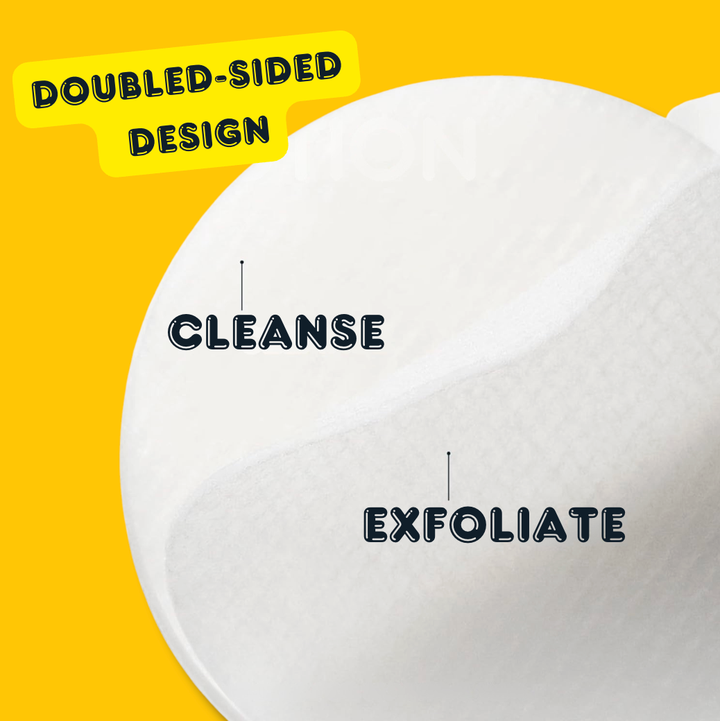
With the RoC pads, you can tackle the cleansing and exfoliation in one session. The smooth side is great for gentle cleaning, while the textured side offers physical exfoliation as you swipe. Additionally, the foam in the pads boasts ultra-hydrating ingredients like glycerin and butylene glycol to plump the skin, while the glycine soja (soybean) protein works as an antioxidant and skin-conditioner.

Beyond addressing wrinkles, reviewers report a slew of other noticeable facial improvements — making these pads a no-brainer routine upgrade.

People are sharing that their pores look smaller, makeup sits nicer and lifelong bumpy, oily skin is finally starting to look smooth and matte. Several shoppers also note that their skin has an “undeniable new glow.” That, good people, is evidence of a product that multi-tasks hard.

The brand says they’re gentle enough to be used twice daily, as you prep your face for the day and as you wind down for sleep. You get 28 pads in a pack, though many cut them in half to double the amount. Reviewers say the pads rival luxury skincare in experience and effect, at an unbeatable price.

Reviewers love these handy pads for making smoothing skin care quick and easy. Read more 5-star reviews and grab a set for yourself for under $11.

I bought these on a whim in December when I ran out of my normal cleanser not expecting much. After 3 months I can safely say I’m amazed. This is one of my favorite skincare products and I’ve used everywhere from high end, prescription and drugstore. I’m 37 and have the start of wrinkles on my forehead. I usually get botox twice a year, normally I would feel the need to get botox again by this point but these really do smooth my fine lines. I’m not exaggerating when I say they give you an instant facelift. After 3 months I have less discoloration and my face feels fresh. I 100% recommend these. I can’t believe how affordable they are!” — BBRebBe

“These are amazing. I was contemplating botox due to lines in my forehead. I decided to try these disks and my skin was brighter and softer after using the first time. It had the kind of glow like I had been to the spa. I have been using almost daily for about 1 week and the difference is visible to me. The lines in my forehead have not vanished (it isnt magic) but they have dramatically diminished. I will continue to use all over my face. I hate I did not take before and after pictures.” — Monica

“Love, love this product. I’ve been using RoC products for 12 years, since I first read they were best all around for fighting wrinkles without draining your wallet. These remove makeup so fast and leave my face feeling incredibly refreshed. I find I sleep better too when I use these. I cut them in half to make them go further.” — Lelsie Stuart

“I will add my voice to all the happy reviewers of this product. I have been very pleased with how it has worked on my skin. I don’t have many wrinkles to contend with but I have found the glabellar lines between my eyebrows have become way less noticeable. I was considering botox to help with those so I am quite happy to have found a much less expensive and invasive option. I have also noticed a considerable amount of brightening of my skin in general.

I would give a word of caution to those with sensitive skin to use these gradually instead of starting off using them every day. They are highly effective at resurfacing which means that you’ll experience some peeling and maybe even burning/tenderness at first. Even I with very tough skin (I use prescription-strength Retin-A every night without peeling) experienced a bit of peeling with this product but that’s really the point of using it (resurfacing) so I’m not bothered by it. I do cut the pads in half, it makes them a little harder to hold onto but there is plenty of product on a half pad to wash your whole face and neck.” — Morgan F. [This review has been condensed for lenght, read the whole thing here.]

Great skin care really doesn’t have to cost a great sum. Grab these 3 under-$20 favorites for smoothing, plumping and suncare — courtesy of HuffPost shopping.

The “botox in a bottle” serum that reviewers ADORE on a rare discount (23% off)

The idea that a sub-$10 skin care serum could offer the same benefits as an expensive in-office injectable sounds too good to be true. So, you can imagine my skepticism when a video came across my TikTok feed suggesting The Ordinary’s 10% Argireline Solution could do just that. But I also wasn’t about to let my cynicism get in the way of me doing some digging.

My research did present me with some pretty undeniable testimonials by those who tried the serum.One Sephora reviewer flat-out touted it as “literally Botox in a bottle” while others went so far as to call it a “miracle product,” “life-changing” and so effective at reducing deep lines that “I don’t even need Botox anymore.” And today, the already-affordable skin care potion has a very rare 23% off discount.

Bottom line: It’s rarely on sale because it’s already so cheap so grab it while it’s discounted. No idea when this will happen again.

Amazon

Enaskin Naturals retinol and collagen eye gels

Dark circles and puffiness around your eyes are likely unwanted guests. If you’re looking to make your eyebags pack their bags — we spotted a set of highly-rated, unobstrusive, retinol and collagen under-eye patches from Enaskin Naturals that users love for bringing their “zombie” eyes back to life, keeping the sensitive skin around their peepers smooth, bright and radiant. And today? A generous set of 30 pairs is almost 20% off — making each treatment under 50 cents. Now, that’s a sight for sore eyes.

Amazon

Neutrogena Hydro Boost with SPF 50 (15% off)

Neutrogena Hydro Boost has been called a “miracle in a jar” — and now they make it with SPF 50. The perfect blend of skincare and sunscreen, you’ll be happy to use this hydrating lotion every morning to keep your face fresh and offer some SPF. Hit the coupon for 15% off.

The Real Deal: We use deal trackers and commerce experience to sift through “fake” hike-and-drop deals and other deceptive sales tactics. Products will usually be rated at least 4 stars with a minimum 15% discount. (And when there’s an exception, we’ll tell you why.)

Share Button

Scientists just captured trees glowing with electricity during storms

In June 2024, a group of Penn State meteorology and atmospheric science researchers set out on a road trip along the East Coast in a modified 2013 Toyota Sienna. The van was outfitted with a custom-built telescopic weather instrument extending from the roof. Their goal was to track down Florida’s near-daily summer thunderstorms and observe a phenomenon that had never been confirmed outside a laboratory.

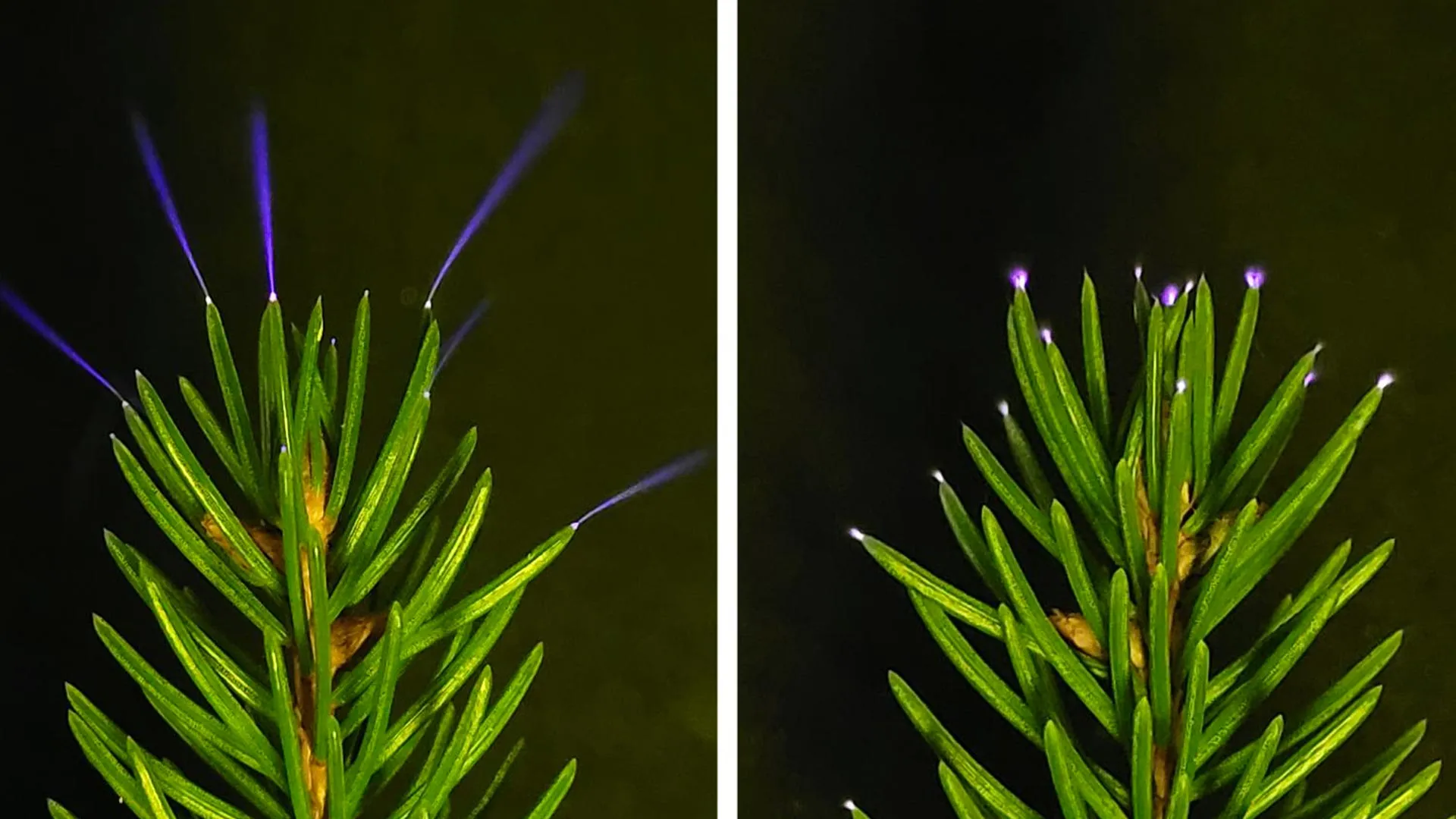
That phenomenon, known as corona discharge, involves tiny bursts of electricity forming at the tips of leaves. These faint electrical pulses can cause treetops to emit a subtle glow in the ultraviolet (UV) range. Scientists have suspected for more than 70 years that forests might produce these effects during storms due to unusual electric field activity, but direct evidence in nature had remained elusive.

A Long-Standing Mystery Finally Tested in the Field

The research team included William Brune, a distinguished professor of meteorology and atmospheric science; Patrick McFarland, a doctoral student in the same field; Jena Jenkins, an assistant research professor; and David Miller, a former associate research professor now working at the Penn State Applied Research Lab. Their objective was to document corona discharges occurring naturally for the first time.

Florida was chosen because of its frequent thunderstorms, which seemed ideal for the study. However, the weather did not cooperate as expected. For three weeks, McFarland and Brune followed short-lived storms that dissipated quickly, leaving them without useful data.

Breakthrough Observation in North Carolina

As the team began heading back to Pennsylvania, conditions changed. Large, long-lasting storms developed just west of Interstate 95. Seizing the opportunity, the researchers stopped at the University of North Carolina at Pembroke and set up their equipment in a parking lot. They aimed their instruments at the upper branches of a sweetgum tree located about 100 feet from their van.

A thunderstorm persisted for nearly two hours, bringing heavy rain and frequent lightning. During this time, the team recorded corona discharges on the sweetgum tree and also observed similar activity on a nearby long needle loblolly pine as the storm weakened. These observations marked the first confirmed detection of corona discharges in a natural setting. The findings were later published in Geophysical Research Letters.

“This just goes to show that there’s still discovery science being done,” said McFarland, lead author on the paper. “For more than half a century, scientists have theorized that corona exists, but this proves it.”

How Corona Discharges Form in Storms

According to the researchers, corona discharges occur because of strong electrical imbalances during storms. Thunderclouds develop large negative charges that attract positive charges on the ground. This positive charge travels upward through trees, concentrating at the highest points such as leaf tips.

At these tiny, hair-like structures, the electric field becomes intense enough to produce a faint glow that can be seen in both visible light and UV. The UV radiation generated by this process can break apart water vapor molecules, leading to the formation of hydroxyl.

Atmospheric Chemistry and Air Cleaning Effects

Hydroxyl plays a key role in the atmosphere as its primary oxidizer. Oxidizers help remove pollutants by reacting with airborne chemicals and transforming them into substances that are easier to eliminate. These reactions involve compounds released by trees as well as human-generated pollutants, including methane, a potent greenhouse gas.

Earlier work by the team showed that corona discharges could be a significant source of these atmospheric cleansing agents within forest canopies. This makes the phenomenon potentially important for air quality and climate processes.

Laboratory Insights and Field Confirmation

The researchers had previously studied this effect in controlled experiments. By applying high-voltage, low-current electrical pulses to tree branches, they found a strong link between UV emissions from corona discharges and the production of hydroxyl. In both those experiments and the recent field observations, they also noted minor damage to leaves at the points where corona formed.

To observe the phenomenon outdoors, the team created the Corona Observing Telescope System. This instrument is a Newtonian telescope connected to a UV-sensitive camera. It includes geolocation capabilities, sensors to measure atmospheric electricity, and calibration using a mercury lamp. The system blocks solar UV wavelengths so that only corona, lightning and fire can produce detectable signals.

Hundreds of Corona Events Captured

Using this system in North Carolina, the team recorded 859 corona events on the sweetgum tree and 93 on the loblolly pine. Each event lasted anywhere from a fraction of a second to several seconds, according to McFarland. Additional observations were made during four other thunderstorms and across four different tree species.

“It’s nearly invisible to the naked eye but our instruments give rise to a vision of swaths of scintillating corona glowing as thunderstorms pass overhead,” McFarland said. “Such widespread coronae have implications for the removal of hydrocarbons emitted by trees, subtle tree leaf damage and could have broader implications for the health of trees, forests and the atmosphere.”

Open Questions About Trees and the Environment

Although the team has confirmed that corona discharges occur in nature, many questions remain. Researchers want to know whether these electrical events harm trees or provide some benefit. They are also investigating whether trees have adapted to tolerate or even take advantage of this process, and whether the resulting atmospheric cleansing benefits forest ecosystems.

To explore these questions, the scientists are beginning collaborations with tree ecologists and biologists. Their work could lead to new insights into how forests interact with the atmosphere and how these interactions influence environmental health.

The study was supported by the U.S. National Science Foundation, with Brune, Jenkins and Miller serving as co-authors.

Share Button

A bizarre new state of matter may be hiding inside Uranus and Neptune

The deep interiors of ice giant planets such as Uranus and Neptune may contain a previously unknown form of matter. This possibility comes from new computer simulations conducted by Carnegie scientists Cong Liu and Ronald Cohen.

Their study, published in Nature Communications, suggests that carbon hydride could take on an unusual quasi-one-dimensional superionic state under the intense pressures and temperatures found far beneath the surfaces of these distant planets.

Why Planetary Interiors Matter

More than 6,000 exoplanets have been discovered so far, and that number continues to grow. To better understand how planets form and evolve, researchers from astronomy, planetary science, and Earth science are increasingly working together. By combining observations, experiments, and theoretical models, they aim to uncover the physical processes that shape planets, including how magnetic fields are generated.

This growing interest also extends to the hidden layers within planets and moons in our own Solar System. Studying what happens deep below the surface can provide clues about planetary behavior and even help scientists assess whether distant worlds could support life.

“Hot Ice” Layers Inside Ice Giants

Data on the densities of Uranus and Neptune indicate that these planets contain unusual internal layers often described as “hot ices.” These regions sit beneath outer atmospheres of hydrogen and helium and above solid cores.

Scientists believe these layers are made up of water (H2O), methane (CH4), and ammonia (NH4). However, the extreme conditions in these environments likely force these familiar compounds into exotic and unfamiliar forms.

Simulating Extreme Planetary Conditions

The intense pressures and temperatures inside ice giants can produce states of matter that do not exist on Earth. To explore this, Liu and Cohen used high-performance computing and machine-learning tools to run detailed quantum simulations of carbon hydride (CH).

They modeled conditions ranging from nearly 5 million to nearly 30 million times Earth’s atmospheric pressure (500 to 3,000 gigapascals) and temperatures between 6,740 and 10,340 degrees Fahrenheit (4,000 to 6,000 Kelvin).

A Strange “Spiral” Superionic State

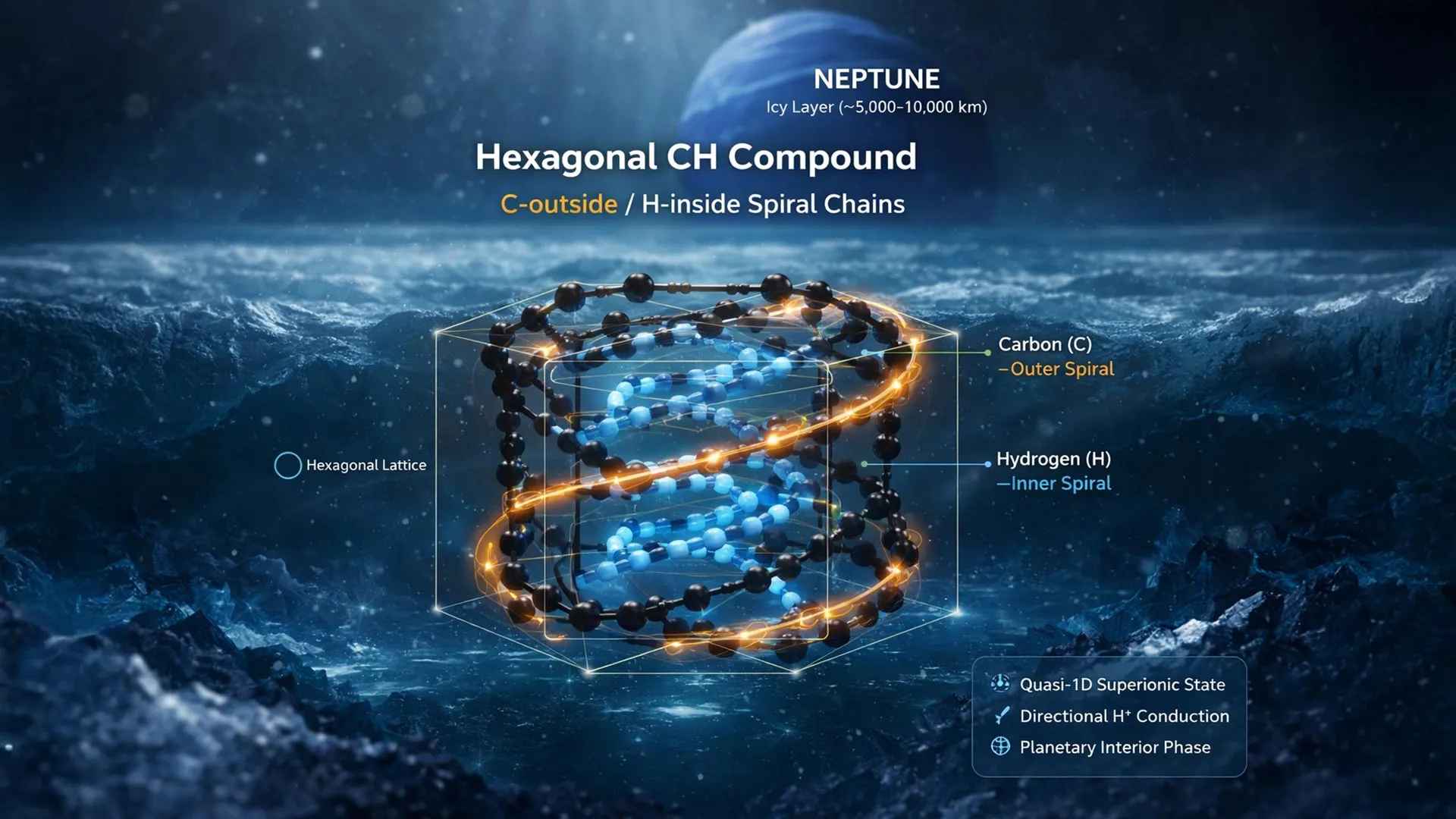
The simulations revealed a striking structure. Carbon atoms form an ordered hexagonal framework, while hydrogen atoms move through it along spiral-like paths. This creates a quasi-one-dimensional superionic state.

Superionic materials are unusual because they behave partly like solids and partly like liquids. One type of atom remains locked in place within a crystal structure, while another type moves freely through it.

“This newly predicted carbon-hydrogen phase is particularly striking because the atomic motion is not fully three-dimensional,” Cohen explained. “Instead, hydrogen moves preferentially along well-defined helical pathways embedded within an ordered carbon structure.”

Implications for Heat, Electricity, and Magnetic Fields

The directional movement of hydrogen atoms could have major effects on how energy flows inside planets. It may influence how heat and electricity are transported through these deep layers.

These properties are especially important for understanding how Uranus and Neptune generate their magnetic fields, which differ in unusual ways from those of other planets.

Broader Impact Beyond Planetary Science

The findings also highlight how simple elements can behave in surprisingly complex ways under extreme conditions. Even basic compounds like carbon and hydrogen can form highly organized and unexpected structures.

“Carbon and hydrogen are among the most abundant elements in planetary materials, yet their combined behavior at giant-planet conditions remains far from fully understood,” Liu concluded.

Beyond helping scientists understand distant planets, this research could also inform advances in materials science and engineering by revealing new types of directional behavior in matter.

Share Button

Rogue sperm donor who says he’s fathered 180 children won’t be on child’s birth certificate

The child’s mother and her partner say they never wanted Robert Albon to play any part in the child’s life.

Share Button

This new camera captures what happens in a trillionth of a second

Researchers have created a powerful new imaging method that reveals far more detail about ultrafast events in the microscopic world than ever before. These processes unfold in incredibly short times, often within hundreds of femtoseconds, and have traditionally been difficult to study. The new approach allows scientists to observe and analyze these rapid changes with exceptional clarity and speed.

“In the fields of physics, chemistry, biology and materials science, many important phenomena happen incredibly fast,” said research team leader Yunhua Yao from East China Normal University. “Our new technique can capture the complete evolution of both the brightness and internal structure of an object in a single measurement. This is a big step forward for understanding the fundamental nature of matter, designing new materials and even uncovering the mysteries of biological processes.”

The team described their method in Optica, Optica Publishing Group’s journal for high-impact research. The technique is known as compressed spectral-temporal coherent modulation femtosecond imaging (CST-CMFI). Using this system, the researchers were able to track ultrafast activity such as plasma forming in water after a femtosecond laser pulse and the behavior of excited charge carriers in ZnSe.

“Beyond helping scientists study materials that change instantly in response to laser light, chemical reactions that rearrange atoms at lightning speed and the dynamic behavior of biomolecules over incredibly short timescales, CST-CMFI could help improve high-power laser technologies used for clean energy research, advanced manufacturing and scientific instrumentation,” said Yao. “It might also lead to the development of more efficient electronics, improved solar cells and faster devices by enabling a better understanding of how materials behave at extremely fast timescales.”

Capturing More Than Brightness in Ultrafast Imaging

This work is part of ongoing efforts at the Extreme Optical Imaging Laboratory at East China Normal University to advance ultrafast camera technologies. A key focus is single-shot ultrafast optical imaging, which captures events that cannot be repeated by recording everything in a single exposure, similar to snapping a single frame that contains an entire sequence.

In the past, these techniques mainly recorded changes in brightness, also known as light intensity. However, light also carries phase information, which reveals how it bends or changes speed as it passes through materials. The researchers set out to capture both intensity and phase at the same time, providing a more complete picture of ultrafast processes.

To achieve this, they combined time-spectrum mapping, compressive spectral imaging and coherent modulation imaging. Each method contributes a specific advantage, including the ability to follow extremely fast changes, gather more data in one measurement and preserve fine image details.

How the CST-CMFI Technique Works

The system uses a chirped laser pulse made up of multiple wavelengths that arrive at slightly different times. This setup effectively links time to wavelength. When the pulse interacts with a fast-changing event, the scattered light carries detailed spatial, spectral and phase information. This information is then compressed into a single image through dispersion-encoded coherent modulation imaging.

A physics-informed neural network processes this data by separating the wavelengths and reconstructing both intensity and phase over time. Since each wavelength represents a specific moment, the result is a sequence of frames that forms an ultrafast movie captured in a single shot.

Real-Time Views of Plasma and Electron Behavior

To test the technique, the researchers examined two types of ultrafast phenomena. One experiment focused on plasma created in water by a femtosecond laser. Understanding how this plasma forms and evolves could support applications such as laser-based medical procedures. The imaging results revealed both brightness and phase changes within the plasma channel, including the formation of a dense free-electron plasma that affects how light is absorbed and how it travels through water.

The team also studied carrier dynamics in ZnSe to better understand how electrical charges move after being excited by light. Insights like these are important for improving optical and electronic devices made from this material, potentially leading to faster and more efficient technologies.

“Using CST-CMFI, we were able to see phase variations associated with the carrier dynamics, even when there were no significant changes in intensity,” said Yao. “This highlights a key advantage of our method: Phase measurements can be much more sensitive than intensity measurements in detecting subtle ultrafast processes.”

Expanding Applications and Future Improvements

Looking ahead, the researchers plan to apply the method to study additional phenomena, including interface dynamics and ultrafast phase transitions. These areas require detecting extremely small changes in the phase of light, making the new technique especially valuable.

At present, CST-CMFI converts spectral information into temporal information, which limits its ability to study processes that are highly sensitive to spectral changes. To address this, the team aims to combine CST-CMFI with compressive ultrafast photography. This next step would allow spectral and temporal information to be captured separately, significantly expanding the range of applications and improving the overall versatility of the technology.

Share Button

Smoking ban for people born after 2008 in the UK agreed

The “landmark” legislation aims to stop anyone born after 1 January 2009 from taking up smoking to create a smoke-free generation.

Share Button

David Haye Addresses Controversial Adam Thomas Spat After Leaving I’m A Celebrity

I’m A Celebrity star David Haye has spoken out after the conflict between himself and Adam Thomas escalated during the most recent episode of the reality show.

Last week, many viewers were unhappy with the way that David had spoken to Adam after the Emmerdale star explained he was feeling too unwell to put himself forward for a Bushtucker Trial, after experiencing a flare up of his psoriatic arthritis.

In Monday night’s instalment, the spat grew even further, with Adam being moved to tears by digs from David, who insisted he was only playing with the soap actor.

Later in the episode, members of the camp each had to select one person to save from elimination.

Because no one selected David, he became the second celebrity to leave the show, choosing Gemma Collins to go with him.

On his way out, he and Adam had something of a reconciliation, with the retired boxer assuring him: “Sorry, it was all banter. It’s all good.”

Speaking to Ant and Dec later in the show, the former heavyweight champion claimed: “Me and Adam had a little bit of back and forth. I was bantering, but the banter, he didn’t really like the banter.

“He kind of got to the limit of the banter he was willing to receive and started snapping and that.”

Adam Thomas and David Haye in I'm A Celebrity: South Africa before their fall-out
Adam Thomas and David Haye in I’m A Celebrity: South Africa before their fall-out

ITV/Shutterstock

Asked whether he felt he’d pushed things “too far” with Adam, David conceded: “Probably. I’m an extremist, and I can’t help myself. But it’s all love. I love him really. He’s a cool guy. It’s all perfect now.”

Following his exit, David was quoted by numerous outlets as saying: “[There’s] no bad blood from my side.”

He added: “When a grown man tells me that a fun TV show – where we’re being paid handsomely every single day – is the hardest thing he’s ever been through, it’s just not a frequency I recognise.

“I was actually on my best behaviour there, honestly. I’ve spoken to Adam, I’ve said my piece and some of what’s still to air will speak for itself, I’ll leave it there.”

Earlier this week, Adam claimed that he’d received a private apology from David over how the athlete treated him on the show.

“He broke me in there, he pushed me to my limits, and I’ve told David this and he’s apologised and that’s that!” he insisted. “I’ve moved on now, am not one to hold a grudge.”

Meanwhile, even Ant and Dec have suggested that David’s conduct “crossed the line” while he was still on the show.

I’m A Celebrity: South Africa continues on Tuesday night at 9pm on ITV.

Share Button

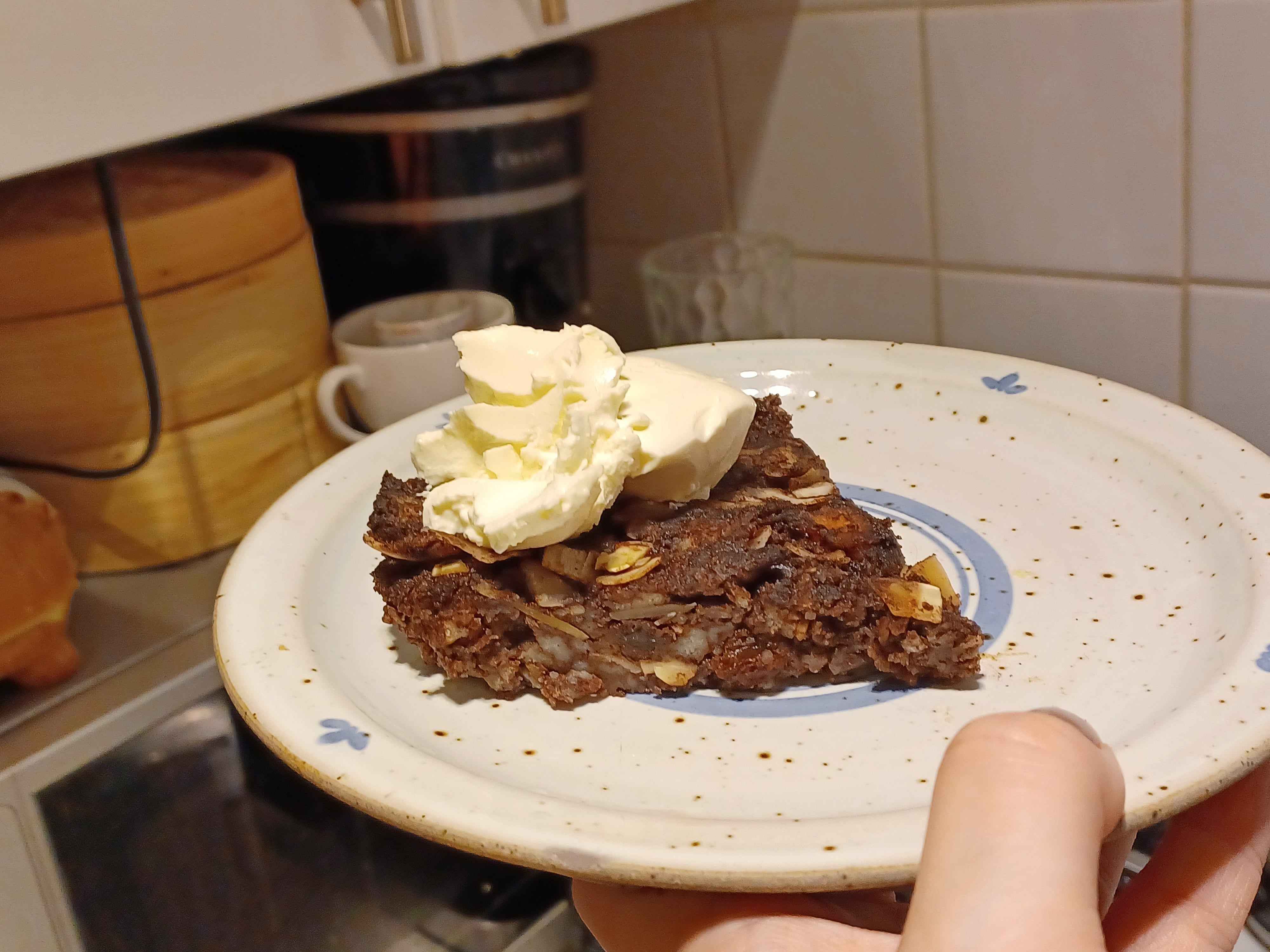
Torte Peasana: This Italian Cake Is The Best Way To Use Up Old Bread

I’ve recently got back into making sourdough, but it’s brought about a problem I could never have expected: by day five, I sometimes have rock-hard leftovers.

I can’t bring myself to throw it away. But now I’m at week four, I’ve grown a little tired of bread-and-butter puddings.

So, when I found a recipe for torte peasana – an Italian dish that’s sometimes called “village cake,” “black cake,” or “milk cake” – I figured I’d give the baked custard a go.

Spoiler alert: it’s delicious.

Some old sourdough

Amy Glover / HuffPost UK

Some old sourdough

What is torte paesana?

It’s a cake from the Lombardy region of Italy. There’s no one set recipe, but usually, it uses up stale bread in a thin custard made with sugar, cocoa, eggs, and milk.

Grappa-soaked raisins sometimes make an appearance (I soaked mine in orange juice, which is probably sinful but tasted delicious). Nuts, like almonds or pine nuts, are common, and crushed Amaretti biscuits occasionally feature, too.

But I would be doing the dish a disservice if I pretended its scope was that limited. You can include a variety of fresh or dried fruit (I reckon pears, dried cranberries, or figs would be delicious) if you want.

You don’t have to soak dried fruit in anything, but if you choose to, a variety of wines and spirits will do, as will some fruit juices.

You can add orange zest to the mix if you like. I used old sourdough, but you don’t have to: stale baguettes or even old ciabatta would be great too.

Cocoa can be substituted for chocolate, and vice versa. Like bubble and squeak, torte paesana has all the hallmarks of a brilliant leftover recipe: it’s endlessly adaptable, next to impossible to mess up, and almost inevitably delicious.

Torte Paesana

Amy Glover / HuffPost UK

Torte Paesana

How did it taste?

It’s impressively rich and deliciously squidgy; a bit like bread and butter pudding or French toast, but more grown-up and with a greater mixture of crunchy and chewy textures.

It’s addictive.

How do you make torte peasana?

Ingredients:

The recipe I ended up making for my tiny torte peasana was:

  • 125g old bread,
  • 30g raisins (other dried fruit will do),
  • 30g flaked almonds (whole almonds or other nuts will be great too),
  • 10ml orange juice (grappa, wine, coffee, or other drinks will do),
  • 25g cocoa,
  • 250ml full-fat milk,
  • 1 egg,
  • 3 tablespoons granulated sugar.

But this was only because I had a tiny amount of bread (125g) left, and it left me with a smaller, thinner tart.

Double what I have here for a bigger, better cake.

That would look like:

  • 250g bread,
  • 60g raisins or other dried fruit,
  • 60 nuts,
  • 15ml orange juice, grappa, coffee, or other soaking liquid,
  • 50g cocoa,
  • 2 eggs,
  • 6 tablespoons granulated sugar,
  • 500ml full-fat milk.

Method:

1) Heat up the milk. I was dealing with very old, tough sourdough. If your bread is softer, you may be able to cover it in cold milk and sit it, weighed down, on the counter for an hour or so, but I couldn’t do that. I brought the milk to just below boiling.

2) While this is cooking, place a tablespoon of e.g. grappa over the dried fruit. This can be done in a bowl. And if you don’t have anything “special” to soak them in, boiling water plumps them nicely; hot coffee would be delicious.

3) Pour the hot, but not boiling, milk over finely-torn bread and place a weight (I used a bowl full of ceramic beads) on top to ensure it’s submerged. Let it sit for about half an hour. Now would be a good time to add fruit zest if you want to include some.

4) Preheat the oven to 170°C ten minutes before the bread’s finished soaking. Line a tart tin (I used a pie tin, which worked fine despite my meagre half-serving) or a pie tin, though ideally not one with a removable base, as this can leak. If you are using biscuits, whizz them into a powder now.

5) Mash the bread. I used the end of a wooden rolling pin, but a wooden spoon would probably have worked. For especially stubborn bread, use a stick blender. Make sure the milk is not still hot; tepid is fine, but hot milk will cook the egg early.

6) Add the cocoa, eggs, and sugar. If you’ve blended or smashed up some biscuits, add them now too. Stir or mash them together. Don’t worry too much about how the batter looks: so long as there are no massive lumps of bread and nothing’s curdled, it’ll work.

7) Add the nuts and soaked raisins and stir. Then, pour the mix into the lined container and bake. For my mini-tart, it took 20 minutes. For the bigger one, it should be about 35-40 minutes. Check to see if the tart is firm.

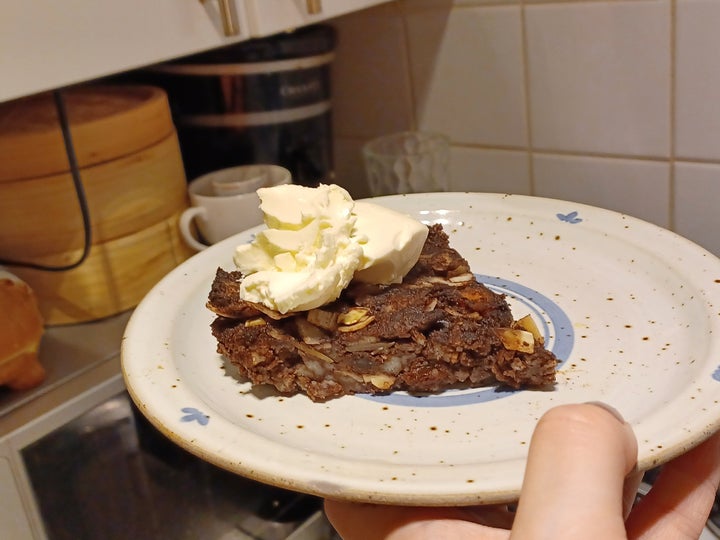
8) Let it cool. Torte paesana gets better with age (allegedly: I didn’t wait long enough to check), so leave it overnight in the fridge if you can bear it. Serve with cream or creme fraiche, or (as I used) mascarpone, if you like.

Share Button

‘Body Doubling’ Could Be The Secret To Helping Kids With ADHD Focus Better

Body doubling – where a person with ADHD works nearby or alongside another person to keep them focused on the task at hand – isn’t a new technique, but ADHD experts are increasingly recommending it as a strategy to help support task completion.

While plenty of adults already use it to plough through their daily workload, parents are also trying it to support their kids with homework or revision – especially the more boring stuff that’s hard to make a start on.

I first came across the concept when psychotherapist Jessica VanderWier, of Nurtured First Parenting, shared some of the parenting strategies she would try in her own home if she had a child with ADHD.

In addition to being structured with how much (and what type of) screen time kids encounter, and offering lots of opportunities for movement, she noted that she would also try “body doubling” when kids feel stuck and unable to start a task.

“Body doubling is when you are present and doing something in the same space that your child needs to get a task done. Example: they’re doing homework and you’re beside them folding laundry,” she explained on Instagram.

“Your presence acts as an anchor and helps decrease procrastination and increase motivation to get something done.”

Why body doubling works

Dr Chris Abbott, chief medical officer at Care ADHD, tells HuffPost UK that while there’s been limited research into body doubling, many clinicians and families report that it can meaningfully help children with ADHD with focus and task completion.

“It’s best understood as a low-risk, practical strategy rather than a standalone treatment, and tends to work particularly well for tasks that are hard to start or sustain,” he adds.

The strategy builds on psychological principles such as accountability and social facilitation.

“Children often find it easier to stay on task when someone else is present. It also helps ‘externalise’ focus, reducing the burden on executive functions like task initiation and self-regulation, which are commonly affected by ADHD,” says Dr Abbott.

Dr Kripalani, lead psychiatrist at The ADHD Centre, says body doubling is
“an incredibly effective tool”.

“Since the ADHD brain often struggles to ‘self-start’ or maintain focus on tasks that aren’t naturally stimulating, having another person present serves as a gentle physical anchor,” he explains.

Teaching kids this tool from a young age can be “transformative” because it prevents a child from internalising a “failure identity”, adds Dr Kripalani.

“Instead of feeling isolated in their struggle, the child experiences a daunting task as a shared journey, which lowers the emotional barrier to entry and helps them find their focus.”

It can also help buffer against rejection sensitivity dysphoria (RSD), which can cause extremely intense negative feelings and severe emotional pain, and is often associated with ADHD.

“Many children experience a form of paralysis born from the fear of being criticised or doing something wrong,” says the psychiatrist.

“A supportive, non-judgmental body double provides a safety net that lowers cortisol levels and keeps the prefrontal cortex ‘online’ for learning.”

Other expert-backed tips for revision and focus

  • Break revision into short, timed blocks of 10-25 minutes with regular breaks.

  • Offer ‘micro rewards’ – rather than waiting for a big reward at the end of the week, give a child a small dopamine hit, like five minutes of a favourite activity for every 20 minutes of work, to keep the momentum going.
  • Use body doubling, in person or via video, for harder or less engaging subjects.

  • Be specific about goals – you could say ‘complete five questions’ rather than ‘revise maths’.

  • Alternate subjects or task types to maintain interest and avoid fatigue.

  • Build in movement breaks (physical activity) to help reset attention.

  • Noise-cancelling headphones and fidget tools can help channel restlessness.
  • Reduce distractions e.g. have a clear workspace and limit devices unless they’re needed for studying.

  • Use active techniques such as practice questions, flashcards and teaching someone else rather than passive reading. Gamifying the more tedious aspects of study with ‘beat the clock’ challenges or colourful mind maps can help the info “stick”.

  • Create a consistent routine, but keep it flexible enough to avoid overwhelm.

  • Prioritise sleep, nutrition, and downtime – these have a direct impact on attention and memory.

  • Praise their efforts – by saying, “I love how you stayed at your desk even when that question was tricky,” rather than just “you’re smart,” we build resilience against rejection sensitivity by valuing effort over perfection.
Share Button