Care homes residents and housebound people will be the first to receive a jab in England.


Care homes residents and housebound people will be the first to receive a jab in England.
Competition is fierce for doctor training places, but ministers say limit on numbers must stay.
Figures obtained by the BBC show taxi firms increasingly being used to assist front-line services.
Diagnoses of dementia rose after two years but other issues like depression fell away, research found.

Comprehensive data from several seasons of field research in the Alaskan Arctic will address uncertainties in Earth-system and climate-change models about snow cover across the region and its impacts on water and the environment.
“Snow cover and its distribution affects not only the Arctic but global energy balances, and thus how it is changing is critically important for understanding how future global climate will shift,” said Katrina Bennett, lead author of the paper in The Cryosphere. Bennett is principal investigator at Los Alamos National Laboratory for the Department of Energy’s Next Generation Ecosystem Experiment Arctic project. “Our statistical model fills in the gap in understanding the spatial distribution of snow.”
The research found that spatial distribution depends most heavily on vegetation, elevation and landscape features, such as stream banks and benches — areas of topographic variability where shrubs grow and snow accumulates.
Based on random-forest machine learning, the statistical model characterizes the spatial pattern of the end-of-winter snow distribution and identifies the key factors controlling the spatial distribution. The model also predicts the snow distribution for the local study sites and can be generalized across the region.
Bennett said the analysis will be useful in validating physically based permafrost hydrology models, such as the Advanced Terrestrial Simulator developed at Los Alamos. The work will also help validate and provide improved snow redistribution representation in the land surface model within the Department of Energy’s Energy Exascale Earth System Model.
“Ultimately, it will increase our understanding of changing hydrology, topography and vegetation dynamics in the Arctic and sub-Arctic,” Bennett said.
Seasons in the snow
The multi-institutional research team, which included members from Los Alamos, University of Alaska Fairbanks, Lawrence Berkeley National Laboratory, Oak Ridge National Laboratory and University of Wisconsin-Madison, conducted snow surveys in the spring months of 2017-2019 at two small sites on the Seward Peninsula.
“We want to gratefully acknowledge Mary’s Igloo, Sitnasuak and Council Native Corporation for their guidance and for allowing us to conduct our research on their traditional lands,” Bennett said.
The field work focused on collecting end-of-winter snow-depth and snow-density measurements to calculate the amount of water contained within the snowpack. Those measurements characterize the impacts of snow cover on water and temperature better than snow-depth measurements do.
To create a model of snow distribution, the team estimated landscape factors for topography, vegetation and wind, and then quantified their impacts on snow distribution using three statistical models.
The Funding: Department of Energy Office of Science, Office of Biological and Environmental Research through Next Generation Ecosystem Experiment (NGEE) Arctic project.
Story Source:
Materials provided by DOE/Los Alamos National Laboratory. Note: Content may be edited for style and length.

The “secretome” refers to proteins that are secreted by a cell, a tissue or an organism. In anew study published in Open Biology, USC Stem Cell scientist Andy McMahon and his collaborators introduce an elegant new way to label and study the secretome in a living organism.
“The secretome orchestrates the subtle and complex processes of embryonic development, maintains the function of individual organs, and coordinates organ activity through inter-organ communication,” said McMahon, chair of the Department of Stem Cell Biology and Regenerative Medicine at USC. “However, it can be challenging to track which cells are secreting proteins, and which cells are being targeted.”
To address this challenge, co-first authors Rui Yang and Amanda S. Meyer at USC and Ilia A. Droujinine formerly at Harvard Medical School and now at Scripps Research generated mice with a built-in system for labeling and tracking the secretome.
“This built-in system is like a “passport system in the body, as we are identifying where proteins are coming from and where they’re going,” said Droujinine, who is a Scripps Research fellow and principal investigator in the Department of Molecular Medicine.
To establish this system, the research team started by genetically editing mouse embryonic stem cells to encode an enzyme engineered in Alice Ting’s laboratory at Stanford University. The enzyme, BirA*G3, indiscriminately tags nearby proteins with the vitamin B7 derivative, biotin. The reason that biotin is a useful tag is because it binds strongly the protein streptavidin, so that biotin-tagged proteins can be separated from other proteins in the cell and blood through a readily available technology called “streptavidin affinity purification.”
The next step was to ensure that BirA*G3 specifically tagged only the proteins of the secretome. These proteins originate in a structure within the cell known as the endoplasmic reticulum, or ER. Some of these proteins remain in the ER, while others are either secreted or incorporated into the cell’s surrounding membrane.
To specifically label only these proteins, BirA*G3 was itself tagged with four extra protein building blocks, or peptides. These four peptides, known as KDEL, served as a signal to the cell to retain BirA*G3 in the ER. So when biotin was added, BirA*G3 only added biotin labels to the proteins traveling through the ER.
Using these genetically edited stem cells, the team then produced transgenic mice. When these mice were given biotin, the scientists were able to demonstrate BirA*G3 labeling and identify the secretomes for a number of organs including the brain, liver and kidney. The scientists also identified proteins that were secreted anyway, even though they weren’t marked with the typical signal indicating the cell should secrete them.
These transgenic mice enable scientists to label and study specific cell types and organs, facilitating studies of inter-organ communication.
“Our new mouse model demonstrates enhanced labeling efficiency of the secreted and ER proteins in specific cell types, providing a valuable resource for mapping and profiling the secretome,” said Meyer, who is a PhD candidate in the McMahon Lab at the Eli and Edythe Broad Center for Regenerative Medicine and Stem Cell Research at USC.
Yang, a postdoctoral fellow in the McMahon Lab, added: “Our mouse model will facilitate a deeper understanding of the secretome’s critical role in development, as well as in healthy and diseased adult states.”
The mice are now in a public repository, so that other scientists can benefit from this new technology.
“Given the central role of key secreted proteins such as insulin, there is a great deal of interest in identifying novel secreted proteins,” said McMahon. “Genome studies are suggesting that many new proteins remain to be characterized. We’re looking forward to a deep dive into this area now that we have validated the technology.”
Additional co-authors include: Jinjin Guo and Jill A. McMahon from USC; Namrata D. Udeshi, Dominique K. Carey, Charles Xu, and Steven A. Carr from the Broad Institute of Harvard and MIT; Yanhui Hu and David Rocco from Harvard Medical School; Norbert Perrimon from Harvard Medical School and the Howard Hughes Medical Institute; Qiao Fang from the University of Toronto; Jihui Sha and James Wohlschlegel from UCLA; Shishang Qin from Peking University; and Alice Y. Ting from the Chan Zuckerberg Biohub and Stanford University.

On the hottest summer days, you may find yourself dozing off in the middle of the day. In some parts of the world, it’s a cultural norm to schedule “siestas” and shutter businesses during the warmest hours of the day. As it turns out, biology, not just culture, may be behind this.
Temperature affects the span of human behavior, from eating and activity levels to sleep-wake cycles. We may have a harder time sleeping in the summer and be slow to get out of bed on colder mornings. But the link between sensory neurons and neurons that control this cycle are not understood completely.
Northwestern University neurobiologists have found a few clues about what’s happening. In a new study, published today (Aug. 17) in the journal Current Biology, researchers found that fruit flies are pre-programmed to take a nap in the middle of the day. A follow-up to their 2020 Biology paper that identified a brain thermometer only active in cold weather, the new paper explores a similar “thermometer” circuit for hot temperatures.
“Changes in temperature have a strong effect on behavior in both humans and animals, and offer animals a cue that is time to adapt to the changing seasons,” said Marco Gallio, associate professor of neurobiology in the Weinberg College of Arts and Sciences. “The effect of temperature on sleep can be quite extreme, with some animals deciding to sleep off an entire season — think of a hibernating bear — but the specific brain circuits that mediate the interaction between temperature and sleep centers remain largely unmapped.”
Gallio led the study and said fruit flies are a particularly good model to study big questions like “why do we sleep,” and “what does sleep do for the brain” because they don’t attempt to disrupt instinct in the same way humans do when we pull all-nighters, for example. They also allow researchers to study the influence of external cues like light and temperature on cellular pathways.
Cells that stay on longer
The paper is the first to identify “absolute heat” receptors in fly head, which respond to temperatures above about 77 degrees Fahrenheit — the fly’s favorite temperature. As it turns out, the common laboratory fruit fly (Drosophila) has colonized nearly the entire planet by forming a close association with humans. Not surprisingly, its favorite temperature also matches that of many humans.
Just as they expected based on the results of their previous paper on cold temperature, researchers found that brain neurons receiving information about heat are part of the broader system that regulates sleep. When the hot circuit, which runs parallel to the cold circuit, is active, the target cells that promote midday sleep stay on longer. This results in an increase in midday sleep that keeps flies away from the hottest part of the day.
The study was enabled by a 10-year initiative that produced the first completed map of neural connections in an animal (a fly), called the connectome. With the connectome, researchers have access to a computer system that tells them all possible brain connections for each of the fly’s ~100,000 brain cells. However, even with this extremely detailed road map, researchers still need to figure out how information in the brain goes from point A to B. This paper helps fill that gap.
The different circuits for hot versus cold temperatures make sense to Gallio because “hot and cold temperatures can have quite different effects on physiology and behavior,” he said. This separation may also reflect evolutionary processes based on heat and cold cycles of the Earth. For example, the possibility that brain centers for sleep may be directly targeted in humans by a specific sensory circuit is now open to be investigated based on this work.
Next steps
Next, Gallio’s team hopes to figure out the common targets of the cold and hot circuit, to discover how each can influence sleep.
“We identified one neuron that could be a site of integration for the effects of hot and cold temperatures on sleep and activity in Drosophila,” said Michael Alpert, the paper’s first author and a post-doctoral researcher in the Gallio lab. “This would be the start of interesting follow-up studies.”
Gallio added that the team is interested in looking at the long-term effects of temperature on behavior and physiology to understand the impact of global warming, looking at how adaptable species are to change.
“People may choose to take an afternoon nap on a hot day, and in some parts of the world this is a cultural norm, but what do you choose and what is programmed into you?” Gallio said. “Of course, it’s not culture in flies, so there actually might be a very strong underlying biological mechanism that is overlooked in humans.”
The paper is titled “A thermometer circuit for hot temperature adjusts Drosophila behavior to persistent heat.” Work in the Gallio lab is supported by the National Institutes of Health (grants R01NS086859 and R21EY031849), a Pew Scholars Program in the Biomedical Sciences and a McKnight Technological Innovations in Neuroscience Awards. The all-Northwestern team includes Gallio, Alpert, Hamin Gil and Alessia Para.

Labour lost 91,000 members in 2021, the party’s latest accounts show.
The accounts, published by the Electoral Commission, said the party’s membership fell from 523,332 at the end of 2020 to 432,213 in a year.
Membership peaked in recent years at 564,443 in 2017 at the height of the Jeremy Corbyn-inspired membership boom. It had fallen to 518,659 by 2018.
Advertisement
The party also ended the year with a financial deficit of more than £5 million.
The figures were described by Momentum as “alarming”, as the pro-Corbyn left-wing pressure group pointed the finger of blame at Keir Starmer’s leadership.
Income from membership fees dropped from £19.3 million to £16.2 million in 2021, though last year’s fees were comparable with 2017 and 2018 levels.
The party treasurer’s report described 2021 as a “difficult and demanding year”, with redundancy pay-offs to cut costs in the long term contributing to the loss.
Advertisement
“Party finances do remain challenging with pressure on income coinciding with increasing costs,” the report said.
The size of Labour’s deficit went up from £1 million to £5.2 million.
The report continued: “The one-off cost of the voluntary severance scheme contributed to the deficit result which required the allocation of cash reserves to fund. For the avoidance of doubt, the Party remains debt free.”
But the report also said there had been a return to more normal operations after Covid, and a Labour spokesman said the party was “on track to returning to a firm financial footing”.
In 2021, the party raised nearly £10 million in donations, including from members, supporters, major donors and unions, up from £5.7 million a year earlier.
Commercial income increased by £2.5 million in 2021.
Labour’s income was also significantly higher than the Conservative Party’s last year, raising nearly £46 million compared with the Tories’ £32 million.
Advertisement
A Labour spokesman said: “Thanks to Keir Starmer’s firm leadership and clear commitment to taking Labour back into power, the party is on track to returning to a firm financial footing – with commercial income and donations rising significantly.”
But Momentum blamed Starmer’s failure to stand by the 10 policy pledges made during the 2019 leadership campaign and his stance towards trade unions for the exodus of members.
The group tweeted: “These figures are alarming.
“Keir Starmer’s pledge-breaking & factional approach have prompted an exodus of members and a financial crisis for the Party.
“Yet the Leadership has welcomed these departures while alienating Labour’s affiliated trade unions.”

Isolating from pets when infected and disposing of rubbish carefully is important, health experts say.

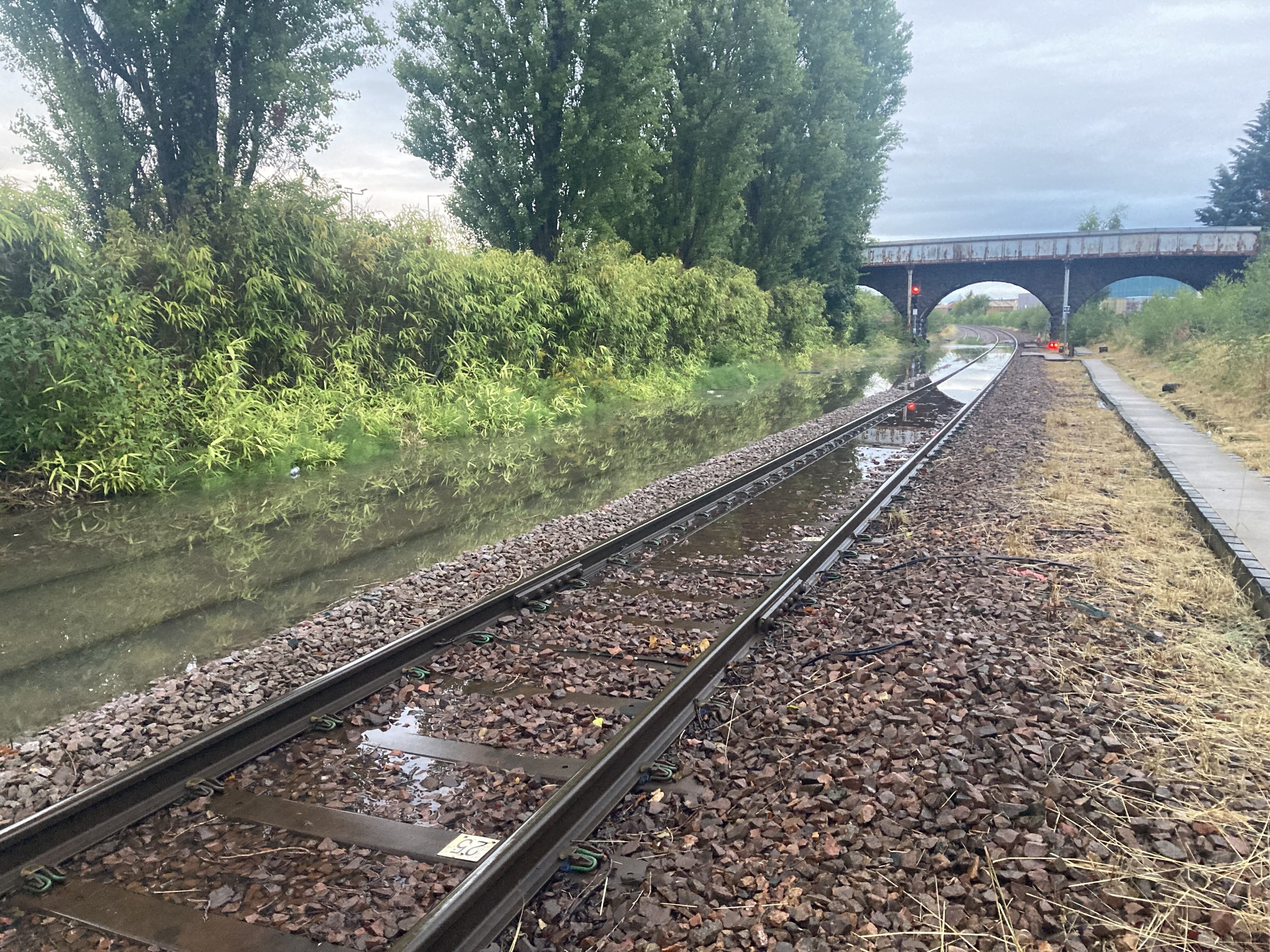
Parts of the UK have faced two days of torrential rain, which follows weeks of hot weather and sunshine, with a thunderstorm warning covering most of the south east of England, including parts of London, in place.
While the weather extremes may be disconcerting, one invariably leads to another. With land left parched, it will take heavy rain much longer to be absorbed into the ground – leading to the spate of flash floods being recorded on social media.
And the downpours will not magically solve the country’s drought problem. The Environment Agency has said it will take weeks of rain to replenish water sources and end the drought.
Footage and photos showed torrential rain and floodwater sweeping through towns across the UK.
The Met Office issued an amber thunderstorm warning from 11am until 10pm on Wednesday, meaning people should expect flooding and disruption.
The warning says: “Fast flowing or deep floodwater is likely, causing danger to life.”
Flooding is likely to affect homes and businesses “quickly”, as 30mm to 50mm of rain could fall in just an hour, while a few places may see more than 100mm in a few hours.
Forecasters say this could lead to train and bus cancellations amid difficult driving conditions, power cuts and communities becoming cut off from roads.
Lightning, hail and strong winds will also lash areas included in the warning, which spreads across Suffolk, Kent, Surrey and West Sussex.
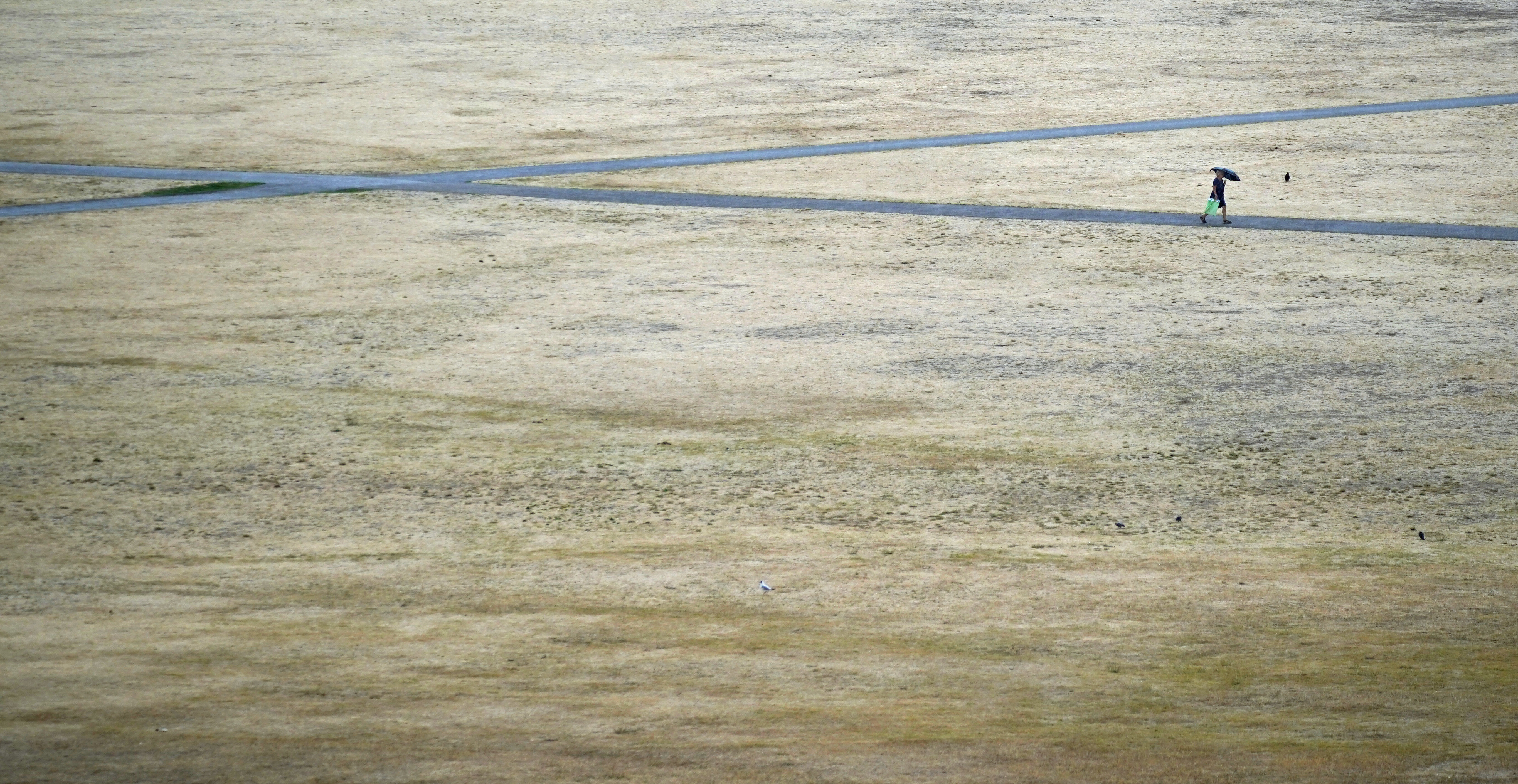
The images of floods emerging are in stark contrast to last week, when England’s green pastures had been turned yellow and brown.
A drought was officially declared across most of England following the driest July for 50 years and the driest first half of the year since 1976.
Thames Water, which supplies 15 million people, is putting a hosepipe ban in place next week, saying water levels in its reservoirs were “much lower than usual”.
It joins Welsh Water, Southern Water and South East Water in implementing a hosepipe ban.
South West Water and Yorkshire Water will follow suit on August 23 and 26 respectively – meaning more than 29.4 million customers across the UK will be prohibited from using hosepipes by the end of next week.