What Sex Therapists Tell People Who’ve Never Had An Orgasm

If you’ve never had an orgasm, it’s easy to feel like your body is defective. But the reality is, there are many things that can contribute an inability to orgasm and plenty of ways to address it – it’s not hopeless!

According to Sadie Allison, a sexologist, author and founder of sex toy retailer TickleKitty, being “anorgasmic,” as it’s sometimes called, could be attributed to “inhibitions in the bedroom, cultural or religious beliefs that make it hard to mentally relax, medical conditions or taking medications, sexual hang-ups from past experiences, and relationship or intimacy issues.”

Past trauma, subconscious feelings of shame or fear, body discomfort, anxiety or even just lack of knowledge about anatomy can also be factors in anorgasmia.

“One of the main reasons, however, is a lack in education around sexual anatomy, arousal and response, pleasure and the clitoris,” Allison adds. “Unfortunately they don’t teach this important information in school. But the good news is, this is something that can be practiced and learned with success!”

But how exactly should you go about learning and practicing if you’ve never had an orgasm? Below, Allison and other sex therapists share their advice.

First, recognise that there’s nothing wrong with you

If you’ve never had an orgasm, it’s important to understand that you are not alone and there’s nothing wrong with you. This is a not-uncommon experience, especially for people with vulvas.

In fact, studies suggest that roughly 10% of women have never had an orgasm, and 50% do not experience orgasm during sexual intercourse.

“You are not broken,” says Kate Balestrieri, a sex therapist and founder of Modern Intimacy. “Orgasms and pleasure can be complex, layered, and unpredictable, especially if you have less experience with sex that you enjoy. Refrain from judging or shaming yourself if you have not yet experienced an orgasm.”

Try getting to know your body

“Most people will find their first orgasm through self pleasuring vs. with a partner,” says sex and relationship coach Keeley Rankin. “This is because being with a partner offers a whole new complex dynamic. And while potentially sexy and fun, for folks who are looking for an orgasm, it is typically more stress inducing.”

Instead, start with your own body, by yourself. Explore which zones are your hot spots and get comfortable masturbating.

“Choose a place where you feel you have privacy and make yourself comfortable,” advises Nazanin Moali, a sex therapist and host of the Sexology podcast.

She recommends building psychological arousal by reading or listening to sexually explicit or romantic content, whatever turns you on.

Sex therapists recommend spending time by yourself getting to know your body.

Miki Onigiri / EyeEm via Getty Images

Sex therapists recommend spending time by yourself getting to know your body.

“When you feel aroused, I recommend that you start with a body scan from head to toe and make a note of all the sensations in your body,” Moali says.

Consider gently massaging lotion all over your body. Take deep breaths in and out to release any tension.

“Start with touching and caressing your face and neck and explore different types of strokes,” she advises. “The goal for the first few times is to get to know different sensations in your body. Set the intention to get to know your body and explore it without putting any pressure. When you are ready, slowly move to your genital area and pay attention to the types of stroke that feel good.”

You can use your fingers or a vibrator or other sex toy in your exploration. Familiarise yourself with lots of different sensations.

Remove the focus on orgasm as the goal

“I initially take orgasm off the table as a goal,” says sex therapist and psychologist Megan Fleming. “The goal is getting back to the basics of giving and receiving pleasure. The pressure of having an orgasm as a goal is often a big part of what inhibits their arousal response.”

Rather than concentrating on having an orgasm, try to focus on the pleasure of arousal, connection with your body or your partner’s body, creativity and general enjoyment.

“Re-conceptualise your expectations for sex,” Balestrieri says. “So many people organise themselves around penetration and orgasm being the pinnacle and goal for pleasure. But that perpetuates a performative experience of sex and limits the countless other opportunities for pleasure that can increase the likelihood of an orgasm. Changing the goal from having an orgasm to experiencing pleasure and fun can paradoxically make orgasms more accessible.”

“There is no magic pill for finding an orgasm. It is often a deep dive into your own sexuality, emotional wounds, psychological blocks, beliefs, as well as learning new skills.”

– Keeley Rankin, sex and relationship coach

Get cliterate

“The sexual encounters we see depicted in film primarily depict penetrative sex,” says Zoë Ligon, a sex educator and founder of Spectrum Boutique. “And while some people can orgasm through penetration alone, the vast majority of people need external stimulation or external stimulation paired with internal stimulation in order to achieve orgasm. We as a culture ignore clitoral stimulation, as well as the time that is needed to build up arousal in order to achieve orgasm.”

She hopes society will continue to move away from penetrative intercourse as the standard definition of “sex” and seeks to educate people with vulvas and their partners about the importance of the clitoris – the small erogenous organ with highly sensitive nerve endings – in reaching orgasm.

“Become cliterate,” echoes Allison. “If you’re still learning where your clitoris is, or how to pleasure it, this is your starting point. The clitoris has about 8,000 nerve endings and is the main epicentre of orgasm creation. While there are other types of orgasms like G-spot, penetrative, anal, they are more advanced, so consider exploring those after you become your own clitoral expert.”

Advocate for your pleasure

When it comes to sex with a partner, good communication is crucial. Everyone is different, so don’t be shy in sharing how you like you like to be touched.

“Don’t be afraid to tell your partner what feels good and what doesn’t,” advises Kimberly Resnick Anderson, a sex therapist and assistant professor of psychiatry at UCLA School of Medicine. “You’d be surprised what a conversation about sexual preferences and fantasies can accomplish. If you are too embarrassed to talk to your partner about sex, you are missing out on an opportunity to increase your sexual satisfaction.”

Of course, the conversation can be uncomfortable, especially with a new partner, but having an open dialogue will bring you closer.

“Orgasm is about surrendering to the moment, to your body’s pleasure, and to another person,” says Jenni Skyler, a sex therapist and director of The Intimacy Institute. “If you are with a new partner, trust is still developing, and thus surrendering to a new person can be tricky.”

Whatever you do, don’t fake an orgasm, or stop doing it if you’ve already developed that habit.

“At times, women fake orgasms in an attempt to please their partner,” Moali says. “However, through this, you are also sending the wrong information to your partner about what works for you. Instead, focus on slowing down and getting curious about what types of touches feel good in your body. Spending more time engaging in foreplay will help you build enough arousal, thereby shortening the arousal gap between you and your partner.”

Don't be afraid to experiment with different sex toys, erotica and more.

Mikhail Reshetnikov / EyeEm via Getty Images

Don’t be afraid to experiment with different sex toys, erotica and more.

Keep experimenting

Never stop trying new things, from techniques to toys. Resnick Anderson suggested vocalizing as a tip to facilitate orgasm.

“Research has shown that expressing sounds of pleasure during sex can increase capacity for orgasm,” she explains. “Women are also more likely to climax during coitus if they can control the speed, depth, and angle of penetration with positions like cowgirl or reverse cowgirl.”

Resnick Anderson also recommends trying different kinds of porn, like more female-friendly videos or erotic writing. Even something as simple as keeping your socks on might make you feel more comfortable and relaxed.

“Activate as many senses as possible,” she adds, noting that some people struggle to get out of their heads and into their bodies. “The more sensations one experiences at the same time, the easier it is to connect to your body. Tantalise your senses by engaging your hearing, vision, tastebuds, sense of smell, and sense of touch all at once. When our brains are busy listening, smelling, tasting, seeing, and touching, it’s easier to ignore intrusive or anxious thoughts.”

Invest in a new vibrator or other sex toys for solo or partnered sex. Try a lubricant. And pay attention to the different kinds of sensory experiences that give you pleasure, or even turn you on.

“Don’t limit yourself to what you think should turn you on, and instead give yourself permission to explore a full range of fantasies or erotic material, so you can learn what your body responds to,” Balestrieri says. “Refrain from judging yourself. Fantasies are just fantasies and do not say anything about your character. Often, fantasies give us access to an emotional or sensory experience that we can’t (and may not even want to) experience in real life. Think of fantasies and sex as play, and let yourself colour with vibrance.”

Seek professional help

If you’re concerned about your inability to orgasm, you may also consider seeking professional help.

“First and foremost, go to a sexual medicine specialist to ensure nothing physically going on – hormone issues, pelvic pain, tissue issues,” advises sex therapist and educator Nicoletta Heidegger. “Not just a regular [gynaecologist] or urologist – someone who has specialised training in sexual medicine and sexual functioning.”

If there are no discernible medical issues, she recommended then reaching out to a sex therapist, sex coach or sexological bodyworker to continue your journey.

There are also a number of apps, books other resources that might be useful. Heidegger recommended Come as You Are and Becoming Cliterate by Laurie Mintz. Ligon is a fan of Girls & Sex by Peggy Orenstein.

“Check out the app OMG Yes, Beducated, or Vanessa Marin’s Finishing school,” Heidegger says. “With many other topics like driving or changing a tire, we learn, and practice or take classes. There is no shame in this not coming naturally – pun intended. You may need practice, help, tools, education, and support, which is totally OK.”

It can also be helpful to talk to a mental health professional about any negative feelings or past experiences around sex.

“Address any shame you feel about sex,” Balestrieri says. “Shame – unless it’s part of your kink – is an inhibiting experience. It makes us feel small and unworthy, and when it comes to pleasure and the permission one gives themselves to feel pleasure, shame is a huge barrier to orgasm.”

Be patient

“I explain right away to my clients that this is often a long journey ― not to scare anyone, but to create realistic expectations for what they can expect,” Rankin said. “There is no magic pill for finding an orgasm. It is often a deep dive into your own sexuality, emotional wounds, psychological blocks, beliefs, as well as learning new skills.”

Patience is key. Be prepared to spend a lot of time with your body and try to remain relaxed and optimistic. Focus on the fun exploration and in-the-moment sensations.

“Stay positive and be patient,” Allison said. “Don’t be discouraged or feel something is wrong with you. Sometimes it could simply be a new rubbing technique or vibrator that surprises you with that special sensation, or even a new partner that brought that special something. Hang in there and enjoy as you explore and try new things. Remember, it’s a journey, not a race. And you’re so worth it!”

Share Button

Cornwall mother, 90, in 40-hour wait for ambulance

After the ambulance arrived she was in the vehicle for 20 hours outside hospital.

Share Button

Which animals can best withstand climate change?

Extreme weather such as prolonged drought and heavy rainfall is becoming more and more common as the global average temperature rises — and it will only get worse in the coming decades. How will the planet’s ecosystems respond?

“That is the big question and the background for our study,” said biologist John Jackson, who, together with his biologist colleagues Christie Le Coeur from the University of Oslo and Owen Jones from University of Southern Denmark, authored a new study, published in eLife.

John Jackson is now at Oxford University but was at the University of Southern Denmark when the study was made. Owen Jones is associate professor at the Department of Biology, University of Southern Denmark.

Llama, moose and elephant

In the study, the authors analyzed data on population fluctuations from 157 mammal species from around the world and compared them with weather and climate data from the time the animal data were collected. For each species there are 10 or more years of data.

Their analysis has given them an insight into how populations of animal species have coped at times of extreme weather: Did they become more, or less, numerous? Did they have more or fewer offspring?

“We can see a clear pattern: Animals that live a long time and have few offspring are less vulnerable when extreme weather hits than animals that live for a short time and have many offspring. Examples are llamas, long-lived bats and elephants versus mice, possums and rare marsupials such as the woylie,” said Owen Jones.

Less affected by extreme weather:

African elephant, Siberian tiger, chimpanzee, greater horseshoe bat, llama, vicuña, white rhinoceros, grizzly bear, American bison, klipspringer, Schreibers’s bat.

More affected by extreme weather:

Azara’s grass mouse, olive grass mouse, elegant fat-tailed mouse opossum, Canadian lemming, Tundra vole, Arctic fox, stoat, common shrew, woylie, arctic ground squirrel.

Quick drop — but also quick boom

Large, long-lived animals are better able to cope with conditions like prolonged drought; their ability to survive, to reproduce and to raise their offspring is not affected to the same extent as small, short lived animals. They can, for example, invest their energy into one offspring, or simply wait for better times when conditions become challenging.

On the other hand, small short-lived rodents have more extreme population changes in the short term. In the event of a prolonged drought, for example, large parts of their food base may disappear more rapidly: insects, flowers, fruits, and they are left to starve because they have limited fat reserves.

The populations of these small mammals may also boom to take advantage when conditions improve because, in contrast to large mammals, they can produce many offspring.

Not the same as risk of extinction

“These small mammals react quickly to extreme weather, and it goes both ways. Their vulnerability to extreme weather should therefore not be equated with a risk of extinction,” said John Jackson.

He also reminds us that the ability of an animal species to withstand climate change must not stand alone when assessing the species’ vulnerability to extinction:

“Habitat destruction, poaching, pollution and invasive species are factors that threaten many animal species — in many cases even more than climate change,” he emphasized.

The animals we don’t know much about

The researchers’ study not only gives an insight into how these specific 157 mammal species react to climate changes here and now. The study can also contribute to a better general understanding of how the planet’s animals will respond to ongoing climate change.

“We expect climate change to bring more extreme weather in the future. Animals will need to cope with this extreme weather as they always have. So, our analysis helps predict how different animal species might respond to future climate change based on their general characteristics — even if we have limited data on their populations,” said Owen Jones.

An example is the woylie, a rare Australian marsupial. Biologists do not know very much about this species, but because it shares a similar life style with mice — that is, it is small, lives for a short time and reproduces quickly — it can be predicted that it will respond to extreme weather in a similar way to mice.

Entire ecosystems will change

“In the same way, there are lots of animal species that we don’t know very much about, but whose reaction we can now predict,” explained John Jackson.

In this way, the researchers expect that the ability of different animal species to adapt to climate change is related to their life strategy, and this can help us predict ecological changes:

As habitat suitability changes due to climate change, species may be forced to move to new areas as old areas become inhospitable. These shifts depend on species’ life strategies and can have big impacts on ecosystem function.

The work has been supported by Independent Research Fund Denmark.

Share Button

Plasma-produced gas helps protect plants from pathogens

The flash of lightning and the dance of auroras contain a fourth state of matter known as plasma, which researchers have harnessed to produce a gas that may activate plant immunity against wide-spread diseases.

The team, based at Tohoku University in Japan, published their findings on June 24 in PLOS One.

“Currently, chemical pesticides are the mainstay of disease control in agriculture, but they can contaminate the soil and harm the ecosystem,” said paper author Sugihiro Ando, associate professor in the Graduate School of Agricultural Science at Tohoku University. “We need to develop plant disease control technologies that can help establish a sustainable agricultural system. The use of plant immunity is one of the most effective disease control methods because it utilizes the innate resistance of plants and has a low environmental impact.”

Using their previously developed device that derives plasma from the air, the researchers produced dinitrogen pentoxide, a reactive nitrogen species (RNS). This molecule is related to reactive oxygen species (ROS), in that both damage cells and trigger specific stress responses in organisms.

“It is well known that reactive species are important signaling factors in the immune response of plants, but the specific physiological function of dinitrogen pentoxide is poorly understood,” Ando said. “Plants produce reactive species as a defense response when they perceive an infectious stimulus from a pathogen. The generated reactive species function as signaling molecules that contribute to the activation of plant immunity.”

According to Ando, reactive species are linked to plant hormones such as salicylic acid, jasmonic acid and ethylene, which help regulate plant immunity, but the physiological function of dinitrogen pentoxide is poorly understand.

“Since reactive species are known to have important functions in plant immunity, we analyzed weather exposure of plants to dinitrogen pentoxide gas could enhance disease resistance,” Ando said.

The researchers exposed thale cress, a small plant commonly used as a model system for scientific research, to dinitrogen pentoxide gas for 20 seconds a day for three days. The plants were then infected with one of three common plant pathogens: a fungus, a bacterium or a virus. The plants with the fungus or the virus showed suppressed progression of the pathogen, while those with the bacterium had a similar proliferation as the control plants.

“These results suggest that the dinitrogen pentoxide gas exposure could control plant disease depending on the type of pathogen,” Ando said.

A genetic analysis revealed that the gas specifically activated the jasmonic acid and ethylene signaling pathways and appeared to lead to the synthesis of antimicrobial molecules, which Ando said may have contributed to the observed disease resistance. “Dinitrogen pentoxide gas can be used to activate plant immunity and control plant diseases,” Ando said. “Through plasma technology, the gas can be produced from air and electricity, without special materials. The gas can also be converted to nitric acid, when dissolved in water, and used as a fertilizer for plants. This technology can contribute to the construction of a sustainable agricultural system as a clean technology with minimal environmental impact.”

Next, the researchers plan to study how their technology works with crops and in greenhouse cultivation.

Story Source:

Materials provided by Tohoku University. Note: Content may be edited for style and length.

Share Button

Early blood tests predict death, severe disability for traumatic brain injury

A study finds that blood tests taken the day of a traumatic brain injury can predict which patients are likely to die or survive with severe disability, allowing clinicians to make decisions earlier on possible treatment of TBI.

Researchers from Michigan Medicine, the University of California San Francisco and the University of Pennsylvania analyzed day-of-injury blood tests of nearly 1,700 patients with TBI. Results published in The Lancet Neurology reveal that higher values of two protein biomarkers, GFAP and UCH-L1, are associated with death and severe injury.

This is the first study to examine the association between biomarker levels of these two proteins and all-cause mortality following TBI, says first author Frederick Korley, M.D., Ph.D., associate professor of emergency medicine at the University of Michigan Medical School.

“Early and accurate prediction of TBI outcomes will help clinicians gauge how severe a brain injury is and inform how best to counsel family members about care for their loved ones with brain injury and what to expect with regards to their recovery,” Korley said. “It will also help researchers more precisely target promising TBI therapeutics to the right TBI patients.”

The U.S. Food and Drug Administration cleared the use of GFAP and UCH-L1 in 2018 to help clinicians decide whether to order CT scans for mild traumatic brain injury.

Researchers measured the proteins using two devices from Abbott Laboratories, the i-STAT Alinity and the ARCHITECT. Results were compared to evaluations made six months after injury using the Glasgow Outcome Scale-Extended, a system that grades the functional status of TBI patients.

Investigators found that compared to those with GFAP values in the bottom 20th percentile, those with GFAP values in the top 20th percentile had a 23 times higher risk of death during the subsequent six months. Similarly, compared to those with UCH-L1 values in the bottom 20th percentile, those with UCH-L1 values in the top 20th percentile had a 63 times higher risk of death during the subsequent 6 months.

“Modern trauma care can result in good outcomes in what we had once believed were non-survivable injuries,” said co-senior author Geoffrey Manley, M.D., Ph.D., professor and vice chair of neurosurgery at UCSF. “These blood tests are both diagnostic and prognostic, as well as easy to administer, safe and inexpensive.”

While the method is promising for determining poor outcomes in moderate and severe TBI, researchers say more must be done to examine its role in mild cases.

“As a next step, the TRACK-TBI team is planning a clinical trial that will examine the efficacy of promising therapeutic agents that may help traumatic brain injury patients recover quickly,” Korley said. “As part of this clinical trial, these biomarkers will be used as an objective method for selecting the right patients to enroll in this trial. We will also use these biomarkers to monitor individual patient response to these promising therapeutics.”

Korley previously consulted for Abbott Laboratories. Korley and Robertson have received research funding from Abbott Laboratories. Manley received research funding from a collaboration between Abbott Laboratories and the U.S. Department of Defense. Diaz-Arrastia consulted for MesoScale Discoveries, BrainBox Solutions, and NovaSignal. All other authors and collaborators declare no competing interests.

Story Source:

Materials provided by Michigan Medicine – University of Michigan. Original written by Noah Fromson. Note: Content may be edited for style and length.

Share Button

Covid infections in UK continue to fall

An estimated 1.7 million people would test positive, according to the latest survey.

Share Button

We Hear You, Dina Asher-Smith, Periods Are Still A Bloody Mystery

Sprint superstar Dina Asher-Smith has revealed the cramps she experienced in her calf earlier this week, causing her to finish last in a 100m race at the European Championships, were down to her period – and we can relate.

When asked about what happened, the 26-year-old responded: “It was just ‘girl stuff’. It’s just frustrating. It’s one of those things. It’s a shame because I’m in really good shape and I was really looking to come and run fast.”

True to form, a few days later she returned to the track and qualified for the 200m final.

She has now called for more research into how periods impact performance from a sports science perspective, “because it’s huge”.

“People don’t always talk about it either,” she said. “Sometimes you see girls that have been so consistent and there’s a random dip and behind the scenes they’ve been really struggling. Everybody else will go ‘What’s that? That’s random’.

“So we could just do with more funding. I feel if it was a men’s issue there would be a million different ways to combat things.”

We’ve all got stories like this. A colleague reveals she had her first period while sitting her GCSE exams and honestly thought she was going to die. Needless to say, she struggled to perform to the best of her ability.

I’ve had moments where the ability to do even the most basic of tasks – let alone run a race or sit an exam – have been completely obliterated by my menstrual cycle.

One memory instantly comes to mind: commuting home from work on the tube and having to get off several stops early because I was doubled over in so much pain and there were no seats available.

Hot, nauseous and unable to stand up straight, I made it to a bench on the platform and sat there for some time before my boyfriend turned up in a taxi to take me home. So yes, I tip my hat to Dina for even finishing the race.

Wherever you turn, women and people who menstruate are dealing with periods – and we agree with Dina, it’s time sports bodies invested heavily in research.

Tennis star Heather Watson previously told HuffPost UK how she quietly handles her period, which makes her feel bloated and low on energy when she’s on the court: “I really don’t think there’s much you can do when you’re on your period before a game except be strong and deal with it as best you can, because that’s what we all do on a monthly basis.”

She’s previously taken the contraceptive pill to delay her period during big tournaments. But even taking the pill can sometimes backfire or cause unwanted side effects.

Speaking to HuffPost UK, British synchronised swimmer Isabelle Thorpe revealed there have been a few occasions “when it’s gone wrong and I’ve bled for longer than I expected”.

British runner Eilish McColgan was also prescribed the pill after experiencing, what she described for a BBC column as, “excruciating cramps every month to the point where my body would go into a fever and start vomiting”. She recalled having a full day in bed “feeling like death” and then waking up the next day like nothing had happened.

But being on the pill made her feel “rotten,” she said, and it impacted her emotionally.

“It still fascinates me that a large majority of women struggle with their menstrual cycles every month, and yet no one seems to have the answers. Even now, the research in regards to sport, especially, is sparse,” wrote McColgan.

Dr Sarah Zipp, an expert in menstrual health and sport, and associate professor at Mount St Mary’s University, in Maryland, says we now need to see more research into the area. “The menstrual cycle has enormous impacts on physical health, performance, etc.,” she tells HuffPost UK.

“The body experiences many changes throughout the cycle, it goes beyond just coping with symptoms of menstruation. Yet we have relatively little research on the impact of menstrual cycles, which is pretty shocking given that there is sport science research into just about anything that might provide the tiniest performance advantage.”

She says the lack of research is in line with “the overall absence of research on women’s health” more broadly.

Dr Camilla Mørk Røstvik, a historian of menstruation at the University of Aberdeen and University of St Andrews, agrees “there needs to be more research into every facet of the menstrual cycle”.

“Many of us are trying to do that through, for example, the Society for Menstrual Cycle Research (established 1970), the Menstruation Research Network and more,” she says.

But these areas are woefully underfunded. “Asher-Smith is so right, and I’d add that we need proper funding too,” she continues.

“It’s a frustration, because there is clearly an interest amongst the public, just not amongst funding bodies or sponsors (yet).”

If you’d like to share how periods have impacted your performance in sport or at work, please tweet us: @huffpostuklife and we may include some of the tweets in this article.

Share Button

People’s health at risk unless action taken on energy costs – NHS leaders

More and more people will get sick as they choose between skipping meals or heating homes, the warning says.

Share Button

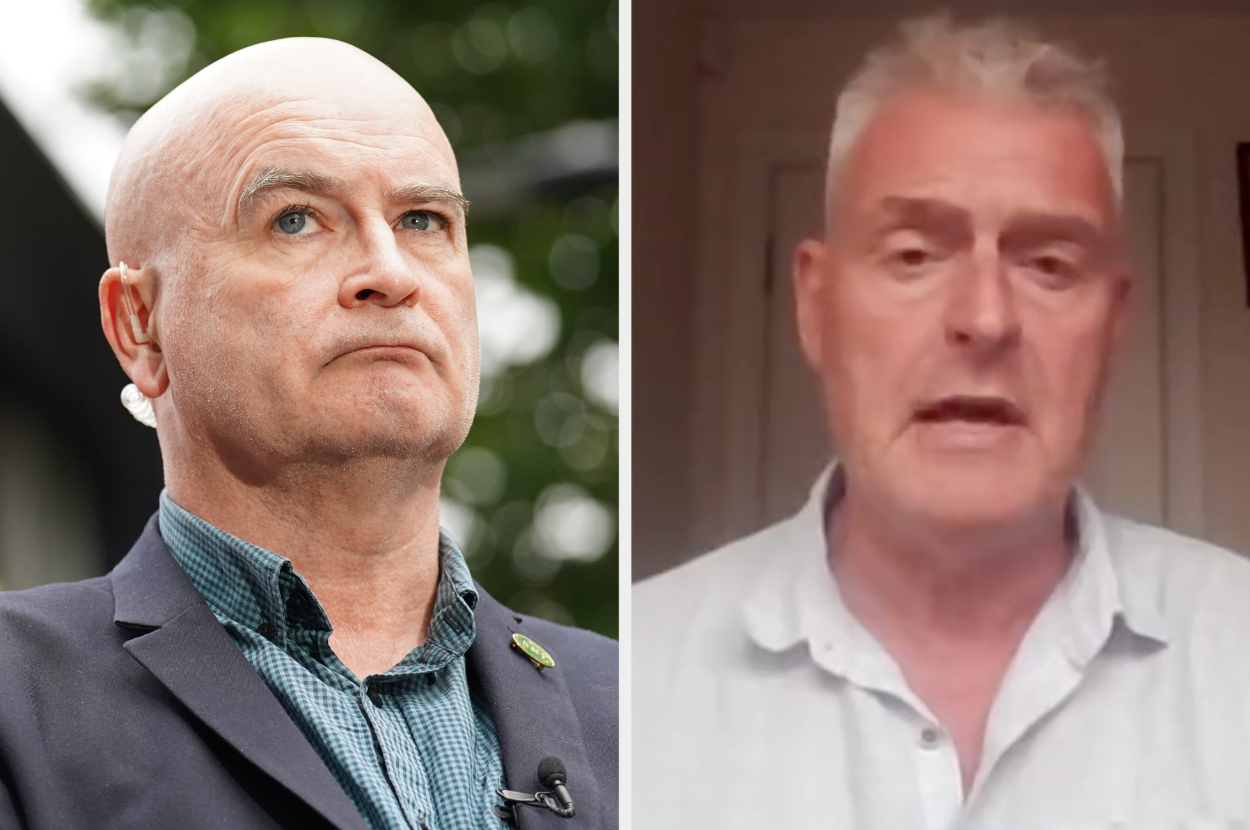
Tory MP Who Said Food Bank Users ‘Cannot Budget’ Takes Aim At Mick Lynch

Tory MP Lee Anderson took a pop at union leader Mick Lynch on Thursday, and claimed the striking rail workers were “holding the country to ransom”.

Anderson, who caused a stir in May by claiming people who use food banks can’t budget or cook, did not hold back when discussing the latest industrial action taking place across the country this week.

The MP hit out at the general secretary of the Railway, Maritime and Transport (RMT), Lynch, who has been calling for rail companies to increase workers’ pay, protect jobs and working conditions in recent months.

Speaking to TalkTV, Anderson said: “The union leaders, the Mick Lynchs of this world, are creating havoc throughout this country.

“These people aren’t interested in working class people at all, I don’t even think they’re interested in the members.

“What happens is you get fifth columnists, these union leaders, holding the country to ransom.

Quite frankly they should be ashamed of themselves.”

He also alleged that these are people earning “nearly as much as the prime minister” with £150,000 a year “holding the country to ransom”.

It’s worth noting that Lynch dismissed claims that he was on a six-figure salary on Thursday morning, telling ITV’s Good Morning Britain that such allegations were “completely untrue”.

But this morning, TalkTV’s host, Mike Graham, responded to Anderson’s claims about Lynch by suggesting that there were “champagne socialists” who supported the idea of strikes, and who blame the government for mishandling the entire industry.

Anderson also questioned the industry altogether, claiming that sometimes there’s only one person on his train – himself – and at the underground barriers, there can be “10 or 11 people” being “not very helpful at the best of times”.

While London Underground staff are not involved with the rail strikes, they will be walking out on Friday in a separate dispute over pay.

Anderson continued: “The great British taxpayer – people on minimum wage, people on living wage, are going to work to subside this industry.”

Graham replied by agreeing that trains were not the primary mode of transport for most people.

He even claimed that drivers now have “to pay more and more money to buy the car, everything you do with the car is more expensive, but for most people in this country, the car is the only way you can get around”.

The Tory MP added: “We are being victimised by these union leaders, these rail union leaders, who quite frankly do not give a toss, Mike, about the rest of the country.”

“They’ve got this big bee in their bonnet, they are the official opposition because the Labour Party are pretty useless at the moment, and they’re saying, ‘look at us, we can hold the country to ransom, we’re not bothered that the government has just bailed the country out with taxpayer money over the last two and a half years.’”

Impersonating the union members, Anderson added: “‘You know what, we don’t care about Britain really do we?’”

Share Button

Rose Ayling-Ellis Leaves EastEnders A Year After Beginning Her Strictly Come Dancing Journey

Strictly Come Dancing champion Rose Ayling-Ellis has announced she is leaving EastEnders after two years with the BBC soap.

Rose began playing Frankie Lewis in 2020, becoming the first deaf actor to play a regular character on the soap.

On Thursday afternoon, the Bafta winner revealed she was stepping down from the role, just over a year after it was first announced she had signed up for last year’s series of Strictly.

Rose with her Strictly professional partner Giovanni Pernice

Ray Burmiston/BBC

She explained: “It’s been incredibly special to be EastEnders’ first regular deaf actor. I have loved my time on the show and Frankie has been such an awesome character to play, however now feels like the right time for me to move on and I am excited and ready for new challenges.

“I will always treasure my time on the show and all the incredible people I have worked with, who have supported my growth as an actor these last two years and given me so many amazing memories.

“I am excited for viewers to see Frankie’s exit storyline; I think it’s a really important one that will hit home for lots of people.”

Frankie will leave Walford this autumn, with Rose’s final scenes in the role having already been filmed.

Rose is probably best known for her participation in the most recent series of Strictly, which she won alongside Giovanni Pernice.

As well as being the first deaf contestant to ever compete on the long-running reality show, Rose and Giovanni later bagged a TV Bafta for the Must-See TV Moment thanks to their stunning Couple’s Choice routine.

Earlier this week, Rose teamed up with Barbie to launch the brand’s first doll who has behind-the-ear hearing aids.

Share Button