New faster charging hydrogen fuel cell developed

Researchers from the University of Technology Sydney (UTS) and Queensland University of Technology (QUT) have developed a new method to improve solid-state hydrogen fuel cell charging times.

Hydrogen is gaining significant attention as an efficient way to store ‘green energy’ from renewables such as wind and solar. Compressed gas is the most common form of hydrogen storage, however it can also be stored in a liquid or solid state.

Dr Saidul Islam, from the University of Technology Sydney, said solid hydrogen storage, and in particular metal hydride, is attracting interest because it is safer, more compact, and lower cost than compressed gas or liquid, and it can reversibly absorb and release hydrogen.

“Metal hydride hydrogen storage technology is ideal for onsite hydrogen production from renewable electrolysis. It can store the hydrogen for extended periods and once needed, it can be converted as gas or a form of thermal or electric energy when converted through a fuel cell,” said Dr Islam.

“Applications include hydrogen compressors, rechargeable batteries, heat pumps and heat storage, isotope separation and hydrogen purification. It can also be used to store hydrogen in space, to be used in satellites and other ‘green’ space technology,” he said.

However, a problem with metal hydride for hydrogen energy storage has been its low thermal conductivity, which leads to slow charging and discharging times.

To address this the researchers developed a new method to improve solid-state hydrogen charging and discharging times. The study: Design optimization of a magnesium-based metal hydride hydrogen energy storage system, was recently published in the journal Scientific Reports.

First author Puchanee Larpruenrudee, a PhD candidate in the UTS School of Mechanical and Mechatronic Engineering, said faster heat removal from the solid fuel cell results in faster charging times.

“Several internal heat exchangers have been designed for use with metal hydride hydrogen storage. These include straight tubes, helical coil or spiral tubes, U-shape tubes, and fins. Using a helical coil significantly improves heat and mass transfer inside the storage.

“This is due to the secondary circulation and having more surface area for heat removal from the metal hydride powder to the cooling fluid. Our study further developed a helical coil to increase heat transfer performance.”

The researchers developed a semi-cylindrical coil as an internal heat exchanger, which significantly improved heat transfer performance. The hydrogen charging time was reduced by 59% when using the new semi-cylindrical coil compared to a traditional helical coil heat exchanger.

They are now working on the numerical simulation of the hydrogen desorption process, and continuing to improve absorption times. The semi-cylindrical coil heat exchanger will be further developed for this purpose.

Finally, the researchers aim to develop a new design for hydrogen energy storage, which will combine other types of heat exchangers. They hope to also work with industry partners to investigate real tank performance based on the new heat exchanger.

Story Source:

Materials provided by University of Technology Sydney. Note: Content may be edited for style and length.

Share Button

Salman Rushdie On A Ventilator And Could Lose An Eye After New York Attack

Salman Rushdie, whose writing led to death threats in the 1980s, was stabbed in the neck and abdomen by a man who rushed the stage as the author was about to give a lecture in western New York.

He is on a ventilator and may lose an eye, according to the New York Times, and sustained nerve damage to his arm and damage to his liver.

The Indian-British author, 75, was attacked on Friday onstage at the Chautauqua Institution.

Police identified the attacker as Hadi Matar, 24, of Fairview, New Jersey. He has been taken into custody.

Witnesses reported Rushdie falling to the floor when the man attacked him, and was then surrounded by a small group of people who held up his legs, seemingly to send more blood to his upper body, as the attacker was restrained.

According to the NYT, Rushdie’s agent Andrew Wylie said he is on a ventilator and unable to speak.

Wylie added the news was “not good” and the author will “likely lose one eye”.

He said the nerves in Rushdie’s arm were severed in the attack and his liver was “stabbed and damaged”.

Rabbi Charles Savenor was among the hundreds of people in the audience. Amid gasps, spectators were ushered outside.

“This guy ran on to platform and started pounding on Mr Rushdie. At first you’re like, ‘What’s going on?’ And then it became abundantly clear in a few seconds that he was being beaten,” Savenor said. He said the attack lasted about 20 seconds.

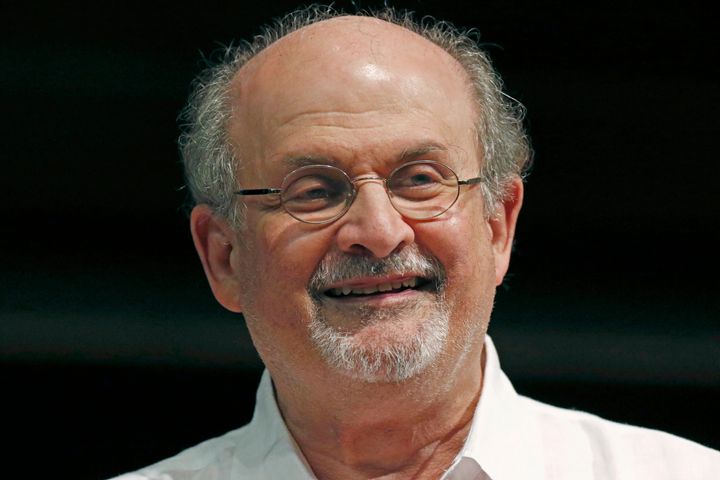
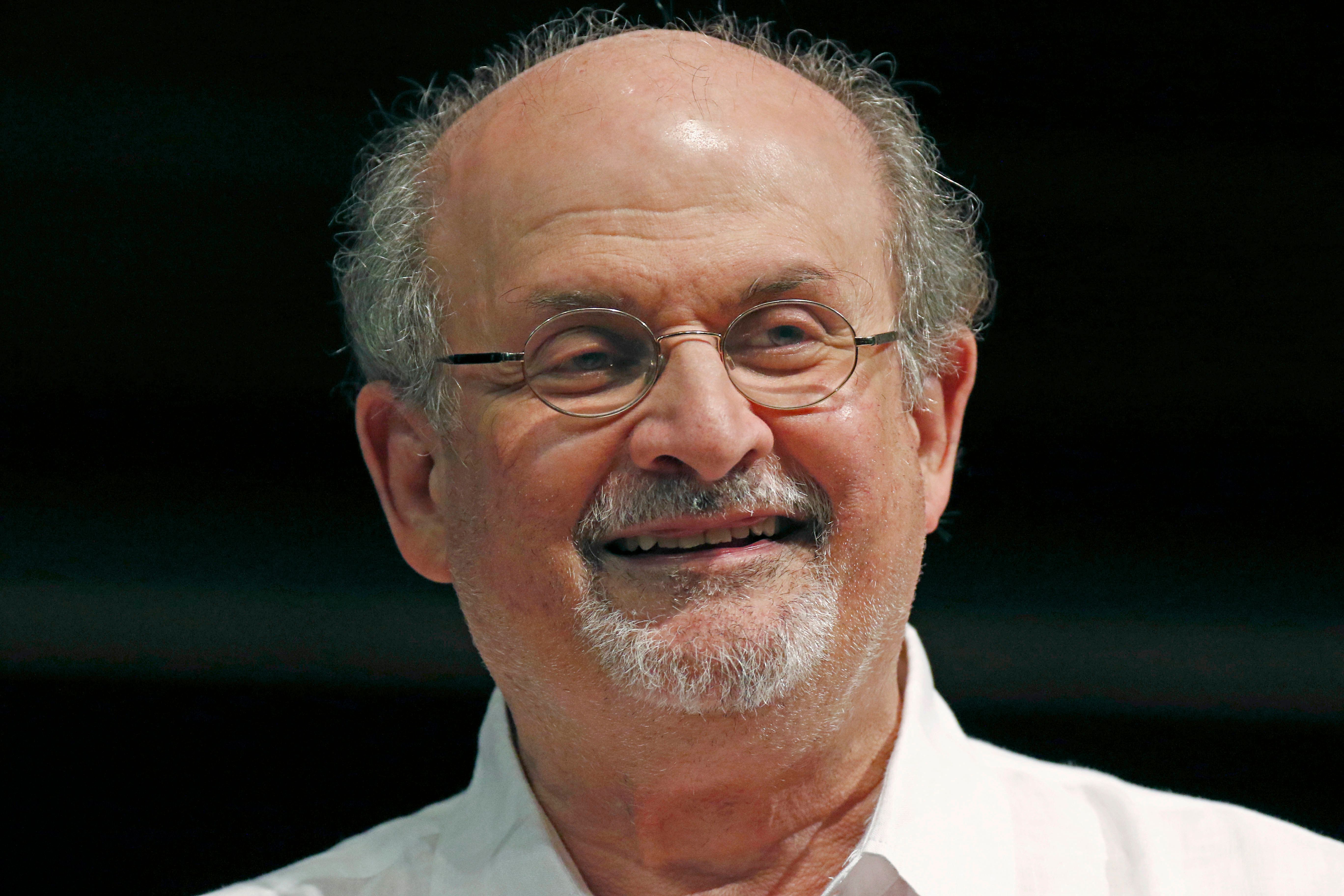
Author Salman Rushdie in 2018.

via Associated Press

Major Eugene Staniszweski of New York State Police said late on Friday: “Earlier today at approximately 10.47am, guest speaker Salman Rushdie, aged 75, and Ralph Henry Reese, age 73, had just arrived on stage at the institution.

“Shortly thereafter, the suspect jumped on to the stage and attacked Mr Rushdie, stabbing him at least once in the neck and at least once in the abdomen.

“Several members of the staff at the institution and audience members rushed the suspect and took him to the ground, and shortly thereafter, a trooper who was at the institution took the suspect into custody with the assistance of a Chautauqua County Sheriff’s deputy.

“Mr Rushdie was provided medical treatment by a doctor who was in the audience until EMS arrived on scene.

“Mr Rushdie was airlifted to a local trauma centre and is still currently undergoing surgery.”

Rushdie’s book The Satanic Verses has been banned in Iran since 1988, as many Muslims consider it to be blasphemous. A year later, Iran’s late leader Ayatollah Ruhollah Khomeini and issued a fatwa, calling for Rushdie’s execution.

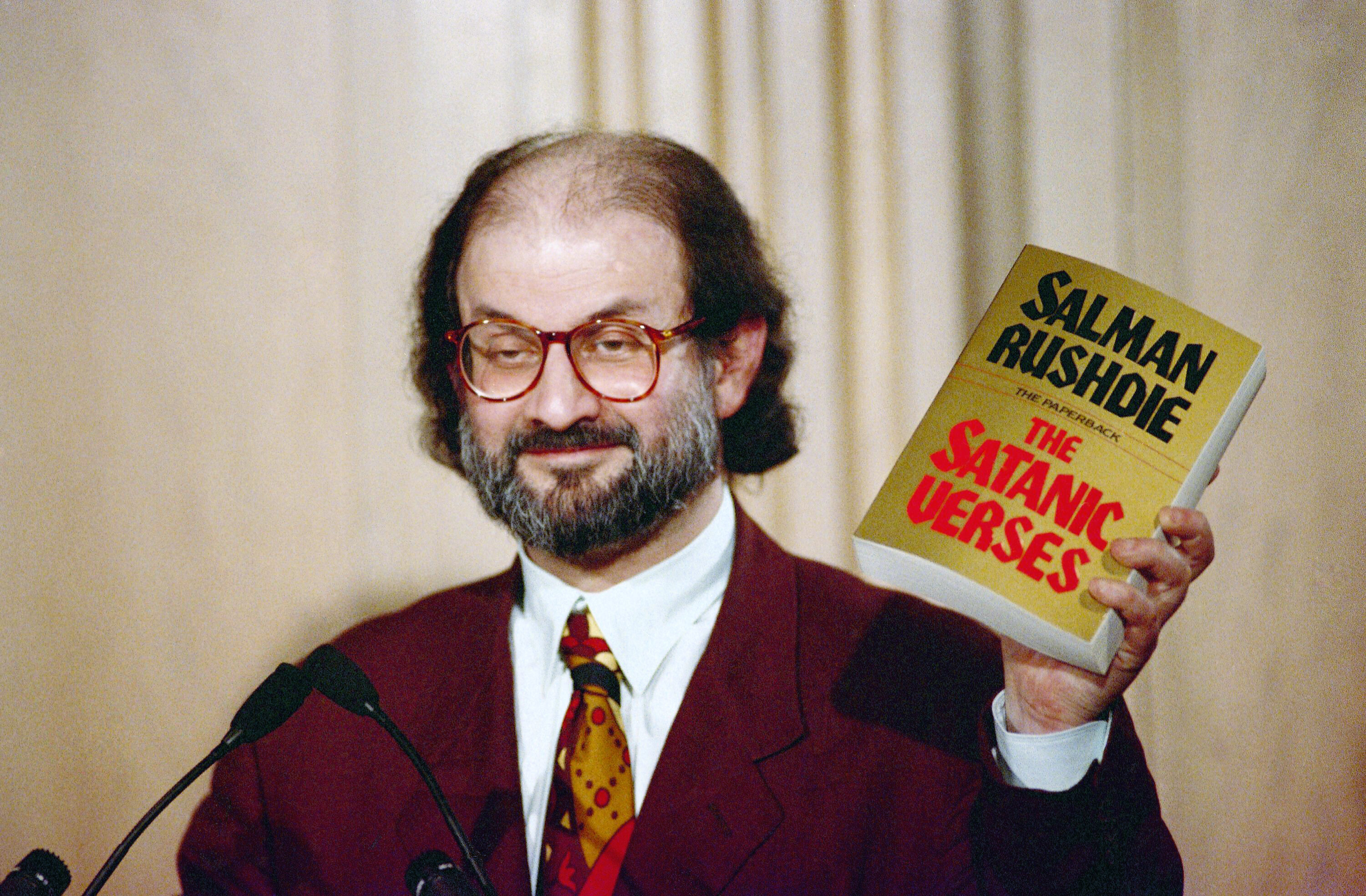
<img class="img-sized__img landscape" loading="lazy" alt="Salman Rushdie holds up a copy of his book The Satanic Verses at Freedom Forum in Arlington, Virginia in March 1992.” width=”720″ height=”472″ src=”https://www.wellnessmaster.com/wp-content/uploads/2022/08/salman-rushdie-on-a-ventilator-and-could-lose-an-eye-after-new-york-attack-4.jpg”>
Salman Rushdie holds up a copy of his book The Satanic Verses at Freedom Forum in Arlington, Virginia in March 1992.

via Associated Press

A bounty of over $3 million has also been offered for anyone who kills Rushdie.

Iran’s government has long since distanced itself from Khomeini’s decree, but anti-Rushdie sentiment has lingered. In 2012, a semi-official Iranian religious foundation raised the bounty for Rushdie from $2.8 million to $3.3 million.

Rushdie dismissed that threat at the time, saying there was “no evidence” of people being interested in the reward.

That year, Rushdie published a memoir, Joseph Anton, about the fatwa. The title came from the pseudonym Rushdie had used while in hiding.

Rushdie rose to prominence with his Booker Prize-winning 1981 novel Midnight’s Children, but his name became known around the world after The Satanic Verses.

The Chautauqua Institution, about 55 miles southwest of Buffalo in a rural corner of New York, is known for its summertime lecture series. Rushdie has spoken there before.

This is a breaking news story and will be updated. Follow HuffPost UK on Twitter, Facebook and Instagram.

Share Button

Salman Rushdie Attacked Onstage At Event In Upstate New York

Salman Rushdie, whose writing led to death threats in the 1980s, has suffered an apparent stab wound to the neck and has been airlifted to hospital after he was attacked on stage as he was about to give a lecture in western New York, police have said.

The Indian-British author, 75, was attacked on Friday onstage at the Chautauqua Institution. Rushdie’s condition is not known.

Witnesses reported Rushdie falling to the floor when the man attacked him, and was then surrounded by a small group of people who held up his legs, seemingly to send more blood to his upper body, as the attacker was restrained.

Rabbi Charles Savenor was among the hundreds of people in the audience. Amid gasps, spectators were ushered outside.

“This guy ran on to platform and started pounding on Mr Rushdie. At first you’re like, ‘What’s going on?’ And then it became abundantly clear in a few seconds that he was being beaten,” Savenor said. He said the attack lasted about 20 seconds.

Author Salman Rushdie in 2018.

via Associated Press

The New York state police department has issued a statement confirming a male suspect ran onto the stage and attacked Rushdie and an interviewer.

The statement said: “State police are investigating an attack on author Salman Rushdie prior to a speaking event at the Chautauqua Institution in Chautauqua, NY.

“On August 12, 2022, at about 11am, a male suspect ran up onto the stage and attacked Rushdie and an interviewer.

“Rushdie suffered an apparent stab wound to the neck, and was transported by helicopter to an area hospital.

“His condition is not yet known.

“The interviewer suffered a minor head injury. A state trooper assigned to the event immediately took the suspect into custody.

“The Chautauqua County Sheriff’s Office assisted at the scene.”

Rushdie’s book The Satanic Verses has been banned in Iran since 1988, as many Muslims consider it to be blasphemous. A year later, Iran’s late leader Ayatollah Ruhollah Khomeini and issued a fatwa, calling for Rushdie’s execution.

A bounty of over $3 million has also been offered for anyone who kills Rushdie.

Iran’s government has long since distanced itself from Khomeini’s decree, but anti-Rushdie sentiment has lingered. In 2012, a semi-official Iranian religious foundation raised the bounty for Rushdie from $2.8 million to $3.3 million.

Rushdie dismissed that threat at the time, saying there was “no evidence” of people being interested in the reward.

That year, Rushdie published a memoir, Joseph Anton, about the fatwa. The title came from the pseudonym Rushdie had used while in hiding.

Rushdie rose to prominence with his Booker Prize-winning 1981 novel Midnight’s Children, but his name became known around the world after The Satanic Verses.

The Chautauqua Institution, about 55 miles southwest of Buffalo in a rural corner of New York, is known for its summertime lecture series. Rushdie has spoken there before.

This is a breaking news story and will be updated. Follow HuffPost UK on Twitter, Facebook and Instagram.

Share Button

Is It Safe To Barbecue At Home In A Heatwave?

With extreme temperatures sweeping the UK, people have been urged not to use barbecues in parks, dunes and woodland, as well as on balconies, due to the massive fire risk.

A lack of rainfall in July and August means grass is bone dry and all it takes is a single spark from a barbecue to light up entire stretches of land – not to mention neighbourhoods.

During the first week of August alone, London Fire Brigade (LFB) mobilised thousands of firefighters to 340 grass, rubbish and open land fires – an eightfold increase on the 42 during the same week last year.

To try and help ease the burden on fire brigades, some supermarkets have now stopped selling disposable barbecues due to the fire risk they pose in the hot weather. Sainsbury’s and Tesco are the latest stores to remove the items from sale, following in the footsteps of Marks and Spencer, Aldi and Waitrose.

LFB’s assistant commissioner Jonathan Smith has warned against barbecuing in open spaces or balconies. But what about barbecuing in your garden at home – is it safe?

It’s a tough question to answer.

There’s no advice explicitly telling you not to barbecue at home in your garden. Nobody wants to be a party pooper when it comes to people enjoying the nice weather, but realistically you do need to weigh up whether it’s worth the potential risk of setting your garden alight – and annoying your neighbours into the bargain, as the lack of wind means smoke tends to stick around.

If you are absolutely desperate to get grilling, you should take extra precautions. Your barbecue should be situated well away from your house and away from dry grass, shrubbery, bushes or trees, advises Andrew Chalk, a home insurance specialist at NFU Mutual.

If your barbecue is in need of a clean, make sure you do it. “Hot ashes or sparks are more likely if the barbecue hasn’t been cleaned since it was last used,” says Chalk, “so people should regularly clean their barbecues of ash and old grease.”

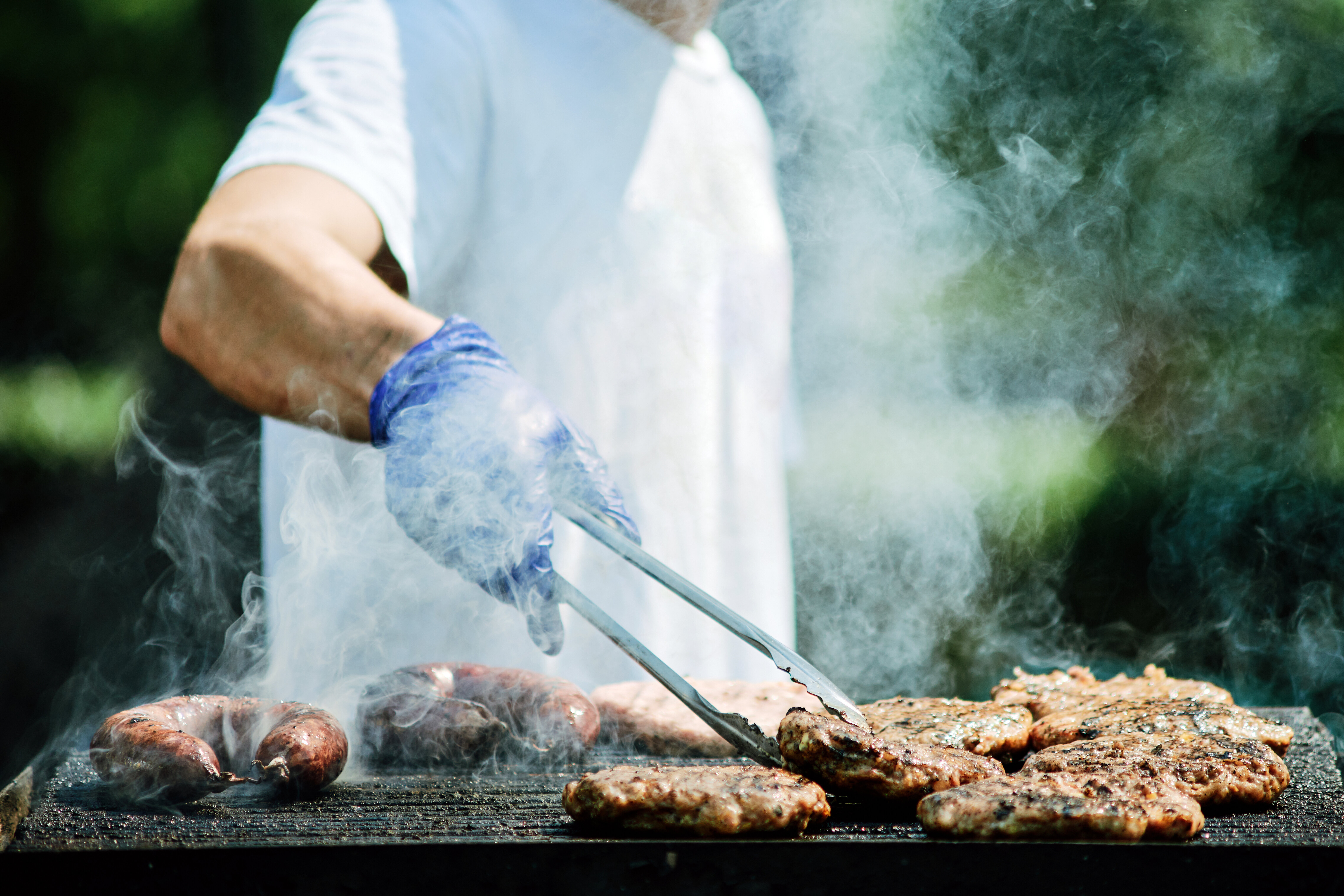
Maryna Terletska via Getty Images

Homes with a thatched roof are at particular risk of fire, so make sure any barbecues are positioned as far away as possible to ensure sparks can’t land on the thatch.

When you are cooking outside, Chalk recommends having a bucket of water on hand in case a spark does ignite anything nearby. Also consider wetting the area around the barbecue to make things a little less flammable.

It goes without saying that barbecues should always be operated outdoors, so don’t light one up indoors thinking you’ll reduce the risk of fire. This is incredibly dangerous due to the carbon monoxide fumes.

LFB also warns against using petrol, paraffin or any flammable liquids on your BBQ. Firelighters are a much safer option.

Once you’ve finished cooking, remember that your BBQ can remain hot for hours afterwards. You don’t want to put your still-smouldering-barbecue in your shed, for example, as you could inadvertently cause a blaze.

Share Button

Thousands more NHS beds to be created in England this winter

Health service chiefs have promised some 7,000 extra beds in England to tackle increased demands.

Share Button

Liz Truss Sparks Backlash Over ‘Woke’ Civil Service Antisemitism Claim

Liz Truss was today facing a backlash after she claimed that “woke” civil service culture “strays into antisemitism”.

The frontrunner in the race to replace Boris Johnson issued a press release vowing to protect Jews from “creeping antisemitism and wokeism”.

However, one part of the announcement, in which she launched an attack on civil servants, sparked fierce criticism.

Team Truss wrote: “She will change woke civil service culture that strays into antisemitism.”

“The civil service is the best workplace to be Jewish to be honest, everyone is so friendly, so it’s all quite strange.”

– A Jewish civil servant speaks to us anonymously

Reacting to the comments, a civil servant working in a major government department told HuffPost UK they had never once heard about an antisemitism problem.

The civil servant, who we are not naming, said: “Honestly, we’re used to ridiculous comments from ministers but to start throwing around that the civil service is antisemitic is such a baffling and odd attack and so offensive to civil servants.

“It’s also patently nonsensical to say ‘they’re so woke they’re antisemitic’. What on earth does that even mean? Every single day I consider leaving the civil service because of these people.”

Another civil servant, who is Jewish, told us there might have been some issues over diversity courses.

But they added: “I think she’s just vomited out a load of buzzwords and ended up with something objectionable.

“The civil service is the best workplace to be Jewish to be honest, everyone is so friendly, so it’s all quite strange.”

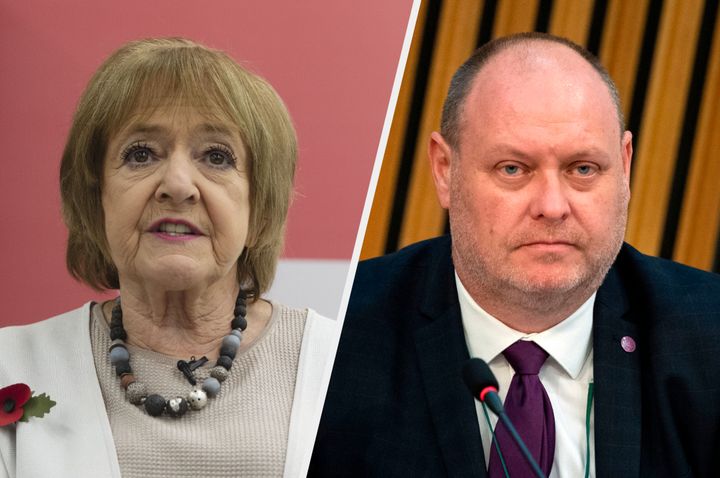
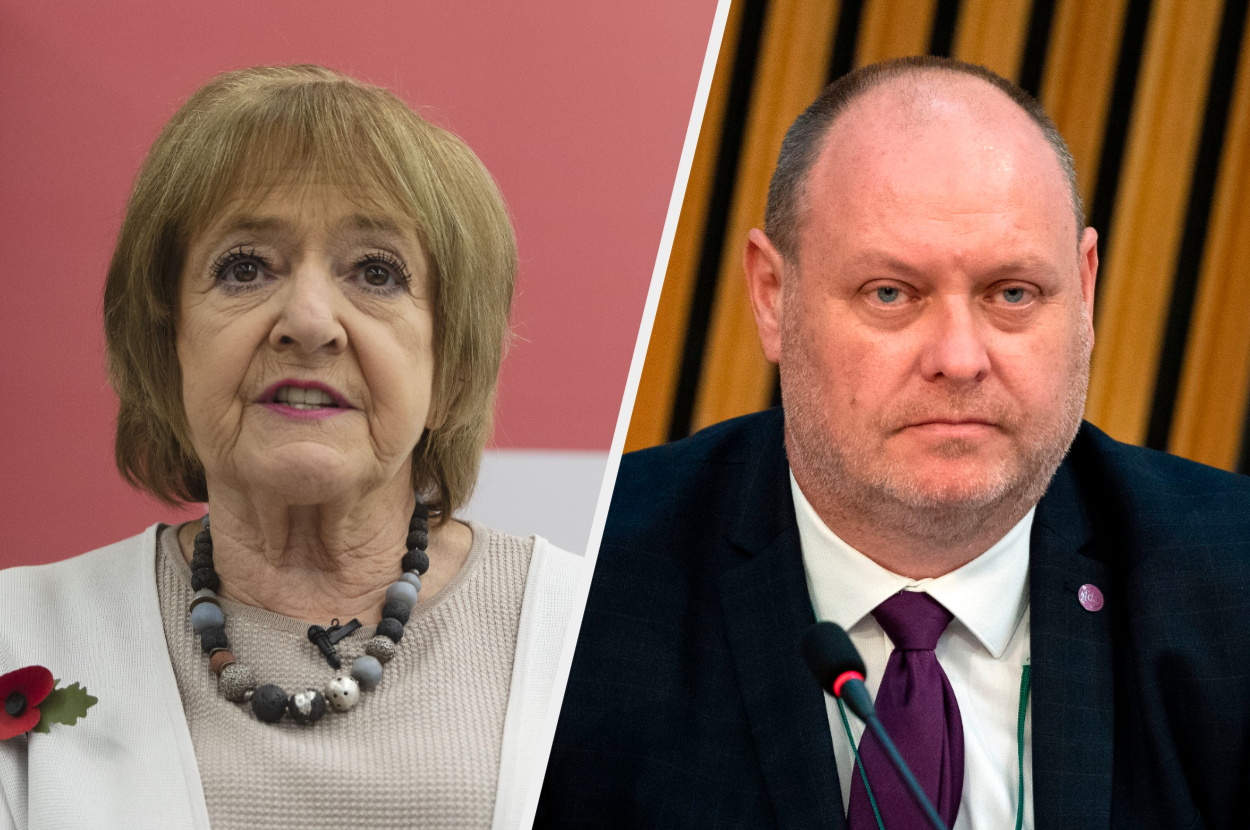
Dame Margaret Hodge and Dave Penman criticised Liz Truss's comments.
Dame Margaret Hodge and Dave Penman criticised Liz Truss’s comments.

A civil servant, who recently left for the private sector, said the “constant attacks” and lack of faith after partygate drove them to leave.

“I know of dozens of good civil servants who are leaving because of this negativity,” they added.

“How ministers, MPs, and leadership candidates can keep making unsubstantiated comments and threats, and still expect to have anyone who can actually deliver left, is beyond me.”

Dave Penman, general secretary of the FDA union for senior civil servants, said Truss’s accusations were a “little ironic” given the Tories had been in power for 12 years.

“Truss’s accusation of antisemitism goes further than the usual dog-whistle politics that has been on display during this leadership campaign when it comes to the civil service,” he added.

“She provides no evidence for her accusation that many civil servants will find both insulting and abhorrent.”

Veteran Labour MP Dame Margaret Hodge described the comments as “below the belt”.

The former cabinet minister, who is Jewish and has been outspoken about antisemitism in her own party, added: “Using antisemitism to peddle the right’s ‘anti-woke agenda’ is below the belt.

“The oldest form of racism is not a tool to use in the divisive culture war nonsense.”

Times journalist Hugo Rifkind commented: “This is baffling, but also grim. Equating Jews with rightwing reactionary politics is what leftwing antisemites do. Am pretty colossally unkeen on Tories doing it, too.”

Sam Freedman, a senior fellow at the Institute for Government, said: “I worked in the civil service for three years and have worked with numerous officials on various things since then and have never once experienced any antisemitism. Bizarre comment.”

Journalist Etan Smallman tweeted: “Antisemitism is far too serious for anyone to be using it in the same sentence as ‘civil service wokeism’. Let alone our prospective prime minister.”

Dr Ruvi Ziegler, associate professor in international refugee law at the University of Reading, commented: “WTAF is ‘woke civil service culture’? Who comes up with this nonsense, and how on earth is this related to British Jews?”

Another Twitter user commented: “Attacking the civil service (who cannot respond in the media) is weak, pathetic and unbefitting someone seeking the highest office in the land.”

HuffPost UK contacted Truss’s team asking for evidence of an antisemitism problem in the civil service.

Her team referred us to an interview Truss gave to the Jewish Chronicle in which she pledged action to change civil service “woke” culture, including within the foreign office.

When discussing how she was committed to eradicating antisemitism in various bodies, she revealed she had to “overrule” foreign office officials who did not share her views.

The article did not outline what the issue was or what she specifically disagreed with civil servants on.

The press release was issued after Truss spoke at a synagogue in Manchester.

In a written statement, hitting out at “civil service wokeism”, Truss said: “Every organisation has its culture, but it’s not fixed, it can be changed.

“That’s what ministerial leadership is about: it’s about making sure that the policies we represent, the values we stand for, are reflected in what we do. I’ve been very clear with our officials about the positions we take on Israel, and that will continue if I become prime minister.”

Truss also announced she would review whether schools are doing enough to educate about antisemitism, rid university campuses of antisemitism and work to secure a free trade agreement between the UK and Israel.

A Truss campaign source also appeared to link Labour’s antisemitism problem when Jeremy Corbyn was leader with Keir Starmer.

The source said: “The Labour Party under Sir Keir Starmer and his colleague Jeremy Corbyn has been a talking shop for antisemitism and antizionism.

“This has increased anxieties within the Jewish community.”

The Labour Party has been approached for comment.

Share Button

Covid: Evusheld antibody protection ruled out for most vulnerable

The antibody injection had promised a protection boost to those with conditions such as blood cancer.

Share Button

Melanoma: ‘Doctors said my cancerous mole was fungus’

By the time BBC journalist Sarah Lee was able to get doctors to listen, her cancer had spread.

Share Button

Monkeypox: Lack of vaccines pauses rollout in Brighton

Stocks of the vaccine run low in the UK, with a new batch not due to arrive until next month.

Share Button

Creating an ‘adult-like’ mature human cardiac tissue

Researchers in the Biomedical Engineering Department at UConn have developed a new cardiac cell-derived platform that closely mimics the human heart, unlocking potential for more thorough preclinical drug development and testing, and model for cardiac diseases.

The research, published in Cell Reports by Assistant Professor Kshitiz in collaboration with Dr. Junaid Afzal in the cardiology department at the University of California San Francisco, presents a method that accelerates maturation of human cardiac cells towards a state suitable enough to be a surrogate for preclinical drug testing.

“There is a very strong need to create human cardiac constructs for all sorts of applications. Small animal models just do not recapitulate human heart biology, and human samples are scarce,” says Kshitiz. “This matters because all drugs need to be tested for their toxicity to heart. It is widely believed that a large number of them unnecessarily fail clinical trials because we do not have human samples to test them with.”

Kshitiz and Afzal first identified the need to create a matured human cardiac tissue during their time together at Johns Hopkins Medicine.

“When methods were developed to differentiate human pluripotent stem cells to cardiac cells, it created a big hope that finally we will have human heart constructs to work with,” said Afzal. “While it is straightforward to get human cardiac cells, they are similar to fetal cells. What we need is adult cells.”

Cardiovascular safety is the number one cause for failure of preclinical drug development, and there is a long standing need to create human cardiac tissue models to test drugs for cardiotoxicity. Currently, the small animal heart models display vastly different biochemical, physiological, and genetic features from humans — making it difficult to replicate the human heart in preclinical studies. In particular, it is very difficult to perform metabolic assessment of current cardiac constructs. Heart beats continuously and is a highly metabolically active organ.

“Metabolic and redox maturation is critical for heart cells, and we are able to achieve it and possibly create a gold standard — fundamentally shifting our expectations of creating a metabolically mature cardiac tissue,” the researchers said.

In the study, the researchers utilized the cardiac biology in an adult human heart to rapidly mature differentiated cardiac cells into a more adult-like state. Within 30 days, the researchers achieved cardiac cells that displayed structural, mechanical, metabolic, and electrophysiological characteristics close to adult heart muscle.

The researchers are optimistic that this application will not only be used for preclinical drug testing, but can also be used in future precision disease modeling to study disease mechanisms and test for regenerative therapies. The researchers hope that the many drugs that fail unnecessarily due to non-human methods will be salvaged for cures for cancer, immune and neurological diseases.

UConn Health researchers Yamin Liu, Wenquang Du, Yasir Suhail, Pengyu Zong, Jianlin Feng, Visar Ajeti, Maya Yankova, Alix Deymier, and Lixia Yue also contributed to this study.

Story Source:

Materials provided by University of Connecticut. Original written by Courtney Chandler. Note: Content may be edited for style and length.

Share Button