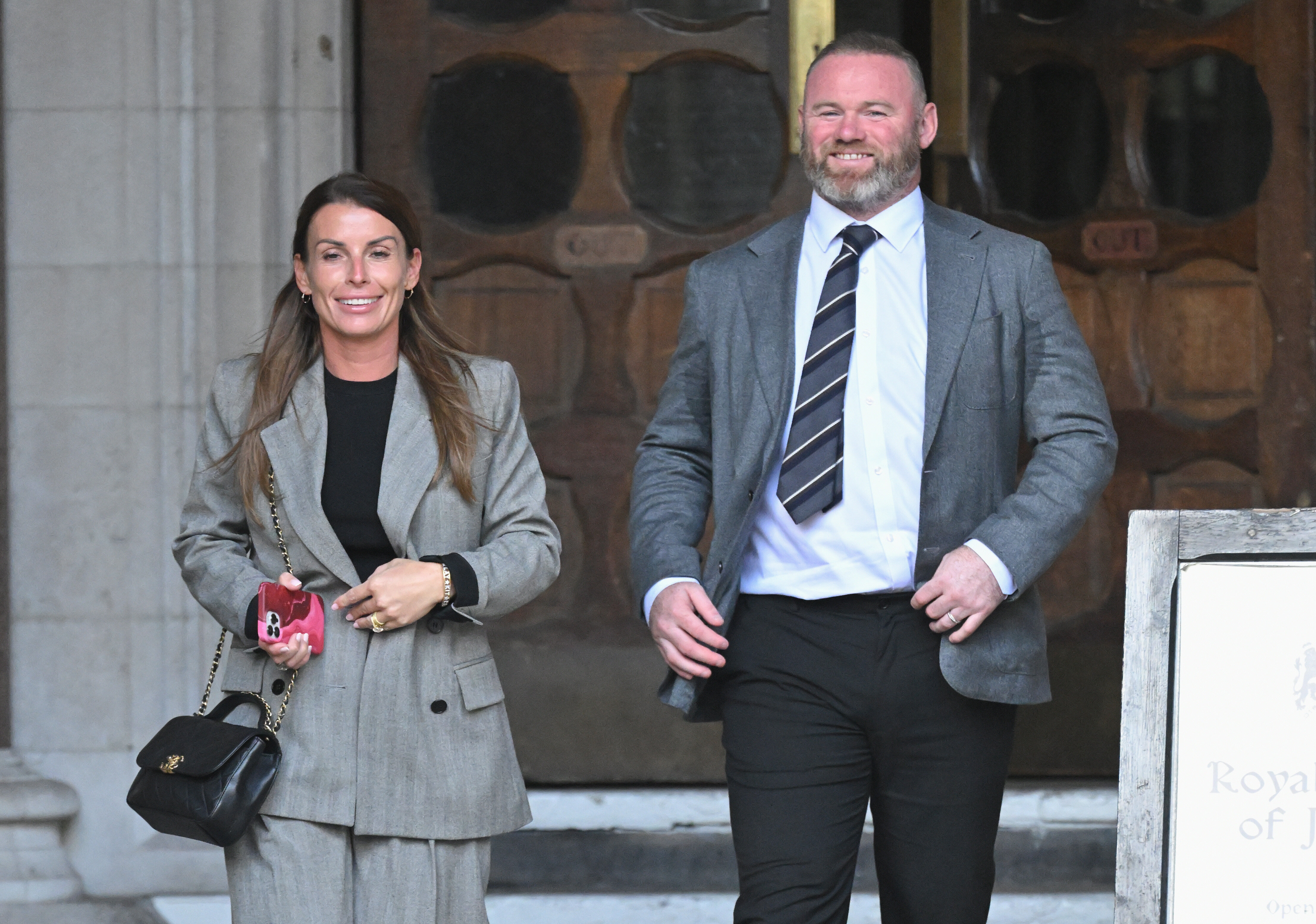
Rebekah Vardy Loses Coleen Rooney ‘WAGatha Christie’ Libel Case As Judge Finally Makes Ruling

Rebekah Vardy has lost her high-profile libel battle against Coleen Rooney.

The two footballers’ wives have been embroiled in a very public feud since October 2019, when Coleen published a now-infamous post on Twitter claiming that Rebekah’s Instagram account was the source of several “false stories” about her being leaked to The Sun.

Rebekah has always maintained her innocence in the matter, and subsequently sued Coleen for libel in what became widely referred to as the “WAGatha Christie” case.

The trial began in May, and lasted for a week, with judge Mrs Justice Steyn sharing her ruling on Friday afternoon.

She ruled that it was “likely” that Rebekah’s then-agent, Caroline Watt, “undertook the direct act” of passing the information to The Sun

However, she added: “Nonetheless, the evidence … clearly shows, in my view, that Mrs Vardy knew of and condoned this behaviour, actively engaging in it by directing Ms Watt to the private Instagram account, sending her screenshots of Mrs Rooney’s posts, drawing attention to items of potential interest to the press, and answering additional queries raised by the press via Ms Watt.”

Rebekah Vardy arriving in court in May

Anadolu Agency via Getty Images

She concluded: “In my judgment, the conclusions that I have reached as to the extent to which the claimant engaged in disclosing to The Sun information to which she only had access as a permitted follower of an Instagram account which she knew, and Mrs Rooney repeatedly asserted, was private, suffice to show the single meaning is substantially true.”

Mrs Justice Steyn has found that Rebekah Vardy’s evidence in the trial was “manifestly inconsistent” with other evidence on “many occasions”.

She said: “Mrs Vardy was generally unwilling to make factual concessions, however implausible her evidence.

“This inevitably affects my overall view of her credibility, although I have borne in mind that untruthful evidence may be given to mask guilt or to fortify innocence.”

The judge also spoke about the “vile abuse” Rebekah had received from members of the public in the wake of Coleen’s initial post, insisting: “Nothing of which Mrs Vardy has been accused, nor any of the findings in this judgment, provide any justification or excuse for subjecting her or her family, or any other person involved in this case, to such vitriol.”

During the seven-day trial, Coleen’s barrister David Sherborne argued that Rebekah had a “habitual and established practice” of leaking information about those she knew – through her friend and former agent Caroline Watt – to The Sun newspaper.

Of Coleen’s viral “reveal” post, her barrister added: “It is what she believed at the time… and it is what she believes even more so now that we have got to the end of the case.”
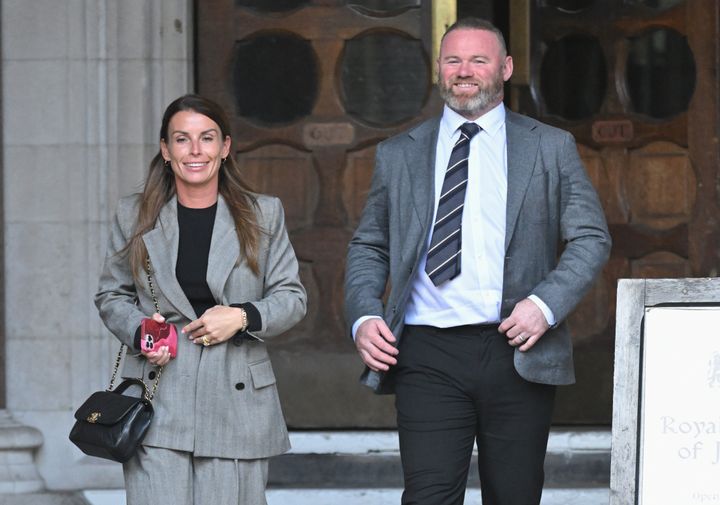
Coleen leaving court with her husband Wayne

Karwai Tang via Getty Images

However, Rebekah’s legal representative Hugh Tomlinson QC insisted that Coleen had “failed to produce any evidence” that his client had “regularly and frequently abused her status as a trusted follower” of her private Instagram account by passing on information from it to The Sun.

He added: “Mrs Vardy’s case is and always has been that she did not leak the information nor did she authorise anyone else to leak.”

“She does not know to this day what happened,” he said. “She does not know where this information came from.”

The barrister also claimed that Rebekah had suffered “very serious harm to her reputation” as a result of Coleen’s initial post.


Share Button

Online drugs: Easy access fed mum’s addiction to benzos

Experts are concerned about a growth in drugs sold easily online to patients, bypassing doctors.

Share Button

Couple stuck in Turkey after baby born prematurely

Stephen and Louise Crawshaw-Bowen are worried about bills after insurers said they were not covered.

Share Button

Heart gene therapy to remove young sudden death risk

Experts hope to permanently correct or silence the inherited genetic material that is involved.

Share Button

Researchers take first-ever cryo-EM images of nitrogenase in action

Previously, it has been impossible to capture the high-resolution images of nitrogenase, the only enzyme capable of reducing nitrogen into ammonia, during catalytic action. Now, for the first time, researchers at the University of California San Diego report near-atomic-resolution snapshots of nitrogenase during catalysis using cryogenic electron microscopy (cryoEM). The results were published in the journal Science.

This work was accomplished through a close partnership between the groups of Professor Akif Tezcan and Assistant Professor Mark Herzik, both in UC San Diego’s Department of Chemistry and Biochemistry. While Tezcan has long studied nitrogenase, Herzik provided the cryoEM expertise needed to carry out the research.

“This is a very important advance in terms of biological nitrogen fixation as well as structural biology, in general,” stated Tezcan. “To be able to obtain atomic-level-resolution pictures of an enzyme as dynamic and complex as nitrogenase in action is extremely exciting. It opens the doors to fully understanding the mechanism of this enigmatic enzyme, which has preoccupied researchers for decades.”

Understanding the significance of these cryoEM images requires understanding the tremendous global importance of nitrogen fixation. All organisms require “fixed” sources of nitrogen for the biosynthesis of life’s building blocks such as proteins and DNA. However, most living organisms do not possess the nitrogenase enzyme and cannot metabolize atmospheric nitrogen into a bioprocessable form.

Nitrogenase was the essentially the only source of fixed nitrogen in the biosphere until the advent of the Haber-Bosch process — the industrial procedure for converting atmospheric nitrogen to ammonia — more than a hundred years ago. Industrially produced ammonia is largely used for fertilizers, and its advent revolutionized agricultural practices in the first half of the 20th century. The Haber-Bosch process has often been cited as the driving factor behind the world’s population explosion over the past century, having “turned air into bread.”

However, the Haber-Bosch process is very energy-intensive, requiring temperatures exceeding 400°C and high pressures of hydrogen gas. An estimated 1-2% of all global energy production is consumed by the Haber-Bosch process. The process also raises environmental concerns including leaching of nitrates into groundwater and higher emissions of the greenhouse gas nitrous oxide.

A key question that drives biological nitrogen-fixation research is the contrast between nitrogenase and the Haber-Bosch process. How does the enzyme catalyze nitrogen reduction at ambient temperatures and pressure whereas the industrial process requires such extreme conditions?

“If we can understand the mechanism of nitrogenase, we may not only figure out why nature evolved it to be such a complex enzyme, but we might also uncover design principles for ammonia production in a more cost-effective and environmentally friendly fashion,” stated Tezcan.

Although much is known about the structure of nitrogenase, until now, no one has been able to acquire atomic-resolution images of the enzyme while “turning over” or in the process of catalyzing atmospheric nitrogen into ammonia, largely due to technological limitations.

Although scientists can obtain atomic-resolution images of proteins using X-ray crystallography, this method requires the proteins to be fixed in place within a crystal — stationary in a sense — which means that it cannot capture nitrogenase in action. Nitrogenase catalysis requires different parts of the enzyme to associate with each other and then come apart several times to make a single ammonia molecule from nitrogen. The process is anything but stationary.

CryoEM not only allows researchers to capture the structures of proteins without requiring them to be fixed in crystals but, thanks to recent advances in hardware and data processing, do so with atomic resolution. Such high resolution is needed to visualize the small changes associated with enzymatic catalysis.

These advances led Tezcan and graduate student Hannah Rutledge to consider using cryoEM to study nitrogenase in catalytic action. And for this, they sought the help of resident cryoEM expert, Mark Herzik, and his group members Brian Cook and Hoang Nguyen.

“This was both an exciting and technologically challenging project to pursue, during the pandemic no less. Although cryoEM is a very capable technique, few studies have reported on enzymes as they undergo catalysis. The critical insights and technological developments in this study not only pave the way for future explorations of the nitrogenase mechanism but enzymes in general,” stated Herzik.

Herzik and Rutledge worked together closely to prepare hundreds of cryoEM samples. Because nitrogenase is oxygen-sensitive, the samples were prepared in an anaerobic glove box, then quickly transferred and frozen within seconds to prevent any degradation. In the end the team collected over 15,000 videos capturing over 20 million individual molecules at varying stages of catalysis.

It took the teams almost a year to sort through several terabytes of data: they discarded low-quality images, then identified and classified all the particles. Eventually they were able to get the first atom-resolution images of nitrogenase in the middle of turnover.

The cryoEM structures revealed several unexpected features of nitrogenase which were previously not observed in X-ray structures. Importantly, the new observations provide new mechanistic hypothesis for nitrogenase catalysis. Tezcan and Herzik hope to collaborate for many years to come to test these hypotheses and understand the catalytic mechanism of nitrogenase in detail.

“This is only the beginning,” stated Tezcan. “We have a picture of the whole enzyme now, not just one specific part, during catalytic action. This will really open the floodgates to further research in understanding how nitrogenase works and, potentially, down the road, developing more efficient processes for producing fixed nitrogen.”

Funding provided by National Institutes of Health grants R01-GM099813, R35-GM138206 and T32-GM008326; NASA grant 80NSSC18M0093; and the Searle Scholars Program. CryoEM experiments were conducted at UC San Diego’s CryoEM facilities as well as the Stanford-SLAC Cryo-EM Center.

Share Button

How molecular motor proteins are involved in malaria transmission

Scientists at the University of Nottingham have made a major breakthrough in understanding how malaria parasites divide and transmit the disease, which could be a major step forwards in helping to prevent one of the biggest killer infections in the world.

Malaria is still the deadliest parasitic disease worldwide, with approximately 241 million cases and over half a million deaths annually. It is caused by a single-celled parasite called Plasmodium, which is transmitted between people by the female Anopheles mosquito when they bite to take blood.

In this new study, published in PLOS Biology, scientists have uncovered the crucial roles of a group of motor proteins named kinesins during the parasite life cycle.

The research, led by Rita Tewari, Professor of Parasite Cell Biology in the University’s School of Life Sciences, has shown the significance of kinesins in basic cellular processes needed for malaria parasite development, multiplication and invasion, most importantly within the mosquitoes that transmit the parasite.

Kinesins are molecular motor proteins that use energy from the hydrolysis of adenosine triphosphate (ATP — a universal store of energy in all cells), and function in various cellular processes. They are involved in transport, cell division, cell polarity and cell motility.

This latest study showed that of the nine kinesins present in the parasite genome, eight are required for the various functions of cell proliferation to cell movement in the mosquito host which was very surprising.

Researchers at the University of Nottingham have studied the location and function of all kinesins in live parasite cells at various stages of development, both in the mosquitoes which transmit the disease, and in the host where it causes disease. These proteins are important potential drug targets, hence the importance of this study in the search for new intervention targets.

Professor Tewari said: “This is an important genome-wide study and an essential resource for studying the various morphologically distinct parasite cells involved in parasite transmission. It shows how these important motors proteins are involved in forming molecular tracks for movement, multiplication, and transmission.”

Dr Zeeshan, who is the first author of the paper, said: “This is a comprehensive study on parasite molecular motors. It was very challenging to capture the dynamics of these proteins in live parasite cells within mosquitoes. Most importantly, we could study the formation of the male gamete (sperm), which involves a rapid multiplication process that completes within 10-12 min after the female mosquito has ingested blood from an infected host. Multiple kinesins are involved in efficient production of male gametes and deletion of kinesin genes halts parasite transmission, a discovery that can be explored further for drug discovery.

“In addition, we found one motor protein, kinesin-13, which is essential for parasite multiplication in all stages of the life cycle.”

The study was carried out in collaboration with several scientists; Tony Holder at the Francis Crick Institute, London; Prof Carolyn Moores at Birbeck College; Profs Sue Vaughan and David Ferguson at Oxford Brookes; Prof Mathieu Brochet and Ravish Raspa at the University of Geneva; and Prof Karine Le Roch and Steven Abel at the University of California. This study demonstrates the power of multidisciplinary science and how networking and collaboration lead greater global understanding in science. The work was funded by BBSRC, MRC, CRUK, Wellcome Trust, NIH and NIAID.

Story Source:

Materials provided by University of Nottingham. Note: Content may be edited for style and length.

Share Button

Climate change could be making it harder for seabirds to catch fish

University College Cork (UCC) researchers have found that that cloudier waters, caused in part by climate change, is making it harder for seabirds to catch fish.

On Little Saltee, a small island off the coast of Ireland, the researchers attached tiny trackers to the feathers of Manx shearwaters. The aim of the study, published in Proceedings of the Royal Society B, was to understand how underwater visibility affects seabirds’ ability to forage for fish and other prey. It is the first study to examine the impact of ocean clarity on seabirds’ diving abilities.

Climate change is leading to the oceans becoming cloudier

Jamie Darby, a marine ecologist in the School of Biological Environmental and Earth Sciences and the MaREI centre at UCC, and lead author of the study, stated “The chemical and physical properties of the planet’s oceans are changing at an unnatural rate, bringing about challenges for marine life. One consequence of climate change is that large areas of our oceans are becoming cloudier.”

Darby and the research team investigated the diving patterns of the black and white Manx shearwaters in relation to local environmental conditions like cloud cover and water clarity. Over 5000 different dives were recorded and using publicly available databases, and a range of relevant information about weather patterns and ocean conditions were amassed.

Struggling to find food

The study found that the birds dove deeper when sunlight could penetrate further underwater, suggesting that visibility is key to their ability to dive for food. As the planet warms and the ocean becomes cloudier this finding is important because it means that seabirds will have to overcome this challenge.

“Our findings support the idea that the birds needed sufficient sunlight to be able to forage at depth. While this study examined one particular seabird. The results can be extended to other animals. Many visually-dependent predators could find themselves struggling to find food as human activities continue to make the oceans murkier” stated Jamie Darby.

Story Source:

Materials provided by University College Cork. Note: Content may be edited for style and length.

Share Button

Stranger Things actor Jamie Campbell Bower praised for addiction post

An addiction charity says celebrities talking about their problems can encourage others to seek help.

Share Button

Scottish Union Leader Quits In Protest At Sacking Of Sam Tarry

A Scottish union leader has quit the Labour party in protest at the sacking of shadow minister Sam Tarry.

Kevin Lindsay, an organiser for the Aslef train drivers’ union in Scotland, said Tarry’s sacking was “a step too far” and a sign the party is “moving to the right and is becoming unrecognisable”.

Tarry, a shadow minister in the transport team, was sacked on Wednesday evening for a joining striking rail workers on the picket line.

The Labour Party said it had no choice but to sack Tarry because he had also done a round of broadcast interviews without permission of party HQ and had also “made up policy on the hoof”.

In response, Tarry told LBC Radio his sacking was a “catastrophic mistake” and warned that other colleagues could quit in protest.

“I think it’s wrong to state that any Labour politician — whether it be a councillor, whether it be an MP, whether it be a shadow minister — shouldn’t be showing solidarity,” he said.

“If it isn’t tackled properly, there’s going to be a real danger that it won’t just be me that’s sacked, I think you’ll see dozens and dozens of shadow ministers sacked across the whole country.” Speaking to Times Radio, he called Starmer’s decision to ban his team from joining the picket line a “catastrophic mistake.”

Lindsay is one of a number of union bosses to express anger at Tarry’s sacking.

Sharon Graham, the general secretary of Unite, described the sacking as “another insult to the trade union movement” while Mick Lynch, the head of the RMT union, accused Starmer of “playing up to the agenda of Liz Truss and the right wing press”.

In a letter to the party confirming his resignation, Lindsay wrote: “The Labour Party was and is meant to be the political wing of the trade union movement but now it’s more interested in trying woo Tory voters in the shires of England than representing working people.

“As a democrat, I respect that Keir Starmer has been elected the leader but I truly believe his performance and policies are making it impossible for the Labour Party to return to power and that he should be removed from his position immediately.

“There needs to be a change in leadership and political direction but I sadly can’t see this happening and we will end up with PM Truss for several years.

“Therefore I have made the decision not only to resign from the Labour Party but now also support the proposal for Aslef to disaffiliate from the party.”

Share Button

NHS to close Tavistock child gender identity clinic

It follows criticism of England’s only children’s gender identity clinic in an independent review.

Share Button