It comes after a draft bill was approved in Spanish parliament to allow three days of leave a month.


It comes after a draft bill was approved in Spanish parliament to allow three days of leave a month.

Technology has allowed us to immerse ourselves in a world of sights and sounds from the comfort of our home, but there’s something missing: touch.
Tactile sensation is an incredibly important part of how humans perceive their reality. Haptics or devices that can produce extremely specific vibrations that can mimic the sensation of touch are a way to bring that third sense to life. However, as far as haptics have come, humans are incredibly particular about whether or not something feels “right,” and virtual textures don’t always hit the mark.
Now, researchers at the USC Viterbi School of Engineering have developed a new method for computers to achieve that true texture — with the help of human beings.
Called a preference-driven model, the framework uses our ability to distinguish between the details of certain textures as a tool in order to give these virtual counterparts a tune-up.
The research was published in IEEE Transactions on Haptics by three USC Viterbi Ph.D. students in computer science, Shihan Lu, Mianlun Zheng and Matthew Fontaine, as well as Stefanos Nikolaidis, USC Viterbi assistant professor in computer science and Heather Culbertson, USC Viterbi WiSE Gabilan Assistant Professor in Computer Science.
“We ask users to compare their feeling between the real texture and the virtual texture,” Lu, the first author, explained. “The model then iteratively updates a virtual texture so that the virtual texture can match the real one in the end.”
According to Fontaine, the idea first emerged when they shared a Haptic Interfaces and Virtual Environments class back in Fall of 2019 taught by Culbertson. They drew inspiration from the art application Picbreeder, which can generate images based on a user’s preference over and over until it reaches the desired result.
“We thought, what if we could do that for textures?” Fontaine recalled.
Using this preference-driven model, the user is first given a real texture, and the model randomly generates three virtual textures using dozens of variables, from which the user can then pick the one that feels the most similar to the real thing. Over time, the search adjusts its distribution of these variables as it gets closer and closer to what the user prefers. According to Fontaine, this method has an advantage over directly recording and “playing back” textures, as there’s always a gap between what the computer reads and what we feel.
“You’re measuring parameters of exactly how they feel it, rather than just mimicking what we can record,” Fontaine said. There’s going to be some error in how you recorded that texture, to how you play it back.”
The only thing the user has to do is choose what texture matches best and adjust the amount of friction using a simple slider. Friction is essential to how we perceive textures, and it can vary between the perceptions of person to person. It’s “very easy,” Lu said.
Their work comes just in time for the emerging market for specific, accurate virtual textures. Everything from video games to fashion design is integrating haptic technology, and the existing databases of virtual textures can be improved through this user preference method.
“There is a growing popularity of the haptic device in video games and fashion design and surgery simulation,” Lu said. “Even at home, we’ve started to see users with those (haptic) devices that are becoming as popular as the laptop. For example, with first-person video games, it will make them feel like they’re really interacting with their environment.”
Lu previously did other work on immersive technology, but with sound — specifically, making the virtual texture even more immersive by introducing matching sounds when the tool interacts with it.
“When we are interacting with the environment through a tool, tactile feedback is only one modality, one kind of sensory feedback,” Lu said. “Audio is another kind of sensory feedback, and both are very important.”
The texture-search model also allows for someone to take a virtual texture off of a database, like the University of Pennsylvania’s Haptic Texture Toolkit, and refine them until they get the result they want.
“You can use the previous virtual textures searched by others, and then based on those, you can then continue tuning it,” Lu said. “You don’t have to search from scratch every time.”
This especially comes in handy for virtual textures that are used in training for dentistry or surgery, which need to be extremely accurate, according to Lu.
“Surgical training is definitely a huge area that requires very realistic textures and tactile feedback,” Lu said. “Fashion design also requires a lot of precision in texture in development, before they go and fabricate it.”
In the future, real textures may not even be required for the model, Lu explained. The way certain things in our lives feel is so intuitive that fine-tuning a texture to match that memory is something we can do inherently just by looking at a photo, without having the real texture for reference in front of us.
“When we see a table, we can imagine how the table will feel once we touch it,” Lu said. “Using this prior knowledge we have of the surface, you can just provide visual feedback to the users, and it allows them to choose what matches.”

For over a decade, scientists have attempted to synthesize a new form of carbon called graphyne with limited success. That endeavor is now at an end, though, thanks to new research from the University of Colorado Boulder.
Graphyne has long been of interest to scientists because of its similarities to the “wonder material” graphene — another form of carbon that is highly valued by industry whose research was even awarded the Nobel Prize in Physics in 2010. However, despite decades of work and theorizing, only a few fragments have ever been created before now.
This research, announced last week in Nature Synthesis, fills a longstanding gap in carbon material science, potentially opening brand-new possibilities for electronics, optics and semiconducting material research.
“The whole audience, the whole field, is really excited that this long-standing problem, or this imaginary material, is finally getting realized,” said Yiming Hu, lead author on the paper and 2022 doctoral graduate in chemistry.
Scientists have long been interested in the construction of new or novel carbon allotropes, or forms of carbon, because of carbon’s usefulness to industry, as well as its versatility.
There are different ways carbon allotropes can be constructed depending on how sp2, sp3 and sp hybridized carbon (or the different ways carbon atoms can bind to other elements), and their corresponding bonds, are utilized. The most well-known carbon allotropes are graphite (used in tools like pencils and batteries) and diamonds, which are created out of sp2 carbon and sp3 carbon, respectively.
Using traditional chemistry methods, scientists have successfully created various allotropes over the years, including fullerene (whose discovery won the Nobel Prize in Chemistry in 1996) and graphene.
However, these methods don’t allow for the different types of carbon to be synthesized together in any sort of large capacity, like what’s required for graphyne, which has left the theorized material — speculated to have unique electron conducting, mechanical and optical properties — to remain that: a theory.
But it was also that need for the nontraditional that led those in the field to reach out to Wei Zhang’s lab group.
Zhang, a professor of chemistry at CU Boulder, studies reversible chemistry, which is chemistry that allows bonds to self-correct, allowing for the creation of novel ordered structures, or lattices, such as synthetic DNA-like polymers.
After being approached, Zhang and his lab group decided to give it a try.
Creating graphyne is a “really old, long-standing question, but since the synthetic tools were limited, the interest went down,” Hu, who was a PhD student in Zhang’s lab group, commented. “We brought out the problem again and used a new tool to solve an old problem that is really important.”
Using a process called alkyne metathesis — which is an organic reaction that entails the redistribution, or cutting and reforming, of alkyne chemical bonds (a type of hydrocarbon with at least one carbon-carbon triple covalent bond) — as well as thermodynamics and kinetic control, the group was able to successfully create what had never been created before: A material that could rival the conductivity of graphene but with control.
“There’s a pretty big difference (between graphene and graphyne) but in a good way,” said Zhang. “This could be the next generation wonder material. That’s why people are very excited.”
While the material has been successfully created, the team still wants to look into the particular details of it, including how to create the material on a large scale and how it can be manipulated.
“We are really trying to explore this novel material from multiple dimensions, both experimentally and theoretically, from atomic-level to real devices,” Zhang said of next steps.
These efforts, in turn, should aid in figuring out how the material’s electron-conducting and optical properties can be used for industry applications like lithium-ion batteries.
“We hope in the future we can lower the costs and simplify the reaction procedure, and then, hopefully, people can really benefit from our research,” said Hu.
For Zhang, this never could have been accomplished without the support of an interdisciplinary team, adding: “Without the support from the physics department, without some support from colleagues, this work probably couldn’t be done.”
Other authors on the paper include Chenyu Wu, Qingyan Pan and Yingjie Zhao from Qingdao University of Science and Technology; and Yinghua Jin, Rui Lyu, Vikina Martinez, Shaofeng Huang, Jingyi Wu, Lacey J. Wayment, Noel A. Clark, Markus B. Raschke from CU Boulder.

How effective environmental measures in agriculture are for biodiversity and wild bee populations depends on various factors and your perspective. This is shown by agroecologists from the University of Göttingen, Germany and the Centre for Ecological Research in Vácrátót, Hungary. The research team found that when assessing the effectiveness of different measures, whether in the field (organic farming) or next to the field (flower strips in conventional farming), biodiversity benefits should be evaluated differently. Like-for-like comparisons of environmental measures could easily be misleading, according to the scientists. The research was published in the journal Basic and Applied Ecology.
The researchers studied ten agricultural landscapes near Göttingen, each containing three winter wheat fields: one organic field, one conventional field with flower strips, and one conventional field without flower strips. For two years, the abundance of wild bees was recorded at the edges of each of these thirty fields. The results showed that a simple comparison of the data sampled at specific sites could lead to the conclusion that conventional fields with strips of flowers might attract many more bees than organic fields but this is not the full story.
“When we looked more closely, this did not give us a complete picture because it did not take into account that flower strips only cover about five percent of conventional fields which has significantly fewer bees overall than the organic farmland,” explains Professor Teja Tscharntke, Department of Agroecology at Göttingen University. Dr Péter Batáry, group leader at the Centre for Organic Research in Vácrátót, Hungary goes onto say: “In short, organic farming, which typically has more wild plants than conventional fields, is actually more successful than conventional fields with flower strips in promoting bees.”
The missing piece of the jigsaw is the fact that fields of grain in organic farming yield only half the harvest of conventional farming. When the loss in wheat yield is taken into account, a ten-hectare area of organic farmland should be compared to five hectares of conventional farmland plus five hectares of flower strips, which would lead to 3.5 times more bees but the same yield. In this scenario, organic farming would not be the best way to support wild bees.
“These data and considerations show that different benchmarks and criteria should be taken into account when evaluating agri-environmental measures. It is only when we take into account the area along with the yield together with the type of farming that we can achieve a balanced understanding of the ecological and economic effectiveness of environmental measures,” the authors say.
Story Source:
Materials provided by University of Göttingen. Note: Content may be edited for style and length.
Pharmacists will be able to give suitable replacements, without needing a brand new prescription.
Rebel Wilson has revealed she was once sexually harassed by a male co-star who then tried to “destroy her career”.
The Pitch Perfect star detailed the “disgusting” incident in an interview with People in which she says the actor pulled down his pants and asked her to perform a sexual act.
Advertisement
She did not name the actor or say what film they were in together.
“He called me into a room and pulled down his pants,” Rebel recalled.
Advertisement
“It was awful and disgusting,” she added. “And all the behaviour afterwards — this was all before #MeToo — where they kind of tried to destroy me and my career. If it had happened after #MeToo, then I could have just blasted them.”
The 42-year-old star, who trained as a lawyer before she found fame on screen, documented the incident and told others what had happened.
Advertisement
She eventually finished the film with the unnamed actor, saying she wanted to “do the right thing, be a professional” but says with hindsight, she would never do that now.

“Why did I stay in that situation … with that awful guy?” she said. “I should have left. It wasn’t worth it. But at the same time, I was like, ‘Oh well, do the right thing, be a professional and finish the movie.’ Now I would never do that.”
The actor says that after complaining to the film studio behind the movie, she discovered she wasn’t the first person to make a complaint.
“I thought even complaining to my agency was a big step,” she said. “And to complain to the studio. I found out I was like the fourth person to complain about the guy. Such gross behaviour, but a lot of women have had it way worse.”
Advertisement


Another 50 suspected cases of the rare disease are being investigated, the WHO says.
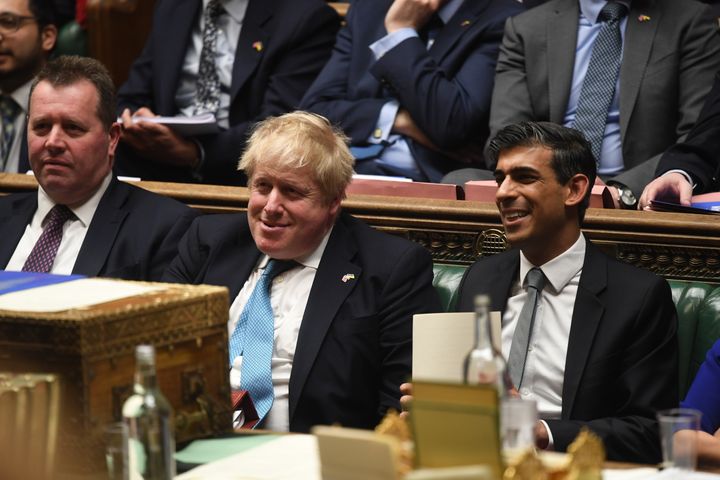
If Rishi Sunak had any doubts that the shine has gone off his reputation among Tory MPs, the last few weeks will have removed them entirely.
Once seen as Boris Johnson’s heir apparent, the chancellor saw his popularity nosedive recently over an underwhelming Spring Statement and revelations about his wife’s tax affairs.
Advertisement
HuffPost UK has learned that Sunak has been meeting with groups of Conservative backbenchers to get their views on how he should tackle the cost of living crisis, and they have not been holding back.
“He’s not the golden boy any more,” said an MP who attended one of those gatherings last Monday night. “There were around 30 of us and we gave him a hard time.”
Advertisement
Sunak’s answers to their forceful questions failed to assuage their anger.
“He came across as making excuses for the state of the economy,” one former cabinet minister told HuffPost UK. “The most wounding criticism was that it isn’t clear what the government’s economic policy is.
Advertisement
“Some people brought up the fact that at least David Cameron and George Osborne had their ‘long-term economic plan’ and it was consistent. If tough decisions had to be made, they were made in that context.
“What is this government’s economic policy? No one has any idea.”
This uncertainty is typified by the chancellor’s will-he-won’t-he approach to a windfall tax on the enormous profits currently being enjoyed by oil and gas companies.
Thanks to the global spike in energy prices, the likes of BP and Shell have posted astronomical earnings, leading to Labour and the Lib Dems calling for a one-off levy, with the money raised going towards cutting household bills.
Advertisement
The government’s response has been to criticise a windfall tax in principle, while being careful not to rule out bringing one in. This led to Tory MPs being forced to vote en masse against a windfall tax earlier this week, fully aware that the government may well end up backing the policy within days.
The confusion at the heart of government has even led to reports that two of the prime minister’s key advisers are making clear their opposition to a windfall tax at the same time as the Treasury appears to be laying the groundwork for one.
“We are all exploring every option available to grow the economy and ease the cost of living,” a senior Number 10 source told HuffPost UK. “It’s not the case of one lot advocating and another blocking.
“It’s just good government – testing the arguments, exploring the merits, getting the detail right and setting the bar high for doing something no Conservative instinctively wants to do.”
One former Conservative frontbencher said he had some sympathy for the chancellor.
“The problem for Rishi is that Tory MPs are all over the place on what they want done,” he said. “There’s not a consensus other than something needs to be done, and that makes his position very difficult.
“There are people who want a windfall tax and there are people that don’t want a windfall tax. Others want to see benefits uprated and others who want tax cuts.”
Asked what he thought Sunak would opt for, the MP said: “There’s going to be a windfall tax, that seems clear. But in the usual way, Tory MPs were marched up the hill to vote against it.”
UK Parliament/Jessica Taylor via PA Media
Another Conservative MP said he would reluctantly support a windfall tax, given the extent of the crisis facing household budgets.
He said: “The current situation doesn’t feel sustainable. The oil and gas companies are making enormous profits out of events that are completely out of their control. How can we be the only people defending them?
Advertisement
“If you look at what happened in the 90s, Labour went into the 1997 election promising to bring in a windfall tax and they won a landslide. If we do it, we instantly shoot Labour’s fox.
“You obviously can’t keep doing windfall taxes because they really do deter investment and harm business confidence, but there is a case for one now.
“If you look at our economic prospects, October looks horrific when the energy price cap goes up, and £150 council tax rebates just aren’t going to touch the sides.
“Government can’t solve every problem, but this is about protecting people from the worst of the cost of living crisis. I really think a windfall tax is going to happen.”
Another ex-minister said: “My sense from my conversations with colleagues is that while in principal they are against a windfall tax for exceptionally good reasons, the current circumstances, in which the energy companies are making massive profits, means the chancellor will probably go for one. He’s getting strong briefing that we should have one from the Treasury.”
But the MP warned the chancellor that the parliamentary party wants to see the tax burden – which is now the highest it’s been for 70 years – fall as quickly as possible.
“Tory MPs are getting fed up of being a high spend, big state party,” he said. “The definite sense of MPs and donors is that people are sick to death of not being a Conservative Party.”
On Wednesday night, Sunak told business leaders that he would use his next Budget in the autumn to cut their taxes, but he was silent on what immediate help he will provide for voters seeing their energy and food bills soaring.
The Treasury points to the £9bn-worth of support the chancellor announced in February to bring down council tax and fuel costs, while insisting that further support will come in October when the energy price cap is set to rise significantly once again.
But with two key by-elections coming in June, and Labour maintaining a consistent lead in the polls, Tory MPs are demanding action long before then. The big question now is what form that will take.
Advertisement
A Labour source said: “The cost of living crisis has drawn back the tide on an out of touch, dilettante chancellor.
“But Rishi Sunak is really just a symptom of the wider Tory malaise. This is a government out of ideas and rapidly running out of road – and after a decade of failing to grow the economy, all they’ve got left to offer is tax rise after tax rise on working people.”
Figures show 14% of dentists doing NHS work are approaching retirement age.
We are facing an unusual and unprecedented monkeypox outbreak but how worrying is it?
