Bone marrow cancer: Potential drug targets

New research from Mayo Clinic’s Center for Individualized Medicine finds that patients with ASXL1-mutant chronic myelomonocytic leukemia — an uncommon type of cancer of the bone marrow — have distinctive epigenetic changes that can activate harmful genes and cause the cancer to grow faster. The ASXL1 genetic mutation also can transform the disease into the more aggressive acute myeloid leukemia.

The study, published in Nature Communications, helps to clarify a potential therapeutic strategy and adds to the knowledge of ASXL1 gene expression.

Epigenetics refers to chemical modifications of a cell’s genetic material that control how genes are expressed and affect the interpretation of the DNA code. Research shows epigenetics play a critical role in the development and progression of many diseases, including cancer.

“The epigenome in patients with these ASXL1 gene mutations is changed in a way that allows the cancer cells to switch on genes that are detrimental to the patients,” says Moritz Binder M.D., a Mayo Clinic hematologist and scientist, and the lead author of the study. Dr. Binder is a 2021 Gerstner Family Career Development awardee.

“These epigenetic changes don’t affect the DNA blueprint itself,” Dr. Binder explains. “It affects how to the blueprint is read — which pages to read and which pages not to read.”

Chronic myelomonocytic leukemia is a cancer that typically affects people 60 and older. It starts in blood-forming cells of the bone marrow and invades the blood. Nearly 40% of patients with chronic myelomonocytic leukemia have a mutation in the ASXL1 gene.

“Unfortunately, patients with ASXL1 mutations do not fare well and do not respond as well to the treatments currently available,” Dr. Binder says.

For the study, Dr. Binder and his team conducted a comprehensive multi-omics interrogation using a variety of high-throughput sequencing methods. Multi-omics offers the opportunity to understand the flow of information that underlies disease.

The researchers compared samples from patients with and without ASXL1 mutations and analyzed the activity of genes along with molecules around the DNA. The investigation included gene expression and several modifications affecting the packaging of the DNA.

“This allowed us to perform modeling to draw inference about the effect of epigenetic changes in isolation and in concert on leukemogenic gene expression in ASXL1-mutant chronic myelomonocytic leukemia,” Dr. Binder says.

Overall, they found that ASXL1 mutations are associated with the overexpression of key genes that drive leukemia.

“Our study supports the notion that several important leukemogenic driver genes are under the control of regulatory elements in the genome,” Dr. Binder says.

The data suggest that these regulatory elements are only functional in patients with ASXL1-mutant chronic myelomonocytic leukemia and may therefore represent new individualized therapeutic targets. Dr. Binder is planning to translate these findings into early phase clinical trials soon.

“Our study is the basis for ongoing work to further explore ways to target these patient-specific regulatory elements with novel small-molecule drugs, “Dr. Binder says. “With this approach, we hope to restore normal gene expression, or at least treat the cancer cells in a new way to overcome the detrimental effect of ASXL1 mutations.”

Story Source:

Materials provided by Mayo Clinic. Original written by Susan Murphy. Note: Content may be edited for style and length.

Share Button

Physicists find direct evidence of strong electron correlation in a 2D material

In recent years, physicists have discovered materials that are able to switch their electrical character from a metal to an insulator, and even to a superconductor, which is a material in a friction-free state that allows electrons to flow with zero resistance. These materials, which include “magic-angle” graphene and other synthesized two-dimensional materials, can shift electrical states depending on the voltage, or current of electrons, that is applied.

The underlying physics driving these switchable materials is a mystery, though physicists suspect it has something to do with “electron correlations,” or effects from the interaction felt between two negatively charged electrons. These particle repulsions have little to no effect in shaping the properties in most materials. But in two-dimensional materials, these quantum interactions can be a dominating influence. Understanding how electron correlations drive electrical states can help scientists engineer exotic functional materials, such as unconventional superconductors.

Now, physicists at MIT and elsewhere have taken a significant step toward understanding electron correlations. In a paper appearing today in Science, the researchers reveal direct evidence of electron correlations in a two-dimensional material called ABC trilayer graphene. This material has previously been shown to switch from a metal to an insulator to a superconductor.

For the first time, the researchers directly detected electron correlations in a special insulating state of the material. They also quantified the energy scales of these correlations, or the strength of the interactions between electrons. The results demonstrate that ABC trilayer graphene can be an ideal platform to explore and possibly engineer other electron correlations, such as those that drive superconductivity.

“Better understanding of the underlying physics of superconductivity will allow us to engineer devices that could change our world, from zero-loss energy transmission to magnetically levitating trains,” says lead author Long Ju, assistant professor of physics at MIT. “This material is now a very rich playground to explore electron correlations and build even more robust phenomena and devices.”

Superlattice

An ABC trilayer graphene, stacked atop a layer of hexagonal boron nitride, is similar to the more well-studied magic-angle bilayer graphene, in that both materials involve layers of graphene — a material that is found naturally in graphite and can exhibit exceptional properties when isolated in its pure form. Graphene is made from a lattice of carbon atoms arranged in a hexagonal pattern, similar to chicken wire. Hexagonal boron nitride, or hBN, has a similar, slightly larger hexagonal pattern.

In ABC trilayer graphene, three graphene sheets are stacked at the same angle and slightly offset from each other, like layered slices of cheese. When ABC trilayer graphene sits on hBN at a zero-degree twist angle, the resulting structure is a moiré pattern, or “superlattice,” made up of periodic energy wells, the configuration of which determines how electrons flow through the material.

“This lattice structure forces electrons to localize, and sets the stage for electron correlations to have a huge impact on the material’s macroscopic property,” Ju says.

He and his colleagues sought to probe ABC trilayer graphene for direct evidence of electron correlations and to measure their strength. They first synthesized a sample of the material, creating a superlattice with energy wells, each of which can normally hold two electrons. They applied just enough voltage to fill each well in the lattice.

Electron boost

They then looked for signs that the material was in an ideal state for electron correlations to dominate and affect the material’s properties. They specifically looked for signs of a “flat band” structure, where all electrons have almost the same energy. The team reasoned that an environment hosting electrons with a wide range of energies would be too noisy for the tiny energy of electron correlations to have an effect. A flatter, quieter environment would allow for these effects to come through.

The team used a unique optical technique they developed to confirm that the material indeed has a flat band. They then tuned down the voltage slightly, so that only one electron occupied each well in the lattice. In this “half-filled” state, the material is considered a Mott insulator — a curious electrical state that should be able to conduct electricity like metal, but instead, due to electron correlations, the material behaves as an insulator.

Ju and his colleagues wanted to see if they could detect the effect of these electron correlations in a half-filled, Mott insulating state. They looked to see what would happen if they disturbed the state by moving electrons around. If electron correlations have any effect, such perturbations of electron configurations would meet resistance, since electrons naturally repel each other. For example, an electron that attempts to move to a neighboring well would be pushed back by the electron already occupying that well, even if that well can technically accommodate an additional electron.

In order to overcome this resistance, it would require an extra boost of energy — just enough to overcome the electron’s natural repulsion. The team reasoned that the magnitude of this boost would be a direct measure of the electron correlation’s strength.

The researchers supplied the extra boost using light. They shone light of different colors, or wavelengths, onto the material, and looked for a peak, or a single specific wavelength that the material absorbed. This wavelength corresponded to a photon with just enough energy to kick an electron into a neighboring half-filled well.

In their experiment, the team indeed observed a peak — the first direct detection of electron correlations in this specific moiré superlattice material. They then measured this peak to quantify the correlation energy, or the strength of the electron’s repulsive force. They determined this to be about 20 millielectronvolts, or 1/50 of an electronvolt.

The results show that strong electron correlations underlie the physics of this particular 2D material. Ju says the Mott insulating state is particularly important, as it is the parent state of unconventional superconductivity, the physics of which remains illusive. With this new study, the team has demonstrated that ABC trilayer graphen/hBN moiré superlattice is an ideal platform to explore and engineer the more exotic electrical states, including the unconventional superconductivity.

“Today, superconductivity happens only at very low temperatures in a realistic setting,” notes Ju, who says the team’s optical technique can be applied to other 2D materials to reveal similar exotic states. “If we can understand the mechanism of unconventional superconductivity, maybe we can boost that effect to higher temperatures. This material forms a foundation to understand and engineer even more robust electrical states and devices.”

This research was supported, in part, by the National Science Foundation, the Simons Foundation, and the MIT Skoltech program.


Share Button

Massive study shows urbanization drives adaptive evolution

Rochester Institute of Technology contributed to a massive study on a tiny roadside weed that shows urbanization is leading to adaptive evolution at a global scale. As part of the Global Urban Evolution Project (GLUE) project, scientists from 160 cities across six continents collected more than 110,000 samples of white clover plants in urban, suburban, and rural areas to study urbanization’s effects on the plants. It is the largest environmental evolution study ever and the results are published in the journal Science.

Scientists in each city used the same process to collect white clover samples and test them for a particular chemical anti-herbivore defense compound that also affects their stress tolerance for factors such as extreme heat and weather. Assistant Professor Kaitlin Stack Whitney from RIT’s Department of Science, Technology, and Society led a team of five environmental science students working on a senior capstone project to participate on Rochester’s behalf. In October 2018, they collected 650 samples at 41 sites along a straight path from downtown Rochester to Black Creek Park in North Chili along New York State Route 33A.

“We were picking through this tiny roadside weed, but it’s fascinating how you can unpack these global issues about urbanization and climate change by looking at this very overlooked plant,” said Stack Whitney. “There are these big global forces that are affecting how those plants are growing, what they’re doing, and whether or not they can respond to stresses in that very localized environment.”

The GLUE project was an opportunity for the RIT students to get hands-on, impactful research early in their scientific careers. Environmental science alumna Kristina Chomiak ’19, ’21 MS, who will begin pursuing her Ph.D. in sustainability in the fall, said the collaborative experiment helped solidify her interest in research.

“For me at that point personally I hadn’t had a ton of research experience,” said Chomiak. “It was exciting to be able to follow a protocol and actually conduct this wet lab research. And it was even better that it would be published and would be meaningful to the scientific community.”

Chomiak said she is excited to see the full results of the study and learn how the data they collected in Rochester compares to that found from other cities. She said that locally the team did not find a significant difference in adaptation between the urban and rural areas, but they hypothesize that is because Rochester has more snowfall than other cities involved in the study, meaning the white clover plants are less under attack here.

Participants in the first GLUE study, led by the University of Toronto Mississauga, are now discussing additional ways to leverage the data and organize follow-up studies. Stack Whitney plans to participate in at least five follow-up studies.

Story Source:

Materials provided by Rochester Institute of Technology. Original written by Luke Auburn. Note: Content may be edited for style and length.

Share Button

Bono Really Wrote A Poem About Ukraine And Nancy Pelosi Read It Aloud

In a statement that will perhaps prompt people to read it more than once, Nancy Pelosi has read aloud a poem by singer Bono about Ukraine during an annual lunch to mark St Patrick’s Day.

On Thursday, the speaker of the US house of representatives told a press conference that during the Annual Friends of Ireland Luncheon in Washington she would be reading verse about the war in eastern Europe penned by the U2 frontman.

Despite even fact-checkers suggesting this was not the case, it came to pass.

For clarity, the poem appears to be an original composition, and not My Friendly Epistle posted on the band’s Twitter feed by Ukrainian writer Taras Shevchenko, which was originally published in 1845.

For completists, here’s Bono’s poem in full:

Oh, St Patrick he drove out the snakes
With his prayers but that’s not all it takes
For the snake symbolises
An evil that rises
And hides in your heart, as it breaks

And the evil has risen my friends
From the darkness that lives in some men
But in sorrow and fear
That’s when saints can appear
To drive out those old snakes once again

And they struggle for us to be free
From the psycho in this human family
Ireland’s sorrow and pain
Is now the Ukraine
And St Patrick’s name now Zelenskyy

In case it needs stating, Bono is likening the legend of Ireland’s patron saint – St Patrick – banishing snakes from the country to Ukraine president Volodymyr Zelenskyy’s heroic efforts to drive Russia out of his country.

Once the reading finished, Pelosi introduced a 25th anniversary performance of Riverdance.

Twitter couldn’t quite believe what was happening:

Share Button

Alarm Raised As Two Ministers Targeted By Russian Prank Callers

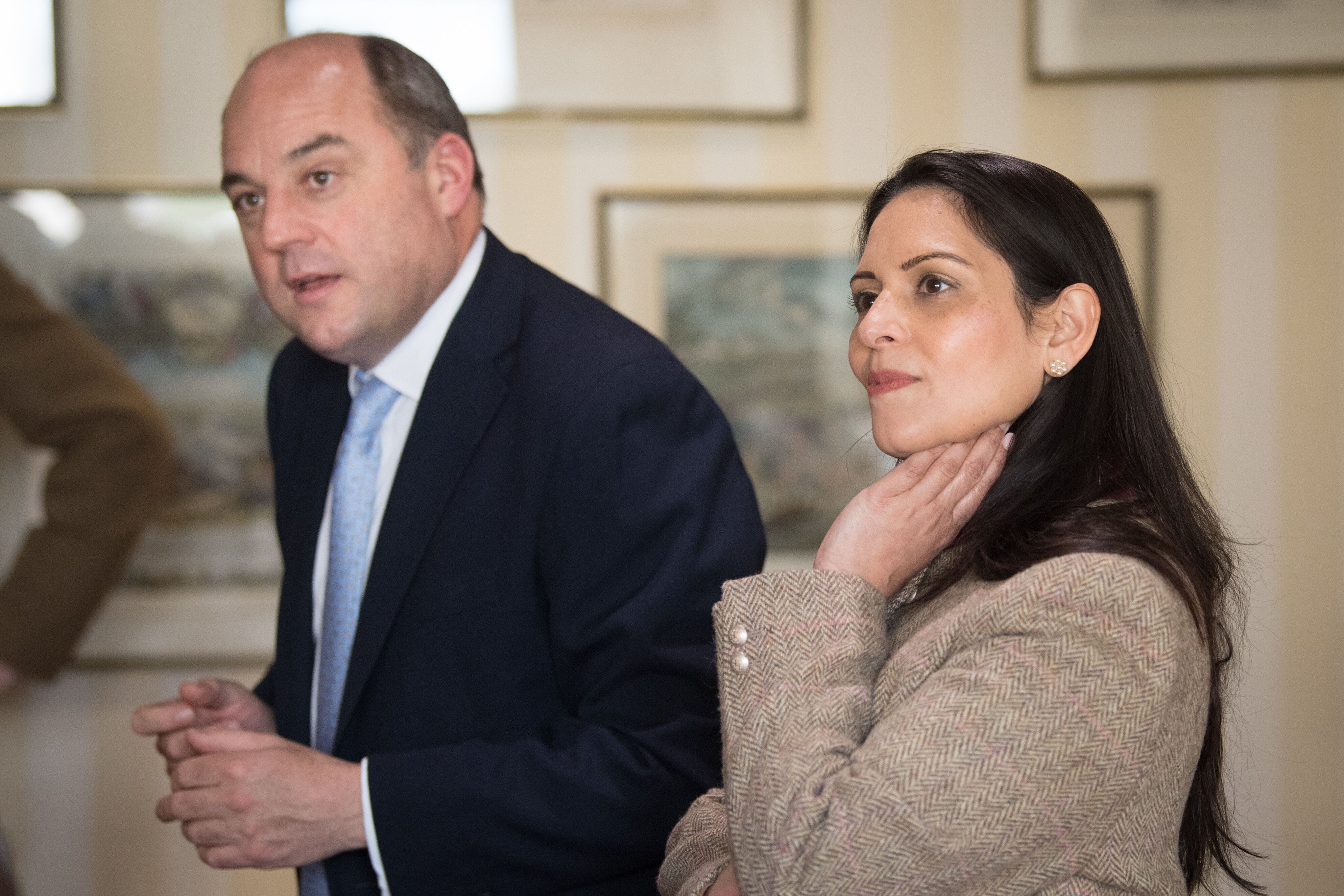
Ben Wallace has blamed Russian “dirty tricks” after being pranked by someone claiming to be the Ukrainian prime minister.

In an apparent security breach, the hoax caller managed to get through to the defence secretary’s personal phone this afternoon.

They pretended to be Ukrainian PM Denys Shmyhal and began asking Wallace a series of questions.

After realising they were not who they claimed to be, the minister ended the call and revealed the “desperate” prank attempt on Twitter.

He said: “Today an attempt was made by an imposter claiming to be Ukrainian PM to speak with me. He posed several misleading questions and after becoming suspicious I terminated the call.

“No amount of Russian disinformation, distortion and dirty tricks can distract from Russia’s human rights abuses and illegal invasion of Ukraine. A desperate attempt.”

Later on Thursday, home secretary Priti Patel said she had also been targeted.

Wallace has been an outspoken critic of Vladimir Putin, claiming he had “gone full tonto” by invading Ukraine.

He also predicted that the war would be “Putin’s end” because it was going so badly for Russia.

The alarm was raised by Wallace after he became suspicious during a 10-minute video call on Thursday.

He ordered an investigation into the security breach but there are serious questions about Whitehall security after Patel said the same thing happened to her earlier this week.

“This also happened to me earlier this week,” Patel said.

“Pathetic attempt at such difficult times to divide us. We stand with Ukraine.”

The Home Office declined to give further details about Patel’s call.

Share Button

What Is a Deeper Relationship?

As I’ve been reading through recent feedback emails regarding the upcoming Guild course, I’ve seen various expressions of a desire for “deeper relationships.” What does that actually mean?

Many people shared that their current social circle feels too fragmented. They have their work associates, their family relationships, their online friends, and perhaps a few other networks like for hobbies or fitness. That by itself isn’t a problem, but what people perceive as problematic is that they’re only able to connect with each of these groups with a few limited aspects of their personalities and interests. They feel blocked from expressing their whole and complete selves with anyone.

A related desire that many people expressed was for more “growth-oriented friends.” One of the most common words I saw in people’s emails was the word “like-minded.” People crave social circles with others who have similar values and interests. They’re tired of investing in relationships with people who seem too dissimilar.

I’d say that many people are looking for what we might call full-range friendships. They find it tiresome and draining to have a wide array of relatively shallow connections. I think much of the time when people say they want more depth, what they actually want is more range within the people that they connect with most often. People are tired of investing in low-compatibility connections. They want to see much higher compatibility across multiple interests.

One thing that a lot of people want is a close-knit circle of friends, and within that friendship circle, they want to see a really good range of like-mindedness. Many people prefer not to have so much fragmentation in their social lives. They don’t want activity partners and professional colleagues and romantic connections and mastermind partners and travel buddies and online friends who are all different people. They’d ideally love to invest in people with whom they can connect with across multiple dimensions – like a travel buddy who’s also great at creative and business masterminding and who’s into having rich spiritual discussions and who can go out for a nice vegan meal and a movie together.

Some people would also prefer if their social circles served as a source of romantic and sexual connections too, either directly with one or more of their friends or by finding good matches through their friends’ referrals.

So people want their social circles to provide more value to them, and they especially want to see more value and engagement per person.

Some people said the ideal size of their primary social circles was relatively small, typically in the range of 6-10 people. Some also want to see a nice gender balance in their friendships, especially if their current social circles feel imbalanced.

Most people don’t really want large social circles. Some lamented that their social circles already feel too big and complex, and they have a hard time keeping up with everyone. Others shared that they have no meaningful social circle to speak of yet, and they don’t want to shift towards something huge and expansive. They’d simply love to have a tight-knit group of friends that they can connect with regularly.

Another factor I saw expressed was what someone described as outreach fatigue or coordination fatigue. Some people serve as the main hubs of their social circles, and if they don’t keep actively inviting people and planning activities, nothing happens. This becomes exhausting after a while. Many people would prefer to have more resilient, self-maintaining social circles. People also want the option to socially engage sometimes and disengage at other times, so they can enjoy some solo time as well when they need it.

So when people say that they want deeper relationships, it’s a whole package of desires. The specifics are different for each person, but there does seem to be a common core of people wanting high-efficiency, full-range relationships. This is better for people’s energy. It’s better for their happiness. And it’s better for fitting into people’s busy lives.

This makes a lot of sense to me, and it aligns nicely with my own social development path. The social expansiveness that came from blogging and speaking has been rewarding, but it can be tiring to keep up with so many casual connections if I overdo it. This made me want to compact my social circle, both online and offline, and spend more time connecting with people who have a lot in common. And I can tell you that this works very well. It’s more relaxing, peaceful, and chill, and it feels more heart-aligned too. That said, I still enjoy phases of meeting and connecting with a lot of different people, but I see that more as the frosting on top of the cake.

The good news is that if a close-knit group of friends is what you want, you can create that, and we’ll be working on this together in the upcoming Guild course. However, it should be obvious that if you’re not there yet, you’ll need to start making different decisions socially.

I’d say that a good place to start is to reflect upon what it means to have deeper relationships with people. What does that actually mean? Is depth really the best word to describe what you want, or are you really looking for more compatibility or more range or more efficiency or more resilience in your individual relationships? I can help you get more clarity about this during the course, but I encourage you to start thinking about this now. What kind of social circle would you love to experience as your personal friendship guild?

Share Button

Covid: Positive tests rise but critical care stable

Positive tests rise for 12 days in a row, but this is not reflected in critical care numbers.

Share Button

Thames Valley pilot study to check for rare condition

Babies born with spinal muscular atrophy (SMA) have better prospects if it is picked up at birth.

Share Button

‘Dangerous’ tanning products promoted by influencers

Sprays and injections containing “melanotan-2” may lead to cancer, doctors tell a BBC News investigation.

Share Button

Dying patients living longer than expected lose NHS funds

More than 1,300 people a year are having their palliative care funding withdrawn, BBC analysis shows.

Share Button