Exclusive: Downing Street Accused Of ‘Quietly Editing’ One Of The PM’s Five Promises To Voters

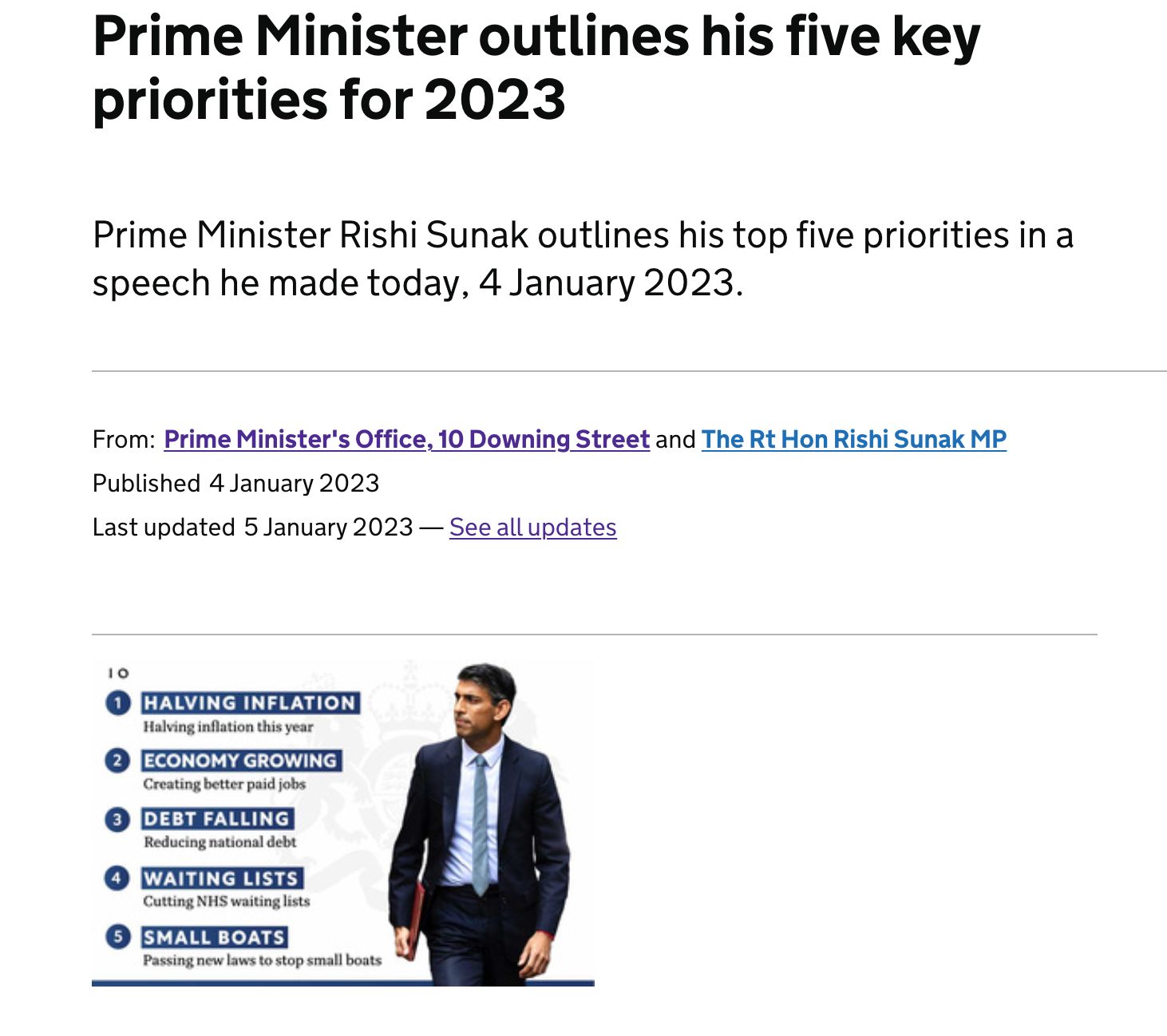
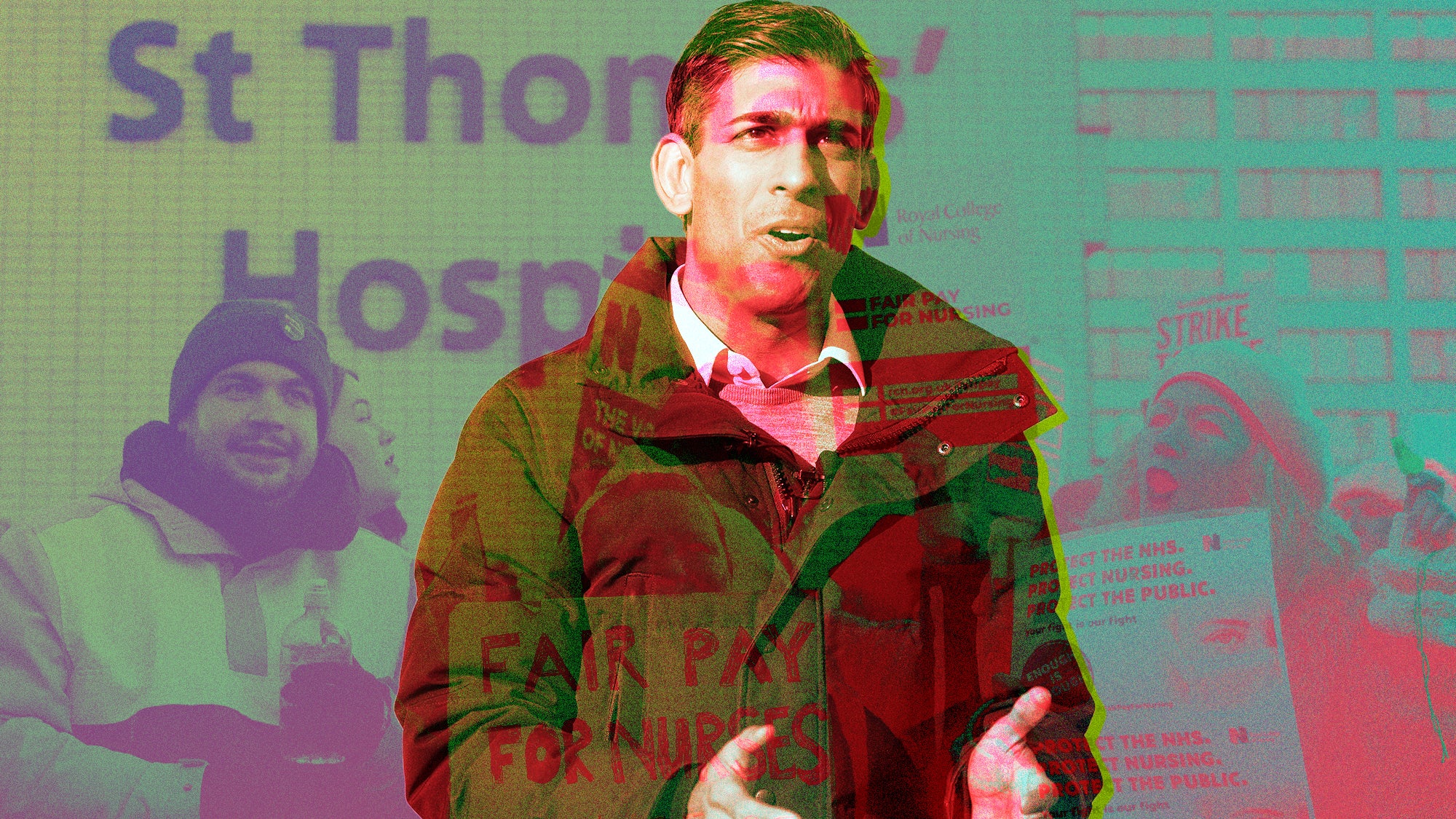
Downing Street has been accused of “quietly editing” one of Rishi Sunak’s five new promises to voters.

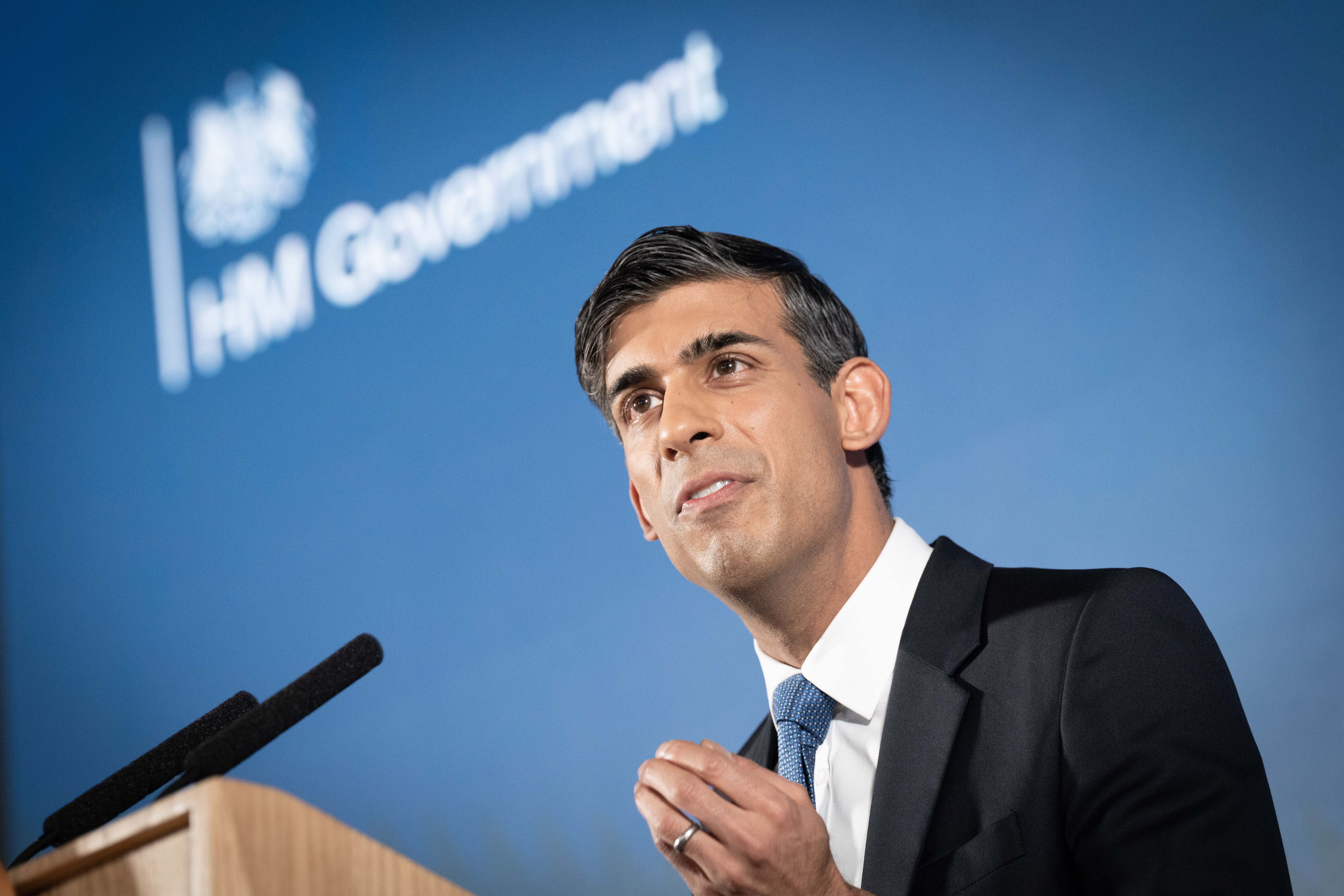
The prime minister unveiled the pledges in a major speech setting out his plans for 2023.

They included a vow to halve inflation this year, grow the economy and cut hospital waiting lists.

Sunak said: “No tricks, no ambiguity – we’re either delivering for you or we’re not.”

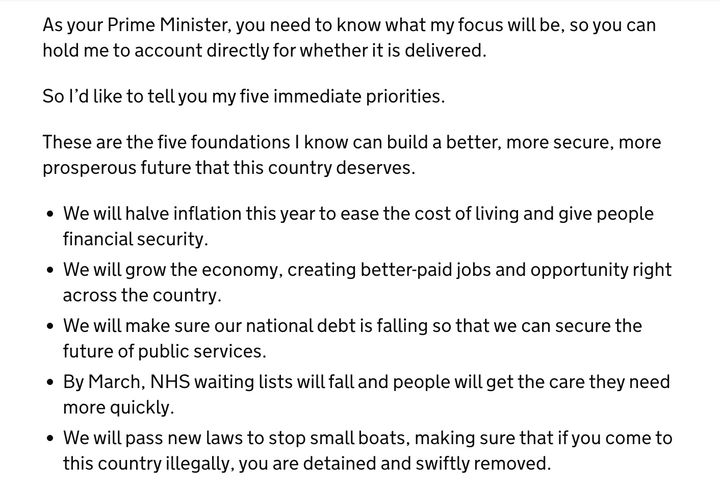
The original version of the announcement published on the government website after Sunak made his speech on Wednesday says: “By March, NHS waiting lists will fall and people will get the care they need more quickly.”

The fourth bullet point claims waiting lists will fall "by March".
The fourth bullet point claims waiting lists will fall “by March”.

UK government

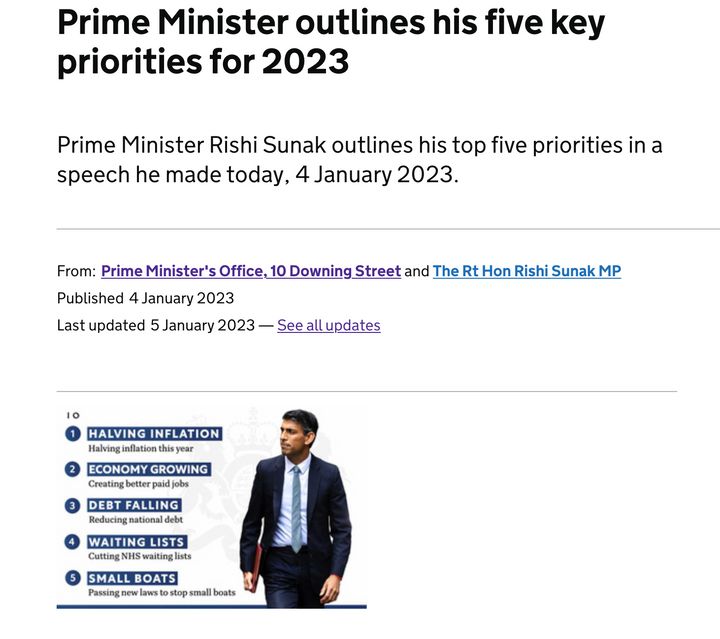
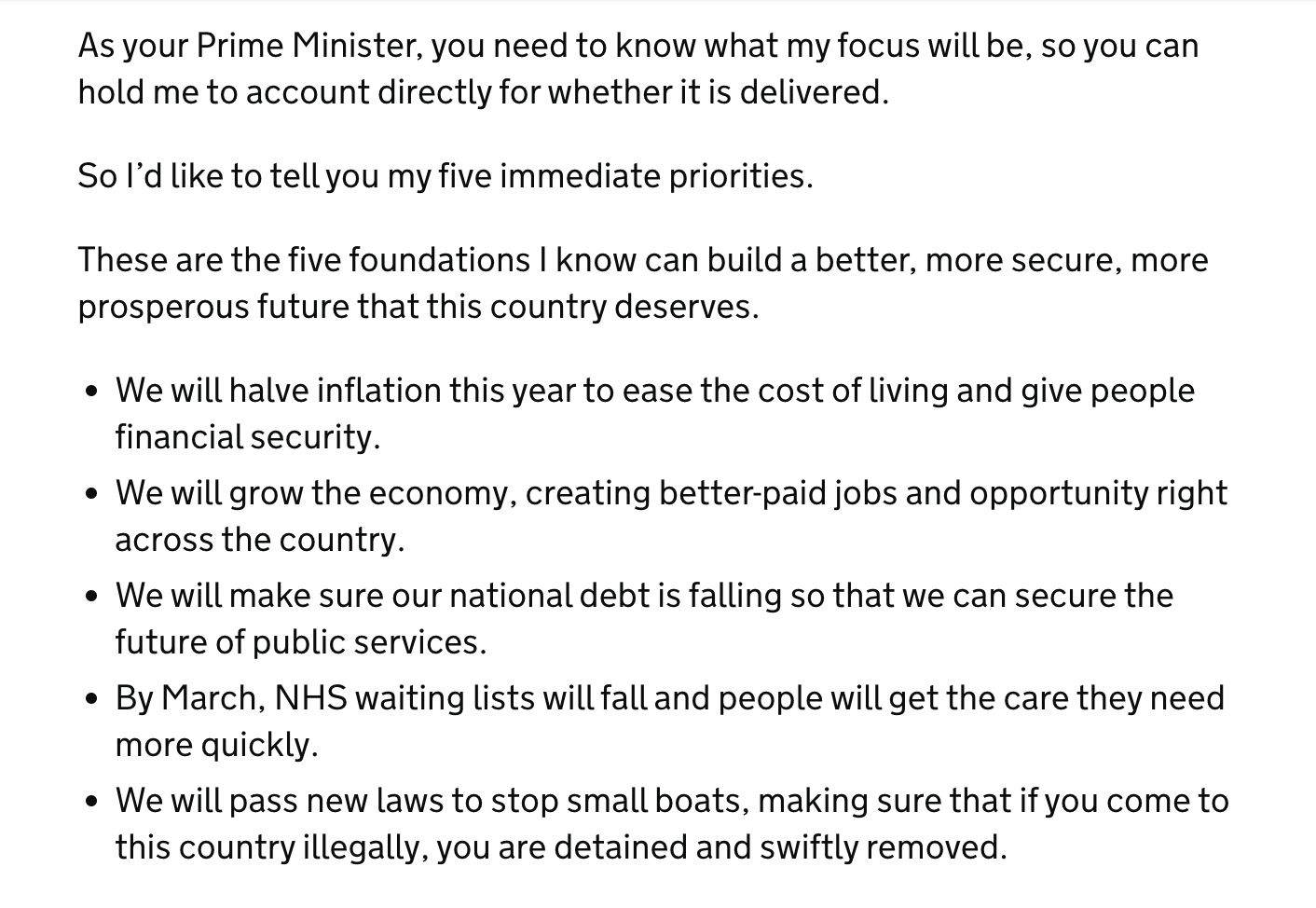
However, visitors to the same page are now told that it was “updated” on Thursday and the March reference has been removed.

That pledge now says: “NHS waiting lists will fall and people will get the care they need more quickly.”

The page has since been edited and the March reference removed.

UK government

Shadow health secretary Wes Streeting told HuffPost UK: “Just 48 hours after promising the British people a series of cast-iron promises, Sunak is already quietly editing the small print.

“The longer we give the Conservatives in power, the longer patients will wait.”

Answering questions from journalists after his speech, the PM said: “By spring of next year, we will have practically eliminated those waiting over a year, with the overall waiting list falling.”

A Downing Street source said the target for bringing waiting lists down is March 2024, and the government website had been edited to avoid any confusion.

HuffPost UK can also reveal that former health secretary Sajid Javid first made the March 2024 vow almost a year ago.

Speaking last February, he said: “Assuming half of the missing demand from the pandemic returns over the next three years, the NHS expect waiting lists to be reducing by March 2024.

“Addressing long waits is critical to the recovery of elective care and we will be actively offering longer waiting patients greater choice about their care to help bring these numbers down.”

Share Button

Exclusive: Teachers’ Strike Ballot Result Will ‘Go Down To The Wire’

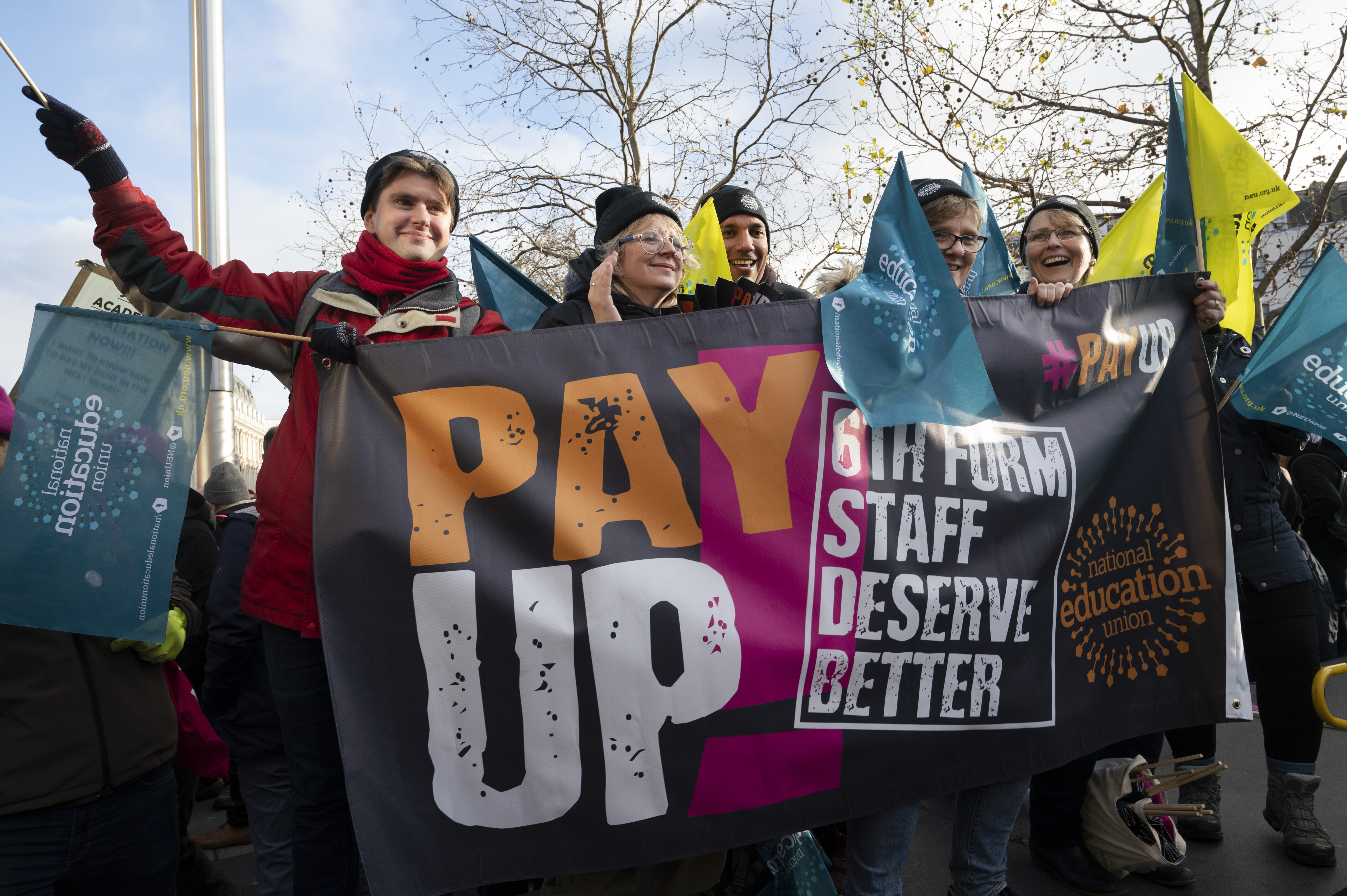
A strike ballot organised by the UK’s largest education union will go “down to the wire”, HuffPost UK understands.

The National Education Union (NEU), which represents around 450,000 teaching staff across England, Wales and Northern Ireland, is currently holding a formal ballot calling for a “fully-funded, above inflation pay rise” following a decade of eroded wages.

A preliminary indicative ballot by the NEU in October showed strong support among teachers and support staff for taking industrial action to achieve a pay rise — but there are fears that turnout for the formal postal ballot has been hampered by Royal Mail strikes and bad weather.

Under the Trade Union Act, NEU members are bound by higher turnout thresholds to push through strike action.

The union must achieve a turnout of 50% in both the teacher and support staff ballots. Some 40% of those eligible to vote must back strike action for it to go ahead.

A source close to the Trades Union Congress (TUC), which represents unions across England and Wales, told HuffPost UK: “The result is going to be very close in terms of turnout.

“The NEU could meet the threshold or it could not — it’ll be down to the wire.

“The fact that the NEU is on the verge of this historic result, despite the massive barriers of the Trade Union Act, shows how angry teachers are about the way they’ve been treated and the formidable NEU data-led operation.”

They added: “It’s true the situation at Royal Mail could delay some ballots and this could make it very close, so individual votes will matter.”

If teachers back strike action, it will create another headache for the government which is so far refusing to back down on union pay demands — increasing the likelihood that disruptive strikes could go on for months.

Already this week the government is battling a series of damaging walkouts by the RMT and Aslef rail unions which began on January 3 and will finish on Saturday.

Nurses will also go on strike on January 18 and 19 unless negotiations are opened, having already withdrawn their labour for two days in December.

And in Scotland, primary school teachers will walkout on January 10 and secondary school teachers on January 11, with more strikes planned for later in the month and into February.

The average primary classroom teacher in England currently earns £38,200, rising to £41,600 for a secondary classroom teacher.

Heads of primary schools typically take home £67,400, which rises to £94,900 for the average secondary school.

The government has offered most teachers a pay rise of 5% for this year, up from an original offer of 3%. Those who are newly qualified will receive a pay rise of 8.9% to meet the Department for Education’s (DfE) commitment to increase starting salaries to £30,000 by 2023.

However, the teaching unions argue that the pay offers amount to a real-terms pay cut given that the rate of inflation stands at 10.7%. Research by the NEU estimates that its members have lost a minimum of £64,350 in earnings since 2010.

Last year, the NEU’s indicative ballot found that 86% of teachers would be prepared to take strike action to demand a pay rise, on a 62% turnout.

A separate ballot of school support staff also strongly supported taking strike action over pay, with 92% of staff rejecting the government’s offer and 78% backing industrial action.

The NEU’s formal postal ballot will close on January 13 next year, with strikes potentially taking place towards the end of the month.

Fellow teaching unions the National Association of Schoolmasters Union of Women Teachers (NASUWT) and The National Association of Head Teachers (NAHT) are also holding strike ballots for members in England and Wales that will close on January 9 and 11, respectively.

Sources within the education sector expressed concern that strikes by the Communication Workers’ Union (CWU), whose members work for Royal Mail, have resulted in some members not receiving their ballots on time, potentially hampering turnout.

The CWU has not yet announced strike dates for 2023 but held walkouts over the Christmas period, including on Christmas Eve, in a bitter dispute with Royal Mail over pay.

If the turnout threshold is reached and strike action is approved, around 24,000 schools in England and Wales could be forced to close as children are sent home.

“The knock-on impact on parents and wider society will be huge,” the source said.

“The government can continue to pretend there’s not a problem or sort it out. Teachers are simply tired of what’s happened to education since 2010 and the strength of feeling is high.”

A spokesperson for the NEU said the union was confident that the thresholds for strike action would be met and that members would be able to re-order any mislaid postal ballots.

“The NEU supports the CWU and the postal workers’ strike,” they said.

“Despite the unfair threshold set by government for strike action to go ahead we are confident our members will vote in the margins required for action to take place. The NEU ballot for strike action for a fully-funded pay increase closes on the January 13 and the results will be known shortly afterwards, most likely on January 16.

“Until this date we will not have the final numbers. It is an indication of the anger felt by teachers and support staff that the union’s electronic indicative ballot had an overwhelming yes vote for action resulting in the union moving ahead with a formal ballot.”

They added: “Through successive below inflation pay rises teachers and support staff have suffered losses of over 20% in salary since 2010. Many are leaving the profession. Government recruitment targets are missed year on year and nearly a third of teachers leave within the first five years of entering the profession. Something has to change.

“Government needs to start negotiating in good faith with the education unions to ensure children get the education they deserve, and teachers and support staff are fairly paid for the vital role they play.

“We don’t want to have to take this action — and we are calling on government to negotiate. It is in the government’s gift to avert these strikes with a new offer on a fully funded pay rise.”

In response, sources at the DfE said plans were being put in place to minimise any disruption if strikes do take place.

They said the best way of making money go further in schools was for the government to tackle inflation and for schools to be made away of the “resource management” available to them.

They also pointed to the £5 billion in funding to help children recover from lost learning in the aftermath of the pandemic, including more than £1 billion for the national tutoring programme.

A DfE spokesperson said: “There are no great schools without great teachers which is why we are making the highest pay awards in a generation – 5% for experienced teachers and more for those early in their careers, including an 8.9% increase to starting salary.

“We are also investing an additional £2 billion in schools next year and £2 billion the year after, taking school funding to its highest-ever level.

“After two years of disrupted education for young people, strike action is simply not a responsible solution.”

The CWU has been contacted for comment.

Share Button

Rishi Sunak Must ‘Step Up To The Plate’ To End Strikes, Says Union Chief

Rishi Sunak has been urged to “step up to the plate” by personally sitting down with union bosses to end the strikes.

TUC boss Paul Nowak has written to the prime minister demanding talks on how to find a solution to the industrial action crippling public services.

Nurses, railway workers and ambulance drivers are among those taking part in strike action throughout January in the ongoing disputes over pay and conditions.

Nowak said Sunak must “allow his ministers to get around the table with our unions reach a fair settlement on pay.”

He said striking workers “can’t afford another year of a real terms pay cut”.

“The reality is their mortgages are going up, their food bills are going up, their rents are going up – the only thing that isn’t going up is their wages,” he told Sky News.

“I think the government has got to take some responsibility now, step up to the plate, facilitate those talks and lets get a fair pay settlement for our NHS workers and public sector workers right across the piece.”

The TUC boss said Sunak had “forgotten some of those basic lessons” from the pandemic, when the TUC worked with him to develop the furlough scheme during lockdown.

He said: “I think he’s forgotten the value of sitting down and reaching an agreement and taking ideas from people outside his own cabinet.

“And frankly, I think it would be really good for Rishi Sunak to talk to our unions, but also to talk to some of those frontline parandemics, those physiotherapists, teachers in the classrooms, civil servants – people who for the last decade have been placed under real pressures on workload who feel they’re at breaking point.

“Let the prime minister talk to those workers and understand their concerns and their issues. I think that’s what any decent employer would do, and as someone responsible for the employment of millions of public sector workers, that’s exactly what the prime minister should do as well.”

Sunak will today set out his plans for the year ahead in a major speech in London.

The PM will unveil plans to make all pupils study some maths until they are 18, as well as explain how he plans to tackle the NHS crisis, illegal immigration and boost the economy.

Share Button

2022 Review: A Look Back At A Year When Politics Went Mad

Every year in British politics is now almost always weirder than the last. But surely 2022 – which saw the country rattle through three prime ministers – will be peak stupid?

Below is a quick rundown of some, if not all, of the bonkers moments of the last year. May it rest in peace.

January

At the start of the year, Boris Johnson was prime minister and under intense pressure over the partygate scandal. On January 12, he admitted had actually attended a No.10 garden event during lockdown. Having previously insisted no rules were broken in Downing Street.

February – Jimmy Savile smear

Johnson spent the first few days of February doubling down on a discredited smear that Keir Starmer failed to prosecute Jimmy Savile. The then prime minister made the allegation during heated Commons debate over the Sue Gray report into partygate. The false claim led Munira Mirza, his policy chief, to resign.

March – Boris’ Russia links

Russia’s invasion of Ukraine saw the British government rollout sanctions on people close to Vladimir Putin’s regime. Johnson himself came under pressure to explain his links to prominent Russians including former KGB agent Alexander Lebedev and Lubov Chernukhin, the wealthy Tory donor and wife of a former Russian minister. Dominic Raab explained it away as the PM simply being “very social”.

April – Partygate fines

On April 12, Johnson was handed a fixed penalty notice by the police for breaking his own Covid lockdown rules. It was the first time a sitting prime minister was found to have broken the law. Despite this, he did not resign.

May – Tractorgate

Tory Neil Parish formally resigned from parliament after he admitted watching porn on his phone in the Commons. Twice. The Tiverton and Honiton MP said it had been a “moment of madness” as he initially was innocently looking at pictures of tractors. Easy mixup.

June – Blue wall blues

On June 23 by-elections were held in the Tory seats of Tiverton and Honiton and Wakefield. The party lost the former to the Lib Dems and the latter to Labour. Ed Davey celebrated his party’s victory with a classically stupid stunt. The double by-election loss did little to settle the nerves of Tory MPs about Johnson’s leadership.

July – Bye bye Boris

After a wave of resignations finally triggered by the Chris Pincher scandal, Johnson resigned as prime minister on July 7. Yet the previous day he had been determined to cling on. The farce was captured live on TV as he was told a delegation of cabinet ministers was at that very moment in No.10 waiting to tell him to quit. The group included very loyal Nadhim Zahawi, who Johnson had promoted to chancellor 24-hours earlier.

Johnson’s resignation triggered a months long Tory leadership contest which included so many idiotic moments it has its own list here.

August – The lady’s not for turning

Perhaps the, highlight, of the contest was Liz Truss announcing plans to pay workers living in cheaper areas of the country less than their counterparts in places like London and the South East.

Tory MPs were livid, with one describing it as “austerity on steroids”. Truss complained there had been a “wilful misrepresentation” of the plan by the media. There had not. Quickly U-turning on the proposal, Truss said it showed she was “honest and decisive”. Perhaps the signs were there all along.

September – Trussonomics

Truss hit the ground as prime minister on September 6. Her tenure lasted 49 days, during which time the Queen died, her mini-Budget caused the markets to have a panic attack and Tory poll ratings cratered. In a boost for Global Britain, the race for survival between her and the Daily Star’s lettuce became international news.

October – Rishi v Boris

Rishi Sunak succeeded Truss as prime minister on October 26, having lost out to her in the contest to takeover from Johnson. But over the course of a crazy weekend at the start of the month, Johnson flew home from his Caribbean holiday to try and stage a dramatic comeback as PM. Before then dropping out of the race in the face over overwhelming opposition from Tory MPs.

November – Hancock in the jungle

As health secretary Matt Hancock helped lead the country through its biggest crisis since WWII. In November 2022 he decided it was a good idea to join ITV’s I’m A Celebrity… Get Me Out Of Here. He promptly had the party whip withdrawn and everyone else had to listen to constant jokes about him eating testicles.

December – normal service resumed?

The final month of 2022 in Westminster was somewhat stable when it came to nonsense, as the government grappled with strikes, inflation and the war in Ukraine. This could signal 2023 will be more serious if not calmer. But let’s not count on it.

Share Button

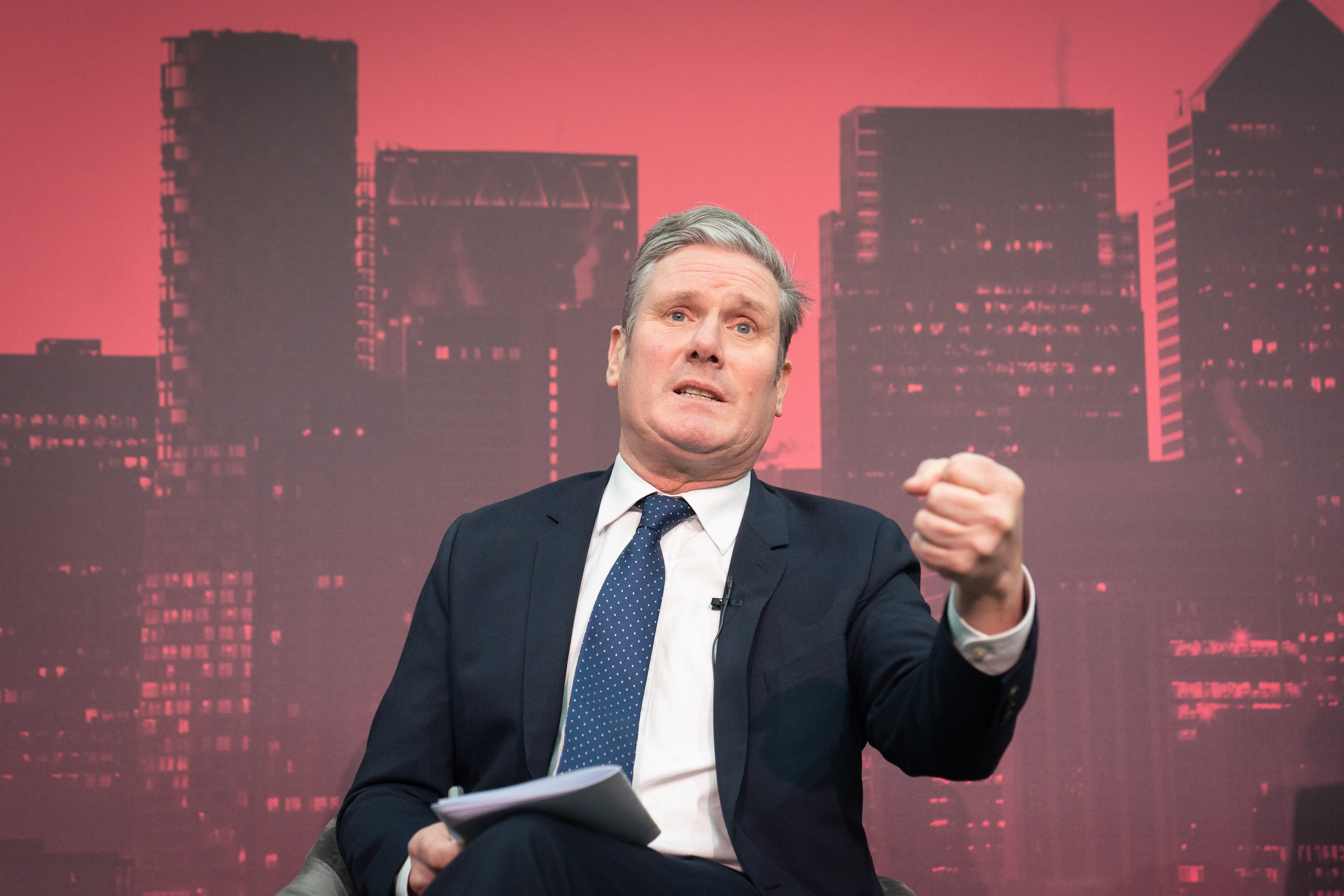
Exclusive: Keir Starmer Warns His Shadow Cabinet To Up Their Game

Keir Starmer has told his frontbenchers and their teams to up their game as the party prepares for a crucial 12 months.

Shadow cabinet members are being urged to increase the number of parliamentary questions they submit to hold the government to account.

The number of ideas each shadow minister comes up with for Labour’s media grid – which lists stories issued to journalists on specific topics – is also being monitored to see who is pulling their weight.

Starmer also wants his shadow cabinet teams to come up with suggestions for the party’s national policy forum in July, where Labour’s manifesto for the next election will take shape.

The crackdown by the leader of the opposition’s office (Loto) comes as Labour maintains its commanding lead over the Conservatives in the opinion polls.

A survey of public opinion by Sevanta earlier this month suggested Starmer is on course for 10 Downing Street with an astonishing 314-seat majority

Nevertheless, the Labour leader is eager for his frontbench team not to take their foot off the gas with the next election still two years away.

2023 is seen as a crucial year, with council elections in England in May, as well as the ongoing political battles over the UK’s economic future.

One senior Labour source told HuffPost UK: “Like any zombie, this government may look like it’s on its way out, but they’ll keep going until they are eviscerated.

“We cannot take our eyes off them for a second. Our mantra has been ‘no complacency’ and that is even more important next year.”

Analysis by HuffPost UK shows that shadow defence secretary John Healey has tabled the most parliamentary questions of any Labour frontbencher this year with 1,317.

He is followed by shadow attorney general Emily Thornberry on 993, shadow rail minister Tan Dhesi on 784 and shadow education secretary Bridget Phillipson on 510.

At the other end of the spectrum, climate change secretary Ed Miliband submitted none, while shadow Welsh secretary Jo Stevens has only tabled seven.

It is understood that Starmer’s team were also impressed by shadow health secretary’ Wes Streeting’s recent ‘health week’, which sought to highlight the government’s failures on the NHS.

“That won plaudits from Loto for its content and the initiative Wes and his team demonstrated in proposing it,” said one Labour insider.

“That is precisely the type of thing we need to be doing to keep the Tories on their toes.”

Share Button

Exclusive: Soaring Cost Of Living Causing Mental Health Crisis, Official Figures Show

The cost of living crisis is “heaping misery” on households this Christmas, with the poorest families twice as likely to suffer from depression.

A survey carried out by the Office for National Statistics (ONS) this autumn showed people’s mental health is suffering as a direct result of rising energy bills and double-digit inflation.

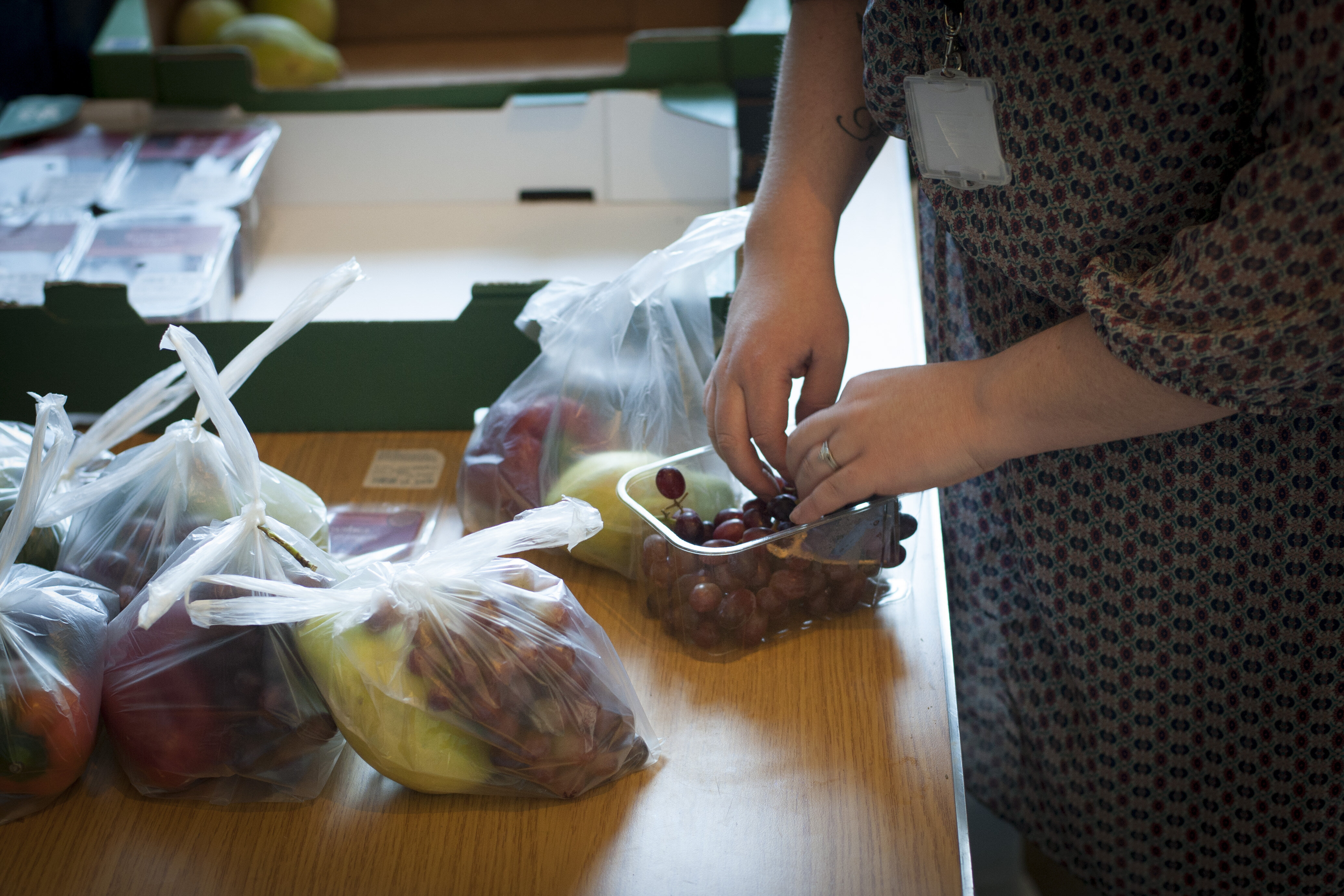
Food bank co-ordinators say many families feel “excluded” from Christmas this year because they can’t afford to take part in school parties or trips. Many are facing poverty for the first time.

The poorest 20% of households are twice as likely to have moderate or severe depression compared to the richest 20%, the survey found, while over a quarter of renters now have moderate depression.

The ONS also found that those struggling to afford energy bills are five times more likely to suffer from depression on a moderate or severe level and that those who were forced to spend less because of the rising cost of living were twice as likely to have moderate depression.

Last year, 18 million days were lost to mental illness, making it the biggest driver of economic inactivity in the UK. The days lost are estimated to have cost the economy £117 billion a year.

Rosena Allin-Khan, Labour’s shadow cabinet minister for mental health, said Liz Truss’s mini budget in September, which sent the financial markets into freefall and led to an increase in mortgages rates, had contributed to the crisis.

She said Labour would abolish so-called “non-dom” status — which allows foreign nationals living in the UK to avoid paying tax in this country on their overseas earnings—- and spend the money on the NHS instead.

“The disastrous economic policies of successive Conservative governments are heaping misery on millions this Christmas — but Christmas has come early for non-doms,” she told HuffPost UK.

“Labour has a plan to transform mental health services and prioritise prevention, by recruiting 8,500 staff in our first term, guaranteeing treatment starting within a month, providing access to a mental health professional in every school and a mental health hub in every community,” Allin-Khan said.

Charlotte White, who helps coordinate a foodbank in Wandsworth, said she had noticed an increase in people seeking support for their wellbeing through the foodbank.

“Many guests are struggling with their mental health, facing poverty for the first time as they suddenly find themselves unable to heat their homes and feed their families,” she said.

“More and more people are seeking support through our onsite wellbeing service.

“As Christmas approaches, I know that many of our families will be feeling particularly anxious. Whether it is paying for their child to attend the school Christmas party, school Christmas outing or buying a Christmas jumper for the non-uniform day, this year many will feel excluded.”

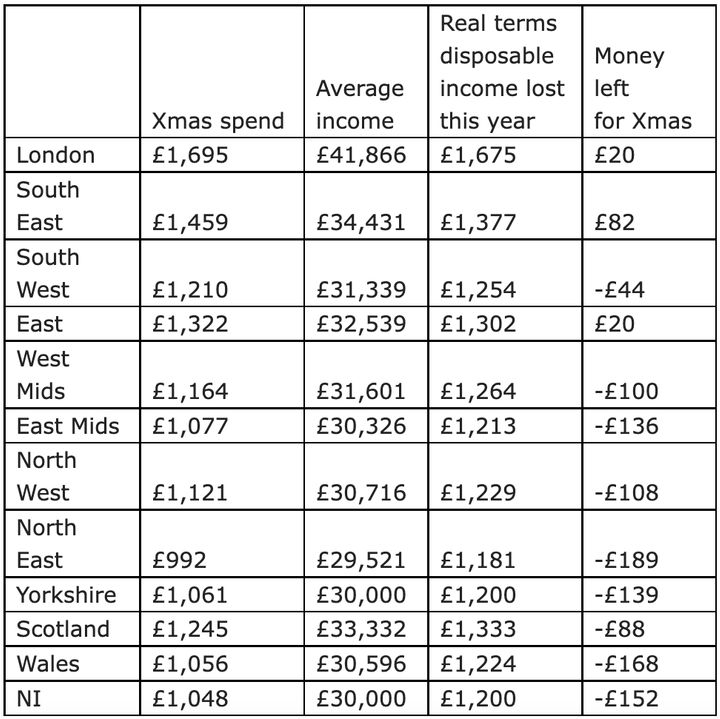
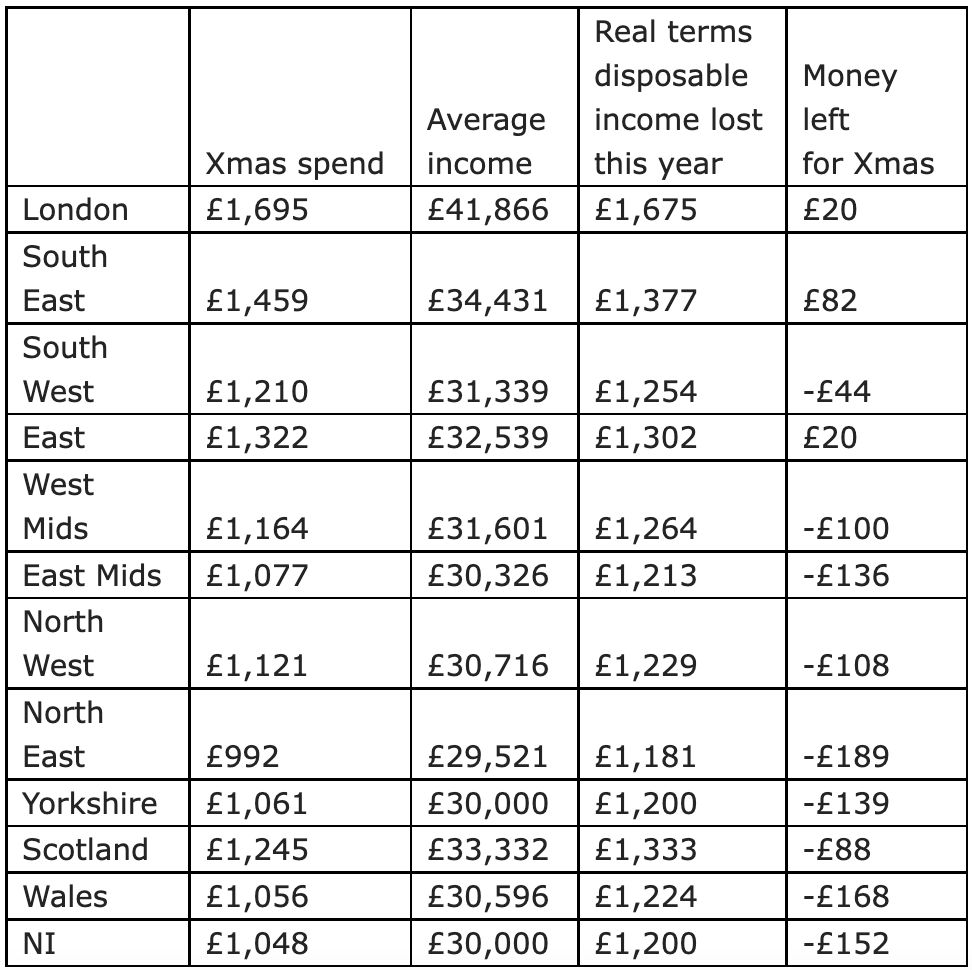
Separate analysis from Statista found that people living in the North East of England had the least money left to spend over Christmas after losing £189 of their disposable income this year.

They were followed by households in Wales, who will lose £168 and those in Northern Ireland who will lose £152.

Statista/Labour Party

One user at Little Village, a baby bank which operates across London, said Christmas this year would be “very, very difficult”.

“Christmas will just be a normal day,” they said.

“I can’t really afford to celebrate how I used to. I can’t afford gifts for the children, it’s very sad. My daughter will be even more sad. We won’t eat anything special.”

A Treasury spokesperson said: “We understand the impact that global price rises are having here in the UK and the toll that can take on people’s mental health.

“That’s why tackling inflation is this government’s number one priority, with a plan to more than halve inflation next year, and the typical household will save more than £900 as we hold down energy bills this winter.

“Over 8 million vulnerable households have received £1,200 in additional cost of living support this year, with a further £26 billion support package on the way next year – on top of increasing benefits in line with inflation, which is worth £11 billion to working age households and people with disabilities.

“It’s also vital that people can access mental health support during this challenging time, which is why have invested £500 million this year to expand provision of mental health services and address waiting times, as well as committing to an additional £2.3 billion in funding each year by 2024.”

Share Button

Will Rishi Sunak Perform Yet Another U-Turn To End The Nurses’ Strike?

Rishi Sunak this week stopped being Britain’s shortest-serving prime minister.

After managing to survive 50 days in Number 10, he has surpassed Liz Truss’s ill-starred tenure as PM.

But during his brief time in charge, Sunak has managed to earn an unenviable reputation for being willing to completely change his position when the pressure’s on.

We’ve already seen two major U-turns – one on housebuilding targets and the other on onshore wind farms – brought on by the prospect of Tory backbench rebellions.

Now, it seems only a matter of time before he is forced into his biggest about-face yet as he tries to end nurses pay dispute which saw members of the Royal College of Nursing walk out on Thursday. A further 24-strike is due next week.

So far, ministers have stuck to the same line on nurses’ pay as they have on other public sector workers taking part in the growing winter of discontent – that the government has accepted the recommendations of the various pay review bodies and won’t be re-visiting the matter.

But with trade unions unwilling to accept the real-terms pay cuts on offer, the pressure is building on the PM – not least from senior Tories – to relent.

Former Conservative chairman Jake Berry – a man with an axe to grind after being sacked by Sunak – spoke for many of his colleagues when he said the current offer on the table to nurses was “too low” and that compromise was needed.

“There is no do-nothing option except continued strikes,” he said yesterday.

“And I just think the cancellation of probably literally hundreds of thousands of non-urgent appointments has huge repercussions for an already-overstretched health service.

“That’s why I think it’s reasonable to say in this regard, it is time for pragmatism and talking between the government and the unions. I don’t see why that is controversial.

“Machismo and sort of chest beating and ‘we’ll take the unions on’ doesn’t work. You only get these things sorted out by talking.”

Dr Dan Poulter – a GP – and former cabinet minister Robert Buckland are also among a growing band of Tory MPs who believe compromise is urgently needed to bring an end to the dispute.

Public support for the nurses’ fight remains strong, meaning the political damage for the government grows whenever they take to the picket line.

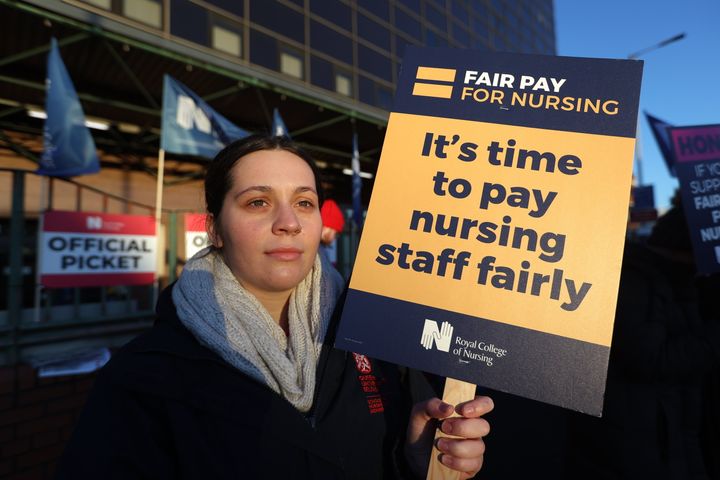
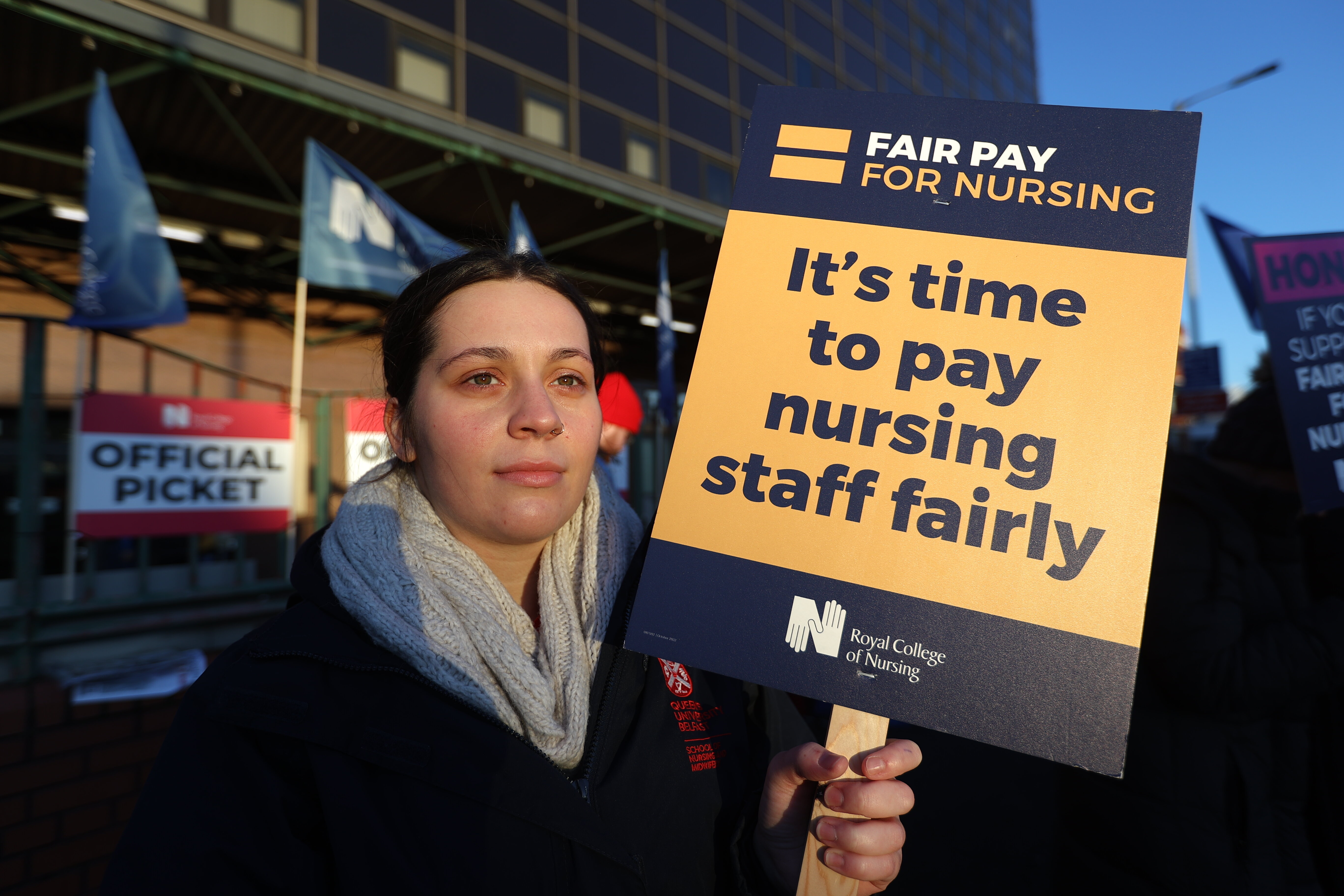
Staff Nurse Courtney Watson joins members of the Royal College of Nursing (RCN) on the picket line outside Mater Infirmorum Hospital in Belfast as nurses in England, Wales and Northern Ireland take industrial action over pay. Picture date: Thursday December 15, 2022.

Liam McBurney via PA Wire/PA Images

A veteran Tory MP told HuffPost UK: “I’ve been around long enough to know that there will invariably be a compromise found.”

Labour can hardly believe their luck. A party source told HuffPost UK: “I just don’t understand what they are thinking – do they think ‘crush the nurses’ is a viable strategy for the country or a good look? He’s just going to end up looking weak again.

“It’s notable that the Tories who think strategically can see a mile off this isn’t going to work.

“It’s absolutely bonkers they didn’t get that strike called off and instead let us use PMQs to frame all the strike action around it. It’s not just that Sunak has no vision – there’s no political strategy either.”

For now, though, the prime minister appears to be digging in.

Speaking in Belfast yesterday, he said: “We want to be fair, reasonable and constructive, that’s why we accepted the recommendations of an independent pay body about what fair pay would be.”

But there is a growing sense in Westminster that a government climbdown is inevitable.

And while that may well pave the way for a resolution to the nurses’ dispute, it will be yet another blow to Sunak’s faltering political reputation.

Share Button

‘Lifelong’ Tory Voter Blasts Jacob Rees-Mogg Over Brexit ‘Benefits’ On Question Time

Audience members on the BBC’s flagship politics show have expressed their frustration about the impact of Brexit on their lives – with one suggesting the “oven ready” withdrawal agreement was more like a “frozen turkey taken out five minutes before Christmas day”.

While leaving the EU has fallen down the political agenda, with no major political party arguing for the UK to rejoin even the single market, BBC’s Question Time aired the frustrations of some over the current situation – from trade to travel.

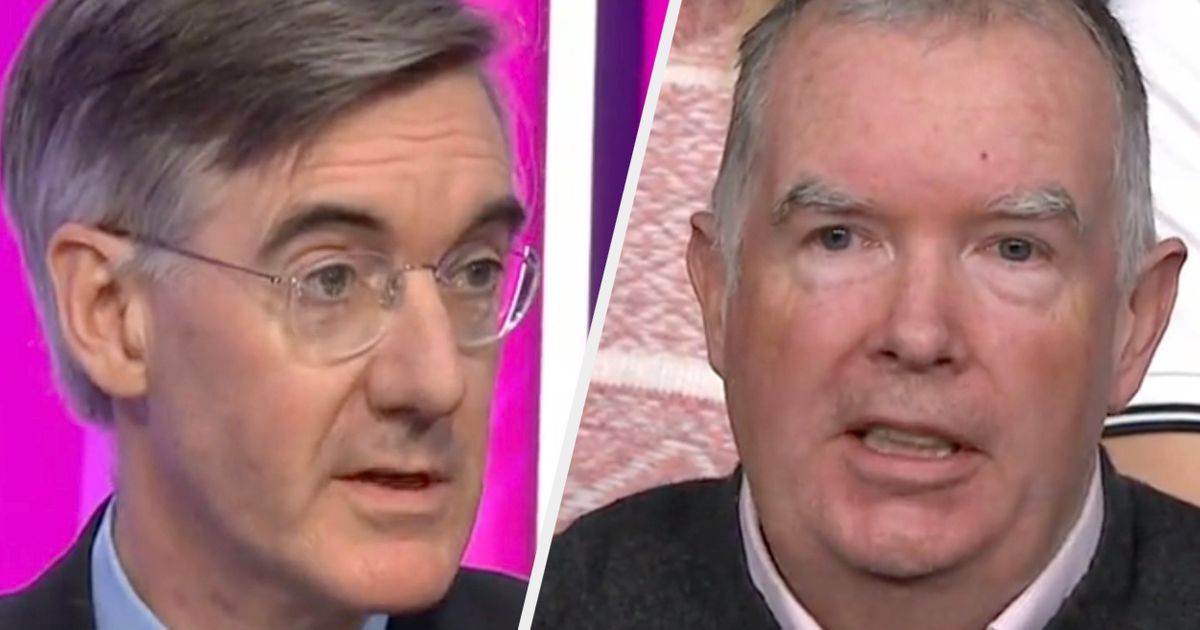
One “lifelong” Tory voter let off steam about the UK’s decision to quit to the bloc having impacted Britain’s wine industry, with former minster and Brexit evangelist Jacob Rees-Mogg taking the flack.

The audience member said: “I’ve spent the last 30 years as a director in the wine industry so I have experienced first-hand just how terrible things have become post-Brexit.

“I find it incredibly disappointing, as a lifelong Conservative voter, to hear Jacob saying all of this stuff.”

He added: “Just from a bureaucracy point of view and the paperwork, I mean everything.

“I’ve been importing and exporting wine for 30 years for a leading wine company and we just see delays, we see paperwork problems, everything has become so much more complicated.

“And the whole point about this being ‘oven ready’, it’s about as oven ready as a frozen turkey taken out five minutes before Christmas day, it really is a joke.”

He added: “I think it’s time someone starts being honest. None of the political parties are actually talking about Brexit and it’s one of the most fundamental problems we’ve got.”

He went on: “I look at the fact that people can tell untruths time and time again and then they are just forgotten, and Brexit was the beginning of all this, and I think as a society it’s incredibly worrying about where this is going to lead to.”

Rees-Mogg, the former business secretary, cited democracy, corruption in Brussels and holidays to Portugal as examples of the benefits of Brexit.

When another audience member criticised the long wait at border control when visiting Spain post-Brexit, Rees-Mogg suggested the British public go “where they are welcome”.

“If the Spanish don’t want British custom there is no need to spend your hard earned money in Spain,” he added, highlighting the virtues of Portugal recognising “having British tourists is a good thing to do”.

Share Button

Matt Hancock Thinks He’s Had ‘A Bucket Of S**t Poured Over My Head’

Matt Hancock has said his affair with Gina Coladangelo has led to the former health secretary having “an absolute bucket of shit poured over my head”.

In an interview with The Mail+ to coincide with his return from the I’m A Celebrity jungle, he renewed his pleas for “forgiveness” as he admitted his relationship with his assistant in the midst of the Covid pandemic was a “failure of leadership”.

The ex-minister was forced to quit last year after video footage emerged of them kissing in his office in breach of social distancing rules he had set.

He told the publication they had fallen “deeply” in love, and as a result his “political judgment was off”.

“I want forgiveness for the mistake I made, the failure of leadership at the end of the pandemic when I fell in love with Gina and I broke the guidance that I’d signed off,” he said.

“I want forgiveness for the human error I made… but I’m not asking for forgiveness for how I handled the pandemic.

“I woke up every single morning determined to do the very best I could in the most impossible circumstances until I needed to go to bed at night. I did that for 18 months.

“There is a good, honest explanation for every single decision I made, whether it turned out to be right or not.”

<img class="img-sized__img landscape" loading="lazy" alt="The Sun newspaper with the story about Matt Hancock and Gina Coladangelo.” width=”720″ height=”480″ src=”https://www.wellnessmaster.com/wp-content/uploads/2022/12/matt-hancock-thinks-hes-had-a-bucket-of-st-poured-over-my-head-2.jpg”>
The Sun newspaper with the story about Matt Hancock and Gina Coladangelo.

Kirsty O’Connor – PA Images via Getty Images

Hancock, who like Coladangelo, was married with three children when they embarked on their affair, said he was not seeking forgiveness for falling in love with her “because I love her very deeply”.

“We realised what was happening was of huge consequence that would last for the rest of our lives but… this was an affaire de coeur and therefore my political judgment was off,” he said.

He said that he had faced “horrific” abuse after he announced that he was appearing on the reality TV show while still an MP.

“It’s been absolutely horrific, especially for Gina,” he said. “I love that woman and what does she get out of it? All she gets is me.”

He added: “I’ve had an absolute bucket of shit poured over my head. The even bigger bucket of shit has been poured over Gina’s.

“She’s given up everything other than her children and, just when she was putting her life back together, she lost an unpaid, ­positive charity role because I was going on I’m A Celebrity.”

He said that each day the public voted for him to remain he was “really pleased” but missed his children “desperately” and felt “guilty” about being away from his Coladangelo.

He added: “I knew it was a risk the whip would be suspended – after all that is the precedent (when Tory MP Nadine Dorries went into the jungle) – but I didn’t expect it and went out of my way to go and see the Chief Whip before coming here.

“I haven’t seen everything Rishi said, but I do agree that public service is a noble profession.

“I think it’s vital MPs connect with the electorate, including the large swathes of people — especially younger people — who don’t ­connect through the traditional political media.”

The interview comes as Hancock’s Pandemic Diaries: The Inside Story Of Britain’s Battle Against Covid, are serialised in the Daily Mail and The Mail+.

They were released as he returned to Westminster for the first time following his controversial appearance on the ITV show.

Share Button

Question Time Panellist Thinks Royal Aide Was ‘Cancelled For One Misspeak’

A Question Time panellist has defended the comments made by a royal aide to a Black domestic abuse campaigner, who was asked repeatedly where she “really came from” at a Buckingham Palace reception.

Ngozi Fulani, founder of the charity Sistah Space, has accused the royal family of institutional racism after the incident involving the late Queen’s lady in waiting, Lady Susan Hussey.

Lady Susan, the Prince of Wales’s 83-year-old godmother, resigned from the household and apologised after she challenged Fulani when she said she was British at the Queen Consort’s reception highlighting violence against women and girls.

But on the BBC’s flagship politics show, Olivia Utley of the GB News broadcaster said Lady Susan was “cancelled for one misspeak”.

She said: “I think it was definitely a very clumsy and surprisingly crass comment from someone who’s spent their life doing these sorts of events.

“But on the other hand I think it’s a bit sad that we live in a society where an 83-year-old woman with 60 years of public service behind her can just be cancelled for one misspeak.

“My heart really goes out to Ngozi Fulani because it sounds like a horrible experience and I can’t quite understand how it happened like that.

“But I think that everyone who knows Lady Susan Hussey says that she’s not in any way racist, she’s a very kind hearted woman, and the rest of her life is going to be blighted by that incident.

“So I worry a bit about cancel culture angle of this whole story but that’s not in any way to undermine what Ngozi Fulani went through because it does sound like a horrible experience.”

Describing how Lady Susan also touched her hair during the incident, Fulani told ITV’s Good Morning Britain: “I was stood next to two other women – black women – and she (Lady Susan) just made a beeline for me, and she took my locks and moved it out of the way so that she could see my name badge.

“That’s a no-no. I wouldn’t put my hands in someone’s hair, and culturally it’s not appropriate.”

Fulani said the comments were down to racism, not Lady Susan’s age.

“I’ve heard so many suggestions it’s about her age and stuff like that. And I think that’s a kind of a disrespect about ageism,” she said on BBC Radio 4’s Today programme.

“Are we saying that because of your age you can’t be racist or you can’t be inappropriate?

“If you invite people to an event, as I said, against domestic abuse, and there are people there from different demographics, I don’t see the relevance of whether I’m British or not British. You’re trying to make me unwelcome in my own space.”

The Palace moved swiftly to respond to Fulani’s tweets on Wednesday morning, saying it took the incident at Tuesday’s reception “extremely seriously” and had investigated immediately.

Share Button