Health Secretary Wes Streeting says the five-day strike by resident doctors is “completely irresponsible”.


Health Secretary Wes Streeting says the five-day strike by resident doctors is “completely irresponsible”.
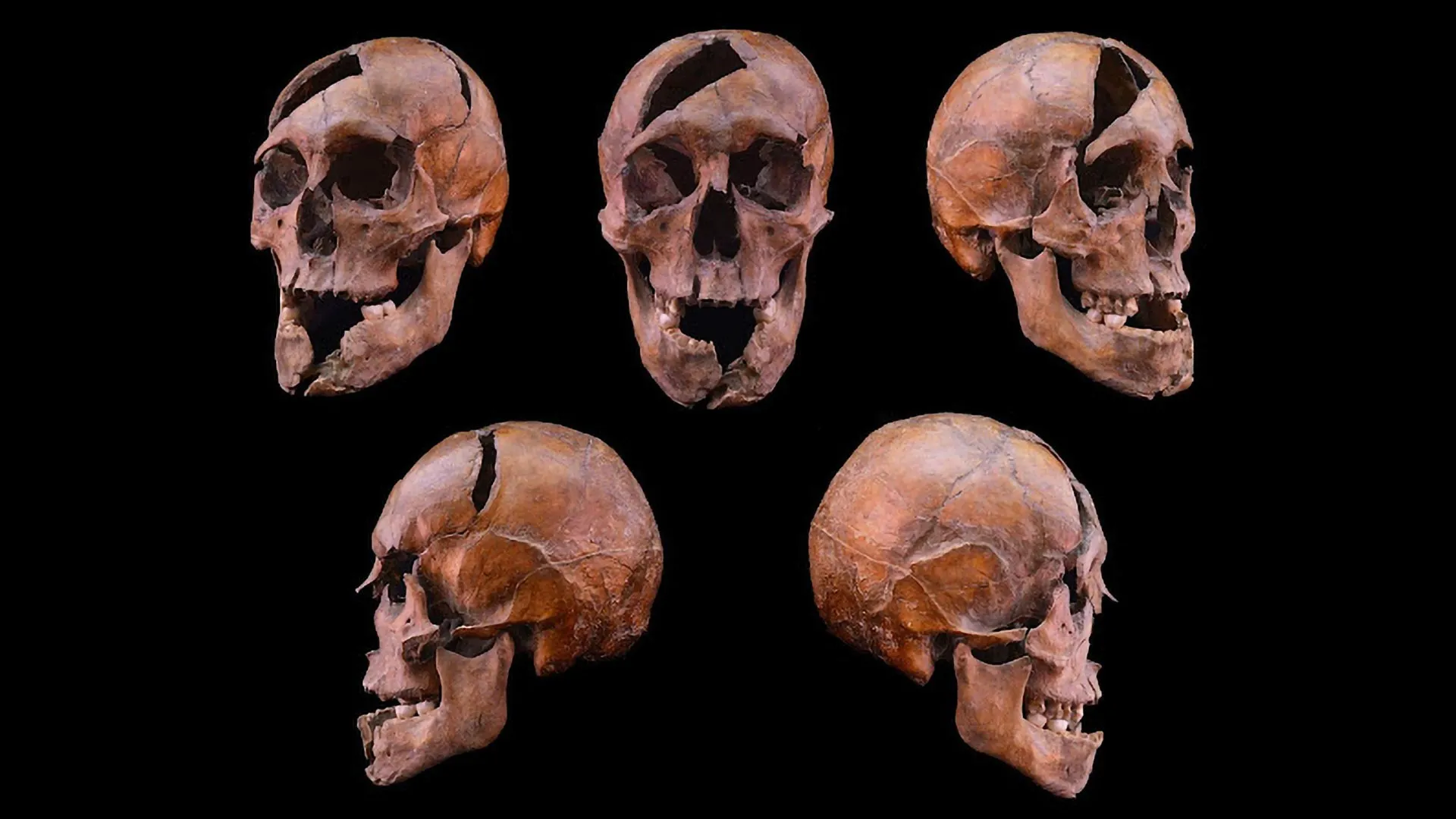
An international team led by Hungarian scholars has successfully confirmed that skeletal remains discovered in Budapest belong to Duke Béla, the Ban of Macsó, who descended from both the Árpád and Rurik dynasties. This finding resolves a long-standing archaeological mystery that has lingered for more than a century.
The project was organized by Tamás Hajdu (Department of Anthropology, Faculty of Sciences, Eötvös Loránd University (ELTE TTK)), with genetic analyses conducted by Anna Szécsényi-Nagy and Noémi Borbély of the Institute of Archaeogenomics, ELTE RCH. Their work demonstrates how historical accounts can be validated and violent deaths reconstructed in remarkable detail when the humanities and natural sciences collaborate. The study has been published in Forensic Science International: Genetics.
Early Discoveries on Margaret Island
The story began in 1915, when archaeologists excavating the Dominican monastery on Margaret Island (Budapest) uncovered the bones of a young man in the sacristy. Based on the burial context, period sources, and the evidence of trauma on the skeleton, researchers at the time suggested that the remains belonged to Béla Duke of Macsó, a member of the House of Árpád. Béla of Macsó (born after 1243 — died: November 1272) was the grandson of King Béla IV on his mother’s side, while his father’s lineage traced back to the Rurik dynasty of northern, Scandinavian origin, which produced numerous Grand Dukes of Kiev from the 9th century onward. According to 13th-century Austrian chronicles, Duke Béla was assassinated in November 1272 by Ban Henrik “Kőszegi” of the Héder family and his associates. Contemporary stories describe how his mutilated body was collected by Margit (his sister) and Erzsébet (his niece) and buried at the Dominican monastery.
Lost Bones and a 20th-Century Disappearance
After the excavation, the remains were sent to Lajos Bartucz at the Institute of Anthropology of the Budapest University (now: Department of Anthropology, ELTE TTK) for bioanthropological study. Bartucz documented 23 sword cuts across the skeleton, along with multiple fatal skull injuries. He concluded that the duke had been attacked by several individuals simultaneously and had even been struck while lying on the ground. Bartucz mentioned the bones publicly in 1936 and published a photograph of the skull in 1938. After that, all references to the remains disappeared, and many experts believed they had been lost during the Second World War. Unexpectedly, in 2018 the postcranial bones were rediscovered in a wooden box stored among tens of thousands of specimens in the Anthropology Collection of the Hungarian Museum of Natural History, while the skull continued to be curated in the Aurél Török Collection at ELTE.
Reopening the Case With Modern Science
In 2018, a new international research consortium was formed under the leadership of Tamás Hajdu (Department of Biological Anthropology, ELTE TTK). The group included anthropologists, geneticists, an archaeologist, an archaeobotanist, stable isotope specialists, radiocarbon experts, and dentists. Their objective was to verify the identity of the remains using modern forensic and bioarchaeological methods and to reconstruct as fully as possible the life and death of the duke.
The find holds exceptional historical value. Besides King Béla III, Béla of Macsó is the only confirmed member of the House of Árpád whose nearly complete skeleton is still preserved. This provides rare insight into both the genetic heritage of the Árpád dynasty and the Rurik line. Researchers from Vienna, Bologna, Helsinki, Harvard University, and multiple Hungarian institutions participated in the project.
Biological Profile and Diet Insights
Anthropological analysis showed that the man buried beneath the monastery floor on Margaret Island was in his early twenties. Radiocarbon dating was performed by two laboratories to ensure accuracy after early 14C measurements suggested a date slightly earlier than expected (second half of the 13th century). Additional tests by the Nuclear Research Institute (Debrecen) revealed that the unexpectedly early date was caused by dietary habits. The individual had consumed high amounts of animal protein, including fish and possibly shellfish that fed on ancient carbon sources, creating a known “reservoir” effect in the bones.
The team also examined dental calculus to further reconstruct his diet. More than a thousand microfossils were recovered from the tartar. Starch grains from wheat and barley, along with clear signs of milling, cooking, and baking, indicated that his meals included cooked wheat semolina and baked wheat bread.
Strontium isotope analysis, which helps determine where a person lived during different stages of life, showed that the individual did not grow up in the same place where he was buried. His early childhood isotope signatures match those found in the region of Vukovar and Syrmia (now part of Croatia and Serbia; earlier this region was a part of the Macso Banat of the Medieval Kingdom of Hungary), as well as other parts of the Carpathian Basin. Later in childhood he moved to a different area, possibly near modern Budapest.
Genetic Evidence Links the Skeleton to Royal Lineages
The final confirmation of identity was carried out at the Institute of Archaeogenomics of ELTE RCH by Anna Szécsényi-Nagy and Noémi Borbély. Multiple lines of genetic evidence supported the genealogical connections described in historical documents. The results show that Béla of Macsó was the great-grandson (fourth-degree descendant) of King Béla III, and his genetic distance to Saint Ladislaus fits this expected lineage pattern.
Genome-wide analysis revealed that the duke had a strong Scandinavian genetic component (almost half), significant Eastern Mediterranean ancestry, and a smaller early medieval Central European component. The Scandinavian contribution supports his descent from the Rurik dynasty, while the Eastern Mediterranean component may correspond to his maternal grandmother, Maria Laskarina, a member of the Byzantine imperial family and wife of Béla IV. Y-chromosome results also confirm the historically documented Rurik paternal line. A 2023 Russian archaeogenomic study showed that a 13th-century Rurikid (Dmitry Alexandrovich) belonged to the same paternal lineage, which can be traced back to Yaroslav I (Yaroslav Vladimirovich, also known as Yaroslav the Wise). Genetic data from present-day Rurikid descendants further reinforces this connection.
Reconstructing a Coordinated and Brutal Assassination
To understand how Béla died and to compare the evidence with medieval accounts, the team conducted a detailed forensic anthropological investigation. The analysis documented 26 perimortem injuries, including nine to the skull and 17 to the rest of the body, all inflicted during a single violent attack. The pattern of wounds suggests that three assailants took part: one confronted him from the front while the others struck from the left and right.
The wounds show that Béla recognized the attack and tried to defend himself. Two types of weapons were likely used, probably a sabre and a longsword. The depth and clarity of the cuts indicate that he wore no armor when he was killed. The reconstructed sequence of violence begins with strikes to the head and upper body, followed by severe defensive injuries as he attempted to block further blows. He was ultimately incapacitated by strikes from the side, and once he fell to the ground, the attackers delivered fatal blows to his head and face. The number and intensity of these injuries point to strong emotional motivation (e.g. sudden anger, hatred), while the coordinated nature of the attack suggests planning. Although Duke Béla’s assassination in November 1272 appears to have been partly or wholly premeditated, the manner of the killing indicates that it was not carried out calmly.
Researchers and institutions participating in the research project:

If it ever becomes achievable, hypersonic flight could dramatically reshape international travel. What currently requires an entire day could become a short trip lasting no more than a feature length movie. A route such as Sydney to Los Angeles, which now takes about 15 hours, might be reduced to only one hour.
“It really shrinks the planet,” says Professor Nicholaus Parziale, whose work centers on turning hypersonic travel from aspiration into reality. Parziale recently received the Presidential Early Career Award for Scientists and Engineers in recognition of his research into fluid mechanics at extreme speeds. “It will make travel faster, easier and more enjoyable.”
The Challenges of Flying at Mach 10
Covering half the world in just one hour may seem impossible, yet the technology is not as far away as it appears. Some military aircraft already reach speeds of Mach 2 or Mach 3, which means two or three times the speed of sound. Mach 1 equals about 760 miles per hour. To travel from Los Angeles to Sydney in sixty minutes, an aircraft would need to reach Mach 10. The major obstacles are the extraordinary turbulence and heat produced during flight at these extreme speeds.
There is a fundamental difference between how air behaves around an aircraft at lower speeds and how it behaves at higher speeds. Engineers describe these conditions as incompressible flow and compressible flow. In incompressible flow, which occurs at lower speeds (below about Mach 0.3 or 225 miles per hour), the density of the air stays nearly the same. This consistency simplifies aeronautical design. Once an aircraft moves faster than the speed of sound, the airflow becomes compressible instead. “That’s because a gas can ‘squish,'” Parziale explains, meaning it can compress.
Why Airflow Behavior Matters for Hypersonic Design
When air compresses, its density changes in response to variations in both pressure and temperature. These shifts influence how an aircraft interacts with the air around it. “Compressibility affects how the airflow goes around the body and that can change things like lift, drag, and thrust required to take off or stay airborne.” All of these factors play a major role in aircraft design.
Engineers already understand airflow fairly well for aircraft that fly below or near the speed of sound, a range called “low Mach” numbers. Creating hypersonic aircraft requires a much deeper understanding of how air behaves at Mach 5, Mach 6, or even Mach 10. Much of that behavior is still uncertain, except for guidance provided by Morkovin’s hypothesis.
Morkovin’s Hypothesis and the Mystery of Hypersonic Turbulence
Developed by Mark Morkovin in the mid 20th century, the hypothesis proposes that when air moves around Mach 5 or Mach 6, the fundamental nature of turbulence remains surprisingly similar to turbulence at lower speeds. Although high-speed airflow involves larger shifts in temperature and density, Morkovin suggested that the general pattern of turbulent motion stays mostly consistent. “Basically, the Morkovin’s hypothesis means that the way the turbulent air moves at low and high speeds isn’t that different,” Parziale says. “If the hypothesis is correct, it means that we don’t need a whole new way to understand turbulence at these higher speeds. We can use the same concepts we use for the slower flows.” This also suggests that future hypersonic aircraft may not require a completely different design philosophy.
Despite its importance, the hypothesis has lacked solid experimental validation. That gap led to Parziale’s recent research, described in his study Hypersonic Turbulent Quantities in Support of Morkovin’s Hypothesis, published in Nature Communications on November 12, 2025.
A Laser and Krypton Experiment Eleven Years in the Making
In the study, Parziale’s team introduced krypton gas into a wind tunnel and used lasers to ionize it. This process briefly created a straight, glowing line formed by the krypton atoms. High-resolution cameras then captured how this illuminated line bent, twisted, and distorted as it moved through the airflow, similar to how a leaf drifts and spins within small swirling currents in a river.”As that line moves with the gas, you can see crinkles and structure in the flow, and from that, we can learn a lot about turbulence,” Parziale says. He notes that developing the experimental setup required 11 years of effort. “And what we found was that at Mach 6, the turbulence behavior is pretty close to the incompressible flow.”
Parziale’s group received early support from the Air Force Office of Scientific Research Young Investigator Research Program (YIP) in 2016 and from the Office of Naval Research (ONR) YIP in 2020, with the latest work also funded by ONR.
What the Findings Mean for Future Flight and Space Access
While Morkovin’s hypothesis is not yet completely proven, the new results move scientists closer to understanding how to design aircraft that can withstand hypersonic speeds. The findings indicate that engineers may not need to reinvent the fundamental approach to aircraft design for these extreme conditions, which simplifies the challenge significantly.
“Today, we must use computers to design an airplane, and the computational resources to design a plane that will fly at Mach 6, simulating all the tiny, fine, little details would be impossible,” Parziale explains. “The Morkovin’s hypothesis allows us to make simplifying assumptions so that the computational demands to design hypersonic vehicles can become more doable.”
Parziale adds that the same principles could transform future access to space. “If we can build planes that fly at hypersonic speed, we can also fly them into space, rather than launching rockets, which would make transportation to and from low Earth orbit easier,” he says. “It will be a game-changer for transportation not only on earth, but also in low orbit.”
Currently, an abortion is only legal before 24 weeks when two doctors agree that certain grounds have been met.
My heart jumped, then thudded, as I faced my fears and the door to Room 207 at Los Altos High School. In three minutes, I would walk in, proceed to the head of the class, listen to teacher Cathy Dao recite my bio to roughly 30 10th graders — and then I would say “diarrhoea” out loud for the first time in my life to an in-person public audience.
It was 2024, and I was at the school to discuss a piece of mine that HuffPost published nearly three years earlier, “Here’s What I Want You to Know About Having Diarrhoea While Out in Public.” The essay addresses bathroom urgency, a condition millions of people experience, some for a limited time and others to varying degrees for the rest of their lives. Because I have Crohn’s disease, I’ve been dealing with it on and off for decades.
Bathroom urgency can affect people with other chronic medical conditions, too, including those with urinary incontinence or paruresis (shy-bladder syndrome); people with ostomy bags; and people on certain medications, say for cancer, weight loss or iron deficiency. But it also can strike delivery folks, mail carriers and other people who don’t work in a building with restrooms nearby, runners, young children and the elderly, and people without homes. Essentially, at some point, there’s a good chance that everyone will require a public restroom because of an urgent need to go, and my essay laid out the need for more easily accessible facilities.
Advertisement
The HuffPost Personal editor had liked my article straightaway — I was the one who put the brakes on publishing it. Several weeks before it was slated to go up on the site, I emailed him, “I’m scared to have this piece published — wondering if I’ll have the nerve to post on social media.” The thought of appearing before such a large and public audience as someone who experiences diarrhoea was terrifying, especially because so few people talk openly about it. However, that was all the more reason to move forward. I slept on it, and then nervously gave my editor the go-ahead.
Across social media platforms, the feedback was mostly positive. One person wrote about waiting for this article for their entire life. A few people were not supportive, writing comments such as, “This article is disgusting.” Hearing something like that can stick with a recovering people-pleaser.
Ultimately, I was happy I’d written the essay — and was happy I was going to be talking about it at the high school. Thanks to an invitation from the school librarian, Gordon Jack, to participate in the school’s annual Writers Week, I had first discussed my writing with students there six years prior.
Advertisement
Five days before my talk, I emailed Ms. Dao, whom I’d gotten to know over the years. “Curious how my article was rec’d by your students, and/or if you have any suggestions re: approach?”
Ms. Dao assured me that she’d told her first period class I had never spoken these words to a non-Crohn’s audience, and that she was confident they would be mature, but I was still anxious. Telling the truth meant risking ridicule, rejection and/or embarrassment — especially in front of high school students. That said, I also knew that if I didn’t start telling my truth, it might not make it out into the world.
Standing before the classroom door, I summoned my purpose: to raise awareness and to ease at least one other person’s way… even if I did not know how much it would ease mine.
Advertisement
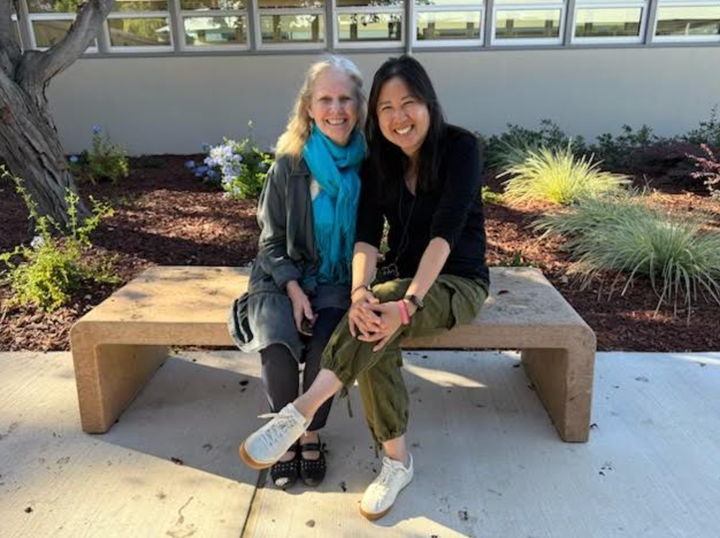
Courtesy of Perla Luna
Clutching my marked-up essay in one hand, and reaching for the doorknob with the other, I headed into that high school classroom… and my deepening vulnerability.
I’d had a carefree childhood in a close-knit seaside town, just riding the waves and my Schwinn — until I began to feel ill weeks before I entered 9th grade and 19 years before the Americans with Disabilities Act.
Advertisement
After 18 months of watching and listening to the swirling white coats from my exam table perch, I finally got a diagnosis: Crohn’s disease, one of the two main forms of inflammatory bowel disease (IBD), along with ulcerative colitis (UC).
One afternoon in the waiting room of my new gastroenterologist, I grabbed a brochure for a camp for kids with Crohn’s. I thought if I went, maybe I could make even one friend who got this disease without me trying to get them to get it. I excitedly flapped the brochure in my mom’s direction on the drive home.
“Can I go to this camp for kids with Crohn’s?” I asked.
My mom had doggedly pursued a diagnosis for me. She sat up at night worrying about me, stuffed enemas up my back side, cleaned up my vomit and diarrhoea, and watched “The Mary Tyler Moore Show” with me rather than socialising on Saturday nights. She showed up for me in every way she could, but she just couldn’t bring herself to actually talk about what was really going on. Like most of us, she was a product of her time and upbringing. I loved her more than anything — she just didn’t understand where my desire to go to the camp was coming from.
Advertisement
“No,” she answered. “We’re not going to focus on that.”
And so we didn’t. We talked about my disease as little as possible.
I learned my lesson: Never show my stripes in public. I was also a teenager, and I wanted to fit in, so I hid my shameful secret as best I could — even from myself. Advocating for people with invisible disabilities never crossed my mind at that time.
Decades later, in 2016, I heard a news commentator mention a survey about the easiest way to get out of work.
Tell them you’re having digestive problems, she said, because no one wants to talk about them, and you won’t be asked any questions.
Advertisement
She and her cozy colleagues all laughed.
But this is no joke.
“Some patients with severe ulcerative colitis flare-ups may need to use the bathroom more than 10 times a day,” Crohn’s & Colitis Foundation Chief Scientific Officer Alan Moss, MD, wrote in an email. “This frequency makes it very hard to leave their homes.”
So UC, as well as a variety of other medical conditions, can sometimes cause people to become virtual prisoners in their homes — if they have them.
Those same conditions can cause people without homes to go through periods of routinely scrambling to find a bathroom quickly, if they find one at all, on top of their other day-to-day challenges.
Advertisement
Tragically, in 2019, a 10-year-old Kentucky boy died by suicide after being bullied about his colostomy bag, which resulted from a bowel condition he’d had since birth. For a variety of complicated reasons that may include bidirectionality as well as bathroom-use embarrassment, people with IBD may also experience depression as well as suicide attempts and death, as can those with IBS and other chronic diseases.
After four decades or so with Crohn’s, I was extremely weary — from finding bathrooms while out in the world, from the vomiting, diarrhoea and acute pain that occurred separately or simultaneously, from feeling invisible, from pretending, from searching for words to convey one of the fundamental stories of my life — all of which I only realised after talking to my therapist.
She was the first person I ever told about my nights in high school when I experienced the howling pain, about how I would writhe on the bathmat behind closed doors and never wake my parents, and only the second person I ever told about a particularly awful bathroom accident in college. Shortly thereafter, I told my husband of 30+ years about both. I never did tell my parents.
Advertisement
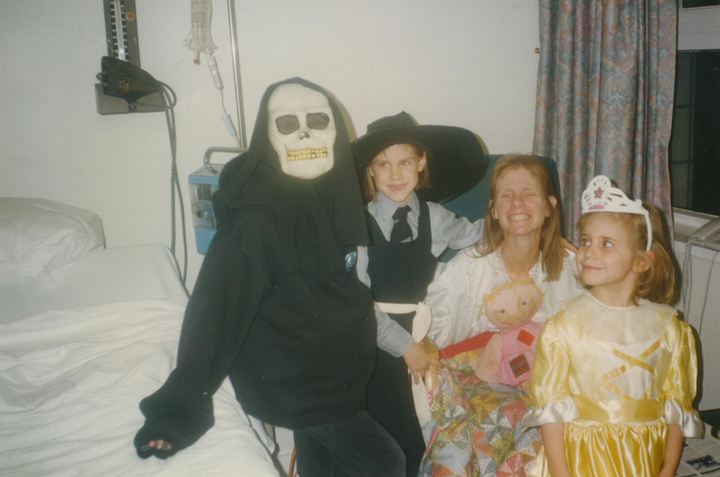
Courtesy of Kirk Davis
I made a video about my Crohn’s for our church.
“What you see isn’t my story,” I said, “and isn’t that true of all of us?”
I also helped organise an invisible disabilities week at church, including a Zoom panel in which I participated. I spoke on another invisible-disabilities panel, again comforted by the barrier my computer screen provided.
In 2020, chained to my desk during lockdown and wanting to give others the voice I couldn’t find for so many years, I co-founded the Disability at Stanford Oral History Project for people in the Stanford community with disabilities. Individuals — including me — were interviewed about their experiences for two to four hours.
Advertisement
Little by little, I was coming out of myself and sharing my stories with more and more people. Publishing my essay on HuffPost exposed me in an entirely new way.
“Thank you for sharing your personal story. It helped me to know that for the last 35 to 40 years, I have not been alone,” wrote one reader.
Another commented, “For every sufferer who happens to stumble on this courageous piece, there are many others who won’t. I hope it goes viral for all of us.”
Advertisement
One reader confessed, “I’m so glad I did read it, and feel like a jerk for my snarky thoughts.”
A paediatric health psychologist shared, “I work with youth with chronic digestive conditions, and having this out there in such a public forum is huge in breaking down stigma and shame … felt by so many kids…”
Hundreds of thousands of people read my piece. I was overwhelmed by the response.
A few people who read my article pointedly challenged me about whether I wear protective underwear, which made me realise I’d lived inside myself for so long that I hadn’t considered writing about how I can go a few years without having an accident while out and about.
Their questions prompted further self-examination, and I’m happy to share more about what my life currently looks like with Crohn’s.
Advertisement
I take most of my thrice-weekly walks in city parks and on school campuses that I’m familiar with so I can quickly locate one of their numerous, fairly clean bathrooms. If I walk on trails or at the beach, I might take an Imodium before departing, which I also do when I travel. I know I can access bathroom-finder apps such as “We Can’t Wait” or “Flush,” among others, and I continue to always carry a change of clothes with me. I take two fibre pills daily, and follow my gluten- and dairy-free diet (most of the time). All of this helps me feel better and gives me more confidence to venture out.
My situation can still turn on a dime. That’s part of having a chronic illness like mine. That said, I have not had a single accident related to bathroom urgency outside my home since my HuffPost essay was published in 2021.
We’ve learned more since then.
Seven weeks after my article appeared, Rebecca Kaplan, then-associate director of marketing & communications at The Crohn’s & Colitis Foundation, reported to me that the Foundation had seen a recent uptick in requests for their “I Can’t Wait” card, which people with IBD can show proprietors or those at the front of a public bathroom line to prove they have to get to a stall immediately.
Advertisement

Courtesy of United Ostomy Associations of America
Thanks to COVID-era discussions, the 2023 coverage of a Delta passenger who had diarrhoea in their seat (I cannot imagine), the side effects of new medications like Ozempic, and a social media trend intent on normalising stomach and bowel concerns, diarrhoea-related internet searches jumped by about 40% from 2018 to 2023.
The Portland Airport has opened single-occupancy, all-gender (SOAG) restrooms that are inclusive, accessible and touchless. Earlier this year, New York City’s Public Restroom Act was signed, and the bipartisan Trucker Bathroom Access Act was reintroduced in Congress. If we can’t bond over our shared bathroom needs, what can we bond over?
Advertisement
But there’s still a lot of work to do.
We need more, cleaner, safer public restrooms and a whole lot more compassion. And we need to have more conversations about bathroom urgency, why it happens, and how we can help one another.
That’s why, as scary as it was to meet that group of high schoolers face to face, I showed up and discussed my essay with them. Unbeknownst to me, Ms. Dao had asked a student from another one of her classes to attend my talk. During the Q&A, that student revealed we share the same disease.
“It was a good feeling to listen to someone who has that common experience,” they told me later, adding that they’d never met anyone else with Crohn’s. Maybe they saw their 15-year-old self in my six-decades-and-counting self. I definitely saw my 10th grade self in them.
Advertisement
May we all be as respectful to one another as Ms. Dao and her 10th graders were to me. Though I still prefer the page to the podium, Ms. Dao and her students helped me feel safer and better about speaking up and out. And here I thought I was there to teach the kids!
This year I returned to Los Altos High School to talk about my article again, only this time I had far less fear. I’ll be back again next year if they’ll have me.
Change — for me and for our society — is slow. But I can see it.
And this is how it happens: one word, one step, one stall at a time.
Alison Carpenter Davis, a former Outside magazine managing editor, has written about life with Crohn’s for HuffPost and the International Herald Tribune, and is at work on a memoir. Look for her interviews for I’m Still Rolling, as well as the Disability at Stanford Oral History Project, a project she co-founded and for which she received the 2024 Susan W. Schofield Award. She’s written on a variety of topics for the Chicago Tribune, The Des Moines Register, The Independent, and the International Herald Tribune, among others. Her book Letters Home from Stanford was released in paperback last year. You can contact her here.
Advertisement
To learn how to advocate for the Restroom Access Act, also called Ally’s Law, go here. To ask for a restroom-access form or wallet i.d. card, contact your health-care provider, the appropriate nonprofit organisation related to your medical condition, or your state health department, which may provide a downloadable form similar to California’s health department.
If you or someone you know needs help with mental health issues, call or text 988 or chat 988lifeline.org for support. Additionally, you can find local mental health and crisis resources at dontcallthepolice.com. Outside of the U.S., please visit the International Association for Suicide Prevention.
Do you have a compelling personal story you’d like to see published on HuffPost? Find out what we’re looking for here and send us a pitch at pitch@huffpost.com.
Advertisement


A hospice offers a free programme for those with life-limiting or serious progressive illnesses.

Wes Streeting brushed off suggestions he wanted to oust Keir Starmer as prime minister today when speaking to LBC – but added in a quick quip while he was at it.
It comes after multiple reports citing senior Labour sources claimed this week that the health secretary was thought to be on manoeuvres and looking to oust the prime minister – while No.10 officials insisted Starmer would not be going anywhere anytime soon.
Advertisement
Streeting instantly denied the reports, accusing senior figures of trying to “kneecap” him and claimed there was a “toxic culture” within No.10.
Starmer later apologised to his cabinet minister over the phone, and insisted he has never authorised any attacks on his ministers.
Speaking on an LBC phone-in on Friday morning, the health secretary seemed to suggest everything was well between him and his boss.
Advertisement
He claimed he and Starmer are still in the “same boat” over the leadership row, joking: “The season finale of the Traitors is over.
“I think the prime minister and I are both in the same boat here of being extremely frustrated because this is a total distraction.”
Streeting also said he had confidence in Starmer’s chief of staff Morgan McSweeney, who has been criticised amid the row.
Advertisement
When asked if he wanted to be prime minister “one day”, Streeting said: “I’m very happy to be doing the job I’m currently doing.”
LBC presenter Nick Ferrari then pointed to a clip from 2018 when Streeting – then a backbencher – predicted that he would be prime minister within a decade.
He smiled, and replied: “It will be my sense of humour that will ultimately do for me one day.
“But If you don’t back yourself, who will? That’s my advice to the kids in my constituency.”
Advertisement
Streeting also spoke out about the way the union jack has become a source of tension in the UK.
“We normally fly our flag in moments of national celebration,” he said, adding that he was “proud” of it.
“It does get hijacked by racists from time to time and I think our response to that should be to reclaim it,” he continued.
“I think we’ve got a level of racism, overt racism, in this country, a kind we haven’t seen for years.
Advertisement
“I’ve been an elected councillor or MP for the last 15 years. I have not had racism come up in my constituency as often as it has in recent weeks.
“People not just saying, ‘I’m really worried about racism,’ people describing being abused, spat at, shoved, giving racist abuse.
“I think we’ve got a sort of 70s, 80s, style racism which has emerged and we’ve got to put it back in its box.
Advertisement
“The government’s got a role to play, but all of us have got a role to play.”


BMA Scotland says ministers went back on a pay agreement but Health Secretary Neil Gray says it is a “fair, affordable, equitable pay offer”.

A new study in the journal Cell from the Chinese Academy of Sciences and Xuanwu Hospital Capital Medical University explains how exercise helps the body stay youthful. The researchers also highlight betaine — a metabolite produced in the kidney — as an oral compound that can imitate many of the rejuvenating effects normally linked to physical activity.
Betaine is a small molecule found in foods like beets and spinach, but the body also makes it on its own. In this study, it emerged as an important signal that helps coordinate the anti-aging benefits of long-term exercise.
How the Body Responds to Exercise
The research team followed 13 healthy men over six years to observe how the body reacts to both short-term and long-term exercise. Using multiomics tools that track genes, proteins, metabolites, and gut bacteria, the scientists compared the body at rest, after a single 5 km run, and after a 25-day running program.
Their results showed that the kidney plays a central role in managing the body’s response to exercise. During sustained training, the kidney produced large increases in betaine, which helped send protective, anti-aging signals throughout the body.
Solving the Exercise Paradox
The study also helps explain the “exercise paradox,” where a single intense workout causes stress but long-term training improves overall health. A short run triggered temporary inflammation and “metabolic chaos,” while regular training restored balance and strengthened the immune system.
Consistent exercise improved gut bacteria, boosted antioxidant defenses, and reversed age-related changes in T cells by stabilizing DNA and adjusting epigenetic marks such as reducing ETS1 expression. The kidney also increased its production of betaine through activity of the enzyme CHDH. Remarkably, giving betaine alone created many of the same benefits as training, including better metabolism, improved cognitive function, reduced depressive-like behavior in older mice, and lower inflammation across the body.
How Betaine Reduces Inflammation
The researchers found that betaine binds to and blocks TBK1, a kinase that drives inflammation. By suppressing TBK1 and its downstream IRF3/NF-κB pathways, betaine helps silence chronic inflammation, also known as “inflammaging.”
This mechanism ties together the exercise paradox: short-term activity triggers survival pathways (IL-6/corticosterone), while long-term training activates the kidney-betaine-TBK1 system that promotes youthfulness. Because betaine is considered safe and effective, it may be useful for people who cannot exercise regularly. “This redefines ‘exercise as medicine’,” says co-corresponding author Dr. Liu Guang-Hui. “This study gives us a fresh way to turn how our body works into something we can target with chemicals. It opens the door to geroprotective treatments that can tweak how multiple organs work together.”
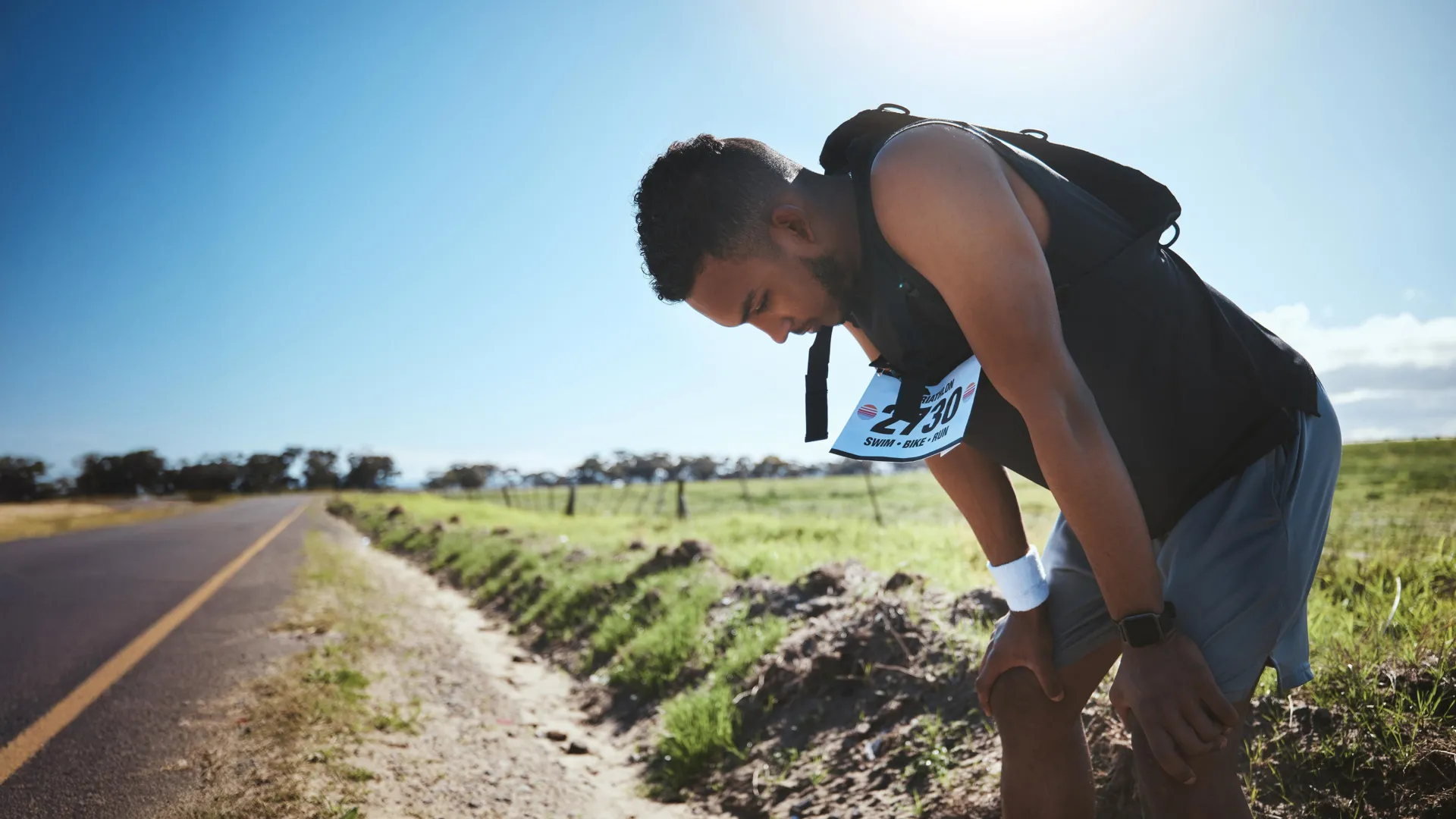
When ultra-runners prepare for races that span hundreds of miles and last for days, they are not only challenging their determination and physical power. They are also exploring how far human physiology can be pushed. In a study published October 20 in the Cell Press journal Current Biology, researchers reported that even elite endurance athletes cannot consistently exceed an average “metabolic ceiling” equal to 2.5 times their basal metabolic rate (BMR) in daily energy use.
The metabolic ceiling refers to the upper limit of calories a person can burn in a sustained way. Earlier studies suggested that people might reach up to 10 times their BMR, which is the minimum amount of energy needed while resting, but only for short, intense periods.
“Every living thing has a metabolic ceiling, but exactly what that number is, and what constrains it, is the question,” says lead author and anthropologist Andrew Best of the Massachusetts College of Liberal Arts, who is also an endurance athlete.
“To find out, we asked, if we get a group of really competitive ultra-athletes, can they break this proposed metabolic ceiling?”
Tracking Energy Burn in Extreme Athletes
To explore that question, the research team monitored 14 ultra-runners, cyclists, and triathletes during both races and training blocks. Participants consumed water enriched with deuterium and oxygen-18, which are slightly heavier forms of hydrogen and oxygen. By following how quickly these isotopes left the body through urine, the scientists were able to determine how much carbon dioxide the athletes exhaled and, in turn, estimate total calorie expenditure.
In multi-day endurance events, several athletes temporarily reached energy burn levels six to seven times their BMR, which translated to roughly 7,000 to 8,000 calories per day. However, when the researchers averaged the athletes’ caloric output across much longer intervals (30 and 52 weeks), their energy use consistently fell back near the expected ceiling of about 2.4 times their BMR. According to the researchers, this pattern demonstrates that even the most highly trained athletes eventually hit a metabolic limit, and sustaining anything above that boundary is extremely difficult.
“If you go over the ceiling for short periods, that’s fine. You can make up for it later,” says Best. “But long term, it’s unsustainable because your body will start to break down its tissue, and you’ll shrink.”
How the Body Reallocates Energy Under Stress
The study also highlighted how the human body balances competing energy demands during extreme endurance efforts. As athletes directed more energy toward running, swimming, and cycling, they naturally reduced energy use in other areas without realizing it.
“Your brain has a really powerful influence on how much you fidget, how much you want to move, and how encouraged you are to take a nap,” says Best. “All these fatigues we feel save calories.”
The researchers noted that their findings reflect the physiology of the athletes who took part in the study. It is possible that unusually high-performing individuals who could exceed the identified ceiling were not included. While the results are important for understanding athletic performance, they also raise broader questions about how this metabolic cap might affect other biological processes.
A Limit Most People Will Never Reach
“For most of us, we’re never going to reach this metabolic ceiling,” says Best. “It takes running about 11 miles on average a day for a year to achieve 2.5 times BMR. Most people, including me, would get injured before any sort of energetic limit comes into play.”
This work was supported by funding from Duke University and a Massachusetts College of Liberal Arts Faculty Incentive Award.
