Here’s a fact that never fails to make me feel more connected to my fellow man: at any given time, about one in seven UK adults is struggling with constipation.
Experts think that change might be partly down to factors like decreased mobility, drinking less water, slower gut transit time, weaker muscles, certain medications, and a higher likelihood of medical conditions that make getting backed up more probable.
Regardless of its cause, though, there’s lots of research to suggest a relatively simple solution: maybe we should all be trying a poop walk.
And research has shown that walking gets our bowels moving a minute or so after we start, helping to relieve constipation, too.
Speaking to HuffPost UK, Julie Thompson, an Information Manager at digestive system charity Guts UK, said: “One of the roles of the large bowel is to absorb water from the gut contents, so the longer poo stays in the large bowel, the drier it becomes.
“Walking stimulates bowel movements because it increases intestinal motility (increases gut muscle contractions) in people with constipation, decreasing the time it takes for the gut contents to move through.”
Advertisement
She added, “Walking regularly can also improve the variety of the gut microbes, compared with those who are less active, which produces health-related benefits for the large bowel and for wider health.”
How can I take a poop walk?
Thompson told us that it can be hard to work out exactly how far or long we should walk to, er, unclog the pipes.
Advertisement
“Research studies use a wide variety of activity in their publications, so it is difficult to be precise about the combined recommendations, plus there is likely to be some individual variation,” she said.
Still, a little may go a long way. A 2025 paper, which included 21 healthy adults, saw great results after a 20-minute treadmill walk, noting that bowel activity increased pretty much as soon as participants got moving.
And other research from this year, which focused on older adults with Parkinson’s disease, found that increasing participants’ steps by 3,000 daily from their usual baseline “significantly improved constipation” after three months.
Advertisement
Thompson told us that you don’t need to be constipated to take advantage of a poop walk – “the best option is to follow the NHS general guidance on activity, which recommends adults should try to be active every day and aim to do at least 150 minutes of physical activity over a week, through a variety of activities including walking.
“If someone is able to walk, but is not active, it is best to increase the distance gradually,” she added.
Even if you’re not constipated, walking can keep you regular
The NHS says on its site that “A daily walk or run can help you poo more regularly”.
Professor Yohei Otaka, author of a study that found a 20-minute walk improved healthy adults’ gut motility, said, “Walking can serve as an effective, immediate tool for stimulating bowel function.
Advertisement
“The findings also point to potential underlying mechanisms, such as changes in autonomic nervous system activity or reflexes triggered by the body’s natural oscillations during movement.”
Aside from its bowel-based benefits, a stroll can “improve cardiovascular health by strengthening the heart, thereby helping circulation, lower[ing] blood pressure, [and] helping in the prevention of heart disease and stroke,” Matthew Nolan, a chief instructor at Barry’s in New York City, previously told HuffPost.
The statistics for colon cancer and rectal cancer – often combined and referred to as colorectal cancer – are both scary and important to know.
For example, colon cancer is the fourth most common cancer in the U.S. and the second leading cause of cancer deaths. Additionally, colorectal cancer rates in young people are rising, nearly doubling since 1995.
Advertisement
We also need to be especially conscientious because many signs of colorectal cancer – such as constipation, diarrhea and fatigue – are easily dismissed. You might assume they’re just another case of irritable bowel syndrome, a food sensitivity or an undercooked meal.
All of this emphasises the importance of knowing what symptoms can indicate colorectal cancer and identifying them ASAP. As a colorectal cancer doctor will tell you, prevention and early intervention are key. That can entail learning your family history, getting regular screenings and paying attention to symptoms.
On that note, there’s a certain symptom doctors want to make sure you’re aware of: bowel incontinence.
Advertisement
While it might feel embarrassing to talk about, we need to. Ahead, doctors explain the concerning sign, other common signs of colorectal cancer, and what prevention and treatment look like. After all, the more information you have, the better prepared you are.
Bowel incontinence as a sign of colorectal cancer
For what it’s worth, this sign isn’t super common – and that can be a good thing and a bad thing.
“Bowel leakage, also called faecal incontinence, is not something most patients with colorectal cancer experience, but it can occur, particularly with cancers involving the rectum,” said Dr. Jason B. Carter, a urologist and medical adviser with Aeroflow Urology who’s board-certified by the American Board of Urology.
That’s a good reminder that even though a symptom isn’t common or necessarily listed on a website, it’s still an indication that seeing a doctor is crucial.
Advertisement
There are several reasons colorectal cancer causes bowel leakage, according to Dr. Ketan Thanki, a board-certified colorectal surgeon who specialises in benign and malignant disease of the colon, rectum and anus with the MemorialCare Todd Cancer Institute at Long Beach Medical Center in California:
Rectal cancer can decrease the rectum’s ability to sense and accommodate stool when it arrives.
Rectal cancer can invade and weaken or disrupt nerve signals to the anal sphincter, decreasing your ability to hold in the stool.
Colon and rectal cancers can secrete large amounts of mucus, which produces diarrhea, which is harder to hold in than solid stool.
Colon and rectal cancer can cause a narrowing of the colon/rectum, in which solid stool can’t pass, and pressurised liquid stool is squeezed through and can cause unexpected leakage.
It’s worth noting that this typically isn’t the first sign you’ll experience.
“Most patients diagnosed with colon or rectal cancer present with other symptoms first, such as rectal bleeding, blood in the stool, changes in bowel habits, abdominal pain, unexplained weight loss, iron deficiency anaemia or persistent fatigue,” Carter said.
Advertisement
So, this symptom can indicate a more advanced cancer.
“Unfortunately, faecal incontinence often presents later in the course of a colorectal cancer because obstruction usually develops once a cancerous lesion becomes large enough to physically block passage of formed stool,” said Dr. Nikiya Asamoah, a gastroenterologist and inflammatory bowel disease specialist in Washington, D.C.
At the same time, this symptom isn’t a 100% clear sign that you have cancer, by any means.
“The important thing for patients to understand is that bowel leakage is much more commonly caused by non-cancerous conditions,” Carter said. He listed ageing, pelvic floor dysfunction, chronic diarrhoea, prior anorectal surgery, childbirth-related injury, neurologic disorders, haemorrhoids, rectal prolapse and inflammatory bowel disease as frequent contributors.
Antonio Hugo Photo via Getty Images
Don’t dismiss signs of colorectal cancer, including bowel incontinence.
Advertisement
Other signs of colorectal cancer
As mentioned above, other symptoms of colorectal cancer (that usually show up earlier) can include:
Rectal bleeding
Blood mixed in the stool
Persistent changes in bowel habits
New constipation
Diarrhoea
Narrowing of stool calibre
Abdominal pain
Unexplained weight loss
Unexplained iron-deficiency anaemia
Excessive fatigue
A feeling of incomplete bowel emptying after a bowel movement
You can also have colorectal cancer without those signs.
“Many patients are surprised to learn that colorectal cancer can be present for quite some time before symptoms become obvious,” Carter added. “That is one reason screening is so important.”
Thanki agreed. “Right-sided colorectal cancer (furthest from the anus) frequently causes no bowel changes at all, showing up only as fatigue or weight loss, which is exactly why screening starting at 45 matters even when you feel fine,” he said.
Advertisement
How to prevent or treat colorectal cancer
“The American Cancer Society has identified several preventable lifestyle habits that might increase an individual’s risk of colorectal cancer, including alcohol and tobacco use,” Asamoah said.
“In general, gastroenterologists recommend that people avoid processed foods, limit excessive intake of red meat, increase their intake of dietary fibre and remain physically active to prevent colorectal cancer.”
If you’re at a higher risk or have a family history, regular colorectal cancer screenings with a colonoscopy are an important prevention strategy, she added.
Advertisement
Thanki agreed, saying that eating nutritious foods, moving your body and getting early, regular screenings are best.
Here’s more good news: “We have never had as many good treatments for colorectal cancer available to us as we do now,” Thanki said. “Colorectal cancer that is caught early is usually surgically treatable.”
If the cancer is advanced or spreads, chemotherapy, radiation therapy and/or targeted immunotherapies are needed in addition to surgery.
Advertisement
“Usually, some combination of these modalities is tailored to fit the individual patient and cancer,” he added.
When to see a doctor
Since seemingly “normal” symptoms can be signs of cancer – and since early detection is so helpful – seeing a doctor sooner rather than later is paramount.
Thanki and Asamoah recommended making an appointment when you experience an onset of any of those symptoms mentioned above.
Advertisement
“If anything feels off about your GI tract and digestion and doesn’t get better within a few weeks, go see a doctor,” Thanki said. “The last thing you want to do is ignore a change in your bowel habits for months or years and then realize it is from an advanced cancer that could have been curable when you first noticed symptoms.”
Even if it’s not cancer, he continued, it could be several other treatable conditions that could also have negative long-term effects if left untreated.
“The biggest message I would share is that colorectal cancer is one of the most preventable cancers we face today,” Carter said. “Early detection dramatically improves outcomes.”
How long do you spend going for a poo? Two minutes? Seven minutes? 20 minutes? Well, it turns out there is a line between spending too long in the bathroom and having a quick and healthy bowel movement.
Spending too much time pooping can lead to health problems and can even be a sign that there’s something larger going on in your gastrointestinal tract.
Advertisement
Here’s what gastrointestinal doctors want you to know.
It should take no more than 5 minutes to have a bowel movement – and maybe even a little less.
Spending more than several moments on the toilet when you poop is too long, doctors say. Exactly how long is too long depends, but around five minutes (or a little less) is a good goal.
Dr. Melissa Hershman, an assistant professor of medicine in the division of gastroenterology and hepatology at Oregon Health and Sciences University, said “an appropriate time to spend on the toilet is no more than three minutes at a time”.
Leslie Waid, a nurse practitioner in gastroenterology at the University of Pittsburgh Medical Center, was a little more lenient with the time, but not by much. According to Waid, it shouldn’t take more than five to 10 minutes to have a bowel movement.
Advertisement
Dr. Valentine Millien, a gastroenterologist at Houston Methodist Hospital, said closer to five minutes is best.
“You should sit down, you should easily pass a bowel movement, feel empty, you get cleaned up and you leave,” Waid said.
“There shouldn’t be any straining or spending time sitting there waiting for stools to pass,” Waid noted.
Advertisement
Straining and excessive pushing motions can “create pelvic trauma, injury,” added Hershman.
For example, straining can cause hemorrhoids, Waid said.
“There are other things that can happen with straining, including anal fissures, and those are tears in the lining of the anal canal, and they can be very painful,” Waid said.
Straining on the toilet can also cause pelvic floor damage and weaken the pelvic floor muscles, Waid added.
“Really, after five minutes, and nothing is happening, we usually tell patients to leave and then wait again to get the urge, and then come back to the bathroom,” Millien noted.
Advertisement
Hopefully, when you return, you’ll be able to evacuate your bowels in just a couple of minutes.
Kinga Krzeminska via Getty Images
One way to spend less time in the bathroom? Stop bringing your phone in with you.
If you spend more than 5 or 10 minutes in the bathroom, there are things you can do to improve your bowel health
If straining and spending 5 or 10 minutes on the toilet is your norm, there are a few things you can do to reduce the time it takes you to poop.
Advertisement
First, positioning is important, said Waid, so stools like Squatty Potty can be helpful.
Millien agreed, “a lot of Asian countries and a lot of African countries, their toilet is actually, even if it’s a ceramic toilet, it’s usually lower to the ground, so that forces you to squat.”
When you squat, “you’re removing some of that pressure of the rectum, and actually allowing gravity to help you evacuate,” Millien said.
And, while it’s common to bring your smartphone everywhere (including in the bathroom), it’s a good idea not to. Research shows that people who bring their phone into the bathroom spend more time in the bathroom and have a higher risk of hemorrhoids, Millien said.
Advertisement
Tried-and-true lifestyle habits are also important for bowel regularity, such as drinking plenty of fluids and exercising, said Waid.
“Exercise is an excellent way to promote bowel motility. I often tell patients that your gut doesn’t move if you don’t,” said Hershman.
Your diet choices also impact your bowel movements. “It’s important to have adequate dietary fibre,” Waid noted. This includes fruits, vegetables, whole grains, certain cereals, oatmeal, chia seeds, beans, and more.
Advertisement
Fibre helps add bulk to stools and makes bowel movements easier to pass.
“If patients feel like they’re not eating enough fibre, or just need a little bit something more for regularity, they can add in a fibre supplement,” Waid said.
“We really want to target at least 25 grams of fibre per day,” said Hershman. For reference, one apple has about 4.5 grams of fibre, one cup of quinoa has 5 grams and one cup of lentils has 15.5 grams of fibre.
In some cases, bowel movement issues can be a sign of colorectal cancer
Rates of colorectal cancer are rising in younger adults, and the signs of colorectal cancer can overlap with some of the problems that come from straining while pooping, too.
Advertisement
“Blood in the toilet – the assumption used to be that this was all hemorrhoids, but it’s also important to talk to your physician,” said Millien.
More, if you notice a change in your bowels, like if you used to have regular bowel movements but are now having frequent constipation or diarrhea, you should also mention that to your doctor, she said.
“Because it could be a sign of inflammation in the colon, or it can be a sign of an obstruction in the colon,” added Millien.
Advertisement
“If there’s any concern in your bowel habits, if anything has changed in your bowel habits, any blood, don’t just minimise [it],” she added.
“A lot of young patients with colon cancer now are actually asymptomatic, other than just intermittent rectal bleeding,” Millien noted.
If you notice anything suspicious about how long it takes you to have a bowel movement, blood in the toilet or any concerning changes, talk to your physician, she stressed.
Using a public toilet is rarely a joyous occasion. They’re filled with sights and smells that can strike fear in the hardest of hearts (and stomachs), and still, most of us have to venture into them at some point if we ever want to live a life outside of our homes.
So how can we make our time in a public bathroom better or safer or, at the very least, less gross?
“Every time I talk about toilet seats and toilets, I’m always saying, ‘Well, it’s not germy – everything is germier than a toilet seat,’” Tetro told us. “[I’m basing that on] studies that were done back in the 1970s and controlled laboratory environments that were mimicking the home… [but those toilets] also had a lid.”
That lid, which is absent from the vast majority of toilets in public restrooms, is key, he said, to containing what scientists call a “poo plume” – the droplets and aerosol particles that can spray up to six feet out of the toilet when we flush.
“As a result of [there not being a lid], there’s that plume that comes from the toilet that ends up on the seat, and no matter where you go, you’re always going to find that about 50% of the [public restroom] toilet seats at any given time are going to have some kind of poo germs on them in the range of hundreds [of particles],” he said.
Advertisement
Those poo particles can contain E. coli, salmonella, or even norovirus, all of which, if present in high enough concentrations, can make us sick – but not from sitting on the toilet seat.
“We do see potentially some low level of all sorts of different types of bacteria and viruses that could potentially cause an infection, but the reality is, unless you have a cut, then there’s really no opportunity for that to get into your skin to cause a problem,” Tetro, the author of The Germ Files and The Germ Code, explained.
However, droplets in the air are a different matter altogether. That’s why he says flushing the toilet is the first thing he does before using it to “get a fresh” bowl and he never stays in the stall after flushing.
Advertisement
“Make sure that you kind of get out of the stall for 30 seconds to let whatever was aerosol or the droplets to fall and then you can go back in,” he said, noting that he actually does this himself before he uses a toilet in a public restroom.
“So here’s the problem: if it’s norovirus or some of the more really troublesome bacteria like E.coli 0157:H7, then you may actually end up getting exposed to a high enough level that it could potentially cause infection,” he warned.
That’s because the droplets from the plume could land in your mouth or nose – which is even more of a danger if you’re standing in close proximity to a public restroom toilet that features an extremely powerful flusher.
Advertisement
“So if you’re gonna go for the clean or for the fresh bowl, make sure that your face is nowhere near that plume,” he added.
Once you’ve finished your business, don’t stick around in the stall after you’ve flushed either – unless you want to be showered by a plume of your own poo particles.
We also chatted with Tetro about the germiest part of a public restroom (spoiler: it’s not the toilet seat), what to do if there’s no soap in the bathroom, and much more.
Need some help with something you’ve been doing wrong? Email us at AmIDoingItWrong@HuffPost.com, and we might investigate the topic in an upcoming episode.
Whether it happens on your postprandial fart walk, right in the middle of yoga class or while you’re sleeping, everyone — even the poshest among us — farts.
According to Dr. Satish Rao,professor of Medicine at Augusta University’s Medical College of Georgia, the average person farts seven to 24 times a day.
Advertisement
“It’s a normal physiological phenomenon,” he said, explaining flatulence as the byproduct of fermentation in the colon.
That fermentation creates gas, which is a mixture of nitrogen, oxygen, carbon dioxide, methane, hydrogen and more. One surprisingly smelly fact is that more than 99% of farts are odourless, but a foul smell comes from trace sulphur compounds. Unfortunately, our noses are extremely good at detecting sulphur, even in microscopic amounts.
Once that gas is formed, Rao said there are only two options for it to escape. “Some gas will move from the lining of the colon to the bloodstream, then get exhaled by the breath,” he said. “But the other pathway out is the fart. The gas will find its way out eventually, and if you produce a lot of gas too quickly, it won’t be absorbed, but will automatically push its way out through the anus.”
Advertisement
In general, a few farts a day are nothing to worry about, said Dr. Cait Welsh, postdoctoral researcher from Monash University and the Hudson Institute of Medical Research. “Most of the time, the release of gas is a healthy sign that digestion and gut microbiota are happy and functioning well.”
While you produce gas all day long, you’re more likely to let ’em rip during sleep, when your anal sphincter relaxes and gas escapes more easily.
Which People Are The Gassiest?
It might be hard to think of King Charles or the Pope as real toot machines, but Rao is positive that anyone who eats food, especially carbohydrates, is going to fart at least some time during each day. And some of us are certainly more, um, productive than others, said Dr. Folasade P. May, associate professor of Medicine at University of California Los Angeles.
Advertisement
“People who chew a lot of gum, drink carbonated drinks or eat too quickly may swallow more air, for example, which can cause flatulence,” she said. “Other people have gut bacteria that produce more gas. Diet, how fast you digest, and medications can also change how much gas you make and pass.”
If you’re thinking that President Donald Trump is making you fart more, you might be right. (Fun fact: An old Australian slang word for a fart is a “trump.”) Stress or anxiety, about the current political climate or matters closer to home, can have an impact on how much someone farts, May said.
“Especially in people with irritable bowel syndrome or other functional gut disorders, stress can change how fast we eat and digest, making flatulence seem worse,” May explained.
Advertisement
krisanapong detraphiphat via Getty Images
Stress can increase your flatulence, according to gastro doctors.
Foods That Can Up Your Fart Count
Dr. Ed Giles, a pediatric gastroenterologist and associate professor of pediatrics at Monash University, noted that the most well-known foods to cause gas are the so-called FODMAP foods, an acronym for Fermentable Oligosaccharides, Disaccharides, Monosaccharides and Polyols.
The key term for these carbohydrates, Giles said, is “fermentable.” That means the foods have an ability to produce gas. “They feed the bacteria in the gut and the bacteria produce the gas, including methane, which smells,” he said.
Advertisement
May outlined some of the worst FODMAP culprits: beans, lentils, onions, garlic, crucifers like broccoli and cabbage, and some whole grains and fruits. “If you’re lactose intolerant, consuming dairy can also increase gas production,” she said.
When To Be Concerned
Gas is concerning when it’s painful, disruptive or different from your normal pattern. If you’re regularly releasing gas more than 23 or 24 times a day and it’s causing problems, it’s worth investigating. However, some people may experience more flatulence than that and it’s still considered normal; it all depends on your diet and your personal health factors.
“The most important thing is that if excessive flatulence is persistent or accompanied by pain, weight loss, diarrhea or blood in the stool, it’s worth consulting a clinician for evaluation,” May said. “If gas is persistent or accompanied by these other warning signs, a clinician can help sort out causes.”
Advertisement
Some of the conditions a health care professional will want to rule out include celiac disease, inflammatory bowel disease, irritable bowel syndrome, lactose or other food intolerances, pancreatic enzyme insufficiency and small intestinal bacterial overgrowth. Connective tissue disorders like Ehlers-Danlos syndrome and other diseases like multiple sclerosis also come with increased flatulence.
You might be asked to keep a food journal and, yes, even count the number of farts you produce each day. Luckily, there are now several apps to help you do this, including Gaslog, FlareCare, Gutly and Vitalis. These apps aren’t medical diagnostic tools, but might help you spot patterns in how your diet and lifestyle contribute to gas symptoms.
And just keep in mind that everyone — every single one of us — has experienced an ill-timed fart, and lived to tell the tale. So unless your gas comes with pain or surprises, you’re probably just doing what everyone else is doing, too.
There’s actually a term for getting up to pee in the middle of the night: nocturia.
Most people will experience more nocturia as they age, because older bodies create less antidiuretic hormone (ADH), which helps us “hold it in”.
Still, while peeing up to twice a night is within the realm of normal (that number goes up to four times a night for those over 90), the NHS said that going more than that per night might mean you need to see a doctor.
Advertisement
Nocturia sometimes happens after drinking alcohol, because of certain medications, or due to drinking too much water close to bedtime.
Why might walking lower the number of loo trips at night?
The 2007 research, published in Biomedical Research, looked at 30 men with an average age of 71.
The researchers recorded their nocturia rates before and after walking at a brisk pace for half an hour in the evening for eight weeks.
Advertisement
Just over two-thirds (67%) of the men said they experienced deeper sleep, which the researchers think might explain why nocturia instances went down so much.
The number of times they got up to pee shrank from about three times per night, on average, to two times per night.
60% of participants enjoyed “excellent” or “good” results after the end of the trial, meaning they experienced less nocturia.
Advertisement
Why might walking help reduce nocturia?
This is not the only study to find an association between light exercise and decreased instances of nocturia.
Some researchers think this might be because exercise can help to reduce sympathetic nervous system activity and lower systemic inflammation levels.
Advertisement
A 2015 study, which also looked into walking and nocturnal polyuria, or the overproduction of urine at night, found that walking before dinner was linked to a reduction in nighttime bladder voiding from 2.3 times a night to 1.6 times.
They suggested that walking could get rid of excess fluid through sweating, too.
When to see a doctor about nocturia
Rarely, nocturia can be a sign of diabetes, high blood pressure, bladder or prostate problems, or heart disease, though the NHS stresses most cases aren’t anything to worry about.
Per the Cleveland Clinic, “contact your healthcare provider if you find yourself waking up to pee more than once or twice per night”.
Advertisement
The site suggested: “It may be a sign of something else going on, and the frequent wake-ups may leave you feeling exhausted.”
My heart jumped, then thudded, as I faced my fears and the door to Room 207 at Los Altos High School. In three minutes, I would walk in, proceed to the head of the class, listen to teacher Cathy Dao recite my bio to roughly 30 10th graders — and then I would say “diarrhoea” out loud for the first time in my life to an in-person public audience.
It was 2024, and I was at the school to discuss a piece of mine that HuffPost published nearly three years earlier, “Here’s What I Want You to Know About Having Diarrhoea While Out in Public.” The essay addresses bathroom urgency, a condition millions of people experience, some for a limited time and others to varying degrees for the rest of their lives. Because I have Crohn’s disease, I’ve been dealing with it on and off for decades.
Bathroom urgency can affect people with other chronic medical conditions, too, including those with urinary incontinence or paruresis (shy-bladder syndrome); people with ostomy bags; and people on certain medications, say for cancer, weight loss or iron deficiency. But it also can strike delivery folks, mail carriers and other people who don’t work in a building with restrooms nearby, runners, young children and the elderly, and people without homes. Essentially, at some point, there’s a good chance that everyone will require a public restroom because of an urgent need to go, and my essay laid out the need for more easily accessible facilities.
Advertisement
The HuffPost Personal editor had liked my article straightaway — I was the one who put the brakes on publishing it. Several weeks before it was slated to go up on the site, I emailed him, “I’m scared to have this piece published — wondering if I’ll have the nerve to post on social media.” The thought of appearing before such a large and public audience as someone who experiences diarrhoea was terrifying, especially because so few people talk openly about it. However, that was all the more reason to move forward. I slept on it, and then nervously gave my editor the go-ahead.
Across social media platforms, the feedback was mostly positive. One person wrote about waiting for this article for their entire life. A few people were not supportive, writing comments such as, “This article is disgusting.” Hearing something like that can stick with a recovering people-pleaser.
Ultimately, I was happy I’d written the essay — and was happy I was going to be talking about it at the high school. Thanks to an invitation from the school librarian, Gordon Jack, to participate in the school’s annual Writers Week, I had first discussed my writing with students there six years prior.
Advertisement
Five days before my talk, I emailed Ms. Dao, whom I’d gotten to know over the years. “Curious how my article was rec’d by your students, and/or if you have any suggestions re: approach?”
Ms. Dao assured me that she’d told her first period class I had never spoken these words to a non-Crohn’s audience, and that she was confident they would be mature, but I was still anxious. Telling the truth meant risking ridicule, rejection and/or embarrassment — especially in front of high school students. That said, I also knew that if I didn’t start telling my truth, it might not make it out into the world.
Standing before the classroom door, I summoned my purpose: to raise awareness and to ease at least one other person’s way… even if I did not know how much it would ease mine.
Advertisement
Courtesy of Perla Luna
“Sometimes it takes a teacher — and her class.” (The author, left, with Cathy Dao).
Clutching my marked-up essay in one hand, and reaching for the doorknob with the other, I headed into that high school classroom… and my deepening vulnerability.
I’d had a carefree childhood in a close-knit seaside town, just riding the waves and my Schwinn — until I began to feel ill weeks before I entered 9th grade and 19 years before the Americans with Disabilities Act.
Advertisement
After 18 months of watching and listening to the swirling white coats from my exam table perch, I finally got a diagnosis: Crohn’s disease, one of the two main forms of inflammatory bowel disease (IBD), along with ulcerative colitis (UC).
One afternoon in the waiting room of my new gastroenterologist, I grabbed a brochure for a camp for kids with Crohn’s. I thought if I went, maybe I could make even one friend who got this disease without me trying to get them to get it. I excitedly flapped the brochure in my mom’s direction on the drive home.
“Can I go to this camp for kids with Crohn’s?” I asked.
My mom had doggedly pursued a diagnosis for me. She sat up at night worrying about me, stuffed enemas up my back side, cleaned up my vomit and diarrhoea, and watched “The Mary Tyler Moore Show” with me rather than socialising on Saturday nights. She showed up for me in every way she could, but she just couldn’t bring herself to actually talk about what was really going on. Like most of us, she was a product of her time and upbringing. I loved her more than anything — she just didn’t understand where my desire to go to the camp was coming from.
Advertisement
“No,” she answered. “We’re not going to focus on that.”
And so we didn’t. We talked about my disease as little as possible.
I learned my lesson: Never show my stripes in public. I was also a teenager, and I wanted to fit in, so I hid my shameful secret as best I could — even from myself. Advocating for people with invisible disabilities never crossed my mind at that time.
Decades later, in 2016, I heard a news commentator mention a survey about the easiest way to get out of work.
Tell them you’re having digestive problems, she said, because no one wants to talk about them, and you won’t be asked any questions.
Advertisement
She and her cozy colleagues all laughed.
But this is no joke.
“Some patients with severe ulcerative colitis flare-ups may need to use the bathroom more than 10 times a day,” Crohn’s & Colitis Foundation Chief Scientific Officer Alan Moss, MD, wrote in an email. “This frequency makes it very hard to leave their homes.”
So UC, as well as a variety of other medical conditions, can sometimes cause people to become virtual prisoners in their homes — if they have them.
Those same conditions can cause people without homes to go through periods of routinely scrambling to find a bathroom quickly, if they find one at all, on top of their other day-to-day challenges.
Advertisement
Tragically, in 2019, a 10-year-old Kentucky boy died by suicide after being bullied about his colostomy bag, which resulted from a bowel condition he’d had since birth. For a variety of complicated reasons that may include bidirectionality as well as bathroom-use embarrassment, people with IBD may also experience depression as well as suicide attempts and death, as can those with IBS and other chronic diseases.
After four decades or so with Crohn’s, I was extremely weary — from finding bathrooms while out in the world, from the vomiting, diarrhoea and acute pain that occurred separately or simultaneously, from feeling invisible, from pretending, from searching for words to convey one of the fundamental stories of my life — all of which I only realised after talking to my therapist.
She was the first person I ever told about my nights in high school when I experienced the howling pain, about how I would writhe on the bathmat behind closed doors and never wake my parents, and only the second person I ever told about a particularly awful bathroom accident in college. Shortly thereafter, I told my husband of 30+ years about both. I never did tell my parents.
Advertisement
Courtesy of Kirk Davis
The author’s three children visit her on Halloween while she recovered from another Crohn’s-related bowel resection.
I made a video about my Crohn’s for our church.
“What you see isn’t my story,” I said, “and isn’t that true of all of us?”
I also helped organise an invisible disabilities week at church, including a Zoom panel in which I participated. I spoke on another invisible-disabilities panel, again comforted by the barrier my computer screen provided.
In 2020, chained to my desk during lockdown and wanting to give others the voice I couldn’t find for so many years, I co-founded the Disability at Stanford Oral History Project for people in the Stanford community with disabilities. Individuals — including me — were interviewed about their experiences for two to four hours.
Advertisement
Little by little, I was coming out of myself and sharing my stories with more and more people. Publishing my essay on HuffPost exposed me in an entirely new way.
“Thank you for sharing your personal story. It helped me to know that for the last 35 to 40 years, I have not been alone,” wrote one reader.
Another commented, “For every sufferer who happens to stumble on this courageous piece, there are many others who won’t. I hope it goes viral for all of us.”
Advertisement
One reader confessed, “I’m so glad I did read it, and feel like a jerk for my snarky thoughts.”
A paediatric health psychologist shared, “I work with youth with chronic digestive conditions, and having this out there in such a public forum is huge in breaking down stigma and shame … felt by so many kids…”
Hundreds of thousands of people read my piece. I was overwhelmed by the response.
A few people who read my article pointedly challenged me about whether I wear protective underwear, which made me realise I’d lived inside myself for so long that I hadn’t considered writing about how I can go a few years without having an accident while out and about.
Their questions prompted further self-examination, and I’m happy to share more about what my life currently looks like with Crohn’s.
Advertisement
I take most of my thrice-weekly walks in city parks and on school campuses that I’m familiar with so I can quickly locate one of their numerous, fairly clean bathrooms. If I walk on trails or at the beach, I might take an Imodium before departing, which I also do when I travel. I know I can access bathroom-finder apps such as “We Can’t Wait” or “Flush,” among others, and I continue to always carry a change of clothes with me. I take two fibre pills daily, and follow my gluten- and dairy-free diet (most of the time). All of this helps me feel better and gives me more confidence to venture out.
My situation can still turn on a dime. That’s part of having a chronic illness like mine. That said, I have not had a single accident related to bathroom urgency outside my home since my HuffPost essay was published in 2021.
We’ve learned more since then.
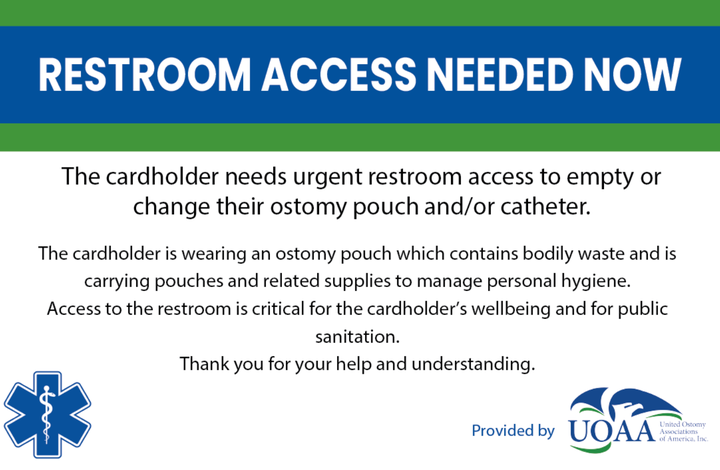
Seven weeks after my article appeared, Rebecca Kaplan, then-associate director of marketing & communications at The Crohn’s & Colitis Foundation, reported to me that the Foundation had seen a recent uptick in requests for their “I Can’t Wait” card, which people with IBD can show proprietors or those at the front of a public bathroom line to prove they have to get to a stall immediately.
Advertisement
Courtesy of United Ostomy Associations of America
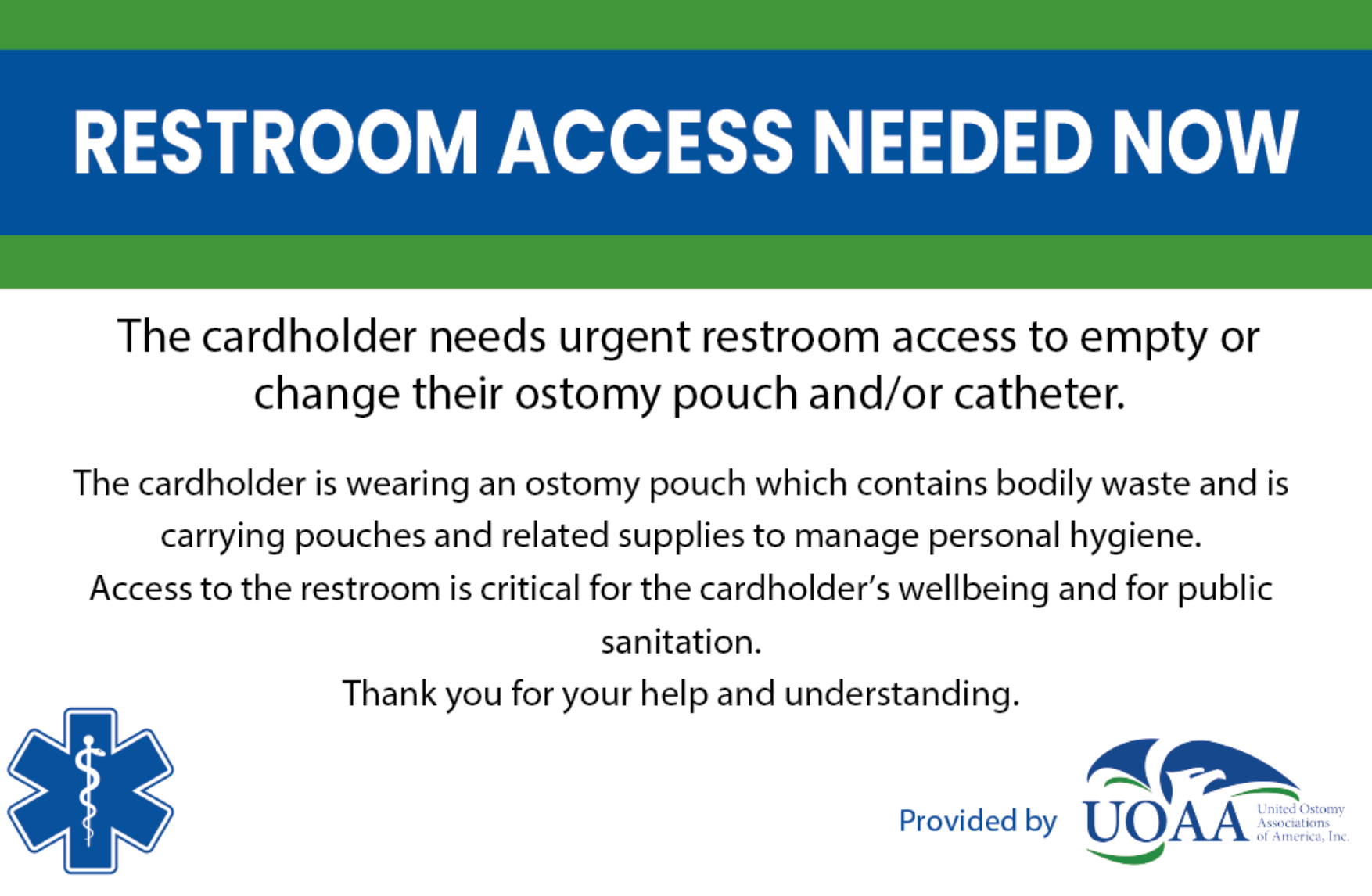
By downloading the free “We Can’t Wait” restroom finder app, anyone — whether a Crohn’s & Colitis Foundation member or not — can access a digital “I Can’t Wait” bathroom-access card. The Foundation provides a physical card for those who become a member, and non-members who also need a hard-copy card can now request one from the Foundation’s Help Center at 1-888-MY-GUT-PAIN or 1-888-694-8872. The Color of Gastrointestinal Illnesses (COGI), United Ostomy Associations of America (UOAA), and other organizations also offer restroom-access cards.
The Portland Airport has opened single-occupancy, all-gender (SOAG) restrooms that are inclusive, accessible and touchless. Earlier this year, New York City’s Public Restroom Act was signed, and the bipartisan Trucker Bathroom Access Actwas reintroduced in Congress. If we can’t bond over our shared bathroom needs, what can we bond over?
Advertisement
But there’s still a lot of work to do.
We need more, cleaner, safer public restrooms and a whole lot more compassion. And we need to have more conversations about bathroom urgency, why it happens, and how we can help one another.
That’s why, as scary as it was to meet that group of high schoolers face to face, I showed up and discussed my essay with them. Unbeknownst to me, Ms. Dao had asked a student from another one of her classes to attend my talk. During the Q&A, that student revealed we share the same disease.
“It was a good feeling to listen to someone who has that common experience,” they told me later, adding that they’d never met anyone else with Crohn’s. Maybe they saw their 15-year-old self in my six-decades-and-counting self. I definitely saw my 10th grade self in them.
Advertisement
May we all be as respectful to one another as Ms. Dao and her 10th graders were to me. Though I still prefer the page to the podium, Ms. Dao and her students helped me feel safer and better about speaking up and out. And here I thought I was there to teach the kids!
This year I returned to Los Altos High School to talk about my article again, only this time I had far less fear. I’ll be back again next year if they’ll have me.
Change — for me and for our society — is slow. But I can see it.
And this is how it happens: one word, one step, one stall at a time.
To learn how to advocate for the Restroom Access Act, also called Ally’s Law, go here. To ask for a restroom-access form or wallet i.d. card, contact your health-care provider, the appropriate nonprofit organisation related to your medical condition, or your state health department, which may provide a downloadable form similar to California’s health department.
A simple stroll can “improve cardiovascular health by strengthening the heart, thereby helping circulation, lower[ing] blood pressure, [and] helping in the prevention of heart disease and stroke,” Matthew Nolan, a chief instructor at Barry’s in New York City, previously told HuffPost.
But in a recent Instagram Reel, Dr Tim Tiutan – a physician and assistant professor – signed off on the idea of adding some, er, gas to your evening wander too.
Advertisement
Stitching a video in which author and creator of the hashtag #fartwalks Mairyln Smith said she and her husband go for “fart walks” after dinner to help them “age beautifully,” the doctor helped us to “look into the science of fart walks.”
Yup, ‘fart walking’ really is good for us
Walking can help to improve “intestinal motility” Dr Tiutan said, meaning it can banish both gas and constipation.
But Smith explained that “the main reason we do fart walks is because by walking… we are helping reduce our chances of developing type 2 diabetes… as you age, especially after 40, you have a bigger chance of developing type 2 diabetes.”
A 2016 study involving people with type 2 diabetes found that 10 minutes of “light” walking following each meal did a better job of managing participants’ blood sugar than walking for 30 minutes at any one time.
That’s partly why a likely gassy (thanks to the “intestinal motility”) post-dinner walk may be better for you than you might think.
Advertisement
Exercise of any kind prevents “large spikes in blood sugar,” the doctor agreed (it can lower your blood glucose for up to 24 hours after completion).
The practice may lower your cancer risk, too
Walking “also lowers our cancer risk,” Dr Tiutan continued.
Professor Amy Berrington, Leader of the Institute for Cancer Research [ICR]’s Clinical Cancer Epidemiology Group, said: “There is strong evidence that getting enough physical activity is linked to a lower risk of many types of cancer in both men and women.”
Advertisement
Cancer.gov says we should aim roughly for 150-300 minutes per week of moderately paced walking.
So perhaps I shouldn’t have been as surprised as I initally was to hear Dr Tiutan say, “I totally support fart walks.”
You probably shouldn’t stick to the social media-beloved carnivore diet, heart health experts say – it may end up raising your “bad” LDL cholesterol.
But what about “fibremaxxing,” a recent TikTok obsession which sees some creators eat more fibre in their breakfast than most people eat in an entire day?
Advertisement
I’ve been on the fibre bandwagon for a long time. It’s linked to lower bowel cancer, dementia, and heart disease risk, but 90% of us fail to hit the recommended 30g a day.
Am I in the right, though? Though many of us lack the crucial carb, can “fibremaxxing” go too far?
Amy Glover / HuffPost UK
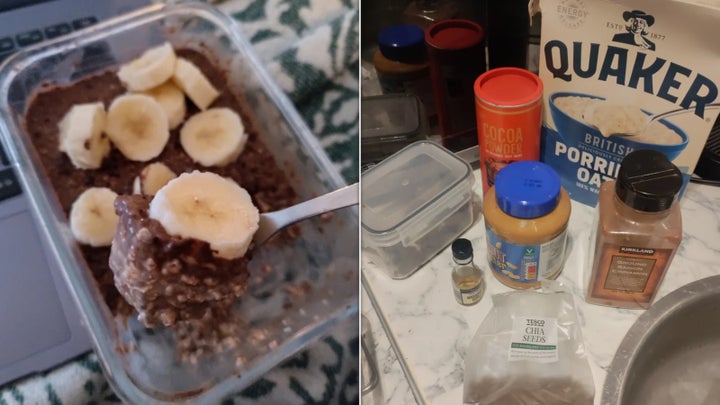
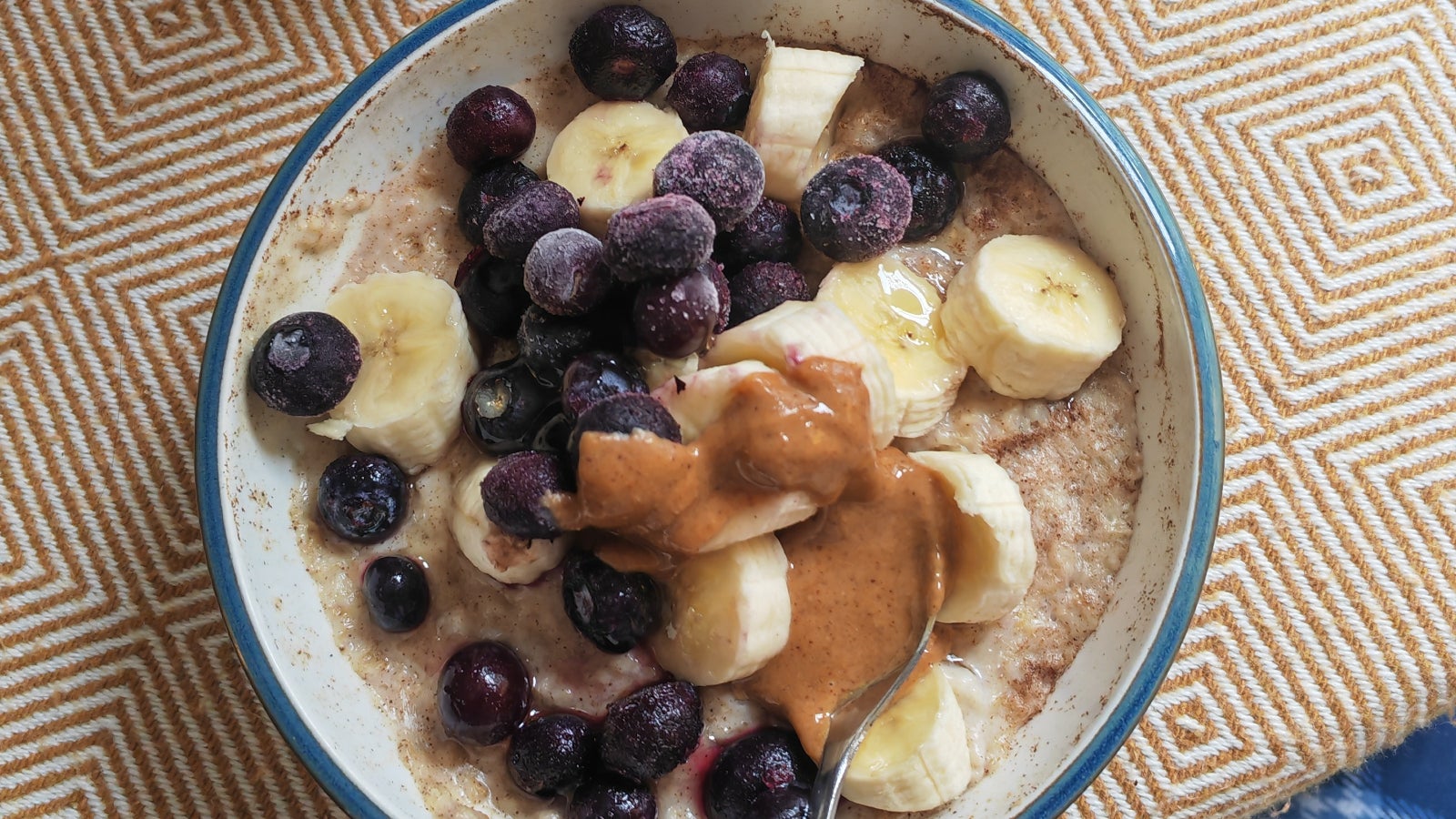
My “fibremaxxed” breakfast
Advertisement
Most of us really could benefit from “fibremaxxing”
Registered dietitian Brea Lofton from Lumen shared that “most adults in Western countries really consume far less fibre than the general recommendation.”
On average, she said, adults hit 20-15g a day (as little as half the recommended amount).
“The gap in fibre can contribute to higher risks of cardiometabolic diseases, like type 2 diabetes, obesity, and even heart disease,” the dietitian added.
Oats, brown rice, legumes, beans, wholegrain versions of foods like pasta and bread, and fruits and veggies can all provide a fibre boost.
But the expert gave a word of caution; you should up your intake slowly, particularly if you didn’t eat much fibre before “maxxing” it.
Too much too soon can lead to “bloating, gas, cramping, constipation or diarrhoea, and nutrient malabsorption,” Lofton said.
“Diarrhoea and constipation can occur depending on the type of fibre, in addition to how much water an individual is drinking, and malabsorption can occur when consuming excessive amounts of fibre over a significant span of time.”
This might be especially noticeable for those boosting their fibre through fortified food or supplements, which she suggested “may not provide the same microbial benefits as whole foods.”
Upping your fibre isn’t for everyone, either
Though in general, more of us should eat more fibre, Lofton stated that older people, those with IBS, people in the post-surgery period, and chronically ill individuals might want to consult a doctor before eating more fibre.
Feelings of fullness when you haven’t eaten much, a bloated, gassy, or “upset” stomach can all reveal you’re doing too much, too soon.
This happens because “the extra bulk and water absorption properties of fibre can cause intestinal muscles to contract more than usual, sometimes leading to cramping or discomfort,” regardless of your health status.
“The overall message is that fibre is foundational, but more isn’t always better,” Lofton concluded.
In his latest newsletter, NHS Surgeon and TikTok creator Dr Karan Rajan reveals that back in 2018, he was doing pretty significant damage to his gut health without even realising it.
He says: “My Indian ancestors were spiritually shaking their heads at me, because despite coming from a lineage of fibre-laden dal, lentils, and spice-rich cuisine, my diet at the time contained about as much fibre as a wet paper towel.
Advertisement
“You could almost hear the garam masala, coriander, and cumin seeds collectively sighing in disappointment every time I ate yet another low-fibre, protein-heavy meal.”
However, his gut health seemed fine. He was regularly passing stools, still very active and, in his words, “Nothing about my daily life screamed -you are a fibre-deficient failure.”
However, his blood tests said otherwise
While the routine blood tests he undertook didn’t suggest that a heart attack was imminent, Dr Rajan did experience a bit of a shock to the system when they revealed that his health wasn’t quite where it should be.
Advertisement
He explains: “let’s just say certain fractions of my cholesterol were slightly higher than they should have been. My triglycerides were creeping up, whispering ominous things about my future and the overall pattern wasn’t what you’d expect from a “healthy” young person.”
Initially, it didn’t make sense to the doctor. He didn’t eat fast food, he regularly exercised and his diet appeared to be overall pretty good.
Then, he explained, “it hit me…I had completely neglected one of the most powerful metabolic regulators: fibre.”
Advertisement
Fibre: essential for more than just bowel movements
Dr Rajan says: “Most people think of fibre as nature’s plumbing assistant; helpful for keeping you regular, preventing constipation, and producing structurally sound poops.
“But fibre is a metabolic heavyweight.”
He explains that some of the benefits of fibre include:
Cholesterol regulation: “It reduces cholesterol reabsorption, meaning less circulates in the blood, keeping arteries unclogged”
Blood glucose control: ”High-fibre diets have been linked to a reduced risk of type 2 diabetes… and if you already have diabetes, fibre can blunt those glucose swings”
Cognitive & neurological benefits: Emerging research suggests fibre indirectly supports brain health by feeding gut bacteria that produce short-chain fatty acids (SCFAs). SCFAs reduce neuroinflammation, improve the gut-brain axis, and may even protect against cognitive decline
Microbiome & liver function: ”A fibre-rich diet lowers systemic inflammation, reducing fatty liver disease risk and keeping gut-derived endotoxins from overwhelming the liver”
The UK Government also urges that we should eat more fibre
On their website, The British Nutrition Foundation warns: “Adults in the UK are not consuming enough fibre. On average, we consume about 20g per day rather than the recommended 30g.”
Advertisement
The UK Government also urges that eating more fibre can reduce your risk of bowel cancer, adding: “Fibre is an important part of a healthy diet as it aids digestion, prevents constipation and helps to reduce your risk of bowel cancer. Foods like wholegrain cereals, wholewheat pasta, oats, beans, chickpeas, and lentils are all sources of fibre.”
Choose a higher-fibre breakfast cereal such as plain wholewheat biscuits (like Weetabix) or plain shredded whole grain (like Shredded wheat), or porridge as oats are also a good source of fibre.
Go for wholemeal or granary breads, or higher fibre white bread, and choose wholegrains like wholewheat pasta, bulgur wheat or brown rice
Go for potatoes with their skins on, such as a baked potato or boiled new potatoes. Find out more about starchy foods and carbohydrates.
Add pulses like beans, lentils or chickpeas to stews, curries and salads.
Include plenty of vegetables with meals, either as a side dish or added to sauces, stews or curries
Have some fresh or dried fruit, or fruit canned in natural juice for dessert. Because dried fruit is sticky, it can increase the risk of tooth decay, so it’s better if it is only eaten as part of a meal, rather than as a between-meal snack
For snacks, try fresh fruit, vegetable sticks, rye crackers, oatcakes and unsalted nuts or seeds